Flashback Friday: Carlsbad Caverns

Flashback Friday is a picture series where we “flashback” to some of our memories – from either from our prior travel or from home. We hope you’ll enjoy some of our remembrances!

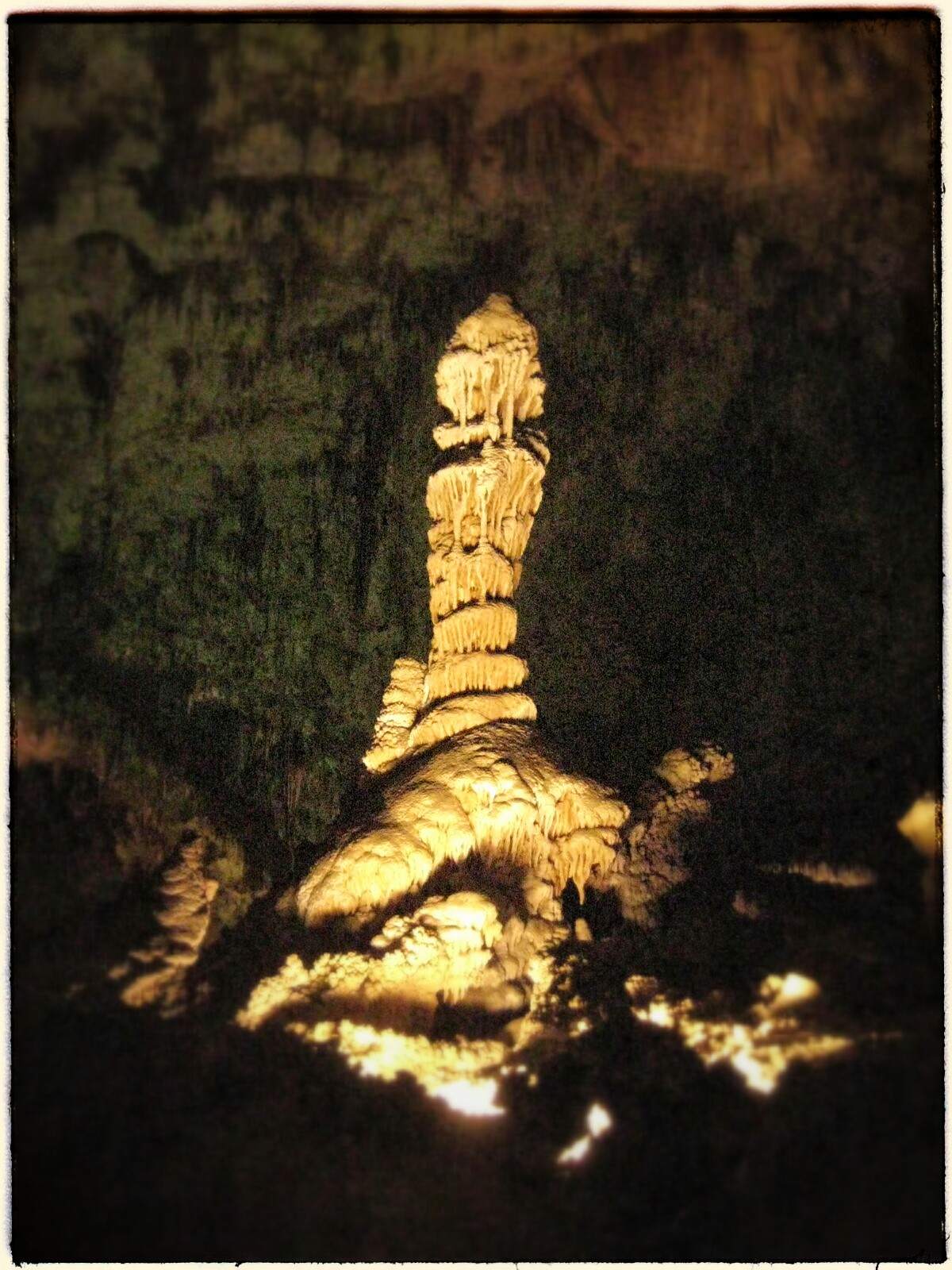
Recently (you’ll read about it soon) we visited a large cave in Vietnam. It got us thinking about another amazing, large cave that we have visited together. On Spring Break of 2010, we drove down to Big Bend in Texas to meet Eric’s family. While on the way, we took a stop at the famous Carlsbad Caverns. This is truly one of the most magnificent caves that one can visit!

image

Colorful Hues of Hue, Vietnam

After the hustle and bustle of Ho Chi Minh City and the touristy but lovely lanterns of Hoi An, we headed to the ancient city of Hue (actually pronounced like “Hway”- which does indeed negate our title rhyme). This was another UNESCO site that we had been itching to visit. The city is located on the Perfume River and was the capital of Vietnam under the Nguyen emperors from 1802 to 1885.

Getting There

We had read that the coast from Hoi An up to Hue was one of the prettiest trains rides in all of Vietnam. We couldn’t pass that up and booked the trip. It was indeed lovely! We were expecting a 4 hour ride but arrived in only 2 (we must have misread some information) so we were quite surprised when we pulled into the station. A quick taxi ride and we were at our hotel.

Where We Stayed

We stayed at the Sunny Hotel. We quite enjoyed this hotel – it had really friendly and helpful staff and a wonderful view from our room. However, the view came because we were on the 5th floor… and there was no lift! Definitely got a bit of exercise during our stay. The room was comfortable but there was a small downside. We discovered little parades of ants wandering our wall and had a visit from a cockroach our first evening. However, once that was resolved, we were quite comfortable. We also enjoyed the location which was on a small alley/street with many options for eating.

What We Did

We only had two full days in Hue, so did our best to make the most of them… despite the sweltering unseasonable heat. We arrived early our first day, so Peggy and Wayne went out to explore the river and a pagoda. However, Della was feeling quite sick having caught a bad chest cold. She decided to relax in the room for the afternoon and Eric opted to join her, hoping to catch up a bit with the blog.

The next day, however, we set out for a full sightseeing experience. We headed to the Imperial Citadel which was a short walk from our hotel. We enjoyed the foot crossing of the bridge over the large Perfume River on our way.

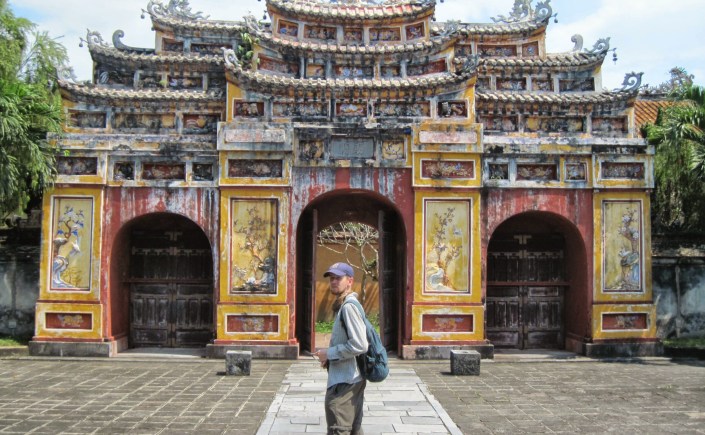
We then headed over the moat and first through the 6m high walls of the Citadel. Within the Citadel is another set of walls and the impressive Ngo Mon Gateway into the Imperial Enclosure, where all of the main activities took place. From there we explored the large site which had been largely destroyed during the French and American wars. However, there is a lot of ongoing restoration work.

We explored the Thai Hoa Palace which was used for official receptions and important ceremonies before heading to the Hall of the Mandarins. “Mandarins” were any government official. We found it interesting to read that they were chosen by testing alone. They would go through schooling and official tests were set up every few years. As the mandarins passed each test, they would move to a higher level. The final test was given by the emperor himself and would determine whether a mandarin would work or not.

The Emperor’s Reading Room was small, but very lovely. We enjoyed the formal Royal Theater, where we were able to escape from the scorching sun for a few minutes. The Co Ha Gardens were lovely to stroll through.

The Forbidden Purple City was once reserved for the personal use  and residence of the emperor, but there is not much left now. Some of the the most beautiful parts of the entire enclosure were the Truong San Residence and the Dien Tho Residence for the wives and mothers of the emperor. It was here where we found a small coffee shop to relax and escape the heat for awhile.

Our final stop was the Thai To Miew Temple Complex which houses shrines to each of the emperors. We enjoyed learning a little bit about the personalities of each emperor. We were especially amused as one was described as working late into the night because he “was slow.” We interpreted that one way, but found out the next day that it really meant something more like cautious and deliberate with his work.

By this point, the heat had sapped almost all of our energy. Della especially, but also Wayne and Peggy, were still recovering from illness so we headed back to the hotel for a much needed siesta.

The next day, we rented bikes and headed outside the city of Hue. There are many extravagant tombs of Nguyen emperors dotting the countryside nearby. We decided, again because of the heat, to head to the closest tomb, the Tomb of Tu Duc, which was about 6 km outside of the city. We debated the idea of hiring a car to take us to more of the tombs (in air-conditioned comfort) but decided against as each tomb had a steep entrance fee and we weren’t sure we needed to see more than one.

The bike ride was slightly nerve-racking at first as we navigated our way through the busy, motorbike filled roads. But, we made it safely and breathed a huge sigh of relief as we passed into the countryside and once again found ourselves making our way through lovely, green rice paddies.

Emperor Tu Duc was the emperor we mentioned above as being “slow.” But learning more about him through visiting his tomb led us to change our interpretation of the term from the day before. He designed his tomb himself, for use before and after his death. He apparently lived a life of excess and spent lavishly. The construction of the tomb actually caused a coup plot, but it ultimately did not succeed. Near his planned tomb was the Stele Pavilion which houses a 20-ton stone drafted by the emperor himself. Apparently, on it, he freely admits his mistakes and is quite reflective about his life.

Apparently, despite everything that went into building the tomb, Tu Duc is not actually buried there. His real burial site is unknown; he and his wife ended up only using the site while they were living. There is a lake which holds a small island where Tu Duc did some of his hunting, a temple where the emperor and empress worshiped, a pavilion where Tu Duc wrote poetry and entertained his concubines, and even a theater. All of the buildings are mostly restored and quite lovely.

Again, drained by the heat, and not looking forward to the heart-pounding ride back to town, we took a different way back. This was slightly longer, but kept us farther away from the big city streets for longer and allowed us a meander along the river. This was a good choice and we enjoyed a quick snack in a park before arriving back to the hotel.

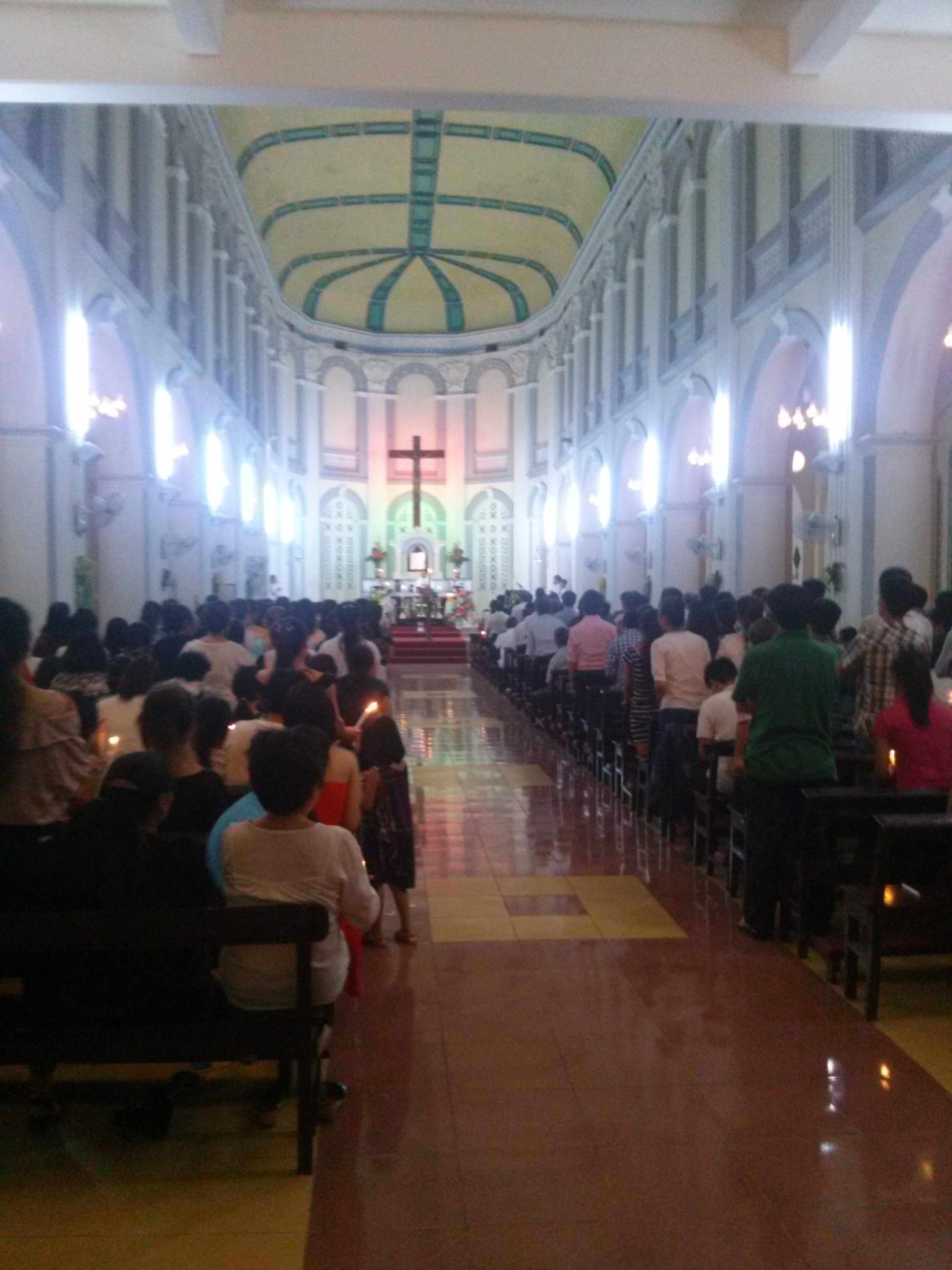
We also celebrated Easter in Hue. By celebrated, we mean that Della and Eric slept in a bit and Wayne and Peggy attempted to visit a church. However, the posted times of the services seemed to be wrong and they were only able to catch the last 10 minutes of the service.

The end of Easter mass

The end of Easter mass

What We Ate

The food in Hue is fit for a king! Or, rather, the traditional foods of Hue were some of the emperor’s Tu Duc’s favorites. We also enjoyed them. The first we tried were a kind of rice pancake, called Banh Khoai. They would serve it with rice paper wrappers and you would roll the pancake in with bean sprouts and other greenery. We also tried a smaller version which was a tiny bite sized pancake with a morsel of flavor called Banh Beo. Eric also made sure to try a soup we had first had in Saigon called Bun Bo Hue.

Two of our more memorable meals ended up with us taking away something that wasn’t food! We ate at a restaurant called Lac Thien after our day exploring the Imperial Citadel. We enjoyed both Banh Khoai and Banh Beo and beer, of course, because it was so hot. The staff was very sweet and particularly enjoyed showing us how to open our beer with a different kind of opener. We actually were familiar with them as they were used widely in Myanmar, but it was a lot of fun to see them again. The owner is deaf so we weren’t able to chat exactly, but he communicated so much energy, kindness, and delight it was lovely. He also signed one of the beer openers and gave it us to keep! The second restaurant was lunch after our long, hot bike ride to the Tomb of Tu Duc. We ate at the Mandarin Restaurant which was quite good. Here, the owner is a photographer, so we were surrounded by lovely images of Vietnam while we ate. When we left, the staff gifted us with two postcards with the owners photographs!

Our final dinner was eaten on the waterfront of the Perfume River. The whole area becomes quite lively after dark with street musicians and a large food market. We expected the restaurants there to be expensive, but we found one with quite reasonable prices. We enjoyed the cool breeze and the lovely lighting of the bridges over the river.

Final Thoughts

We really enjoyed our time in Hue. We found that it didn’t really feel as touristy as we were expecting. The evening on the river front was enjoyed mostly by locals, almost no foreigners at all. Through discussions with travelers after we left, we found that most tourists make Hue a day trip either on their way to or away from Hoi An. We were so glad that we stayed a few days and got to experience more that the city had to offer. The tourist sites were beautiful, marred only by the outrageous heat. Hue is worth a bit of time!


The Lantern-Lit Streets of Historic Hoi An, Vietnam

Hoi An, our second stop in Vietnam was a large contrast from our first stop of Saigon: instead of wide lanes clogged with motorbikes and fronted by modern buildings, there were narrow streets that were pedestrian only and featured quaint old buildings that looked like they haven’t changed in hundreds of years. We spent three days exploring the atmospheric streets of Hoi An and the scenic sites of the surrounding region.

Getting There

For most ways of travel, to get to Hoi An, one first has to get to the major town of Danang, where there is an airport and train station. We debated between taking a cheap flight that would arrive late or taking an overnight train, and in the end chose the train partially for a slight cost savings and partially just for the novelty of an overnight train.

Based on the advice from the very helpful Seat 61 blog, we hoped to book beds in the “soft sleeper” class, which have 4 bunks to a cabin. But, by the time we tried to book, all of these were taken, so we had to settle for bunks in the “hard sleeper” class, which have 6 bunks to a cabin. We had to take the middle bunk, which wasn’t ideal.

Our train pulled out of the station promptly at 7:30, and we headed north. Our bunks were not as spacious as we would have hoped; there wasn’t enough room to sit completely up, so we just had to lay down. Our cabin was full, with two older gentlemen in the bottom bunks and a young married couple in the top bunks. Unfortunately none of them spoke English so we couldn’t really discuss the logistics of moving around and going to bed in the tight space.

They went to bed fairly early, but we had reading lights so we could read for a while longer. We got some fitful sleep, but then were woken up early when the gentlemen in the lower bunks decided to have a full strength conversation at 5:30 in the morning.

We arrived in Danang on time at 12:30. Della’s parents had arranged their travels from Siem Reap (Cambodia) so that they were also in Danang and we could continue our trip through Vietnam with them. We caught a cab to the hotel where they were waiting.

They had arranged for a private van to transport us the 30 minutes to Hoi An. They also set it up so that the driver stopped for us to sightsee at the Marble Mountains, a tourist attraction in between. We went up the most popular of the mountains, and visited a few of the Buddhist pagodas and caves found on top.

Where We Stayed

We stayed at a recently opened guesthouse called the Viet House Homestay just outside of the Old Town. The family that ran the place was very nice and made sure that we were enjoying our stay. The rooms were nice and large, and the included breakfast was cooked to order. We also enjoyed the location, as it was within walking distance of Old Town but also on a more local street with some very affordable restaurants.

What We Did

Explore Old Town – The town of Hoi An was once a major center of trade, and now definitely shows the influence of the different cultures that were the trading partners: China and Japan. There are also many French influences. It is scenic just to walk through the streets and admire the sights, but to really get a feel for the history you need to purchase a ticket to go into some of the historic structures. Each Old City ticket gives you five vouchers to visit a choice of more than 20 buildings, so we made sure to structure our visit to see the five that seemed most interesting.

Our first stop was the Handicraft Workshop, where we made sure to arrive in time to catch the first showing of the twice-daily arts performance. This was a nice overview of different Vietnamese arts, including music, dance , opera, and a special bingo game in which the winning combinations are sung out.

We also went to two assembly houses. These structures were built by groups of Chinese immigrants from the same part of the country to be used as a place to gather for social events and a place to pray to their gods. We visited two: the Assembly Halls of the Chaozhou  Chinese Congregation and the Fujian Chinese Congregation. The former was smaller, but with nice wood carvings and a party going on as were were visiting. The latter was pretty elaborate and fronted with a nice pink gate.

Hoi An also has many private residences which can be visited for one of the vouchers on the Old City ticket. We first went to a small one, the Quan Thang house. We didn’t see the fancy carvings that the guidebook promised, but we did enjoy chatting with the proprietor and having the place to ourselves. Our final stop was the Lonely Planet top choice, so we knew we wouldn’t be the only ones inside. It was quite pretty inside, and we were able to eavesdrop on a tour and get a little bit more information about what we were seeing.

It wasn’t a part of our ticket, but we definitely wanted to make sure and visit the iconic Japanese Covered Bridge, built in the 1590s to link the Japanese side of town with the Chinese.  We went on our first night, and then returned after sightseeing one afternoon to make sure we got good pictures.

Bike Ride to An Bang Beach

Our plans to do a guided bicycle tour fell through, but after consulting a map we decided we could just rent bikes and head to some of the sights ourselves. The Viet House provided two bikes for free, and then our host suggested a place across the street with cheap options to rent more.

We followed a vague plan that was a scenic route towards the beach. As we got away from the city, we saw large rice paddies and shrimp farming. Everything was an impressive shade of green. Our maps program led us down what turned out just to be a tiny path through shrimp fields, but we made it though just fine.

At An Bang Beach, we found a place that had chairs under an umbrella, called the Banyan. In hindsight, there were plenty of places down the beach that were probably cheaper, but the Banyan was a comfortable, convenient place for us to base ourselves for an afternoon of relaxation. The water wasn’t as warm as in Thailand but was still refreshing.

Day Trip to My Son – Before the Vietnamese people moved south into the area, the dominant power was the kingdom of Champa. At the site of My Son, there are the remains of a large number of temples built by the Cham people. The temples are primarily dedicated to the Hindu god Shiva, and there are many examples of linga and yoni that are shrines to him. The Cham built their temples using bricks with no mortar in between, and we found it impressive how well the structures and carvings had held up. Parts of the site, though, were seriously damaged during the war when the US bombed the area to try and destroy the Viet Cong forces using it as a headquarters. We were glad to be able to add another UNESCO World Heritage site to our list, but the heat and humidity in the jungle setting was so oppressive that they detracted from the experience a bit.

We booked a cheap tour through a travel agent we found in Hoi An. Our transport to the site was a 30 minute minivan ride, but for the way back we “splurged” and paid a little bit extra to return by boat. This was a little misleading, as we drove back about two-thirds of the way before getting on a boat for the final stretch. The boat did make an extra stop at an island that is a center of woodcarving. This would have been more impressive if we hadn’t already seen the process in every other Southeast Asian country we have visited.

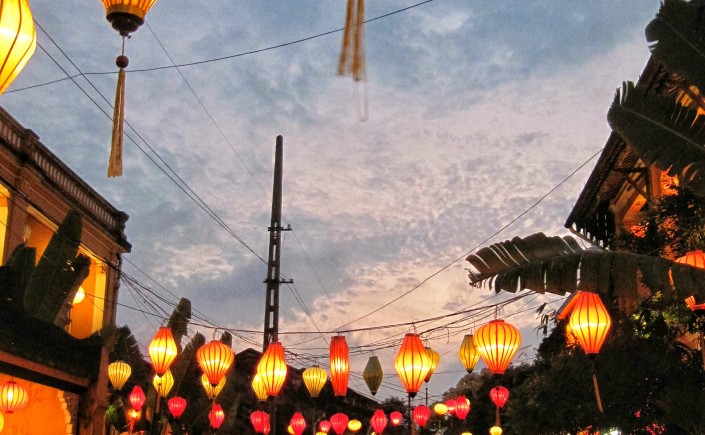
Lantern Festival – On the night of every full moon (well, really the 14th day of every lunar month), the old town of Hoi An throws a Lantern Festival. The streets are lit just by lanterns (most normal lights are turned off), businesses put out shrines for their ancestors, and on a few corners there are special music and theatrical performances. The most impressive part is the launching of lit candle boats onto the river for good luck. You can actually do this every night, but on the night of the Lantern Festival it is ramped up and the river is filled with the illuminated rafts. We felt a little guilty contributing to the pollution but still decided to do it once. Honestly, we were a little underwhelmed by the festival itself. The atmosphere wasn’t that much different in the Old Town than on the other nights, and the hassle of the crowds was harder to deal with.

Where We Ate

Hoi An specializes in a few  good dishes that aren’t found anywhere else in the country, notably cau lau, a dish made with a unique type of noodles and served with roasted pork, and “white rose,” a small shrimp dumpling. We made sure to sample these at multiple restaurants in the area. Our first night in town we headed to a slightly fancy place in the Old Town that presented a more refined take on these Hoi An classics. It was a bit pricey though, so the other nights we ate at the cheap restaurants on the same street as the Viet House, including one that was strictly vegetarian so had slightly different versions of the dishes.

In Hoi An we also had our first chance to sample “fresh beer,” a classic beverage that is unique to the country. The beer is called fresh because it has just recently been brewed and is served without preservatives. It has less alcohol than normal beer and less carbonation, but is very cheap. We paid 5000 Vietnamese dong (about 25 cents) at one place, and then at the restaurants near us it was only 3000 dong (about 15 cents)!

Final Thoughts

The town of Hoi An is quite charming, with great history and beautiful architecture, and we loved the streets lit up by the colorful lanterns at night. On the other hand, it felt a bit like an amusement park version of Vietnam, with more tourists on the streets than locals and quite a few vendors wherever you turned. Our favorite day was probably when we took our bikes out to the beach and got to see more of the everyday life of people in the area.

Flashback Friday: Eric’s Birthday!

Flashback Friday is a picture series where we “flashback” to some of our memories – from either from our prior travel or from home. We hope you’ll enjoy some of our remembrances!

Tomorrow we celebrate Eric’s 32nd birthday! We thought we would flashback to one of Eric’s birthdays a long time back. This picture is from his party 2001 with the Dallas crew of friends. This was his senior year of highschool.

4x6 brown and gold

Saying Hello to Vietnam in Ho Chi Minh City (a.k.a Savoring Saigon)

Our final stop on our tour of Southeast Asia is the country of Vietnam. There’s quite a bit to see in the long, skinny country. We had heard a variety of opinions from fellow travelers about the country: some loved it, but other disliked it and said they wouldn’t go back. We were excited to see where we would fall on this spectrum. Also, as Americans, we were interested to learn more about the war that affected our parents’ generation so deeply, and to see how we would be received in this country.

We chose to start from the south and work our way to the north in the hopes of finding cool weather. Our first stop was the most populous city and the base of US operations during the war, Ho Chi Minh City.

You may be confused, thinking that Saigon was where all the action occurred. Well, they are actually the same city! The name was officially changed once Southern Vietnam was liberated (or taken over, depending on your point of view) by Northern forces and the country was reunified. Many people in the city still informally refer to it as Saigon, so we found ourselves doing the same.

Getting There

We were coming from Ko Lanta, our beach destination in Thailand. We were able to find a flight from the Krabi Airport to Saigon (via Bangkok), which simplified things. Our trip away from Ko Lanta wasn’t nearly as frustrating as our trip there, but it still had its bad moments.

Booking a minivan transfer to the airport was way easier than figuring out how to get from the airport. Every travel agent in town offered the same service, with vans leaving once an hour. We were the first ones picked up and therefore had to spend almost an hour picking up other travelers. Once the van was stuffed, we headed towards Krabi. The lines for the ferries went quickly, and we made it in plenty of time to check in.

Our check-in was a little unique, since we were boarding a domestic flight to Bangkok but ultimately would be going to an international destination. Our airline, Air Asia, gave us special stickers to wear to show that we needed to be taken through extra steps. We were stamped out of Thailand in the Krabi airport, and ended up in a waiting area for international flights. When it was time to board our plane, an Air Asia rep found us and took us to the domestic terminal. What was funny was that our transport to there was a full-size bus… for just the two of us and the rep! And the bus only went about 100 yards.
The rest of our private coach to the gate

The rest of our private coach to the gate

In Bangkok’s Don Muang Airport, we again had a special escort that took us through a side door into a transfers area, where they checked our documentation, did another security scan, and then dumped us into the main international terminal. We didn’t have much baht (Thailand currency) left, so we had one last pad thai each, and then shared some fries from McDonalds (please don’t judge, there was no cheap local food available..).

Our plane was scheduled to take off at 7:30, then around 7:00 we saw lightning flash outside and it started pouring rain. We were excited to see the moisture falling from the sky after so many dry, dusty days, but we were worried about flight delays. Sure enough, a few minutes later, every gate in the area made announcements about delays. Ours ended up not boarding until almost 9:00. We could see large pools of standing water on the tarmac, but takeoff went smoothly.

In the Saigon airport, we had to wait to get our visas. We had used the Visa on Arrival service from Hotels in Vietnam, and all the paperwork they provided worked great. We did still have to wait about 30 minutes for the visas to be processed. At this point it was 11:30 or so.

We were very glad that we had pre-booked a driver to pick us up from the airport, because the few taxis in the ranks looked like the scammy ones we had read about online. Our driver was very relieved to see us. He didn’t speak very much English, but later we found out that he had been waiting since our original arrival time. We had emailed the hotel to let them know about the delay, but apparently the driver had heard that it was on time and didn’t trust them.

When we finally got to our hotel, the clerk roused himself from a nap, checked us in, and then we all headed to bed. Another long travel day in the books!

Where We Stayed

We booked a double room at Giang Son Hotel 2 in the middle of the backpacker area. Our room was a little small, but we really enjoyed the AC and bathroom after “roughing it” at our beach bungalow. The front desk staff seemed very competent and friendly. The included breakfast was good as well.

What We Did

We were especially excited to see the sights around Saigon because we had both recently read the book Saigon by Anthony Grey, a historical fiction novel which used many different real-life locations around the city.

HCMC (Ho Chi Minh City) Museum – Our first day, still a little tired from the late night, we just decided to visit one museum. We headed to the city’s history museum hoping to get a good overview for what we would see on subsequent days. It is housed in an impressive colonial building that has seen a variety of uses from its construction in 1885: it has been the residence of the French colonial governor, offices for the South Vietnamese government, and now a museum. The ground floor houses a few exhibits on the history of the city and the culture of its residents, while the second floor is all dedicated to the revolution in Saigon, first against the French, then the South Vietnamese government (supported by the Americans). We also found a small door leading down to a bunker in the basement, which the leaders of one of the South Vietnamese governments had built to use to escape in case of a coup.

Saigon Old City Walk – We followed the self-guided walking tour route laid out in the Lonely Planet to see some of the sights of old Saigon. Some of the highlights were the bustling Ben Thanh market, the modern Bitexco Financial Tower, the Majestic Hotel by the riverfront, the large square with the Opera House and two other historic hotels, and the People’s Committee Buildings (which is weirdly next to a fancy shopping mall). The tour ended at the Notre Dame Cathedral and the main Post Office, where we made sure to meet each other at noon to test out a potential rendezvous plan.

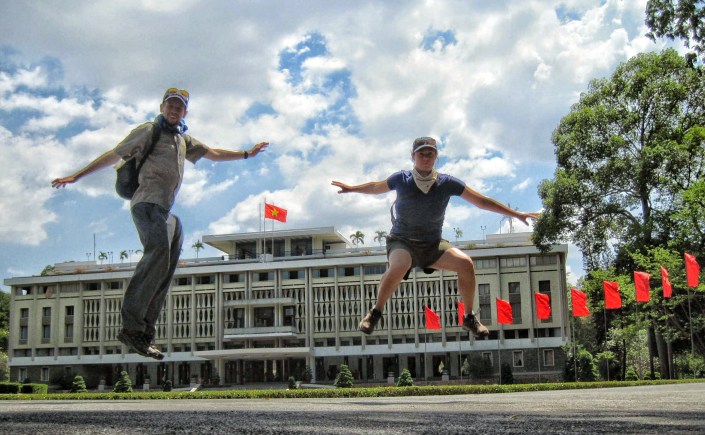
Reunification Palace – On April 30, 1975, the Communist forces of the Vietnam Liberation Front crashed a tank through the gates of this complex, the home of the South Vietnamese government. The leaders inside surrendered, and the country was reunified. Interestingly, they have left the building almost exactly as it was at this moment, so it functions as somewhat of a time capsule for the era. There are a multitude of ornate reception rooms, the President’s residence, and on the upper floors a lounge, a movie theater, a helipad, and a dance floor. The basement is maybe the most fascinating part – here there was a giant bunker complex where you can still see the old radios and maps that were used by the South Vietnamese as the Viet Cong forces grew closer.

War Remnants Museum – This sobering and sometimes disturbing museum shows the effects of the “American War” on the countryside and people of Vietnam. It definitely portrayed the American actions in the war in a negative light, from the massacres of innocent civilians and the long-lasting effects of the deployment of Agent Orange. On the other hand, it did not describe any of the war crimes committed by the Viet Cong side, so it felt like we only heard part of the story.

Cu Chi Tunnels Tour – The Viet Cong were successful against the American forces in part because they engaged in guerrilla warfare. One key part of these tactics was a network of tunnels that they built which enabled them to launch sneak attacks and then disappear quickly. We took a half-day tour up to the Cu Chi Tunnels, where a section of these tunnels has been preserved. The tour took us past some exhibits on the wartime activities in the tunnels and examples of the booby traps that were also a part of the guerrilla strategy. The experience itself felt a bit rushed, but we did ultimately get to crouch-walk through about 20 meters of tunnels (which are only about 3 feet tall).

Explore Cholon, Saigon’s Chinatown – This neighborhood in Saigon was originally founded as a separate settlement by Chinese immigrants and still maintains a heavy Chinese influence. We rode a city bus over and spent some time wondering its streets. Our first stop was the large Binh Tay Market. We were amazed by the size of this place; at one point we thought we were in the center, and then realized that we we still in one corner! We also visited two Taoist pagodas, where we got our first look at a type of religious structure that we hadn’t yet seen. Our final stop was at the Cha Tam Catholic Church, where South Vietnamese President Nguyen Dinh Diem and his brother hid during the coup against them.

Attend the HCMC Tourism Festival – We were excited to discover that a large festival was going on in the park just across the road from our accommodations. The purpose of the festival was to promote tourism in the region, and it was definitely aimed at the local population. Still, we enjoyed visiting the different booths, recognizing many of the places we were planning to visit soon. Also, on the first night we got to see a nice dance performance where each number portrayed a different one of the UNESCO World Heritage sites in Vietnam.

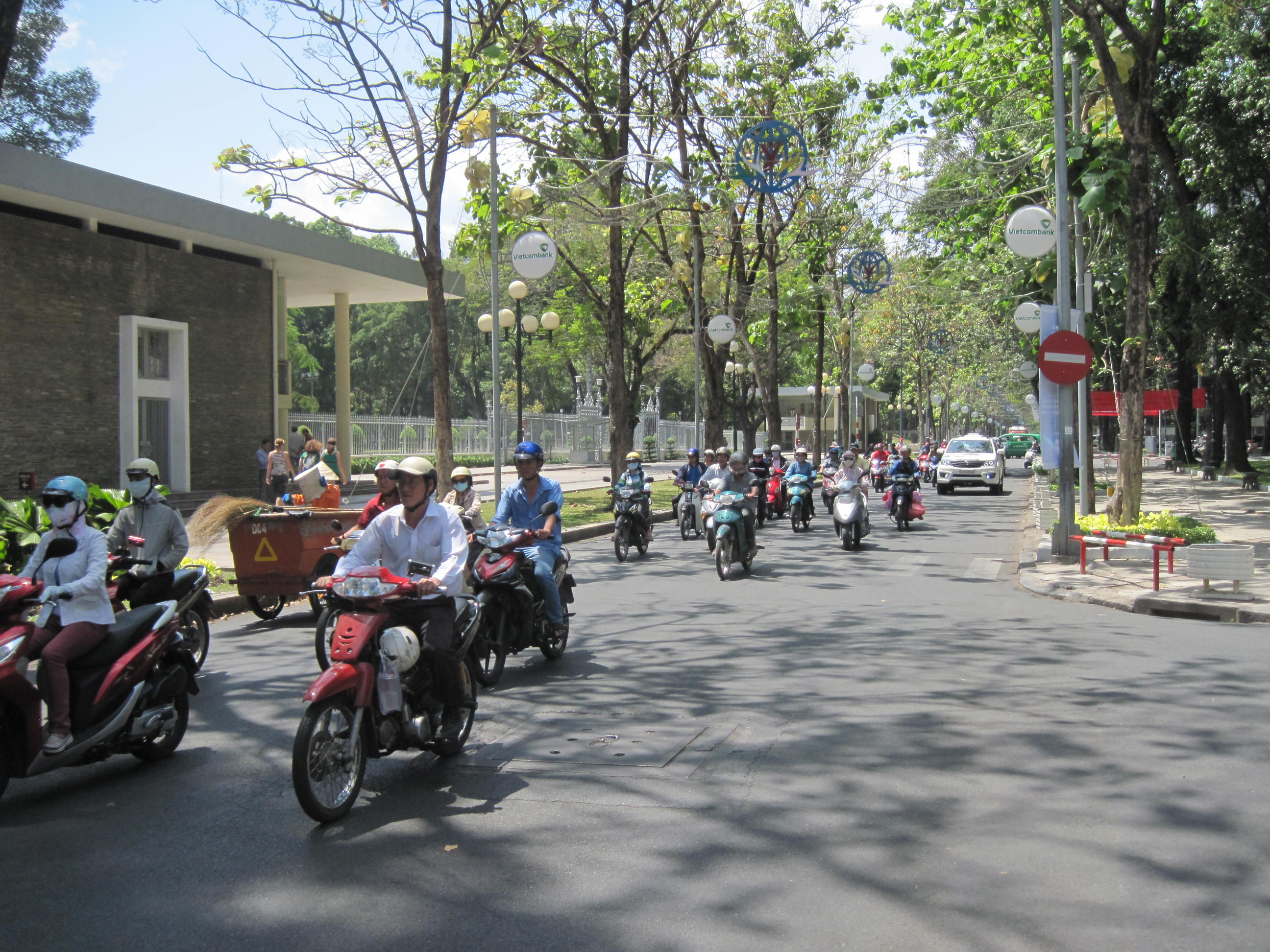
Survive the Traffic – Saigon has a reputation for crazy traffic, and it definitely lived up to this. Crossing larger roads was quite an adventure, especially in a few cases where there was no light. We were very grateful in two of these instances when a local person led the way for us and we were able to get across safely. Even the sidewalks are not safe – sometimes in cases of heavy traffic the motorbikes would drive along them!

IMG_9550

Where We Ate

We enjoy eating Vietnamese food back home in Denver, so we were pretty excited to get our first taste of the cuisine in the country itself. One of our favorite things to eat is the famous beef noodle soup called pho, and fittingly this was the first meal we enjoyed. We ate at a local chain and are very happy to report that it was quite good! We also ate at another local chain near our accommodations for dinner one evening.

Another good feature of the festival beyond the dance performance was that it had many food booths set up that allowed us to sample some different cuisine. One night we each got soups that were unlike anything we had had before (they had some random meat parts and herbs in them), and another night we had a more conventional soup and a vermicelli bowl. We were also excited to order draft beer here for just 50 cents a glass!

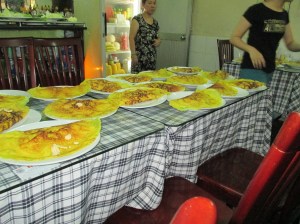
The day we went to the Cu Chi tunnels, our tour guide us talked into ordering a local special savory pancake called banh xeo. It was very tasting – a large pancake made with rice flour, and stuff with pork, shrimp and bean sprouts.
IMG_6650

We never really dipped our feet into the Saigon street food scene because it was just so hot outside, and we preferred the air-conditioned comfort of inside dining. Even with that restriction, we found two local restaurants with nice cool interiors where we were able to enjoy some local specialties.

IMG_6604

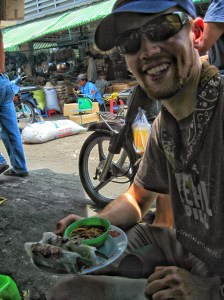
At most of these meals, we ordered an appetizer of fresh spring rolls, which was especially exciting for Della since they are one of her favorite things. We even were able to find some in a street stall outside the Bin Tayh Market – our one (delicious) exception to not eating street food!
IMG_9659_edt

Final Thoughts

We were unsure about how much we would enjoy Saigon, but we actually quickly decided that we liked it! The city was vibrant but not overwhelming, the sites were easy to explore, and the cuisine was excellent. Saigon served as a great introduction to Vietnam and hopefully the first of many fun places to see there.
Budget: Thailand

This is one of our Budget series of posts to give you an idea of how much we spent traveling around the world. Here we will look at Thailand. Check our posts to see what kind of activities we did and where we stayed!

In Thailand we used the Thai Baht. We converted to US dollars using the current conversion rates at the time of our visit. It was approximately 3 baht to $0.01.

IMG_8902_edt


Total Spent (23 days): $1415.20

Accommodation: $390.07

We stayed in several places in Thailand. Our first time was in Bangkok for a few days in January before we headed to Myanmar. We returned to Thailand on the the 5th of March and we stayed mostly in small hotels or guesthouses. Much of our time in Thailand, we were traveling with Della’s parents. There was one hotel that we stayed at for 2 nights that Della’s parents paid for as a gift.

Activities: $369.65

This included a lot of things! Entrance fees to museums and wats, a movie in Bangkok, a day with elephants, a cooking class, and even a snorkeling trip!

Alcohol: $31.53

We only count alcohol costs when it is not purchased with other food.

Food: $327.73

We loved the food in Thailand and often ate out for lunch and dinner. Only a very few of our accommodations included breakfast, so we often purchased that as well.

Miscellaneous: $46.38

This included a lot of added toiletries as well as several souveniers. It is amazing how many things we start to buy when we know that we can send it home with Della’s parents! 😉 We also had to purchase a new battery for Eric’s fitbit.

Transportation: $249.67

We traveled around a lot in Thailand! This cost is actually quite low when you think about where we went. We traveled by bus from Chiang Rai, to Chiang, Mai, to Mae Sot, to Sukhothai, to Ayuthaya. Then we traveled by train to Bangkok. After that, we flew to Koh Lanta.

This divides out to $61.53/day which is under $100/day budget! Now that’s what we were hoping for in Asia! We even felt like we splurged on activities and accommodations, and we were able to remain this low, so it just goes to show that Thailand can be an inexpensive place to travel.

Flashback Friday: Spring Break Sand Dunes

Flashback Friday is a picture series where we “flashback” to some of our memories – from either from our prior travel or from home. We hope you’ll enjoy some of our remembrances!

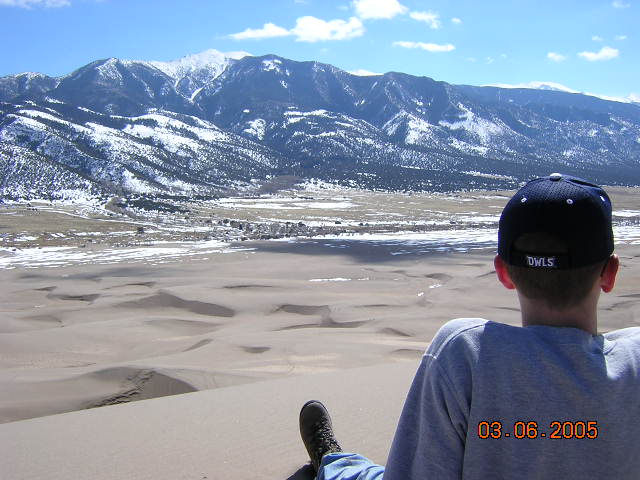
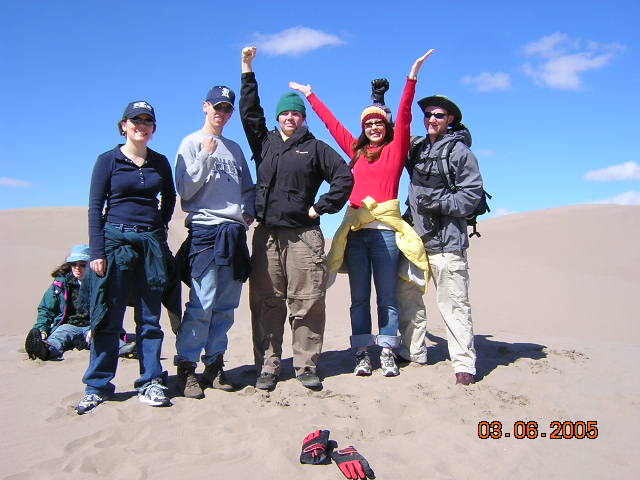
So, this week is Spring Break for Della’s colleagues back home, so we are remembering some of our spring break trips! The first trip that Eric and Della did together as a couple was spring break of our senior year, 2005. We took several of our friends and drove to Colorado to do some skiing. Our first stop though, was at a super underrated destination in southern CO called the Great Sand Dunes!

069 eric top

Dunes of sand next to the gorgeous CO mountains

075 top yes!

We made it to the top!


Lounging on the Beach at Ko Lanta, Thailand

“Mountains or beach?” That’s a question many people ask each other when making small talk. Generally, we choose mountains (as you may have guessed given that we live in Colorado – Della can provide a whole rant if you want), and we haven’t made a big effort thus far on the trip to spend a lot of beach time. Still, we figured it would be a shame to miss out on the world-class Thailand beaches, so we built a few days into the end off our time in Thailand to do so.

Picking a Beach

There are a huge number of beaches in Thailand, and we only wanted to see one. This meant sifting through a vast maze of information, from the recommendations of friends and family to guidebooks and online resources. So many data points just served to confuse us. And, just when we thought we’d made a decision, we’d discover something that turned us off. Wow, this island looks amazing… but it sounds pretty hard to get to quickly. Or This beach would be really easy to get to… but it doesn’t sound like there is much to do once you get there. And so on.

In the end, the island that best fit our criteria was Ko Lanta. It seemed fairly easy to get to for a quick trip from Bangkok, it looked scenic and had plenty of stuff going on, and we could pre-book affordable accommodation. It was nice to get that decision made and get to the beach.

Getting There

It wasn’t quite as easy as we had hoped, but we made it there in one piece.

Where We Stayed

Based on the recommendation of some of our travel friends, we booked a bungalow at The Hut on Khlong Nin beach. (Even once we had decided on the island, we still had to pick the beach on the island to stay on.) Our bungalow was nice and spacious, with a covered front porch and a large bed. We did have an attached bathroom with a Western toilet and cold-water shower… but no sink, which we found inconvenient. The only cooling apparatus was a fan; no A/C, which would have been nice on the hot, muggy days, although we managed to cool off enough at night to sleep. The staff was very laid-back – almost a little too much so at times, but maybe we just don’t have the correct attitude for a beach ;-).  The location was not on the beach itself but just across the road, so not too bad. The price (about $15 a night) was pretty reasonable compared to other bungalows we priced out as well.

What We Did

We were looking forward to some relaxing times and we definitely were able to achieve that. Both the first and second days we didn’t emerge from our bungalow until it was time for lunch. The first day we just stayed on the beach after lunch and read and took turns swimming in the warm waters of the Andaman.

The second day we intended to rent a motorbike to see some of the other sights on the island… but when we admitted to the staff at The Hut where we were going to rent from that it was our first time, they refused to rent to us. Too discouraged to try another place, we spent another afternoon lounging on Khlong Nin beach.

In the evening we headed over to check out what we had seen advertised as a free beach exercise session followed by a yoga class. We were a little skeptical, but it turned out to be exactly that! A South African named Yakut first led us through a variety of exercises he seemed to make up on the spot, many involving the use of a large volcanic rock we picked up nearby. After a refreshing swim to cool off, the yoga session started. The yoga instruction itself was a little hit-or-miss, but the opportunity to do a sun salutation towards the setting sun was pretty incredible. We also enjoyed listening to Yakut espouse some of his personal philosophies.

The third day we decided to be a little more active and book a snorkel tour to the Four Islands area. We debated which company to go with, and ended up choosing “Lanta Nature Tour” since it was the cheapest. We were taken on a small “longtail” boat along with five others, including someone from Boulder, Colorado and a German who had gone to the University of Colorado for a year of study abroad – talk about a small world! We stopped at two small islands and hopped out for about 20 minutes of snorkeling. We didn’t see anything amazing, and the coral seemed a little worse for the wear, but the water was crystal clear, and we enjoyed swimming among schools of a smaller type of fish that had no fear.

The third stop was at the Emerald Cave, where we hopped out and swam into a natural opening underneath the limestone karst. Just past the entrance we got to see where the cave got its name from, and the water beneath us glowed in an emerald-esque color as it was lit from the sun outside. After we swam about 100 meters, we emerged into an interior oasis of a small beach open to the sky. It was quite pretty, although the effect was marred a bit by the vast crowds of loud tour groups talking excitedly.

We couldn't take any pictures of the cave since we had to swim into it, but we did get to enjoy a Pepsi afterwards

We couldn’t take any pictures of the cave since we had to swim into it, but we did get to enjoy a Pepsi afterwards

After we swam back out the cave, we headed to our final stop: lunch on the beach at Ko Ngai. This was our favorite stop; the view from our table of the longtail boats bobbing in the bright blue water above a white sand beach with limestone karsts in the distance was exactly what we had hoped to see on the beach in Thailand. We had about an hour to eat lunch and then relax in the water before we took the long ride back to Ko Lanta.

Where We Ate

Khlong Nin has a nice selection of restaurants along the beach, and we visited quite a few of them. Since it was our last few days in Thailand, we tried to eat our fill of curries and fried noodles. Della was especially insistent on choosing places that offered her favorite dish, pad see ewe.

Many of the beachfront restaurants offered happy hour deals on beer, which was great since the beach faces west. We took advantage and made sure to find a good seat to watch the sun fade below the horizon.

Final Thoughts

We are glad that we made our way to the beach, and Ko Lanta was very scenic. Khlong Nin was the right beach for us to choose (we saw some of the party beaches on the way out and were glad we didn’t choose them). It’s hard to say if we chose the right island or not. The frustrations of getting there and the relatively high prices once we arrived soured things a bit, but we might have had similar issues at many of the other islands. So, our trip to the Thailand beaches didn’t change our affiliation as “mountain people,” but it did provide for a scenic and relaxing way to say goodbye to Thailand.