RTW Timeline: 5th Century BC

After seeing so many interesting sites and learning many facts about places all around the world, we thought it would be interesting to arrange the different places and events on a timeline to provide more of a context for the different highlights.

In our previous installment covering the first half of the first millennium BC, we saw the Greek culture grow and develop, leading up to an explosion of culture and history in the period we will cover today, the 5th century BC. This is considered to be the classical era of Greece, and especially of Athens as that was the center of much of the development.

490 BC – Athenian Treasury built at Delphi to celebrate victory at Battle of Marathon

The sanctuary at Delphi was surrounded by structures built by the city-states of ancient Greece, given as offerings to the oracle in thanks for the good advice. After Athens defeated the Persians in the battle of Marathon (the one that gave the modern race its name), the city dedicated a treasury in Delphi to show its thanks and display the spoils of victory.

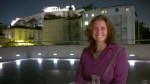
Failed jelfie in front of the Athenian Treasury

Failed jelfie in front of the Athenian Treasury

480 BC – King Leonidas of Sparta dies at the battle of Thermopylae

King Leonidas led the militaristic city-state of Sparta on the Peloponnese peninsula. He died in the battle of Thermopylae against the Persians (the same battle dramatized in the movie 300). There is a large contemporary statue of him in the modern city of Sparta which we visited.
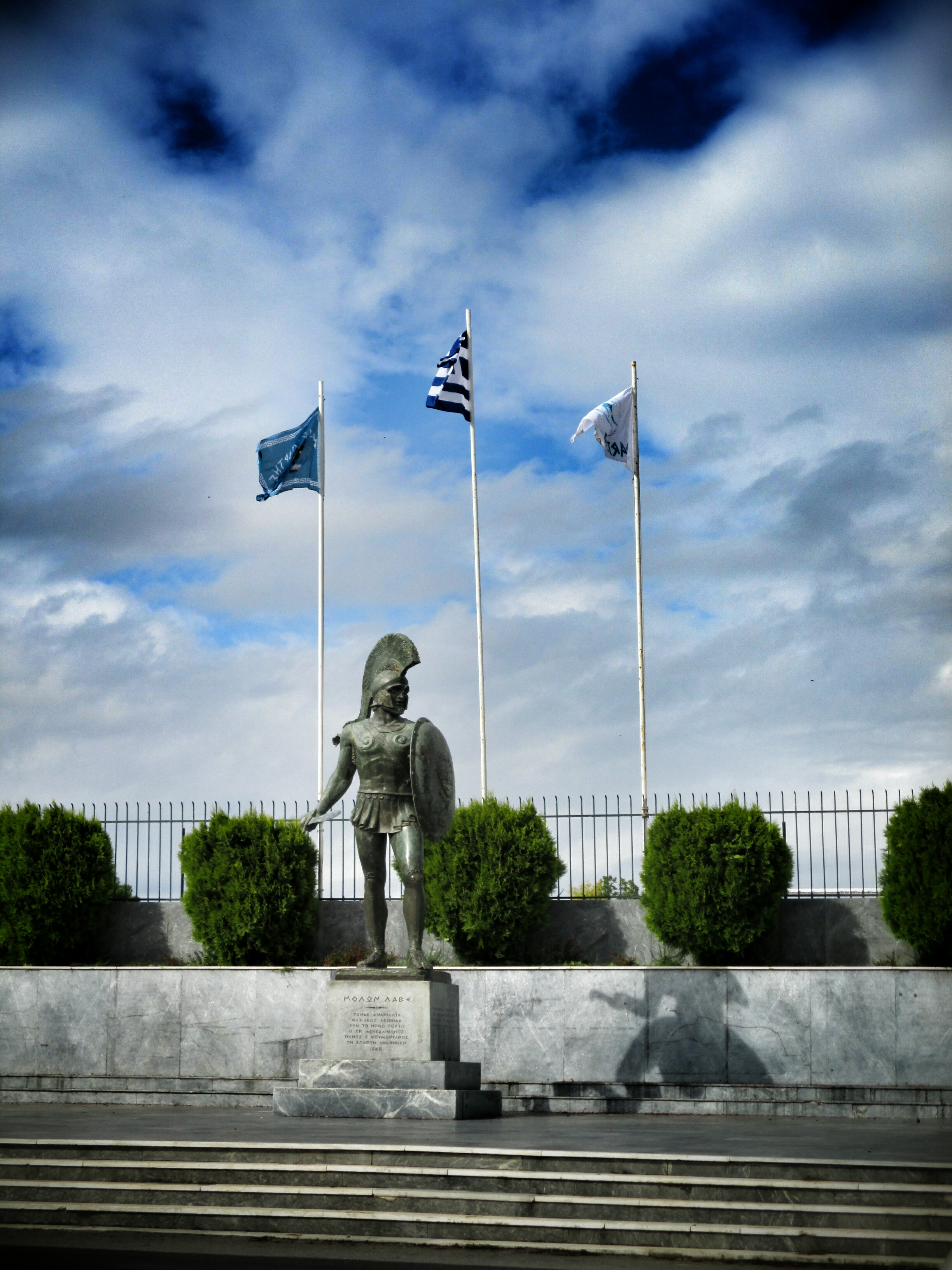
A statue for King Leonidas (main character in 300)

A statue for King Leonidas (main character in 300)

478 BC – Serpent Column erected as part of a sacrificial tripod in Delphi

We actually saw this column at its current location in Istanbul. Emperor Constantine moved the column from Delphi to Constantinople for use as a decoration at his new Hippodrome.

The serpent heads on the top of the column were removed at some point

The serpent heads on the top of the column were removed at some point

474 BC – Charioteer of Delphi created

We viewed this well-known striking bronze sculpture at the archaeological museum in Delphi.
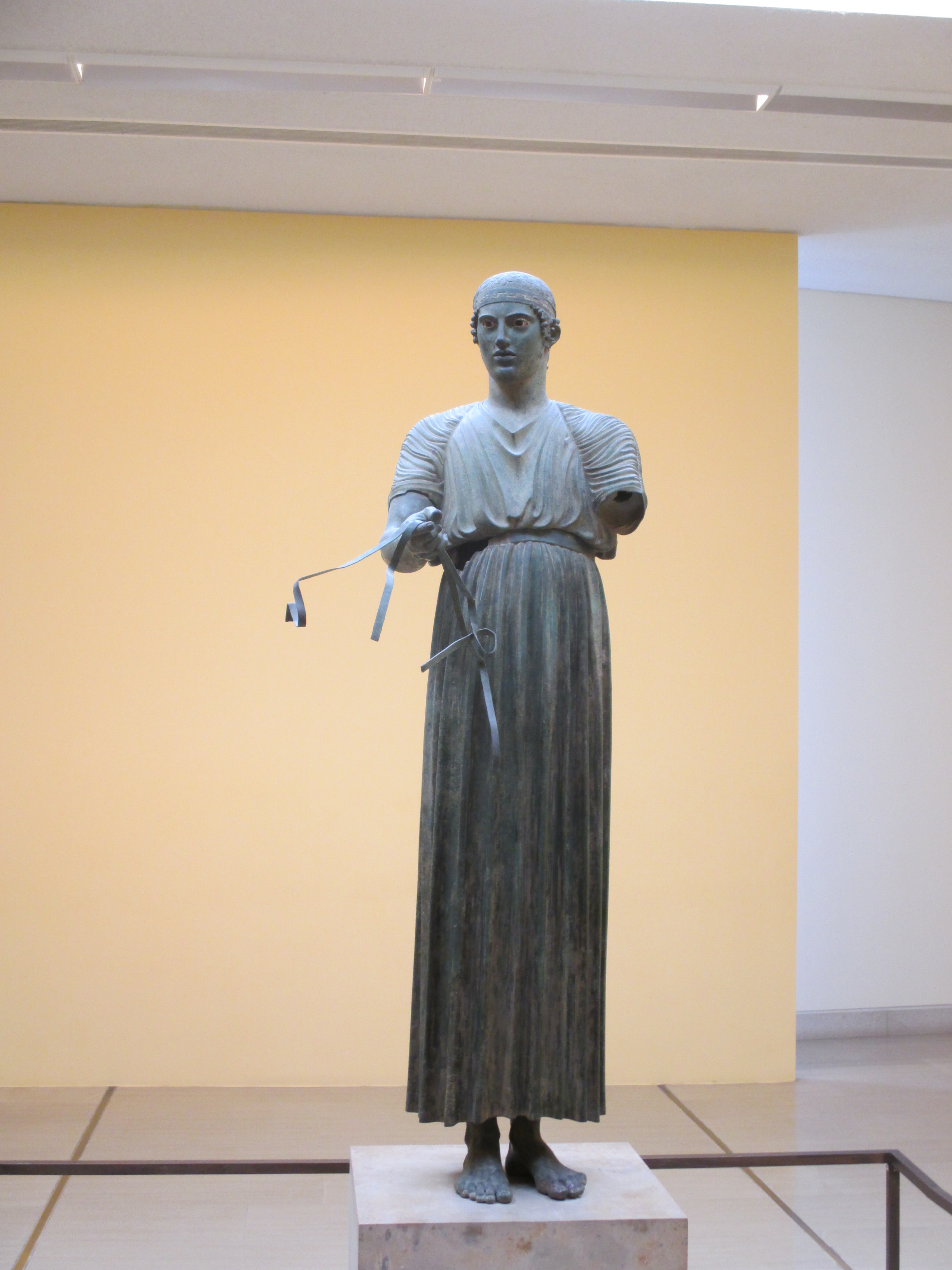
The famous Bronze Charioteer

The famous Bronze Charioteer

460 BC – Artemision Bronze Sculpted

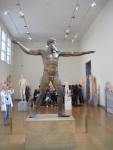
Art historians don’t know if this depicts Zeus or Poseidon, since he could either be hurling a lightning bolt or a trident. The date for this sculpture is also just a guess, because it was found as part of a shipwreck about which not much is known.

Zeus/Poseidon

Zeus/Poseidon

456 BC – Temple of Zeus Built in Olympia

This was the largest temple at Olympia. Today, only one of the massive Doric columns has been reconstructed.

Temple of Zeus

Temple of Zeus

440 BC – Temple of Poseidon at Sounion constructed

This temple, located on a promontory overlooking Cape Sounion, was a pilgrimage site where those about to take a sea voyage could make offerings to the god of the sea.
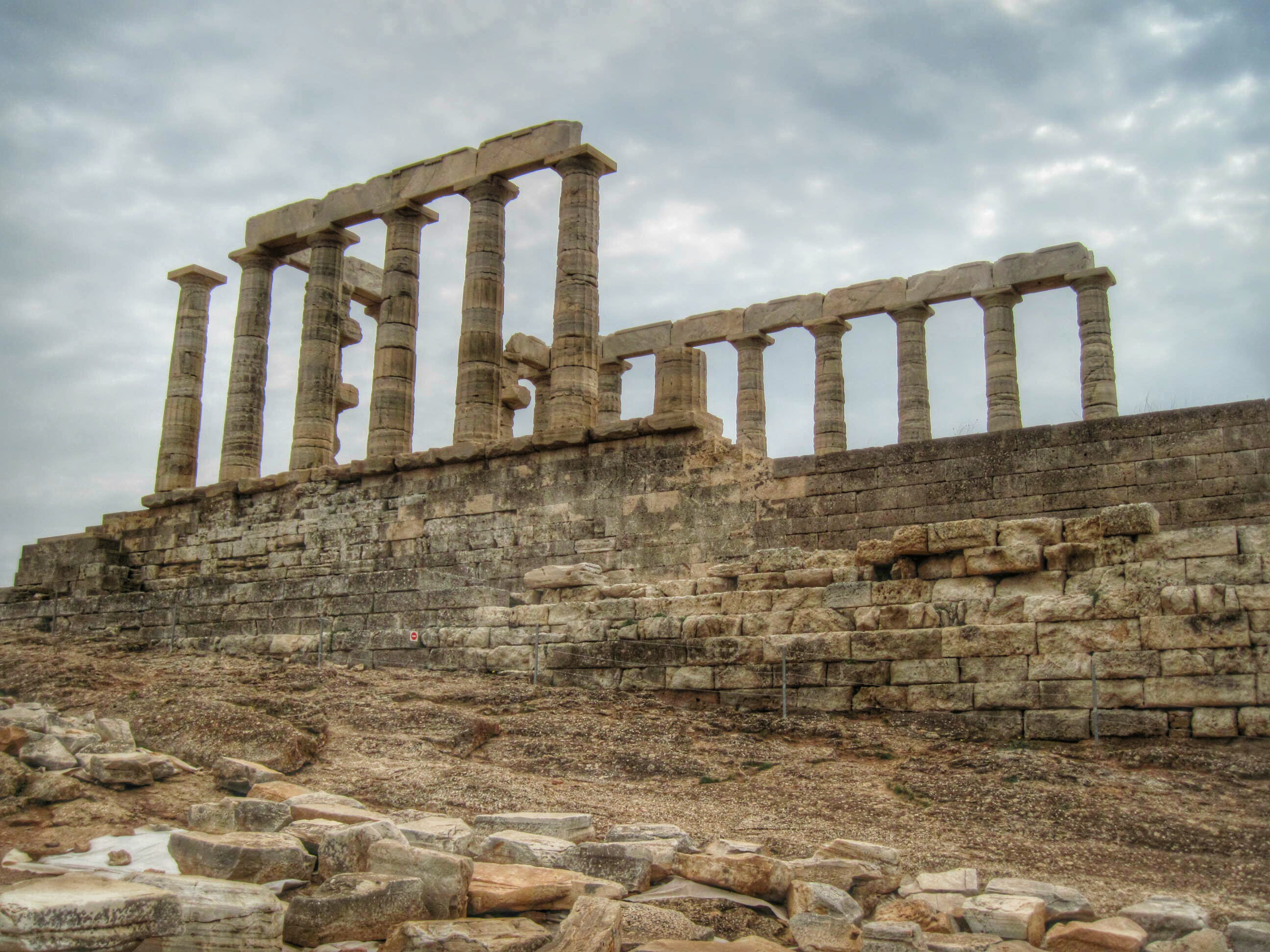
The Temple of Poseidon

The Temple of Poseidon

438 BC – Parthenon Completed

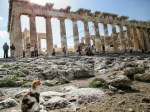
The classic Greek temple dedicated to Athena, the patron of Athens, sits on the acropolis overlooking the city below. The decorative sculptures have been removed and it is under recontruction, but just seeing it in person was a great experience.
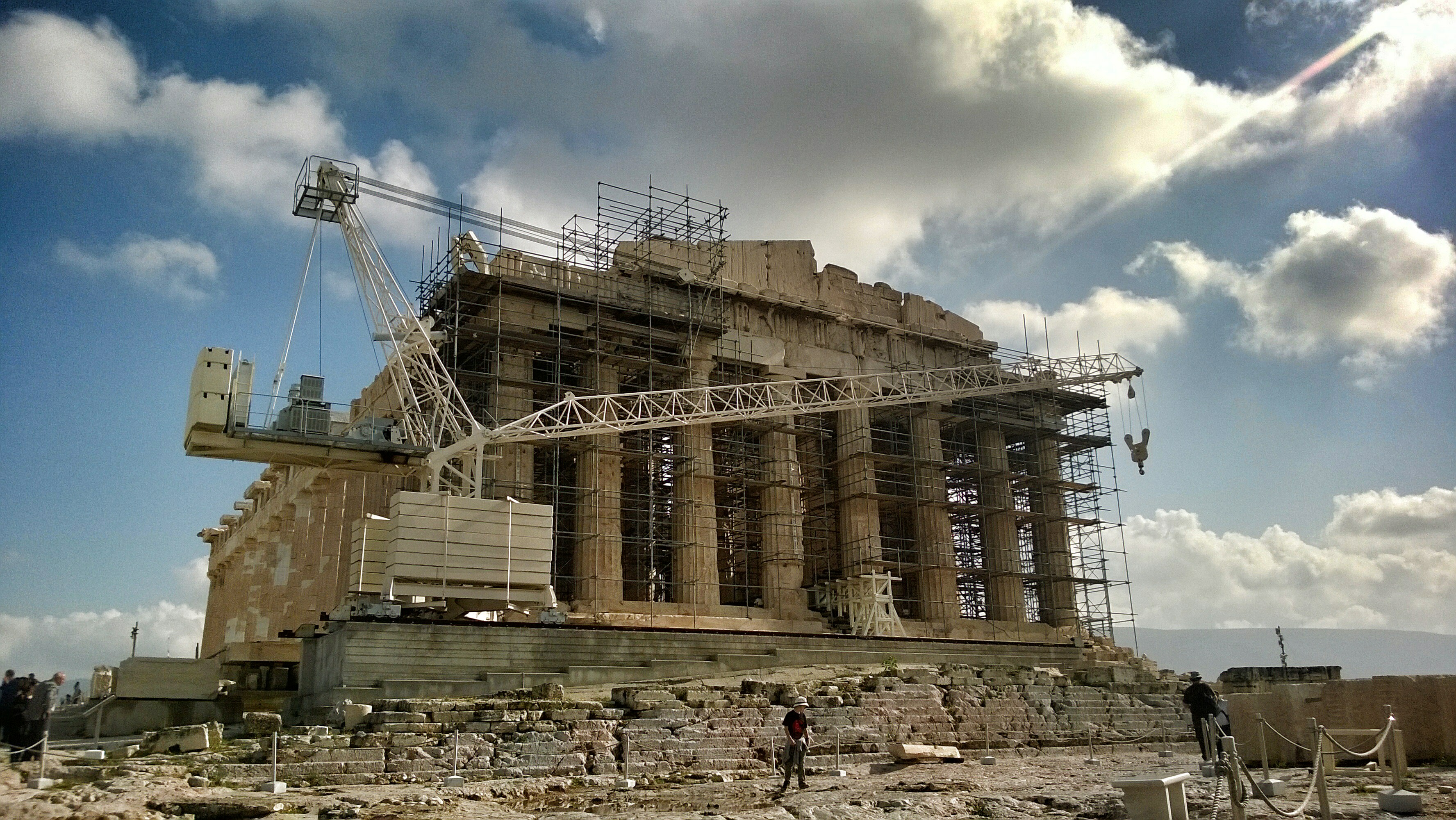
The Parthenon

The Parthenon

432 BC – Construction of Athenian acropolis Propylaea halted due to outbreak of Peloponnesian War

Athens dominated the Classical age of Greece, but it didn’t last for too long. War eventually broke out between Athens and the Peloponnesian city-states (led by Sparta). Costs for the war drained money from the treasury, and the ceremonial entrance to the Acropolis, the Propylaea, was never completed.

The Propylaea is still the main entrance for tourists

The Propylaea is still the main entrance for tourists

420 BC – Nike of Paeonius created for display at Olympia

The dynamic sculpture is missing a few pieces these days but still does a great job of conveying motion.
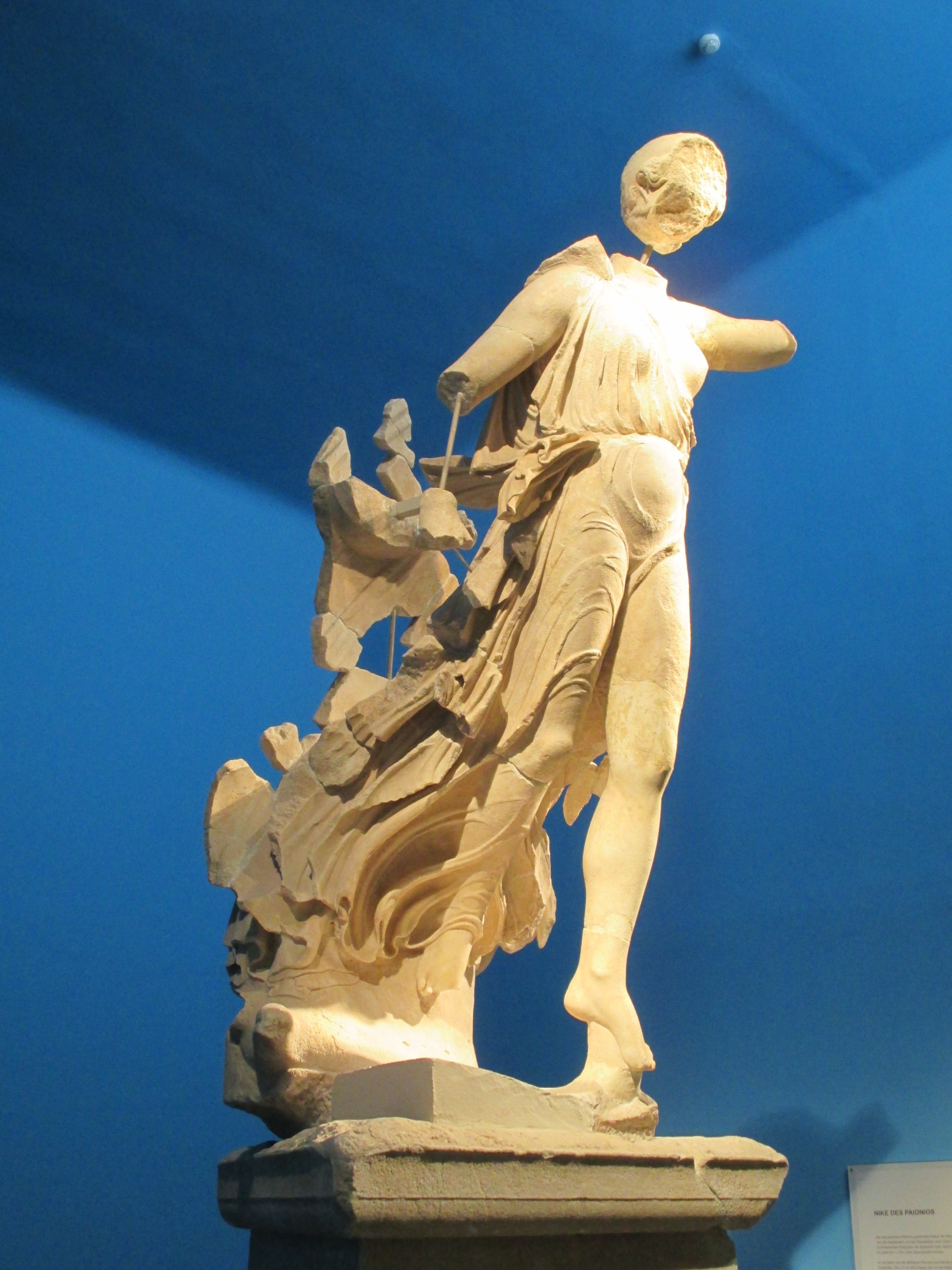
Nike - goddess of Victory. She stood on a pedestal where the Olympic victors were crowned near the Temple of Zeus

Nike – goddess of Victory. She stood on a pedestal where the Olympic victors were crowned near the Temple of Zeus

420 BC – Temple of Athena Nike constructed on Athens acropolis

This small temple is found on the southwest corner of the Acropolis. This was the oldest Ionic temple that we saw. Nike means victory in Greek, and Athena was worshiped in her victorious form here. Note the date – the Athenians were praying for victory in the Peloponnesian War which was still going on.
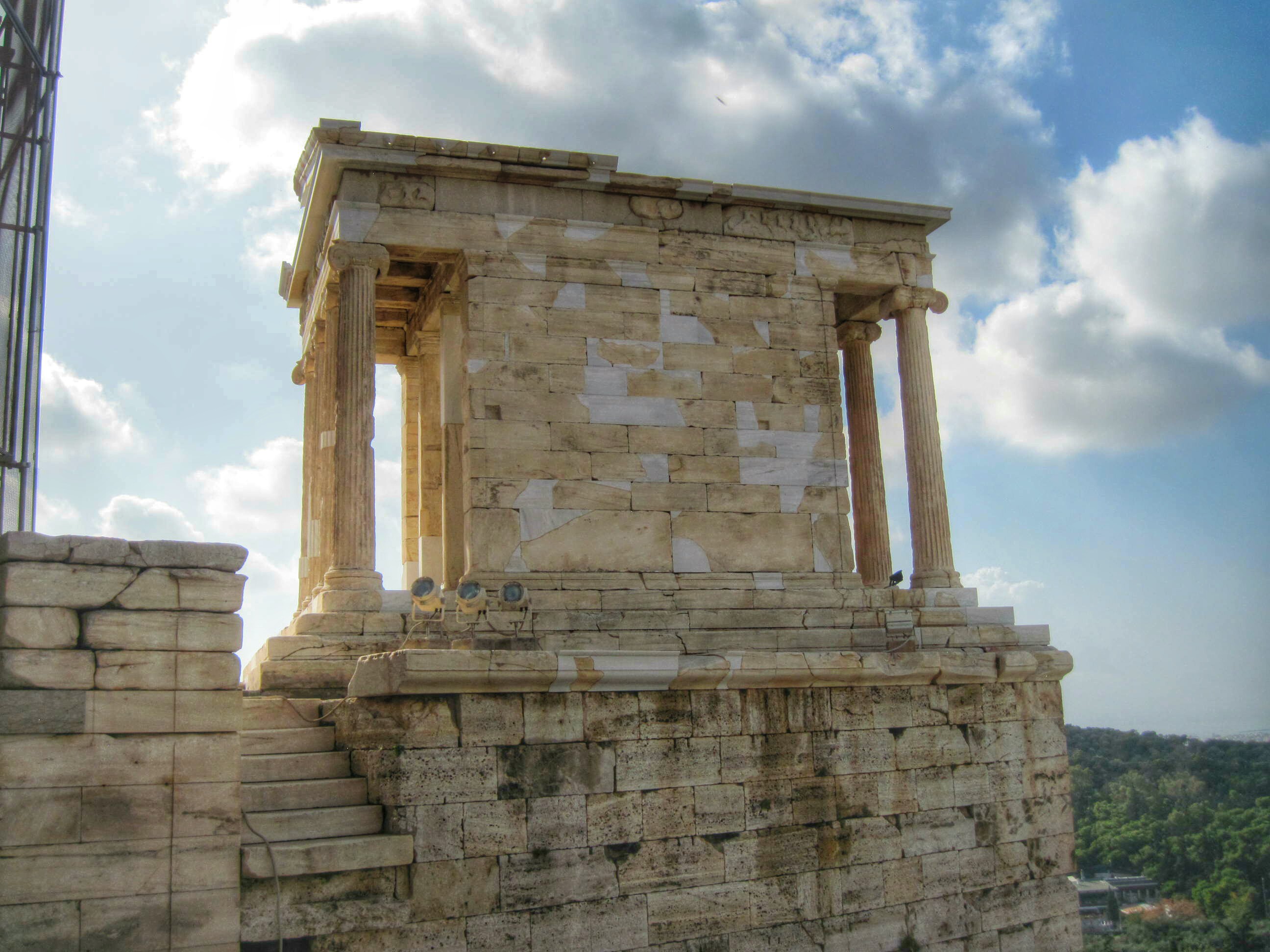
Temple of Athena Nike at the entrance

Temple of Athena Nike at the entrance

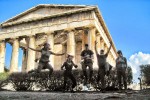
415 BC – Construction of Temple of Hephaestus completed

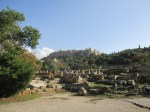
This Doric temple, found in the Ancient Agora of Athens, is one of the better preserved temples that we saw.

Temple of Hephaestus Jelfie

Temple of Hephaestus Jelfie

406 BC – Construction of Erechtheion on Athenian Acropolis complete

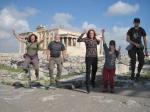
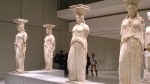
The Erechtheion is a temple on the north side of the Acropolis, dedicated to both Athena and Poseidon. Arguably its most famous feature is the “Porch of the Caryatids,” where the columns holding up the roof were carved into women in flowing dresses.

The porch with the caryatids on the Erechtheion

The porch with the caryatids on the Erechtheion

404 BC – Sparta triumphs over Athens in the Peloponnesian War

We visited Sparta, but there was much less to see there than there had been in Athens. Its culture was much more focused on the military than it was on building grand temples.

This is Sparta! No, really, this is actually the historical site of Sparta. And the modern town of Sparta beyond.

This is Sparta! No, really, this is actually the historical site of Sparta. And the modern town of Sparta beyond.


After Athens lost the war, its time as the dominant force in the region was over, and its boom of monumental architecture was through. Structures like those seen on the Acropolis in Athens were never to be equaled.

However, as you will see in our next entry, covering the fourth century BC, there would still be many sites in Greece producing architectural gems that are world-renowned to this day.

Athens, Greece (With Family)

Della’s family – her parents and her sister – joined us for two weeks in November as we traveled through Greece and Turkey. The first stop on our joint trip was Athens. We had already been in town on our own for a few days, but held off on the major sites until they arrived.

Getting There

We were already in town, but the others had a much longer journey to get to Athens. Della’s sister flew from California to Denver, and then the three of them flew from Denver to Houston, Houston to Paris and finally Paris to Athens. They arrived in the late afternoon. We were very happy to see them! But, after such a long travel day they were pretty exhausted!

Meeting each other in the metro station

Meeting each other in the metro station

Where We Stayed

With a group of five, we decided that a rental apartment was the best bet. It was a little tough finding a nice place for five on Airbnb, but we eventually found a good deal on HomeAway for a two bedroom apartment in the fancy Kolonaki neighborhood. The apartment we rented turned out to be quite fancy – it was clear that it was the primary residence of the older woman who owned the place. It was very nicely decorated so we were very careful not to mess anything up. There was some confusion about the large security deposit we paid, which made us wish for the simplicity of Airbnb.

What We Did

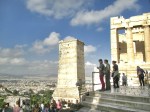
The Acropolis – We were itching to see this star attraction, so on our first full day we headed straight here. We decided to visit using the Rick Steves audio guide – the first time we attempted to listen to the narration instead of read it ourselves. Walking up through the columns of the Propylaea and onto the top of the hill was awe-inspiring. Even with the large amount of scaffolding covering the Parthenon, it was still very exciting to see the large temple in all its glory. The other highlight of the top was the back porch of the Erectheion with its six caryatid sculptures.

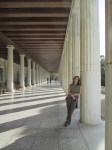
The Ancient Agora – After the Acropolis, we headed down the hill to the ruins of what was the main part of town during the heyday of ancient Athens. The most impressive ruin left is the Temple of Hephaestus, one of the best-preserved Doric temples. The rest of the agora was a mix of Greek and Roman stoas (covered markets) and statues. The site closed at 3 since it was the low season, so we didn’t get to spend as much time in the on-site museum as we would have liked.

The Acropolis Museum – The Acropolis Museum is housed in a fancy new modern structure just south of the acropolis. It is built over the ruins of an ancient neighborhood, so various places in the floor have clear panels so you can see what is beneath. The museum has a large amount of space devoted to different items from the acropolis throughout ancient history, laid out in roughly chronological order. The ramp to the first level has ancient pottery. Then, during the Archaic Era, the predominant artifacts were the kore and korous statues. They did a good job of showing how colorful they must have once been.

For the main architectural elements of the classical era, they split the big items into rooms based on the structure they came from. This meant there was an area for the Temple of Athena Nike, an area for the Erectheion (showcasing the original caryatid statues) and then on the top floor all by itself, a large area for the Parthenon. There was also a video describing the decorations and layout of the Parthenon. The pediment, frieze and metopes are all laid out in the same order they would have been on the Parthenon, utilizing the entire floor which is of the same size. The museum is quite clear in multiple places that they would like the works of art that the British Museum “stole” back at this museum. The missing pieces are currently shown as ugly plaster casts.

The National Archaeological Museum

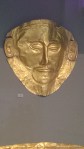
At the museum, we again all plugged into the Rick Steves audio tour. The museum went in chronological order and was quite extensive. The first major area was the Cycladic figurines and other art, from the 3rd century BC. Then, they covered the findings from Mycenae. We were pretty excited to see the artifacts from Mycenae that we had heard about when at the site and from reading Greek Treasure.

The next stop was the Archaic era, where we again learned more about the kore and kourous statues. The next major era was the Severe Style. The sculptures started to get more realistic, but the expressions were stern. The most classic piece from this era was a large bronze sculpture of either Zeus or Poseidon (we don’t know which because we can’t see if he is throwing a lightning bolt or trident).

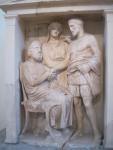
For the classical era, many of the finds were split into different rooms. There was a large collection of rooms focused on the art found on tombstones in the ancient cemeteries. There were many elaborate marble carvings to be found. The sculpture of Paris was one of the highlights of this era.

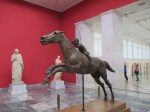
The next period is the Hellenistic era, which was characterized by sculptures which more realistic faces (instead of idealized) and more active movements. Some of the highlights in the collection were the Jockey of Atemision and Aphrodite fighting off Pan with her shoe. The final period covered was the Roman era. Here they tried to copy the Greek styles and were somewhat successful, although the art was less impressive.

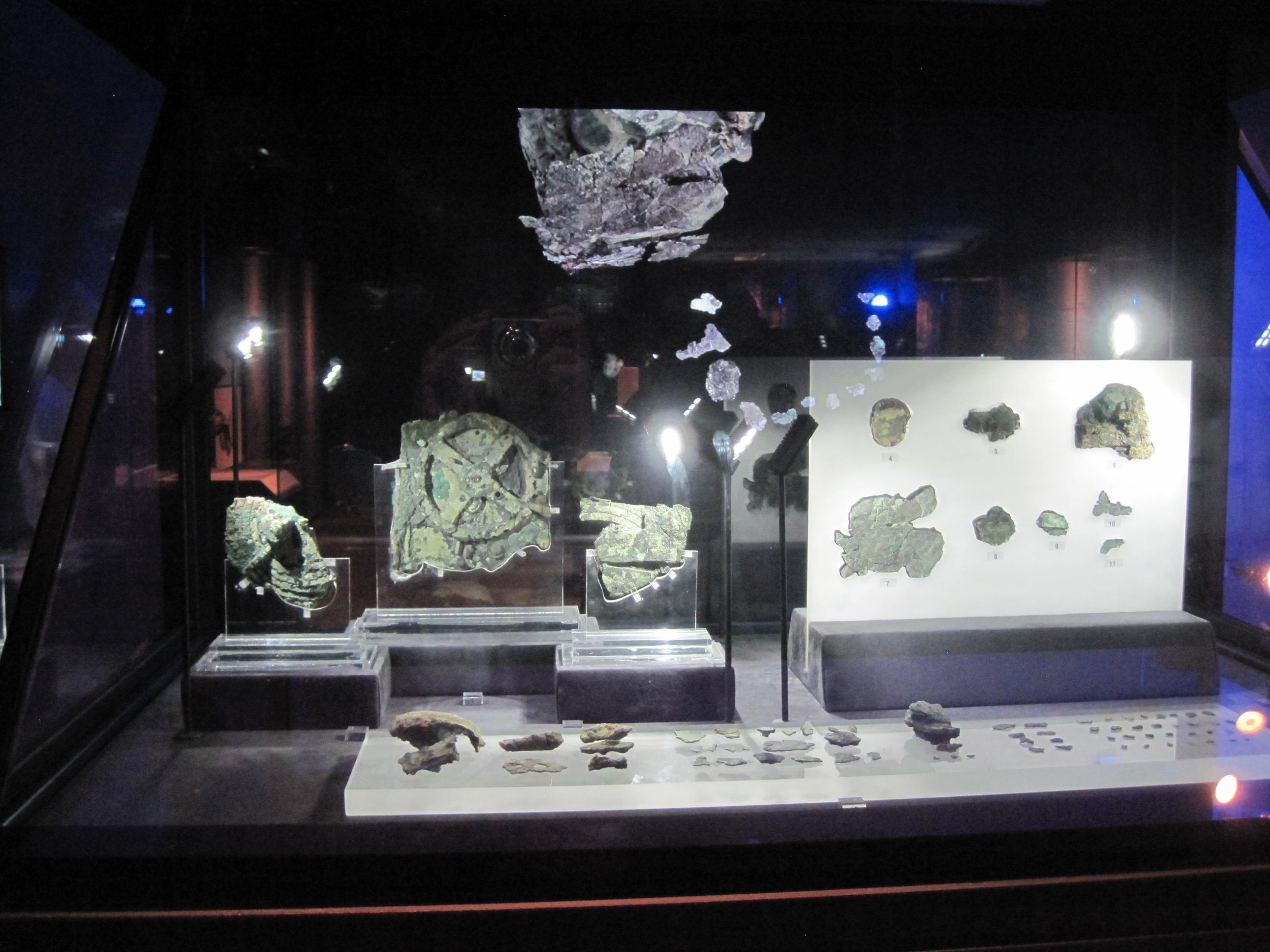
This concluded the main part of the tour. There was still a little bit to be seen of the museum, so we split up and saw the parts we were interested in. There was an ancient “computer” which calculated various celestial phenomenon. We also looked through the bronze collection, Egyptian collection and ceramics collection.

The ancient computer

The ancient computer

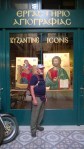
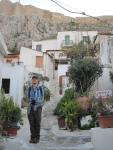
Rick Steves City Walk – We followed the Rick Steves walk of the main downtown area to get a feel for the more modern parts of Athens. The tour started at Syntagma Square, and we lucked out in our timing to see the hourly changing of the guard in front of the Parliament building. We then walked down Ermou, the main pedestrian shopping street. The second part of the tour focused on the Greek Orthodox church, so we passed by the main cathedral and a few other churches, plus some stores that sold Greek Orthodox icons. The highlight of the last part of the walk through the Plaka area was a trip through the small neighborhood of Anafiotika. It was built by residents of the island of Anafi, so it has that Greek island “feel” to it.

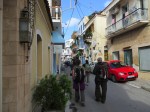
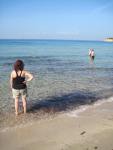
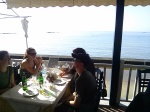
The Island of Aegina – One of Della’s dad’s priorities for the Greece portion of the trip was to make a trip to an island. We had read that Hydra was very nice, so we decided to make a day trip there on one of our days. We didn’t think we needed to stress about the ferry ticket, so we just showed up the morning of and went to buy our ticket… big mistake. They were sold out! We weren’t quite sure what to do, but the ticket agent suggested the nearby island of Aegina. We decided to just head there and ended up having a pleasant day. We wondered around the back streets, sampled some of the local pistachios and found a beach that we ended up having mostly to ourselves. The archaeological site was closed for renovations, which was a bummer, but we could still see the lone remaining column from the Temple of Apollo from our beach. We rounded out the day with a seafood meal sitting next to the ocean, then caught the ferry back into Athens.
Where We Ate

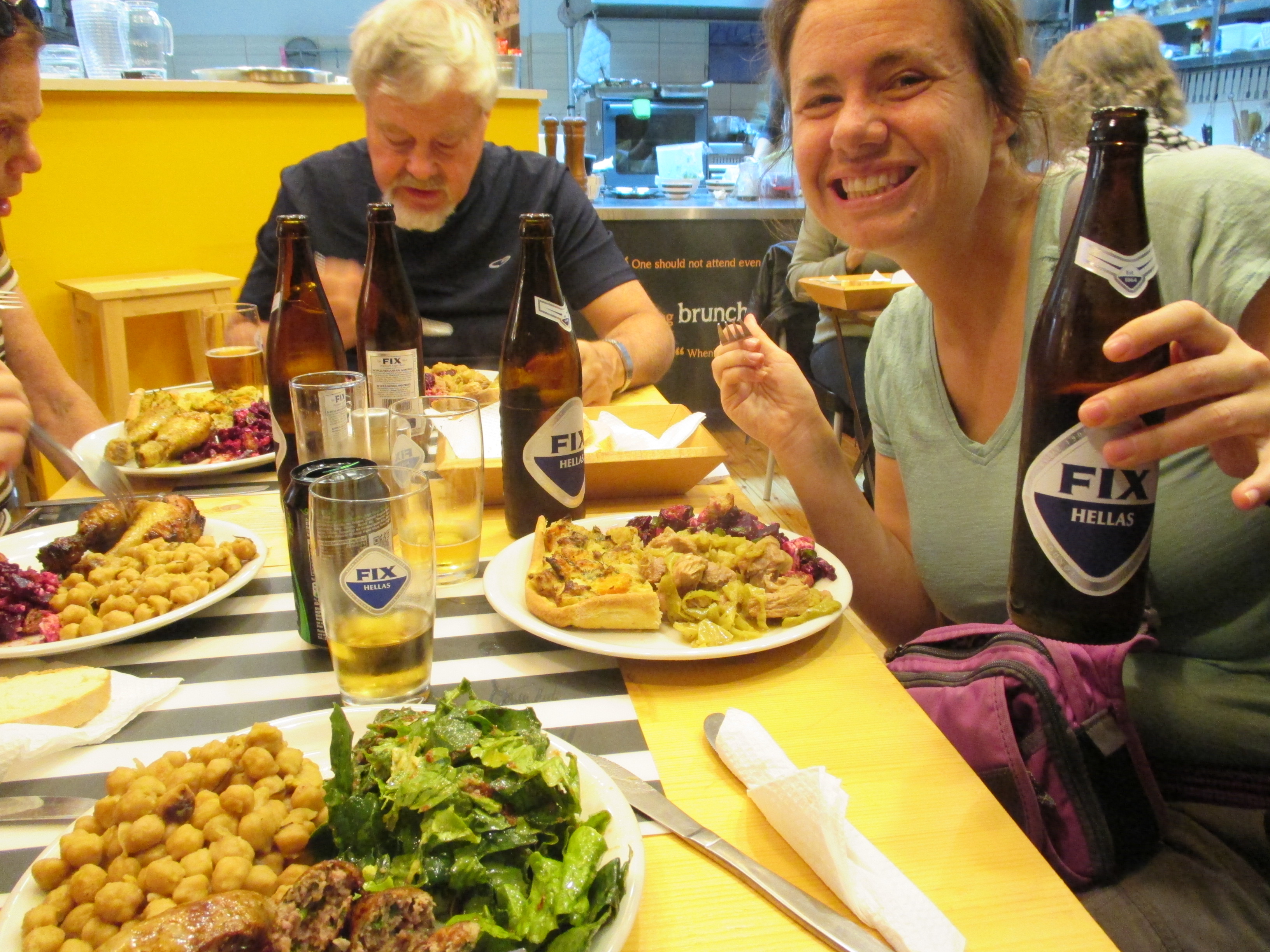
The best restaurant we ate at by far was a little restaurant hidden away north of Omonia Square called Bread and Roses. The simple menu allowed you to choose a meat dish, a salad and a side (all homemade). Your choices were then prepared in the small kitchen just next to the seating area. The food was the best we had and the variety quite impressive as well (not your standard Greek taverna options). Highly recommended!

IMG_3097

Final Thoughts

We finished up our four weeks in Greece with a whirlwind of activity once Della’s family arrived. The limited amount of time made us feel a little rushed, but we are definitely glad we made sure to see everything that we got to see.