Enjoy our photos from Namibia. You can also access our photos on the top right “places we’ve visited” menu.
 |
| Namibia |
Enjoy our photos from Namibia. You can also access our photos on the top right “places we’ve visited” menu.
|
| Namibia |
We wanted to give you an idea (and figure it out for ourselves) of how much our self-drive safari cost. We knew that it would take us above our $100/day budget, but we figured that it would be worth it.
Throughout the safari, we used South African Rand, Botswana Pula, Namibian Dollars and US Dollars. We used the current exchange rates.
We divided this cost down into the following categories:
The transportation includes the cost of our Bushlore Truck Rental ($3001.00), gas ($685.99), various road fees, and a ferry.
We were actually quite shocked at the expense of our accommodation. We used our truck company to help us pre-book many of our campsites because we knew it would be high season for safari. We decided that it was a good choice for some of the parks in Botswana, but was probably a bit unnecessary for Namibia. We also found that the parks in Botswana were outrageously expensive, even though we were just camping. For example, there were park fees of about $28 per day. In addition to the park fees, we paid for camping. The camp grounds within the national parks are all private and they are amazingly expensive. You pay per person and they cost $50 per person, per night.
These are the park fees mentioned above. They were much more expensive in Botswana than they were in Namibia.
We purchased 2 boxes of wine for our camping and also purchased a couple of beers here and there in the lodges.
This mostly consisted of groceries for camping. However, we did end up breaking down and buying a few meals along the way.
We purchased maps for all of the major parks. Again, the Botswana prices were much more expensive than Namibia. We also had to pay for the bathroom in a couple of places.
Our safari was 25 days, so this cost averages $223.97 per day. That definitely blows our budget. However, the good news is that because it was at the beginning of our trip, we did pay our deposits for the truck and accommodation prior to leaving. Therefore we feel as if we didn’t actually pay it now… Or at least that is what we are going to tell ourselves.
We talked a lot about the roads of our safari, so we wanted to give you an idea of those as well. Here is a photo essay of the roads we drove while on safari.
There were many big regular highways in South Africa, but our first campsite took us off of them!
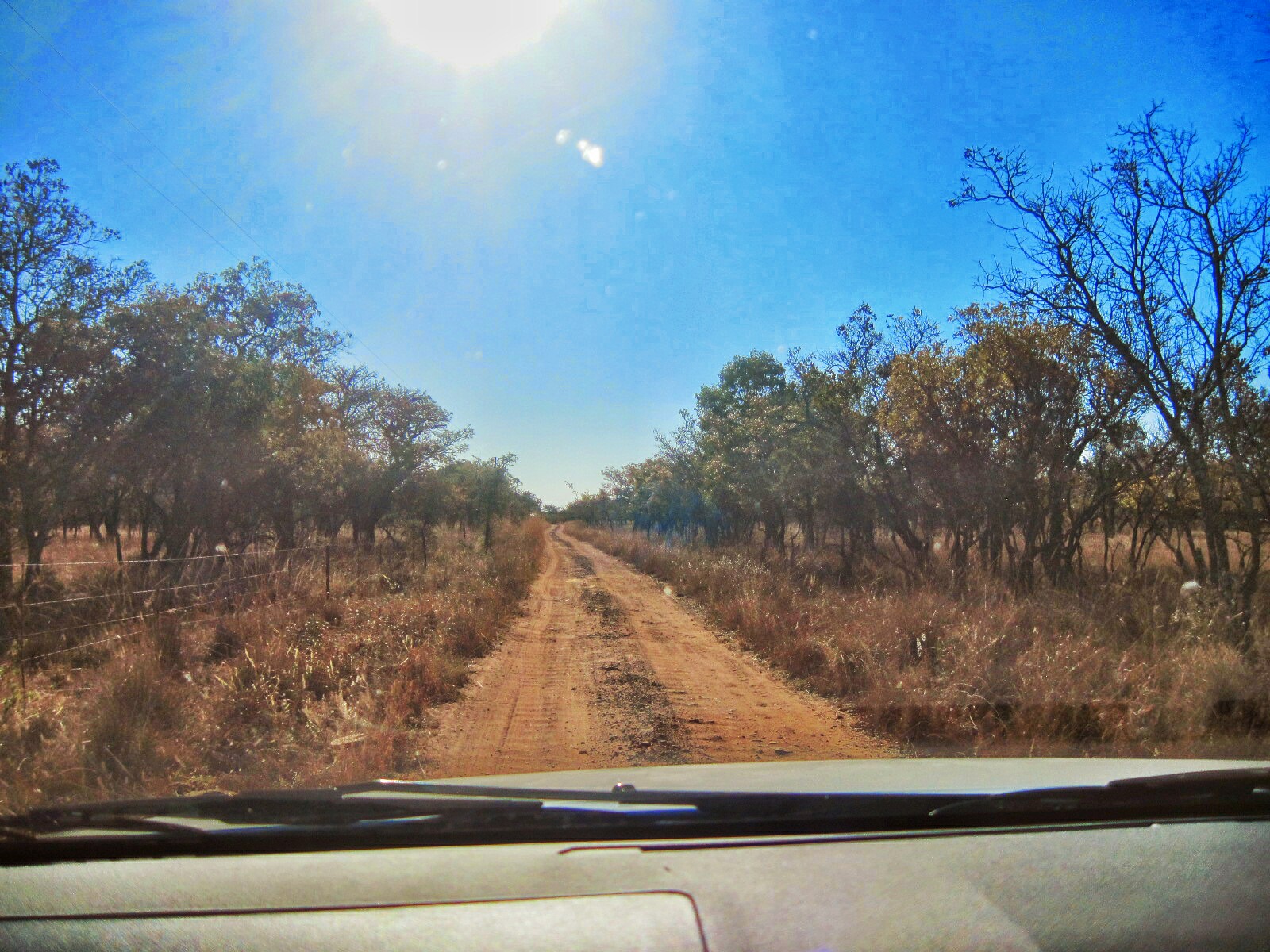


Why did the Kudu cross the road?
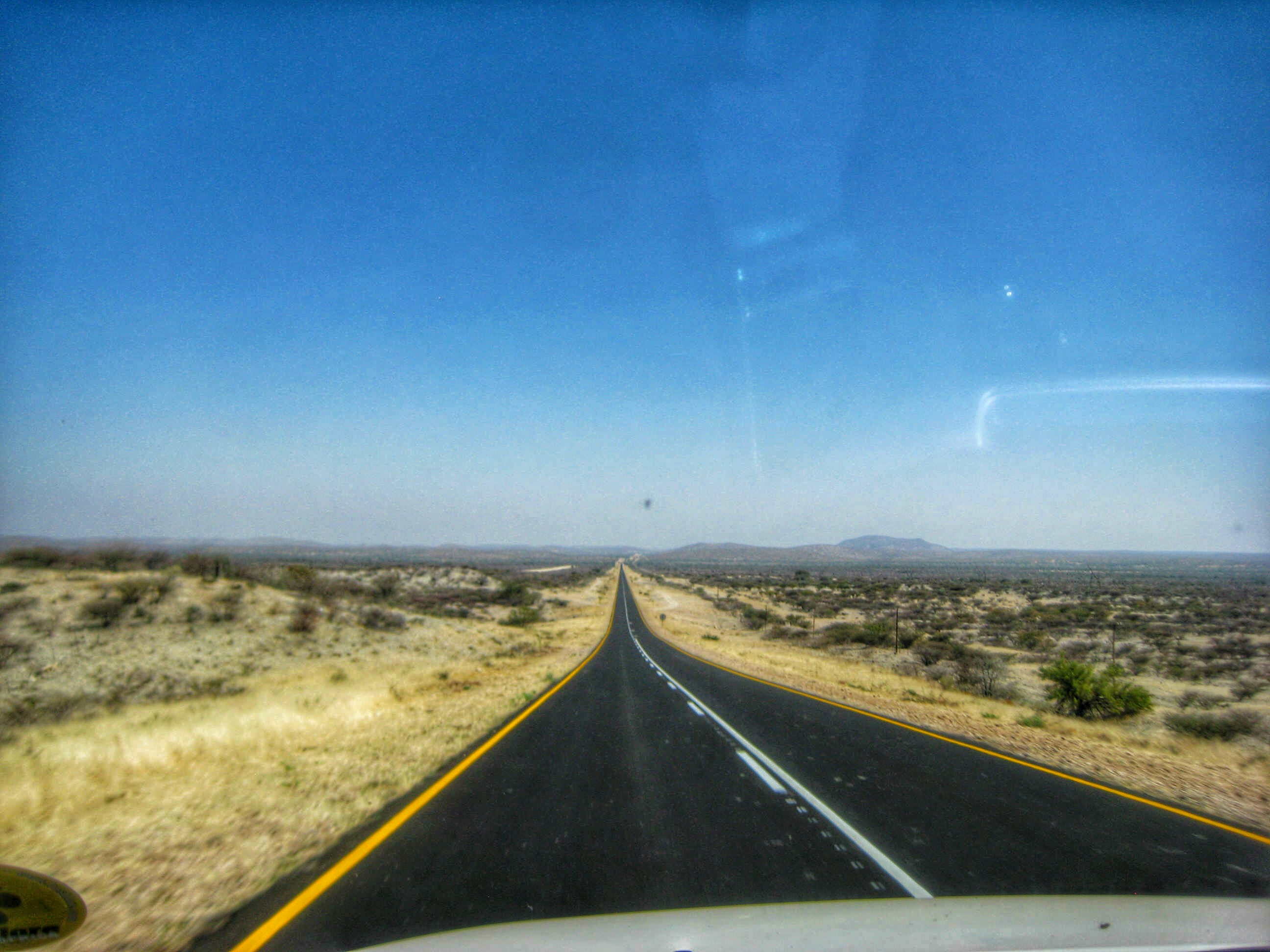
There were of course long stretches of tar highways here too. The hardest part was watching for the many many cows and donkeys that constantly decided to cross the road in front of you. There were warthogs leaping out on the road every now and then as well. As we made our way into the parks, the roads became deep sand.
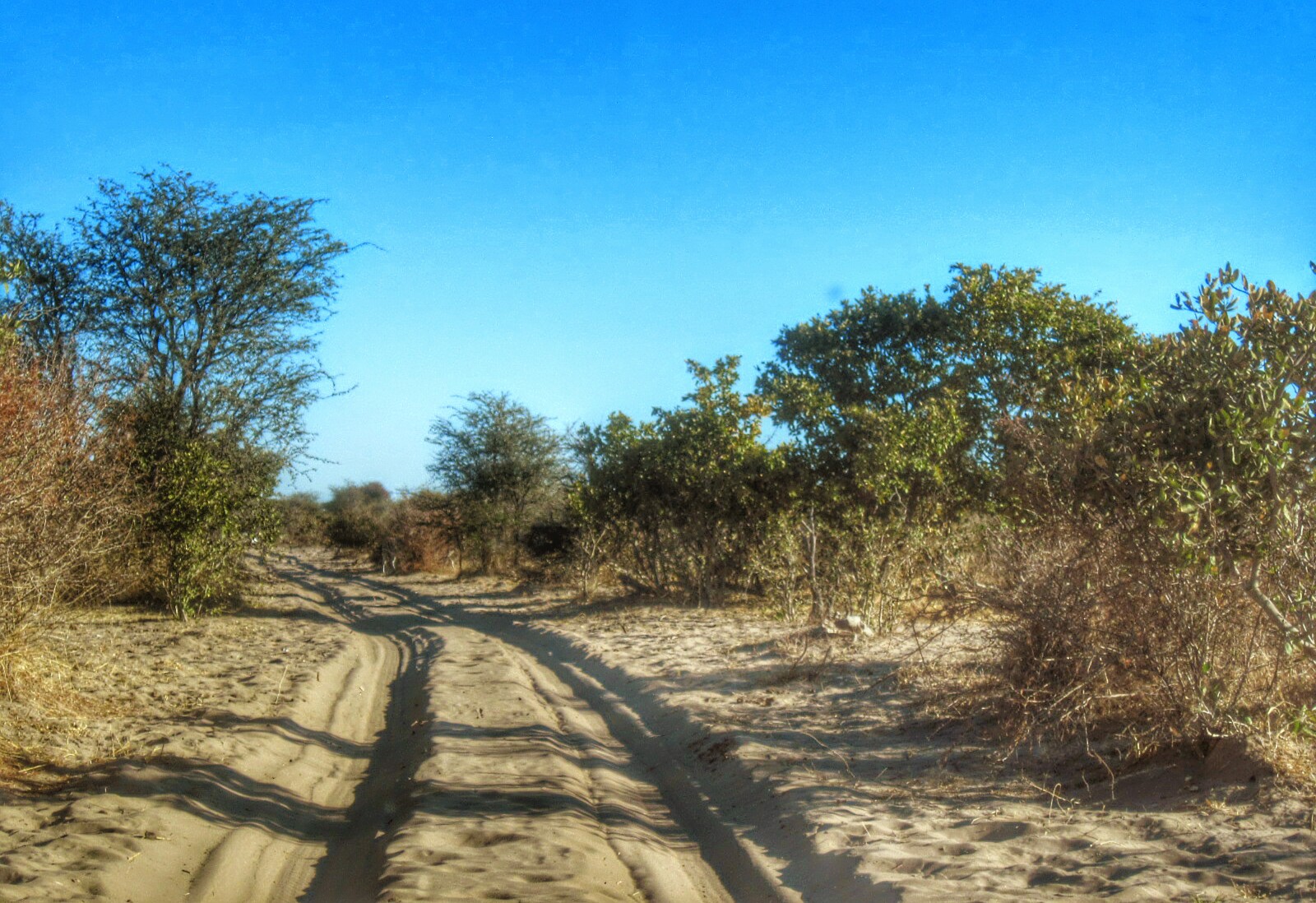

Why did the springbok cross the road?

The impalas needed to cross the road as well!

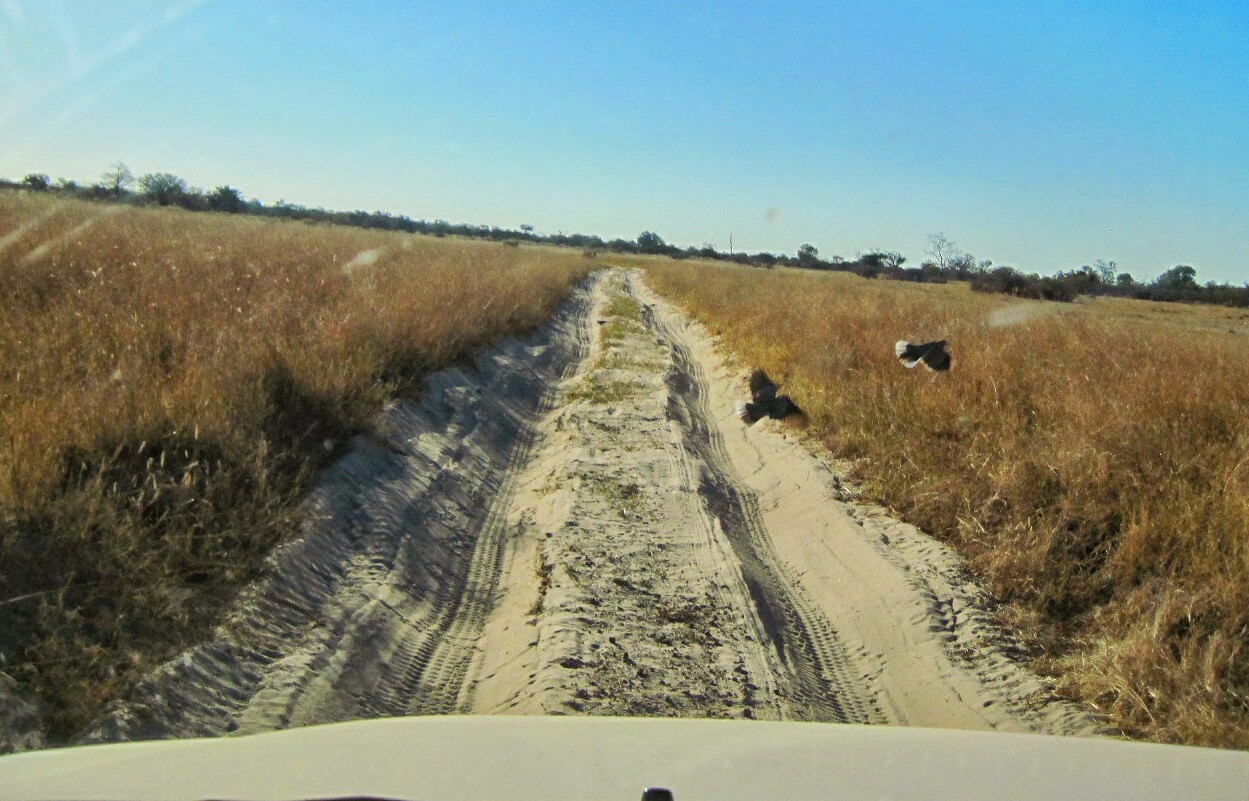
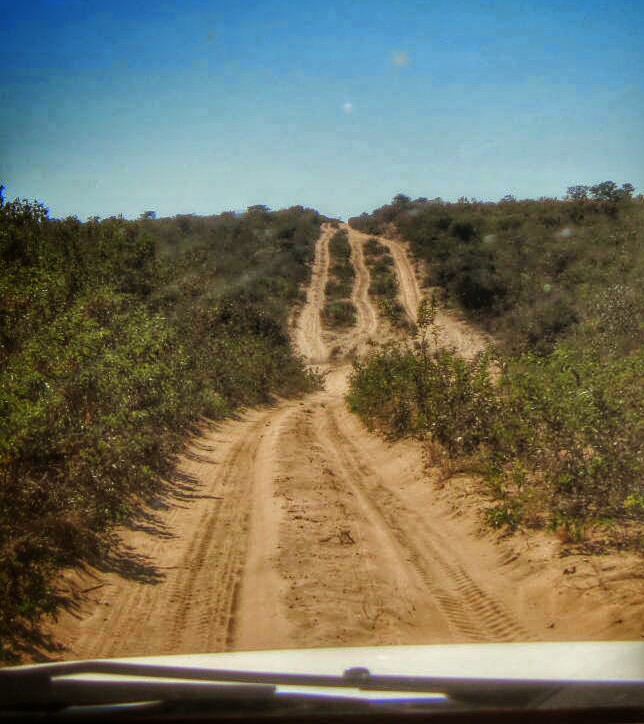
Here is the road where we got stuck. It was purely accident that we got this picture. We just took it, continued driving and picked the wrong road. It is hard to see how deep the sand was down there… but it was bad!
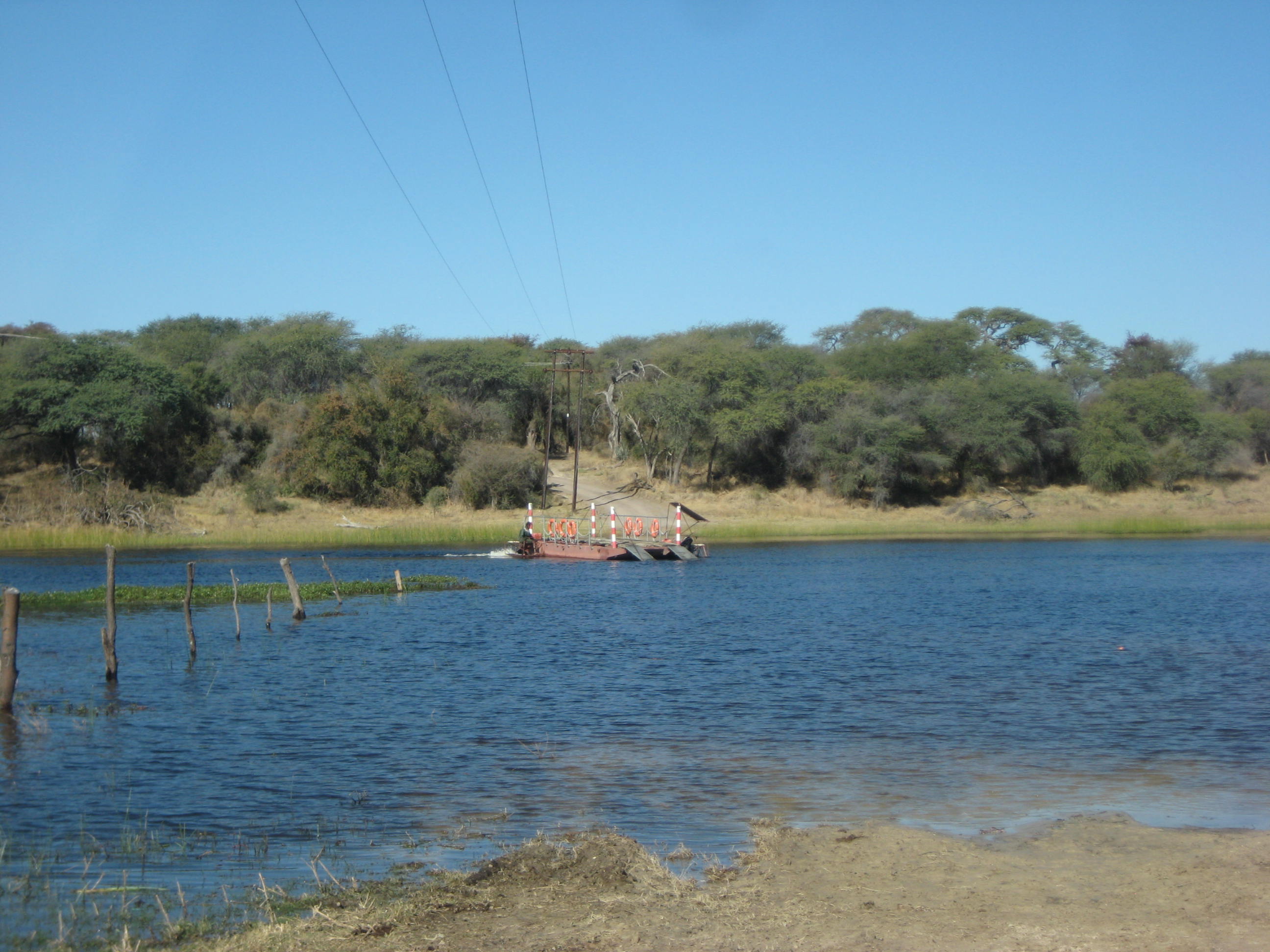
We had to drive INTO the river about 15 feet to actually get ONTO this ferry.

Always watch out for the donkeys!
This was called third bridge. Not much of a bridge… as you can see.

Luckily, 4th bridge was a little more bridge like.
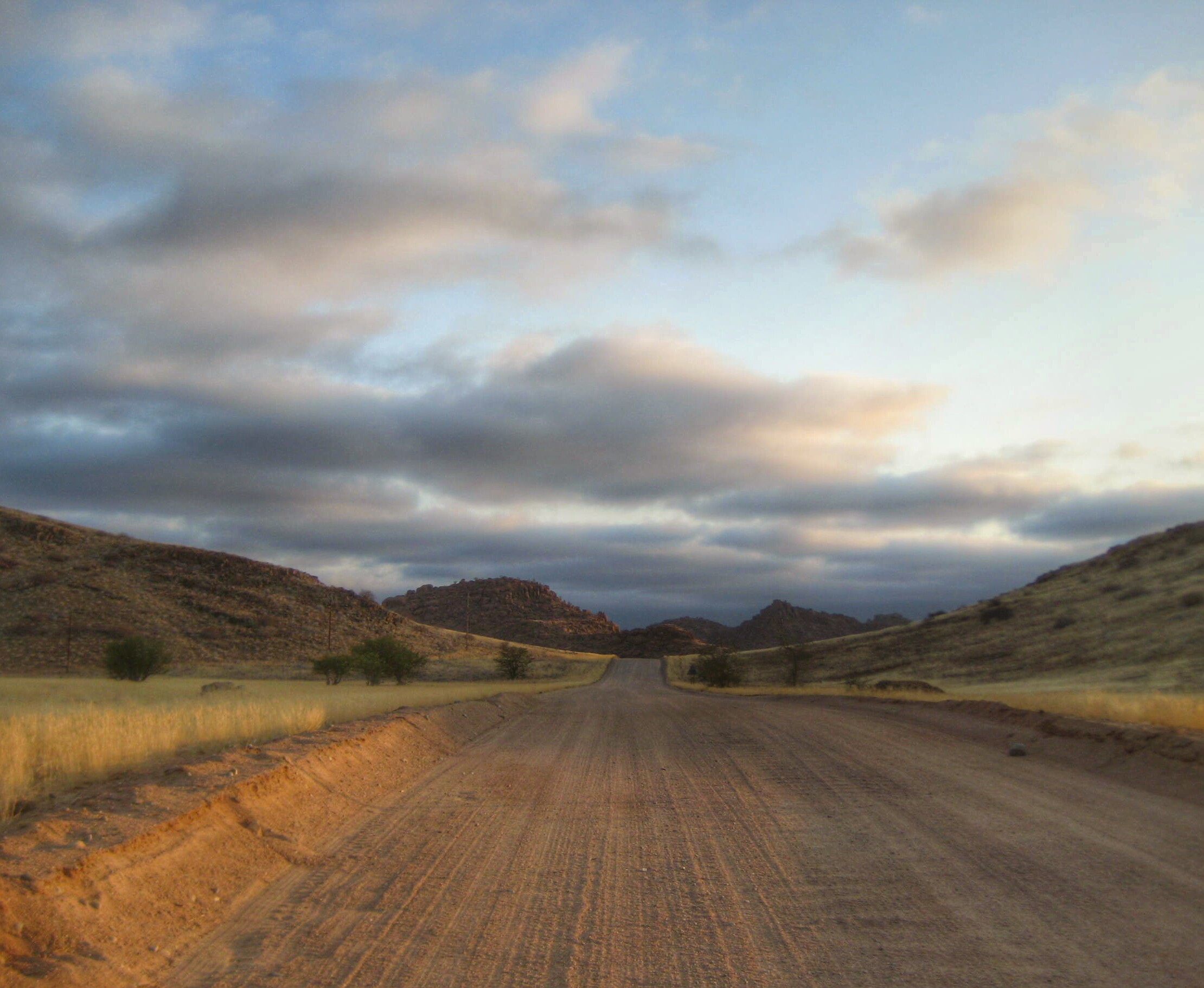
After Botswana, Namibia felt like a breeze. No more deep sand, but lots and lots of gravel.

And why did the elephants cross the road? No… I still don’t have an answer…
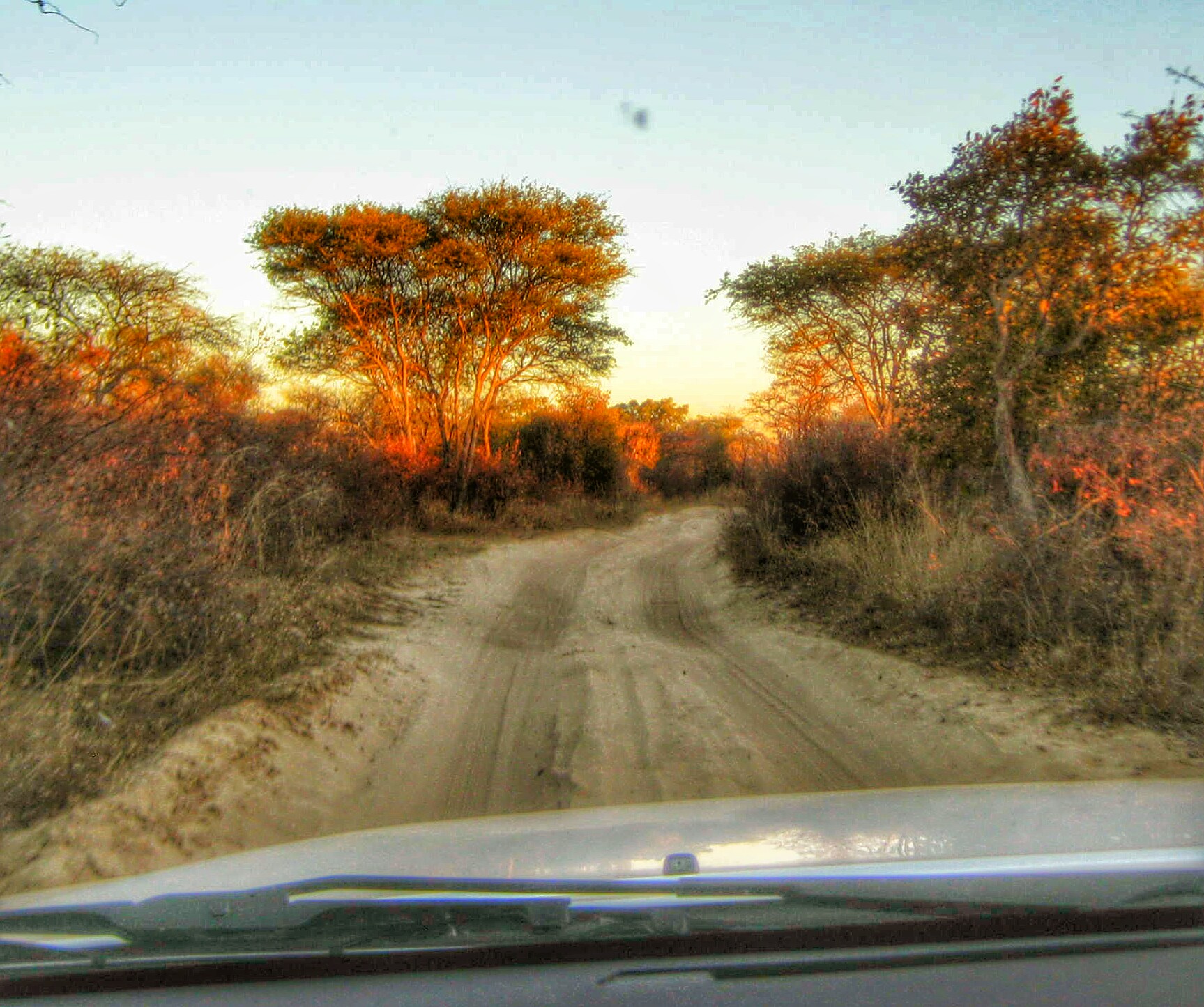
We had to drive into the sun sometimes. This evening was particularly difficult cause there was a lot of dust in the air… we could hardly see!
Don’t forget to watch out for giraffes!
And zebra of course!
It did get a little hilly in Namibia.

The blind hills were the hardest!

 The Skeleton Coast felt like we were on another world.
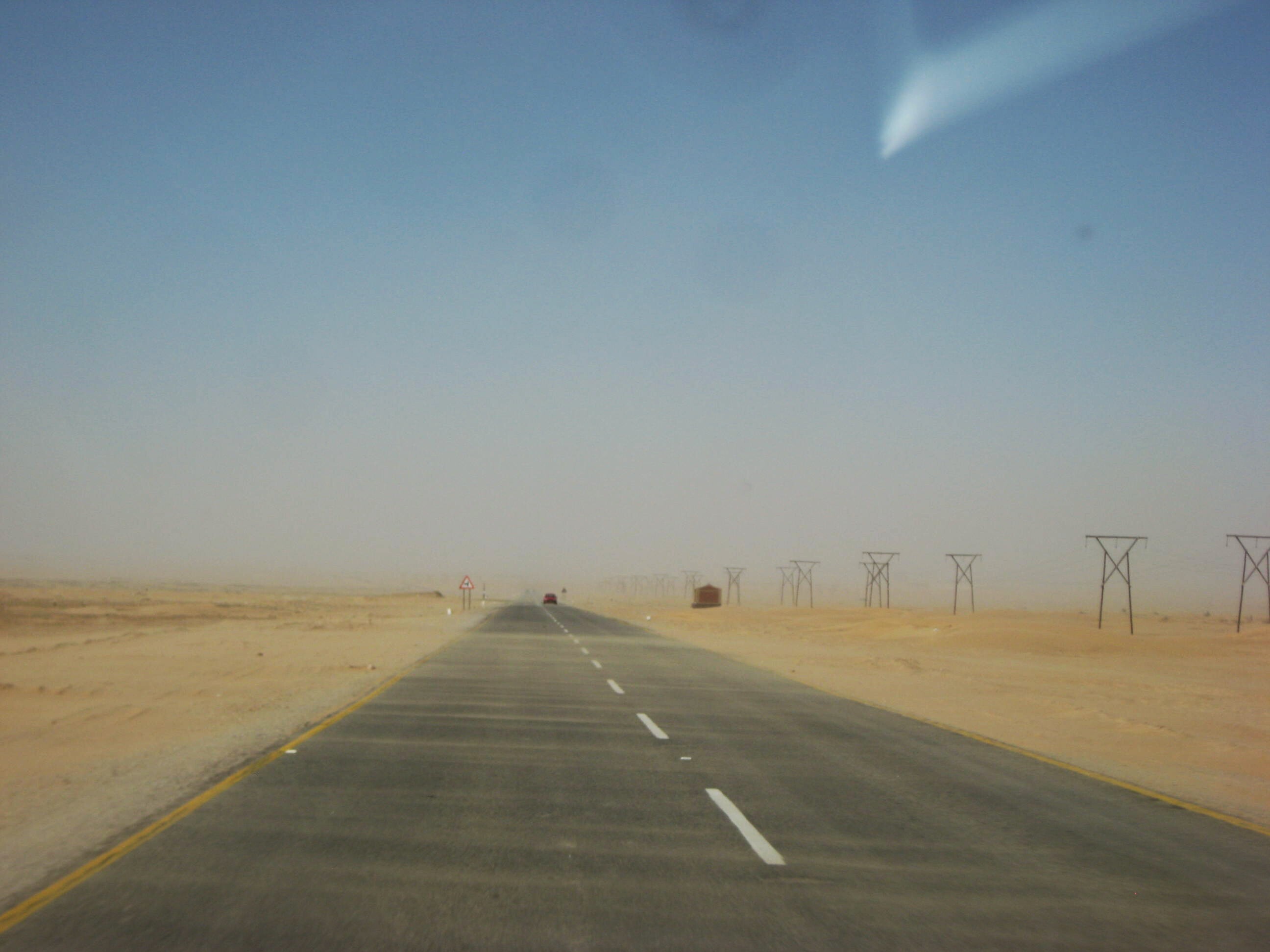
There were some windy roads!


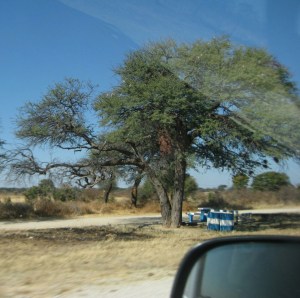 We enjoyed the southern African version of waysides or picnic areas. We would see a sign for a table under a tree… and then you’d always see the table under the tree!
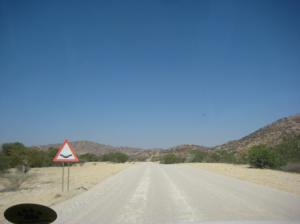

Watch out for the above sign. They meant you were about to cross a river… most likely a dry one. But it was good for a big dip!

The second country that we visited on our self-drive safari was Nambia. We had heard a lot of great things about the wildlife and natural beauty to be found in the country!
Getting There
Our exit from Botswana and into Namibia was almost shockingly easy. The border at Ngoma was very sleepy – we were the only ones crossing at the time so we didn’t have to wait in any lines. We gave one of the final guards some water, so I guess that was a bribe?
Most of the roads we drove on were paved, so no stress there.
Campsite
Camp Kwando felt almost like a resort. We were the only ones camping in the main public campground so we got to pick the best spot. The site itself was covered with nice grass and had a lot of trees.
Ablutions
There was a small rondavel near the site we picked that had a (flush) toilet and sink. There was a communal ablutions with showers a short walk away. The furnishings were pretty fancy and the water was hot.
Amenities
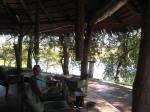
This camp was clearly catering to a fancy crowd. It had a very nice open-air reception, bar and restaurant that overlooked the river. We spent time here reading and admiring the views.



Getting There
We had an easy day of driving down the Trans-Caprivi highway. We could tell this camp was going to have a different spirit based on some of the humorous signs that marked the way into camp.
Campsite
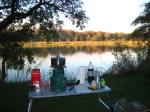
We had a nice site with our own private area for looking out over the river. There was grass in the site, but we had to park our car on dirt and thus set up our tent there. During dinner, we really enjoyed watching a family of elephants across the river.
Ablutions
Definitely fit in with the funky vibe. All facilities were outdoors and with no coverings. We didn’t take a shower since they didn’t look very nice. We heard that other bathrooms in the campground had different themes, but we didn’t investigate.
Amenities
This definitely had a hostel vibe to it. There was a communal hang-out area with a fireplace and a bar. We stayed up later normal at night by this fire, conversing with some of the other guests and the staff running the place, who were all males who were in their 20s. The bar became quite the scene later in the evening when a group of American college students on an overland tour decided to order a ton of drinks and behave pretty crazily.
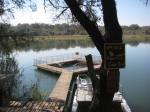
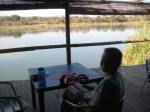
There was also a few nice patios out over the water where we spent a lot of time reading, relaxing and looking for hippos.


Getting There
Another easy day of driving on the Trans-Caprivi
Campsite
Most of the campground was pretty unattractive, mostly a big grassy area, but we did get our own walled-off area to ourselves.
Ablutions
A large building with only lukewarm water
Amenities
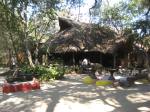
There was a nice lodge with comfortable chairs, good shade, and most importantly… free, fast wi-fi!
Activities
We attended a nice dance performance put on by a group of local villagers.


Getting There
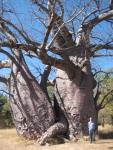
We took a Google-recommended shortcut and had our first experience with Namibian gravel roads. It wasn’t that bad actually! And we stopped at a monument for a giant baobab tree.
Campsite
The site was pretty unattractive. There were just large patches of dirt which were split off into different camps. Not much privacy from the neighbors! We did enjoy the provided table and light though.
Ablutions
Nice, hot water with good water pressure for showers.
Amenities
There was a restaurant which we decided to eat at twice – once for lunch and once for a buffet dinner (we decided to splurge). There was also a small convenience store. There was also a swimming pool, but we never took the plunge.
Activities
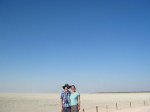
By far the coolest thing to do here was to walk to the waterhole they had set up for viewing. Compared to the Botswana parks, this felt very different! The park had made an artificial pool, then set up a large tiered viewing area with benches and shade where we could watch the animals come drink. And it was floodlit, so it was open 24 hours! We spent a lot of time just relaxing and watching animals here.
Also, one morning we took a trail up the small hill behind camp, which afforded great views of the area.
Probably the most popular activity, and for good reason, was to do a game drive – you are in the middle of the National Park after all. We did multiple and were amazed by how many different animals we saw – and how much easier it was to see them here than in Botswana. The roads were much nicer as well.




Getting There
We had heard about cheetah farms in the area and were interesting in investigating, since we hadn’t yet seen a cheetah and it sounded pretty neat. One of the original ones we were considering would be a significant detour, so we weren’t sure what to do. So when we saw a small camp right off the road that offered cheetah feedings, we decided to do just that. We got a chance to feed two cheetahs, which was pretty fun.
The last stretch of driving to the camp switched to a dirt road that went into some hills. It got a little twisty, but not the worst road we’ve ever been on. Got pretty scenic too.
We got a little lucky finding the camp: we had a map that showed its location as being on a road that didn’t exist, but luckily we spotted the camp just off the road on the way to Twyfelfontein.
Campsite
On the bank of the Abu Huab river – but with no water! We found that in Namibia they had a lot of rivers listed on maps that only rarely flow. We were able to pick a nice spot with a big tree and river access. When it was windy in the afternoon we even read books down in the river.
Ablutions
In a random building somewhat far from the sites. The hot water was heated by a wood-fired burner, so we decided not to test the temperature for showers.
Amenities
There was a small bar, pool table and even a sitting area that looked like it could have served as a restaurant. It all seemed pretty dead though, so we didn’t test any of these out.
Activities
See Tywfelfontein post


Getting There
See Skeleton Coast post for the drive to Swakopmund
Within Swakopmund, we had an interesting adventure. Eric had written down some basic directions from Google Maps, and we had a map of the town from the 1999 Lonely Planet. However, as we were driving into town, we realized that the street names had almost all changed since 1999! We spent some panicky moments trying to orient ourselves (exacerbated by the fact that we hadn’t really driven in an urban environment since day 1). Eventually, we found a road that had the same name as on the 1999 map, and we made our way to the campground.
Campsite
This was a new setup for us: each site had its own patch of grass with a its own structure attached.
Ablutions
Inside this structure was our own private ablutions area! We definitely enjoyed the showers that we took here.
Amenities
There was wi-fi in the sites… but we had to pay almost $5 US dollars to use it. The signal would go in and out too, which was frustrating.
Activities
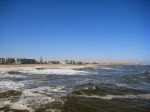
The campground was within walking distance of the central parts of Swakopmund. We enjoyed walking out on the jetty, and walking through town spotting the historic German buildings.


Getting There
The first section of the road went by some pretty dunes. It was pretty windy though, so there was lots of blowing sand.
As we got away from the coast, we went back into some mountainous terrain and crossed two passes (not quite as hard as Colorado passes). We also passed a sign for the Tropic of Capricorn.
Campsite
This seemed like a higher-end facility and had mostly lodge rooms. There were only three campsites, and all were pretty fancy. They were large sites with a fence around each.
Ablutions
Again, we got our own ablutions block! This one even had enough space inside that we decided to cook and eat dinner in it to get out of the wind.
Amenities
There was a bar, two swimming pools and free wi-fi.
Activities
The was a small hill within walking distance of the camp that made for an excellent place to view the sunset.



Getting There
This was only about an hour’s drive from Solitaire, so probably our easiest driving day of the entire trip.
Campsite
Each site was surrounded by a low stone wall and had a large tree in it.
Ablutions
Not the prettiest inside or out, but nice hot water.
Amenities
There was a bar with a large indoor seating area that we used one afternoon, and also a convenience store.
Activities
See Sossusvlei post
Getting There
The safari was basically over at this point, and this was the first of three long days of driving to get back to Johannesburg.
Campsite
This was a large campground with a lot of sites to choose from. We didn’t know if it was just a low season or if this place had seen better days. Scarred from the previous windy nights, we spent a while trying to find a site that seemed to have good wind protection. There wasn’t a lot of privacy between the small sites, but it didn’t matter since it was so empty.
Ablutions
There were a lot of little ablutions scattered around. There was nice hot water so we enjoyed our showers.
Amenities
Not much to speak of that we used.
Activities
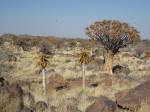
We spent some time exploring the Quivertree Forest that the camp is set right next too. We definitely enjoyed exploring these very strange looking trees – they felt like something out of Dr. Seuss! We also had fun spotting all of the rock hyraxes that lived in the forest.
Also, the manager of the camp had a (free!) viewing of him feeding cheetahs in the afternoon.



One of the biggest reasons we wanted to include Nambia on our self-drive safari itinerary was to visit the surreal landscape of the dunes of Sossusvlei in the Namib Desert. We were able to spend two days exploring the area.
Unfortunately, a lot of our visit was dominated by the wind, which we described here.
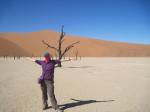
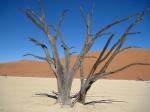
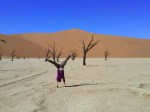
This pan with dead trees surrounded by massive red dunes was what we had seen pictures of and were looking forward to the most. It was a bit of a chore to get there – an hour drive on a paved road, 5 km on a sandy 4×4 track (Botswana experience came in handy here!), and then a 1 km hike through some blowing sand.
But once we crested a dune and saw the vlei, we were pretty happy to be here!

Down in the vlei, the wind was mostly blocked by the dunes, so we spent a long time soaking in the surreal scenery around us.




The campground for the area is located near the Sesriem Canyon, which is a pretty cool attraction in its own right. We spent an afternoon walking upstream and downstream through the dry canyon bed.


This was marked on the map, but not with a sign! We wouldn’t have found it if we hadn’t seen someone else here. We were able to walk out and get a nice view of the red dunes.


Another spot that was on the map but a little hard to find. We climbed this dune, found right inside the park, on our first evening. We didn’t make it all the way to the top, because it got a little windy (and Della discovered that Keen’s are not the best for dune hiking)


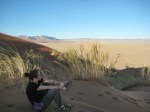


One of the most popular activities in the park is to wake up very early and drive to this dune, hiking up in time to catch the sunrise over the red dunes. We planned to do this the morning after our first night in the park. But, when the aforementioned wind was still blowing when the alarm rang, we opted not to go. We thought about doing the climb the next morning before we left, but since the wind was also blowing hard that morning, we decided to skip this dune. We were pretty bummed about this!
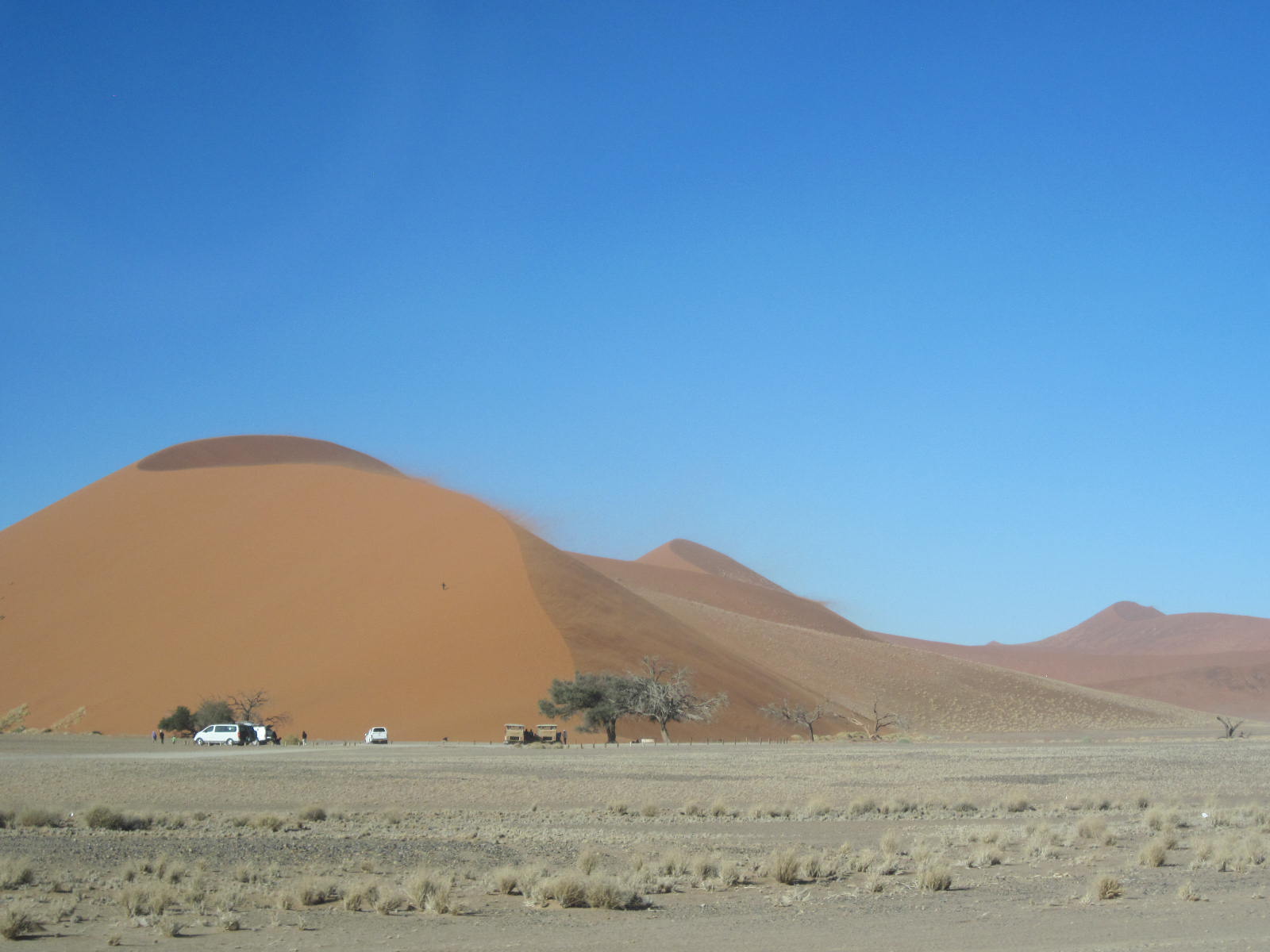
See the blowing sand? We decided to pass on that in our face
The guidebook and a sign said this was only 2 km from the main Sossusvlei parking lot. But it was so windy that we couldn’t find the markers we were supposed to follow!
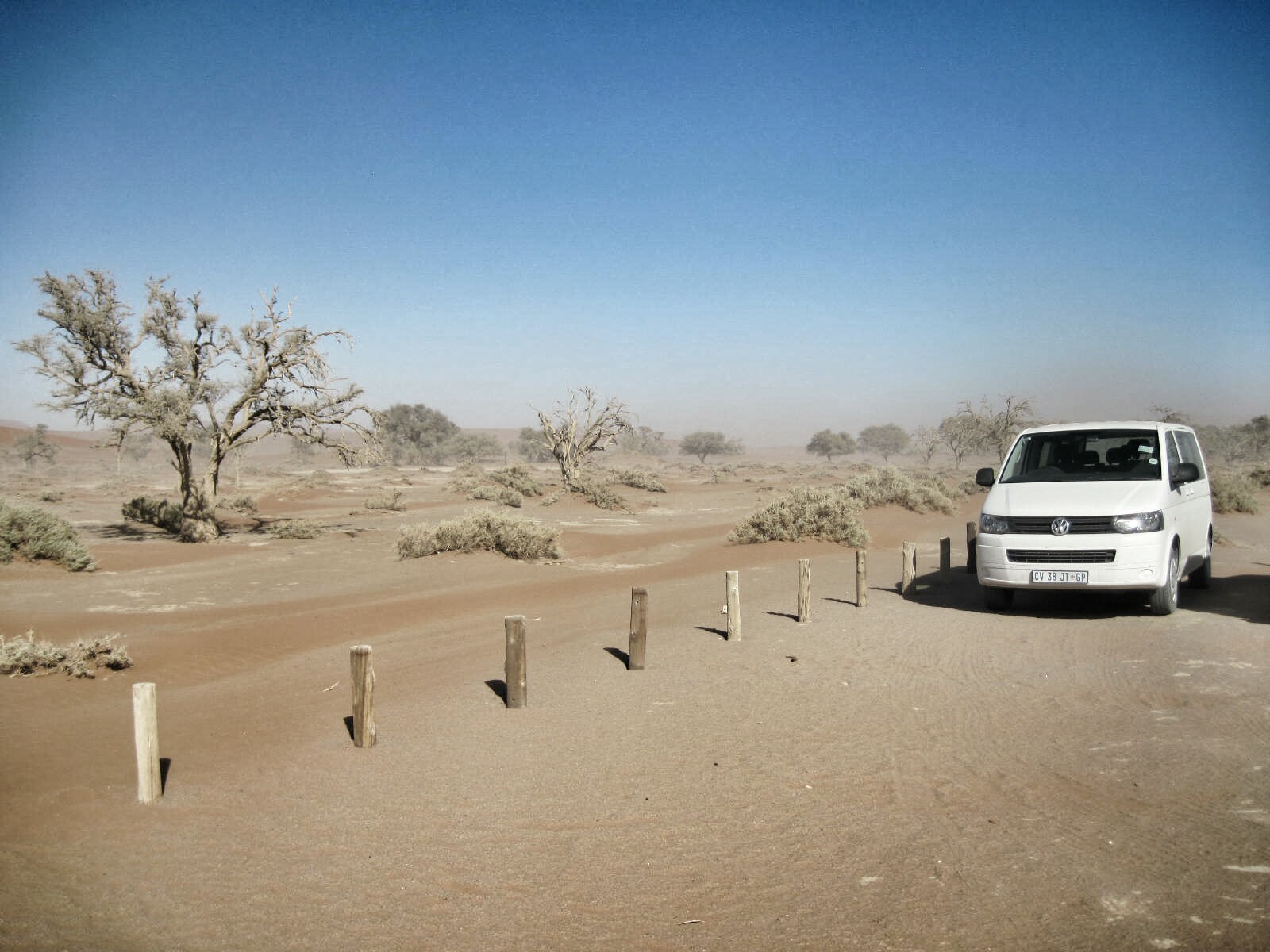
Hidden Vlei was somewhere out there… we think
Most of our posts on this blog will be happy recollections of some moments of our trip. But life on the road won’t always be fun. We feel like we’d like to share some of these moments of misery too. (OK, and vent a little about them too…)
Nineteen days into our safari, we were feeling so confident about the camping aspect of the trip. Sure, it had been a little cold, but we had figured out how to dress ourselves to deal with that. We were getting at least 8 hours of sleep a night, if not more.
Then it got windy.
After the sun went down on our night in Solitaire, a strong wind started to blow. We manoeuvred the truck into place behind the ablutions block, but it still didn’t really block the wind very well. Our tent was pretty sturdy, so we were worried about it collapsing or blowing away, but the wind was gusting strongly enough to cause the sides to flap very loudly, and even the wooden floor to vibrate. We didn’t get much sleep until the wind died down around midnight.

Hiding our tent behind the ablutions building
The next morning we were pretty frustrated not to have gotten much sleep. But, it wasn’t windy anymore, so we hoped our next night in Sesriem would be better. All day it was nice and calm, and even by the time we went to bed, there was only a light breeze. We were looking forward to a nice night of sleep to make up for the previous night.
Around 11, the wind came.
It was just as bad as at Solitaire, and this time continued on through the morning, interrupting some of our plans for visiting Sossusvlei. By the afternoon, the wind had died down to a light breeze. OK, this night, we really were looking forward to some solid sleep.
Around 10, the wind came.
Again, the wind lasted until the morning. We left Sesriem pretty bitter about the lack of sleep and interruption of our plans.



The next night, in the Quivertree Forest, there was no wind, and we finally got some good sleep!
After our visit to Twyfelfontein, we knew that our next stop was in Swakopmund. However, we hadn’t quite decided how to get between the two places. When we met a Namibian in Botswana, he actually recommended to us a route we hadn’t even considered – a drive along the Skeleton Coast.
Nambia has a long coastline along the Atlantic Ocean, but don’t plan your next beach vacation here! Most of what borders the ocean is barren desert landscape. In Skeleton Coast National Park, we had heard that it was basically a lunar landscape. We reached the coast and observed almost no living life as far as the eye could see. Very surreal!
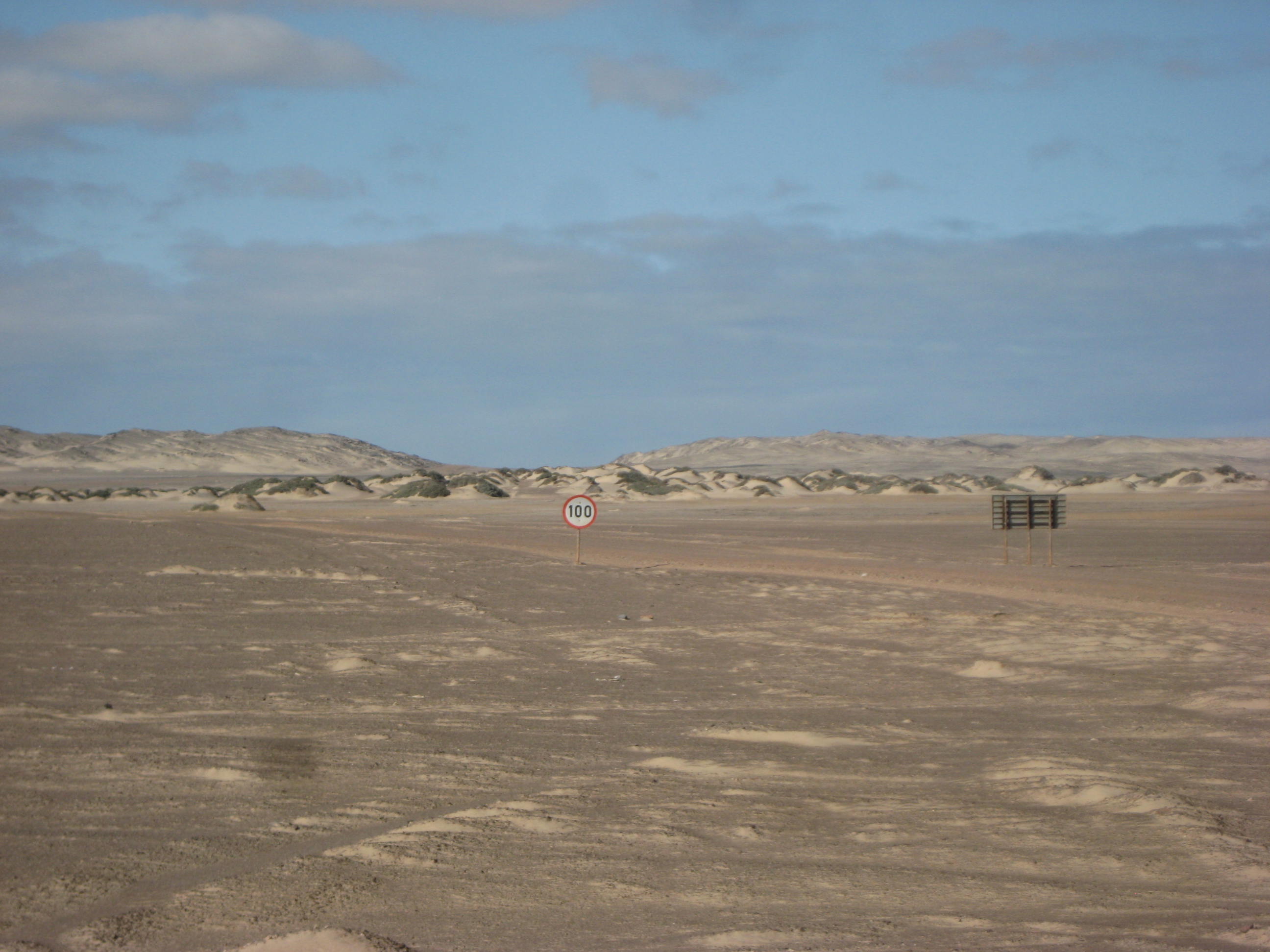


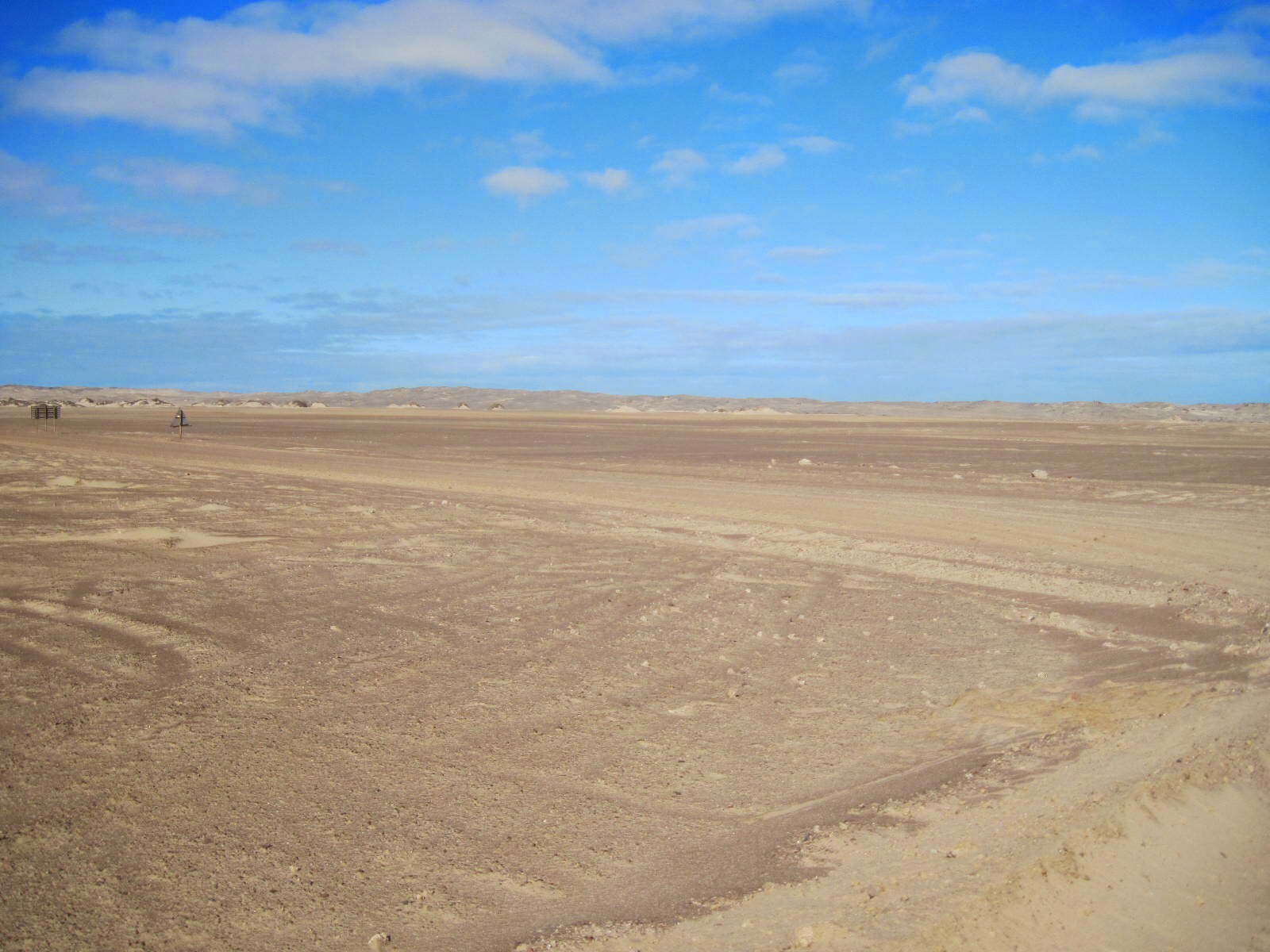
We proceeded down the coastal “salt road” and only encountered a few other cars. The landscape remained barren and very bleak, with occasional views of crashing waves


The coastal road left the Skeleton Coast National Park and entered Dorob National Park. We saw a few more fishermen but still not much life. Then we came to the Cape Cross Seal Reserve. We figured this would probably be a few seals, if any at all. Then we approached the viewing area…
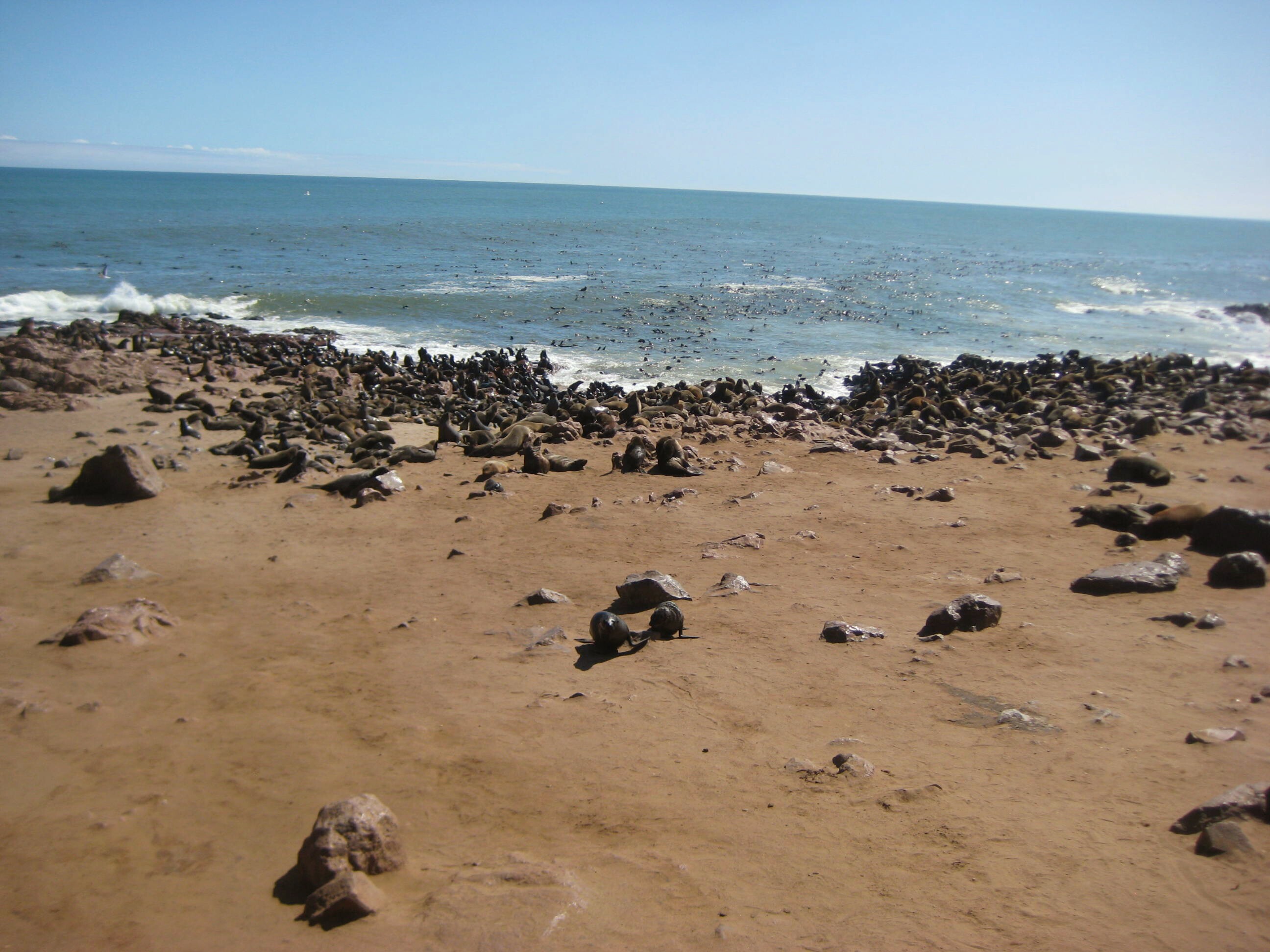
There were thousands of seals! Seals in the water, seals near the water, and seals basking in the sun by the walkways. We spent a long time observing them with multiple senses. We watched their funny ways of walking and other mannerisms. We heard them bark like dogs, moo like cows, and bleat like sheep (just the little ones). And we also unfortunately smelled quite a stench from all the seals.
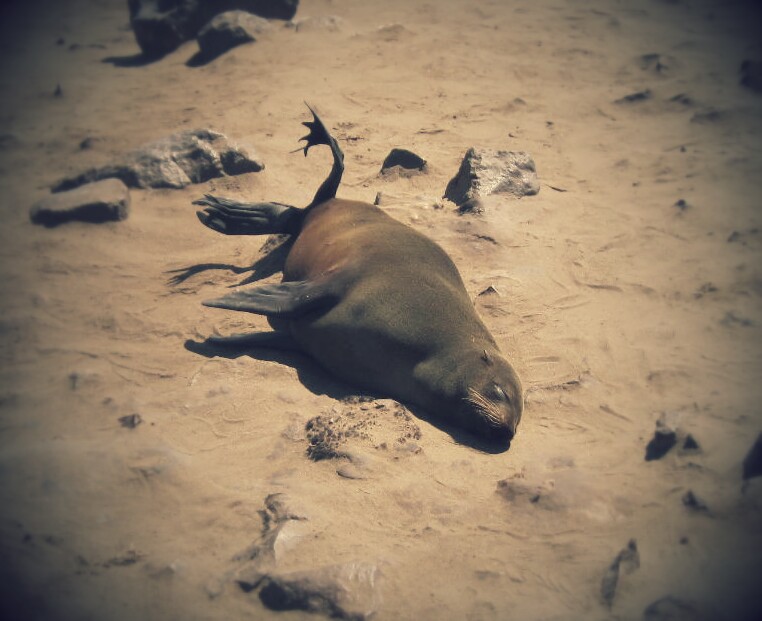


In the end, it may have taken us a little while longer to go this route to get to Swakopmund, but we think it was worth it for the memorable and unique views.
Posted from WordPress for Android
Two big way-points on self-drive safari itinerary through Namibia were Etosha National Park and the town of Swakopmund. We needed something to break up this long drive, and we realized that there was a UNESCO World Heritage site along the way we decided to make that our stop!
The site of Twyfelfontein (//Uis-//Ais in the native language) contains rock engravings from the San people (a.k.a Bushmen) dated from 2000 to over 6000 years old. Most of the engravings are of the different animals of the region – giraffes, rhinoceros, antelope, lion, etc. The San shaman would enter a trance state and carve these images into the rock.


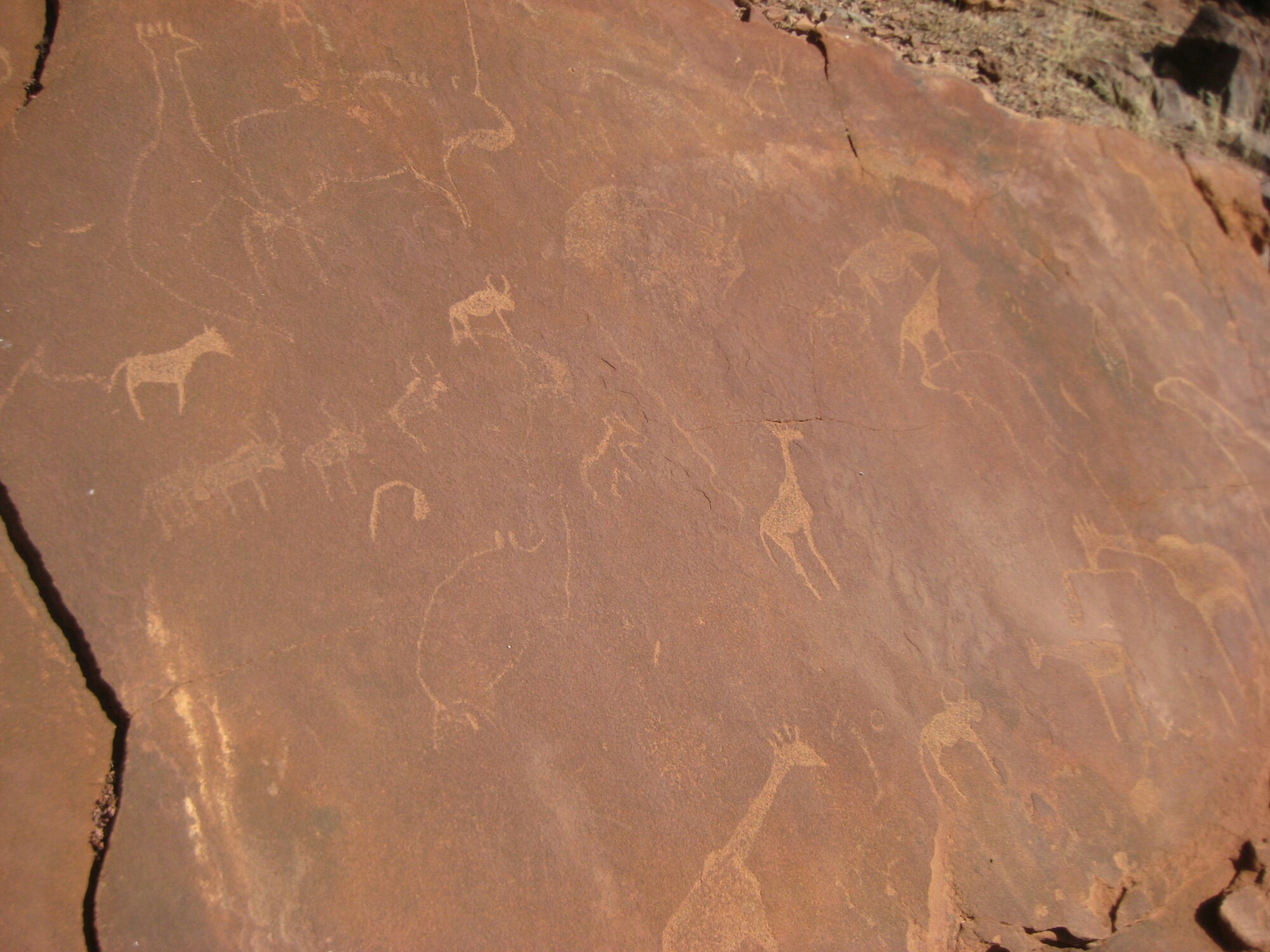
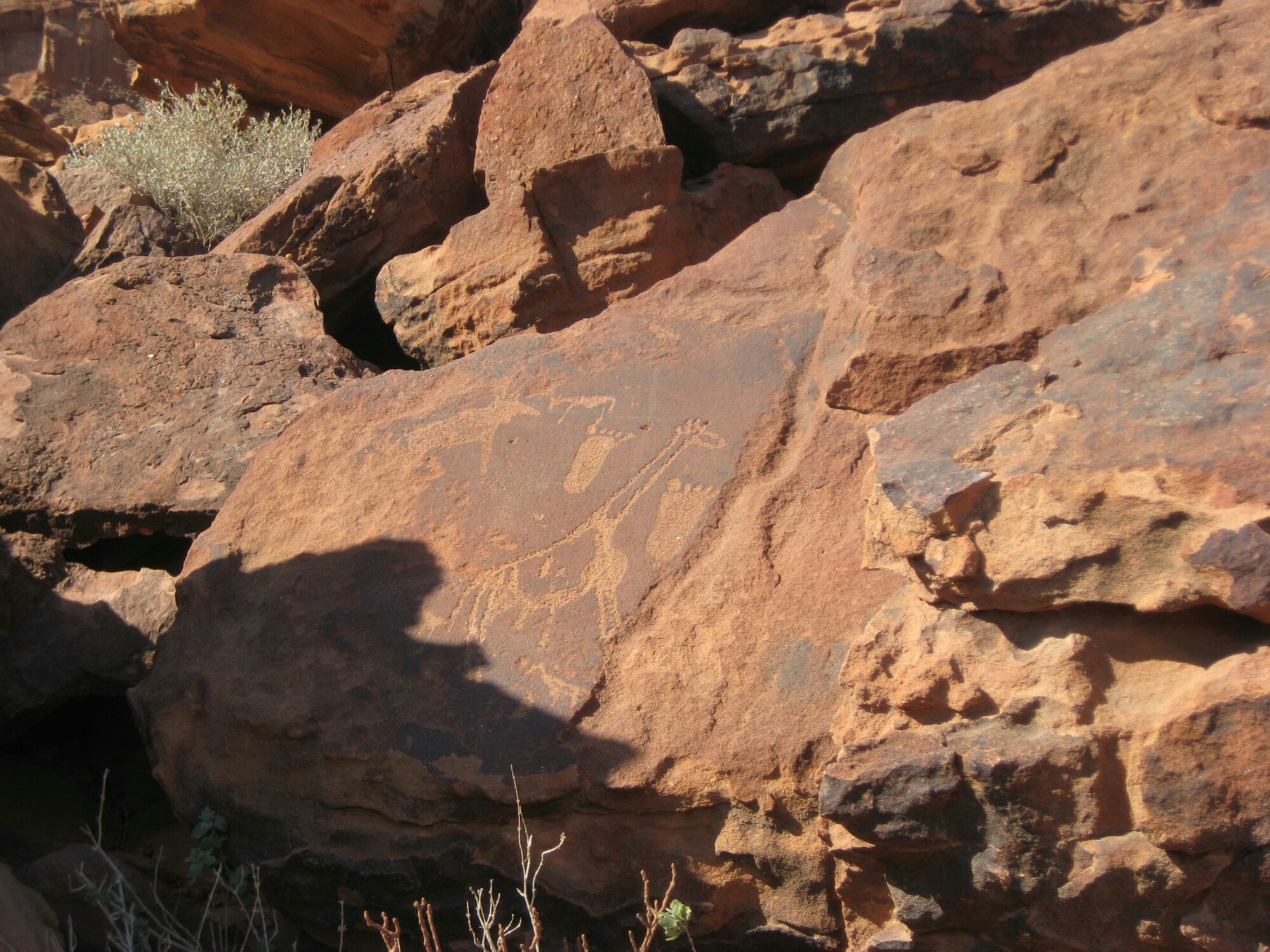
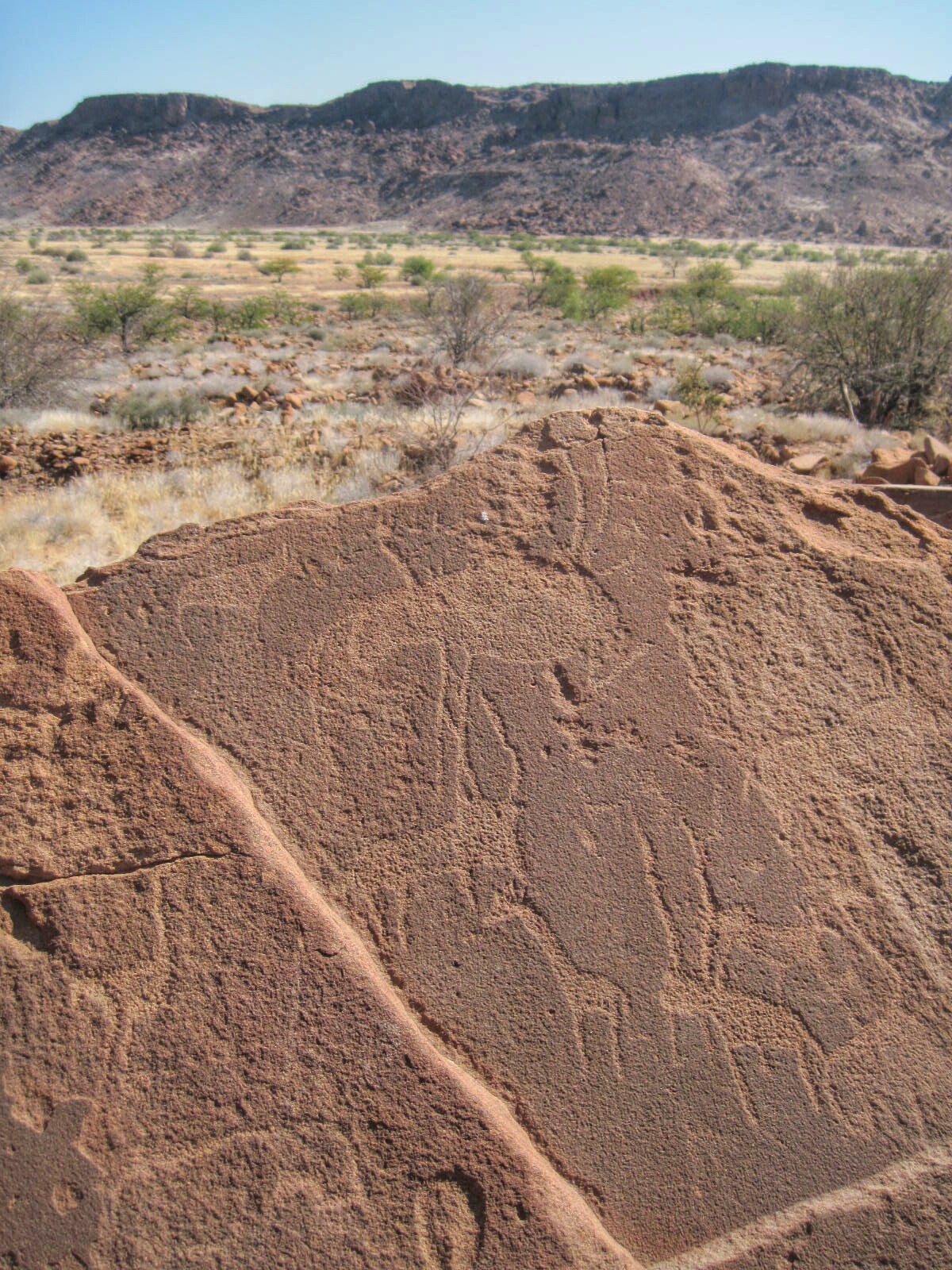
One interesting aspect of visiting the site is that you are required to go through the engravings while accompanied by a guide. We did enjoy learning more about the engravings from our guide, although it went against our normal do-it-yourself spirit. One of the most memorable moments of interaction was when he taught us how to count from 1 to 5 in Damara (which contains 4 different click sounds).
We’re not sure we will have Internet access while on our safari, so we’ve scheduled a few posts like these to automatically go out.
During the final week of our safari, here is where we are planning to be:
We leave Sesriem and start our long haul back to Joburg. Tonight we stop in Keetmanshoop, Namibia at the Mesosaurus Fossil Camp.
A very long day of driving – all the way to Kuruman, South Africa where we spend the night at the Red Sands Country Lodge.
We will drive almost all of the way to Joburg, stopping about an hour away. No camp booked yet, but we are expecting to stay somewhere near Magaliesburg.
Explore the Cradle of Humankind archeological park, where there is a visitor center and a cave where ancient hominids were found,. Once done, we drive to Joburg and return our truck to Bushlore – hopefully in one piece! 🙂
We’re not sure we will have Internet access while on our safari, so we’ve scheduled a few posts like these to automatically go out.
During the third week of our safari, here is where we are planning to be:
We spend the day exploring Etosha National Park in Namibia, again spending the night in Halali Camp.
Another full day in Etosha and a night in Halali.
We leave Etosha and head to Twyfelfontein, spending the night in Abu Huab camp. Hopefully we have some time this day or tomorrow to explore some rock art in the area.
We drive to the coastal town of Swakopmund, spending the night at Alte Bruck.
We drive from Swakopmund to the town of Solitaire staying at Solitaire Guest Farm.
We drive to Sesriem and and explore Sesriem Canyon. We spend the night in the campground here.
Another day in Sesriem which we will use to explore Soususvlei.
 Globe Gazers