Layover in Cairo

This post was pre-scheduled to publish while we are off on our self-drive safari

When we originally bought our plane tickets to Africa, one of the advantages to the set of flights we chose was that it gave us a 12 hour layover in Cairo. From doing some research, it sounded like this would give us enough time to see the pyramids, which was a pretty cool bonus feature.

On Arrival

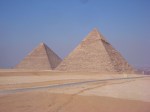
The plane got in at about 11 AM Cairo time. It was fun to fly in and see the pyramids down below you. Our first thought, while unoriginal, was “there is so much sand!”

We went past the EgyptAir transit passenger services booth and found the tours office. It is called Karnak tours, but is is actually part of the services offered by EgyptAir. We got set up with the tour and with their standard offer for transiting passengers: a complementary room at the airport hotel and meals! The tour was going to cost us $45 per person, but since there were a significant number of other people from the flight who wanted to do the same thing, it was only $35 a person.

One drawback is that they take your passport and boarding pass for the duration of the transit. This would have worried us but we had read that it was to be expected. Another drawback to going through Karnak is that doing the paperwork took a long time. They had us sit in the waiting lobby while they booked our rooms and got us all transit visas. It was a little tough to fight off jet lag and stay awake through all this and it would have effects later.

The Tour

We drove the tour bus out of the airport and into the craziness that is the Cairo traffic. Lane markers seemed to be little more than suggestions. Passing happens in crazy zigzags with much honking. It seemed as if intersections involved nosing through and fighting with other cars – biggest car wins of course. (We were lucky we were on the big tour bus!) Despite the craziness of the roads, pedestrians choose to walk in and across the street at all times! We were sure we were going to see someone killed- luckily we didn’t see a pedestrian get hit, but we did see evidence of a large multi-car crash.

We drove over the Nile River into Giza, briefly pausing by the side of the highway to pick up what we first thought was a hitchhiker but turned out to be our guide. He explained that the driver had been in a hurry because the pyramids were closing extra early today because of Ramadan.

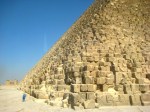
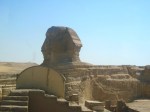
Once we got into the pyramids area, we had time for one photo op in front of the biggest of the three, then we got back into the bus and headed straight to the panoramic overlook where you could also see all three plus other structures. Others in the tour group paid to have their pictures taken on camels. We then got back in the bus because the park was closing. We briefly paused by the Sphinx but didn’t have time to get out of the bus. The rush was truly unfortunate as we would have liked to spend more time in awe of the amazing sites. We wished they had sped up the process at the beginning.

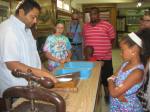
We did have time to be taken to a “perfume museum,” where the owner gave us a free hibiscus drink and then sampled a bunch of different scents for us. Not surprisingly, we were offered the opportunity to purchase some of these scents. The next stop was a “papyrus museum,” where we had a quick presentation on how papyrus is made and then had the opportunity to buy some papyrus artwork from the gallery. We declined both. It took a while, but we finally got out of there and headed back to the airport.

Leaving Cairo

We were dropped off at the Le Meridian airport hotel, which is conveniently connected to the airport by a sky bridge. We had time to shower (yes!) and then to head down to the complementary dinner, which turned out to be a comped meal at the buffet, which had mostly Mediterranean food and was quite tasty.

Upon returning the the airport, we were able to get our passports and boarding passes back without issue (phew).

Our plane for Johannesburg boarded at about 11 PM. So, it was kind of a whirlwind day fighting jetlag, but we think it was worth it to see the pyramids!

Tip for future travelers: if you use the EgyptAir transit option, you don’t need to fill out a departures document. They only need that if they have to stamp you out of the country, and with a transit visa you are never actually considered stamped it.

Another tip: Make sure to heed the warnings to get to the airport 2 hours ahead of the flight. You have to go through an initial layer of security, immigration, and then another layer of security to get into the gate seating itself.
Self-Drive Safari, Week One

We’re not sure we will have Internet access while on our safari, so we’ve scheduled a few posts like these to automatically go out.

During the first week of our safari, here is where we are planning to be:

Day 1 – July 8:

We will pick up our truck at the Bushlore office, and drive to the campsite at the Waterberg Wilderness reserve.

Day 2 – July 9

We cross into Botswana and head to the Khama Rhino Sanctuary.

Day 3 – July 10

Drive to Makagadikgadi Pans National Park. We will spend the night at the Khumaga campsite.

Day 4 – July 11

Drive through Maun and into Moremi Game Reserve, spending the night at the Third Bridge campground.

Day 5 – July 12

We will explore more of Moremi, then head just outside the park to spend the night at the Khwai community camp.

Day 6 – July 13

We will spend another night at Khwai community camp, so we will have the day to explore more of Moremi

Day 7 – July 14

We leave Moremi and head north to the Savuti area of Chobe National Park. We will spend the night at the Savuti reserve camp

The Hamptons

Our flight to New York arrived on Sunday, but our flight to Africa didn’t leave until Wednesday. Luckily, Della’s uncle Richard had graciously offered to let us stay with him and Kathy out at their place in the Hamptons. We figured this would be a great place to relax after all of the stress of packing up the house in June.

We didn’t have a big itinerary in mind for our time out there. Richard and Kathy took us out to eat at Oakland’s restaurant near the inlet, which was fun because we got to sit on the patio and enjoy the sea breeze and views of the boats passing by. They also took us on a driving tour of all the fancy neighborhoods, but it seemed like most of what we saw was the giant hedges everyone seems to use.

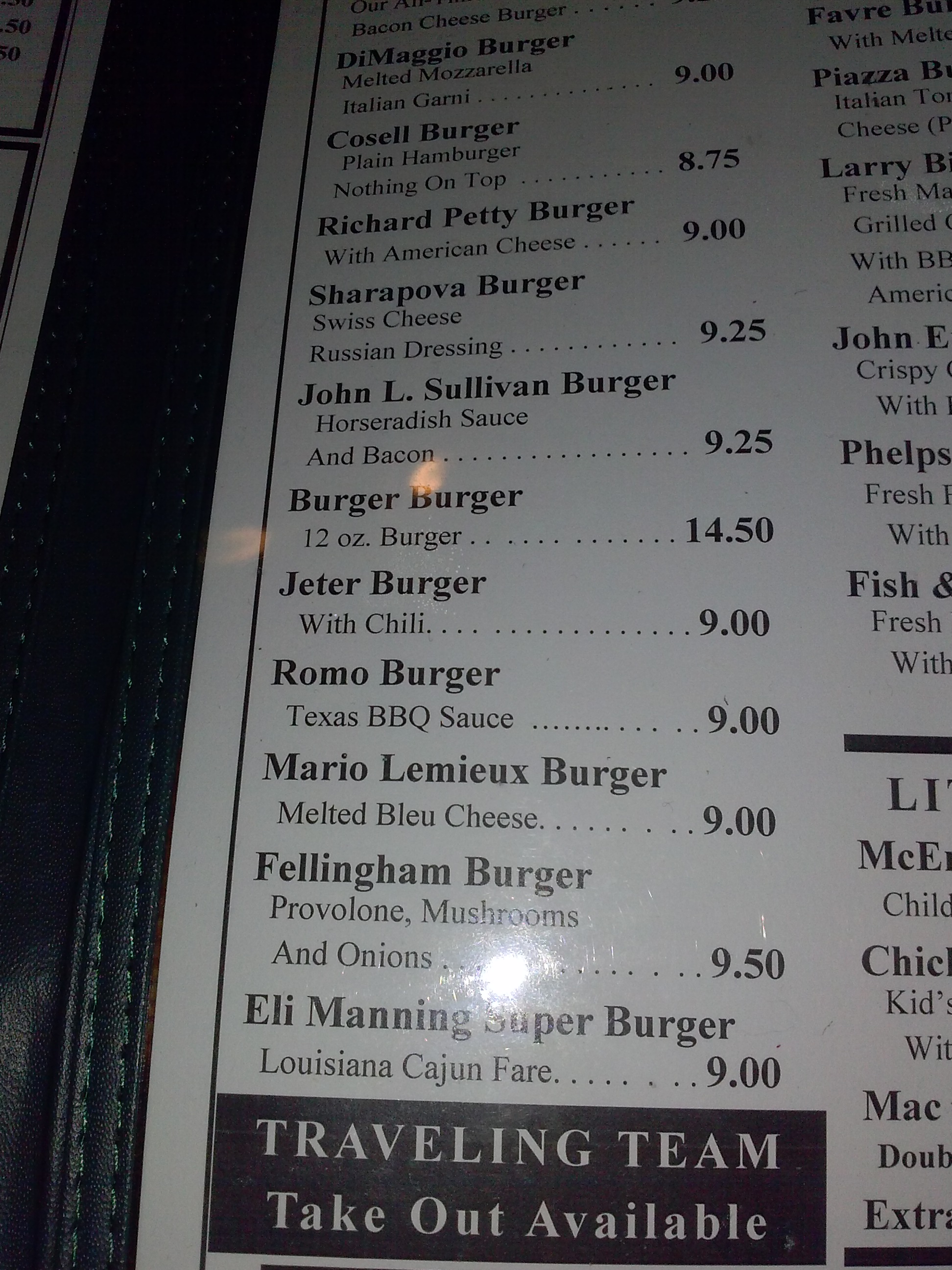
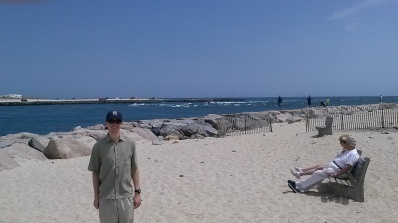
We also had a little bit of time to head to the beach. The water was a little too cold to want to swim in, but we dipped our toes in and relaxed on the sand. For our last dinner in the US, their houseguest Freddy took us out to their favorite local sports bar. Della told Eric he had to get one of these sports-themed burgers seen below. Can you guess which one he chose? 🙂

CAM00383

All in all, the 2 days in the Hamptons were exactly what we needed to get mentally and physically ready to do some globe gazing! 🙂

CAM00052

IMG_9087

Shots, Shots, Shots: Our Visit to a Travel Clinic

Part of our trip preparations was to get some shots!

Actually Lil Jon, we don’t mean those kinds of shots. We mean vaccinations!

There are a lot of nasty diseases out there in the world that we don’t want to contract. So, we decided to get ourselves preotected from those dangers.

Rather than try and figure out on our own what we needed, we decided to visit a travel clinic. They wanted to see us six weeks before our trip, so we went and visited the second-to-last week of May.

During our visit to the clinic, we first went over our itinerary with them to identify the different entry requirements the country might have and the different risks we would be exposed to while in the country. Once we had gone through all of the itinerary, they gave us recommendations of what we should get, and we decided what to accept. In the end, we went with most of their recommendations.

  • Hepatitis A: Eric needed this one. Della had it in 2007
  • Typhoid: Both of us got this. It is actually taken as an oral vaccine now
  • Japanese Encephalitis: Both of us had to get this one. We felt a little unprepared to decide on whether we needed it, but we decided better safe than sorry. We will need to get a second dose of this in June
  • TDAP: Eric needed this one. Della had it in 2007
  • Polio: Required for entry to Israel and India, so both of us got it

So in the end, Eric got four shots (two in each arm) and Della got two (one in each arm).

We also got a few prescriptions for some pills:

  • Doxycycline (malaria): this seemed like the best choice among the different malaria pills. Still going to be a pain though. Based on the time we will be “at risk,” we have to each get 220 pills!
  • Cipro: Anti-diarrhea antibiotic treatment outside of Asia
  • Zithromax: Anti-diarrhea antibotic treatment in Asia
  • Diphenoxylate (Lomotil): Anti-diarrhea treatment similar to Imodium

There were a few immunizations we declined:

  • Rabies: they said we only needed this if we would be outside reach of medical care for over 24 hours. We don’t think this will be the case very often, so we declined. Plus, this was a pretty expensive shot…
  • Meningitis: recommended for group living situations. We will be in hostel dorms some nights potentially, but we didn’t think this would be often enough to justify the cost

In the end, the cost of this was quite high, but this was mitigated somewhat by the fact that we each have an HSA that we were able to use for payment. Also, probably better to pay the high cost than get the disease later!


Planning Our Self-Drive Safari

Why Self-Drive?

When setting out our overall itinerary, we decided that we wanted our first stop to be South Africa.We also know we wanted to do some sort of safari to see some of the amazing wildlife and sights that Africa has to offer. But what kind of safari should we do?

First, we had to figure out where we wanted to go. Some people just go out to Kruger National Park in South Africa. While that sounded like an excellent destination, once we saw pictures of places like Sossusvlei and Victoria Falls, we decided to focus on getting to both Botswana and Namibia out of Johannesburg.

A quick glance at the prices or the luxury guided safaris let us know that was a no-go. Another option that a lot of “backpackers” do is to do a group “overland” tours through a large tour operator. This would have allowed us to see a lot the highlights, but the downside seemed to be to us that we wouldn’t be able to set our own pace.

Then, we stumbled across a blog by Traveling 9 to 5 about a self-drive safari. Intrigued, we looked into this further and thought it sounded pretty cool. You rent a truck with camping equipment and drive yourself on your own itinerary. This seemed like it would allow us to see exactly what we wanted while not breaking the bank. So, we started planning for this option.

Picking a Truck

There are many operators in Johannesburg that will rent you the standard self-drive safari vehicle: a four-wheel-drive pickup (always white for some reason) with a tent mounted on top and camping supplies included. We wanted to find a good deal, but also wanted to go with someone that seemed responsive to our concerns.

We got quotes from a few different places, then made a spreadsheet to compare their daily costs, insurance options and other fees. In the end, we went with Bushlore. Their costs were on the lower end of the spectrum, and they were very responsive in answering questions. From their selection of trucks, we chose the Toyota Hilux with Safari Camper.

Choosing the Route

The next step was to figure out where the truck was going to take us. July is part of the high season for safaris, so we couldn’t afford to dawdle. Conveniently, Bushlore offers a service to help plan the itinerary and book accommodations along the way. So, we got in touch with the booking department and started making plans.

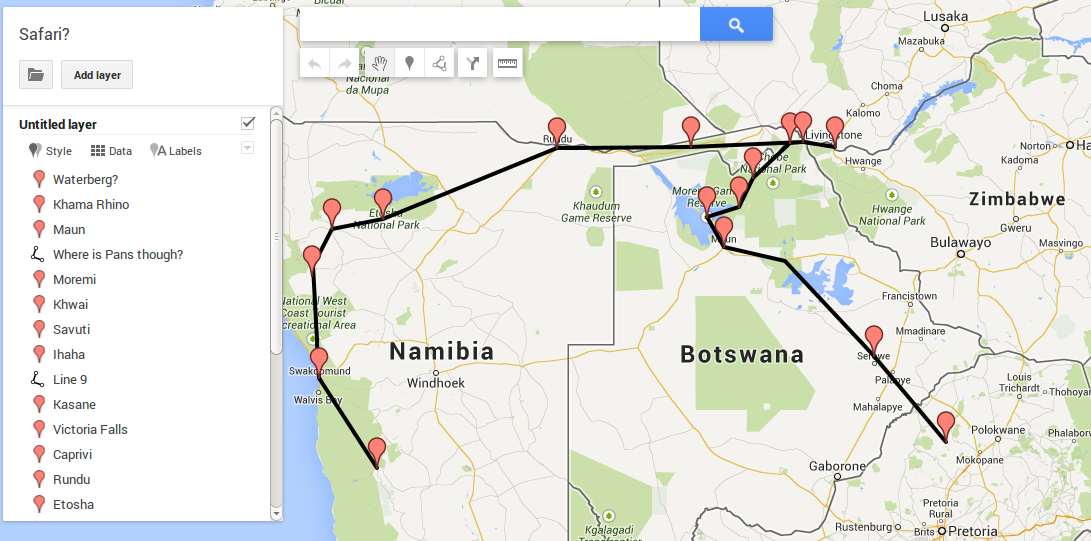
The agent came up with a day-by-day plan and quoted us a price to book the whole thing. However, we felt like we needed a little more information. First, we mapped out the itinerary ourselves to see if the number of days could be condensed. Then, we researched all of the proposed campsites (cross-referencing against Lonely Planet and Trip Advisor, of course) to see if any of them could be booked by us directly.

Our first attempt at mapping out the destinations

Our first attempt at mapping out the destinations

It required a little back and forth, but eventually we settled on a route and cost with the agent. We came up with a 25 day itinerary, which doesn’t allow for a lot of downtime but hopefully won’t be too hard to get done. It turned out that it was easier and almost as cheap for Bushlore to book the campsites for all but one of the destinations…

The Time We Wired Money to Africa

The website for Etosha National Park in Namibia seemed petty straightforward, and the price they were requesting for a campsite was about half of what Bushlore quoted. So,we decided to try and book it on our own. Things seemed to be going pretty smoothly until it got to the whole payment part of it.

We had thought we could pay by credit card, but it turned out the only option was to wire money. We hadn’t really done that before, so it took a little figuring out how to even do that. It was tough to even figure out if we were sending it the right place – the way it was supposed to work was that we wired to an account in the US that is associated with a foreign exchange company that would then send the appropriate Namibian dollars to Etosha.

We were a little scared that somehow this was a scam (and trying to explain that we were attempting to wire money to Africa while talking to representatives of our bank felt a little silly), but by this point we were in deep enough that we decided to just send the money anyway. If we ended up losing it, it wasn’t going to be the end of the world and would be a good lesson learned. We were getting a little nervous because it took Etosha quite a while to email that they received the payment… but they finally did (after close to 3 weeks)! Hopefully when we show up there, they will still remember that…


After telling everyone how flexible we want to be on our trip, it feels strange to have planned out the first month in such detail! We’re just hoping that all of this up-front planning will help make this self-drive safari go as smooth as possible. Look forward to more posts in the future about how close we can stick to this plan 😉

How We’re Getting to Europe for $200

We’ve bought our second set of plane tickets for our trip! It wasn’t quite as cheap as our first flight, but we were still able to use miles!

The Africa leg of our trip will be concluding in Cape Town, and the next stop on our journey is Prague in the Czech Republic in Central Europe. Luckily, it’s pretty easy to search for award flights between these two airports.

As with our flight to Africa, the Star Alliance seemed to be the best bet for finding an award flight because they have the most members that fly in the region. It costs 30,000 United miles to fly from South Africa to Europe. Luckily, Della just got 50,000 Chase Ultimate Rewards points (transferable to United) from the Ink card, and Eric had just enough left over from his Sapphire bonus.

Award availability was good for the week we wanted to fly as well. For a while we just watched the flights and pondered which day of the week we wanted to leave. It seemed like the best bet was going to be on Turkish Airlines flights with a layover in Istanbul. However, by the time we got around to booking, that flight on that day had disappeared.

But… we noticed one of the other flights that was available had a 8 hour layover in Munich, Germany. Sounds like a good chance to add another country to the itinerary! Eric was especially excited when he found this well-organized guide to Munich layovers. It is always nice to have the options so well laid out, plus a chance to see the oldest brewery in the world is hard to pass up!

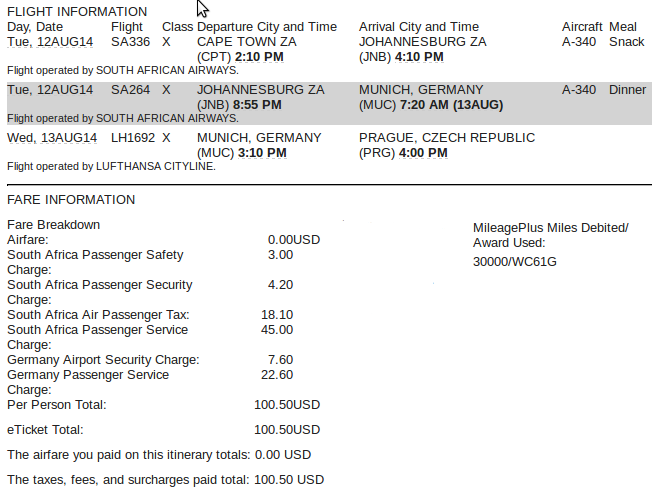
In the end, the fees were a little higher than the Turkish Airlines option: $100 a person. But, the departure date was right and the opportunity to (briefly) see Germany seemed cool too, so we went ahead and booked:

Screenshot from 2014-04-15 20:49:50

Brewing Up Some Fun at Beer Bike

As part of planning for our trip, we’ve read that it’s fun to visit local festivals. We were in Houston visiting some friends and heard of a festival called “Beer Bike” that same weekend that sounded interesting. We like beer and bikes, so we figured we’d check it out

  • Where: Rice University campus
  • When: Saturday March 29 at 11 AM
  • What: Some sort of bike race between different groups(dorms??). We think there was chugging involved too.
  • Who: Mostly Rice students and alumni. Most wearing colorful t-shirts with funny slogans. We hate to say it, but some seemed slightly inebriated for it being so early in the morning!

There were three different bike races among the groups. It was a little hard to follow the results from our vantage point, but it seemed like one of the groups was clearly better – the ones wearing maroon and gold. If we had to choose a favorite team, we definitely would have chosen them!


JUST KIDDING

As most of you reading this blog probably know, Beer Bike is not just a random festival we stumbled upon. We are Rice alumni, and Beer Bike is one of the biggest events of the Rice social year. A lot of alumni return just to see the races, so we wanted to come to see both the event and reconnect with friends.

The “team in maroon and gold” is our “residential college” (for those unfamiliar with the term, think the Hogwarts houses in Harry Potter”), named Will Rice. We are the only college to have swept the three races at one event – and we have done it five times! Unfortunately, this year we only won two of the three races, so no sweep but still a good showing.

It wasn’t technically practice for going to a random festival in a new city, but definitely a fun weekend!

Special shout out to Jenny and James for hosting us, and to Caitlin for driving us to and from the airport

How Do You Plan Something Like That?

Another question that we have been asked is how we are going to plan such a big trip. It can seem daunting, but it has also proved to be pretty fun because we are so excited!

Choose Some Highlights

The first thing we had to decide was what we were most excited to see.  We both had some ideas about what we wanted to see around the world such as: The Parthenon, other ancient world ruins in Greece and/or Turkey, Machu Picchu, the Amazon, the most southern points in the world, Penguins, Pyramids, the Taj Mahal, the Himalayas, castles in Europe, The Great Wall of China, Angkor Wat, etc. We both love ruins, history, and outdoor beauty. Della was interested in visiting some of the countries from which her students come from: Burma and Nepal.

 Save Some Places for the Future

After thinking about the highlights we wanted to see, we had a huge list! So we had to pare it down a bit. We first took into account that some places are easier to get to from the US than others. For example, we ultimately decided not to visit South America during this trip at all because it is so much easier to reach than all the other continents. We believe that we can fly to many countries in Central or South America for shorter vacations in our future. It is easier to plan a two week summer vacation when you are only a couple of hours away via plane. It is much harder to plan that same vacation when you know you will be spending over a day’s travel time on each end (plus jet lag). This thinking led us to focusing on Africa, Europe, and Asia on this trip.

 Choose a Direction

Next, we tried to see how we could make them fit together in some semblance of order. We did not want to flit all over the world in big plane rides – we’d rather want to travel overland where we could to save money. This led us to the idea that we were generally travelling one direction around the world – either west or east.

 Consider the Climate and Crowds

The next step was to look at the weather. We knew that we would rather avoid the hottest time of year, the coldest/wettest time of year, and busiest tourist season in every location. Knowing we were leaving in July helped us get an idea of where we wanted to be and when. Many round the world books have collected average temperature and rain data about different locations.The website Price of Travel also has a lot of good information about climate and tourist season, both on its location profile pages and in posts about the best cheap places to travel during certain months.

Once we read all this information, we were a little overwhelmed. Then Eric’s nerd side came out and he decided to try and organize it visually. He decided to get some old-fashioned notecards and lay out an itinerary. First he made notecards for each month. Then, he made a notecard for each of the potential destinations and listed on the cards when it was best to visit the destination, when it was OK, and when to avoid. We then laid these cards out and tried to optimize for the “best” category.

CAM00264

Using this system helped us come up with a general flow of the trip: Africa first, Europe next, and Asia last. We do get to Africa during the coldest part of the year, but it is the best time for wildlife watching. This also helps us avoid the worst of the summer crowds in Europe. Also, we will get to Asia during the best (least hot) weather months.

Consider the Costs

We also looked at the relative cost of traveling in all locations we wanted to visit. We wanted to stick to a $100/day or less budget for the two of us. This, unfortunately, made us reconsider visiting many of the countries in Europe. However, the great news was once we decided that many of the countries in Western Europe were too expensive for this trip, it made us start to research more about countries that we knew very little about. Suddenly, countries like Slovakia, Slovenia, Croatia, Montenegro, and Albania were on our list.

 Dive In

Finally, we had a general idea of the countries we wanted to visit and the order in which we could visit them.  The next step was to learn more about each country in an effort to plan the approximate amount of time we might want to spend there.

This became very tricky as we don’t want to over-plan the trip. This actually has been our biggest struggle in planning – attempting to plan too much! The beauty of a long trip is that we can shape the trip as we go. We can spend more time in places that we enjoy or less in places that we don’t. We will become exhausted if we are constantly on the move and should try to plan some down time in certain locales.

Still, we want to do a little planning, so we decided to start with guide books. We are true believers in Lonely Planet guide books and have used many to guide our research. One thing that has been invaluable is the Denver Public Library. It offers loans on almost all Lonely Planet books that are quite recent. We have been able to get the guide books from the library and spend time reading through the various sites – giving us possible time tables and ideas about the best way to travel from one location to another.

CAM00262

Read Travel Blogs

The guide books are a great resource for learning about a destination, but it’s also nice to hear more personal stories to really get a feel for the place. Luckily, on the Internet it is now very easy to find such stories! Often, if we want to read about a place, we will just Google “<place name> travel blog”, and a ton of results pop up.

There are a few other web resources that we like to check. Wikitravel provides advice similar to a guidebook, so it’s a good place to use for cross-referencing. We also like to check Trip Advisor reviews to make sure that the places we are thinking of get good reviews.

Keep Track of It All

It’d be nice if we could remember all of this information we’ve found, but when you’re planning a whole year that’s somewhat hard to do! Our solution has been to keep track of what we have found in a set of Google Drive documents. This way, we can both edit them, and we will be able to access them from anywhere. Whenever we find a noteworthy link, we add it to the corresponding document for future reference.

Always Be Planning

It’d be foolish to say that we have come up with our final plan. We are hoping that part of the fun of this adventure will be experiencing some unplanned and surprising things! So, we are hoping to use all this research as a basic guide but will continue to seek out new information about the places we are going to go. You can check out the Itinerary link on our to see where we’re currently planning to go… but don’t be surprised if you see it change!

How We’re Getting to Africa for $7

One of our first steps in planning the trip is to buy plane tickets. You may think this would be a big expense, but with a little effort you can get a ticket for really cheap. Like the title says, our main tickets to Africa from the US are only going to cost us $7 total!

Ticket Types

One of the early decisions we had to make was what type of ticket to buy. The big airline alliances do sell “round the world” tickets which allow you to group a bunch of different flights under a one fare. We looked into this, but in the end we decided it wasn’t the best fit for us. On one of the RTW tickets, you are only allowed a certain number of stops, and you have to plan out your dates far in advance. We want to figure out some of that as we go, so not exactly a match for us. Plus, we would have had to pay lots of money for that. But why pay money when you have miles?

Using Miles to Buy Plane Tickets

For the past few years, we have gone on many trips for very little money out of pocket.We do this by “paying” for the flights with frequent flyer miles.

We don’t actually rack up the miles by flying though. Instead, we get big chunks of miles by applying for credit cards with hefty sign up bonuses. It may sound risky, but if you are careful with how you use the credit cards (like we always are) then it can get you some great deals.

Getting credit cards is only a good solution if you are responsible with how you use them. Always make sure to pay off your balance in full every month!! You may worry about negative effects on you credit score, but in our experience our scores have stayed fairly constant.

For some of the cards, you only get the sign up bonus if you complete what they call a “minimum spend”. It’s usually a few thousand dollars within a few months. We don’t typically put that much on a credit card, so we’ve had to figure out some creative ways to do this. If you’re interested, let us know and we can share our strategies.

Getting to South Africa

Based on a variety of factors, we decided to start our trip in South Africa. We knew from research that the best miles to redeem to get to South Africa would be United miles. (We aren’t actually flying on United though. One other cool thing about miles is that you can redeem them on an airline’s alliance partners. United in in Star Alliance along with a few African airlines).

We also knew from the award chart that you need 40,000 United miles to get to South Africa from the US. Luckily, we also knew that the Chase Sapphire Preferred card offered a signup bonus of 40,000 United miles. We each got the card, completed the minimum spending requirement, and had our miles.

Then we had to search for the flight. Using the United website, we searched for award redemptions to Johannesburg from a variety of U.S. cities. Unfortunately, availability was a little limited so we didn’t have a lot of options. We were this close to flying via Nigeria until we read some horror stories about layovers there. On the other hand, we read some positive things about layovers in Cairo, so we ended up booking a ticket on Egypt Air. We should have time on our 12 hour layover to see the pyramids – pretty cool!

But, very little in life is free unfortunately. There are some fees associated with the journey: $3.50 per person. So, we can’t say we are flying to South Africa for free. It’s going to cost us a whole $7.

Screenshot from 2014-02-25 23:08:29

You may notice that we still need to figure out how to get to NYC for our flight. No definite plans on that yet, but we are hoping we can figure out a way to use miles :-).

If you’re interested in learning more about how to travel for cheap, here are some resources we enjoy:

Belize/Guatemala Trip Overview

In the end, our Summer 2013 trip to Belize and Guatemala was a success. As we anticipated, Belize was a relatively easy country to travel in: they speak English, prices are low and there is a good tourist infrastructure. We also enjoyed the ability to experience the Mayan ruins and the ocean adventures within such a short distance.

Budget

The Belizean dollar is pegged to the US dollar at an exact rate of 2 to 1, so it was pretty easy to calculate how much we spent. Guatemala was a little bit tougher – for purposes of estimation we are using the rate of 7 quetzales to 1 US dollar. The numbers below are rounded up to reflect the uncertainty.

  • Lodging: $240
  • Transportation: $390
  • Food and Drink: $585
  • Activities: $395
  • Border Fees: $45

Our total for the 15 days was $1655, so our per-day average was $110. A little higher than we would have liked, but we learned some lessons about how to cut costs that could help in the future.

Some other observations from the budget:

    • The transportation costs include plane flights. You may not think that’s possible, but it is! We used American Airlines miles for our flights. We got these miles by signing up for the American Airlines credit card and getting the nice sign up bonus. We will talk more about these strategies in later posts.
    • Buying a bottle of rum in the store was definitely cheaper than getting drinks out at a bar. We will try to do this more often in the future. We also could have saved money by eating out at restaurants less and cooking for ourselves more.
    • The most expensive activity was definitely the ATM cave tour. This was definitely worth it though!

Our cheapest days were the days in Caye Caulker where we did nothing but hang out by the beach. Goes to show you that sometimes it’s good to just do nothing for a day to recharge your spirits and your wallet.