Snorkeling in Caye Caulker

One of the things that Belize is known for is being a premiere destination for diving. We don’t dive, but we do like to snorkel, so we figured we had to try it out while we were in Caye Caulker. Spoiler alert: it was awesome!

Our traveling partners from the Caracol journey had been to Caye Caulker a week earlier and had recommended a variety of places to us. For snorkeling, they gave a big recommendation for Blackhawk sailing tours. We decided it looked good to us as well, mainly because it seemed like a smaller, more personal experience than going with one of the big companies.

We set up the snorkel trip a couple of days in advance with captain Steve. We were also able to get our friends from Hopkins to come along, and they also invited along four people from their hostel. No one else had signed up for the day so we would have the boat to ourselves.

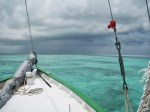
The day of the tour it had rained early, so we worried that the tour might be cancelled, but Steve said we could still go out.Steve fitted us with snorkels and fins and we went out to the boat, named the Seahawk.

Our crew for the day was Captain Steve and his helper / snorkel guide Charlie. The boat had a sail, but the conditions dictated that to get out to our snorkel destinations we had to use the motor instead.

Stop 1: Manatee Viewing

The Caye Caulker area is known for having a small number of manatees in some areas of the reef. It is hit-or-miss on whether they will be there on any given day, but Steve had heard that they were there on this day so our first stop was to where one was supposedly hanging out. When we got there, Charlie hurried us into the water because he could see the big tour on its way. We rushed out to the spot and saw the manatee! This was especially exciting for Della because she had written a big report on manatees in grade school. We weren’t supposed to get too close, so we kept our distance. But then the manatee swam towards us! We had to back up quickly. We then left the area and got back on the boat.

Stop 2: Shark Ray Alley

We then travelled along the reef to our next stop, called Shark Ray Alley. This was a place that local fisherman had used to clean their daily catch, and as a result nurse sharks and rays had known to congregate there. They get so excited when they hear a boat coming that they swim right up to it. Charlie just had us jump right in with them, which was a little scary! Luckily, they are not aggressive towards humans. We spent some time swimming among the sharks, some big rays, and a lot of fish.

Stop 3: Conch Shell Graveyard

The next stop was only a short distance away. Here there were a ton of empty conch shells that fisherman had discarded. The highlight of this stop was getting to swim with a giant sea turtle! After this stop, we had a provided lunch on our way to the next stop.

Stop 4: Hol Chan Marine Reserve

The final stop was in the Hol Chan Marine Reserve, a part of the reef where the wildlife is protected. Our snorkeling stop was near the “Cut,” a channel that goes through the reef. The wildlife is especially vibrant here. You do have to be a little careful because there is a strong current coming through the cut, so we stuck together with Charlie. We saw a lot of different fish and even some more turtles. Some of the fish would even get close enough to touch!

After we were done snorkeling, Captain Steve and Charlie put up the sail and we sailed all the way back to Caye Caulker. They also put on some reggae music and passed around some rum punch. It was a very relaxing end to the day.

The only negative of the trip for us was that the cloudier conditions early in the day resulted in us not putting on much sunscreen. Bad idea! Eric wore a shirt so his main issue was the backs of his legs, but Della had a bad back burn herself.

Looking back on the trip,  we thought was perhaps the best snorkeling trip we had done. It certainly was the widest variety of marine life that we have ever seen snorkeling. Plus, the water was a pleasant temperature, the currents weren’t too bad, and the boat ride itself was not too long or bumpy. Highly recommended!

Hopkins Overview

The second major town we stayed in on our Belize trip was the town of Hopkins. We had read in the Lonely Planet that this small fishing village was a good place to chill out at the beach and to experience the unique Garifuna culture.

Where We Slept

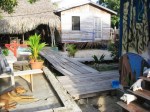
The Funky Dodo.This is the main hostel in town and seemed like a good place for the cost. We paid BZ $38/night for a private room (shared bathroom). The setup felt appropriate for the beach location: instead of a rooms in one big building, the different rooms were in their own small buildings that are connected with a wooden boardwalk over sand. The common areas are basically just tables scattered around the sandy courtyard. There are some nice hammocks as well, although we got seriously eaten by mosquitoes when we tried to use them. (This was common throughout Hopkins – we seem to have hit the high mosquito season). There is also a bar in the hostel with reasonably-priced drinks that we went to a couple of times. The hostel isn’t on the beach like some other properties, but it is a quick walk there. The shared bathrooms are accessed via the boardwalks as well, so they felt a bit rustic. Same with the communal kitchen, which is located outdoors.

Favorite Place to Eat

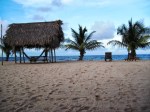
Driftwood Beach Bar & Pizza Shack. After our stressful 24 Hours in Guatemala and our adventures hitchhiking into Hopkins, we were ready to relax for a while. On our first evening in Hopkins, we made our way through town and eventually found our way to the Driftwood. The pizza is a little on the pricey side, but it is very good. Since it was the low season, we were the only patrons for dinner that night, so we got to take the best beach chairs and sit by the ocean, enjoying the nice cool sea breeze (good for keeping the mosquitoes away!) and some rum cocktails while the sun set. It was a perfect introduction to Hopkins. We enjoyed the vibe so much that we came back two more times.

Things to Do

Go to the Beach

Hopkins is a beach town, and has a reputation for being one of the better white sandy beaches in Belize. Unfortunately, we can’t really confirm this reputation. There had been a storm the previous week, and most of the beach was covered in driftwood and some trash. A few places that had been cleaned up were nice, but this wasn’t the case for most of the beach. We spent one day exploring the beach – first walking quite a ways south to some resort areas. We felt out of place there, so we headed all the way back and then up in the opposite direction to the Driftwood, which had cleaned up its stretch of beach. We spent the rest of the day lounging in beach chairs, reading, and exploring the water.

Garifuna Culture

Only spending two and a half days here didn’t really give us enough time to learn too much about this culture that is quite different that we had experienced in San Ignacio. If we had more time, we would have enjoyed sampling a few more local delicacies or learning more about the Garifuna drumming. Still, we enjoyed the friendly nature of the people, who gave us plenty of greetings on the street. It was also fun to buy some homemade snacks from a group of kids who rode around selling them from their bikes.

Placencia

A nice beach town not too far away. Just think carefully about your transportation options

Summary

Hopkins provided a nice opportunity to relax on the beach and get away from the hustle and bustle of the first week of our trip. In the end, there wasn’t as much to do there as we had hoped, but sometimes it is nice to just relax!

From Guatemala to Hopkins via the Hummingbird Highway

After our 24 hours in Guatemala, our next stop was to go all the way to the coastal town of Hopkins in Belize. This would involve traversing a decent portion of the country, but luckily it’s not a big place!

Still, it would have been a long travel day to try and do it in one day, so we decided to break the trip up by stopping along the way on the Hummingbird Highway.

From Guatemala to the Hummingbird Highway

As stated in the previous post, to get out of Guatemala we re-traced our steps from the day before. We walked back from El Remate to the main highway, then almost immediately caught a colectivo back to the border. At that point we actually had leftover Quetzales, so we bought some drinks and snacks before crossing over.

Once we were in Belize, we took a series of transportation options that actually flowed together smoothly:

  • A shared taxi from the border to the town of Benque (just 2 km away)
  • A bus leaving from Benque headed east
  • Got off the bus at the transit center in Belmopan. We had time here to take a bathroom break.
  • Got on a bus headed south along the Hummingbird Highway

Hummingbird Lodge

The Hummingbird Highway goes through the most mountainous part of Belize, so it is quite pretty. We decided to spend a night in this part of the country but Lonely Planet didn’t really list any good budget options. Then we randomly found a a cheap place listed on Trip Advisor called the Hummingbird Lodge (website, Trip Advisor). However, since our schedule was flexible, we had never actually contacted the place to make sure they really existed / were open, so we weren’t sure it was going to work, but we decided to give it a go anyway!

The website is pretty vague about directions to the place – all we knew to tell the bus conductor was a mile marker and some random business signs. Luckily he knew what we were talking about! Still, we were apprehensive about being at the right place… but it turned out we were!

The Hummingbird Lodge turned out to be a pretty neat place to stay. There were only a few other travelers there, but they all had interesting and varied stories to tell. We took advantage of the swimming hole on the property (although the temperatures in the mountains were noticeably cooler  than those in San Ignacio and Guatemala).

We did make one big mistake though: we didn’t have any food with us. We were assuming there would be some sort of market nearby, but we weren’t counting on this place being as isolated as it was. Luckily, the fellow guests let us share with the meal they were cooking.

We only spent one night at the Hummingbird Lodge, but it definitely helped recharge our travel batteries after the Guatemala whirlwind.

To Hopkins

The next morning we headed back out to the Hummingbird Highway and waited for the next southbound bus to continue our journey to Hopkins. We were unclear of the schedule so it felt like we waited a while, but a bus eventually came.

We got off the bus in the town of Dangriga because we knew we needed to transfer to a separate bus to the smaller town of Hopkins, since it is not on the main highway. However, we quickly realized that we had missed the morning bus from Dangriga to Hopkins, and the next one would not be coming until much later. A taxi driver offered to drive us there, but we declined while we thought about our options.

After heading into town briefly to restock on cash, we decided to catch the next southbound bus out of Dangriga. It wouldn’t go to Hopkins, but it would drop us off at the turnoff to to the town. And we had read that plenty of people hitchhiked from there, so again we would take a leap of faith.

As it turned out, there were a few locals who were also doing the same thing, so we didn’t feel like we were doing something too outlandish. It was interesting to try and figure out the etiquette in who took the limited spots in cars that stopped to offer a ride!

Unfortunately, the number of cars that did stop was pretty low. Even the locals said that it was taking abnormally long to find a ride. Eventually we did get a ride in a van that was passing by. It turned out that the occupants of vehicles were on a mission trip from the Dallas area of all places!

We got the van to drop us off at our hostel in Hopkins, and then the next phase of the trip began…

24 Hours in Guatemala

When we’re writing these blogs, we hope to pass along our stories in part that they may help others in the future with their travels. Most of the time we hope our decisions provide examples of what one should do… but this will be more of an example of what not to do. Seeing Tikal was great… but seeing it in 2 hours is not really recommended.

Decision Time

As we were planning our time in San Ignacio, one of the selling points was the fact that Tikal, one of the most impressive Mayan ruins, was located just across the border in Guatemala. Della had been there previously and really wanted to share it with Eric. Tour companies offered day trips there, but we decided it would be cheaper and more flexible to use public transportation to get there.

Our original plan had been to get to the Tikal area in one day, do Tikal, and then head back the next. However, as our time in San Ignacio wound down, we began to question if we should do it differently. We spent one less day in San Ignacio than we originally planned, so we could spend two nights in Guatemala. On the other hand, we were starting to feel a little bit jaded by Mayan ruins, since we had seen so many in San Ignacio already. So maybe we should just not go at all?

We dawdled a bit in the morning as we tried to decide between the two options. In the end, Eric decided that he didn’t want to miss seeing Tikal so we decided to do the two-night option. We bid farewell to San Ignacio and headed west.

Into Guatemala

There are a few different options for getting to Guatemala from San Ignacio. The main public bus only runs as far as Benque, a town which is still 2 miles from the border (so you would have to take a cab once you got there). The other option is to take a cab from San Ignacio directly to the border. We were able to negotiate a reasonable fare, so we chose the latter option.

At the border, we made a decision which was the main contributor to our later travel mistakes. At the border there are many money changers who would convert Belizean dollars to Guatemalan quetzales. We hadn’t really thought about how much to convert, so we tried to quickly calculate how much we thought we would need for two nights in Guatemala plus Tikal entrance. The money changer was helpful in telling us how much things would cost, plus Della felt that Guatemala was very cheap based on her previous visit, so we felt pretty comfortable with the amount we exchanged…

Quetzales Left: 700

We then crossed out of Belize and into Guatemala on foot. On the Guatemala side we found the building for people coming in (not immediately obvious), paid a fee, and got our passports stamped.

Quetzales Left: 660

As soon as we were done, we were asked by a cab driver where we were headed. We told him El Remate, a small town that is on the way to Tikal. He wanted to drive us all the way there, but we declined since our plan was to take a cheap colectivo (shared minibus). Eventually we agreed that we would pay him to drive us to the place where the colectivo picked up. There was still some confusion at the end because he thought we agreed to 10 Qs per person, but we thought 10 total. As we pulled up, it appeared a colectivo was about to leave, so we rushed out of the taxi and only gave him 10. This left a sour taste in our mouth though.

Quetzales Left: 650

The colectivo conductor threw our bags on top and we piled in. Riding a colectivo is quite the experience! The vehicle is about the size of a normal passenger van, and they cram as many people as possible in them for each trip. We were some of the last ones on, so we had to ride on a tiny bench facing backwards, knee to knee with another row of seats. We got to dust off our Spanish skills to communicate with the conductor about the cost (English is not very widely spoken in Guatemala – quite a shift from Belize). The cost was 30 Qs per person, which was more than we had budgeted. We wondered if we were getting a tourist upcharge but there was no easy way to tell.

Quetzales Left: 590

The colectivo did not go all the way to El Remate, so we had to ask to be let off at a highway junction called Ixlu (also called El Cruce). We then hiked a mile or so along the side of the road into town. We then had an unpleasant surprise when we discovered that the cheap hostel listed in Lonely Planet was closed. So we continued on to the next listing we liked in the book, Hostel Hermano Pedro. We decided to get a room there, because the one we were shown was nice and spacious. We probably should have tried to negotiate a lower deal, since we seemed to be the only ones there, but the desk clerk didn’t speak English so we didn’t try.

Quetzales Left: 490

At this point, it was only about noon. We talked it over and decided that it didn’t seem like much was going on in El Remate, so we decided to try and go to Tikal after all. This would mean switching back to our original one night plan, but it seemed like it would be a waste of an afternoon not to go.

Plus, we were starting to worry about money. We knew that the entrance fee to Tikal was 150 Qs per person, so that would leave us with 190. Then, we needed to reserve 30 Qs per person for the colectivo back to Belize – so 90 Qs left for transportation to and from Tikal plus dinner that night. Also, the only ATM in town was broken. Everything in Guatemala so far had been more expensive than Della remembered, so we didn’t have much optimism about being able to survive on such a low amount. And we knew we didn’t have enough for another night’s worth of lodging, so our best thought at the time was to go ahead and go to Tikal.

An Afternoon in Tikal

We headed out to the main road in El Remate to catch a colectivo to Tikal. We thought they ran fairly regularly, but a local expat did come by and warn us that they ran less frequently in the afternoon. We waited… and waited… and waited,… and just when we were about to give up we see the colectivo coming up the road. We decide to take it. It is also 30 Qs per person, but only crowded instead of ridiculously crowded.

Quetzales Left: 430

Unfortunately, the colectivo took a long time to travel the distance to Tikal. Since these are shared buses, they stop whenever anyone wants to get on or off. This one made a lot of stops, including two where we had to spend about 5 minutes waiting for bags and bags of dry goods to be unloaded for the passenger getting off. We didn’t get to the park until almost 2:15. We knew the park stayed open until 6, so while not ideal, we still had some time to explore. But… the conductor told us to be back by “cuatro y media”. Once the translation hit us, we realized we only had two hours to explore Tikal! But, at this point we didn’t have any choice. We paid the entrance fee and started race walking into the park.

Quetzales Left: 130

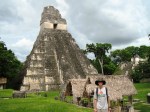
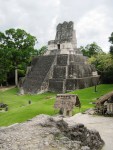
We made it to the Gran Plaza, took a few seconds to catch our breath and admire the tall ruins surrounding the courtyards, and then dashed off on a loop of what seemed to allow us to see the highlights. We walked at a brisk pace past the many impressive ruins, pausing only briefly to read something about them. Certainly not enough time for any sort of reflection, although at the same time we had just seen a bunch of other Mayan ruins so we could somewhat justify a quick glance.

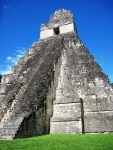
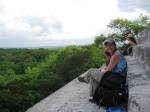
One big difference between Tikal and the ruins we saw in Guatemala is that you are not allowed to climb to the top of most of the ruins in Tikal. The one exception is Templo IV, which has a steep wooden staircase going up the side. We took this up and finally paused for a moment. The shade and breeze from the top of the 210-foot tall structure were a welcome relief, especially since we were getting pretty worn out from walking so fast in the summer afternoon heat. The view from the top is pretty neat because you can see the tops of the other tall temples just barely sticking out of the thick jungle. When we were there, we could see and hear a thunderstorm in the distance as well. That plus the grunts of the howler monkeys made for a fun aural experience.

We eventually regained some stamina and headed back down. We completed the loop back to the Gran Plaza and did a little exploring there.

We made it back to the colectivo pickup point with 15 minutes to spare. The ride back to El Remate also cost 30 Qs per person.

Quetzales Left: 70

Food, Food Everywhere, But Not a Drop to Eat

Back in El Remate with only 70 Qs left, and knowing we needed 60 to get back to Belize, we were at a loss for what exactly to do about dinner. We decided to walk around and see if we could find a place that would accept a credit card. We walked up and down a few times trying to find the places listed in Lonely Planet, and we struck out at multiple – no credit card machine or closed due to the low season. We thought we had found one place but their machine was broken!

We almost lost hope, but then Eric remembered on the walk into town there was a fancy resort, so we decided to take a long walk down there as one last hope. As it turned out, this was our saving grace. They would take a credit card for dinner, but we decided it was an even better deal to use their money changing service to change some US dollars into quetzales. Even though their restaurant didn’t look to be the cheapest option in town, we were so worn out/relieved that we just decided to eat there anyway. We had a Gallo beer and some decent food and watched the sun set over the lake.
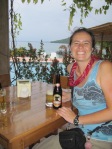
IMG_8812

The next morning, with fresh quetzales in our pocket, we left El Remate and walked back down to Ixlu. A colectivo came by almost immediately. We hopped on and rode back to the border. At this point we actually had a few extra quetzales left, so we bought some snacks and then changed the rest with a moneychanger on the Guatemala side. We got our passports stamped and headed back over the border, just about 24 hours after we had done the reverse.

Conclusions

We really regret that in the end, we only were able to spend two hours in Tikal. Such a rich site deserves to have much more time devoted to it. Reflecting back on the experience, we can say

  • We should have given more thought to how much money we got in the first money exchange. It was bad to assume that Guatemala was going to be so cheap. Plus, it was bad to try and cut it so close with what we did get. A buffer is always better.
  • We should have thought more about the decision to go to El Remate in the low season. The cheap hostel being closed affected our budget. Plus maybe in the high season the ATM would have been functional, or there would have been fellow travelers to provide some advice. We still enjoyed El Remate as a base to visit Tikal, but we should have budgeted more money to cover these incidentals.
  • Sometimes it might make sense to pay attention to when everyone else is going someplace. We had heard that more people visited Tikal in the morning, but we figured it would be better to go when it was less crowded. But, if we had stuck with the plan to go in the morning, there would have been more transportation options,and it would have been more pleasant.
  • It’s not good to let panic drive your decisions. When we started to get worried about money, we charged ahead with plans to go to Tikal instead of sitting back and really working through our options. Perhaps if we had not tried to immediately go to Tikal, we would have remembered sooner about the fancy resort where we eventually changed money.
  • Fast travel is not necessarily the best travel. We got to “see” what we wanted to see, but it wasn’t nearly as fulfilling as the rest of the stops on our trip.

Cave Adventure: Actun Tunichil Muknal

One of the activities we were most looking forward to in our time in San Ignacio was a visit to the Actun Tunichil Muknal cave (called ATM for short). This cave is undeveloped so it is quite an adventure just to explore. Plus, there are also Mayan artifacts and skeletons in a large chamber inside. We enjoy cave formations and we enjoy Mayan ruins, so this was an excellent activity for us!

Because of the unique nature of the cave and its artifacts, you have to go there as part of a guided tour. The tours were quite expensive, but we decided it was a unique opportunity. We evaluated a few different tour guides and eventually chose Mayawalk because their offering was slightly cheaper. (We were warned their their tour would be rushed and impersonal, but that would turn out to be far from the truth).

Our ATM tour was composed of us and 6 other people. We drove out to the trailhead with our guide Martin and started the mile-long walk to the cave.

By the way, we don’t have any pictures from this adventure. A few years ago, a tourist dropped a camera on an ancient Maya skull, leaving a giant crack. So, the powers that be decided to ban cameras altogether.

The walk out to the cave turned out to be pretty interesting just on its own. Martin would stop frequently to show us something interesting, such as leafcutter ants or cohune nuts (which we ate). There were also three river crossings which we had to ford. After some recent rains, the water was moving pretty swiftly!

After a quick snack break, it was time to go into the cave itself. We put on our hard hats and headed for the cave. The entrance to the cave is pretty unique-you have to swim 20 feet across a deep pool of water! Some people indicated it was going to be difficult to get across, but it turned out to be easy.

The first mile of the cave was definitely a pretty wild experience. This is not a calm path with a handrail – you are walking into an undeveloped area. The cave has water running through it which you are walking against most of the time ankle deep but in some cases chest deep!

At one point Martin had us stop so he could look at our neck size, We were a little confused, but after going through the obstacle it made sense – you had to go through some chest deep water between two boulders.The best way is to go through with your neck between the skinniest part!

Martin had us walk one calmer stretch without flashlights – only being guided by placing our hand on the person in front of us. Here is a re-creation of what that looked like:

Pitch Black Darkness

After about a mile of spelunking,we got to the chamber with the Mayan artifacts. We took off our shoes because the artifacts are just lying on the ground right next to you, so they really didn’t want us stepping on them.

First, we looked at many different examples of Mayan pottery. It seemed as if they were arranged into ceremonial offering sites. Martin had us as a group try and interpret what the layout might symbolize. We weren’t ever sure if we got it “right,” but that might have been the point.

Then, we got to see actual skeletons of the Mayans that are still in the cave today. Over time, they have been calcified by the elements and almost look like part of the cave. It was pretty amazing to be able to observe them from a few feet away with nothing separating us. The most impressive remains are what they call the “Crystal Maiden,” a well-preserved female skeleton whose calcification causes the bones to sparkle.

Crystal Maiden - from Wikipedia

Crystal Maiden – from Wikipedia

Because our group spent so long doing various interpretations, we were the last of the various tour groups that day out of the cave. At this point we were also starting to get pretty cold – our clothes were still wet from going through the water, and there isn’t any warm sunlight to dry us off underground! Therefore, we walked out of the cave and then down the trail much faster than we did one the way in. We had a late provided “lunch” back at the van, and then headed back to San Ignacio.

Overall, we really enjoyed the trip and would highly recommend seeing ATM if you are in San Ignacio. It is worth the cost if you have any interest in caves or ancient artifacts. It certainly does not feel like something that you would be allowed to do in the US without filling out extensive paperwork!

From Denver to San Ignacio via the Belize Zoo

Flying

To get to Belize, we first flew to Miami on a red-eye flight from Denver. That meant that we didn’t have to leave our house until the sun was setting. We took the Denver RTD bus to the airport, which was a helpful preview of managing our packs.

Red-eye flights are never fun, but we did manage to sleep a little bit. We got to the Miami airport at about 5 AM local time and found a relatively quiet corner to try and sleep. However, it was tough because the airport was really cold! And we didn’t think to pack anything for warmth in our bags, because we were heading to Belize…

Travel Advice: Never underestimate the probability of over-air conditioning in a public space.

The flight from Miami to Belize City went pretty quickly. Upon arrival and clearing customs,we caught a cab into Belize City. The cab was $25 (US), which seems like a big rip-off, but there aren’t really any public transportation options unless you are willing to walk quite a distance to the highway.

Taking the Bus

We hadn’t heard that there was any great reason to stay in Belize City, so we had to cab take us straight to the bus station. After getting out, some people came up and asked where we were trying to go. We assumed they had nefarious motivations, but it turned out they actually were very helpful and took us straight to our bus which was about to leave!

In Belize, the public buses are old school buses, so it felt very familiar to us to be riding one. The bus was pretty full, so we had to ride with our bags uncomfortably on our laps. We told the “conductor” where we were headed and he said he would tell us when our stop was coming up. Then, he cranked up the reggae on the bus sound system and we were on our way down the Western Highway.

Travel Advice: In Belize, you don’t pay for the bus when you get on. The conductor will come by at some time during the ride itself and ask for your fare. We never determined if there was a formula for when he decided to make his rounds or not.

Belize Zoo

Our final destination for the day was San Ignacio all the way on the western border of Belize. Belize is so small that this means that it is only about 120 km away. Since it was still early in the day, we decided to stop at the Belize Zoo.

The Belize Zoo had the reputation of being one of the premiere places to see animals in Belize, so we thought it would be a good introduction to the country’s natural wonders.

The Zoo is very easy to get to. The bus dropped us off right at the entrance (it is just off the highway). The Zoo had lockers for us to store our big bags. The entry fee was a little steep though.

The Zoo is smaller than the one in Denver but had quite a bit of diversity of animals. Our favorites included:

Tapir (The national animal of Belize.)

IMG_8214

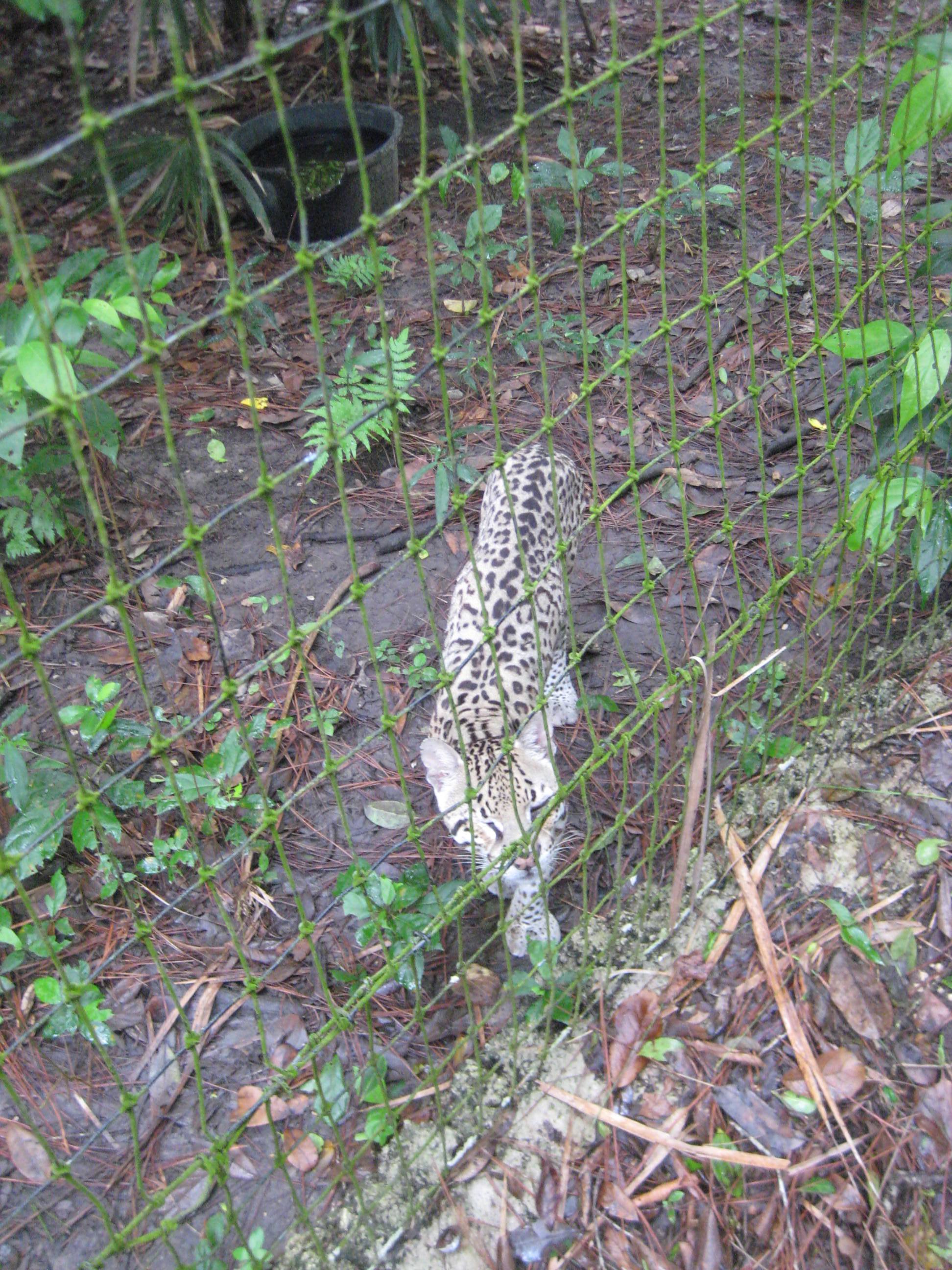
Ocelot

IMG_8223

Jaguar

IMG_8236

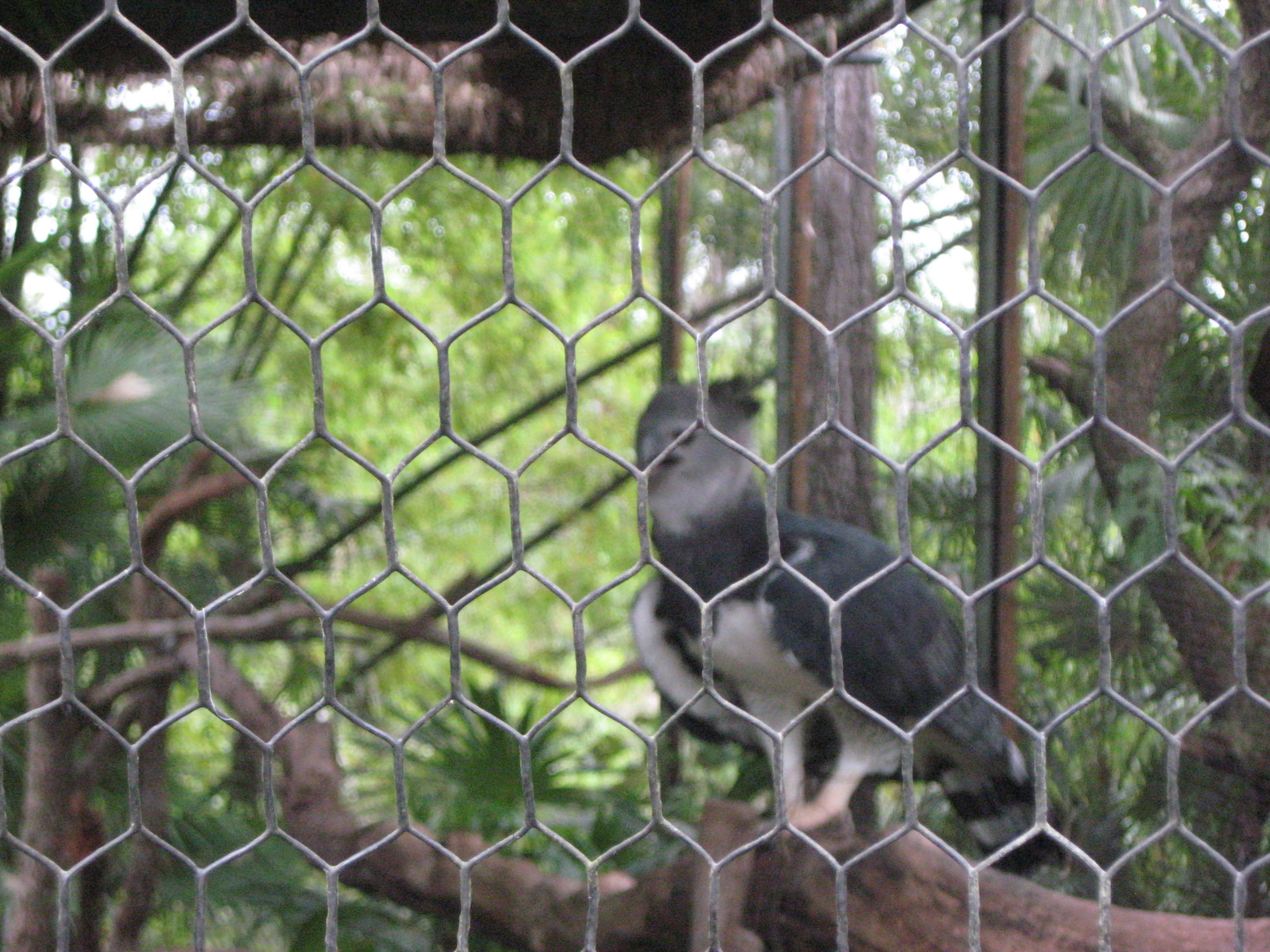
Harpy Eagle (Della’s new favorite bird!)

IMG_8231

To San Ignacio

After finishing looking at all the animals, we headed back out to the highway. A westbound bus came by pretty quickly. We flagged it down and headed on to San Ignacio. We made it in plenty of time to find lodging and get some dinner.

A long 24 hours of travel but a fun introduction for our trip!