Spanish Legacy and Texas History in San Antonio, Texas

After we returned to the US following our round-the-world trip, we had a busy summer visiting family and friends within the country. In the latter part of June, we took a trip down to Texas to visit Eric’s family. We ended up seeing quite a few sights around the state.

One of our favorite days was spent touring the famous Spanish, Mexican and Texan sights in the city of San Antonio. Eric has a cousin who lives in San Antonio and graciously agreed to host us and Eric’s parents while we visited.

Downtown San Antonio

We found a self-guided walking tour online and did a part of it to explore some of the sights of the historic downtown. Based on where we were able to find free parking, we started the tour halfway through and only did the first part (and did it backwards). Some of the highlights included:

  • San Fernando Cathedral – the oldest cathedral in Texas, founded by some of the original settlers of the Spanish colony in San Antonio who were from the Canary Islands (an interesting fact that Eric didn’t know)
  • The River Walk – No visit to San Antonio would be complete without a stroll down the shaded paths by the “river” that runs through town. Though derided by some, it’s still a pleasant magnet for activity in downtown
  • La Villita – We found a nice cafe for a lunch break in this collection of shops and restaurants on the site of a historic village
  • The Menger Hotel – We walked through the lobby of this Victorian building which has seen many famous guests and is still operating today

The Alamo

We ended our walking tour at The Alamo, arguably San Antonio’s and even Texas’s most famous attraction. The site was originally one of the Spanish missions, built as San Antonio de Valero in 1718. By 1793 though, it was abandoned, but then in 1836 it was used by the Texian Army during the Texas Revolution. It was the site of the famous Battle of the Alamo, where all of the Texian defenders were killed when the Mexican Army led by General Santa Ana overtook the fort. The massive losses later served as a rallying cry for the Texians as they won their independence.

IMG_1953

As such, this is a hugely important site in Texas history and a very popular site to visit. Also, surprisingly, it is free to visit. We purchased audio guides to better understand what we were seeing.

Not much is left of the compound from the battle of 1836. The image that most people think of when thinking of “The Alamo” is actually just the chapel building of a much larger complex. It is the main building still standing, so the bulk of the visit is focused there. Since many people died inside, it is treated as hallowed ground.

IMG_1949

Throughout the courtyards of the complex are more informational signs about the Alamo and Texas history in general. It’s a fascinating story, so we spent quite a while just going through them. There is more information in one of the other still-standing buildings, the Long Barracks, but we skimmed through it because we wanted to have enough time for our final stop of the day.

The Missions

In the 17th and 18th centuries, Spain established Catholic missions in the New World in order to try and convert the Native Americans to Christianity. The area that is now San Antonio proved to be fruitful for this type of work, so many missions were built along the San Antonio River (including what we now know as the Alamo).

Today, the ruins of the missions comprise the San Antonio Missions National Historic Park (minus the Alamo, which is run independently). There is a nice hike-and-bike trail connecting them to each other and to downtown, but we were running low on time so we just drove.

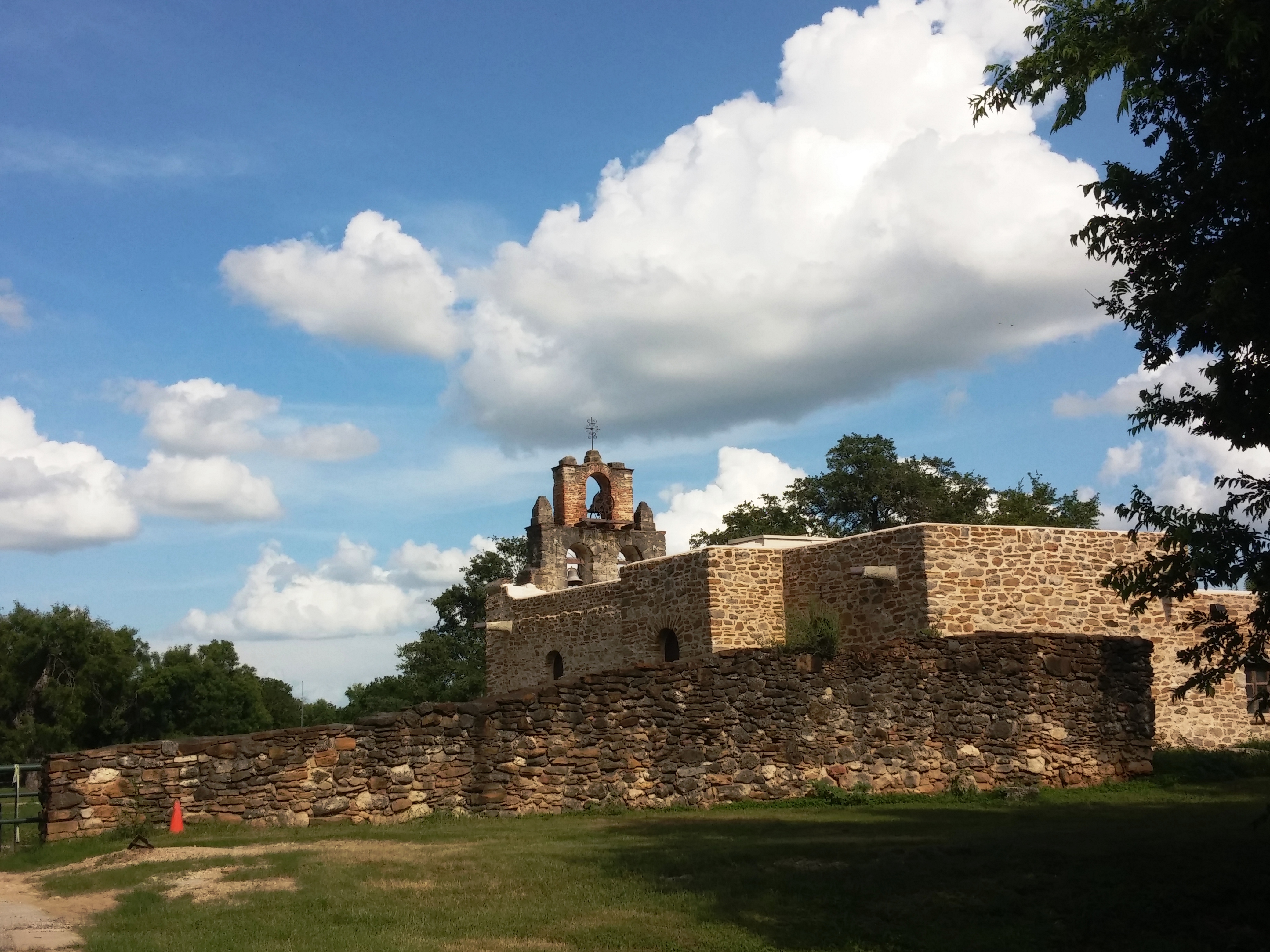
We started at one of the largest and most well-preserved: Mission San Jose. We explored the grounds inside the well-built walls and the recently renovated chapel. There were only a few other people here, which was a nice change of pace from the busy Alamo.

The park closed at 5, so we hurried and just drove by a few of the other sights: Mission San Juan, Mission Espada and the Espada Dam and Aqueduct. Just the brief glimpse was interesting, so we hope to get the chance  to return and visit in much more detail.
20150628_172100

At the time of our visit, the missions and the Alamo were not UNESCO World Heritage sites (something that some of us, namely Eric, obsess over seeing), but we read that they were considered strong contenders to be named as such soon. And just a week later, they were! So now we can add the San Antonio Missions to our list of sites visited.

Pearl Brewery

To cap off our day of sightseeing, Eric’s extended family took us to the up-and-coming development near the former Pearl Brewery. We had a nice dinner of Mexican “street foods” at La Gloria, then walked down and back up a newer, less-developed stretch of the RiverWalk. Both the kids and adults in the group were fascinated to watch sightseeing boats go up and down a set of locks along the way.

Final Thoughts

One day is clearly not enough to see all there is to see in San Antonio, especially if you are interested in all of the Spanish and Texan historical sites to be found. Thanks again to Eric’s cousin and her family for hosting us on our all too brief visit!
Summer Rendezvous 2015

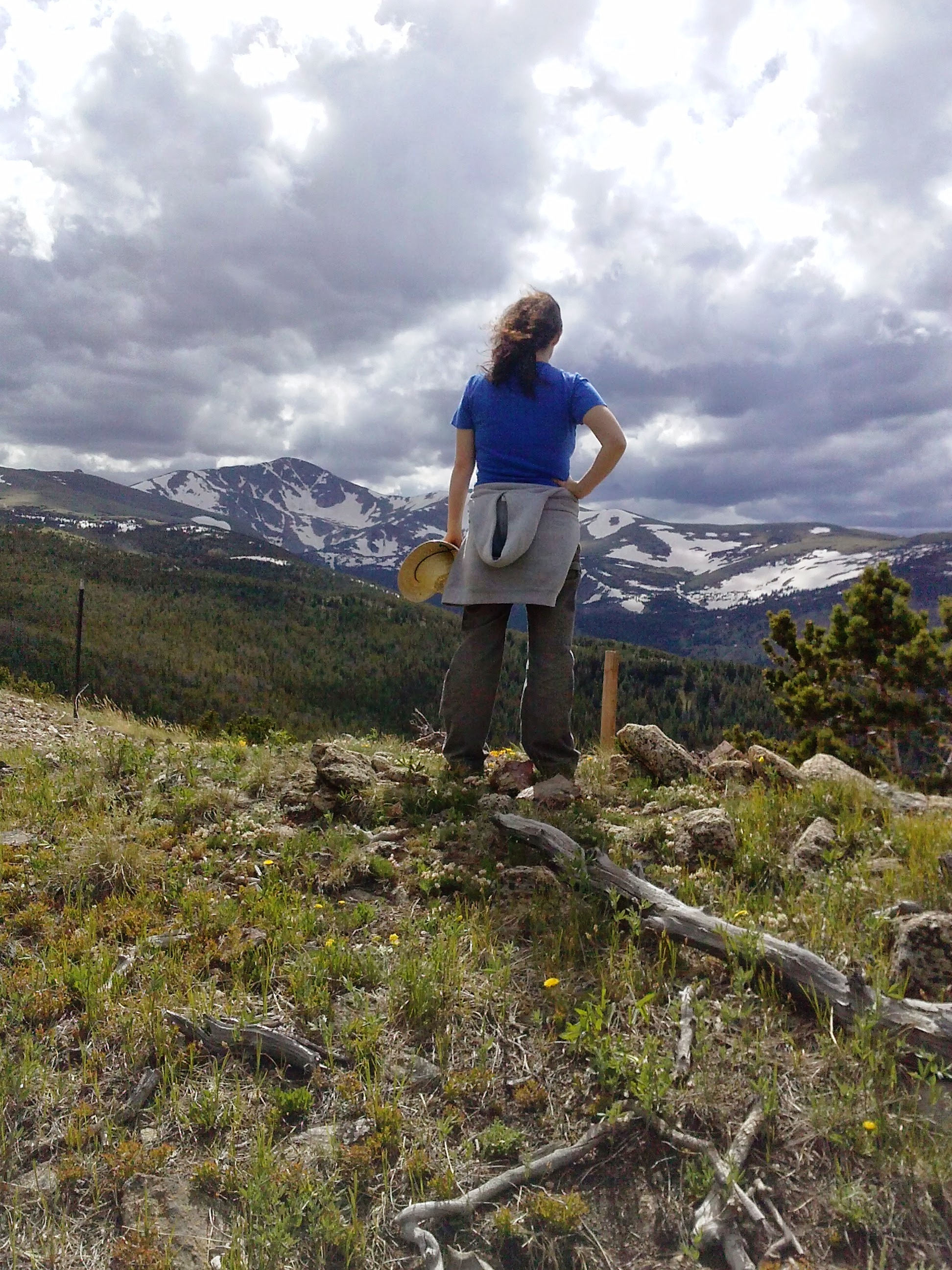
We were quite excited to be back this summer so that we could once again participate in Della’s family’s annual party at their cabin in the Colorado mountains. It is such a treat for us to be able to spend time in the mountains again. It was a little painful that we only got to visit the cabin once in the entire summer season of 2014.

CAM00338

For Rendezvous, we spent a long weekend up at the cabin, enjoying the cooler weather, the lovely silence of the wilderness, and even a blue moon.

On Saturday, the family took a hike to two small mountains that we have affectionately named Della and Dana Points (Dana is Della’s sister). The weather was absolutely glorious, and we couldn’t have had better views.

On Sunday, many of our friends joined us at the cabin for the annual Rendezvous. The weather was a bit less nice, with intermittent clouds and even a few rain drops, but we still managed nice hikes with the guests.

Of course, we also played our annual Rendezvous Games. Two more teams were added to the Centennially famous Yellow Apron Award.

Thank you so much to all of our friends and family who made it a lovely day!

Exploring Closer to Home: Southern Colorado

After our trip through northern New Mexico with Eric’s parents, we split from them and headed back towards home. We decided to make a scenic trip out of it, and add a few more of the sites in southern Colorado to our trip, including another UNESCO World Heritage site and one of our favorite national parks.

Mesa Verde

After leaving Chaco Canyon, we drove north out of New Mexico to the southwestern Colorado city of Durango. We hadn’t pre-booked a place to stay, but had identified a road on the north side of downtown with a few cheaper off-brand hotels. The first one we tried had no one at the front desk and the door locked (which seemed strange), so we went a little further down the street to the Day’s End Motel. It was a little run down, but we did have a decent room that would work well for our purposes.

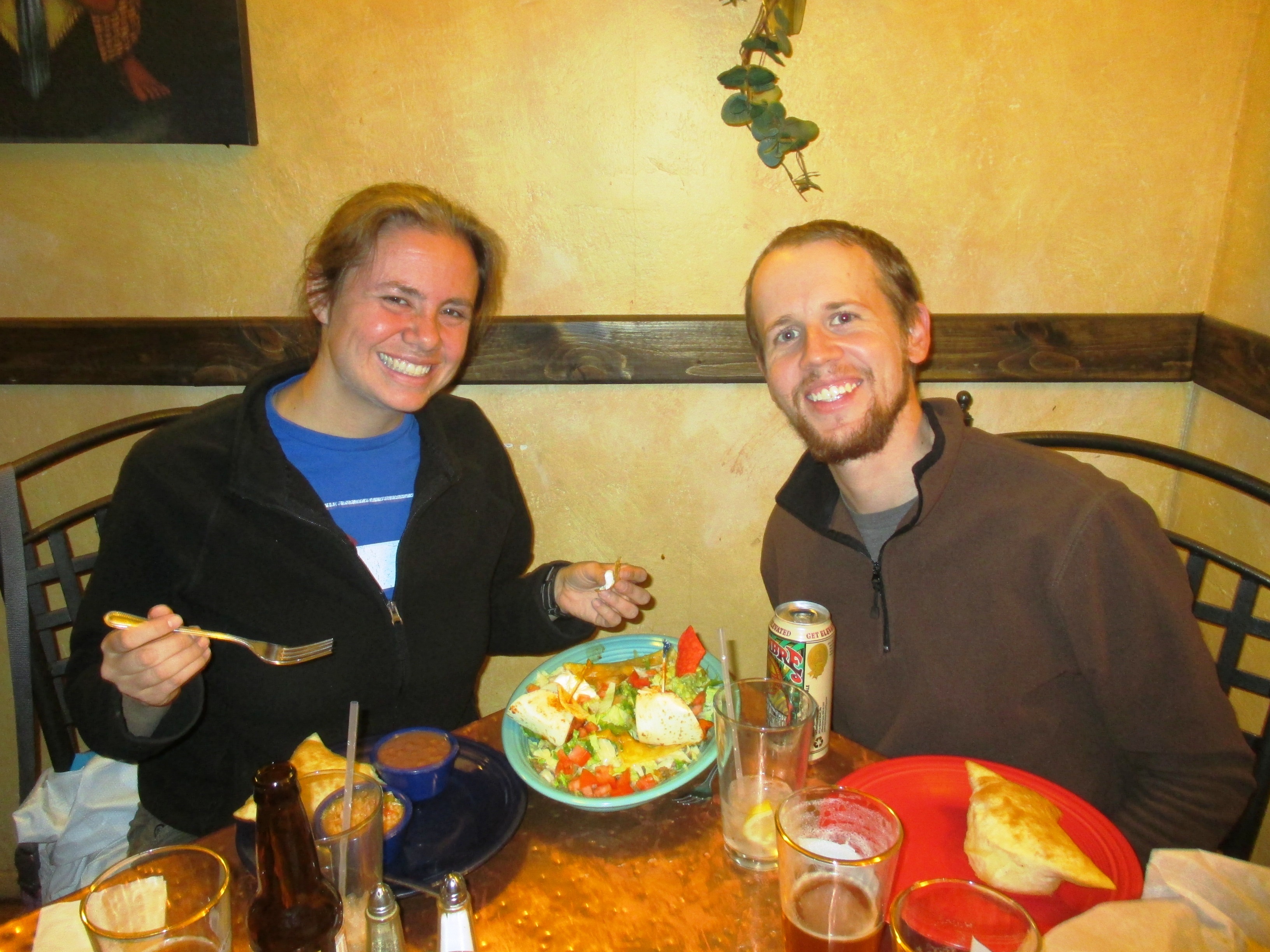
For dinner, we decided just to do something close rather than head to downtown. On Yelp, we found a Mexican restaurant called Tacos Nayarit within walking distance. We enjoyed the food, especially the cheap tacos which were their specialty.

IMG_8218

The next morning we headed out for a day trip to Mesa Verde National Park, our third UNESCO World Heritage site of this roadtrip. It is mainly known for its intricate cliff dwellings set high up on the walls of picturesque canyons.

Our first stop was the recently renovated visitor center, where we picked up some maps and a few self-guided trail brochures. We also signed up for a ranger-led tour of the Balcony House (you have to register in advance for these tours since space is limited).

IMG_8220

We paused a few times on the drive into the main part of the park to take in the scenic views out over the valley below.

IMG_1644_Fotor

We had a little time before our tour, so we did the self-guided walk through the Spruce Tree House ruins. Here we got our first look at one of the famous cliff-dwellings built by the Ancient Puebloans. This is the same general culture that built the structures at Chaco Canyon, but archaeologists are still debating the exact relationship between the two. The cliff dwellings were built after the great houses in Chaco Canyon were abandoned, so one theory is that the builders came to Mesa Verde and built there,  but there are not very many architectural similarities, so it’s not clear that it would have been the same people.

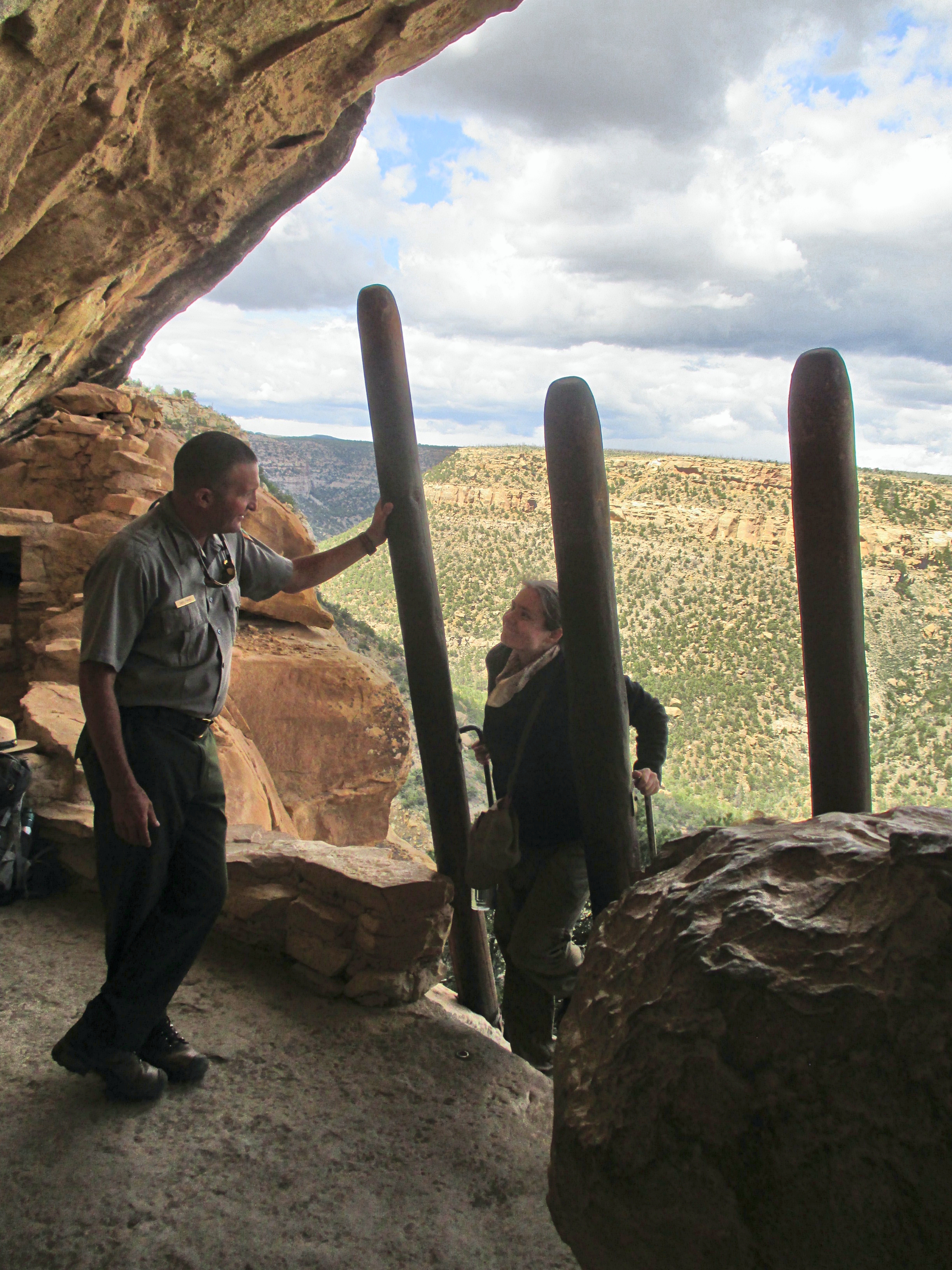
After a brief stop in the museum and a picnic lunch, we headed to the trailhead for the Balcony House guided tour. The ranger who led the program was very interesting and quite informative. He had grown up in the area so he was able to explain a lot about what we were seeing. A lot of the beginning of the hike was taken up with him giving a safety briefing for accessing the ruins, since the ruins are found in the side of a steep cliff face, requiring a bit of an adventure to get in and out of.

IMG_8247_Fotor

The ranger also explained something that we had found confusing: why the people who built Mesa Verde were now called Ancestral Puebloan. The two of us had both visited Mesa Verde as children, and remembered the park literature then referring to the Anasazi people. As it turns out, this was a phrase that had been invented by historians, and the modern-day descendants found it offensive. The term Ancestral Puebloan was deemed to more accurately reflect who these mysterious ancestors were.

IMG_1667_Fotor

The first “obstacle” was a large ladder, which turned out to be pretty fun to climb. The ruins themselves were actually a little small, and it felt like we had to rush through them, since it took a while for the large group to all get up the ladder. After a brief tour of the ruins, we crawled out through a narrow tunnel (smaller than the Cu Chi tunnels in Vietnam), up another ladder, and then along some stairs. It was a little nerve-wracking but also pretty fun.

Our next activity was a self-guided drive along the sites of the Mesa Top Loop. Here were got to see some of the ruins of other types of structures found in the park. Most people only know about the cliff dwellings of Mesa Verde, but those were actually built later in the area’s history. The early settlements were more traditional farming villages, with small buildings and the ceremonial kivas which are the hallmark of the Ancestral Puebloan culture. We could see the progression of building technology as the years went on, culminating in the big cliff houses. Historians are still unclear what drove the culture into such an isolated location. Was it for defensive purposes from some outside threat? They don’t know for sure.

Our last stop was the Far View sites, a collection of buildings making up a small village on top of the Mesa. Here we found some of the larger buildings that reminded us a bit of the great houses in Chaco Canyon. The most impressive ruin here was an ancient reservoir that was used as a water supply for the village.

The drive out of the park was pretty, with the sun starting to set over the mesa and valleys below.

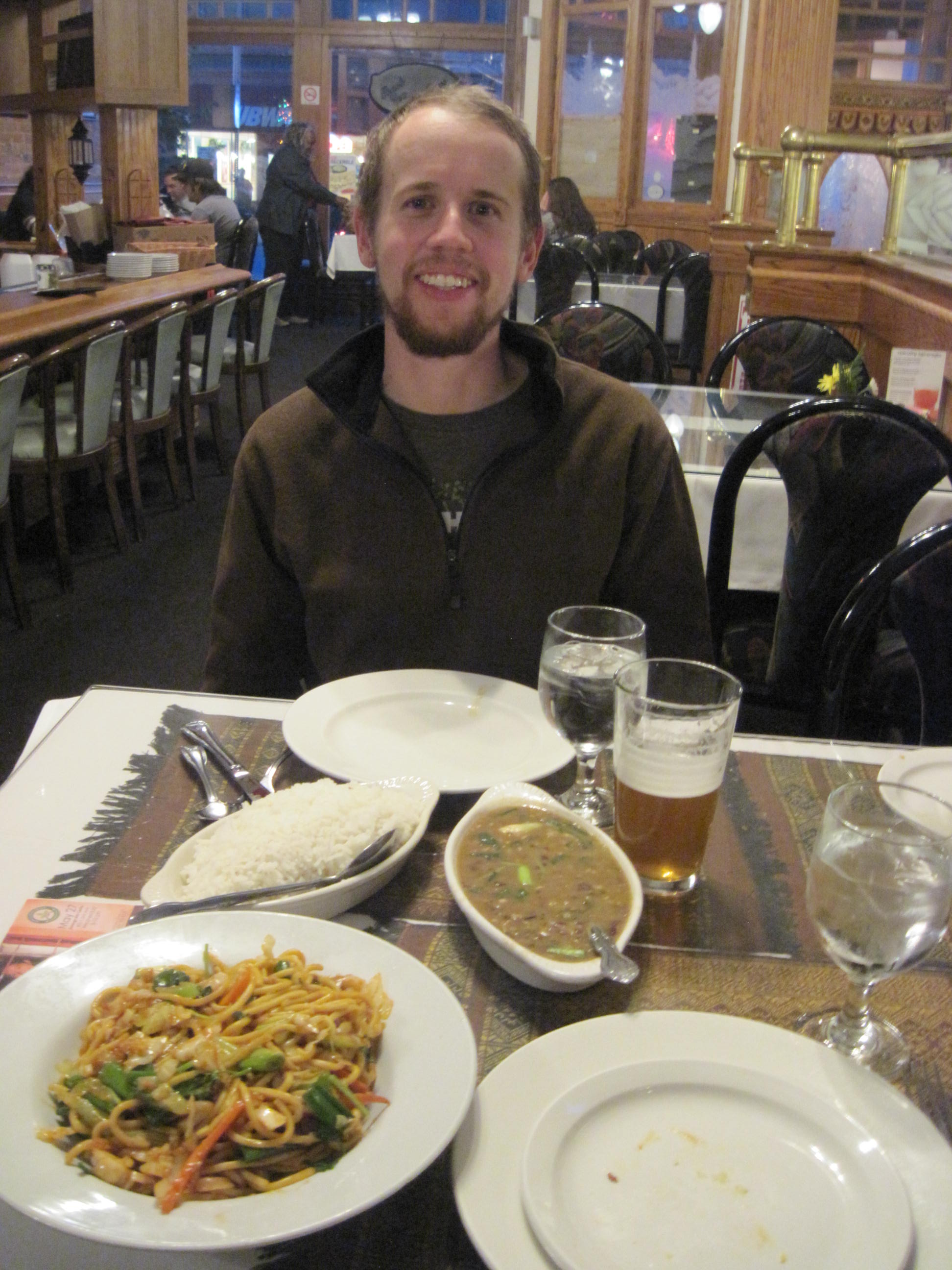
We stopped in downtown Durango and decided to eat at a Nepali restaurant we had seen earlier. We felt it was fitting to go there after our recent earthquake experience. We didn’t tell anyone we had been in the country, since we didn’t really know how to. We donated a little money to a collection that they had set up for relief efforts.

IMG_1749

Pagosa Springs

The next morning we packed up and headed east. We took a slight detour to Vallecito Lake, where we drove around and took some pictures. This was for the benefit of Eric’s dad, who has fond memories of the summers he spent there at a camp run by his uncle. The camp is a RV park now, but you can still see some traces of the old buildings.

We drove on to the town of Pagosa Springs, where we stopped for lunch and then an afternoon of lounging in their signature attraction, the natural mineral hot springs. There are a few options of different places to experience the springs. The town visitor center had a nice brochure comparing the costs and benefits. We chose the Overlook Hot Springs, a cheaper spa housed in an old Victorian mansion on the main street.

As it turned out, for most of our time there we had the whole place to ourselves! We started at the outdoor tubs on the roof, but the intense sun drove us inside. Here we lounged for a long time in the dimly lit main room, alternating between some of the hot mineral pools in there (and occasionally a cold plunge pool!). It was very relaxing, but we finally, reluctantly got out of the pools, showered off, and headed east once more.

Great Sand Dunes National Park

Our destination that night was the town of Alamosa. Once again, we hadn’t booked anything ahead, but we did identify one cheaper place just outside downtown, the Riverside Inn. We were lucky and got the last available room for the night. We were also surprised – the room was large! We weren’t expecting to have a separate room with a full oven, refrigerator and dining area.

IMG_8365

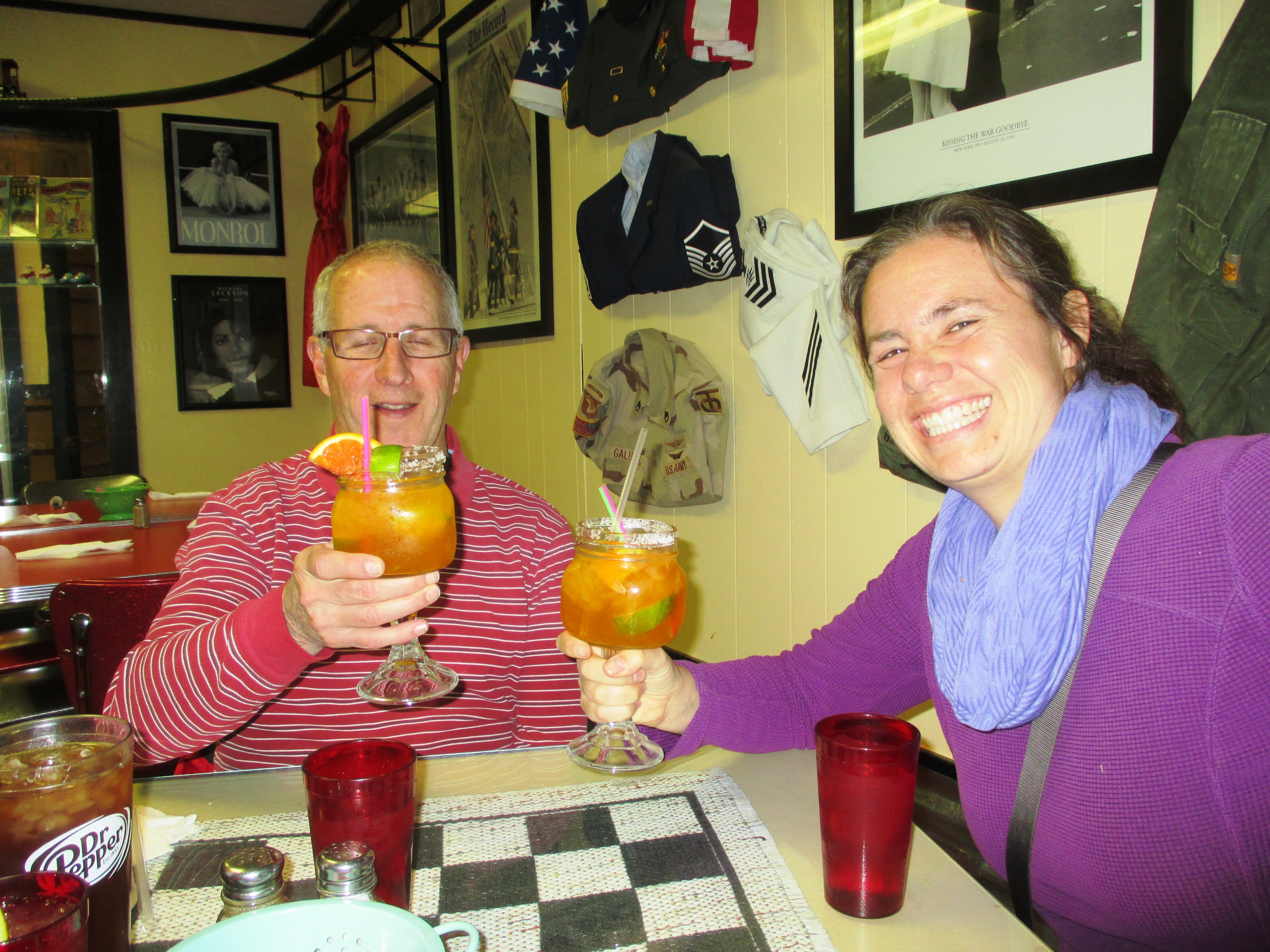
We hadn’t prepared to cook on our own, so we headed in to town to find some dinner. Like any respectable Colorado town, Alamosa has a microbrewery restaurant, San Luis Valley Brewing Company. We love beer, so we made this our dinner stop for the night. We shared a taster tray of their brews, including some interesting ones made with green chile. The food was pretty good as well.

IMG_8362

The next morning we headed out to a park which Della has great memories of as a child: the Great Sand Dunes. It was overcast though, and as we drove out, it started to rain :(. We stopped in the Visitor Center and browsed their exhibits while we waited for it to clear up. Eventually it only started drizzle, so we went out to explore the dunes.

Unlike other parks, there aren’t many rules about where you can go for a hike. You kind of just set out and hike wherever you want on the sand – the wind will erase your tracks before you know it!

In the spring and early summer, there is one small obstacle you must cross – a seasonal river of snowmelt runs between the parking area and the base of the dunes. There are no bridges across it, so you have to figure out your own way across. On a hot summer day, it might be fun to splash across, but this was a cloudy, cold, late spring day, so we spent a while debating our options. It was too deep to think that we could make it across in our waterproof hiking shoes, so we decided to wear sandals and just get wet. This was complicated by the fact that the creek exhibits an interesting phenomenon called “surge flow,” which means that there are waves of water surging down the creek. We tried to time our spurts of activity around surges, but they were pretty frequent and we still got pretty wet. Our feet were numb from the cold water by the time we got over. In retrospect we wished we had brought dry shoes and socks to change into on the other side.

Instead, we just explored the dunes in our wet sandals. It was windy and starting to rain again, so we didn’t go very far. We walked up one dune, took in the view, and then headed down again once it started to hail/sleet. It was a disappointing visit to the dunes :-/. Though even with the bad weather, we managed to have some fun!

We ran back across the creek, and hurried to the car where we tried to warm our feet back up. Once they started to thaw, we hit the road and drove back to Denver.

IMG_8401

Our unplanned roadtrip through northern New Mexico and southern Colorado was a success. We got to see three UNESCO World Heritage sites, a lot of natural beauty, spend some time with family, and do a little mental recovery from the abrupt end of our trip in Nepal. We weren’t quite ready to end our travels, so it was nice to do a little bit more traveling in our own backyard.

Exploring Closer to Home: A Week in Northern New Mexico

We arrived home in Denver about 1 month earlier than we had intended. Because of this, we had one more month of summer to figure out. We were feeling a bit antsy and were working through a lot of feelings related to our experience in Nepal during the earthquake. We knew that Eric’s parents already had a short vacation planned in Red River, NM. We decided to drive down and join them and give ourselves a little bit more time to explore a bit closer to home. If you’d like to learn more about how to support Nepal after the earthquake, there are a few ideas here.

We loaded our car, making sure to be extra prepared. Our recent experiences in Nepal made us super aware of the variety of things that could possibly go wrong. We made sure to carry extra gas, extra warmth, extra food, etc. We drove through some excellent scenery south from Denver towards New Mexico. We arrived to Red River right around sunset and right before a downpour started.

IMG_1320_Fotor

It turned out that May in Red River was a low time for visitors. We were reminded of our experiences with walking dead tourism in Turkey as we had to go to 3 different places to find an open restaurant for dinner!

IMG_8024

Taos

The next day we headed out to visit Taos. We were excited to add another UNESCO site to our list as well as explore a town we had never really seen. Our first stop was the town visitor center where we picked up a self-guided walking tour guide and got more information about things to do in the area. But, our first stop was Taos Pueblo.

IMG_1323_Fotor

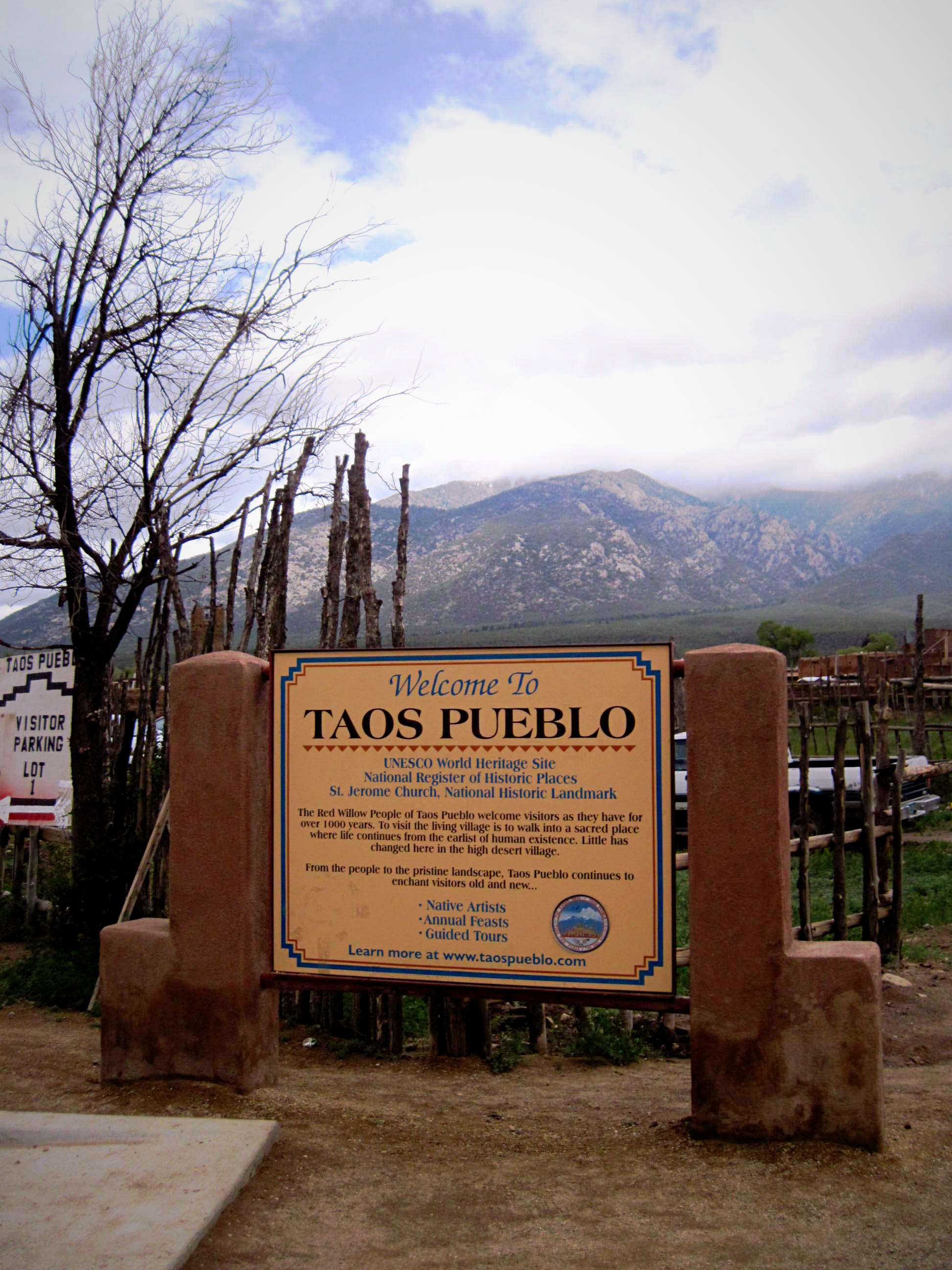
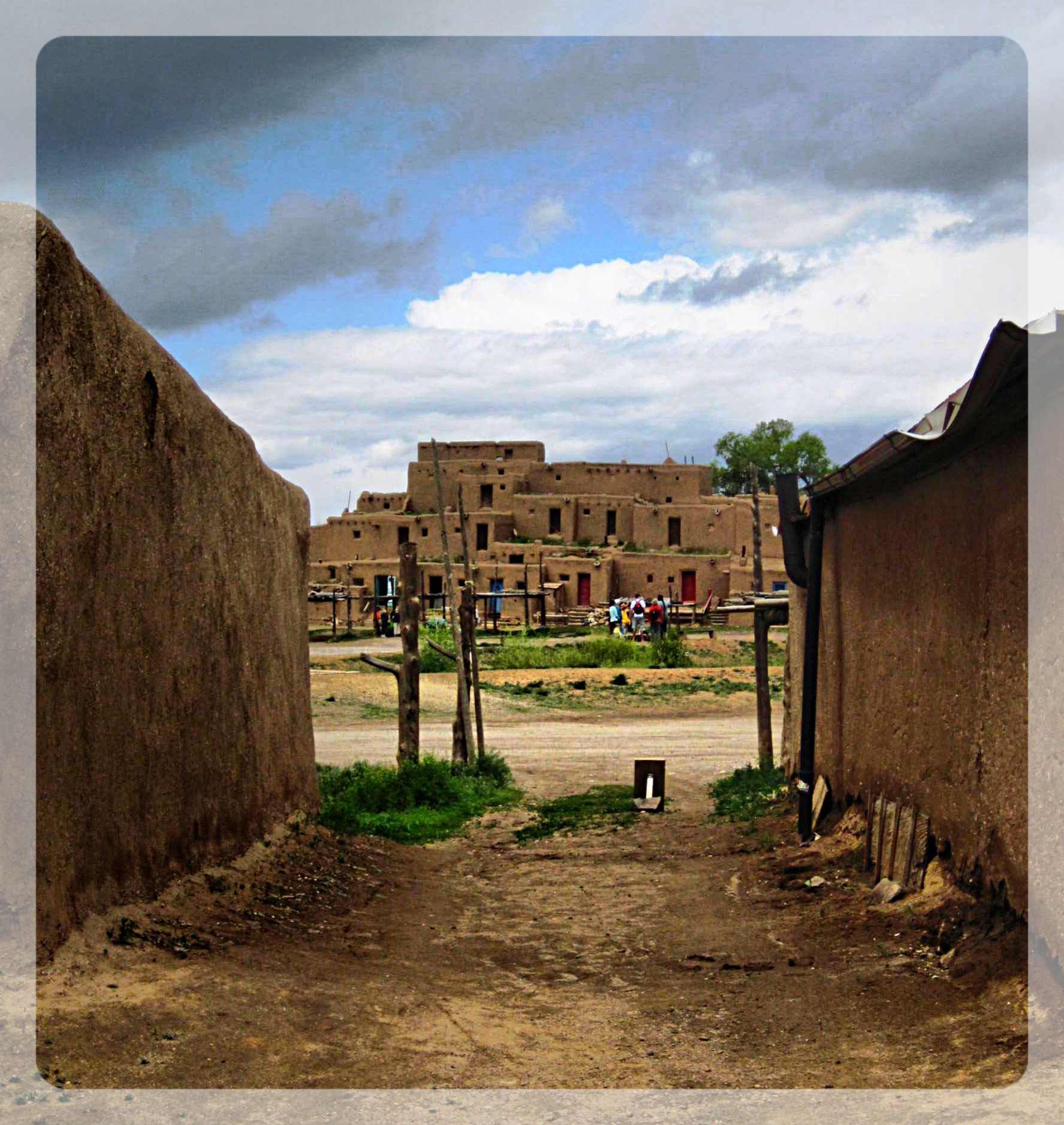
Taos Pueblo is an ancient Pueblo about 1 mile outside of Taos. It is designated a UNESCO world heritage site. The site is made up of several multi-story adobe buildings that have been continuously inhabited for more than 1000 years.

IMG_1352_Fotor

When visiting Taos Pueblo, you pay an entrance fee which includes a tour of the site by a native of the Pueblo. We enjoyed this tour, on which we learned a bit about the history of the Pueblo and more about the culture and traditions of the people who have lived there for so long.

We learned that the oldest buildings were built perhaps sometime between 1000 and 1400 AD. Currently there are about 150 people who live in the pueblo. The Puebloan families own a home within the Pueblo that they use for holidays and religious ceremonies, though they often live outside the Pueblo. The Pueblo and about 48,000 acres of mountain land above the valley belong to the native people. They structure their own government and education system within the Pueblo.

We learned a bit more about how the adobe structures are built and maintained. In addition, we toured St. Jerome’s Church and learned more about the religion that the Puebloan people practice. They are about 90% Catholic, but ancient (and secretive) native rituals are performed alongside the Catholic traditions.

We were surprised to learn that they are a very secretive people. Our guide was not allowed to describe any of the private rituals, ceremonies, or holidays observed in the Pueblo. He was also not allowed to describe much of the native religious beliefs or education practices.

Please check out the Taos Pueblo website to learn more about this fascinating site.

IMG_6812_Fotor

After our visit to the Taos Pueblo, we headed back into modern Taos. We spent the rest of the afternoon exploring there. First we visited the iconic St. Francisco de Asis Church, which was made famous by artists such as Georgia O’Keefe and Ansel Adams who painted/photographed it. Then we headed back downtown to follow our self-guided walking tour. We walked up Kit Carson Avenue past art shops, through Taos Plaza and inside the old courthouse to see some murals. Then we headed through Guadalupe Plaza and up LeDoux street. At the end of LeDoux, there was a winery tasting room. Della was intrigued and Donna and Steve had never been to a winery, so we headed inside to take a break and get a few tasters. We enjoyed most of them, though Donna decided that she really doesn’t enjoy most red wine. We finished the tour at an old settlement a few blocks away, enjoying the lovely light as the sun started a slow descent.

We then drove out to the Rio Grande Gorge Bridge, which appears in the middle of a flat plain way over the Rio Grande below. We parked and walked out on to the bridge. A bit scary looking down, and when it vibrated with trucks passing by. But the views were really incredible.

We started to head home, but made a last minute decision to stop at Taos Mesa Brewing Company on the same road. It seemed to be in the middle of nowhere but it was packed with people for trivia night! We got a bunch of samplers of beer and dinner.

Wild Rivers Recreation Area

The next day we decided to head to Wild Rivers Recreation Area which was about a 1 hour drive from Red River. Again, the park seemed mostly empty. In fact, when we first headed to the ranger station, it was closed. Luckily, a ranger showed up a few minutes later to give us some advice. He recommended checking out the confluence of the Rio Grande and Red Rivers and then doing the Big Arsenic Springs trail. We ate lunch at the confluence, enjoyed the windy view and then headed to the trailhead. We hiked a mile down on some rocky trail (making us cross our fingers for no earthquakes). Near the bottom we moved through a campground and on to some petroglyphs. After a quick snack, we headed down the river to Little Arsenic camp and then head up the canyon from there. It was a little longer than anticipated, so made for good exercise.

Valles Caldera National Preserve

We were heading to Chaco Canyon next, so had a couple hours driving to get there. We left after brunch and made a few stops along the way. We enjoyed a quick wine tasting at La Chiripada Winery in Dixon. This was a much less structured tasting than the last, but enjoyable as well. We stopped for lunch in Los Alamos. The on and off rain we had been experiencing all day lead us to keep driving. We headed out of town toward the Valles Caldera National Preserve. We arrived late afternoon in some mist and rain without much of a plan of what to do. Fortunately, the park wasn’t busy and a ranger offered to give give us a guided tour of the Caldera in his van. He was able to give us lots of information about the caldera’s geology, history, and status as a park. The park is unique because the land is owned by the Federal Government but is managed by a trust. This has created an interesting experiment in land management. The trust does continuing ranch operations while opening the preserve to visitors. We also stopped at an interpretation cabin and listened to another employee tell us more about the area and about some of the movies and TV shows that have been filmed in the preserve. These include the 2013 version of The Lone Ranger with Johnny Depp and the TV series Longmire.

Chaco Culture National Historical Park

We drove from Valles Caldera to the small town of Cuba, which we had read was the closest town to our next destination, Chaco Culture National Historical Park (also known as Chaco Canyon). We got one of the last rooms at one of the few motels in town, the Frontier. We had a nice New Mexican dinner at El Bruno’s just down the road – much better than what we expected for such a small town!

IMG_8128

Getting to Chaco Canyon requires quite the journey. The last 13 miles of the road are unpaved and rough, but our Subaru handled it well. The main attraction at the canyon is visiting the extensive ruins built by the Chaco culture between 900 and 1150 AD (a little before the well-known cliff dwellings at Mesa Verde), now a UNESCO World Heritage site. We picked up some maps and headed out to hike the different self-guided trails through the best-preserved of the ruins.

The first set of ruins, called Una Vida, is just outside of the visitor center. It was windy and cold, so we bundled up and set out on the trail. A small brochure described how the structures we were seeing were part of what seems like a pueblo or some other gathering place for a large group of people, with ceremonial kivas scattered throughout. One of the most interesting parts was the masonry: the walls were built with many small flat rocks stacked on top of one another. We also took a side trail up the canyon wall to see some petroglyphs.

We drove through the park and stopped at the trailhead for the two biggest sites: Pueblo Bonito and Chetro Ketl. We had just started our tour through Pueblo Bonito when a hailstorm hit, leading us to take shelter pressed up against one of the ancient walls. Once the storm passed, we continued our tour of this massive example of what archaeologists call a “Great House,” since it seems to be a living structure for a large number of people. This one, a large multi-story complex, had at least 650 rooms at its height. The path took us through some small doorways and into some of the structures.

The sun came out as we passed by more petroglyphs on of walk to Chetro Ketl, another Great House. This one was a little smaller, having about 500 rooms.

We were running out of time in the day, so we rushed over to our final stop, Casa Rinconada. The attraction here is a massive Great Kiva, a ceremonial structure seen in all Ancient Puebloan sites. When in use, it was covered with a roof and had a fire going inside in a large fire pit. It functioned as a place for religious and cultural ceremonies.

Around 1140 AD, the Chacoan culture collapsed, perhaps caused by a severe drought. Archaeologists think that the people migrated to neighboring communities, but do not know definitively. Many of the Native American tribes in the area, such as the Hopi and Pueblo, have oral traditions that describe the people from Chaco Canyon as their ancestors.

As we left the park, the sun came out again, and a beautiful rainbow crossed from one side of the canyon to the other.  It was a picturesque end to our time in New Mexico. We split from Eric’s parents; with them headed back to Texas and the two of us headed north to Colorado for a visit to another UNESCO site. It was an enjoyable time, and a good way for us to get another small taste of traveling as we adjusted to life back home.

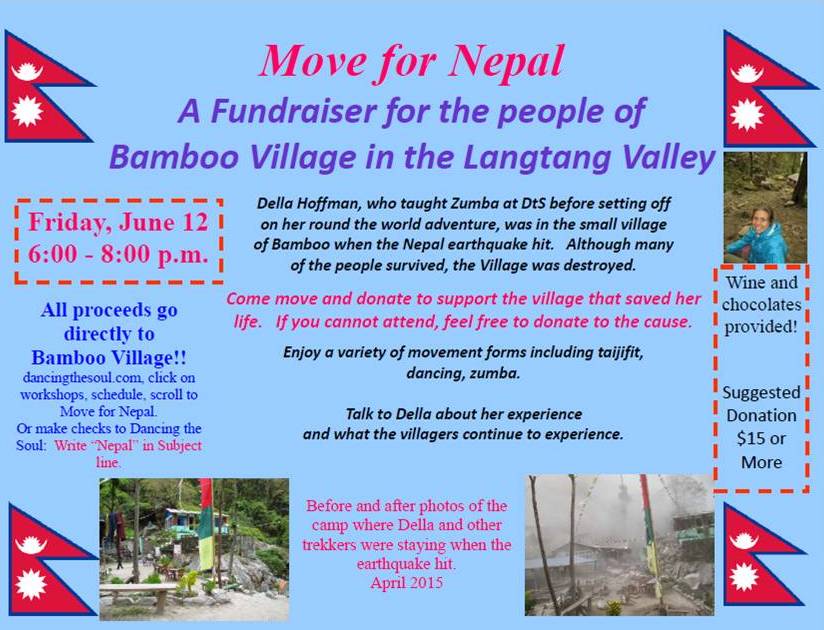
Denver Area: Dancing Fundraiser to Support Bamboo! Friday, June 12 6 pm

Eric and I have been looking for ways that we can support Nepal. One of the ideas I came up with was to use Zumba as an avenue to raise some money to help support the villagers of Bamboo. Click here to read our Earthquake story and learn how this village saved our life.

Margie Krest of Dancing the Soul has graciously agreed to host and support this event. I taught Zumba at Dancing the Soul for several years before I headed out on our RTW journey. It is a wonderful studio in Denver that offers many modalities of movement and stillness. I’m so pleased that this wonderful community has agreed to help support Nepal!

On Friday, June 12 from 6-8 pm, we will have an event called Move for Nepal. It will feature several types of movement including Qigong, Belly Dancing, and Zumba. Two other instructors will be joining me to lead this class. We will Move for approximately 1 to 1.5 hours and then enjoy some wine and chocolate and ask any questions people may have about Nepal.

We’re asking for $15 donation with all proceeds going directly to the people of Nepal.

You may sign up in advance by going to http://dancingthesoul.com/ and clicking on “Workshop Schedule” on the top right hand side or clicking this link. You can also chose to donate directly online at that time.

Dancing the Soul is located in the Mayfair Neighborhood of Denver at 950-C Jersey Street | Denver, CO 80220. Click here for more info on location.

Please come to help support Nepal. (It will also be my Zumba debut after my RTW trip and I would love the support of familiar faces!)

Picture1

Flashback Friday: Carlsbad Caverns

Flashback Friday is a picture series where we “flashback” to some of our memories – from either from our prior travel or from home. We hope you’ll enjoy some of our remembrances!

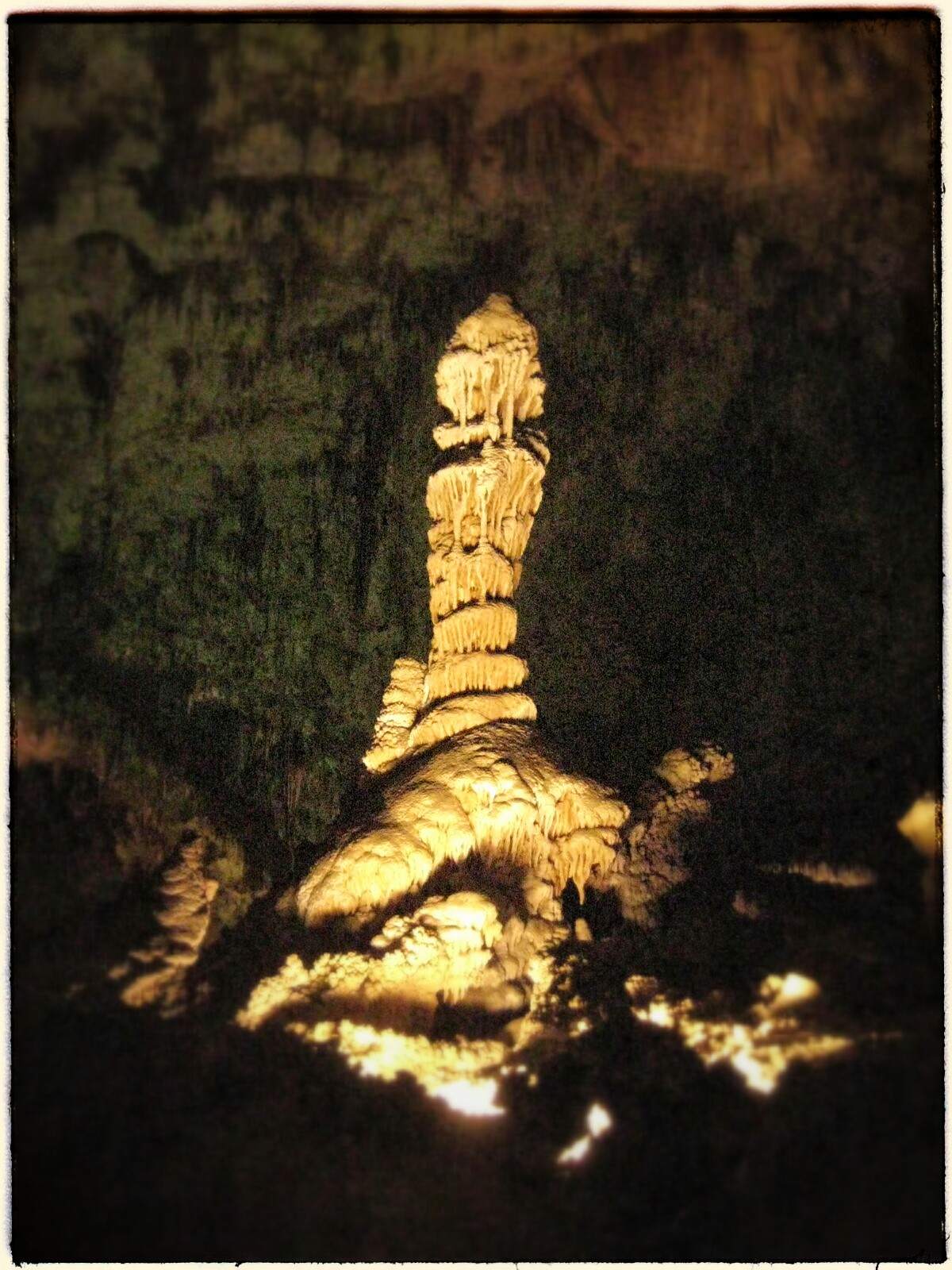
Recently (you’ll read about it soon) we visited a large cave in Vietnam. It got us thinking about another amazing, large cave that we have visited together. On Spring Break of 2010, we drove down to Big Bend in Texas to meet Eric’s family. While on the way, we took a stop at the famous Carlsbad Caverns. This is truly one of the most magnificent caves that one can visit!

image

Flashback Friday: Eric’s Birthday!

Flashback Friday is a picture series where we “flashback” to some of our memories – from either from our prior travel or from home. We hope you’ll enjoy some of our remembrances!

Tomorrow we celebrate Eric’s 32nd birthday! We thought we would flashback to one of Eric’s birthdays a long time back. This picture is from his party 2001 with the Dallas crew of friends. This was his senior year of highschool.

4x6 brown and gold

Flashback Friday: Spring Break Sand Dunes

Flashback Friday is a picture series where we “flashback” to some of our memories – from either from our prior travel or from home. We hope you’ll enjoy some of our remembrances!

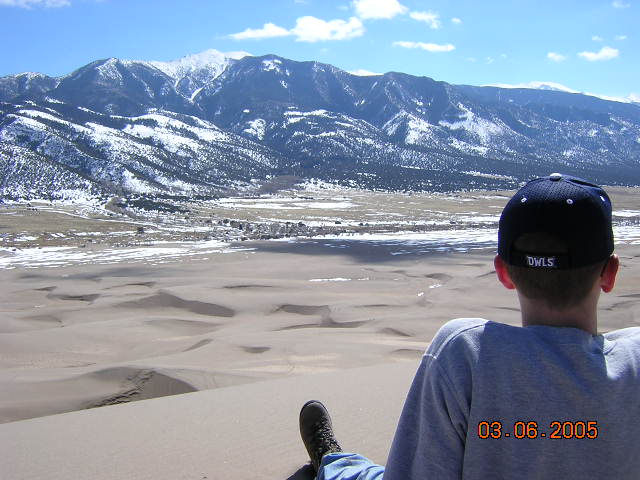
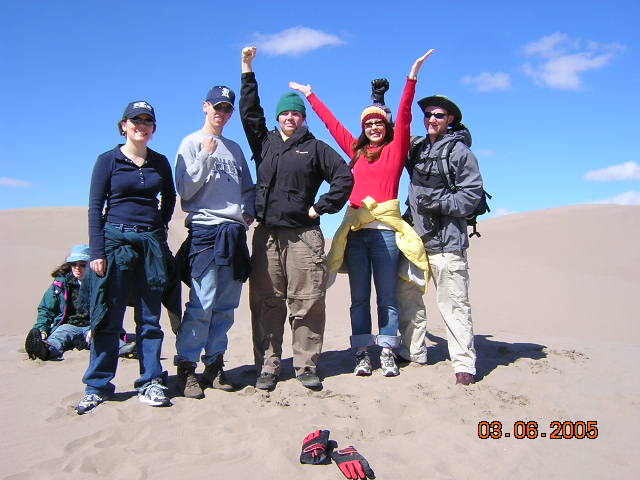
So, this week is Spring Break for Della’s colleagues back home, so we are remembering some of our spring break trips! The first trip that Eric and Della did together as a couple was spring break of our senior year, 2005. We took several of our friends and drove to Colorado to do some skiing. Our first stop though, was at a super underrated destination in southern CO called the Great Sand Dunes!

069 eric top

Dunes of sand next to the gorgeous CO mountains

075 top yes!

We made it to the top!


Flashback Friday: Beer Bike

Flashback Friday is a picture series where we “flashback” to some of our memories – from either from our prior travel or from home. We hope you’ll enjoy some of our remembrances!

March is Beer Bike month! What is Beer Bike you ask? Well check out this post to learn more. In short, it’s a yearly event at our alma mater that we both really enjoyed. Eric served on the pit crew for many years and Della was a biker, chugger, and coordinator of the event over time! It’s always fun to reminisce about our college days!

She’s 40 yards out, she’s 30 yards out, ready, set, suck! Suck! SUCK!SUCK!

image

Posted from WordPress for Android

Flashback Friday: Winter Rendezvous!

Flashback Friday is a picture series where we “flashback” to some of our memories – from either from our prior travel or from home. We hope you’ll enjoy some of our remembrances!

If we were at home, we would have been planning and enjoying the 4th Annual Winter Rendezvous at our cabin during March. So, we thought we’d flashback to the very first Winter Rendezvous! This occurred in 2011. It is nice for us to see some pictures of snow while we are sweltering in 100 degree heat here in Bangkok and off the chart humidity. Oh snow, how we miss thee!