Here is a new video in Della Dances Around the World. Those of you who have taken my Zumba classes should know this dance inside and out! Stand up and dance it out with me! Here is Danza Kuduro from all over the world!
Here is a new video in Della Dances Around the World. Those of you who have taken my Zumba classes should know this dance inside and out! Stand up and dance it out with me! Here is Danza Kuduro from all over the world!

Enjoy our photos from Thailand. You can also access our photos on the top right “places we’ve visited” menu.
 |
| Ayutthaya Album |
 |
| Bangkok Album |
 |
| Chiang Mai Album |
 |
| Chiang Rai Album |
 |
| Elephant Jungle Sanctuary Album |
 |
| Koh Lanta Album |
 |
| Mae Sot Album |
 |
| Sukhothai Album |
This is one of our Budget series of posts to give you an idea of how much we spent traveling around the world. Here we will look at Laos. Check our posts to see what kind of activities we did and where we stayed!
In Laos we used the Laotian Kip. We converted to US dollars using the current conversion rates at the time of our visit. It was approximately 8,000 Kip to $1.00.

We stayed in several places in Laos – 3 hotels, 2 guesthouses, and 1 hostel. The guesthouse we stayed at in Luang Prabang was beautiful and probably a little bit pricier than we would have stayed if we had not been with family.
This included entrance fees for museums and wats, as well as a fee to cross a bamboo bridge in Luang Prabang. The majority comes from a day tour we did in Vang Vieng.
We only count alcohol costs when it is not purchased with other food. This included several afternoon beers.
We ate out one to two times per day. A few of our guesthouses included breakfast, but not all.
This included several souvenirs… More than we’ve bought almost anywhere in Asia. (A secret: It included some gifts for some special people in our lives!) Eric also got his hair cut!
We took buses between major cities, including one of the worst bus rides we’ve had in a long time, as well as two days on a slow boat to get to Thailand.
It should have only been $70, but we stupidly forgot our passport pictures in our checked luggage and had to purchase them for $2.
This divides out to $74.21/day which is under $100/day budget! Still a little bit higher than we were hoping for countries in Asia. However, we stayed in mostly the biggest tourist cities and bought more souvenirs than is our norm.
This is one of our Budget series of posts to give you an idea of how much we spent traveling around the world. Here we will look at Cambodia. Check our posts to see what kind of activities we did and where we stayed!
In Cambodia we used the US dollar. Yup, that’s right. Cambodia uses US dollars. They do not use US coins though, so we were also dealing with Cambodian Riel for costs less than one dollar. The going exchange rate at the time of our visit was 4000 Riel to 1 dollar.
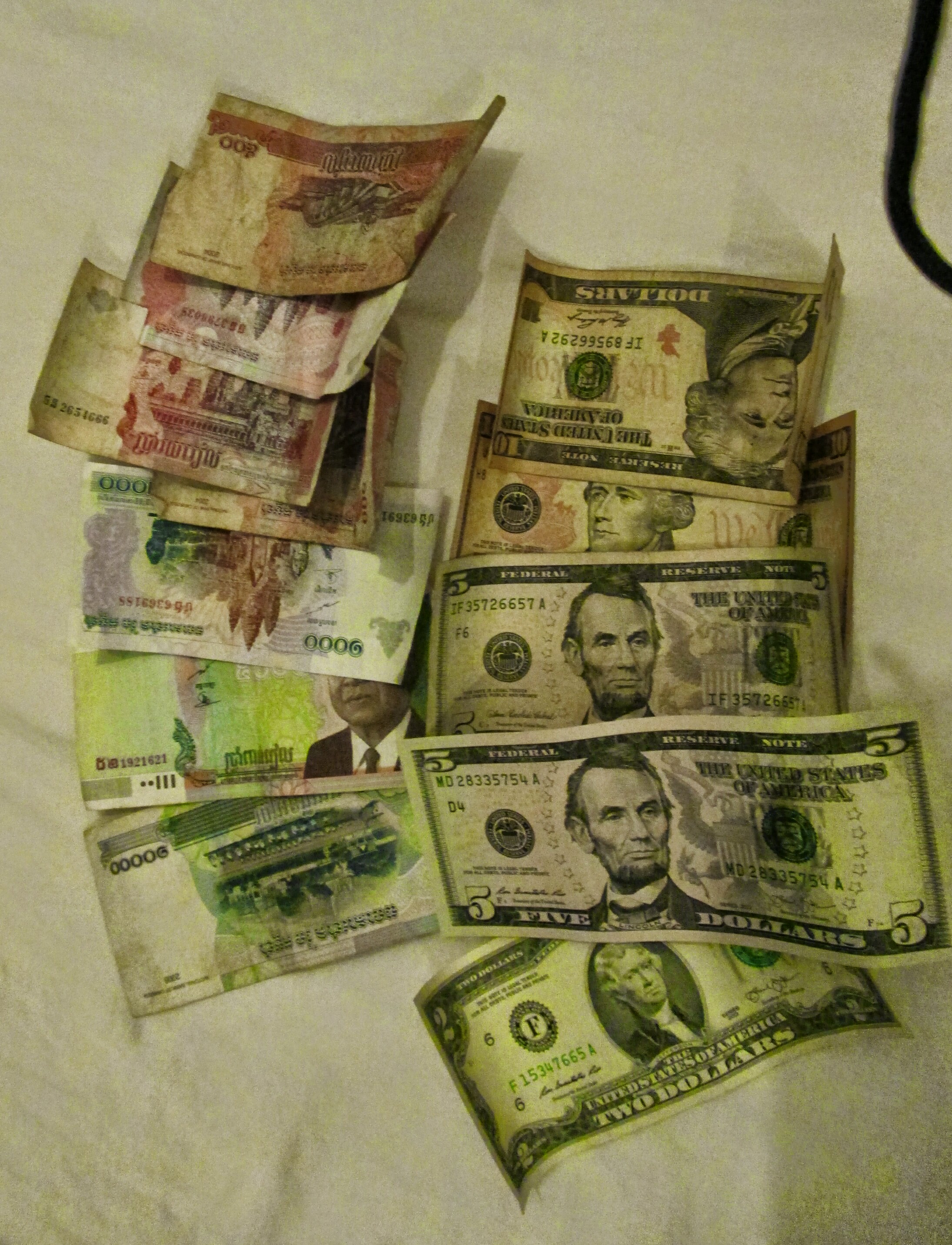
Did you catch it?? Yes, that is a 2 dollar bill. They are in circulation in Cambodia!

We splurged on an expensive place that our friend suggested for two nights, then stayed in hostels and guesthouses for the rest of the time. We always had private rooms.
This included entrance fees to a number of things: museums, the killing fields, Angkor Wat, and more. It also included a few tuk tuk drivers/guides. In addition, we went to the circus in Battambang which was fairly pricey.
Our alcohol category does not include alcohol that we buy with food, so this includes a few happy hours with a friend in Phnom Penh, a wine tasting, and some beers while watching a movie.
We ate out one to two times per day and we had to purchase our own breakfast for most of the time (though not all).
This included postcards, mailing postcards, laundry, a scarf souvenir, and a donation (which Eric thinks was actually a scam).
This includes a few taxis and tuk tuks as well as bus transport between cities. It also includes rental ebikes and bikes in Angkor.
Our visas on arrival were $30 each and we had to pay an extra $2 each because we forgot to put our passport photos in our day bags and so had to buy new ones. Oops.
This divides out to $91.02/day which is under our $100/day budget… though not nearly as low as we had hoped. We were so surprised that Cambodia has ended up being one of our most expensive countries thus far. We did a little calculating and realized that we ended up spending much more on food than we ever imagined we would. We didn’t eat street food nearly enough, partly because it is so hot so we always looked for restaurants to get out of the heat. Activities were also high which was in part because of the high cost of visiting Angkor temples. Wow, we have to do better!
This is one of our Budget series of posts to give you an idea of how much we spent traveling around the world. Here we will look at Bali. Check our posts to see what kind of activities we did and where we stayed!
In Bali we used the Indonesian Rupiah. We converted to US dollars using the current conversion rates at the time of our visit. It was approximately 12,500 Rupiah to $1.00.

We stayed in two Airbnb apartments which Phill paid for and we paid him back for through food…
This included entrance fees for a lot of temples. The largest expenses were for a dance performance, massages, and a tour guide for two days in Ubud.
This is misleading – we did drink in Bali, but we never purchased alcohol on its own. It was always with meals or other food…
We ate out for lunch and dinner every day. We purchased one breakfast from Payogan Homestay and the others from the grocery store. There was also alcohol consumed with most dinners!
This includes one postcard… and a large airport exit tax. blargh.
This includes several taxis as well as a day we took a car and driver around near Seminyak.
We purchased our visas on arrival. We should have paid in Rupiah as it would have been cheaper than in dollars. Oops.
This divides out to $100.98/day which is just about $100/day budget! We were expecting that we might go a little over in Bali as it was a special occasion and we were traveling with others. We have to give a HUGE shout out and THANK YOU to Phill and Izaak for being understanding and supportive of our budget. Thanks!
This is one of our Budget series of posts to give you an idea of how much we spent traveling around the world. Here we will look at Singapore. Check our posts to see what kind of activities we did and where we stayed!
In Singapore we used the Singaporean Dollar. We converted to US dollars using the current conversion rates at the time of our visit. It was approximately 1 Singaporean dollar to 0.8 dollars.

We stayed in a small hotel room.
This included a free walking tour, a museum, and the night safari (which was quite expensive).
Alcohol was super expensive in Singapore. We abstained.
We ate out about one time a day, but we had to purchase our own breakfasts.
We purchased a postcard.
We purchased a tourist 3 day transit card which covered both the MRT and the buses.
This divides out to $105.68/day which is over our $100/day budget. This is a little disappointing, but Singapore was quite expensive. Especially for lodging!
Enjoy our photos from Myanmar. You can also access our photos on the top right “places we’ve visited” menu.
 |
| Bagan Album |
 |
| Inle Lake Album |
 |
| Mandalay Album |
 |
| Pyin Oo Lwin Album |
 |
| Yangon Album |
Hope you enjoyed the first part of our interview with Della’s parents about what it was like when they traveled around the world back in 1979-80. Here we will continue to hear more about their life on the road then and compare it with ours on the road now!
Peggy and Wayne (P&W): In some countries like Egypt, Turkey, Taiwan, Greece and even, Germany, there was not much English spoken or understood (and needless to say, we didn’t speak their language). Taiwan was especially rough because we didn’t understand the weights, measures, or street signs because they were in a different script. Even if someone wrote the street name on a paper, we found it impossible to compare the two different renderings of the same name. A lot of countries were easier because they were former British colonies. That meant there were English speakers and even English language newspapers. We found more English spoken in India 35 years ago than during our 2008 visit.

Chatting with a local in Burma
Della and Eric (D&E): For the most part, it has been incredibly easy. English is the universal language and there have only been a very few times where others didn’t speak it. We feel quite lucky (and lazy) that we never have to work very hard to communicate.
P&W: Except in Europe, almost no place we stayed, ate, or shopped accepted credit cards and the only card of any value at all abroad, was American Express. Each of us had an American Express card and it was important to be one of their customers. Once every 30 days you could use the card to cash a check by going in person to the American Express office. Not many places had such offices however. We carried some US cash and $4800 in American Express travelers checks in relatively small denominations. We would carry these in our money belt or in pockets we had sewn inside our pants both at our waist and near the cuffs. Halfway through the trip, we had American Express re-issue some travelers checks, since they were so sweaty and worn out. At airports and near border crossings there were always currency exchanges They usually took large commissions so we would only use these to get a minimal amount of local currency, sufficient to tide us over until we could get to a bank. Exchange rates were better there, but foreign banks often kept short and sometimes erratic hours and the money exchange process was tedious and time consuming. Most countries had established exchange rates (rather than market driven ones). You could almost always get a much better rate on the “black” market, on the street. Doing so, however, was illegal. As part of your entry and exit, you were supposed to declare all your cash and then show official receipts demonstrating official exchange for the difference in dollars between the amount you came in with and the amount you left with. Some countries required that you exchanged at least a minimum amount. We never ran out of money, but other travelers did. And that was a big deal. They had to send home for money to be wire transferred to a bank. It cost a lot to do and could take a long time.

At the beach in India
D&E: We almost exclusively get money from ATMs along the way. It has been easy to find them at almost every stop. We make sure to use debit cards from accounts that charge no foreign transaction fees. Eric uses Charles Schwab and Della uses Fidelity. Many places also accept credit cards and we use those as often as we can. Again, we have ones that have no extra foreign transaction fees.
P&W: We didn’t have a budget, we just tried to be as cheap as we could be. We had enough in savings that we knew we wouldn’t run out before the end of the trip. The bigger worry was always having access to cash if we should need it and not having our cash and/or airline tickets stolen.
We wrote down all of our expenses in the back of our journal. We would keep tabs by category of spending for each country and divide by the number of days. Our records show that it cost $12 a day for two people in Nepal (and about half that while trekking).
We spent almost $13,000 overall during the nine months we traveled. Airfare figured prominently in our budget – costing almost $3500. We spent about $1600 on things – souvenirs and gifts. Excluding airfare and these purchases, we spent about $30 per night. That includes $1700 spent on internal transport. We had relatively high costs in Europe and in Hong Kong. We also had high daily costs in Burma because the visa there was very restrictive and required that internal transportation be done by air, rather than by boat, train or bus. When looking for lodging, we usually started by looking at recommendations from Lonely Planet or other travelers. We would go to the area where the recommended guest house was located. If the recommended place was full or was no longer cheap, we could usually find other cheap places nearby. Booking ahead really wasn’t an option since there weren’t many phones. Sometimes we would follow touts. Perhaps most important to keeping costs down was that Wayne loved bargaining with everyone and about everything. Even when he didn’t want to buy, Wayne would bargain just to get a sense of what things really cost.

Negotiating over something in Greece
D&E: We try to say we have a general budget on average of about $100/day. However, that is a pretty arbitrary number that we have chosen for ourselves. Our general rule is to be as cheap as possible. It is often easy to pick affordable accommodation because you can compare all prices in one sitting on the computer before you book. Sometimes it is even the same with restaurants, though we count more on fellow travelers and outside menus generally. We try to eat out only as much as is necessary, cook for ourselves occasionally, take public transit as much as possible, and stay in dorm rooms when we feel like we’re spending too much! Check out our budget posts to see how much we’ve been spending in each location.
P&W: In Greece, we think we picked oranges for one day for $5.
We worked as volunteers for about two weeks in South India and it was an incredible experience. A graduate school friend had prior experience working with NGOs in India and he arranged the experience for us. It was at a clinic/farm, run by an elderly British lady and a Hindu couple. They provided health care services in a rural area. Often patients had to travel hours to get to the clinic, so if they had an injury that needed ongoing care, they would stay and if able, work on the farm in exchange for their room and board. We did a building project for them and it was quite an experience to take the oxen cart to get our supplies. This place was so off-the-tourist track that locals would surround us and just stare.


D&E: We haven’t volunteered or worked yet, but we see a lot of other travelers who do. Many travelers use a site called workaway.com where you can find opportunities abroad. There are also a ton of volunteer opportunities through different non-profit organizations. We hope to do some volunteering with elephants in Thailand!
P&W: We took about 2000 pictures during our trip. Wayne’s walk-around day bag was the camera case with a 35 mm SLR camera and two big lenses: a wide angle and telephoto lens. We bought an additional zoom lens in Hong Kong. Peggy had the original “spy camera,” a small 35 mm Minox. We had to ration our picture taking because we brought all of our film from home and because film and processing were relatively expensive. We shipped our film home whenever we sent a package and had it developed there. As a result, we didn’t know whether any of the pictures we took were any good. Going through airport security was tough because the old x-ray type machines used for security could ruin film, so we carried a lead bag to protect it. We kept index cards for each roll of film to take notes on where pictures were taken.
We also kept a journal. We wrote our experiences down every couple of days. Peggy used carbon paper to make a copy as she wrote each page in the journal, and then send those pages in lieu of letters to our families. They were to keep the letters just in case our journals got lost. We remember having to be really careful using the carbon paper. Sometimes it would end up folded and you’d lose half a page, or worse yet if you put it in the wrong way, you ended up with backwards script on the back side of the journal page and nothing on the paper to be sent home! We also bought souvenirs, which contributed to our memories. We shipped items home from several of the countries we visited. Shipping was a little difficult. We varied who we sent packages to because you would have to pay tariffs if you sent too much to the same address . It sometimes took several days to put together a package. Finding boxes was quite hard, especially in Africa. Also every country had a different process. In India, you had to find a tailor to sew a cloth around the entire box and put wax seals on seams. We shipped 13 boxes in total, including a small marble table top from Agra and Tibetan rugs from Nepal. Despite dire warning that stuff would be stolen or lost in transit, every one of our boxes made it home eventually! We waited over a year for the Agra marble. We had a friend going to Agra and we asked him to visit the shop where we bought it. The guy told him he had only recently completed the inlay of the semi precious stones (it was a special order) and it was in the back room ready for shipping. To be on the safe side, our friend accompanied the craftsman to the post office just to make sure that it was sent!
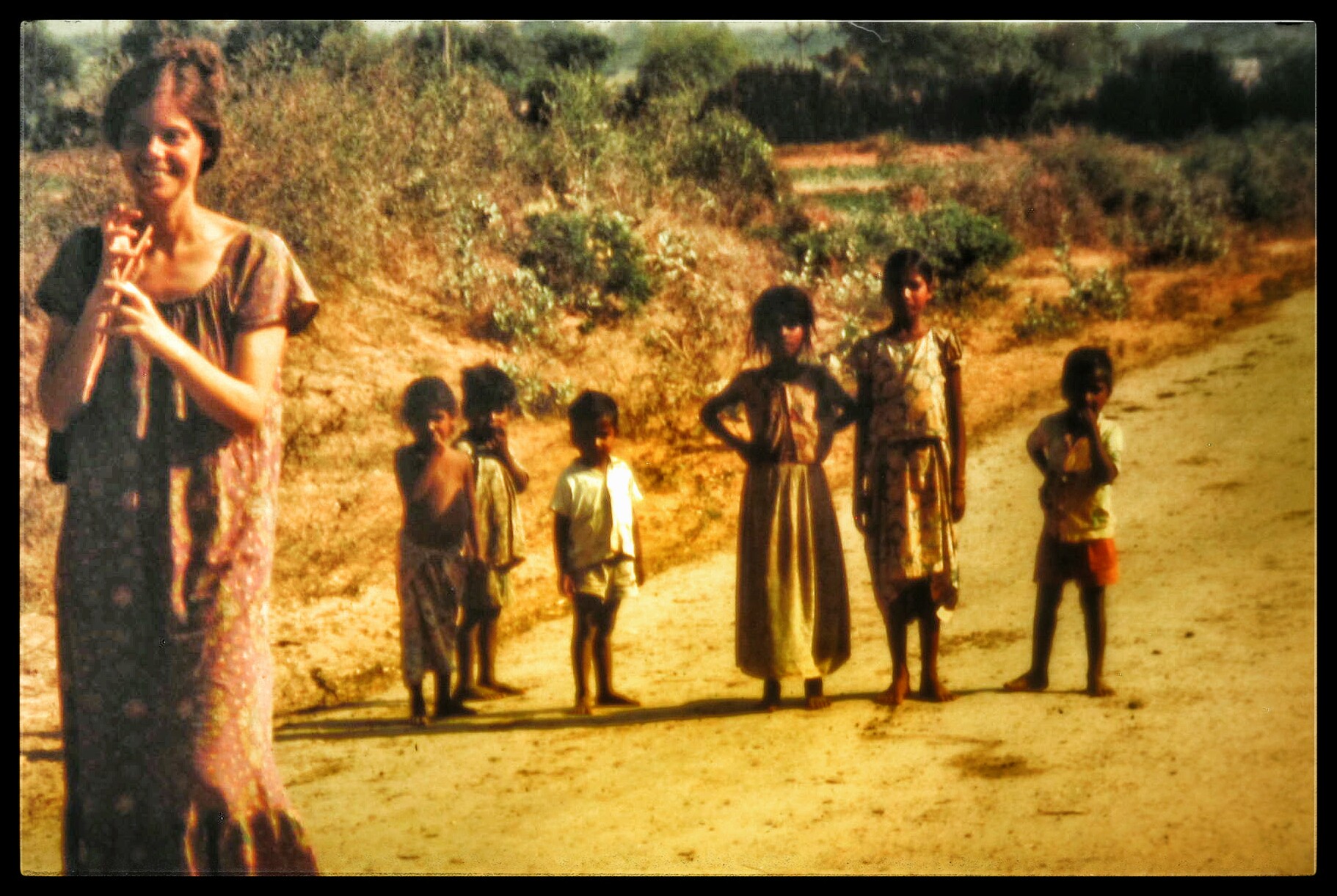
Peggy as the Pied Piper in rural India
D&E: Obviously our biggest tool is this blog! However, we also keep a more personal more detailed log of every day travel. We have taken thousands and thousands of pictures – sometimes more than we know what to do with! Keeping everything digitally makes it easy to have way more than you really need. We have also sent quite a few postcards home. We have purchased a few souvenirs which we have sent home with family members when they have visited and we took some home ourselves on our break over the holidays.
P&W: We sent letters and postcards to family and friends fairly often. We would send things called airgrams. They were pretty affordable. The paper was really lightweight, almost like tissues. We had to be careful, as they could get ruined easily!
We made one or two phone calls. You would go to the center of town where there was a bank of phones for international calls. You would wait for them to get set up and then they would assign you a booth. We called our families around Christmas. We would generally call collect. It was difficult though, because there was no way to prearrange the call, so we just hoped people would be around.
We had given people a general itinerary of where we expected to be, each time we bought a batch of air tickets. We asked them to send us letters “post restante” or general delivery to the larger cities. They could also send things to the American Express offices or the American embassies. People would send us letters fairly often. When we arrived in major cities, we would check in all three of those places to make sure we didn’t miss a letter.
We traveled with Peggy’s parents in Italy at the start of our trip. Other travelers in Europe seemed quite a bit younger than we were. Later on, in Africa and Asia, we connected with quite a few other travelers and most were our age. We also managed to see some friends from home along the route. In Kenya we celebrated Christmas with a friend from the US who was working as a teacher in a small village near the Uganda border. In Delhi we stayed twice, for a week each time, with graduate school friends who had a real house, with a guest bedroom and servants who offered us “bed tea” each morning.
We would try to stay abreast of what was happening at home through newspapers or radio. In larger cities, we we could find the International edition of the Herald Tribune and sometimes Time or Newsweek Magazine. Back then, US embassies weren’t quite so barricaded and some had reading rooms you could visit. Occasionally we would hear English speaking radio stations. We remember staying in an old hotel in Rangoon and hearing a radio playing The Voice of America in the room next door. We heard about the failed attempt to rescue the hostages held in Iran.

Peg holding up the wall in Mycenae
D&E: It has been quite easy to keep in contact with home. We have email of course. We also use some other internet sites like facebook, Instagram, and this blog to stay in touch. In addition, our cell phone plan allows us free texting and data in many countries so we have been able to text home often. We have also called using online tools like Skype and Viber. We are in touch so much it is like we have hardly left! =p
P&W: Our contingency plan was to go back to the place we had last seen each other, or if that failed, to go to the place where we were staying. Our big fear was getting separated when we were in transit or first arriving in a new place. Our fall back plan was to go to the main post office in our destination city at noon and to do so for repetitive days. Fortunately we never lost each other for long, but we each had some nightmares in which even our fallback plan didn’t work.
Our friends almost got separated on a flight. There was room for 3 of us but not all 4 to fly from Kenya to Bombay. The ticket agent saw no issue with a couple being separated. All 4 of us stood at the counter refusing to move until the manager figured out a solution that would allow a couple to either stay together or leave together.

Didn’t want to get too separated!
D&E: When we head into a very crowded place, we typically set a point like the entrance or exit. The general rule is to go back to where you last found a person. However, we don’t really worry too much given that we both carry cellphones and have the option to call or text if need be.
P&W: We met a lot of Germans traveling, usually in a slightly fancier style and heading to beach destinations. There were also a lot of Aussies, spending a year getting to England, then working, then travelling for another year returning home. There were fewer Americans overall but it was usually Americans that we hooked up, sometimes travelling for several days together. There were no large Asian tour groups except in Japan.
While we enjoyed the time spent with the people we met while on the road, we didn’t really maintain contact with anyone. On a visit to Alaska, Wayne did see some folks we had spent time with in Nepal.

Peggy hanging out with a travel friend… and a car that crashed into their bus!
D&E: We meet a lot of travelers from Europe – specifically Germany, the UK, and Belgium. There are also a lot of Australians on the road! We meet people from the US fairly regularly, though it depends a bit on the place. We also meet lots of Canadians. Facebook has made it quite easy to stay in touch with our new friends from the road!
P&W: We really missed our morning coffee. Even places that said they had coffee were actually serving instant Nescafe . . .Yuck. We also missed beer and wine. Adding a drink (if available) doubled the cost of any meal, so we usually refrained.

Peggy and a monkey
D&E: Good Tex-Mex/New Mex-Mex food and craft beer!
P&W: Go and travel the world! Appreciate how easy it is to do in an age where there is modern communications, an international monetary system and ways to get points for cheap airfare. Despite it being logistically easier, there will still be challenges and in overcoming them, you will increase your self confidence. You need to prepare and to plan, but you also need to be flexible and to change your course as you go. You’ll develop and enhance your appreciation of different cultures and of diverse people. You’ll take home images and impressions that will make world events that occur later more meaningful, though not always more understandable. And you will have memories that will last a life time! (And may even inspire the future generations to travel as much as you did through your awesome stories! – Added by Della)

Family jelfie in Greece – seeing a place for the first time (Della, Eric, and Dana) and for the 2nd 35 years after the first (Peg and Wayne)
We were happy to spend some time at home during the holidays in part because it gave us a chance to reevaluate what was in our packs and change some things up.
This post will focus on Eric’s pack. See our previous posts about packing to learn what he brought before. You can also see Della’s packing update here!
On the first half off the trip, Eric didn’t have any major issues with how his packing list worked out. There were a few things he decided that he hadn’t used much, so he took advantage of being home and dropped some items off. The main things he left out this time were a merino wool sweater (which had shrunk in a laundry and hadn’t really been used since Africa), a wide-brimmed hat that had only been used on safari and a belt which he never used.

Eric’s pack, a Go-Lite 65 Liter pack, has one big section and a small detachable top section.
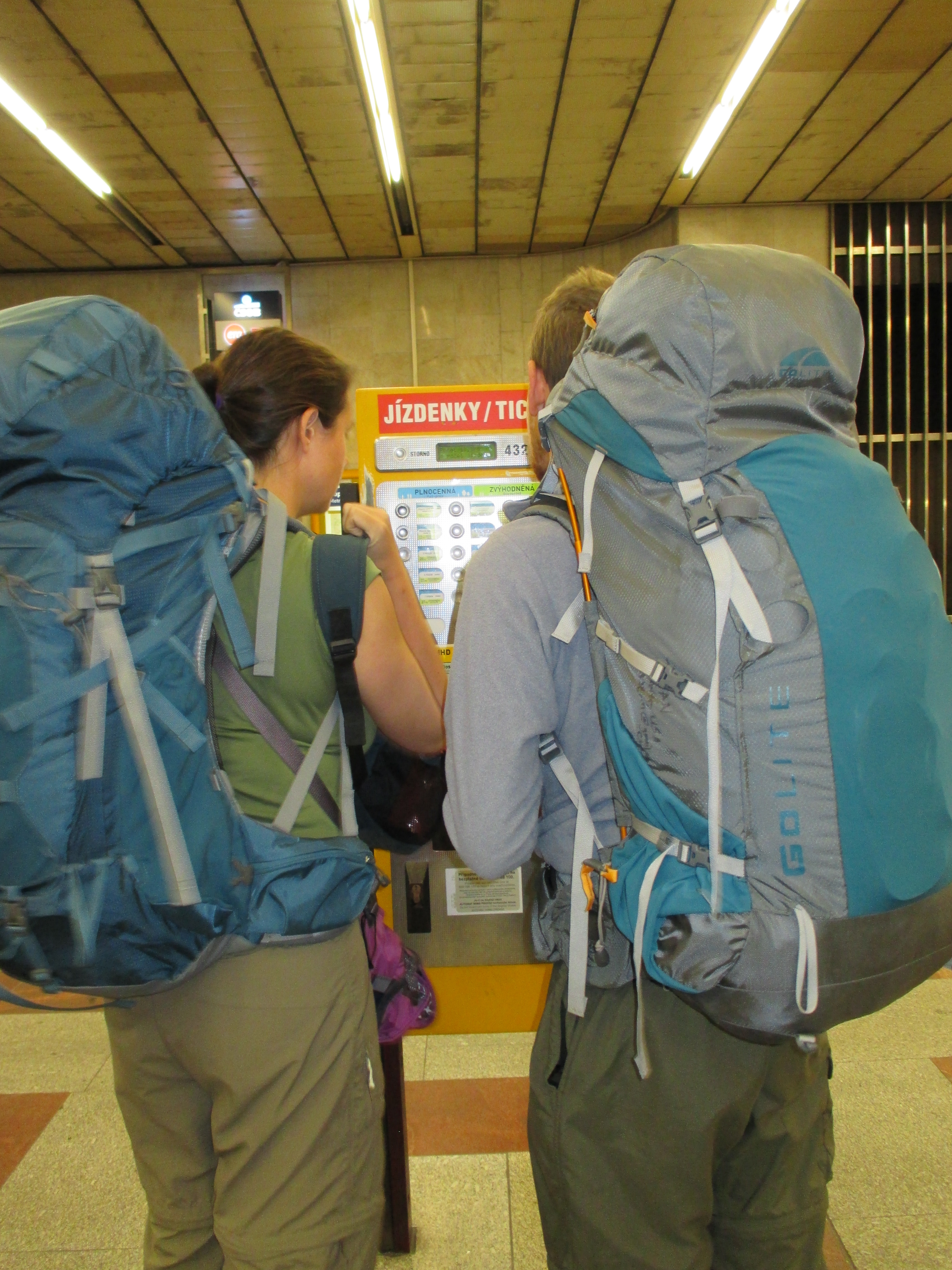
In the main section:


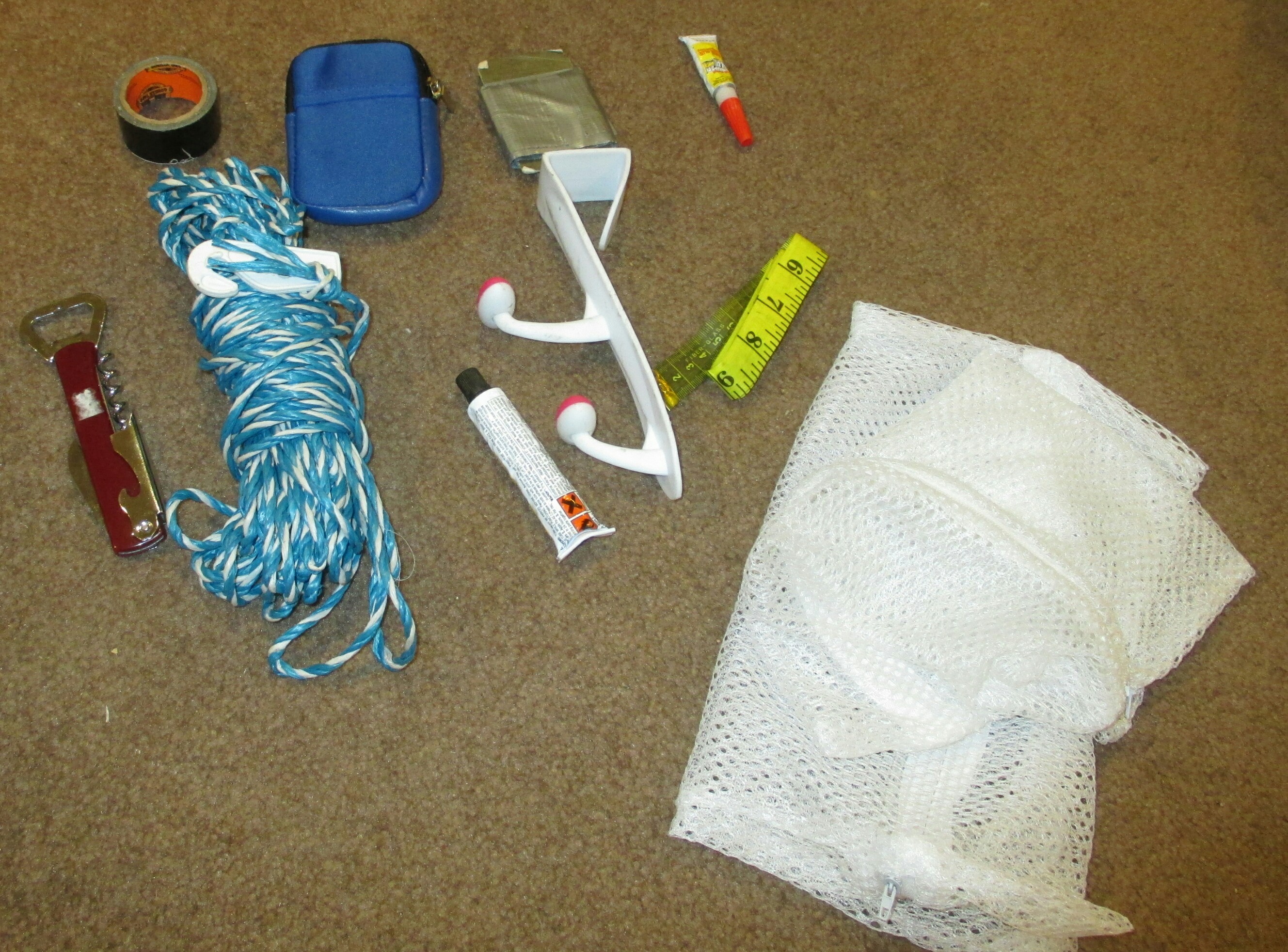


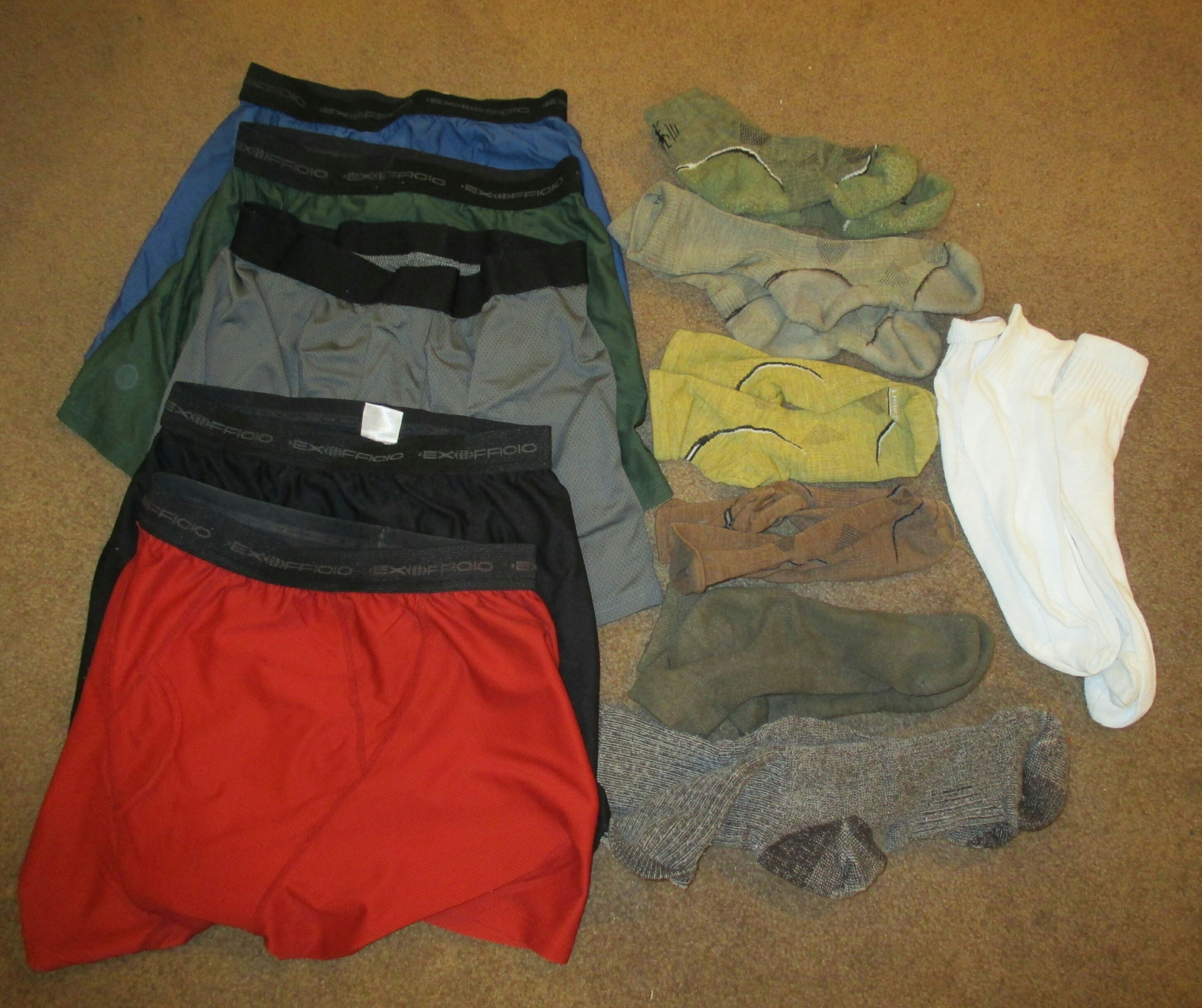


In the top section:


In his day pack (a Go-Lite pack as well):
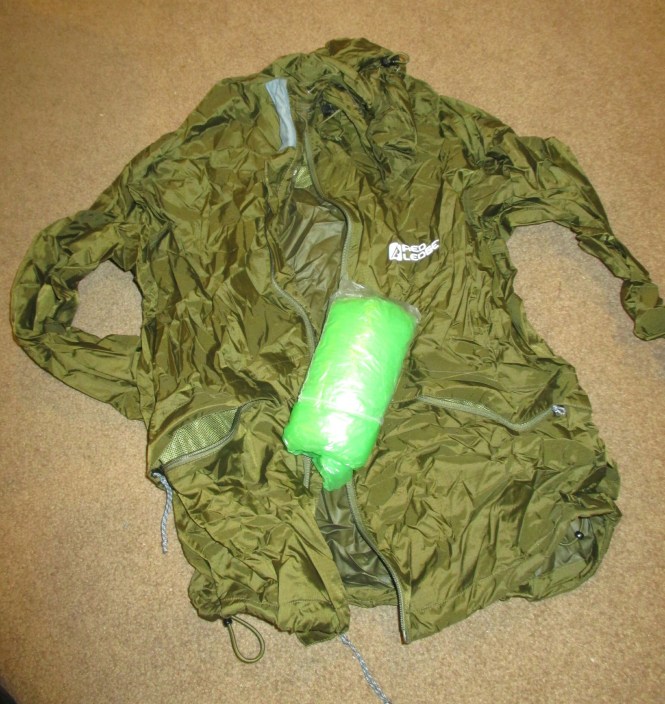


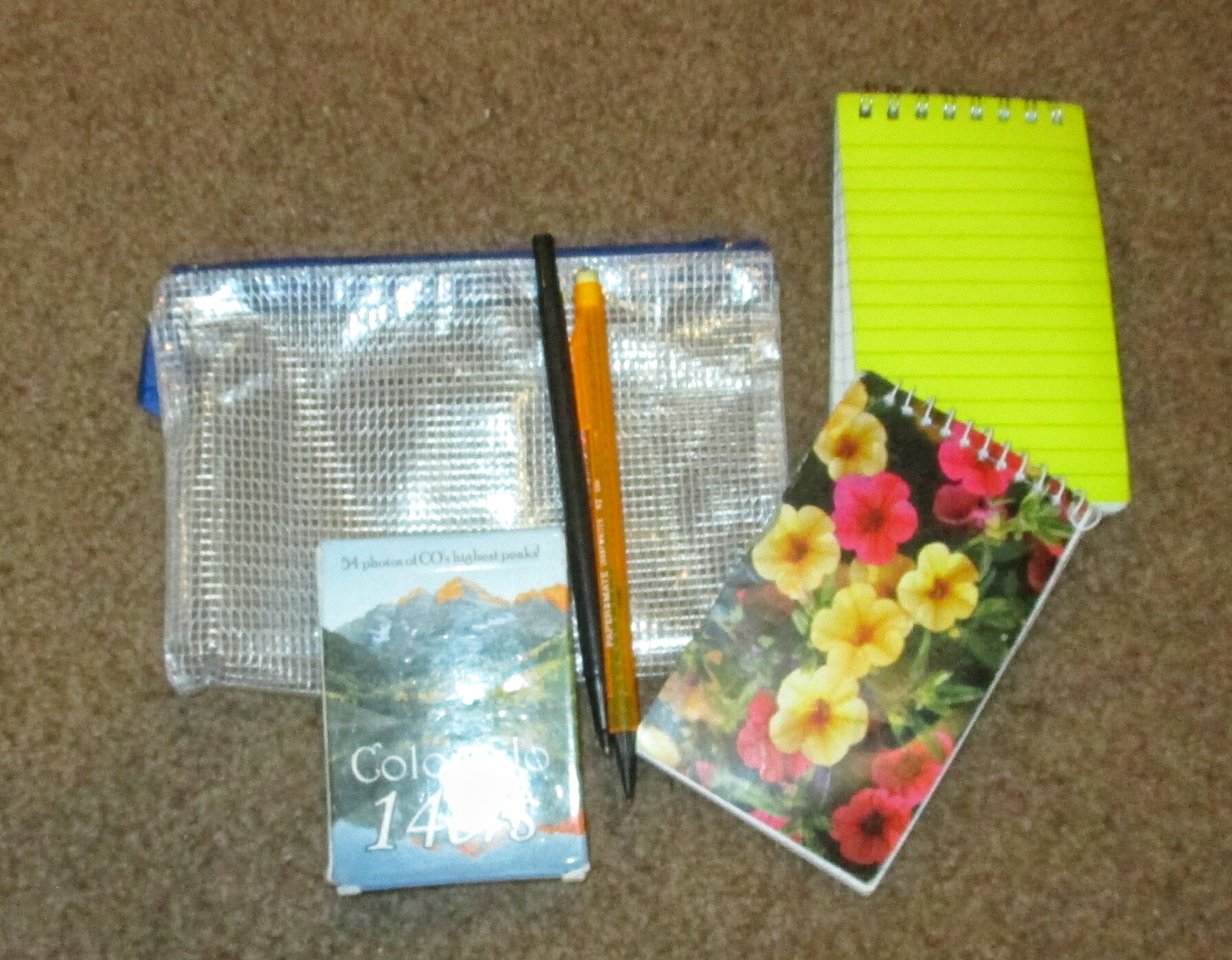

In his pockets:
Eric’s large backpack weighs only 27 lbs! However, like Della, he also carries a day bag. His day bag is slightly heavier due to its bigger size and the computer. The weight of the day bag depends on how much water he is carrying!
One of the many things that inspired us to go on our RTW trip was that Della’s parents, Peggy and Wayne, did a RTW trip of their own. They traveled for about 9 months in the years 1979-80. The trip was in many ways similar to ours; they visited Europe, Africa, and Asia. One of the things that has been really fun as they have met up with us a few times on our trip is discussing what is the same and what is different from when they traveled 35 years ago!
Their trip took them from Italy (where they visited Peggy’s father’s old home), to Eastern Africa, and finally to Southeast Asia. We decided to ask them some questions about their trip to see how it compares with traveling RTW now! Read their answers and our own and draw your own conclusions!
This is part 1 of this interview series. Stay tuned for part 2!
Peggy and Wayne (P&W): We planned to follow in the footsteps of a friend of Wayne’s who had done world travel. He wrote to Wayne with the details of what he was doing. What stuck in Wayne’s mind was that he said he had been gone for 11 months, had traveled overland by bus from London to India, had kept detailed records of his budget and had spent only $530. This overland route had become a somewhat standard backpacker’s route. We hoped to do that. We did a little planning using a single Lonely Planet guidebook for Asia Overland travel. Part of our planning was to attend a series of travel lectures sponsored by National Geographic. We also talked to people we knew in DC who had taken world trips. Both before and during the trip, much of our planning was based on word of mouth information from other travelers.
We also had been invited by our friend who was an Assistant to the ambassador in India to visit with for a while. We hoped to arrive there by Republic Day in January.

Wayne in Italy
Della and Eric (D&E): We wrote a more expansive blog post about this awhile back, but in short: We talked to Wayne and Peggy about where they went, we read a lot of travel blogs to get inspiration, we checked out a lot of Lonely Planet (and other) guide books from our local library, and we did research on climates in each locale to figure out the best times to visit.
P&W: People thought we were a little weird. Most of the people we knew in DC were on a professional path and they thought it was strange that anyone would risk the consequences of getting off that path. They thought the trip was less crazy in terms of a money perspective, but we would miss out on professional advancement.
Wayne had traveled a lot prior and had even gone to Israel for 7 months while in college. His parents, therefore, were accustomed to his wanderlust, but they always worried, especially his mother. His dad was confident he knew what to do. The typical advice his parents gave was “I know you know that you’re doing, but be careful!” Peggy’s parents, who rarely left New York, thought we were crazy, period. They had given up on understanding our choices, but never sought to influence to change our plans. In both cases, since we were already living far away from home, it wasn’t a huge change for them having us gone. Our parents ultimately were both supportive and helpful, especially because they both took on responsibility for managing affairs back in the US. Peggy’s parents even joined us for the beginning part of our trip in Italy!

Peggy’s parents during the trip in Italy
D&E: We got a variety of reactions –some jealousy, some wondering how we could possibly afford it, and some just blown away at the thought of leaving home for so long. For the most part, people have seemed quite excited for us. We did write a blog post about why we chose to do this trip which addressed many of the questions and reactions we had received from people.
Not surprisingly, Peggy and Wayne were super supportive and excited for us. They were pleased that we were going to set out on such an adventure, but also started to understand some of the worry that their parents felt when they left. Eric’s parents were also supportive and made plans to meet us along the way. Peggy and Wayne have been very helpful from a logistics perspective in managing our affairs back home and they, as well as Della’s sister, have made it a priority to join us for parts of the trip as well.
P&W: We owned a house in DC which we rented out to an existing roommate. We didn’t get rid of anything. We left the house furnished so most of our stuff stayed in place in the house. We did worry a lot about who would handle repairs on our very old house. Just before we left, it rained heavily and a skylight started leaking. We knew we couldn’t leave until we had it repaired. We were trying to clean the roof tar off some clothing using gasoline. Then in a rush we put the clothing in the washer and proceeded to cause a small explosion. Dealing with the consequences of that delayed our departure a couple of days (to New York which was an interim step prior to our international departure). A friend agreed to keep our cat, but only after he had been declawed. Gus didn’t talk to us for days after the operation. We owned two cars. We left one in New York and one in Colorado in the garage of the cabin.
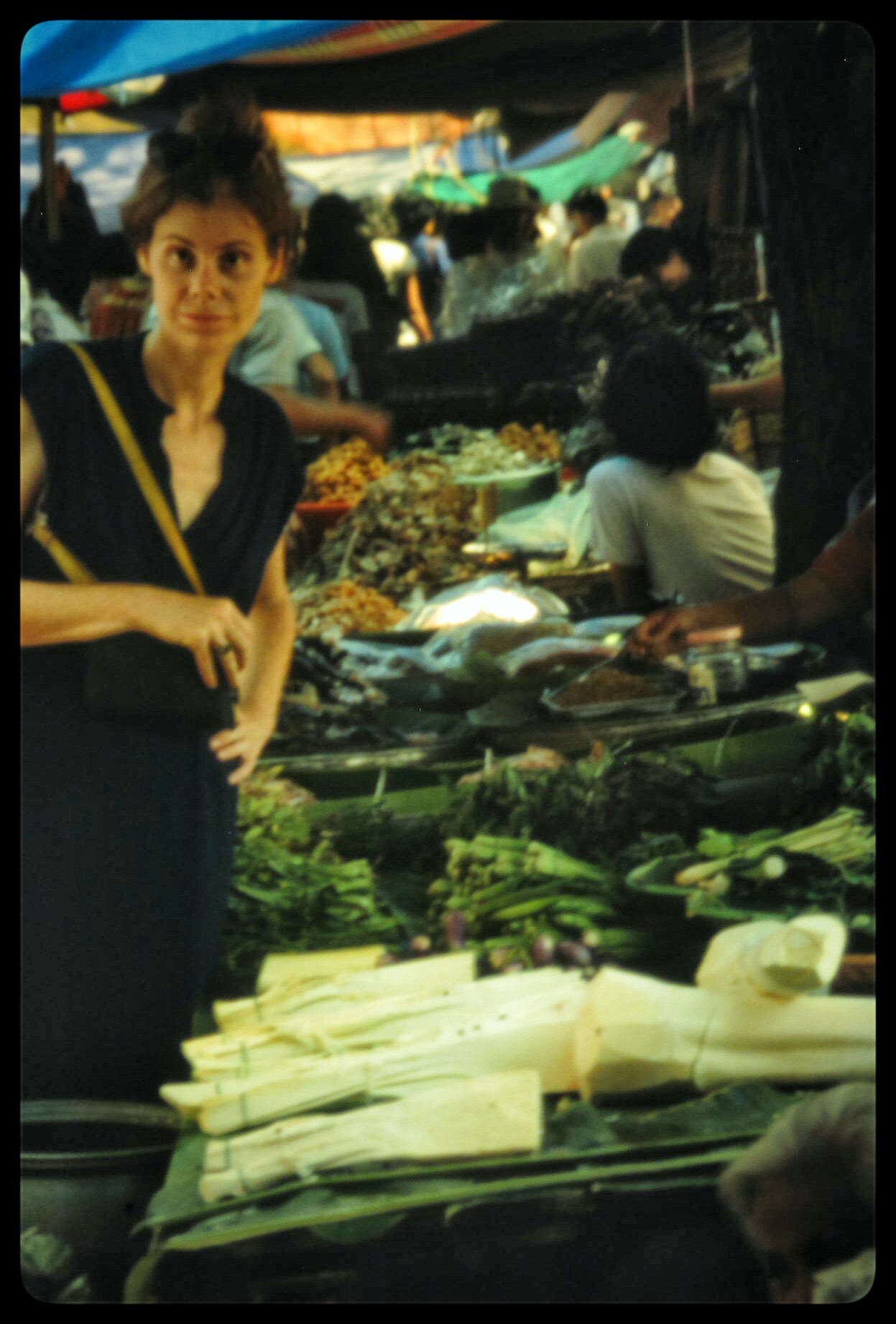
At a market in Thailand
D&E: We also rented out our house, but to a friend who wasn’t already living there. We were able to keep it partially furnished and leave the rest of our possessions in the house in the attic and basement. We asked Eric’s parents to take care of our cat while we were gone. Our two cars currently reside and Peggy and Wayne’s house.
P&W: We had to get all of our visas and information from consulates or embassies. We did that while we were in New York and it took almost a week of walking around the city to get it all done.

D&E: Most of the time, we are able to get our Visas on arrival. There have been a few that we had to apply for in advance. However, luckily, so far we have been able to get this quickly and easily online! We do think we will have to get our Vietnam visa in person before we go there.
P&W: We each had a large internal frame backpack. We had one big camera bag, and Peg’s pack had detachable zip pockets that we carried as day bags. We don’t remember exactly what we had in our packs. We know we took one down sleeping bag and made a light weight, quasi sleeping sheet that zipped on. If it was hot we put the sheet side up and if it was cold, we put the sheet down. Peggy had sandals and hiking boots, 2 pairs of pants, and a dress. She bought a great wraparound ankle length skirt in India. She loved skirts because they were cooler in the heat and also facilitated peeing somewhat more discretely out of doors in places where there were no facilities. Wayne brought jeans. He remembers that he bought his first GoreTex coat for the trip. It actually leaked like crazy. He went back to the store in DC a year later and returned it for a replacement! We remember buying replacement black cloth Chinese slippers in Hong Kong and some clothes in Sri Lanka (but those didn’t last).
We had repairs and medicine kits. We also made big zippered nylon bags to wrap around our big packs when we flew, in order to protect the straps. These turned out to be really useful because we were often able to establish a home base in some guest house in a country and then leave extra gear in those bags while we traveled to other places. We did this when we trekked in Nepal.
We had a coil to heat water in a cup. We also used Iodine to purify water. We started with pills but then used a dropper. We had a hell of a time communicating with pharmacists when we needed to replace the iodine. We had to treat the water pretty much everywhere we traveled, even for brushing our teeth.
We always remember spending days in New York packing and repacking our bags. We weighed everything! The problem was that no one item weighed very much, but put together they weighed an awful lot. We finally made our decisions, went to the airport, decided we were too heavy, shed stuff at the gate sending it back home with Peg’s parents. Then after travelling in Italy with Peg’s parents, we sent even more stuff home! Mostly we parted with some sweaters and fancier clothes that we figured we wouldn’t need after leaving Europe.


D&E: We focused on packing things that were lightweight, quick dry, and wouldn’t hold smell. We talk extensively about our packing lists here and here.
P&W: We considered buying an around the world plane ticket, but they were expensive and had confusing rules regarding stops and direction of travel. That posed a dilemma because back then one-way tickets generally sold at a large premium. We finally decided to buy our initial ticket from New York to Frankfurt from a travel consolidator for $175. You had to send him money via mail and then he met you at the airport with the actual ticket on the day of the flight.
Remember our original plan was to travel overland, mostly by bus, from Europe to India. Once we were in Italy we had to revise our entire travel plan. It was then that the Iranians took the American hostages. That foreclosed travel there and the Russians had recently invaded Afghanistan. So that wasn’t an option either. As a result, we ended up having to take many more flights than we originally anticipated. During our re-plan of the trip, the key was to find big cities with travel agents or flight consolidators who would bundle tickets at discounted prices. Athens and Bangkok were those cities. We spent a lot of time in Athens going between different agents trying to find routings that made sense. We decided at that point to buy blocks of tickets that took us to Egypt, Kenya, and then, India. We did the same thing in Bangkok, trying to figure out a route that would take us home. We had to choose between one that would take us through Malaysia, Indonesia and Australia or a route that would take us via Hong Kong, Japan, Taiwan, Honolulu, and then home. We chose the latter.
When we booked these big chunks of tickets, we would have to carry the paper tickets all with us! It was as important as your passport and money. Sometimes people would even steal tickets. You didn’t need a picture ID to fly on tickets then. We also learned the hard way, that having a ticket didn’t necessarily mean we had a confirmed seat on a flight. From that point on, we checked flight codes very, very carefully.
We figured out our travel as we went from arrival in Bombay through to Bangkok. Mostly we traveled by train, bus, or boat. But some stretches required air travel. In India, we learned that there was a narrow window in which you could buy tickets. “Control” over ticketing would shift location depending on how much in advance you tried to get tickets. We tried to book a flight from Kathmandu to Calcutta a couple of months out. The ticket agent in Delhi, sent us to the main computer center on the other side of town for the airline. When we got to Kathmandu (still several weeks before the scheduled flight out) we stopped at the airline office to confirm the ticket. Not only did we not have a confirmed seat, it turned out there was no such flight. The man was actually mad at us for having a ticket! We had to explain that it was their system who had given it to us in the first place. He told us, “I didn’t do this! The computer people did this!” We were at an impasse until we were able to talk to the manager. He understood and told his underling to book us on a different flight. We waited a long time. It turned out that he was filling out a lot of paperwork to cancel the original flight. We always laugh when we remember the manager informing the underling “It is not necessary to cancel a ticket for a flight that does not exist!”
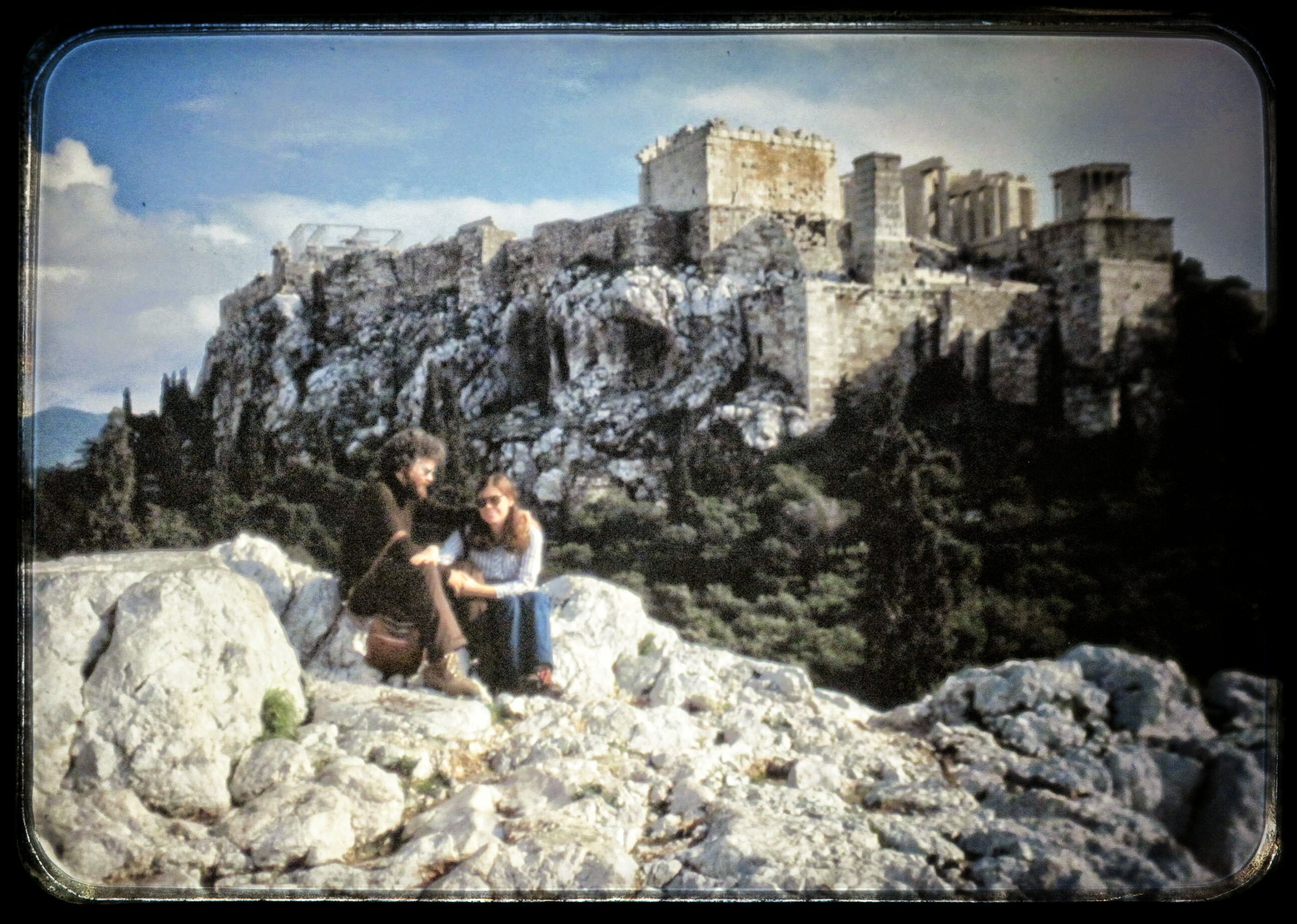
Spending time in Athens
D&E: Buying plane tickets is easy! We buy them online of course. The only challenge is figuring out how to use miles to fly more cheaply. We worked hard to gain credit card “miles” so that we wouldn’t have to pay full price on any of our long plane rides. Thus far, we have succeeded! We flew from the US to Africa, South Africa to Europe, Turkey to home, and Denver to Bangkok all using miles. We search for the best deal using a lot of different airline search sites, but one of our favorites is Kayak.com.
P&W: We carried the Asia Overland guidebook and that helped with some of the planning. We would visit the Tourist Information (TI) center and get a lot of information from them at the beginning. Peg read everything really carefully. Wayne relied more on talking to people, he asked everyone he met, whether it was the guy hawking his wares or other travelers, what to do and how to get there. We would also always try to find out what things should cost, so we knew how to approach bargaining. We also would stop by travel agents selling tours. That gave us an idea of what was worth seeing. If we could figure out how to do it on our own, we would. Other times, we might buy the mini-bus tour.


D&E: We access a lot of tools to figure out what to do in a city. We use our Lonely Planet guide books which we can carry a lot of thanks to Kindle Unlimited and our tablet. We use websites like tripadvisor to help us decide what to do. One of our biggest resources is other travelers- but instead of talking in person (we do sometimes of course!), we use travel blogs. There are so many travelers out there who share their experiences in blogs, and we use those a lot to figure out how to get places and decide what to do. For accommodation, we use Lonely Planet and travel blogs (and other travelers in person), but we also do extensive research online. We use sites like hostelworld, booking.com, and airbnb. In Asia, we have started to use agoda.com as well.
P&W: Where we stayed varied by country. We didn’t stay in a lot of hostels and didn’t prefer them. Most hostels locked you out during the daytime hours. We usually stayed in guesthouses where we had our own room. We did stay in hostels in Japan and Bangkok. In India, we stayed in places where the Indian middle class might have stayed, or places that catered to the Peace Corps crowd. These guesthouses often had common area or associated restaurant.
In India and other places where we traveled by train, we would often book sleeper trains, thereby reducing our need to find lodging. We also enjoyed staying in government guest houses some of which were in the train stations themselves. These were holdovers from the days of the British Raj. In Japan, we also stayed with Servas hosts. This was an international peace through friendship organization. In general, Servas worked best for a trip highly planned and with long lead times. Staying with real people in real homes was a treat – really interesting and informative, but a bit exhausting.
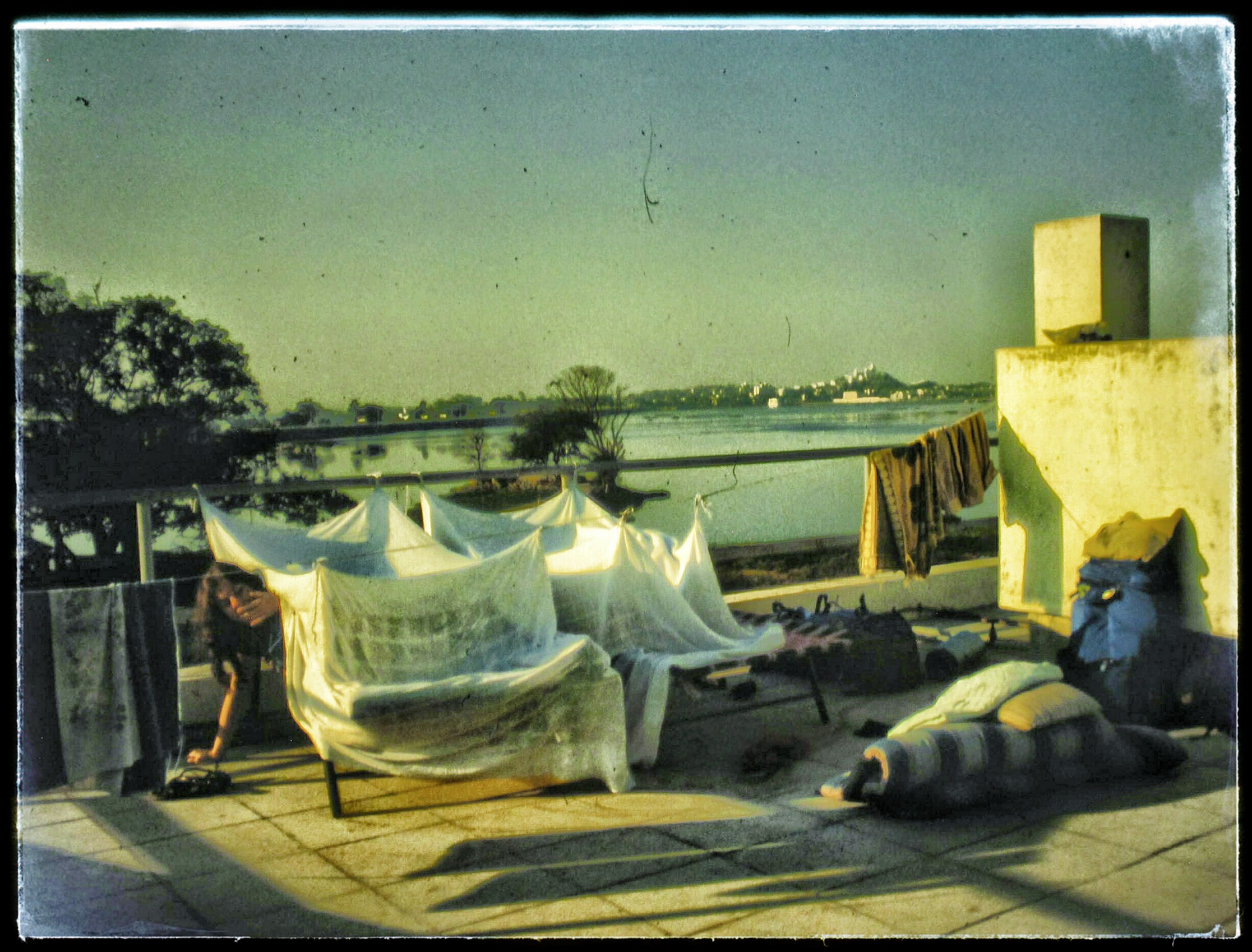
Staying on a roof!
D&E: For the most part we have stayed in hostels and guest houses. Every now and then we stay in a hotel. We have also stayed in several apartments using sites like Airbnb. Our favorite places have a communal vibe so we can meet other travelers to make connections and a kitchen so we can cook some of our own food.
P&W: We took flights for large distances. In Egypt, India and Sri Lanka we took a lot of trains. They were great. We also took a lot of buses, although we liked them less well. Schedules and routes were much harder to figure out and they were always very crowded (with animals as well as people). Some of our best rides were on the roofs of the buses. Some transport was in the back of pickup trucks (that had wood seats along the edges) or in mini vans. The hard part about these was that even if they told you they were leaving at a given time, you usually had to wait for however long (sometimes hours) that it took for them to fill all their seats (and then some). Within cities, transport was often by bicycle rickshaw. There were still many rickshaws pulled by men, but we felt too big and heavy to want to ride these.


D&E: We’ve gotten around almost every way you can think of. Planes for big distances (and some small when we were in a rush). We’ve used a lot of buses and trains. Within cities, we are always happy if there is a subway or rail equivalent. We have even traveled by boat, horse cart, and electric bicycle! Occasionally we have used taxis as well.
 Globe Gazers