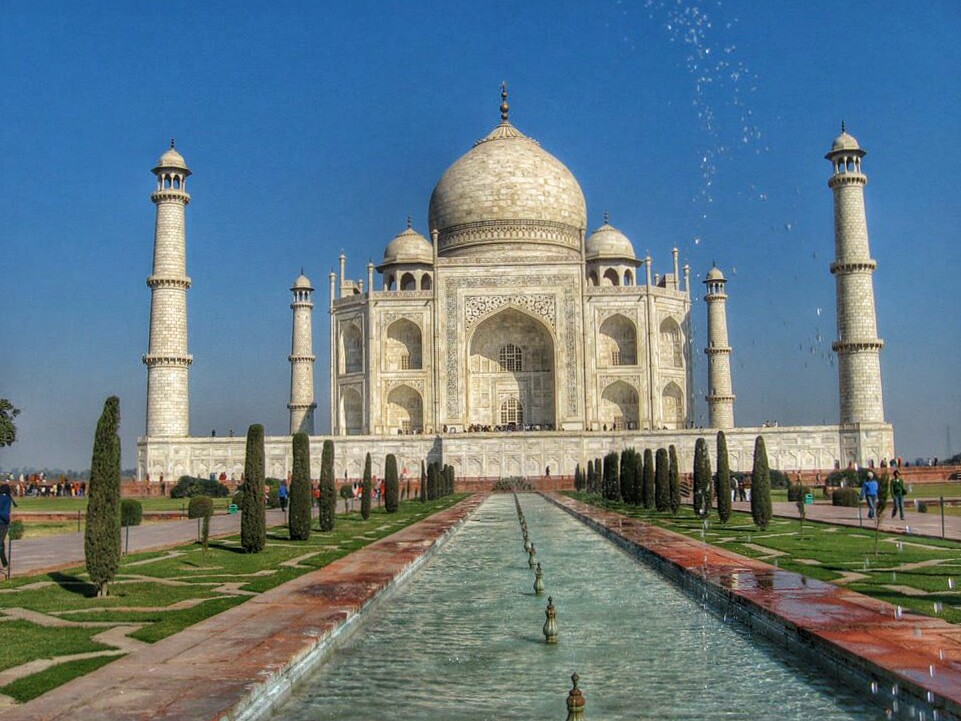
Della got to visit Agra and view the Taj back in 2008. She was completely mesmorized by this amazing site. She can’t wait to go back and share it with Eric.
Posted from WordPress for Android
Della got to visit Agra and view the Taj back in 2008. She was completely mesmorized by this amazing site. She can’t wait to go back and share it with Eric.
Posted from WordPress for Android
After almost a month of Zumba withdrawal, we were able to find another convenient class! We spent two nights in Bratislava, Slovakia. Luckily, we were able to find a class quite close to our Airbnb. Even more lucky, it turned out that it was Daniela Cavojec Cesnekova.

She is not only a ZES (Zumba Education Specialist), but the very first Zumba instructor in Slovakia. Needless to say, her class was excellent! Lots of people and energy! We felt a little clumsy actually as it was clear that we were two of only three non-regulars in the class! We warmed up with Shakira’s Dare (La La La). Then we had a good variety after that. We feel fortunate to have been able to go to this class!
Wow! It was great to get back in the Zumba saddle, and we were definitely feeling out of Zumba shape!
Check out a video of Daniela! It was a great class!
Check out the rest of our Zumba Round The World posts.
One of things we were most looking forward to in Slovakia was visiting Spiš Castle. We had originally planned to do it as a day trip from our hostel the Ginger Monkey in Zdiar, but we were there over a holiday weekend and the buses weren’t running nearly as often as we would have liked. This meant that it was not likely that we could make it there and back in a day with a reasonable amount of time to spend at this amazing UNESCO heritage site. So, at almost the last minute, we decided to move to Levoča, a town that was quite a bit closer to the castle. We are glad we decided to do this as Levoča is quite a nice, small, not too touristy town.
Pension Oaza – We quite enjoyed this pension, especially after staying in the dorm in Zdiar. We had a very large room all to ourselves. We had plenty of space to spread out, a refrigerator and microwave, and our very own bathroom! The woman who owned the pension was kind and offered us homebaked goodies. She also told us to grab some of her many tomatoes growing in her garden. It was quite a nice location too, located midway between the main train station and old town.


Old Town Levoča and Church of Saint James – We enjoyed visiting this small old town square. We visited in the late afternoon so we didn’t go into any of the museums, however, we did enter the Church of St. James. The Church is UNESCO listed and is famous for having the tallest altar in the world. We paid 4 euros to enter, but were quite disappointed that the altar was under renovation so covered by scaffolding. Also, there were no pictures allowed inside. We did enjoy some of the other carvings though, done by the famous Master Pavol. Levoča is also unique within Slovakia because it is still surrounded by most of its original city wall. We particularly enjoyed walking around town observing the wall and imagining its past.


Spiš Castle – Spiš Castle is the real reason we came to Levoča in the first place. We had to take a bus to the town of Spišské Podhradie which is situated in the valley right beneath the Spiš Castle (this leaves from Levoča regularly). Even approaching the town in the bus, you are struck by the enormous size and majesty of the castle.

The bus drops you off in the middle of town, so you will need to do a bit of walking to reach the castle. We headed out of town, following the signs for Castle parking. Strangely, there were almost no cars in the parking lot, but we did see a path heading up towards the castle. We followed and enjoyed the sights while hiking up the surprisingly steep hill. We also were surprised to see big trucks driving past us on the grass up to the castle. We followed them and entered the castle through a lower back gate. We later realized that we had only been allowed to enter there because it was open for the trucks who appeared to be bringing equipment in to set up some sort of stage. The normal entrance is on the far side of the hill, away from the town.


We were honest though, and still paid our entrance fee even though we had entered through a back door. The entrance fee did include the use of an audio guide (free as long as you returned it within 90 minutes). We walked through the castle and listened to the stories on the guide.
There actually isn’t very much left of the castle. The royals stopped living in it in the early 18th century, and then in the late 18th century it burned down. What’s left has more of the feel of an archaeological site than the other castles we have visited so far. It was built in the 12th century and went through many phases of construction and purpose. It has 3 baileys, which we learned were walls to protect itself. It is really more of a fortress. It went through many owners, but always was an imposing view over the valleys nearby. It is actually lucky that it burned down in 1780 and no one rebuilt it. Therefore it looks more like it did when in use than many of the other castles we’ve seen during our travels.
The grounds of the castle are massive: there are multiple courtyards within the complex. After doing the audio tour, we spent some time just soaking in the ambiance from different places within the structure. The view was great as well!


We really enjoyed the castle and finally had some good weather! The sun was out and it was warm (actually a bit humid), but we were so excited that it wasn’t cloudy! We highly recommend making time for this castle if you visit Slovakia.
On our first night in Levoča, we found a small place just off the main town square that seemed to have reasonable prices. We ordered some regional specialities:
Bryndzové halušky – a national dish of Slovakia. Halušky are small potato dumplings, similar in size to macaroni almost. Bryndza is sheep cheese, so the dish is potato dumplings covered with sheep cheese. It usually comes with some sort of meet on top, like bacon or sausage. It tastes somewhat like macaroni and cheese, and is very good and filling.
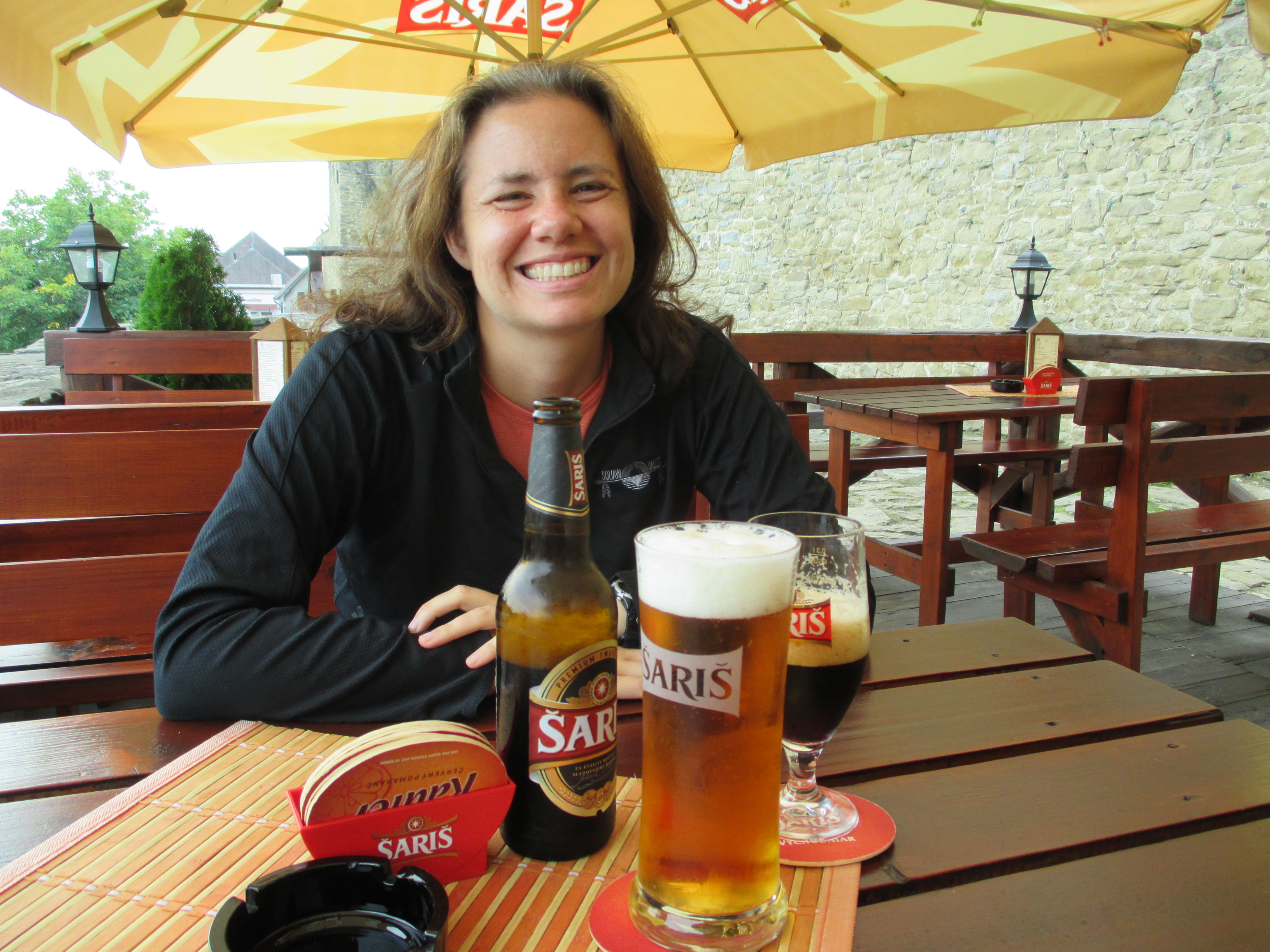
For drinks we had a Šariš beer.

The halušky is in front of Della
On our second night, we decided to eat at a restaurant was built into the old city walls. Probably a little touristy, but seemed like a fun opportunity!
Enjoy our photos from the Poland. You can also access our photos on the top right “places we’ve visited” menu.
 |
| Poland |
This is one of our Budget series of posts to give you an idea of how much we spent traveling around the world. Here we will look at Poland. Check our posts to see what kind of activities we did and where we stayed!
In Poland we used złoty. We converted to US dollars using the current conversion rates at the time of our visit. It was approximately 3 złoty to one dollar.
We normally break down into the following categories:
We stayed at one hostel in a dorm.
This included the entrance fees to the various museums and important sites that we visited. More than half of this cost was visiting the Wieliczka Salt Mines. Everything else we chose to do was much less expensive or even free!
We ate out approximately 1 meal a day. Breakfast was provided by our hostel.
This included postcards, stamps, and bathrooms.
We traveled exclusively by bus in Poland.
This divides out to $85.19/day which, thankfully, is under our $100/day budget. Yay!
Occasionally, some of your visitors may see an advertisement here.
Krakow was initially on our list to visit because of Auschwitz and the Wieliczka Salt Mine. Auschwitz is of course an infamous site, and we knew about the salt mine from a book we have at home that always helped inspire our travel (one of those 100 places you must see kind of books). The salt mine was in it, so we knew we had to see it! 😉 Krakow is much more than those things though. We found that we loved the old town. We spend 5 days there, and we could have spent many more!
Tramp Aparthostel – We found this hostel on hostelworld. It was spread out over many floors of an old building very close to the old town square. We were in an 6 person dorm. The benefits were that all of the beds were on the floor, a nice change from bunk beds and the room was very spacious. The hostel also provided a filling free breakfast! The other nice thing was that we ended up being the only 2 in our dorm for 2 nights which is always good. There was a pleasant common room upstairs where breakfast was served. Our main complaint was that they kept trying little ways to overcharge us. It was confusing because they kept trying and would back down very fast when we resisted. We weren’t sure whether they were just enforcing the “customer is always right” policy or whether they were trying to get us if we weren’t paying attention. Examples: we paid through hostelworld which says right there that all taxes and fees are included, but they tried to charge us extra taxes when we arrived. Then, when we decided to stay an extra night (a Thurs night) they asked us for a more money than the previous nights. They claimed it was the weekend rate… which started on Friday. We had to reiterate that we LEAVING on Fri, not staying on Friday. Both times they backed down immediately and we got our way, but it was weird. Also, unfortunately, there was not a communal vibe here due to the rooms being spread across multiple floors, so we didn’t make any connections.
Free Walking Tours – There are several different kinds of free walking tours offered in Krakow. We ended up doing two different tours in one day. They were both excellent, though we are not sure we recommend doing two in one day. Our legs and feet were exhausted by the end! The first was a tour of the Old Town Area. We looked at the many beautiful buildings on the large town square including 2 different churches and the cloth hall where merchants have been plying their wares for 1000 years! We then headed up to Florian’s Gate, part of the last remnant of the city walls, and the Barbican fortress. We also found time to head back to the square to listen to the bugle call which happens every hour and to wave at the bugler. The story says that in the old days the bugler warned of approaching enemies. When the Tatars attacked in the 1200s the bugler was shot through the throat in the middle of the melody and they still play that aborted melody 4 times (1 in each direction) on the hour (every hour- even at night) to commemorate! We also visited the Jagiellonian University which was attended by Copernicus (who was an economist as well as a scientist!) We saw the window where Pope John Paul II spoke to his Polish subjects and finally headed to the Wawel Castle complex where we learned a bit more about the history of kings in Poland. It was quite interesting actually, they would elect their king and it was most often a foreigner. The powerful magnates (nobility) never wanted a king who could become too powerful so they could retain control of Poland.


We actually did a second walking tour with our same guide later that afternoon. This one was of Kazimierz, the Jewish Quarter of Krakow. The tour started in the main square of the district, on Szeroka Street. We looked at the outside of three different synagogues and also heard about one of the famous residents who was a makeup mogul. Next we walked into an actual synagogue and heard a little about its history. Then, we stopped at the JCC and learned about how there really weren’t that many Jews (officially only 120) left in all of Krakow, since most were killed in WW2 or moved away afterwards. We then went to the square at Plac Nowy, where we took a break to look at the various stalls. Next stop was a walk through an alley that has been used to film many scenes of old town Polish life, most notably Schindler’s List. We then walked through a Christian church in the district – pretty gaudy inside, done in the Baroque style. From there we left Kazimierz and crossed over the Wisla River on a pedestrian bridge with some love locks into the area that was the Jewish ghetto during the war: Podgorze. Not much remains, except for a memorial with chairs in a main square and a fragment of the wall used to keep them in. The last stop was at Schindler’s Factory. Here our guide, Damien, explained that Schindler maybe was not as great of a person as the movie made him out to be. He said we should look into Irina Sendlerowa, who saved over 2000 children. After some research, we found that she is becoming more famous for her work in WWII and there are now several books written about her.


Auschwitz-Birkenau Concentration/Extermination Camp – This powerful day trip from Krakow is described here.
Wieliczka Salt Mine – Read about our excursion to the salt mine here!
Schindler Factory Museum – This was the only museum we visited in Krakow, and it was excellent! The permanent exhibits walk you through what happened in Krakow during the years 1939 – 45, during the Nazi occupation. The museum does fascinating things in each room, designed to make you understand the subject with all of your senses. The room for before the war has nice, warm lighting and happy music playing. It feels like sitting in a comfortable room, watching old family movies about Jewish life in Krakow. Then you enter a hall which describes when Germany attacked. It is black and gloomy with red lighting streaking across the walls, representing the fire, and the sounds of shooting and bombs is everywhere. Even the floor of each room played a big role: in the room describing the initial attack, the floor was uneven; in a room describing life for the Nazis, the floor was fancy swastika tiles; in a room for a concentration camp the floor was actual white gravel. The last room was quite interesting as well. To get into it, you walk through a dark room with a spongy floor (we aren’t quite sure of the interpretation). Then, you enter the “room of regrets”, which is stark white and covered with snippets of writing. Upon closer inspection, the snippets are quotes from people who did something (or didn’t do something) during the war period. The building was actually Schindler’s Factory (from Schindler’s List), so his office is preserved and there are a few rooms dedicated to him.


Wawel Castle Complex – Krakow boasts a beautiful castle complex. We unfortunately did not have time to explore it all. We did visit the Dragon’s Den which is a cave under the castle walls. We were a bit disappointed because we thought there would be “dragon’s” bones there, but there was not. The bones they talk about must be the ones hanging in front of the Cathedral. We did enjoy taking some pics in front of the gorgeous cathedral with the many chapels, different architecture for different kings.


Our favorite restaurant (we went back 3 times!) was just a block outside our hostel and it was called the Milk Bar. Traditionally, a milk bar in Poland is a kind of cafeteria. It was designed to offer cheap but nourishing food. They were especially common through the communist era after WWII. Our milk bar is a modern take on this. It offered a cheap price for a meal of soup and entree. You had your choice of three different of each, which changed most days. They also had excellent pierogies which we enjoyed both boiled and fried!
We really liked Krakow! There were quite a few things to do, and the vibe was not nearly as hectic as Prague. The people were friendly, and prices for a tourist were quite reasonable. We’d definitely recommend it as a destination!
One of the reasons we wanted to visit Krakow, Poland was to visit the Wieliczka Salt Mine. We had never heard of a salt mine before learning about this one, so we were fascinated to find out more.
Eric had discovered that the salt mine was only a short distance from Krakow, and it was easy to take a city bus there. We also saw that the bus would pick up quite close to Old Town. We took the 304 bus toward Wieliczka and it was about a 30 min ride. Unfortunately, we had a little confusion when we first tried to get on. As we approached the stop, we saw that a bus was there so we rushed to get on. However, the bus driver indicated that we needed to buy our ticket outside. We went to the ticket machine but there was quite a line and people seemed to be very slow and confused on how to buy the ticket. We were quite frustrated when it took so long that the bus pulled away without us. We waited for only about 15 min for the next one. This time we had our ticket in hand and were the first ones on! At this point, we saw that there was a ticket machine ON the bus… If we had known that, we could have caught the first one! However, it turned out to be good that we got on the bus early because it became very crowded!
We arrived in Wieliczka and made our way into the large salt mine complex. The day was rainy and it turned out that we were not the only people interested in going underground. We waited in line for close to 45 min to buy our tickets! We had read somewhere that the salt mines are quite like the DisneyWorld of Poland, and we are inclined to agree. Luckily, once we bought our tickets, we only had about 10 min before our assigned (and mandatory) tour group headed into the mine. We quickly gobbled a small snack and found the bathrooms before we joined our English speaking tour group.

The tour starts by descending 54 flights of stairs to the 1st level of the mine. It got pretty dizzying!! Here we learned some of the history of the mine. Salt has been made in the area as far back as the neolithic period where people made it from the rivers. As time went on and it became harder to make enough salt from the waters, people began to dig. The mine was established as far back as the 13th century! The mine actually produced salt continually until 2007. It grew to 327 meters below the surface. We walked for approximately 5 km through the mine, however, we saw only about 2% of the mine!
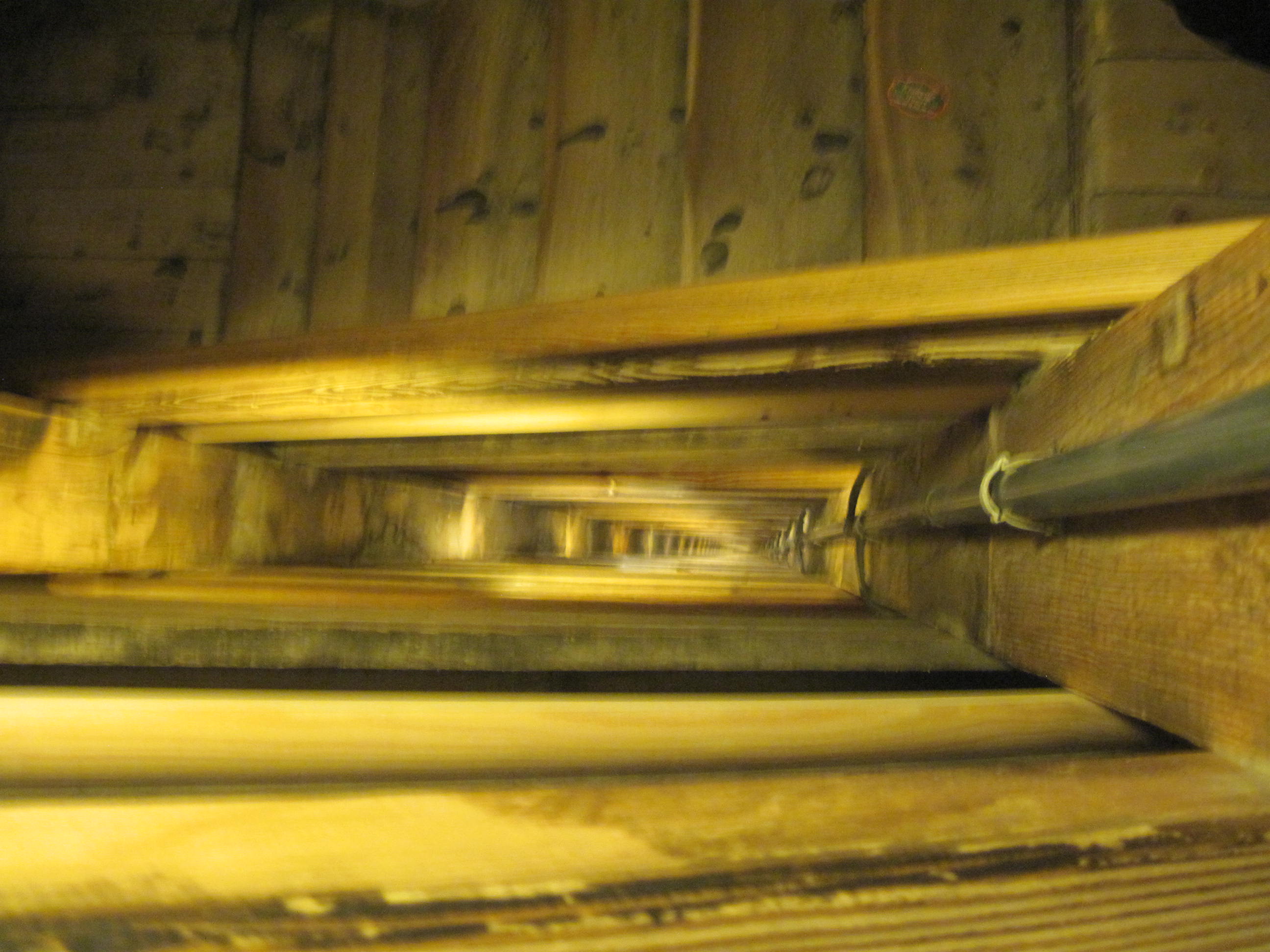
Over the course of the tour, we descended down to the second and third levels of the mine and learned a bit more about what salt mining was like. It was quite dangerous, as all mining is. The miners used quite ingenious tools to move salt up and down. They even had horses which lived their lives in the mine. Because of the danger, many of the miners began to carve religious chapels into the salt to pray in. Also, from early on the mine has been a tourist attraction, with many famous dignitaries being noted as having visited and then memorialized in rock salt sculpture. So over time, the mine has become quite a beautiful place, full of sculptures, religious and otherwise!


The most amazing thing about the tour was that everything we were walking through was rock salt – floors, walls, and ceilings (with some wood used as stairs and for support). They had even made chandeliers out of rock salt, so clear that they looked like crystals.


The most impressive part of the entire mine is the huge underground chapel dedicated to St. Kinga, the patron saint of all salt miners. This was a huge room, amazingly beautiful, with many statues and scenes carved into the walls.


As the tour finished, we were deposited into the part of the mine that was the most touristy. It included multiple gift shops, a restaurant, and a small interactive movie room about the history of salt mining.
We had been told that when we were done exploring those areas, we could go to one of two lines. One to wait for a lift directly up and out, or another to enter the underground museum. We were definitely interested in the museum. However, after waiting in line for several minutes, we were beginning to question our decision. At some point, another guide came over and asked who would like to continue the tour in English. We were the only 2 people who were interested. The guide seemed quite disappointed that we were interested and turned abruptly. We followed her down many corridors without her saying a word. Then we entered the first of many museum rooms. Our terse guide gave a canned speech about one display case and moved on, ignoring most of our attempts at conversation. She even ignored some of our questions… We continued this way through the rest of the museum, so the tour was not very enjoyable for us.
In the end, we found the mine fascinating and were glad that we got to experience it. However, the cost was quite high and we were a bit disappointed in the museum portion at the end.
Enjoy our photos from the Czech Republic. You can also access our photos on the top right “places we’ve visited” menu.
 |
| Prague |
 |
| Olomouc |
 |
| Cesky Krumlov |
After our great visit to Prague with Eric’s parents, we planned to head to Krakow, Poland. We thought it would be fun to break up the trip and Eric knew that there was a unique UNESCO site in a small city called Olomouc so we decided to head there. Boy, are we glad we did! Upon arriving and exploring the old town of Olomouc, we decided to extend our stay to 2 nights instead of the original one!
Poet’s Corner Hostel – This was the top-rated accommodation for Olomouc in the Lonely Planet so we were excited to try it out. It was a nice hostel, with the standard features. We decided to stay in a private room and didn’t end up being as social with the rest of the hostel as we could have been. The best part about the hostel was the good advice they gave us for exploring the town – they gave us a nice map with a lot of recommendations on it.
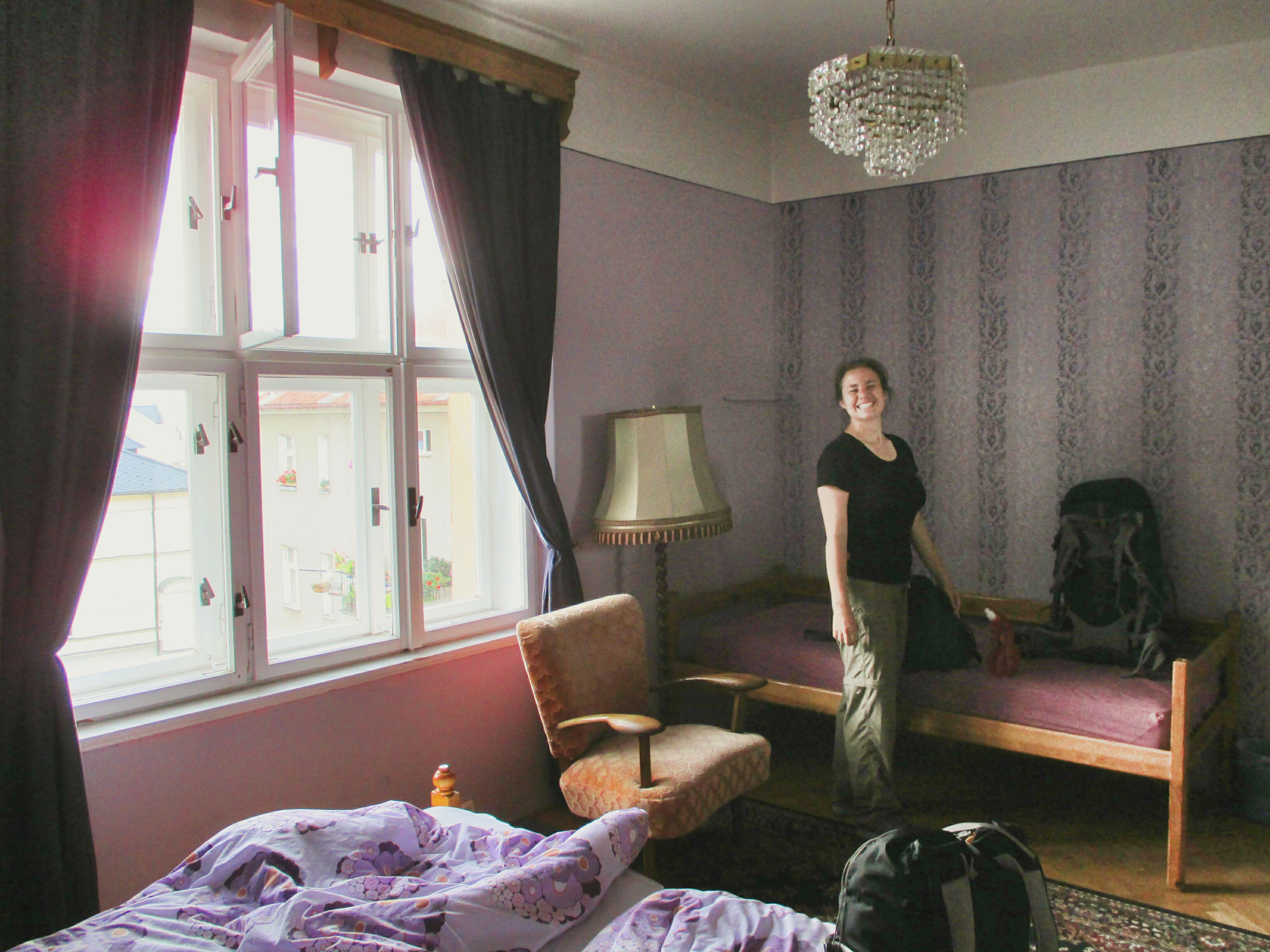
Olomouc was definitely a nice change of pace from Prague. There weren’t as many things to do, but there were still plenty of monuments and pretty sights to explore, without all of the people!
Our first stop in town was to climb the bell tower of this church in the old town.The staircase was a neat double-helix spiral pattern, so you went up and down on different staircases with the same center. From the top of the tower you could spy a lot of the different sights we wanted to head to next.


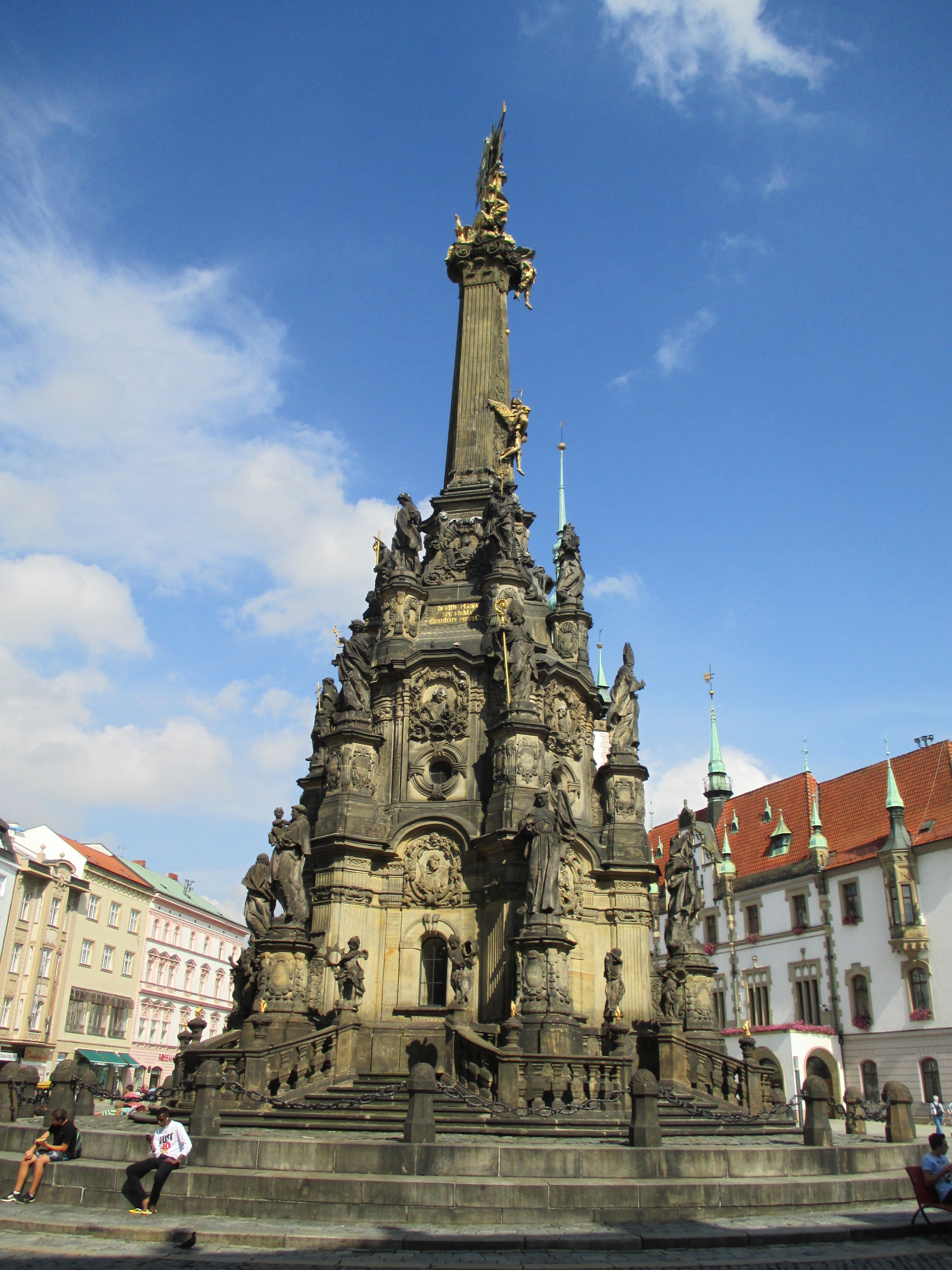
Like Prague, Olomouc’s main square has a few different sights. The most notable one in the UNESCO-listed Holy Trinity Column, This column is wide enough at the base that there is a small chapel in it.
Olomouc has an astronomical clock as well. One interesting aspect of the clock is that the mosaic surrounding it was redone in the 1950s in the communist-area style emphasizing the socialist values. We also enjoyed trying to decipher all of the different dials on the clock faces.


We thought the interior of this church was pretty impressive. Also, in one of its crypts there is a natural spring which they say the town was founded around.


We found a path outside the old city walls and along a nice hike and bike trail.

When we started walking around on Saturday, we noticed one wedding party taking pictures in the square. Then, at St Michael’s, we actually climbed the bell tower during the end of another ceremony and the got to witness the bridesmaids handing out shots at the end of the receiving line. Then, at the Saint Wenceslas Cathedral one wedding was wrapping up… as another was getting lined up outside! In the end we saw six different weddings in various stages of the events.

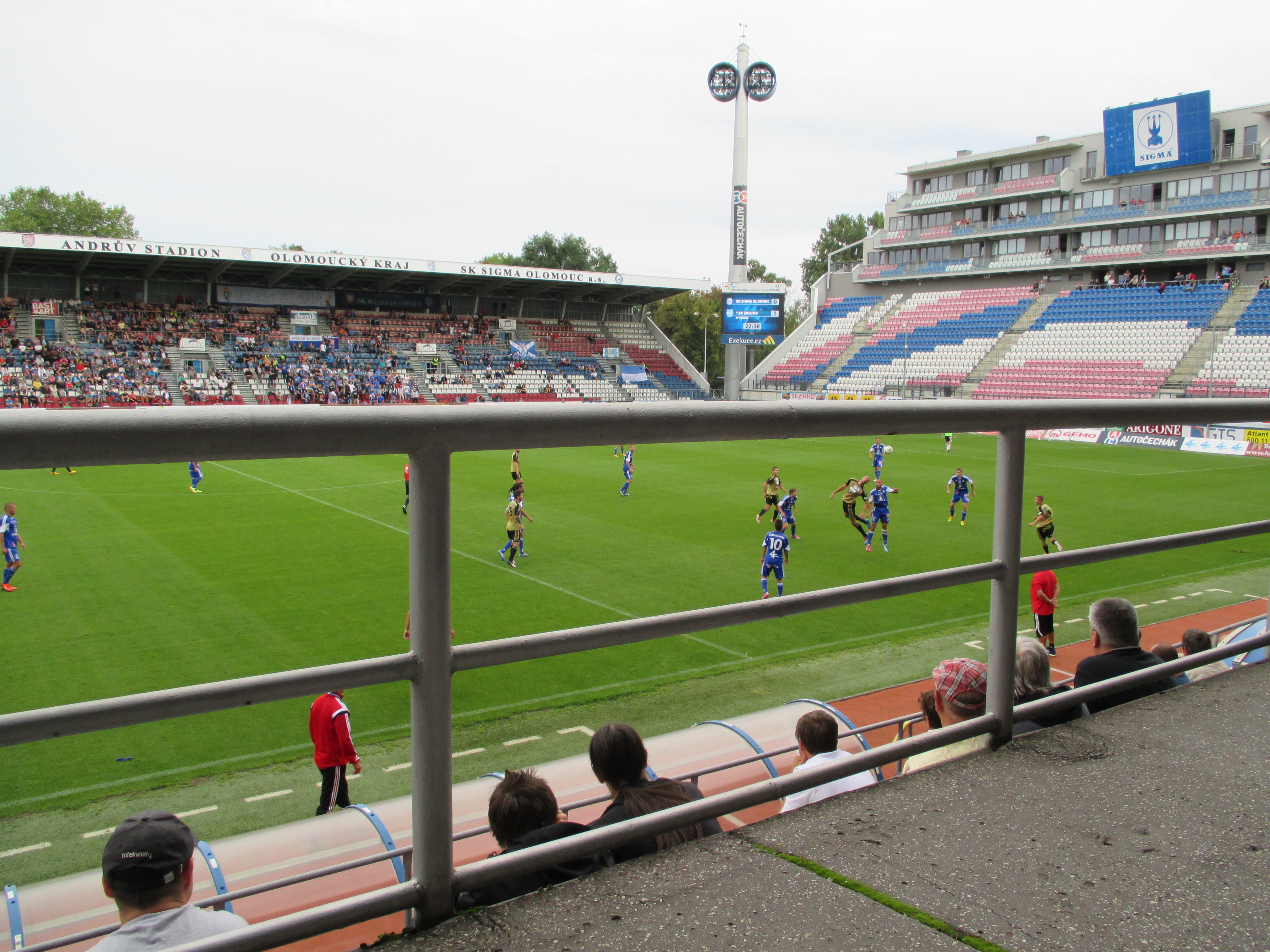
We noticed that the soccer stadium was very close to Poet’s Corner, and the local team, SK Sigma Olomouc, was playing a game on Saturday afternoon, so we decided to check it out. Unfortunately, Sigma had been relegated to the second tier Czech league the previous season, so it seemed like maybe the attendance was a little low. Tickets were cheap though, and we got seats pretty close to the action. Sigma lost 2-0, so the local fans did not seem too happy.There was a small group of hardcore fans who chanted the whole time, but the overall atmosphere wasn’t much different from any US sporting event.
We hoped to try a few different places, but when we went around on Saturday, multiple places were closed! One was for a wedding but the others were just not open. We don’t know if this was a low-season thing (Olomouc is a college town and students were not back yet) or if the town always shuts down on Saturdays.
One place we did eat was the Saint Wenceslas microbrewery. The food and beer weren’t the best, but the price was pretty good. We debated but eventually decided against their “beer spa” experience: we would have bathed in beer!
Olomouc was a nice town to use as a break from hectic sightseeing. There are a lot of nice things to see and not nearly as many crowds to fight through as in other places. Anyone planning to go between Prague and Krakow should definitely consider a stop in Olomouc!
Bagan is an ancient city in Myanmar (Burma). Over 2200 of the ancient temples and pagodas still exist today!

Posted from WordPress for Android
 Globe Gazers