Scotland Road Trip: Stirling and Oban

In the summer of 2024, we took a trip to Scotland with our two children, ages six and three. After a longer than expected journey getting there, and two nights in Edinburgh, we rented a car and took a road trip through the Highlands.

After picking up our car in Edinburgh as described in our previous post, our next destination was Stirling Castle. It was a little intimidating for Della to have get familiar with driving a new car on a different side of the road while in the city, but she was able to figure it out as Eric navigated. There were also a lot of roundabouts which we also don’t see a lot of in the US. Eventually we got on a larger highway which was refreshingly straightforward.

We got to drive by “The Kelpies”: large steel horse-head sculptures

Stirling Castle

Our destination was Stirling Castle, located on a big hill in the city of Stirling. It took us about an hour to get there from Edinburgh. One feature of our car we didn’t talk about in the previous post was a fancy navigation system where you could plug in an address and get turn-by-turn directions. (Yes, we know that this is probably a standard these days, but our car at home is from 2013). That helped us navigate there… although it took us on a back way up the back of the hill that the castle is on using some pretty narrow roads.

We were planning to park in the main parking lot for the castle, but when we got there it was blocked off because it was full! That meant we had to keep driving back down the hill into the main part of Stirling. We eventually found a city parking lot to park in (but only valid for two hours). We had reserved a timed entry into the castle, so we then had to race-walk back up the hill to make it in time for our reservation.
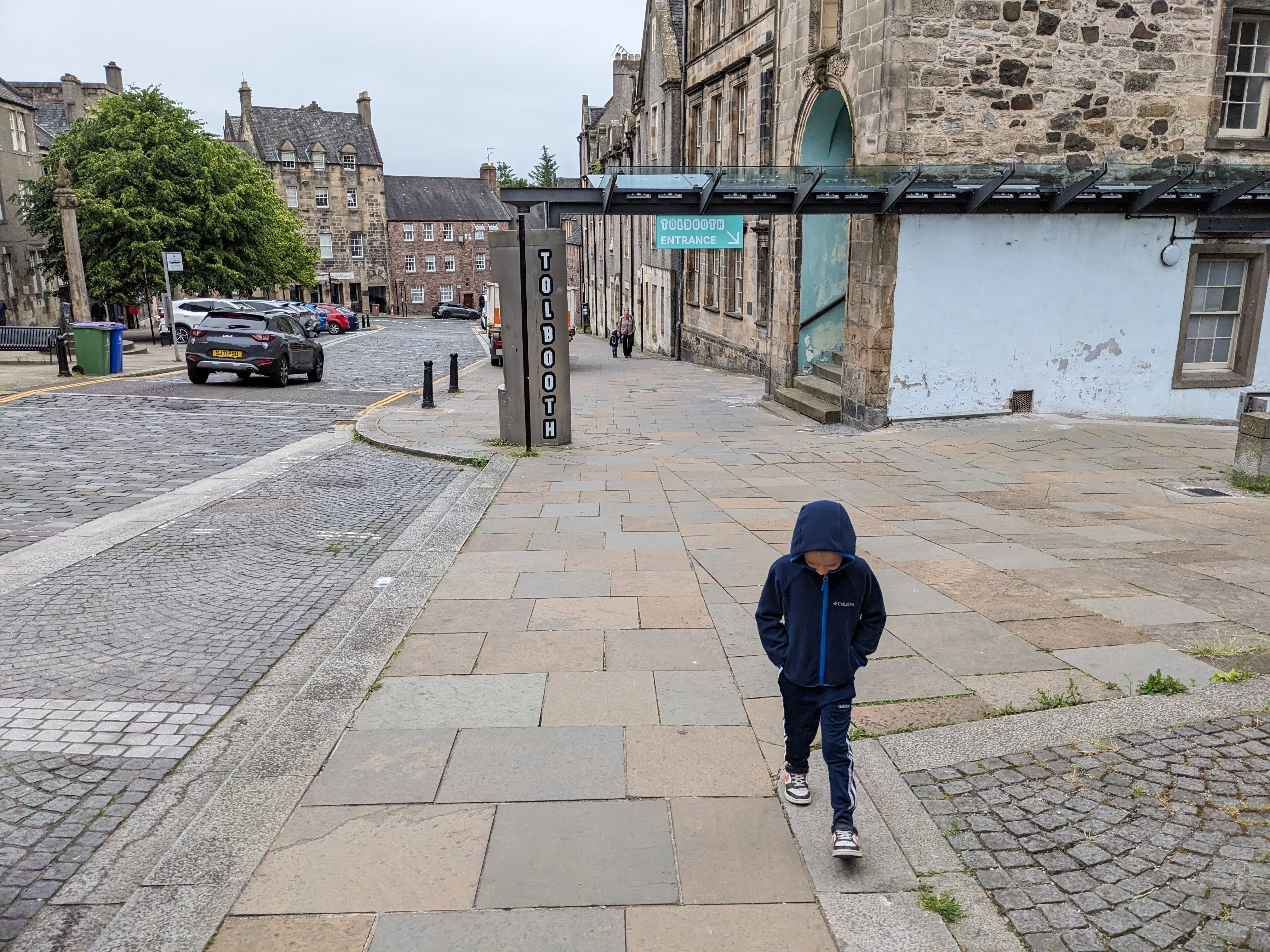
Rushing up the hill to the castle

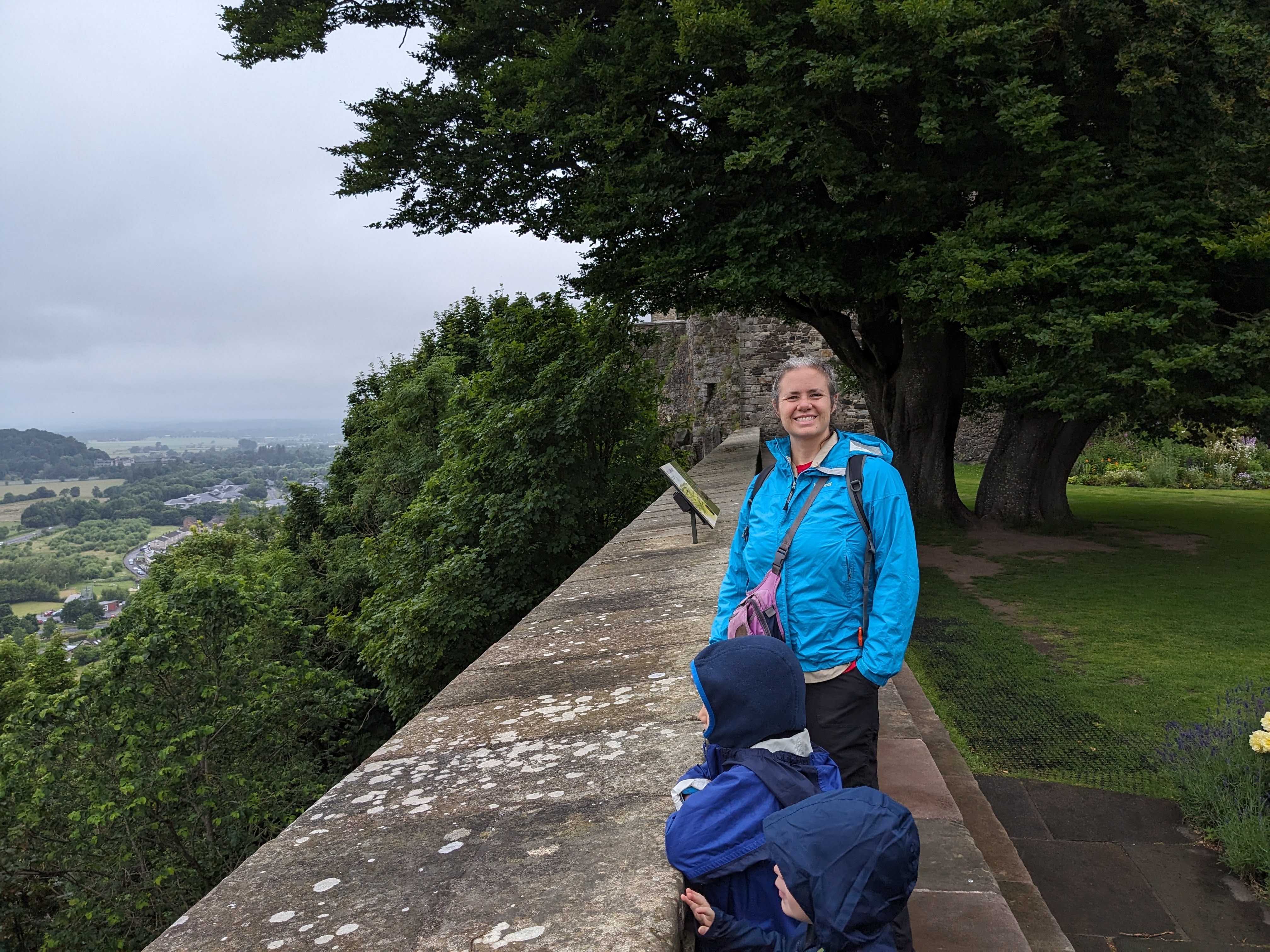
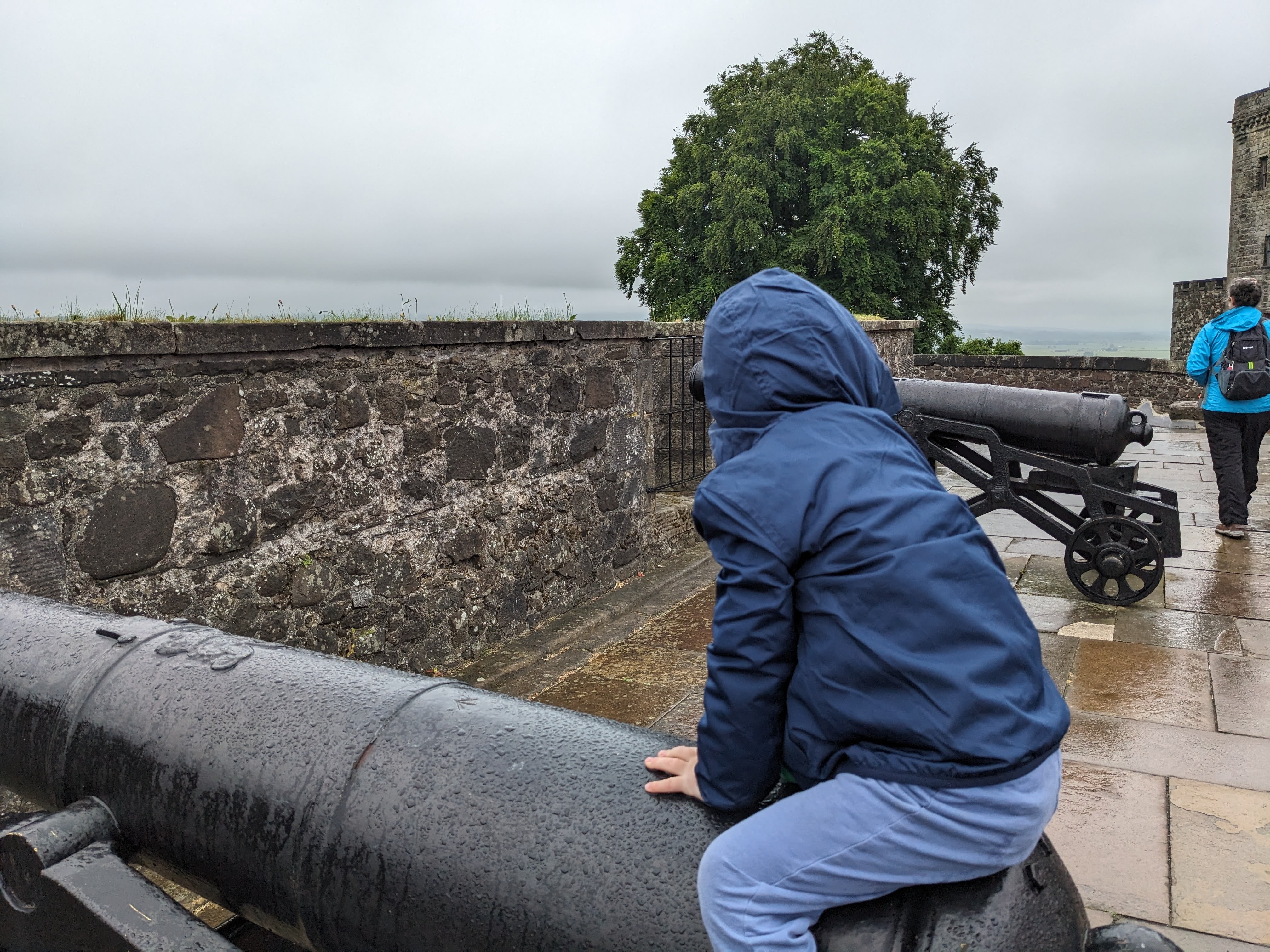
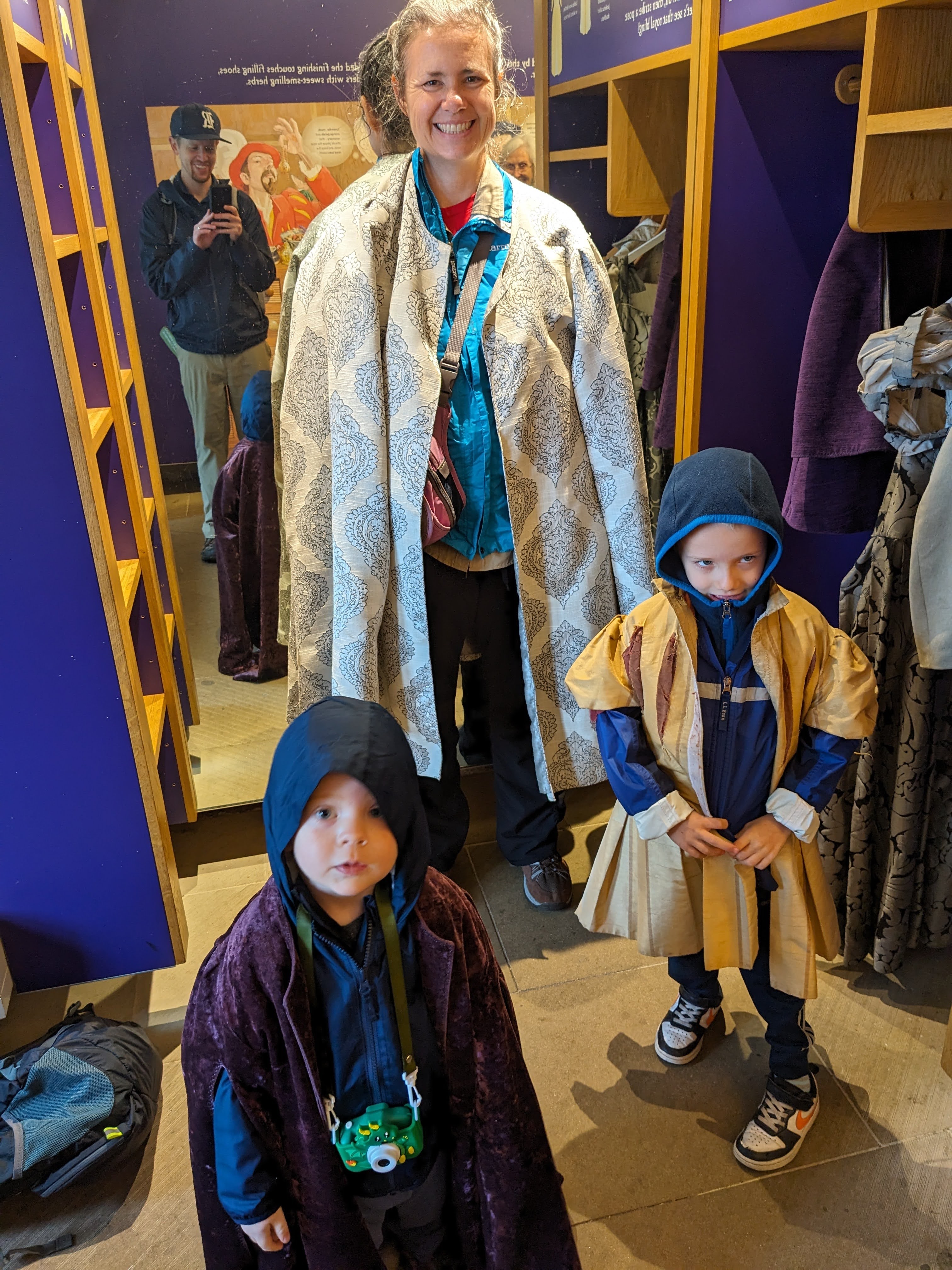
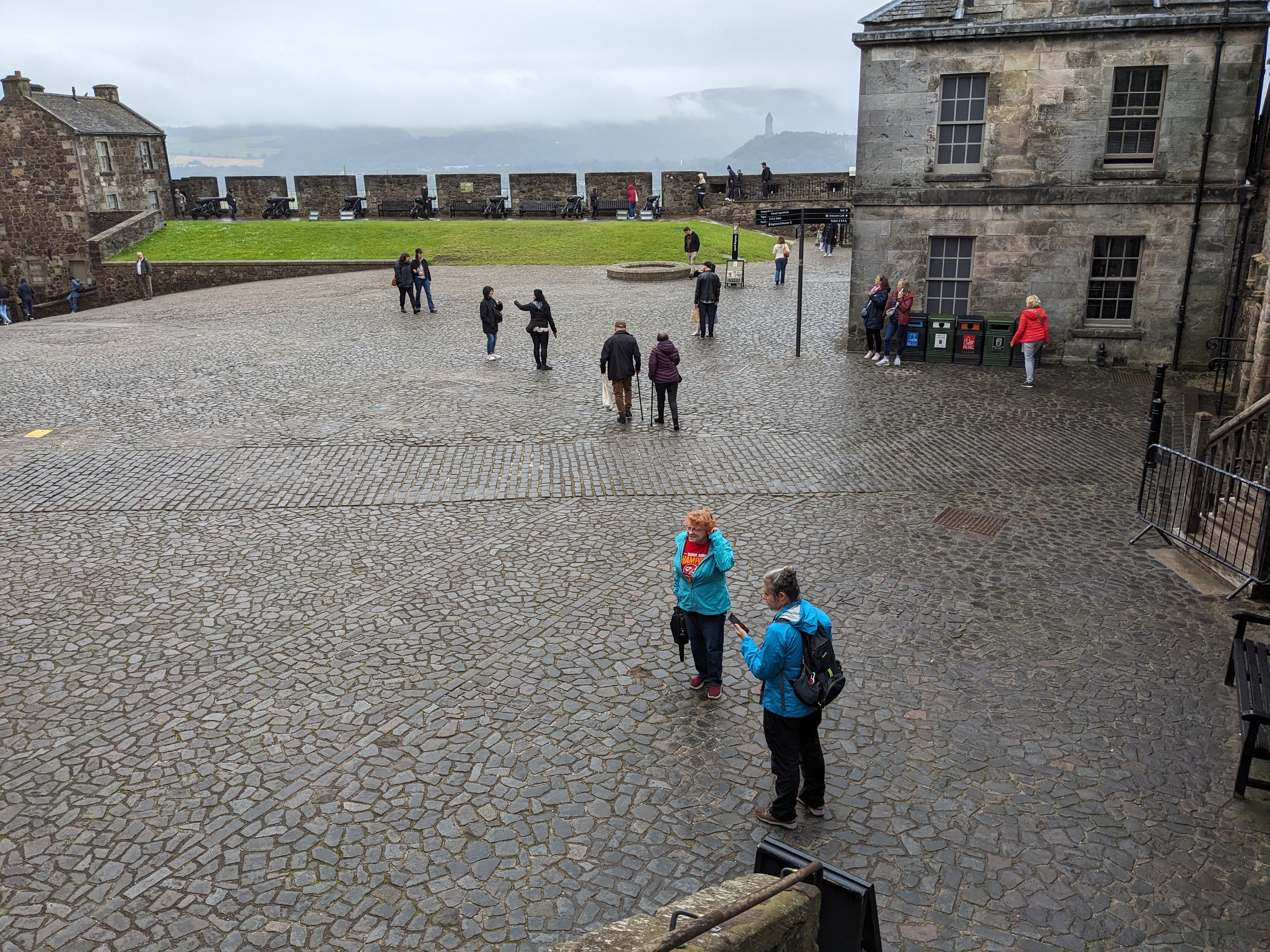
Stirling Castle is included in the Explorer Pass, so we were able to book our visit through that. We had pre-booked a time just to make sure we could get in. To tour the castle, we used, you guessed it, a self-guided tour from the Rick Steves guidebook. Stirling Castle actually felt bigger than Edinburgh Castle, so there was plenty to see. We enjoyed the gardens and 360-degree views from the battlements, plus some nice areas about life in the castle that were aimed towards kids. Also in the royal apartments there were some actors who were able to provide some historical context to what we were seeing.

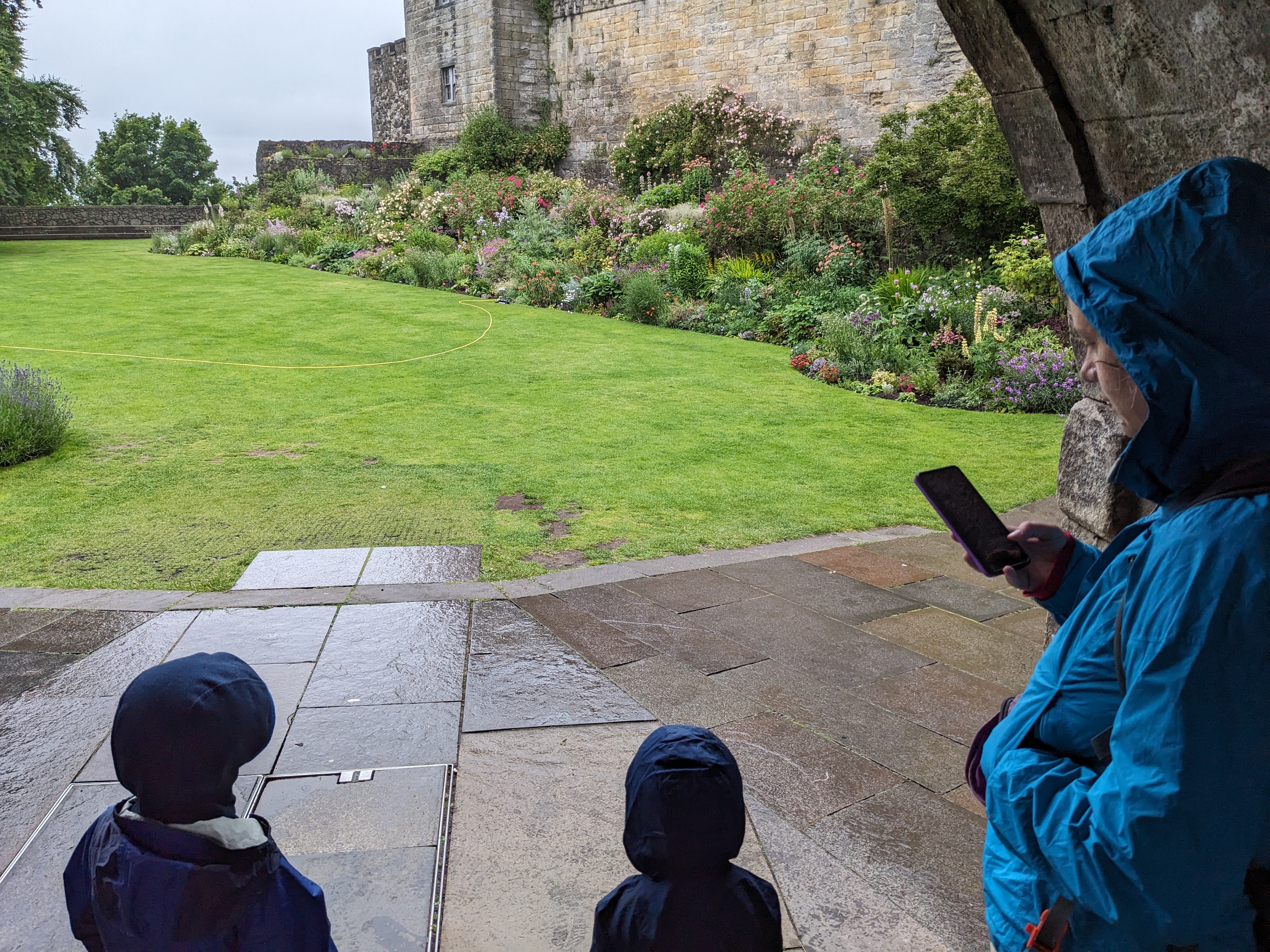
We rushed through the end of the castle tour to make sure to get back to our car before our two hour parking was over. It was easier heading back down the hill than it had been coming up! After adding time to our parking, we went to eat lunch in town. We found a Thai restaurant called Sida Thai which had some good lunch specials.

Oban

We then hit the road west to the town of Oban, our destination for the night. This route was one that really introduced us to what we talked about in “Driving in Scotland,” with many roads that were “highways” with 60 MPH speed limits, but with blind curves and narrow lanes. After 2.5 hours, we were definitely happy to get to Oban!
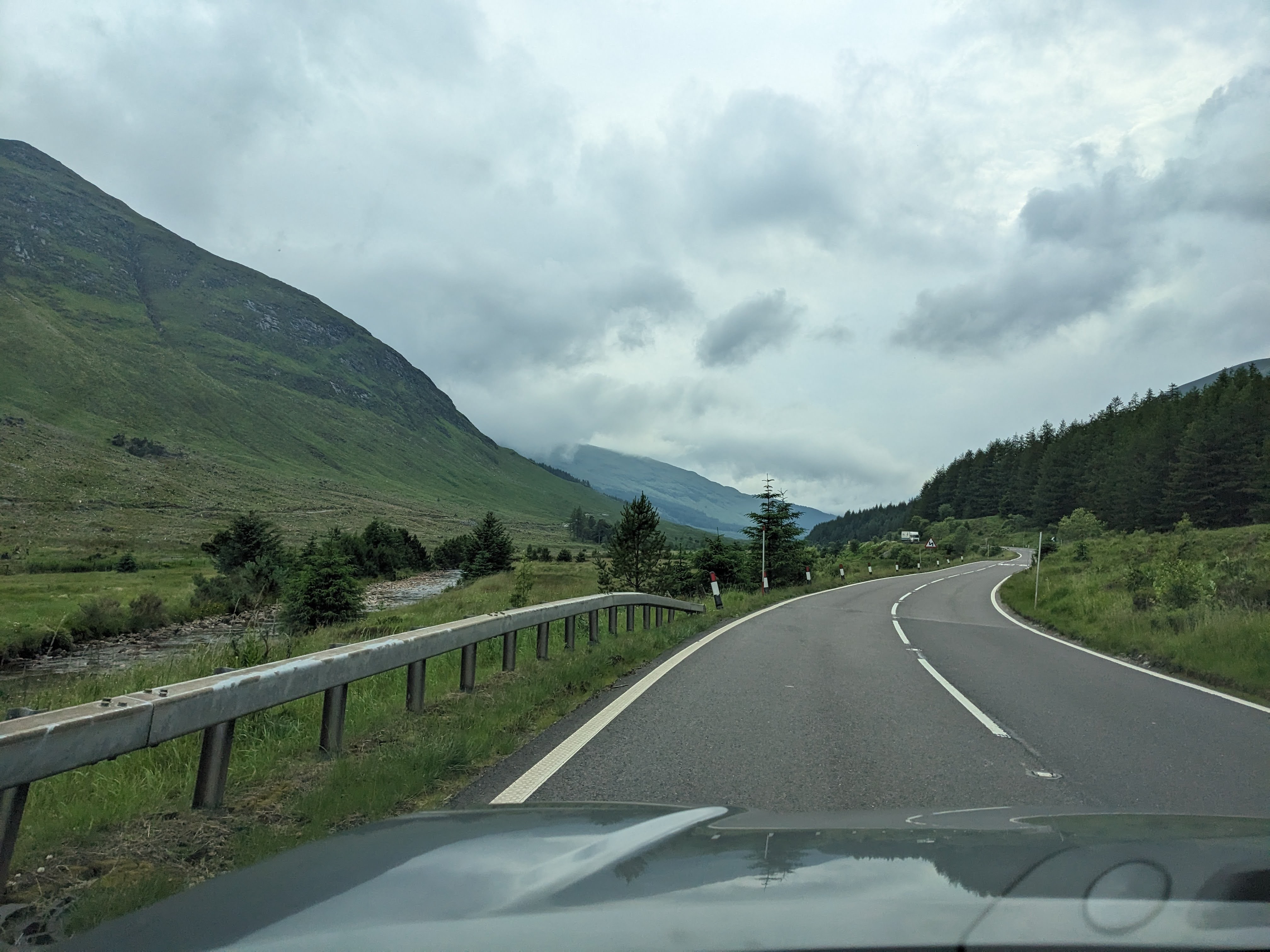
There were some nice views along the way

In Oban, we were staying in the first of the Hosteling Scotland hostels we had previously discussed. Here we were able to get a private room with its own ensuite bathroom, which was a nice way to ease in to hostel life. The hostel itself is located in a nice older building right by the bay.

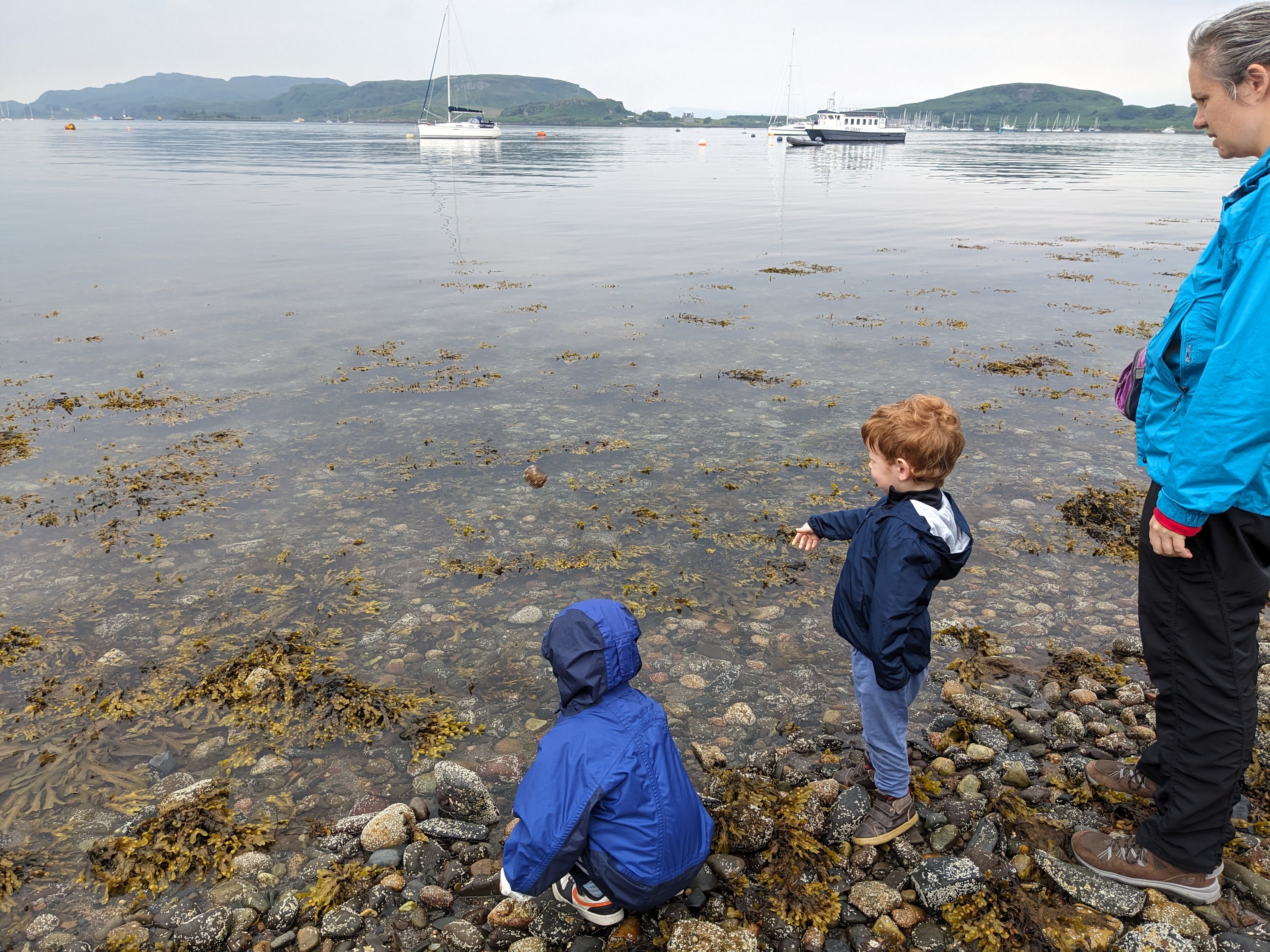
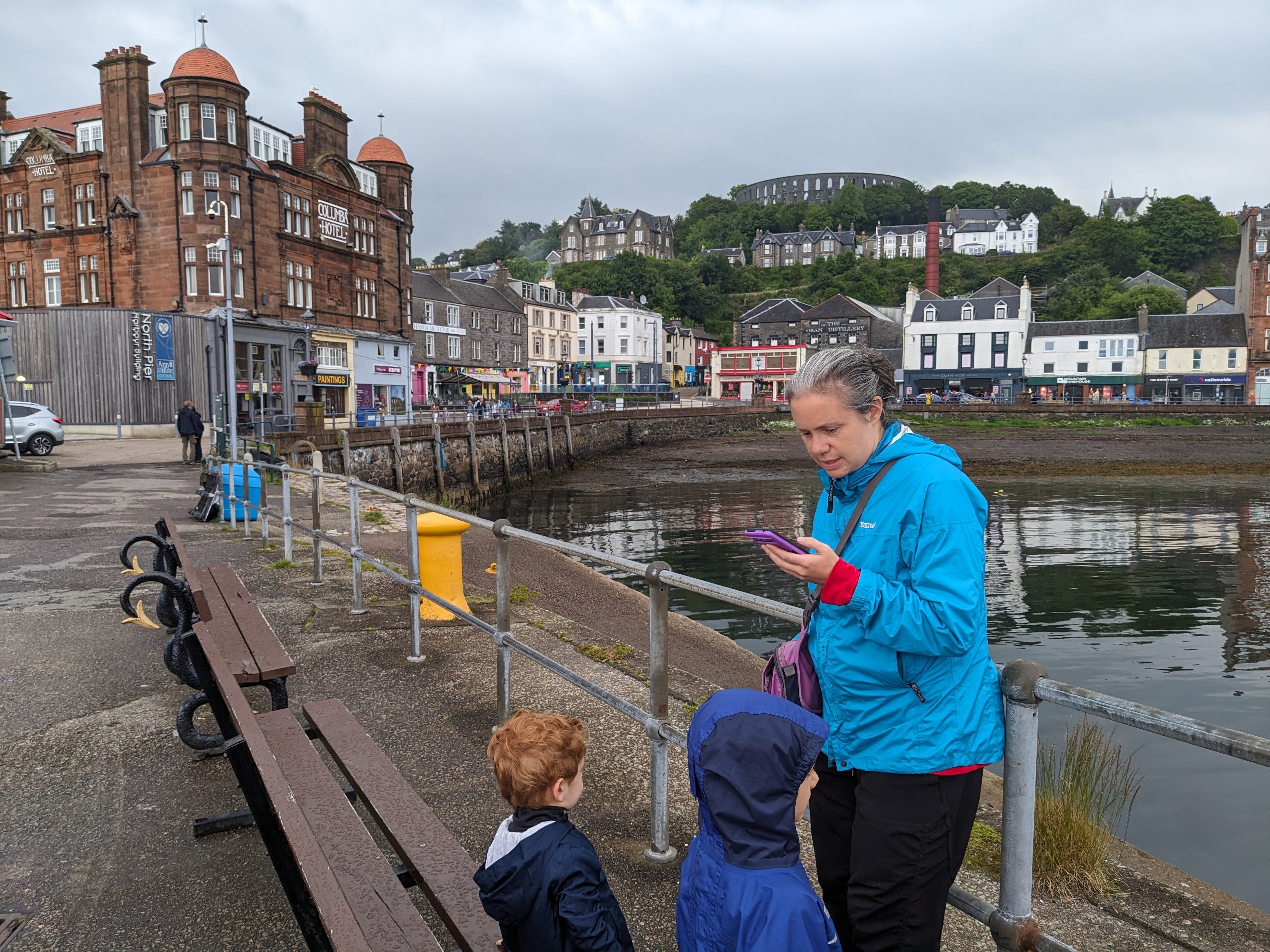
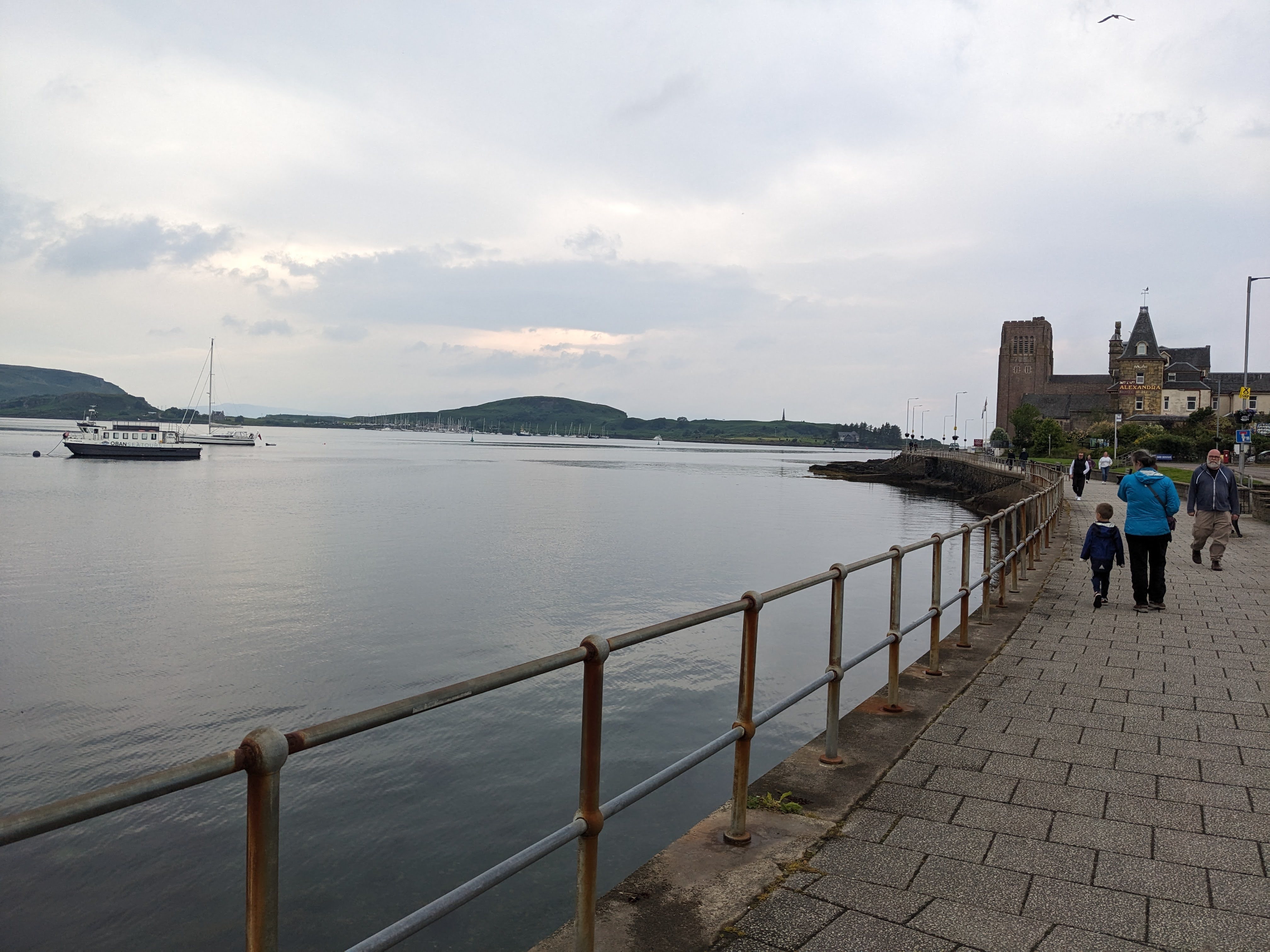
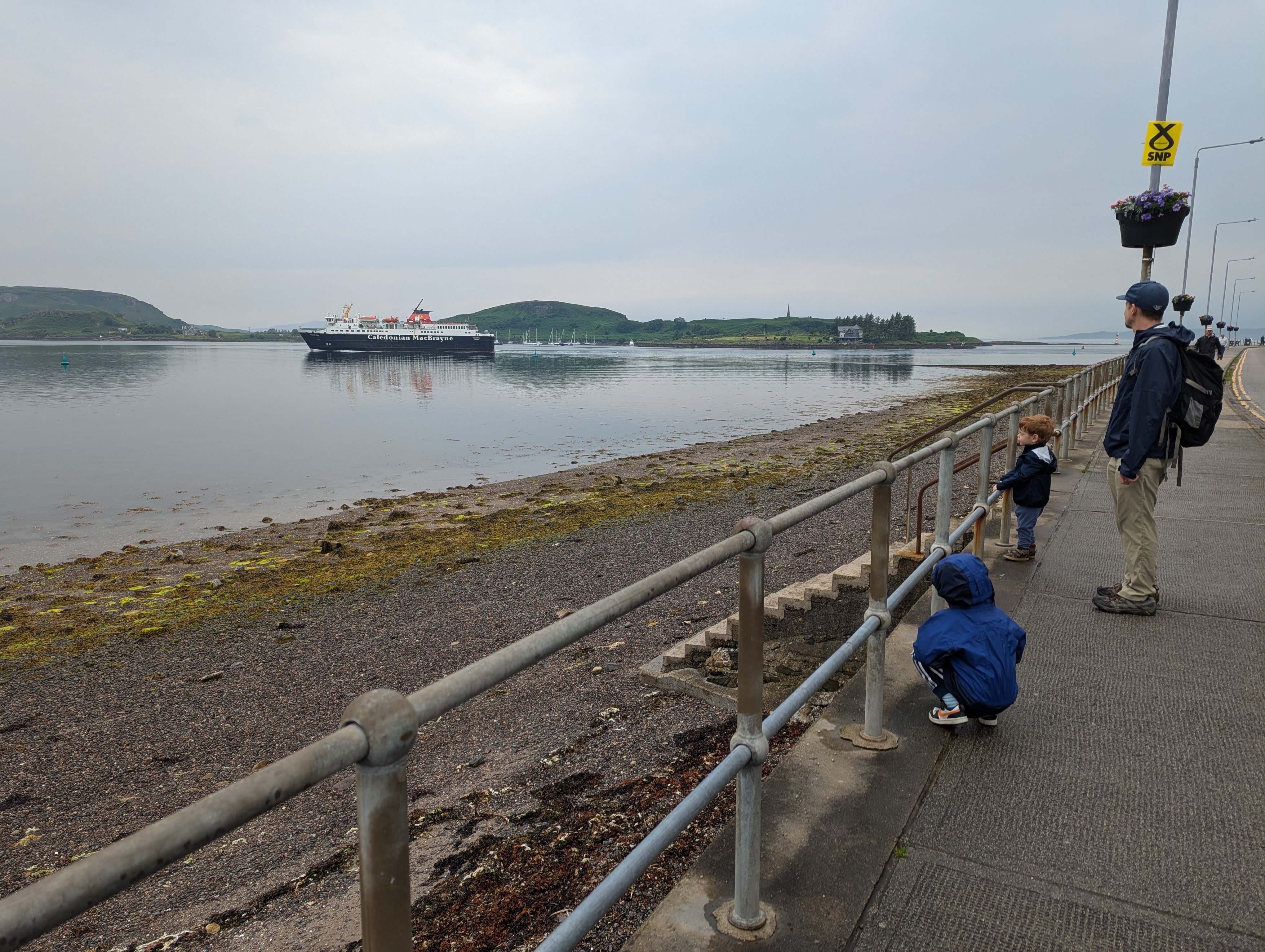
After settling in, we walked along the shore into the main part of town. The kids were interested in touching the water, so we found a staircase and walked down. The tide was low so we ended up walking on slippery ocean rocks. We continued on to the North Pier where we took in the sights of the city and the bay. We had dinner at the Piazza Italian restaurant there – good but smaller portions. We headed back to the hostel and relaxed for the rest of the evening.

Trip to the Isle of Mull

Our itinerary had us spend two nights in Oban, so we had another full day to use. We had originally hoped to take a tour to the Isles of Mull and Iona. However, the weather forecast was showing constant rain, so we didn’t think it would be particularly enjoyable to be out all day in inclement weather. Instead, we decided just to ride the ferry to Mull and back on our own for something to do.

Before catching the ferry, we had time to get the “Wee Breakfast” at the hostel, the continental breakfast that was included in our booking. It had a nice assortment of cereals and toast.

We then walked back into town and caught the 9:55 ferry. The car reservations had filled up far in advance, but there were plenty of spots available for passengers on foot. The kids enjoyed saying the name of the ferry company: “Caledonian MacBrayne.”

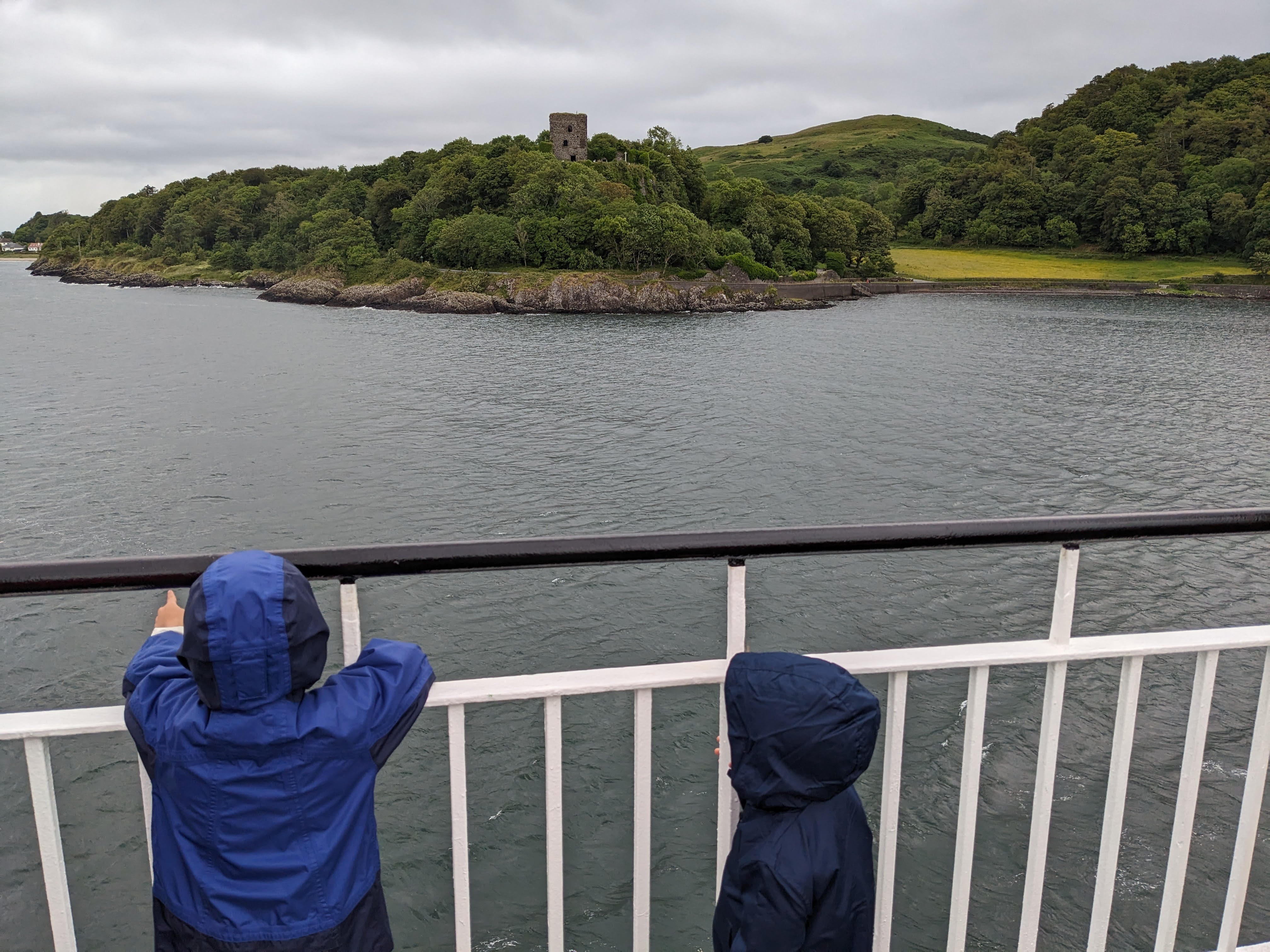
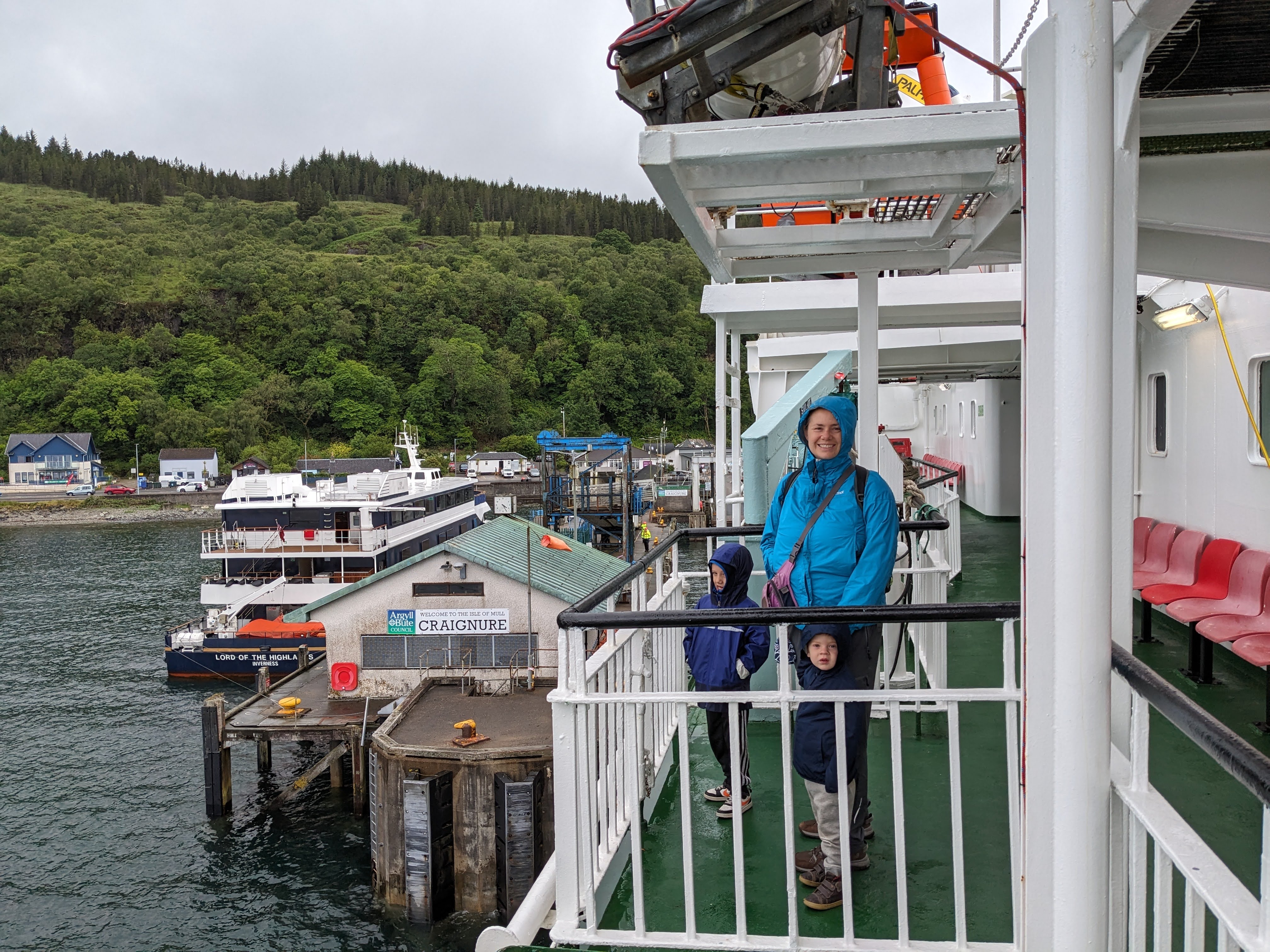
The weather was cloudy but not raining, so we started out on the outside observation deck. We had nice views of Oban as we exited the bay. Once we were out in open water we started to feel cold and wet, so we headed into the inside observation area for the rest of the 45 minute journey to Craignure on Mull.

Once we arrived at Craignure, we didn’t have a lot of time because we wanted to ride the same ferry back to Oban. We had just enough time to get off, check out a gift shop by the tiny ferry terminal, and then get back on. We did find it fascinating to watch the cars load off and then on to the ferry. They actually raise up the nose of the ship to allow for access.
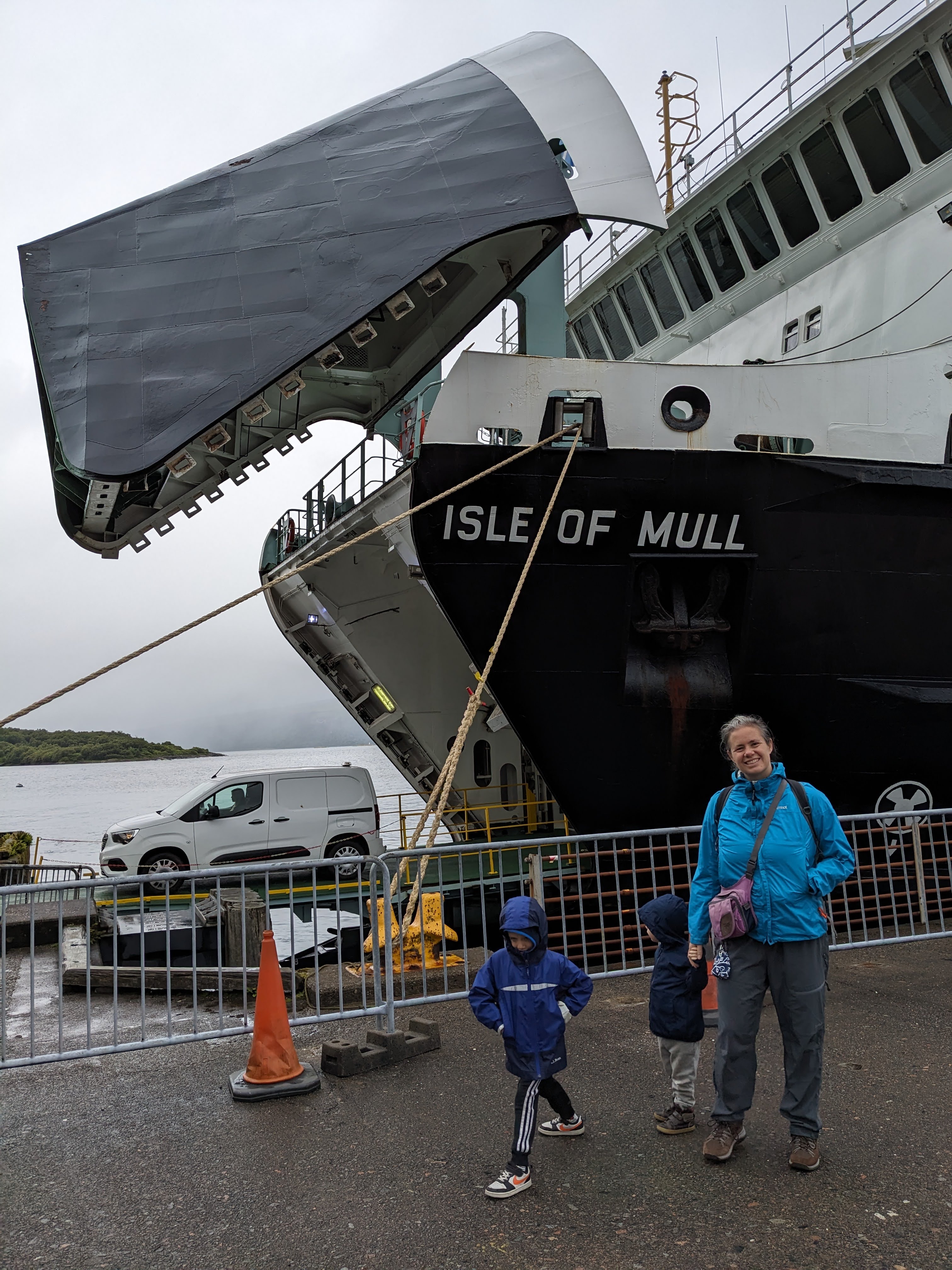
Watching the cars come off the ferry with its nose lifted. Note that the ferry is also named Isle of Mull because this is its main service

The ride back was pretty straightforward since we followed the same path, so we mostly stayed inside. We did go back outside for the final stretch into Oban.

Rainy Afternoon in Oban

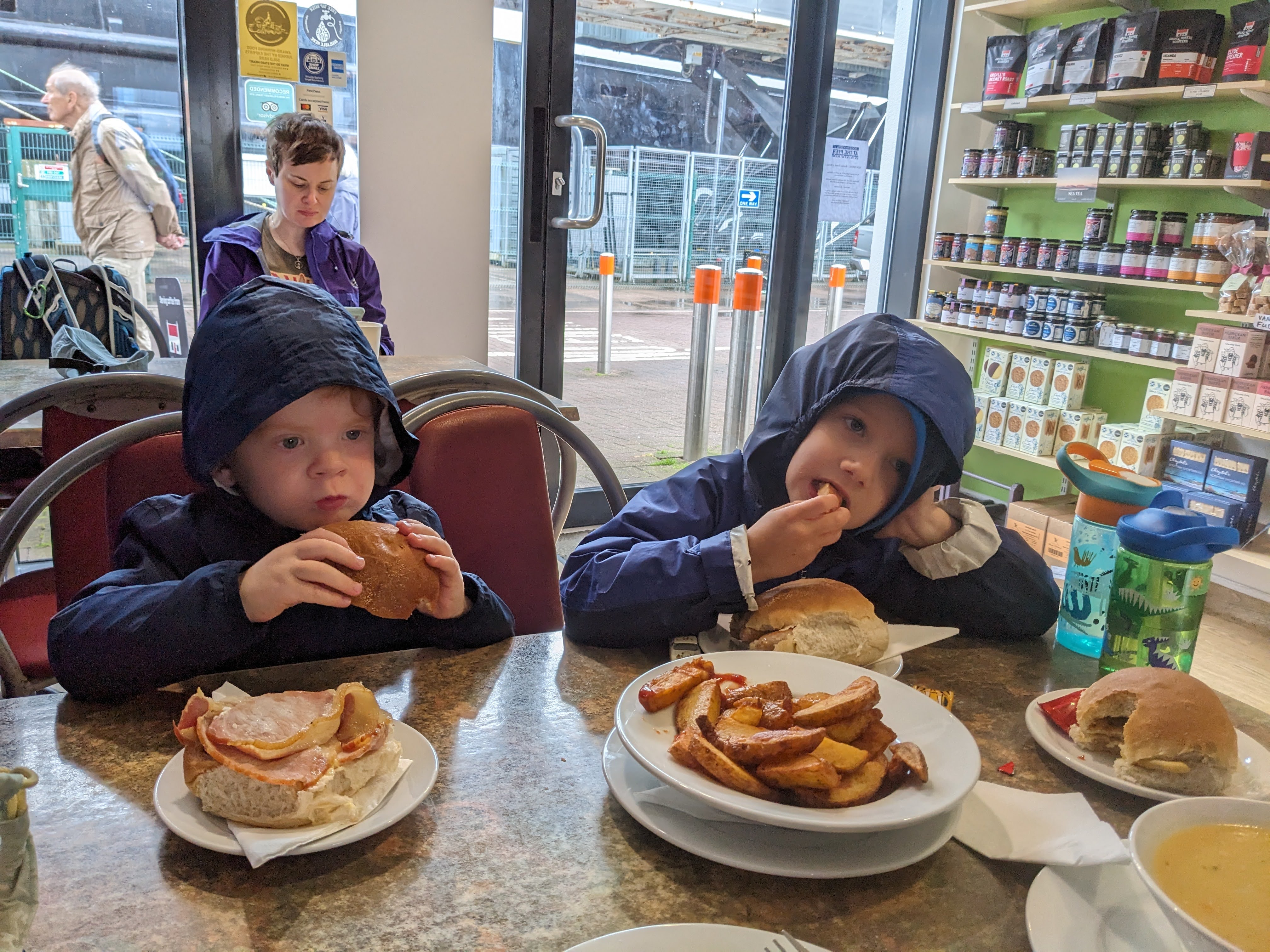
After disembarking, we grabbed lunch at a little cafe in the ferry terminal called Argyll at the Pier. The warm soup was nice on the damp day! As we left the terminal, we did get a little bit of sun. We grabbed some groceries at a Tesco supermarket and walked back (in the rain) to the hostel.
We spent some time in our room relaxing and drying off. We then tried to decide what to do with our afternoon that the kids would enjoy (not the Oban Distillery unfortunately). We ended up heading to Atlantis Leisure, Oban’s version of what we would call in the US a recreation center. They had a big soft play area for the kids that they enjoyed playing around in for quite some time.

Soft play area at Atlantis Leisure

For our dinner, we kept it easy and used the hostel kitchen to heat up a few different items we had gotten at the supermarket.

Self-catered dinner at the hostel

The next morning, we had the Wee Breakfast again and hit the road for our next destination, Glencoe. Of course, this morning there was a little bit of a blue sky! It was a little bit of a frustrating reminder that we hadn’t gotten to experience everything we wanted to in Oban due to the weather, but still provided a nice vista as we said goodbye to the pleasant town.
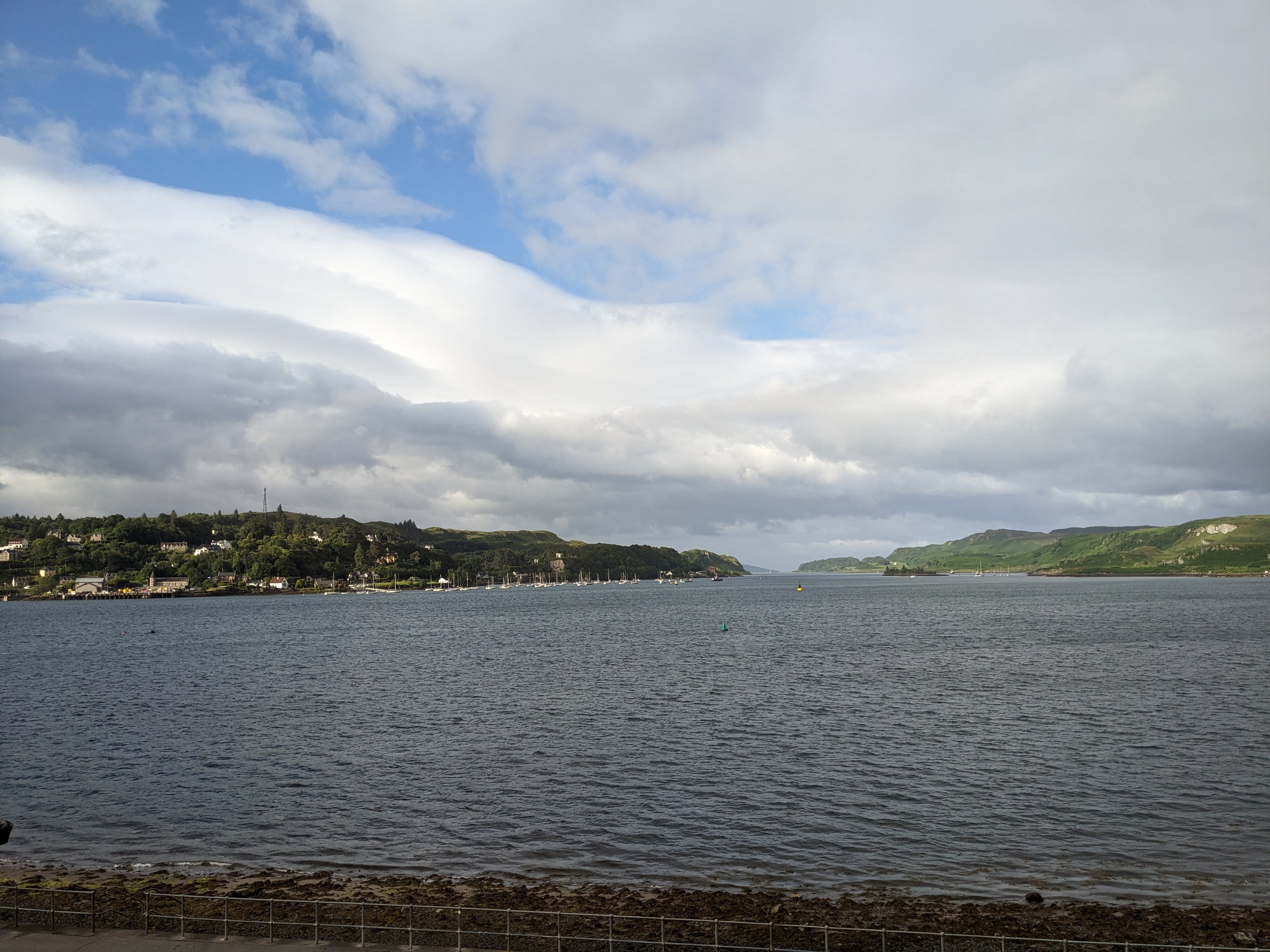
Sun over Oban Bay on the day of departure

RTW Timeline: First Half of the First Millennium BC

After seeing so many interesting sites and learning many facts about places all around the world, we thought it would be interesting to arrange the different places and events on a timeline to provide more of a context for the different highlights.

Our first installment in the timeline series covered events from the beginning of human history up to 1000 BC. This installment will cover from then up to 500 BC. During this time, one of the great civilizations emerge, and a deity is born.

776 BC – First Panhellenic Games in Olympia, Greece

The Greeks established a tradition of Panhellenic games, in which male athletes from all over the country would converge on a location and compete in contests of speed and strength. The most famous and the oldest were the games held in Olympia, which gave rise to the tradition we now know as the Olympics.

IMG_2497_edt

Around 600 BC – Sounion Kourous Carved

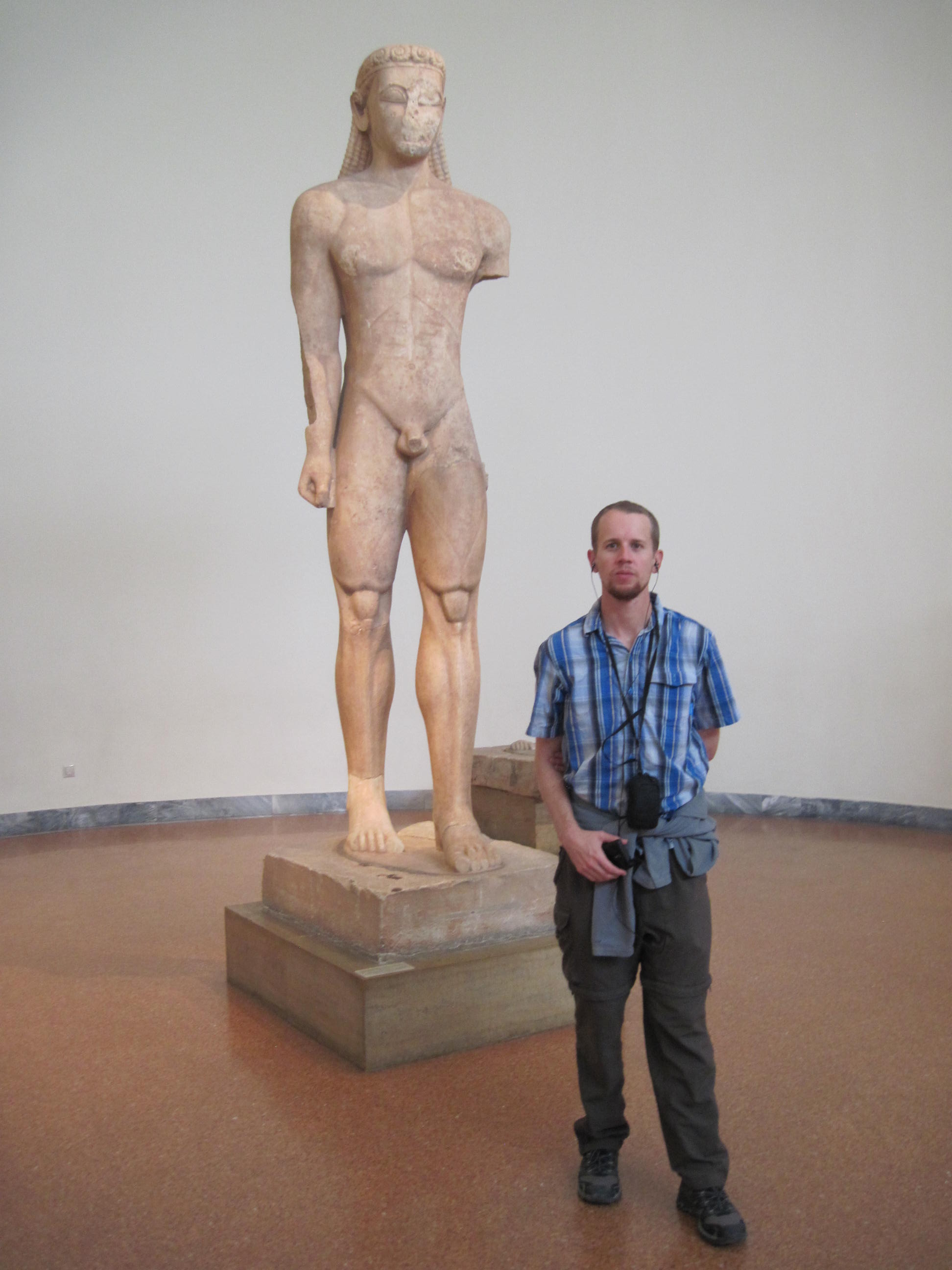
As the Greek population grew and the culture began to flourish, what we now call the Archaic Greek culture emerged. The hallmarks of the art of this period were standing figures carved out of stone; the male figure was called a kourous and the female a kore. We saw one of the more well-known Archaic kourous figures at the National Archaeological Museum in Athens.

A korous (male)

Sounion Kourous (male)

590 BC – Temple of Hera Built at Olympia

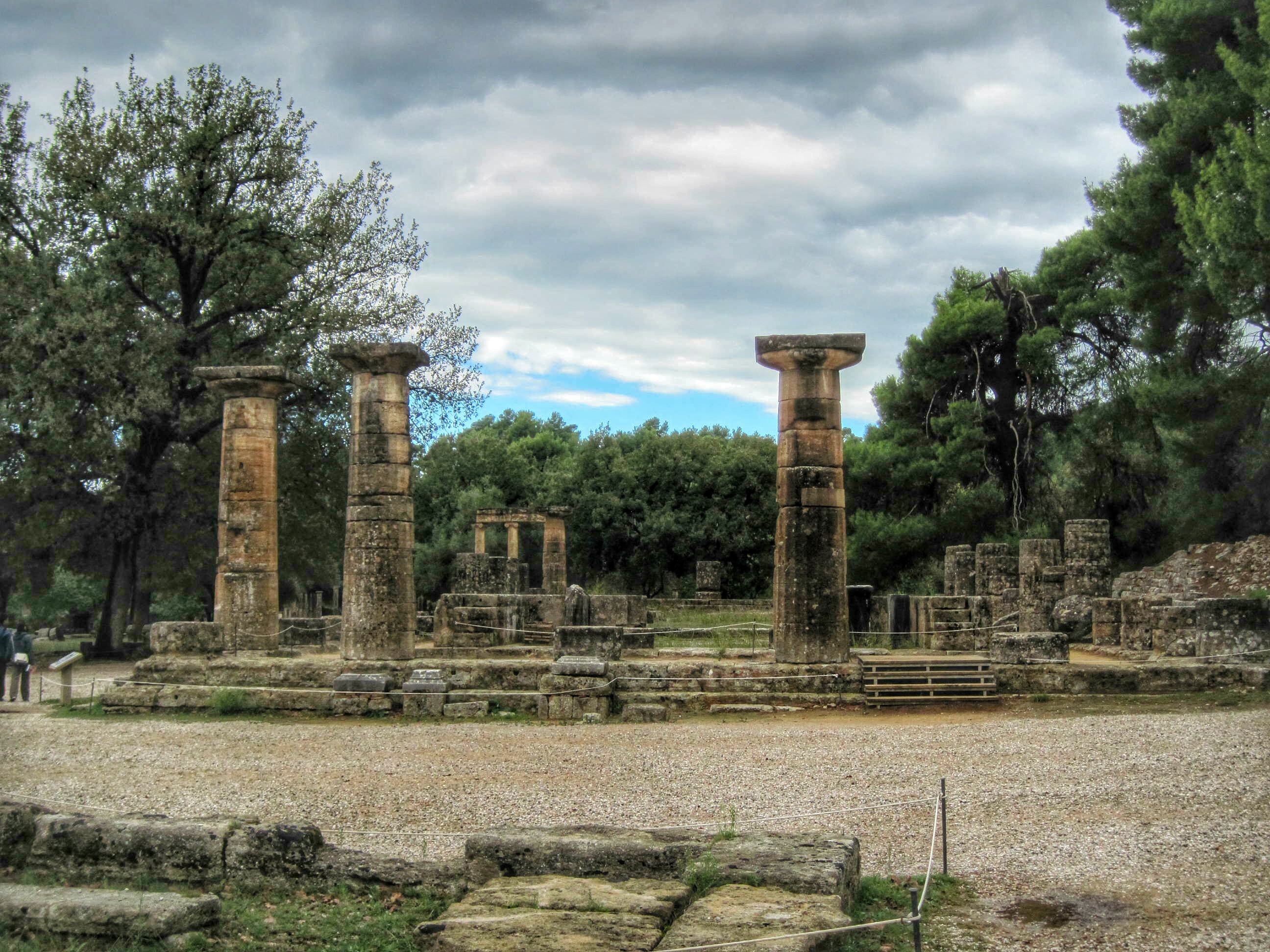
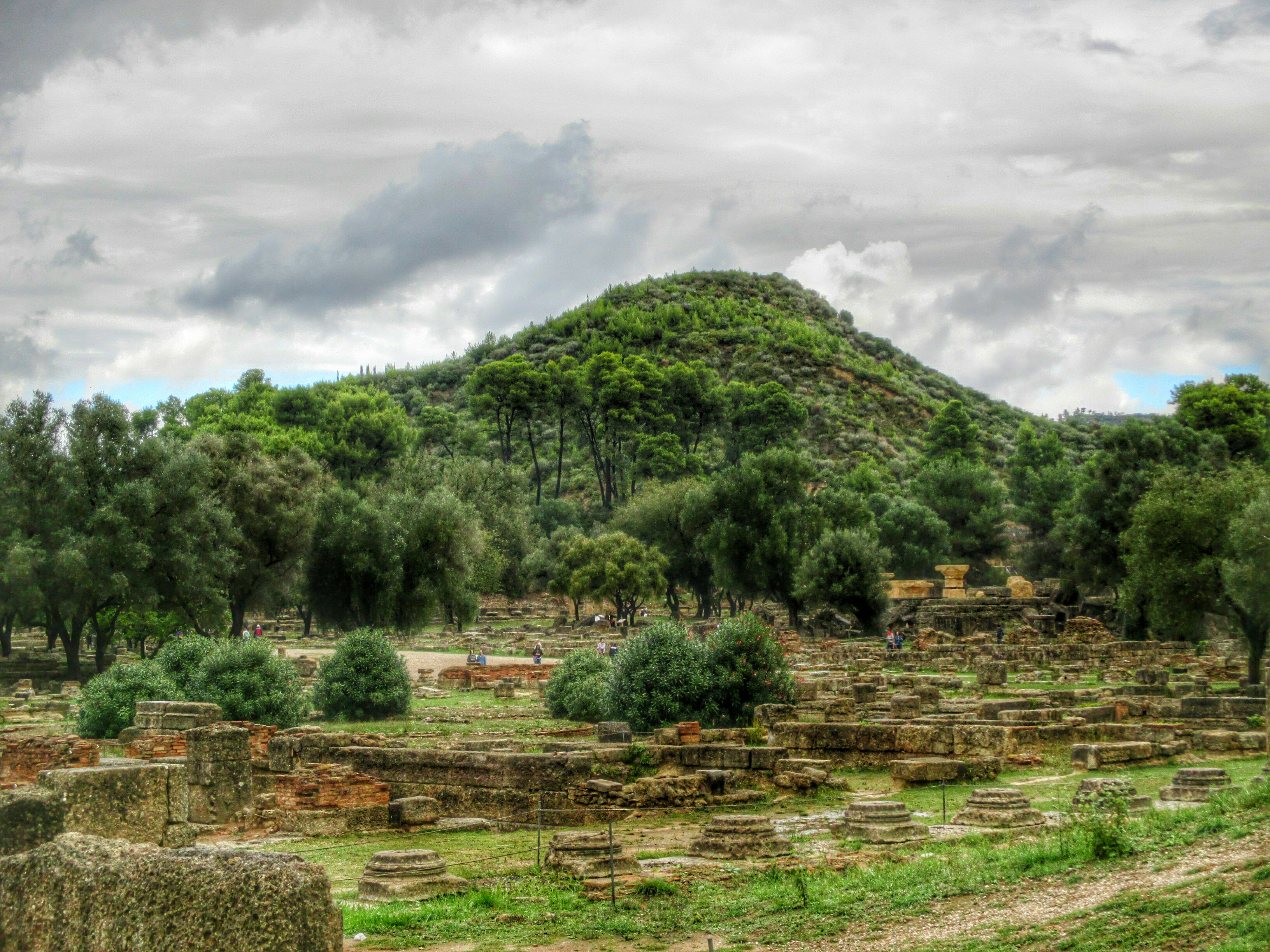
The Panhellenic Games held every four years at Olympia were not just an athletic competition. In addition, they functioned as a large religious festival. To support the religious activities, a large number of temples were built in an area called the sanctuary, or Altis. This temple was one of the first structures erected, and one of the first examples of a Doric temple. Today, it is used as the site where the Olympic flame is lit by sunlight reflected from a mirror.

Remains of the Temple of Hera

Remains of the Temple of Hera

586 BC – First Pythian Games Held in Delphi, Greece

The games held at Olympia are the most famous, but the sanctuary to Apollo at Delphi also hosted a Panhellenic Games every four years. These games had the same athletic events as those at Olympia, and also had art and dance competitions.

The remains of the stadium from the Pythian Games (renovated during Roman times)

The remains of the stadium from the Pythian Games (renovated during Roman times)

580 BC – “Argos Twins” Sculpture Created

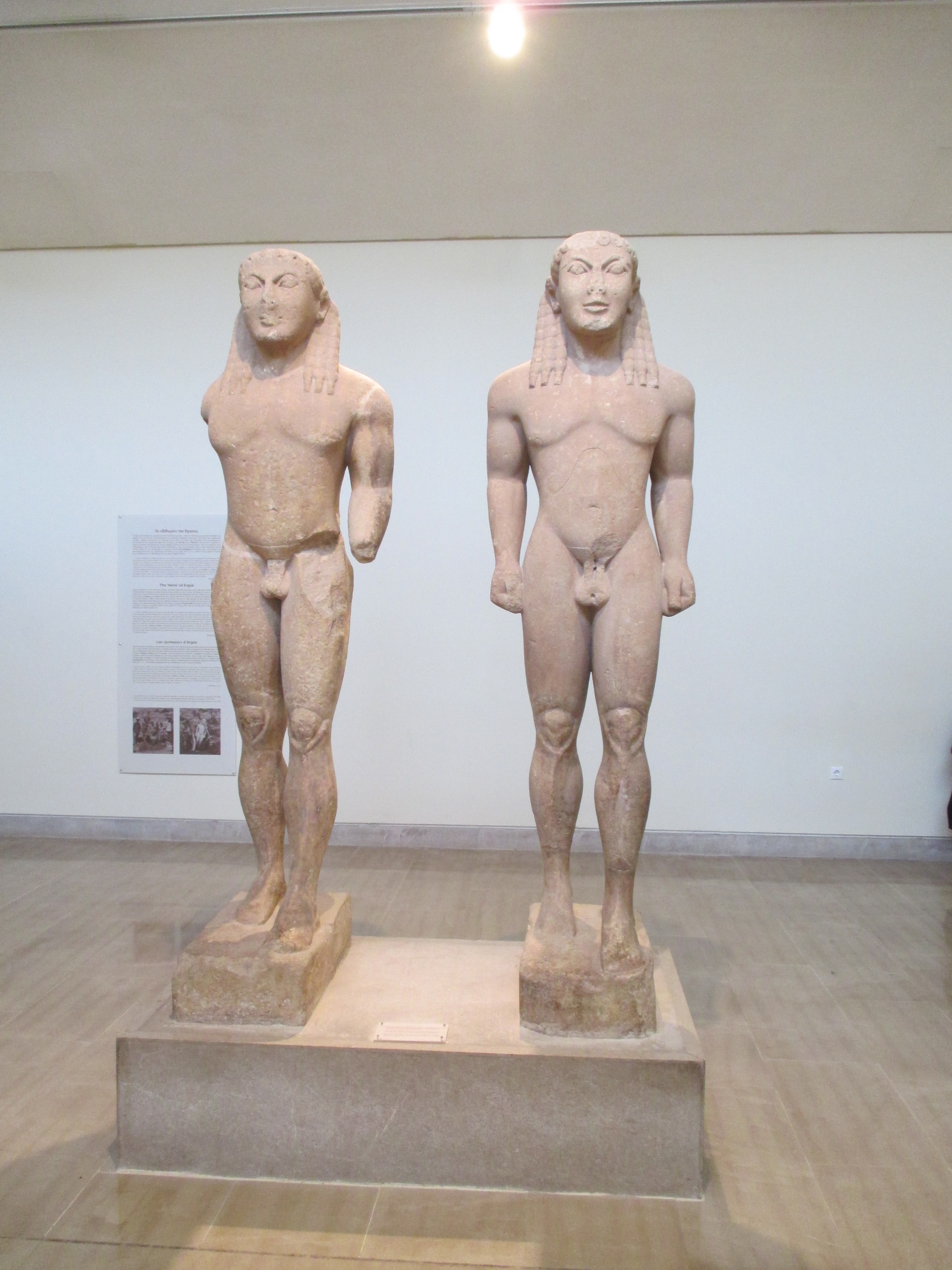
This pair of kouros statues were sculpted in Argos, but were found in Delphi, where we viewed them at the archaeological museum.

The Twins of Argos

The Twins of Argos

563 BC – Siddhartha Gautama Born

The man who would attain enlightenment and become the Buddha was born in Lumbini, Nepal around the middle of the 6th century BC. We didn’t visit this site, but we did see the influence of this event in the countless stupas, pagodas and wats that we visited all throughout Asia.

560 BC – Sphinx of Naxos Created

This is another famous piece of Archaic Greek art that we viewed at the archaeological museum in Delphi. This massive carving of the mythical creature was sent by the island of Delphi as a offering to the sanctuary in Delphi.

The Sphinx of Naxos

The Sphinx of Naxos

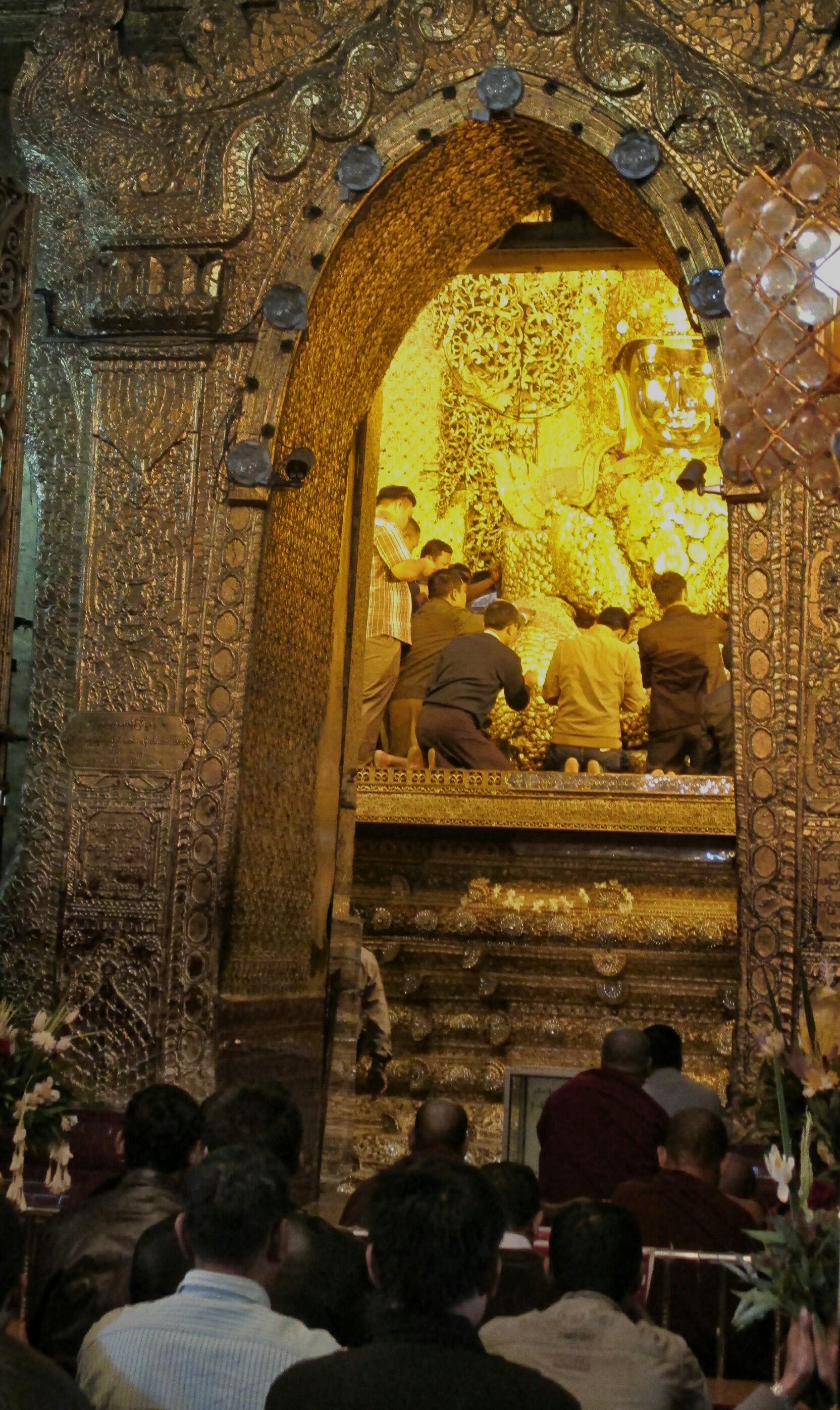
554 BC – Mahamuni Buddha Image Cast

Legend states that this bronze image of Buddha was cast in the kingdom of Arakan when the Buddha visited. It now resides in a special temple outside of Mandalay in Myanmar (Burma). Male pilgrims apply gold leaf to the image which has given it a large gold covering.

Males applying gold leaf

Males applying gold leaf

520 BC – Temple of Apollo Built on Aegina

We visited the island of Aegina as a day trip from Athens with Della’s family. We walked by the ruins of this temple to Apollo on our way to the beach, but couldn’t go in because it was closed for the day. All that remains of this temple is a solitary column that we were able to see from a distance.

The lone column remaining in the Temple of Apollo

The lone column remaining in the Temple of Apollo


As the first half of the first millennium BC drew to a close, the Greek culture began to reach its apex. In our next installment, we will travel through many of the relics of the Greek classical period that we were able to view.

RTW Timeline: Prehistory and the Earliest Civilizations

After seeing so many interesting sites and learning many facts about places all around the world, we thought it would be interesting to arrange the different places and events on a timeline to provide more of a context for the different highlights.

The first installment of our timeline series will cover the oldest things we saw on the entire trip. In case you’re wondering, this only includes human activity; obviously we saw many natural wonders around the world that are much older.

2.5 – 2.1 million years ago – The Age of the “Mrs Ples” hominid fossil found in Sterkfontein Caves, outside Johannesburg, South Africa

The Cradle of Humankind is an area where many remains of our most ancient ancestors have been found (including a recent discovery). We visited the cave where some of the most famous remains were discovered as part of our visit to the park on the very last stop of our self-drive safari.

One of the hominid fossils from the Cradle of Humankind

One of the hominid fossils from the Cradle of Humankind

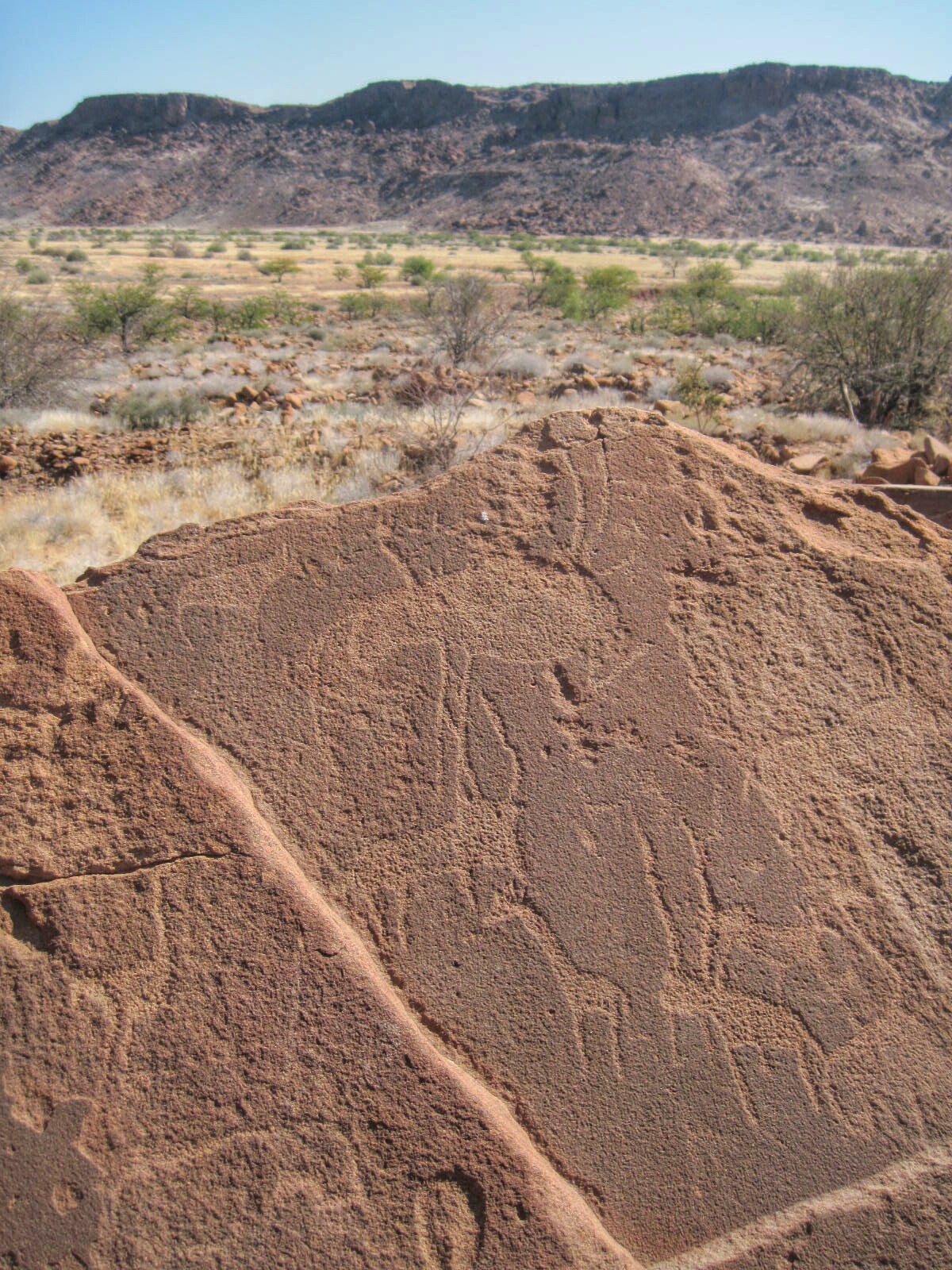
Around 4000 B.C. – San people inhabit the Twyfelfontein area and make rock carvings

The site of Twyfelfontein (//Uis-//Ais in the native language) in Namibia contains rock engravings from the San people (a.k.a Bushmen) dated from 2000 to over 6000 years old.

wpid-wp-1406990422066.jpeg

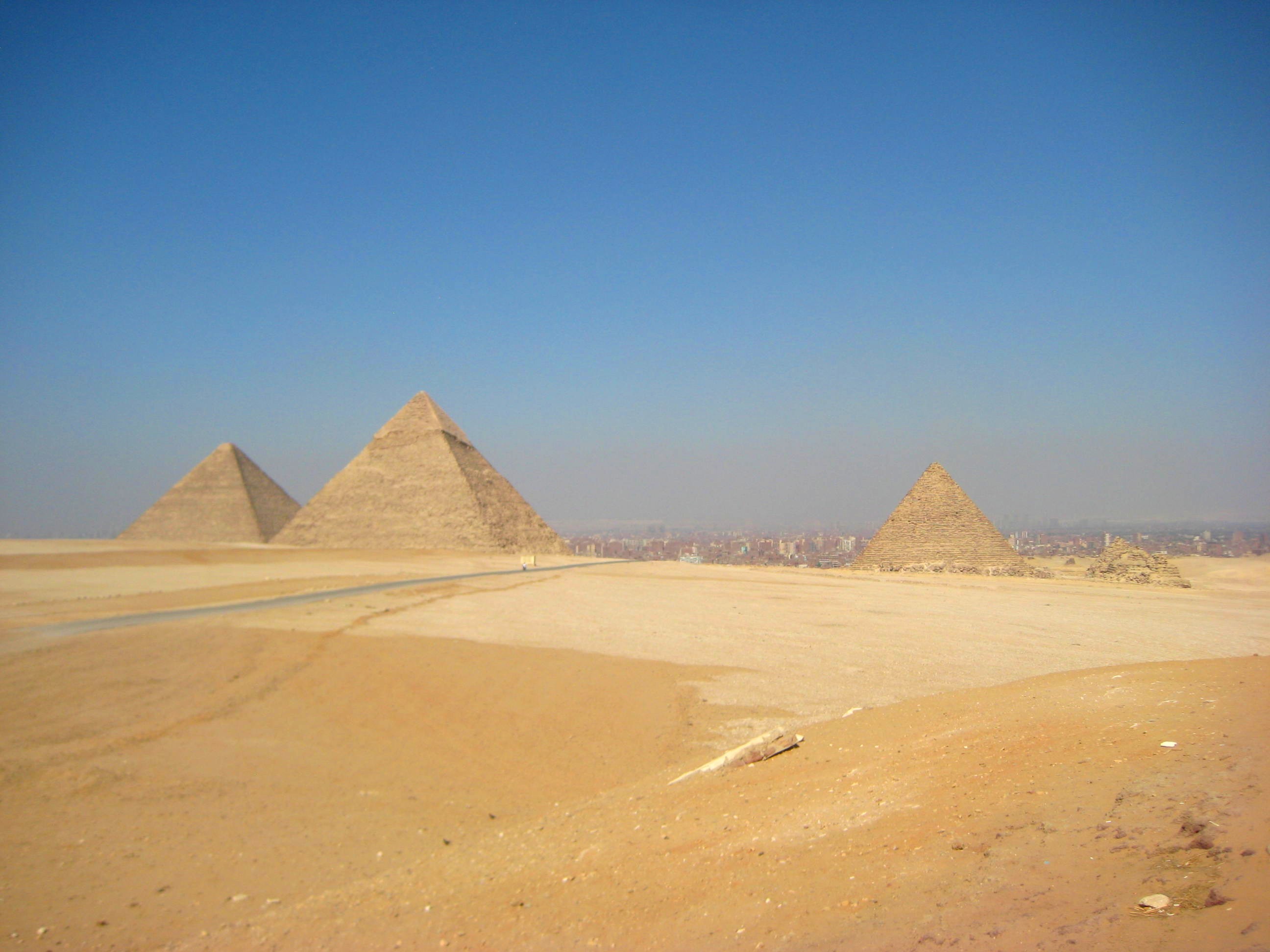
2560 BC – Pyramids of Giza constructed

We were able to view these ancient wonders of the world during our brief layover in Cairo at the very beginning of the trip.

IMG_9137

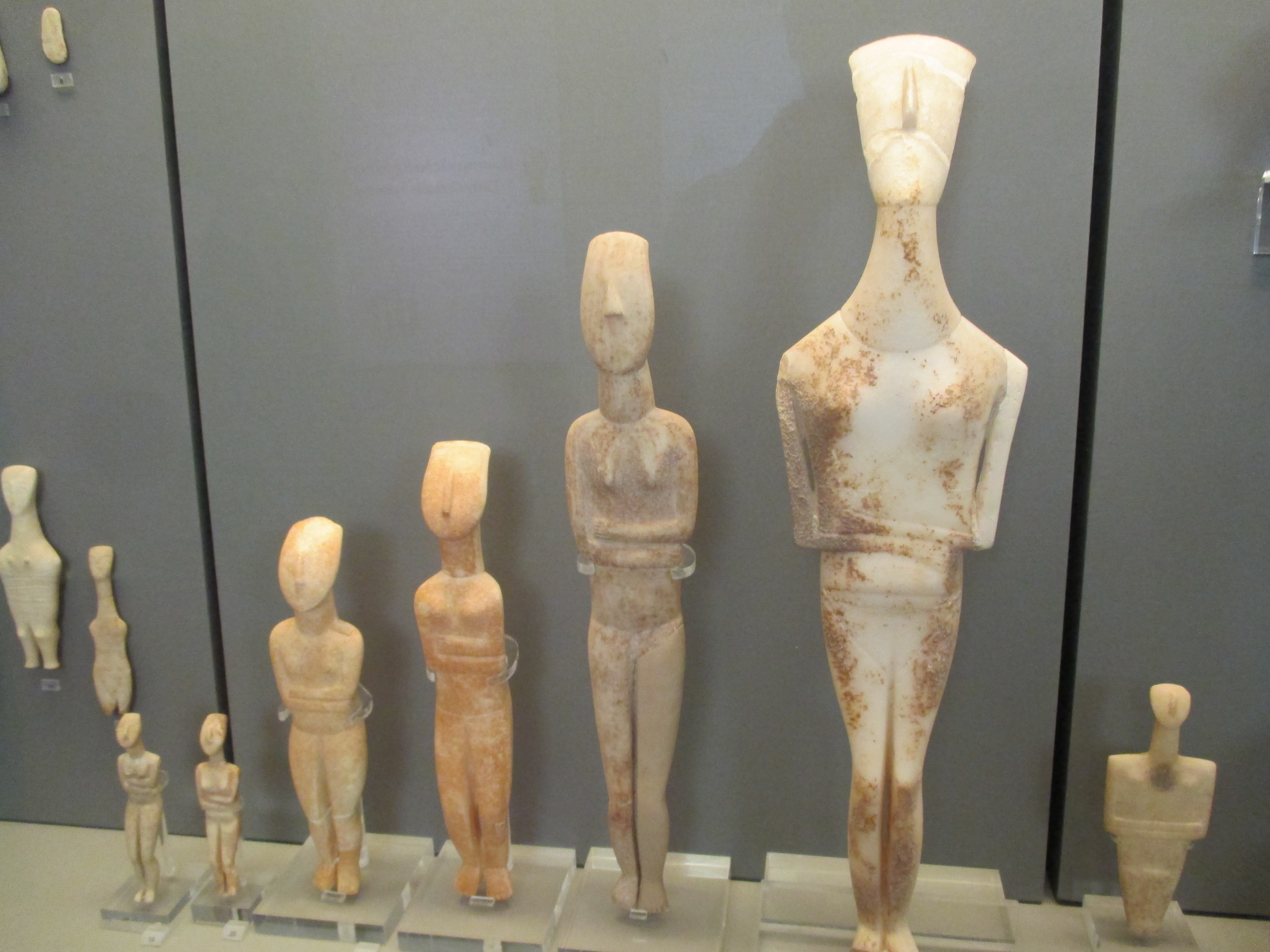
Around 2500 BC – The Cycladic culture in the Greek islands produces unique figurines

Around the same time that the pyramids were being built, in islands around the Aegean Sea, an emerging culture was making these distinctively-shaped sculptures. We saw examples of these at the National Archeological Museum in Athens.

Cycladic figurines

Cycladic figurines

16th Century BC – Grave Circle A at Mycenae Formed

1000 years later, the dominant culture on the Pelopponesian Peninsula of Greece was what we now refer to as the Mycenaean culture. These are supposedly the people who fought against Troy in the Trojan War. The site of Mycenae is now in ruins, but some evidence remains to give you a feel for their culture. They buried their dead nobility in grave circles which were filled with treasure. The famous archaeologist Henry Schliemann thought this grave circle was the final resting place of Agamemnon, who led the Mycenaeans against Troy.

Grave Circle A

Grave Circle A

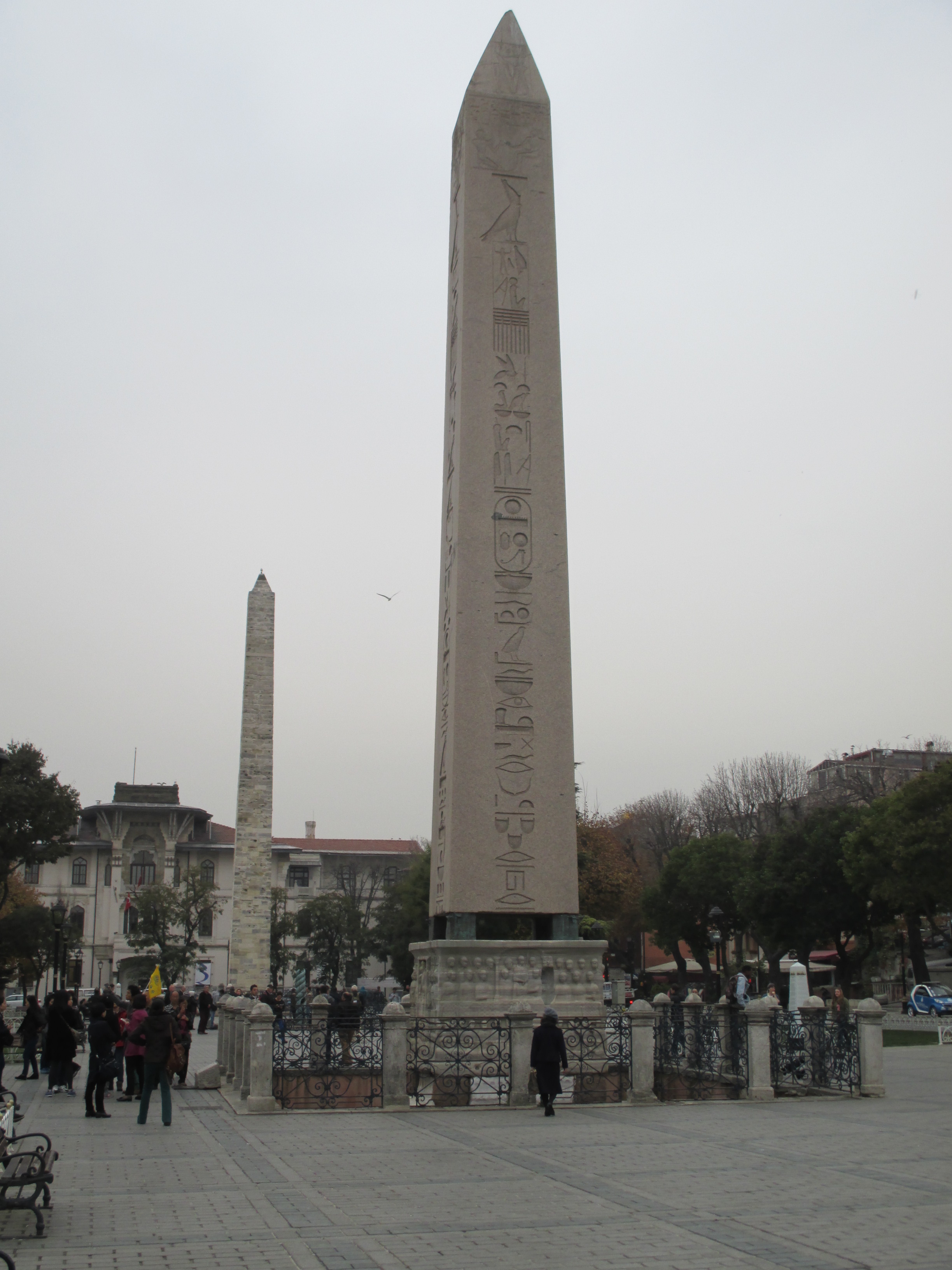
1450 BC – What is now called the Obelisk of Theodosius set up by Thutmose III in Karnak, Egypt

We saw this obelisk in Istanbul, in the ruins of the ancient Hippodrome. It was brought to Constantinople by Roman Emperor Theodosius in the 4th Century AD, but was originally erected in Egypt.

The Hippodrome

The Hippodrome

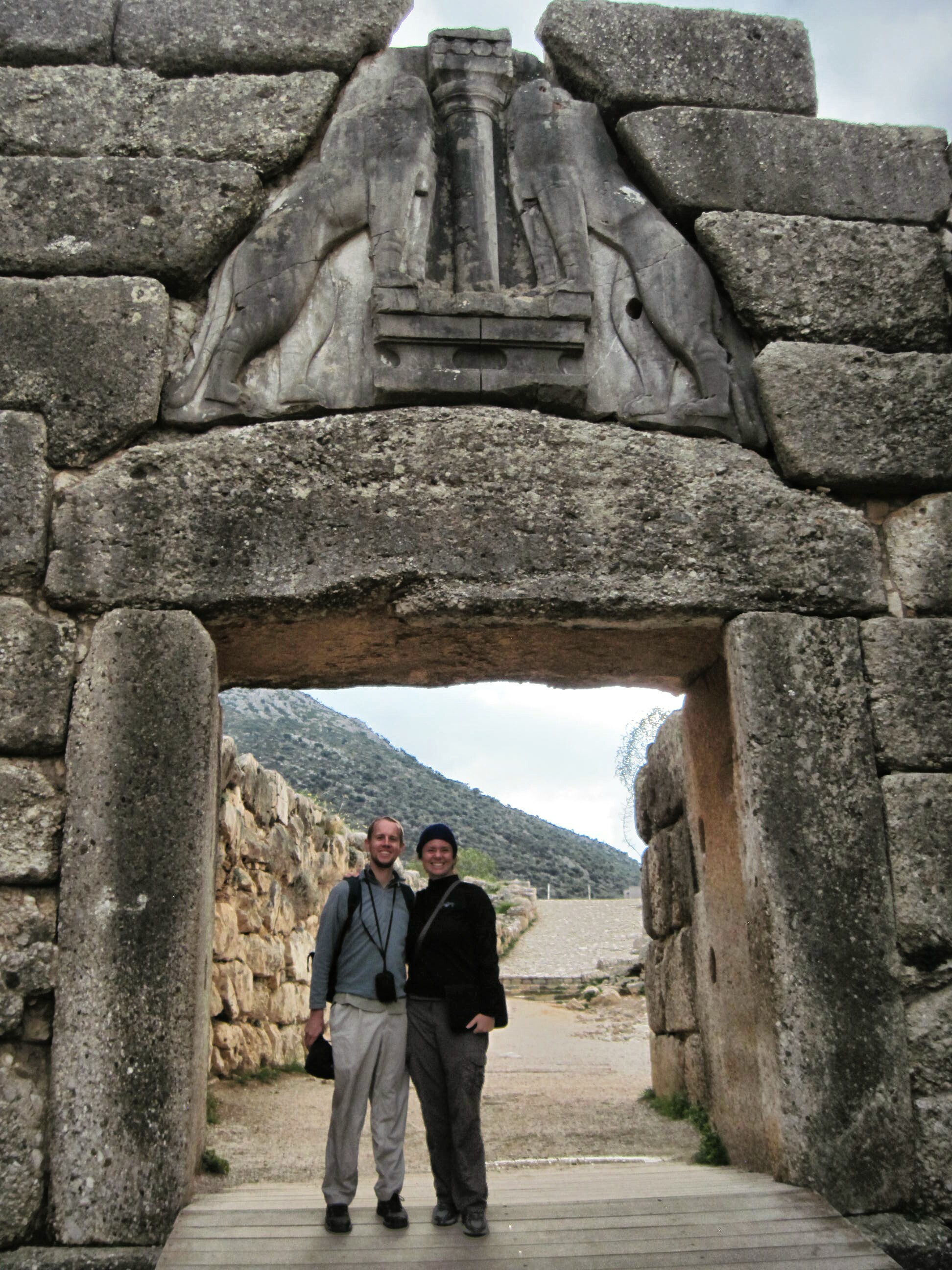
13th Century BC – Lion Gate at Mycenae built

Back in Mycenae (the site of Grave Circle A), probably the most famous feature is the Lion Gate, the main entrance to citadel. It was build about three centuries after Grave Circle A.

The Lion Gate

The Lion Gate

Around 1250 BC – “Treasury of Atreus” tholos tomb built at Mycenae

In the later years of Mycenae, the main style of the grand tombs was the tholos tomb, built in the shape of a beehive with a large, domed interior. The largest is what Henry Schliemann deemed the “Treasury of Atreus.”

The Treasury of Atreus

The Treasury of Atreus

Around 1200 BC – Palaces at Mycenae Destroyed

Not too long after the last monumental structures were built at Mycenae, the civilization collapsed and the citadel and its palaces were destroyed.

The remains of the palace

The remains of the palace

Around 1000 BC – The Basketmaker People Settle the Mesa Verde Region

Meanwhile, in North America, the culture that archaeologists refer to as the “Basketmakers” settled in the Mesa Verde region. They didn’t leave behind any iconic structures, but we know they were in the area based on remnants of baskets and other agricultural and hunting relics.

One of the canyons in Mesa Verde

One of the canyons in Mesa Verde


That wraps our first installment of our RTW Timeline series. Our next post will take us back to Greece and observe the emergence of one of history’s most famous civilizations.