Scotland Road Trip: Glencoe, Glenfinnan, and the Isle of Skye

In the summer of 2024, we took a trip to Scotland with our two children, ages six and three. After a longer than expected journey getting there, and two nights in Edinburgh, we rented a car and took a road trip through the Highlands.

Glencoe

After checking out of the hostel in Oban, we drove north along the coast. Our next stop was Glencoe (also written as Glen Coe), a beautiful valley in the Scottish Highlands. If you have watched Outlander, you have seen this beautiful area in the opening credits. There is a highway that provides for a scenic drive through the valley and a number of hiking opportunities along the way.

We stopped at the Visitor Centre to get more information about the area and what hikes would be best to do with kids. They also had a reconstruction of a 17th-century turf house showing what life was like in that era.
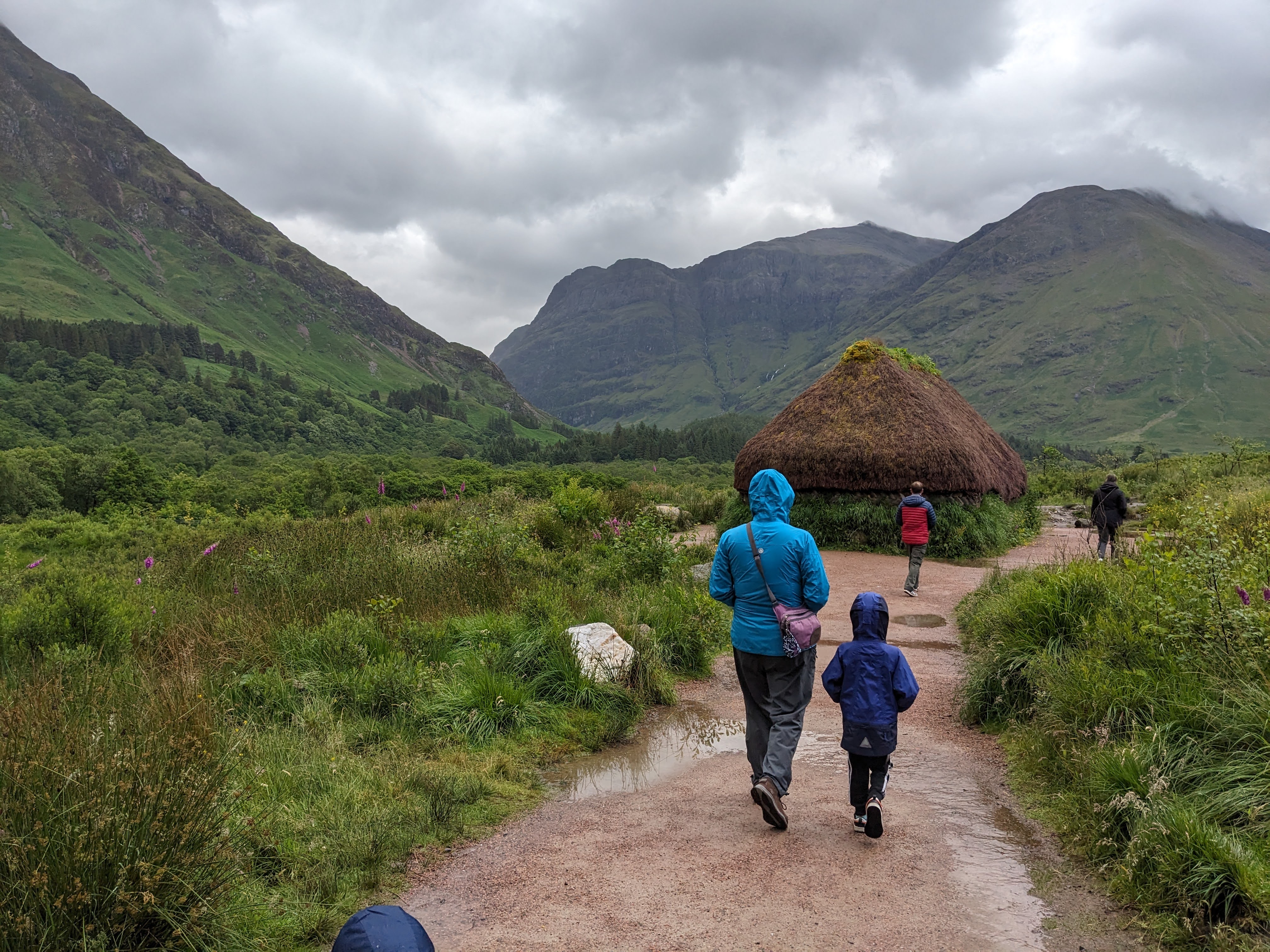
Nice views of Glencoe from the turf house

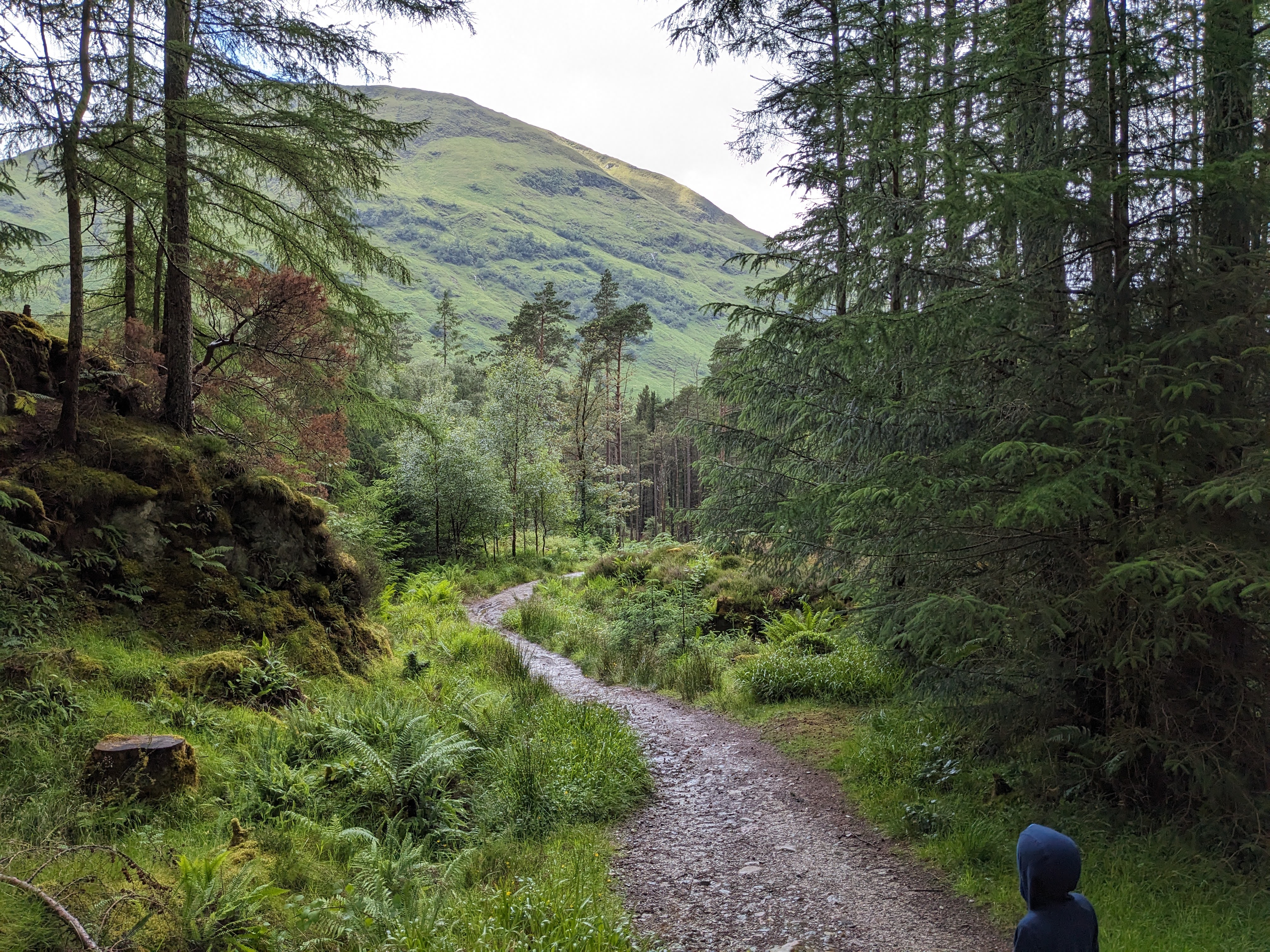
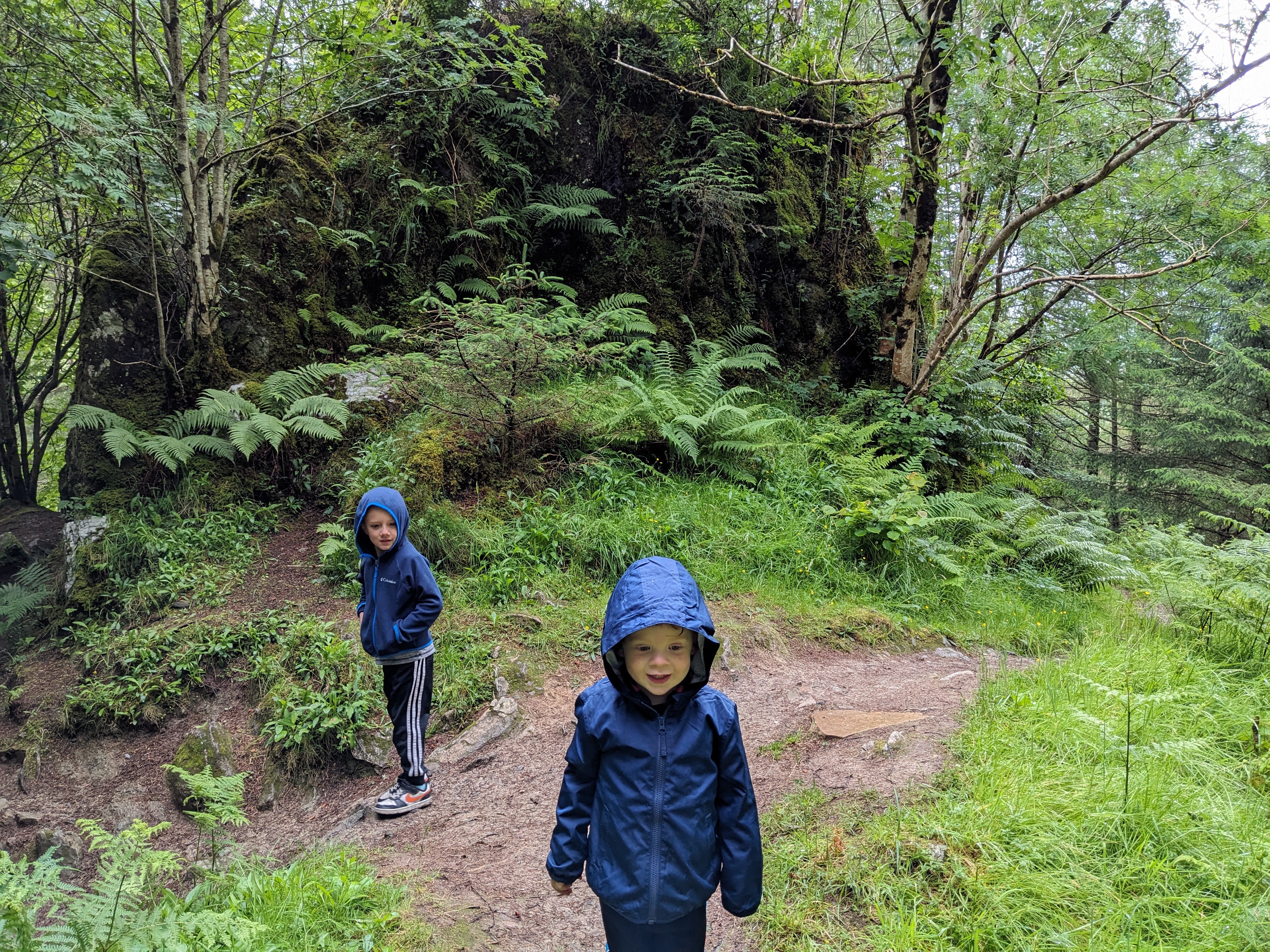
The rain seemed to have cleared slightly, so we next did the nearby Signal Rock hike. It involved some mild up and down through a (planted) conifer forest. There was lots of mud and some puddles we had to help the kids get around. The rock itself is now surrounded by trees, so you don’t get the visibility you would have had when it was supposedly used to signal the start of the Glencoe Massacre. It did start raining again on our walk back so we tried to move quickly.

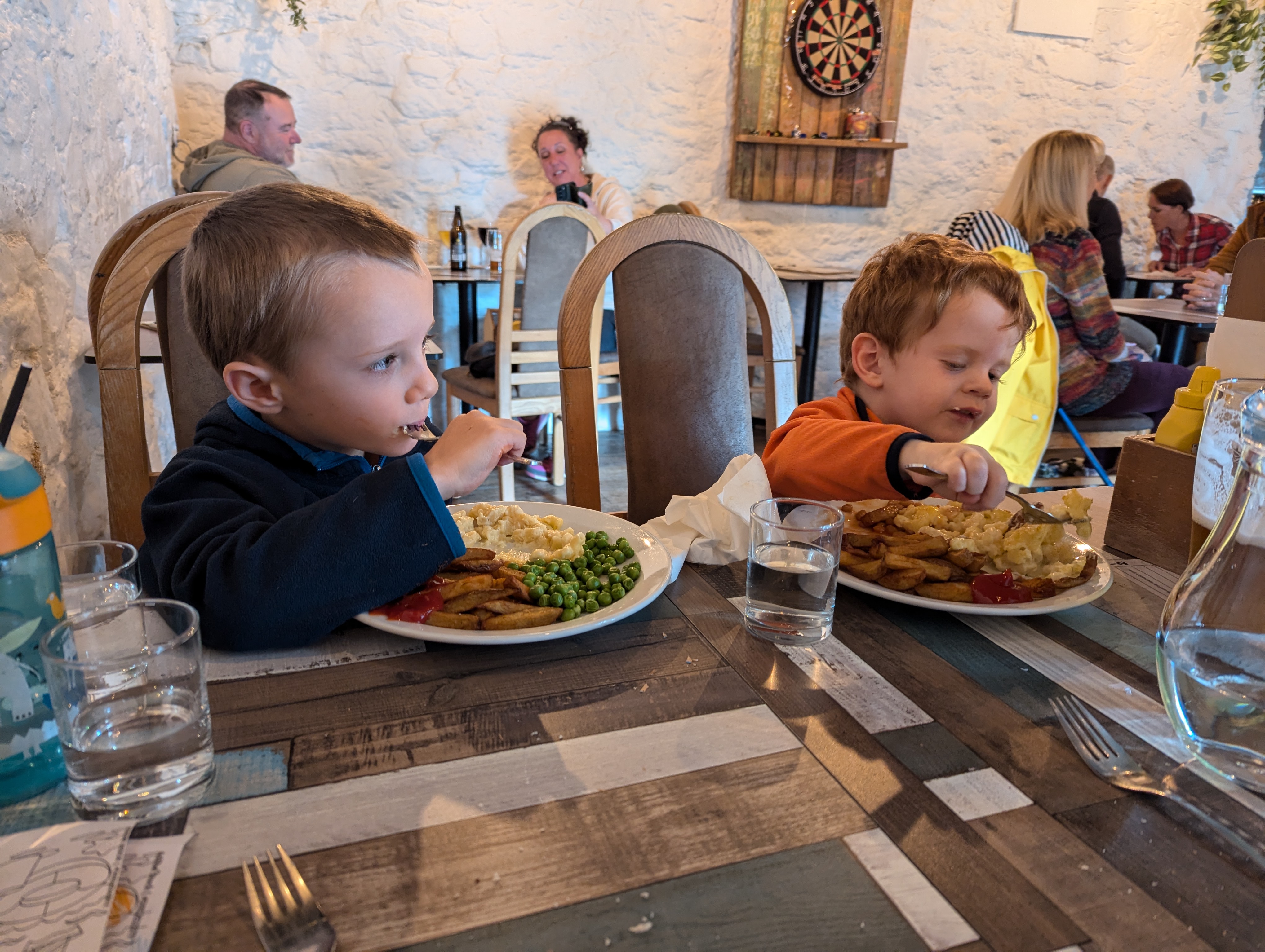
For lunch, we stopped at the recommended restaurant of the nearby Clachaig Inn. We were impressed that even with a number of other visitors our food came quickly. We were also excited to hear that the music that they were playing matched many of the songs on our road trip soundtrack.
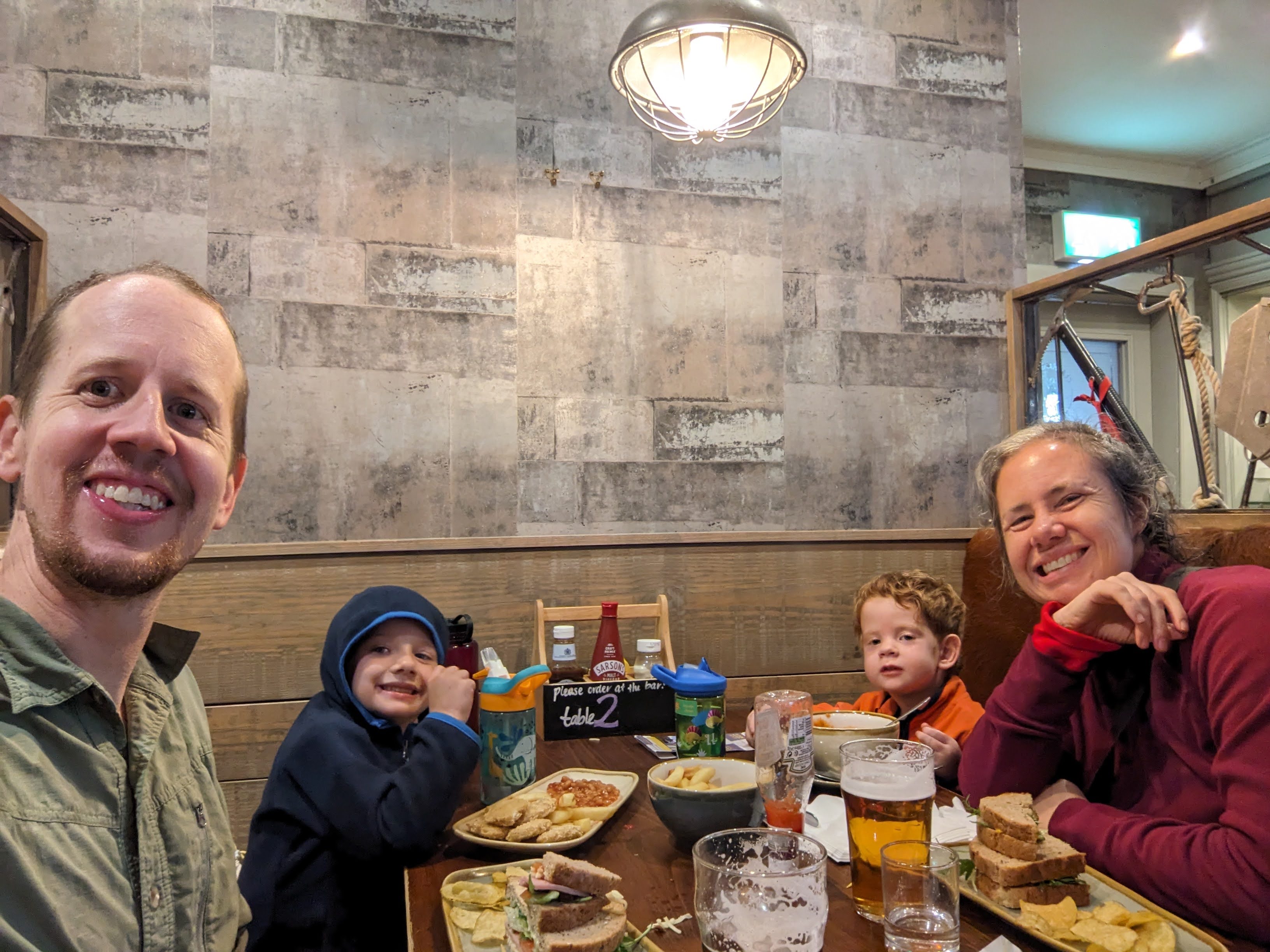
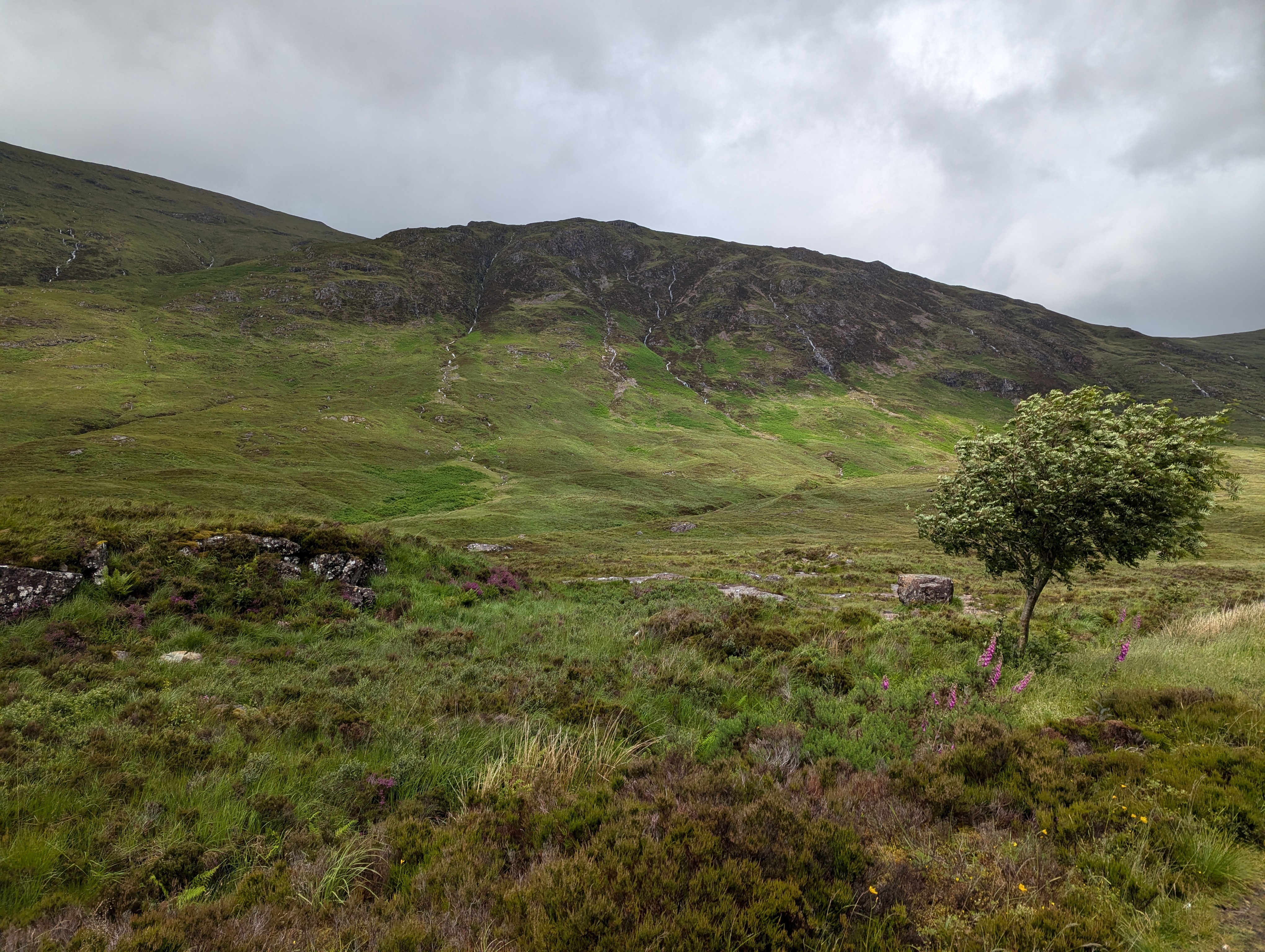
After the welcome chance to dry off and warm up, we got back in the car, cranked up the Outlander theme song, and drove the scenic road through Glencoe. The views did not disappoint!

Glencoe

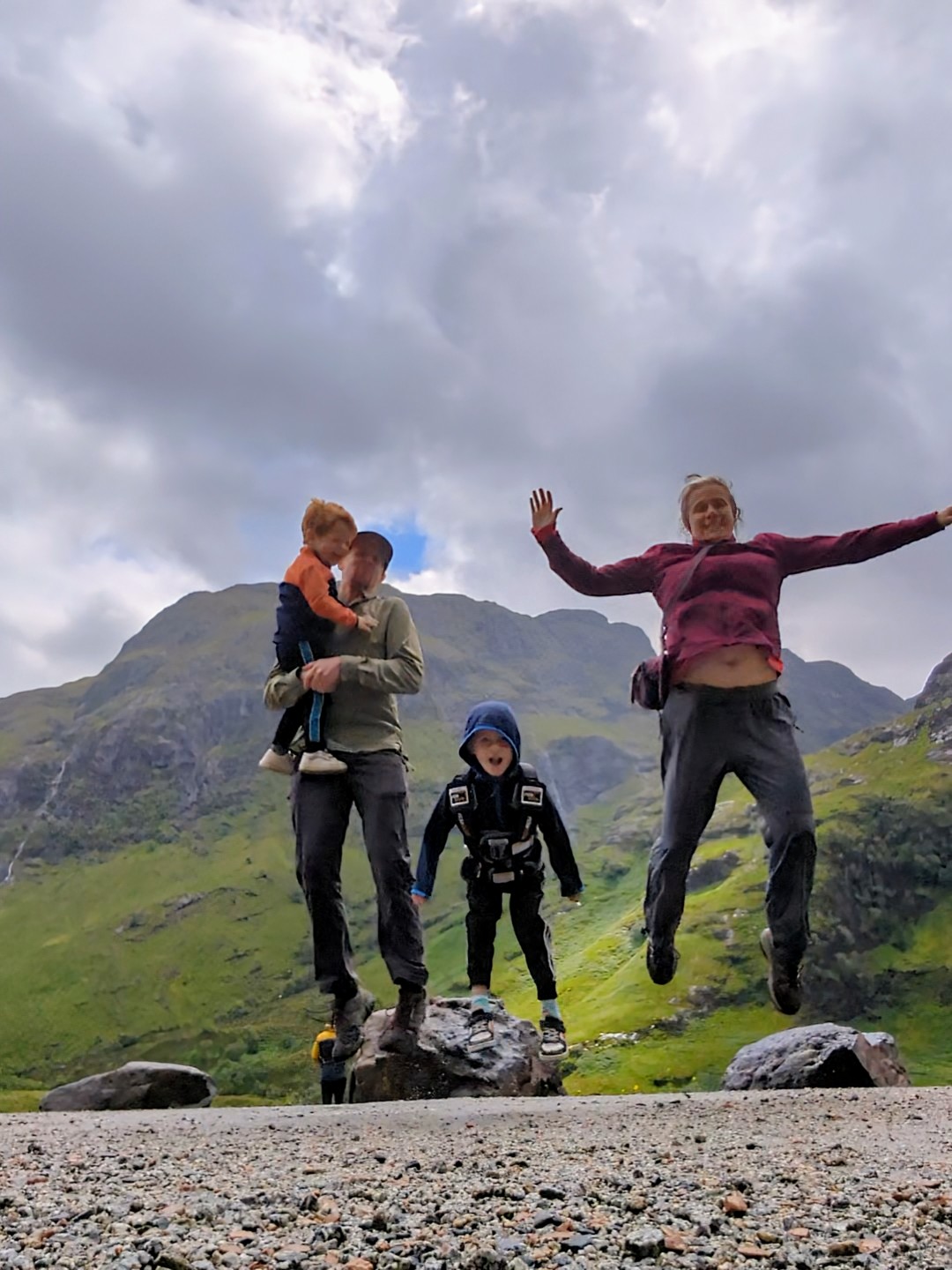
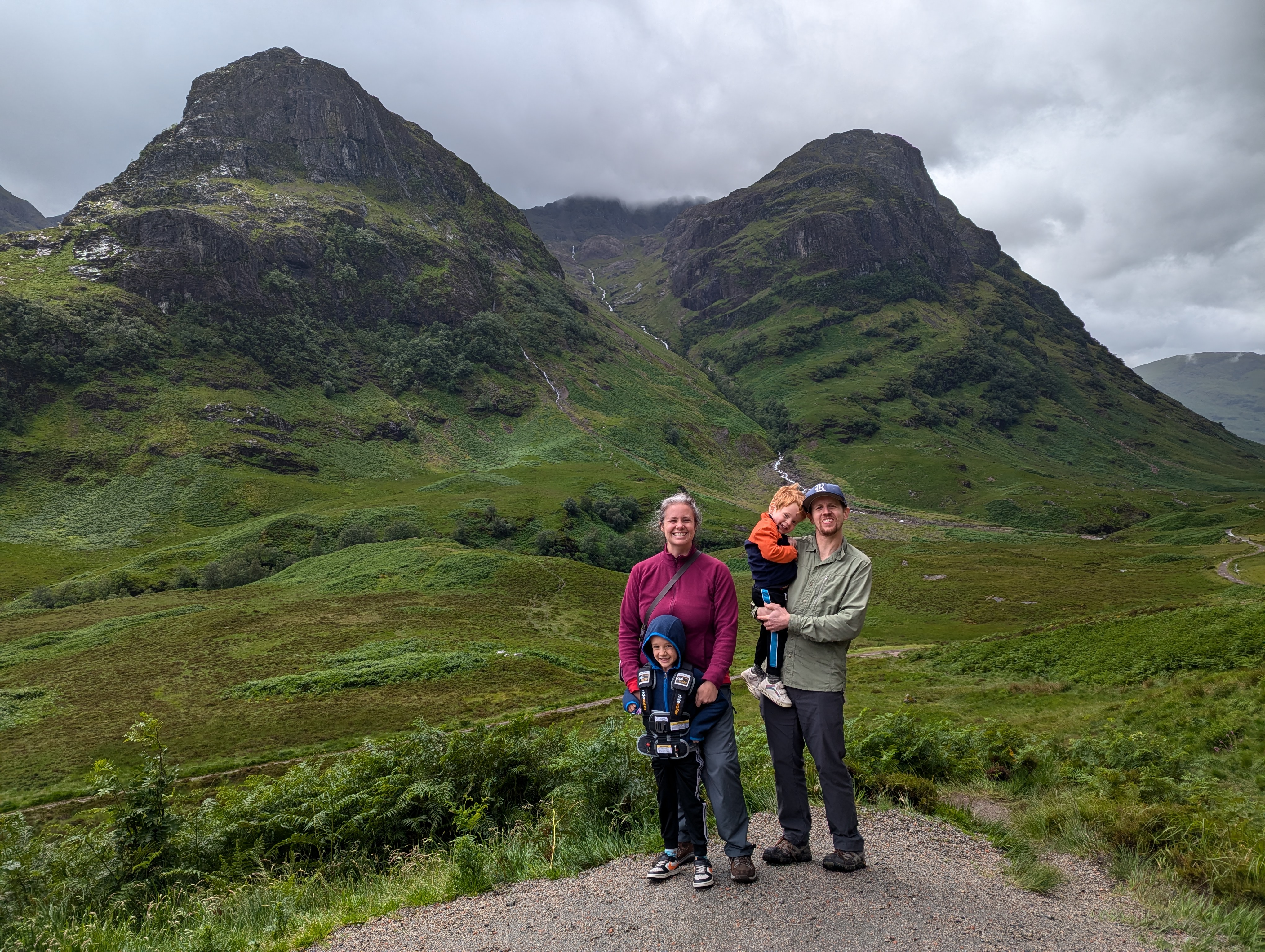
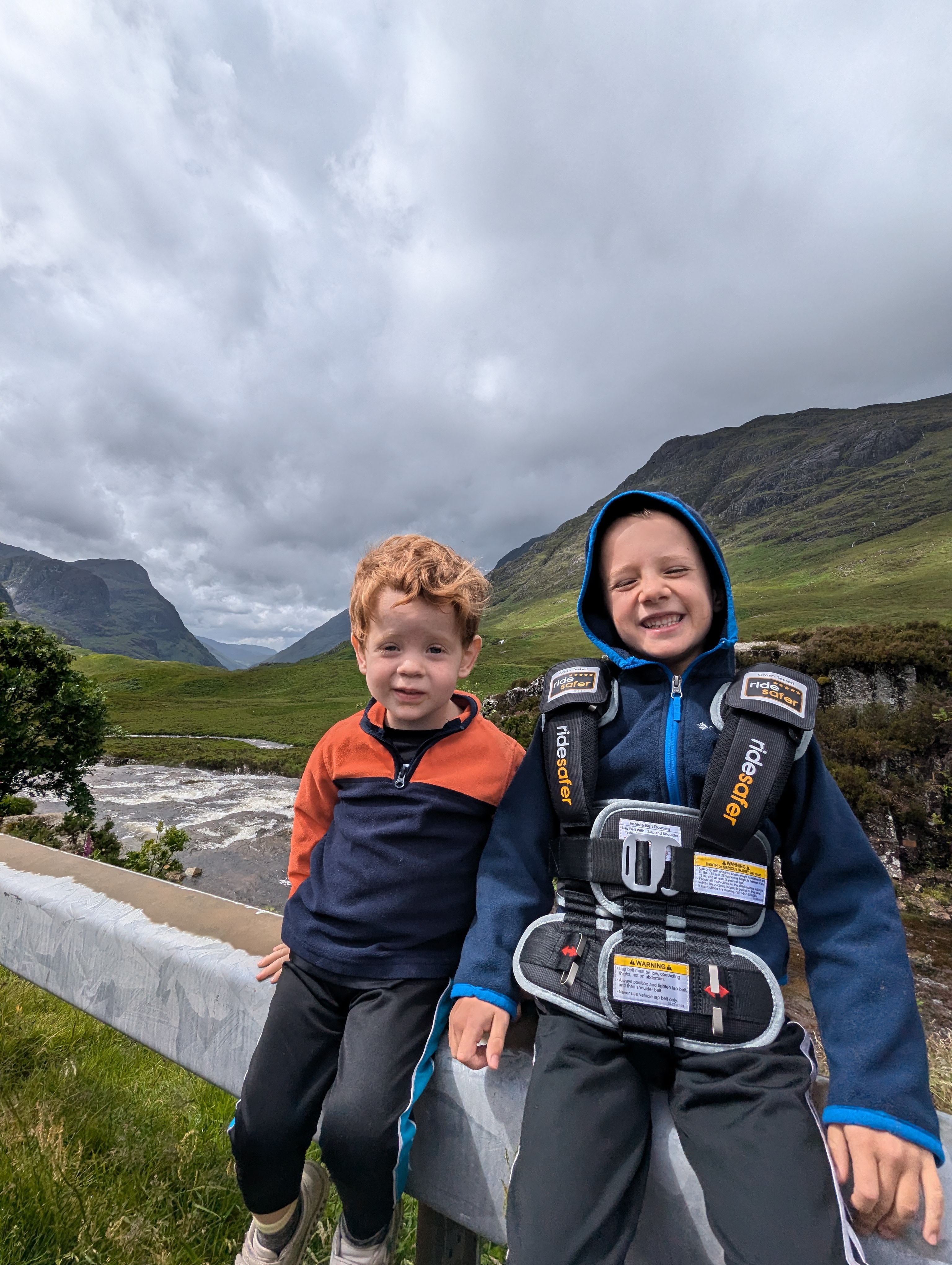
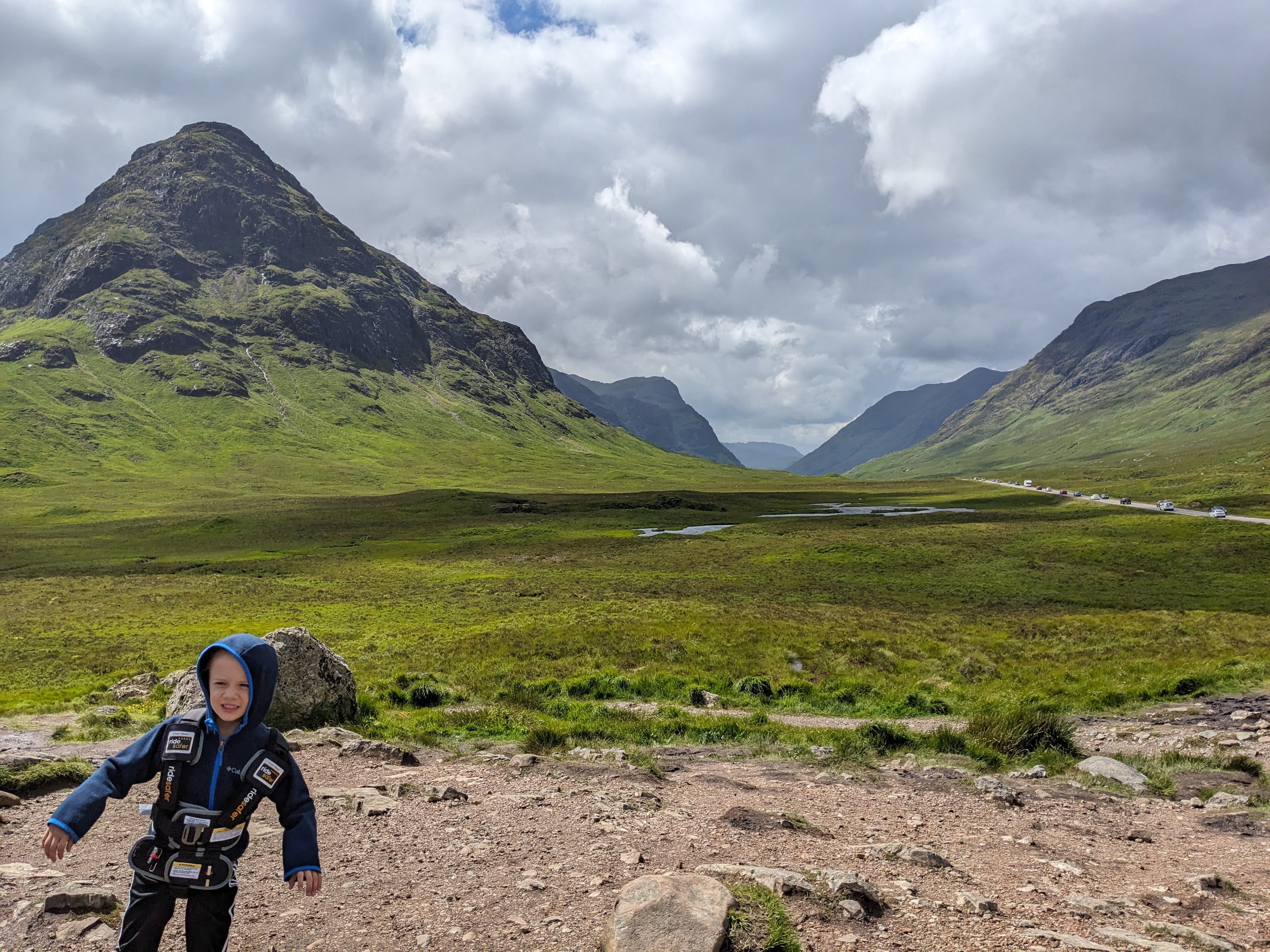
We stopped at the Three Sisters Viewpoint where there are great views across at the Three Sisters mountains, plus up and down the valley.

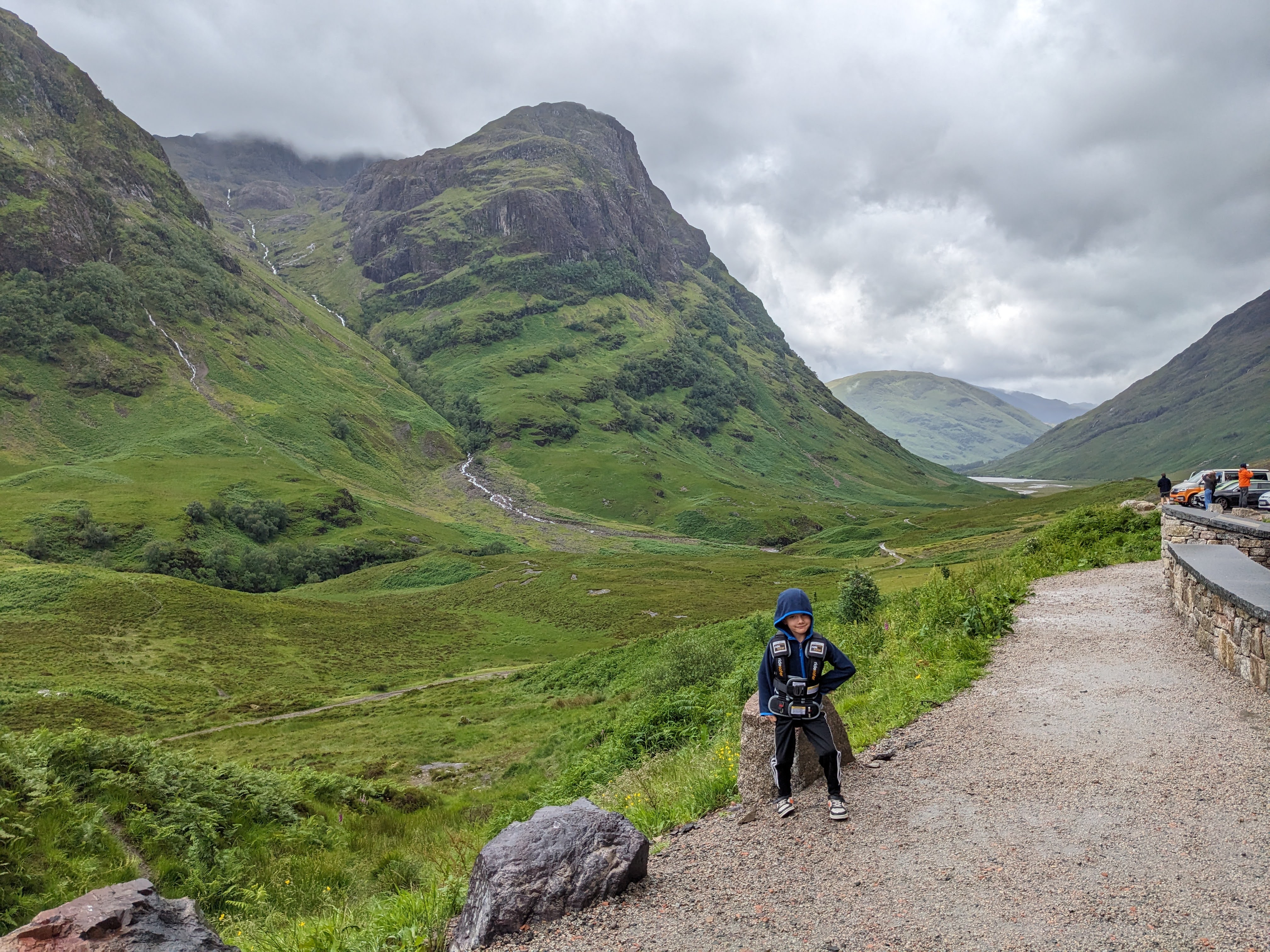
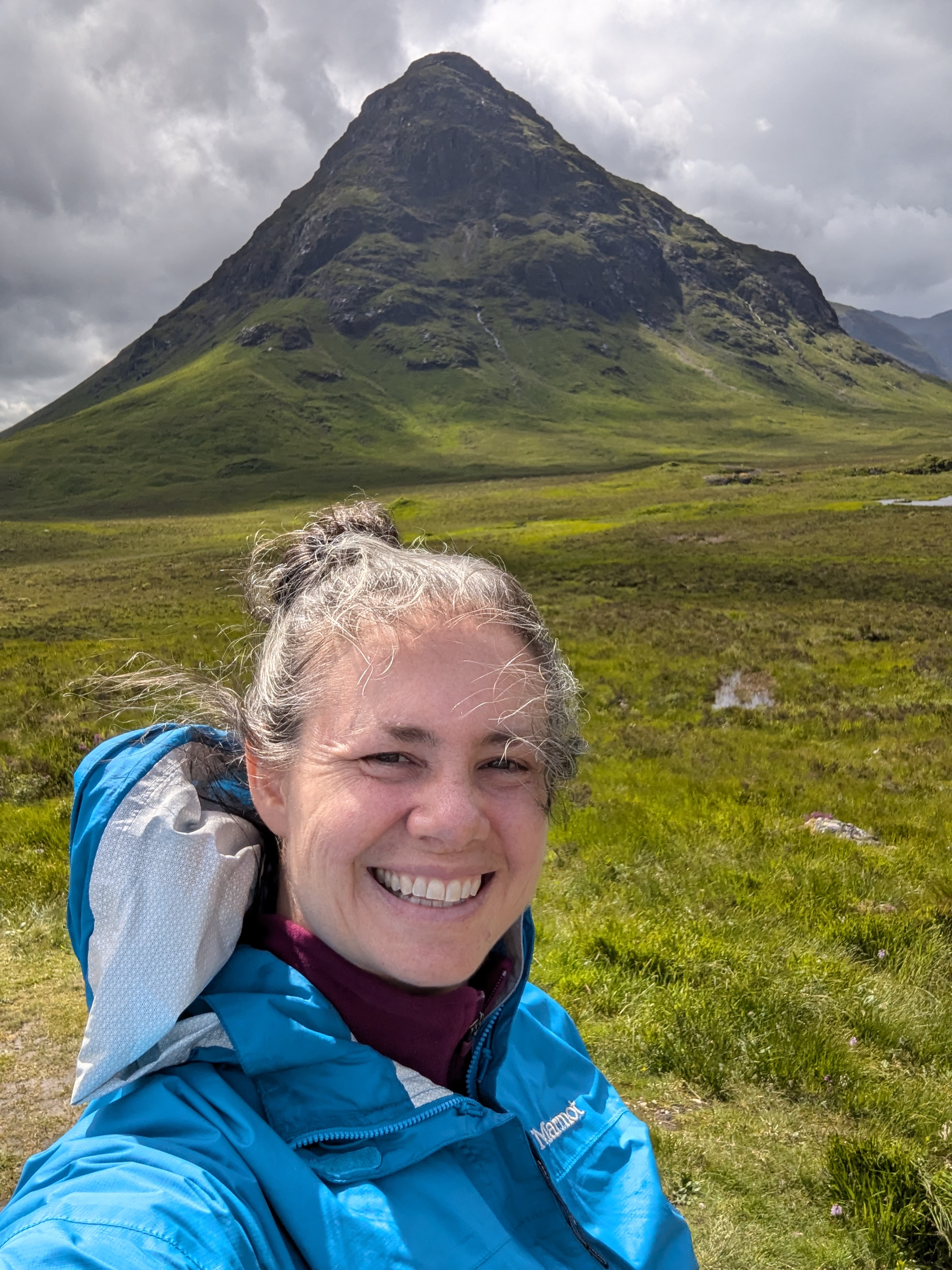
We stopped one other place where Rick Steves had recommended a hike, but it seemed too windy to be enjoyable. We did get some great views from the parking area though.
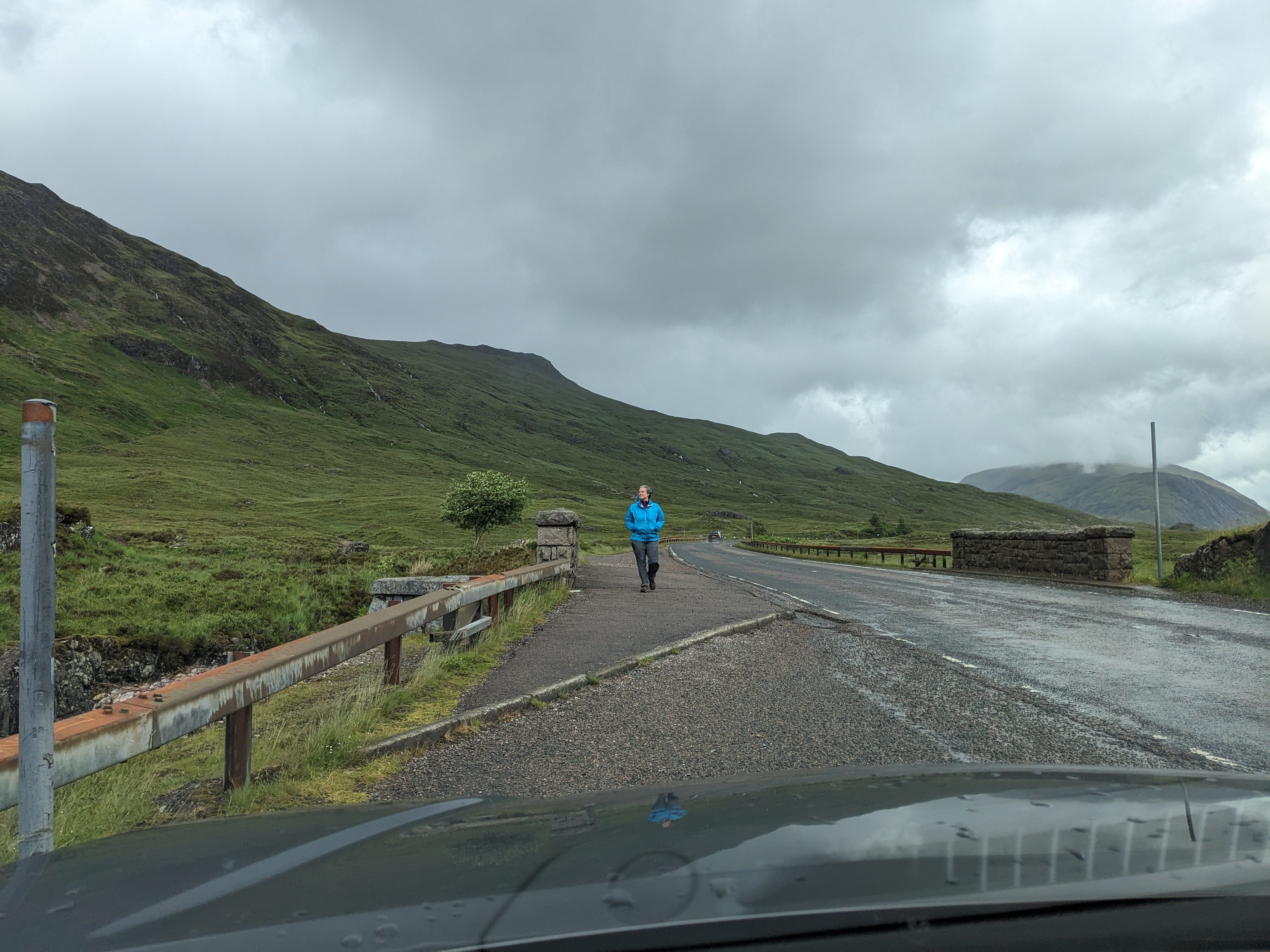
Once we got to an area called Rannoch Moor, the hills flattened out. We turned around and drove back through Glencoe, getting to see the beautiful valley coming from the opposite direction.
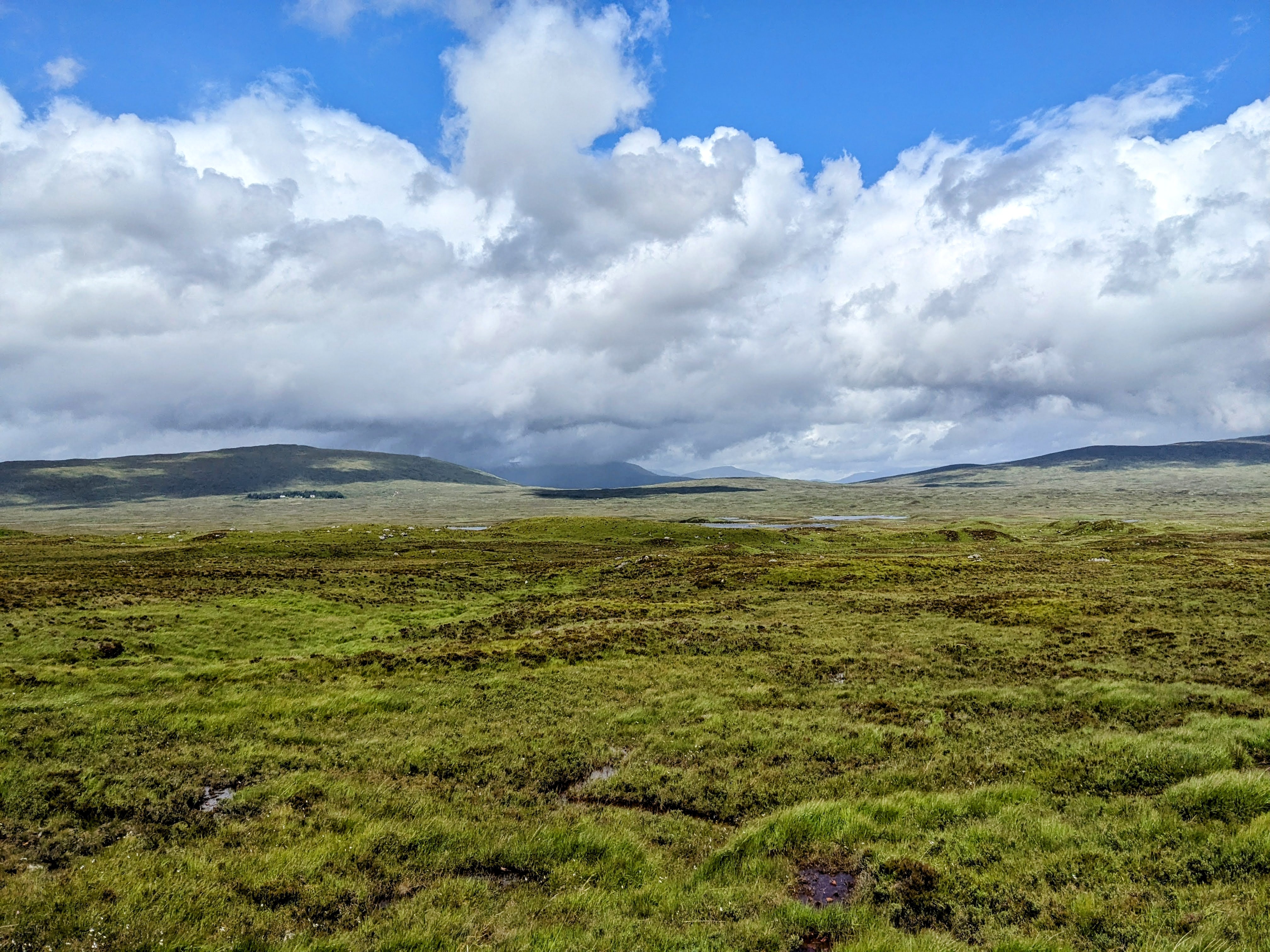
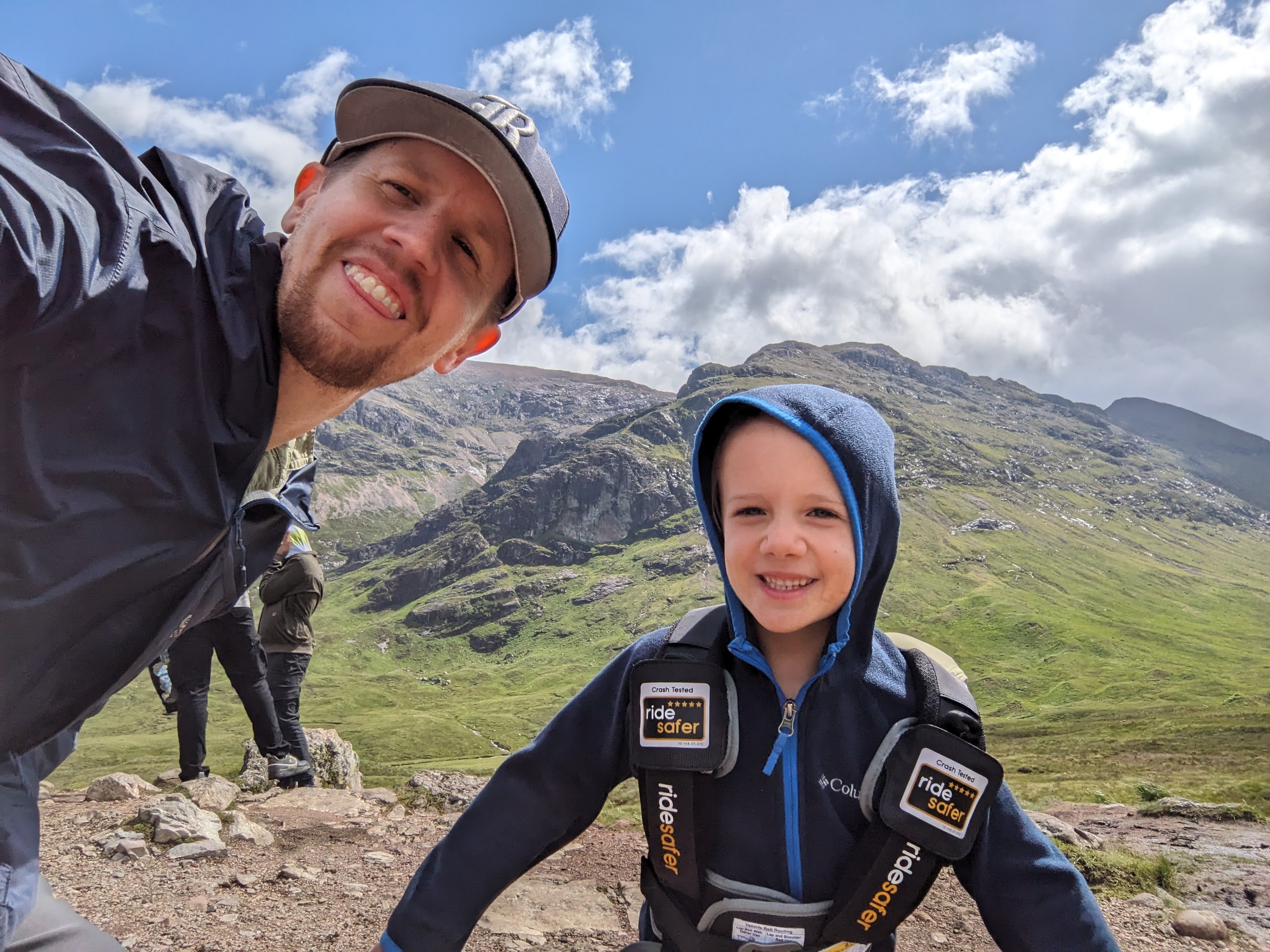
We stopped at one more overlook, but had to take turns getting out because our younger kid had fallen asleep.
Glenfinnan

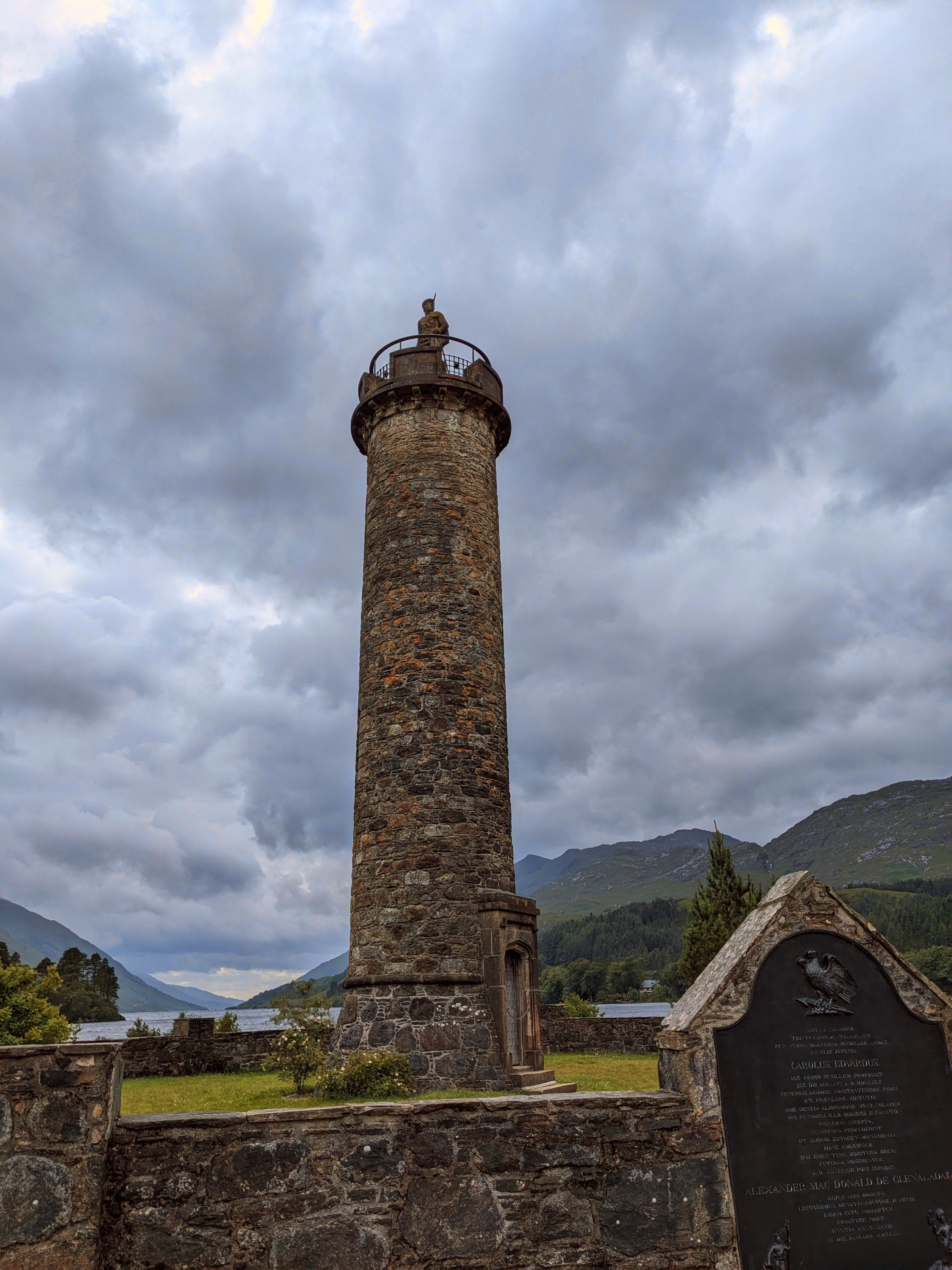
After driving back through Glencoe, we got back on the bigger coastal highway and continued north through the town of Fort William (and its many roundabouts). Our next destination was the Glenfinnan Monument. This is again another location of particular significance to fans of Outlander. The monument marks the spot where Charles Edward Stuart (“Bonnie Prince Charlie”) landed in Scotland in 1745 to start the 1745 Jacobite Rising – the conflict featured in the novel and show.

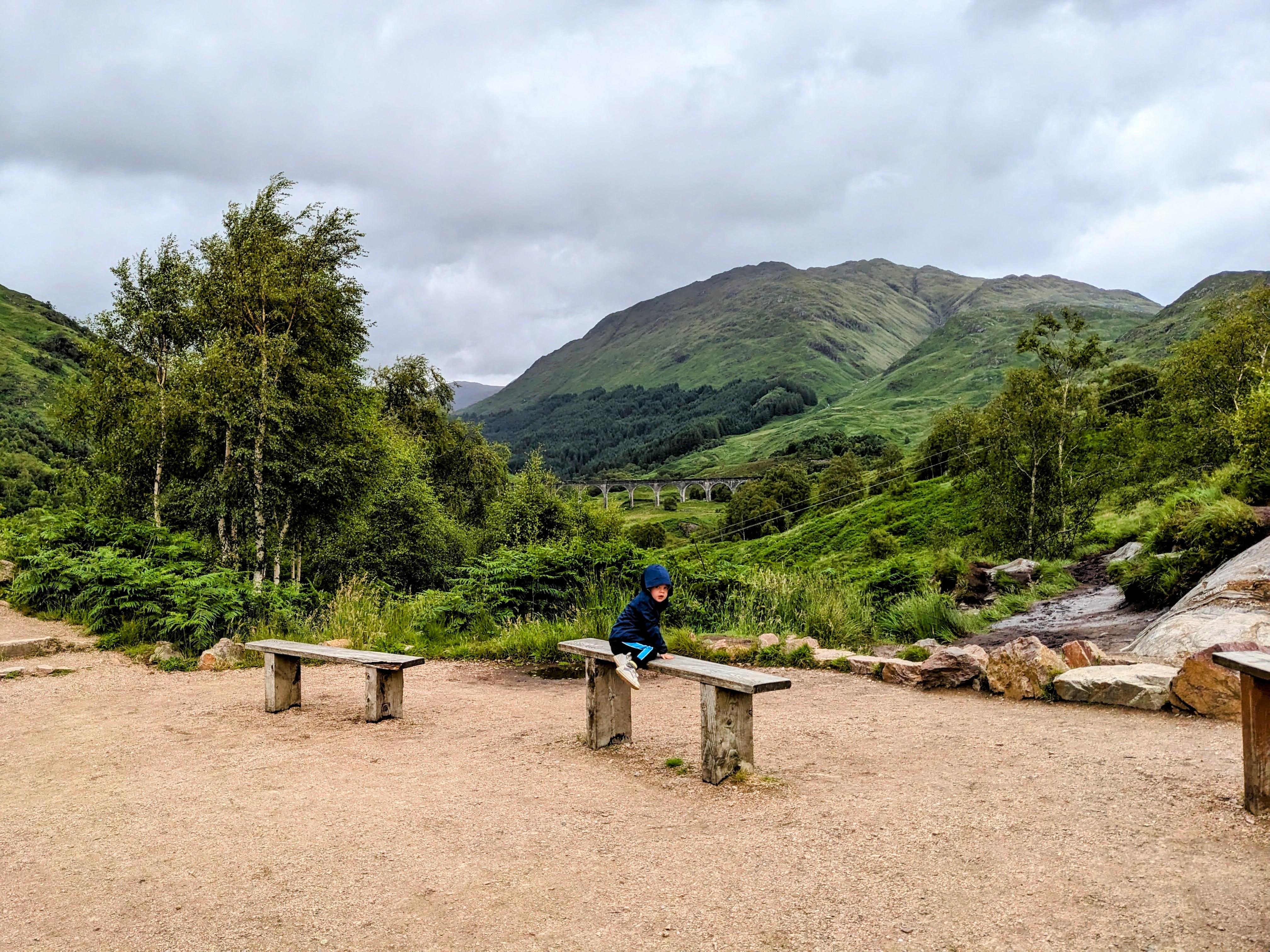
Before checking out the monument, we walked over to see the attraction that perhaps draws even more visitors to the area: the Glenfinnan Viaduct. This expansive railway viaduct was popularized when it was used as a filming location in the Harry Potter films as part of the tracks that the train to Hogwarts takes. There is a steam train for tourists that makes a few trips daily over the viaduct, and it has become a very popular destination for fans looking to get a picture. We debated trying to see it, but we would have either had to cut our time in Glencoe short or arrive late to our hotel in the evening, and we ultimately decided it wasn’t worth fighting the crowds anyway.
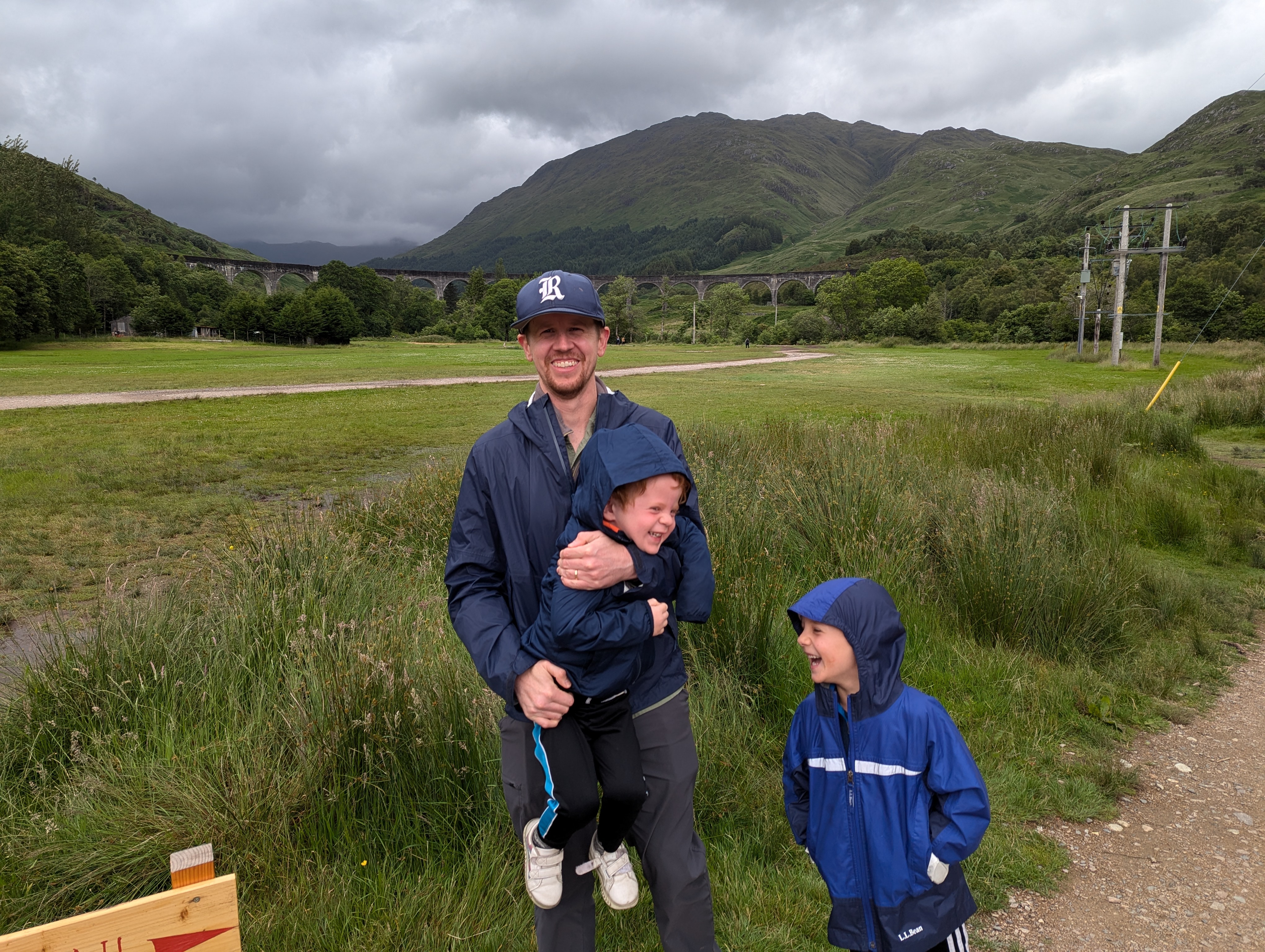
Glenfinnan Viaduct in the distance

Next, we learned more about the monument in the small visitor centre, and then walked across the road to walk around the monument. The Highlander soldier at the top seems especially evocative.

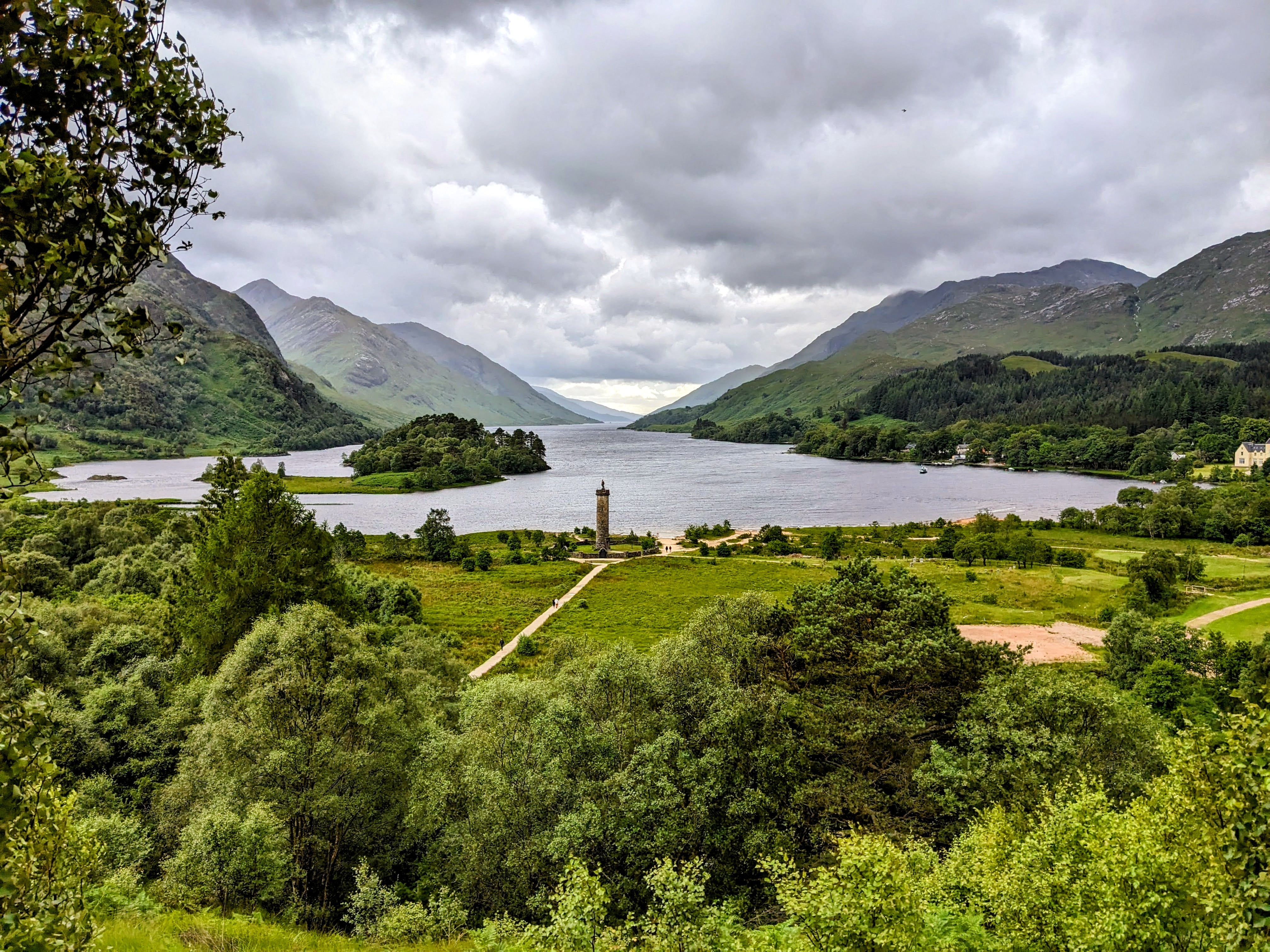
To wrap up our time, we took a short trail up to a viewpoint with good views of both of these attractions.
Arisaig

When we were putting together our road trip itinerary, the toughest puzzle was figuring out where to stay between Oban and Skye. We thought about staying near Glenfinnan itself, but there aren’t any budget options near there. Ultimately we had the revelation that it might be good to stay as close to Skye as possible so that we could spend as much time as possible there the next day. With that goal in mind, we looked near the port of Mallaig where we could catch the ferry the next morning. We found a reasonably priced hotel in the town of Arisaig.

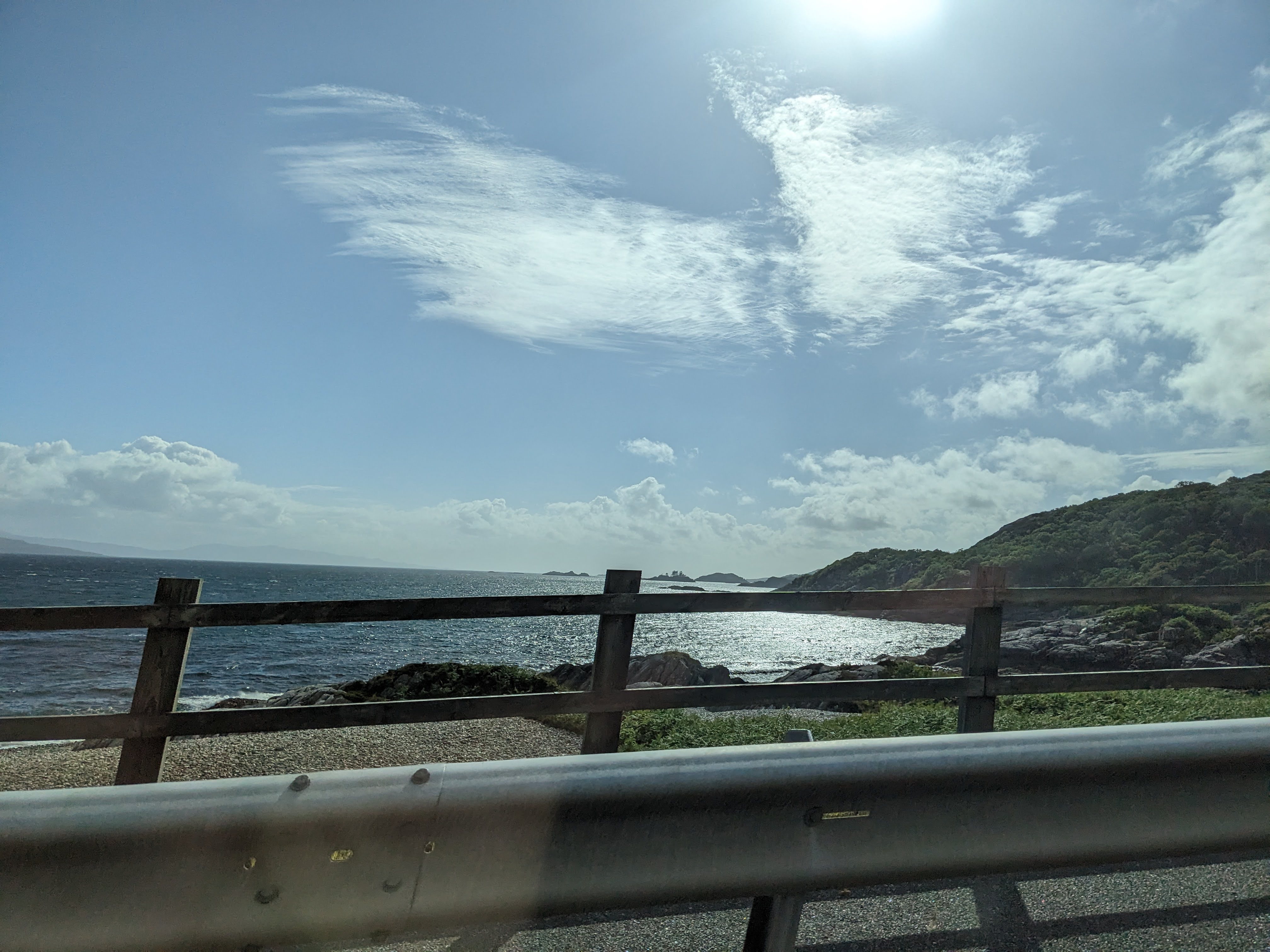
The drive from Glenfinnan to Arisaig along the “Road to the Isles” was quite scenic. The sun came out and made for nice views over the water. We could see the train tracks for most of the way too, and we even briefly saw the steam “Harry Potter” train when we went under it on a bridge – too quickly for pictures unfortunately.

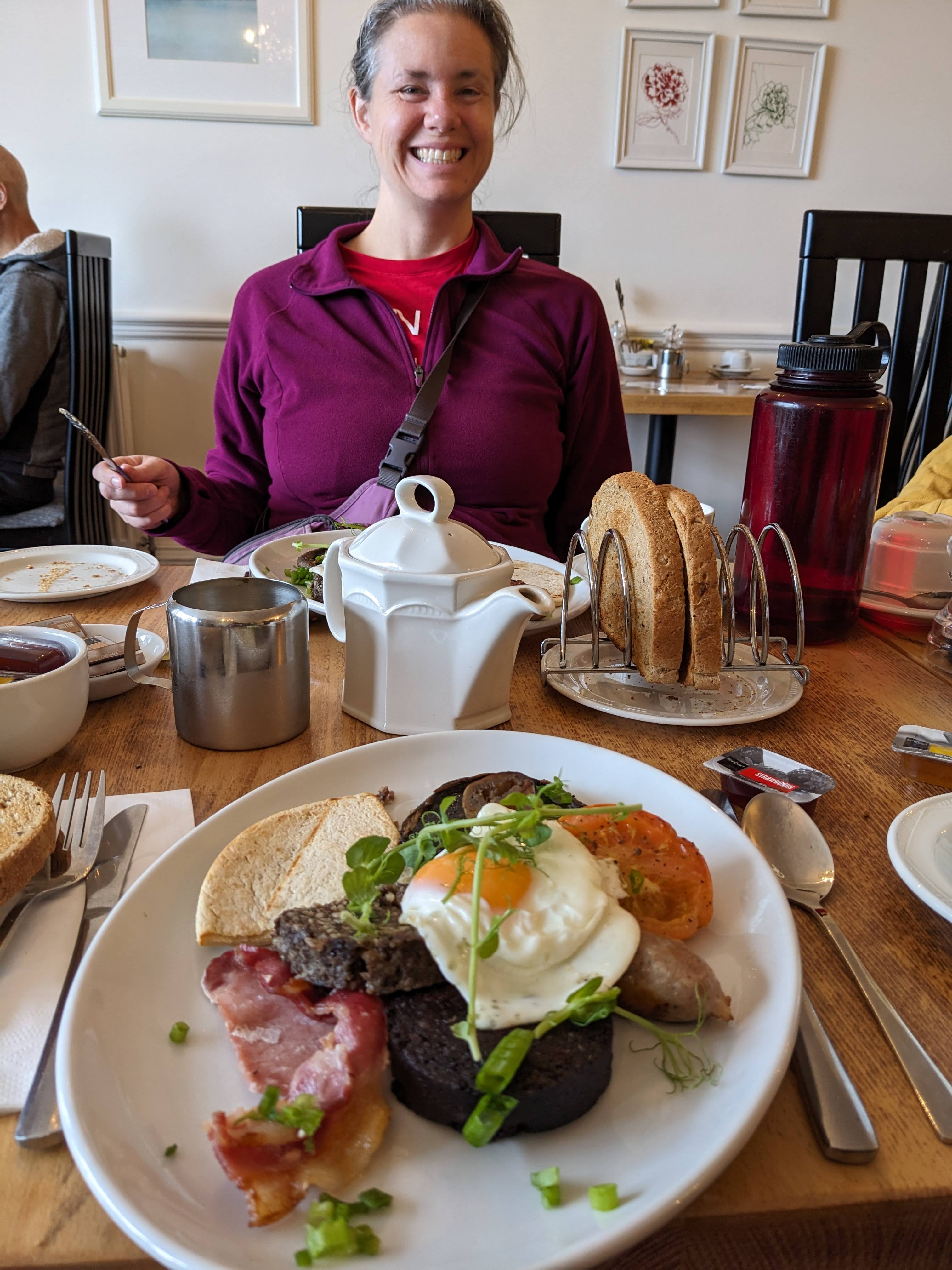
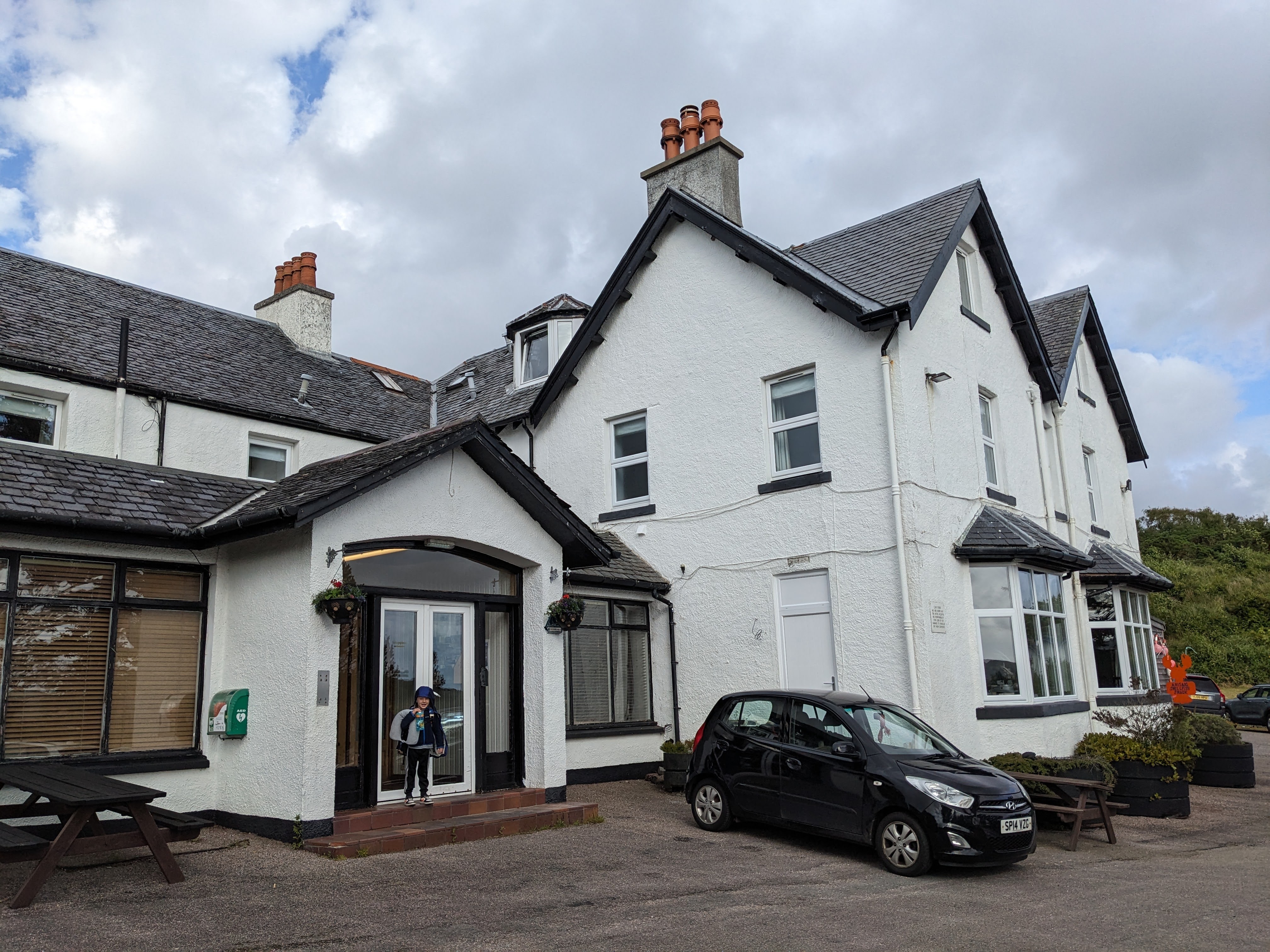
We stayed in the Arisaig Hotel in one of the family rooms with bunk beds for the kids (booked directly with them). We had a nice dinner at the attached restaurant (making sure to make reservations ahead of time because it was quite popular). Probably our favorite feature came the next morning: our room rate included a full Scottish breakfast! The adults really enjoyed getting to try some of the specialties including blood sausage.
Over the Sea to Skye

Merry of soul s/he sailed on a day
Over the sea to Skye.

The line above is from both the Outlander theme song and the poem/song it is based on, the Skye Boat Song. It is describing Bonnie Prince Charlie escaping on a boat over to the Isle of Skye after the defeat of the Jacobite Rising. It was interesting for us to make the same journey just a day after seeing the monument to the beginning of the Rising.

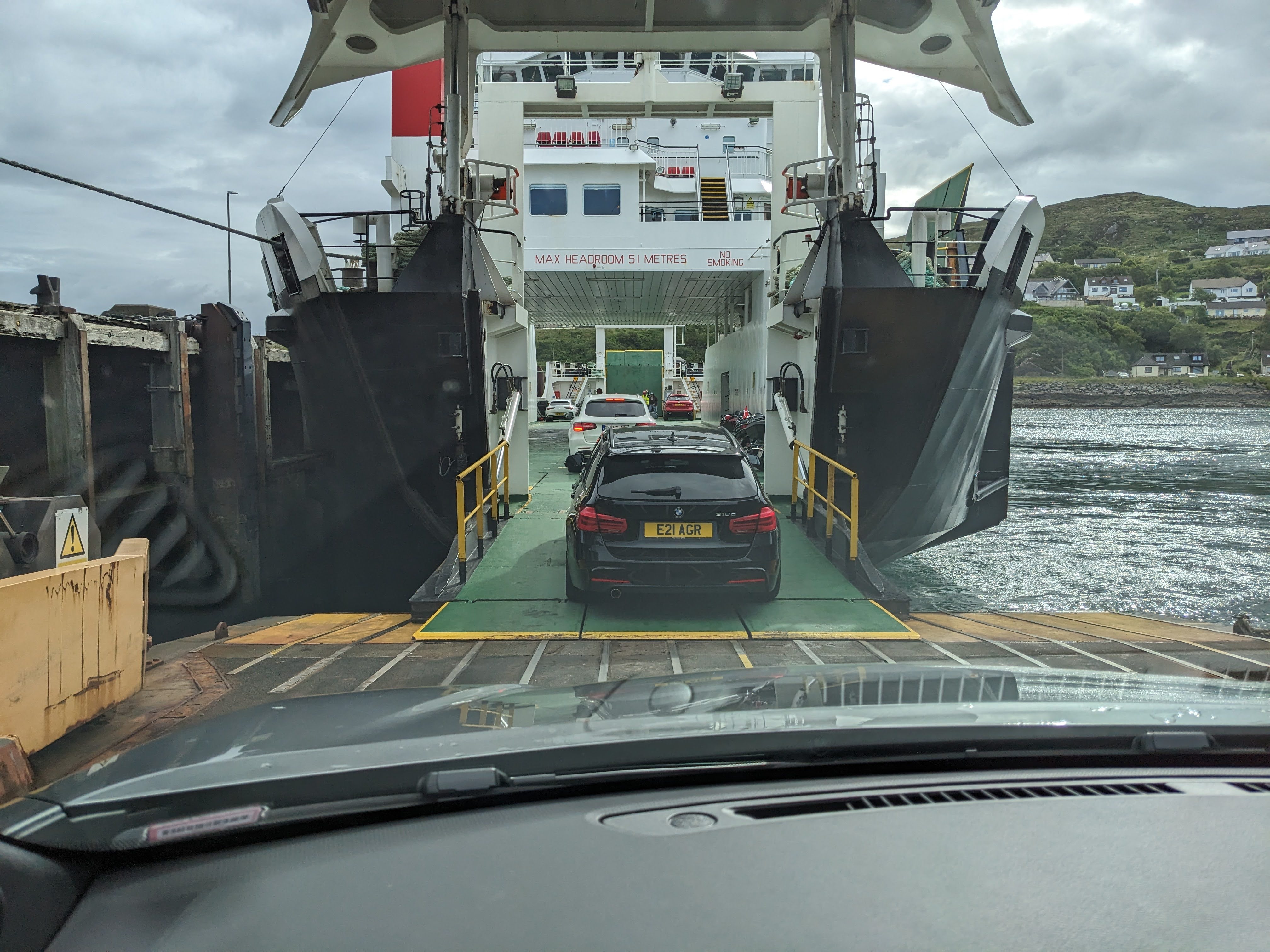
We had pre-booked the ferry to Skye out of Mallaig for the 9:00 sailing. The breakfast at the Arisaig Hotel would only be served starting at 7:45, so we made sure to be all packed up and at the breakfast area right at the beginning. From there it was only a ten minute drive to the ferry terminal, and we ended up making it on time.

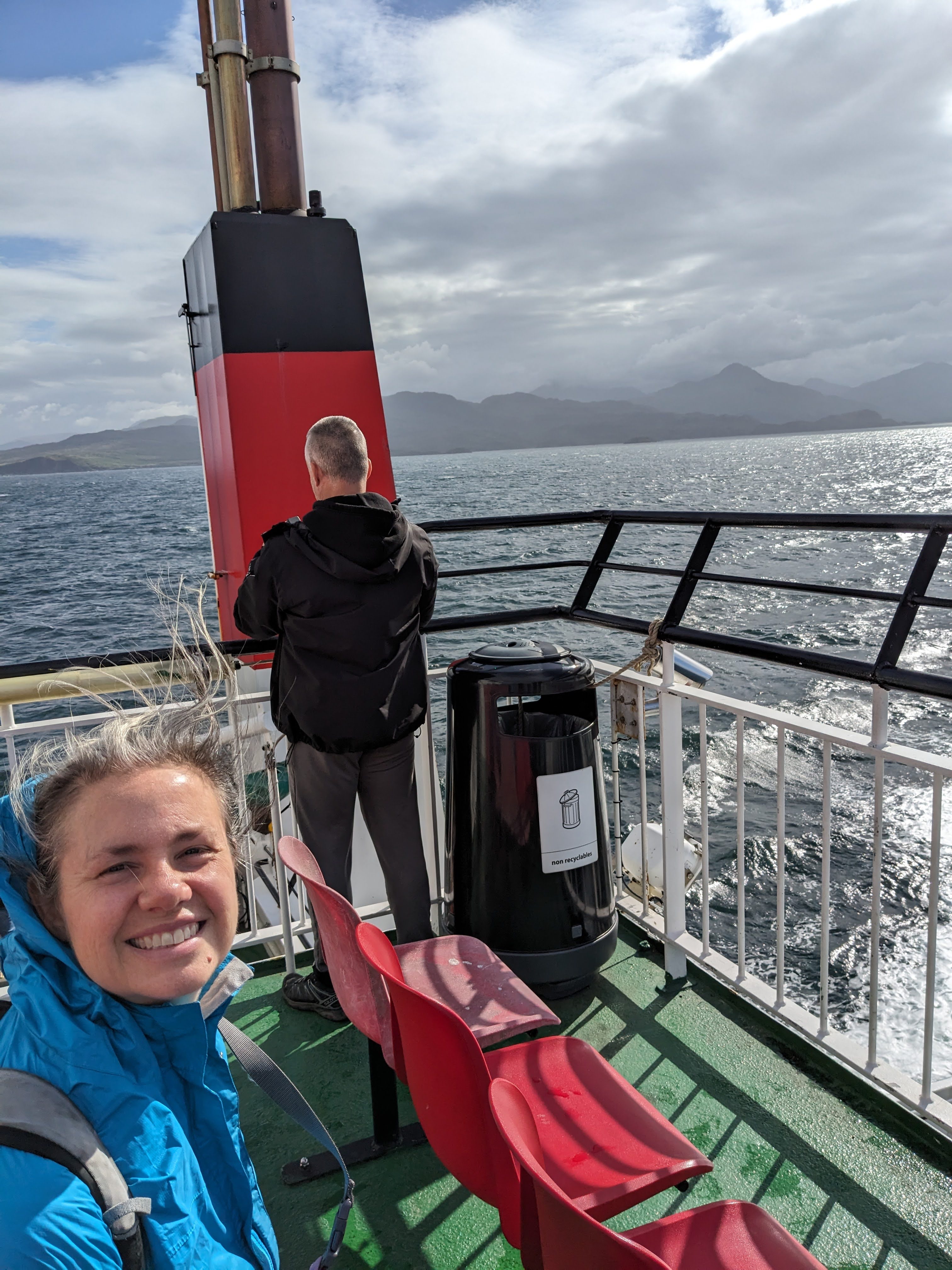
The ferry was run by the same company we had seen in Oban, Caledonian MacBrayne. We drove our car onto the ferry, then got out and headed up to the observation area. The sun came out so we spent most of the ride out on the deck, watching mainland Scotland recede just as Bonnie Prince Charlie had.
Skye: Portree

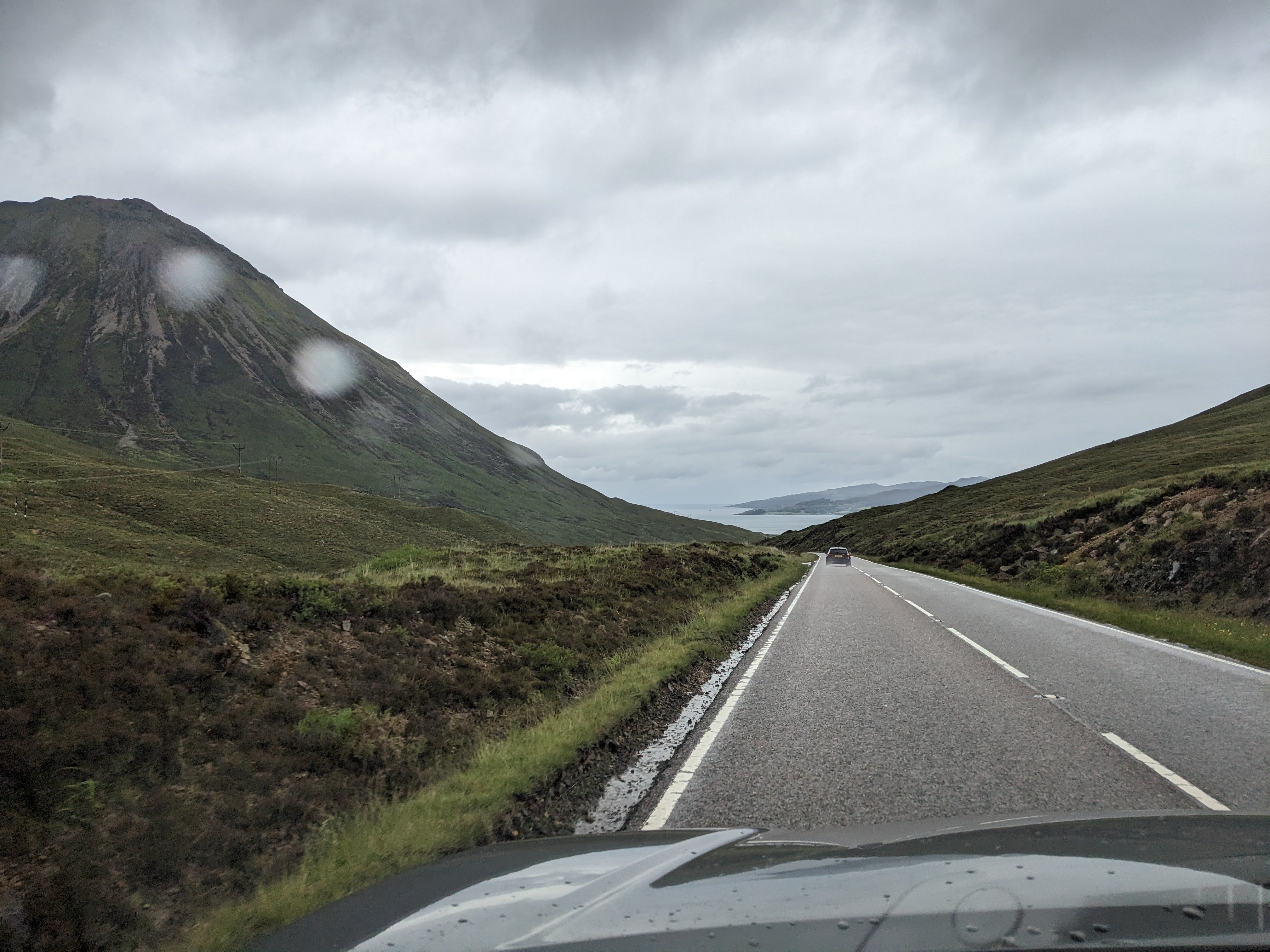
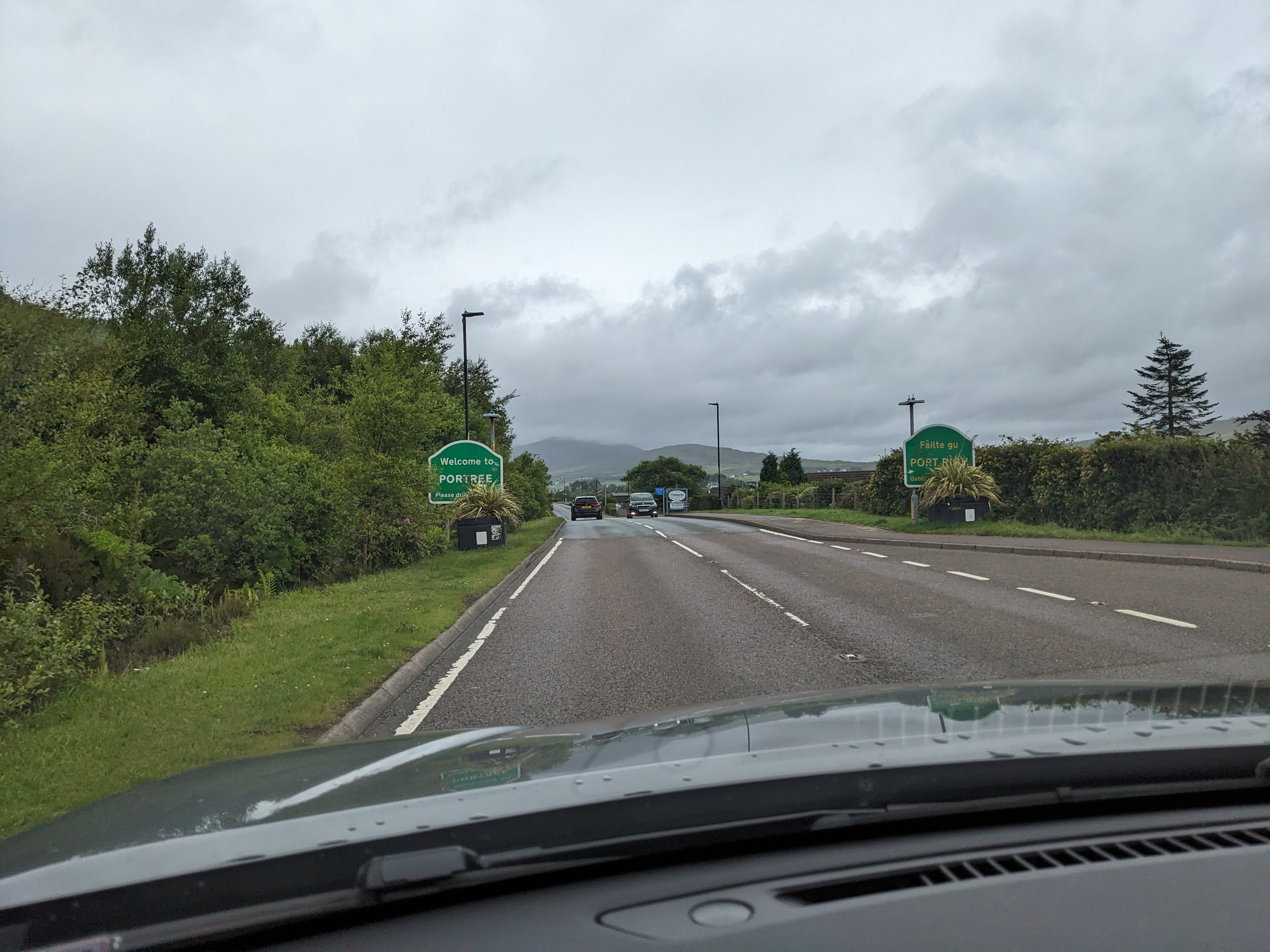
The ferry from Mallaig goes to the town of Armadale on the Isle of Skye. Here we drove off of the ferry and then drove up the large island to its largest town, Portree. This scenic drive took about an hour and a half.

In Portree we parked in a public lot in the main square and then got out and explored the town. We explored some souvenir shops and walked up to a viewpoint to get a nice view of the harbor and the colorful houses lining it. On the way back we stopped at a cafe for a hot drink and some snacks. The kids also had fun chatting with a talkative local.

Skye: Trotternish Peninsula

We got back in the car and started our trip around the scenic Trotternish peninsula north of Portree. We used the Rick Steves guide to help us figure out which of the places along the loop to get out of the car and see.

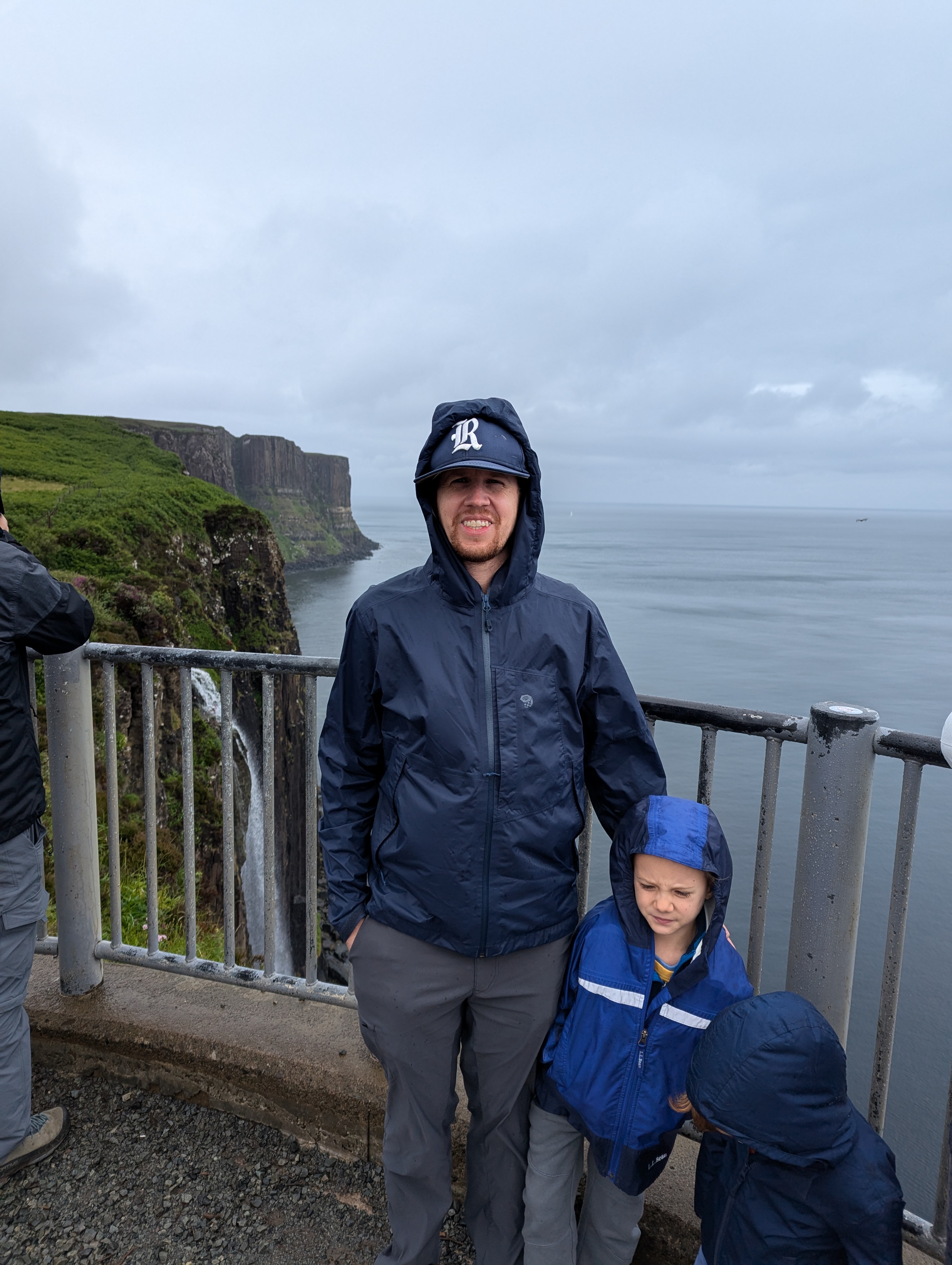
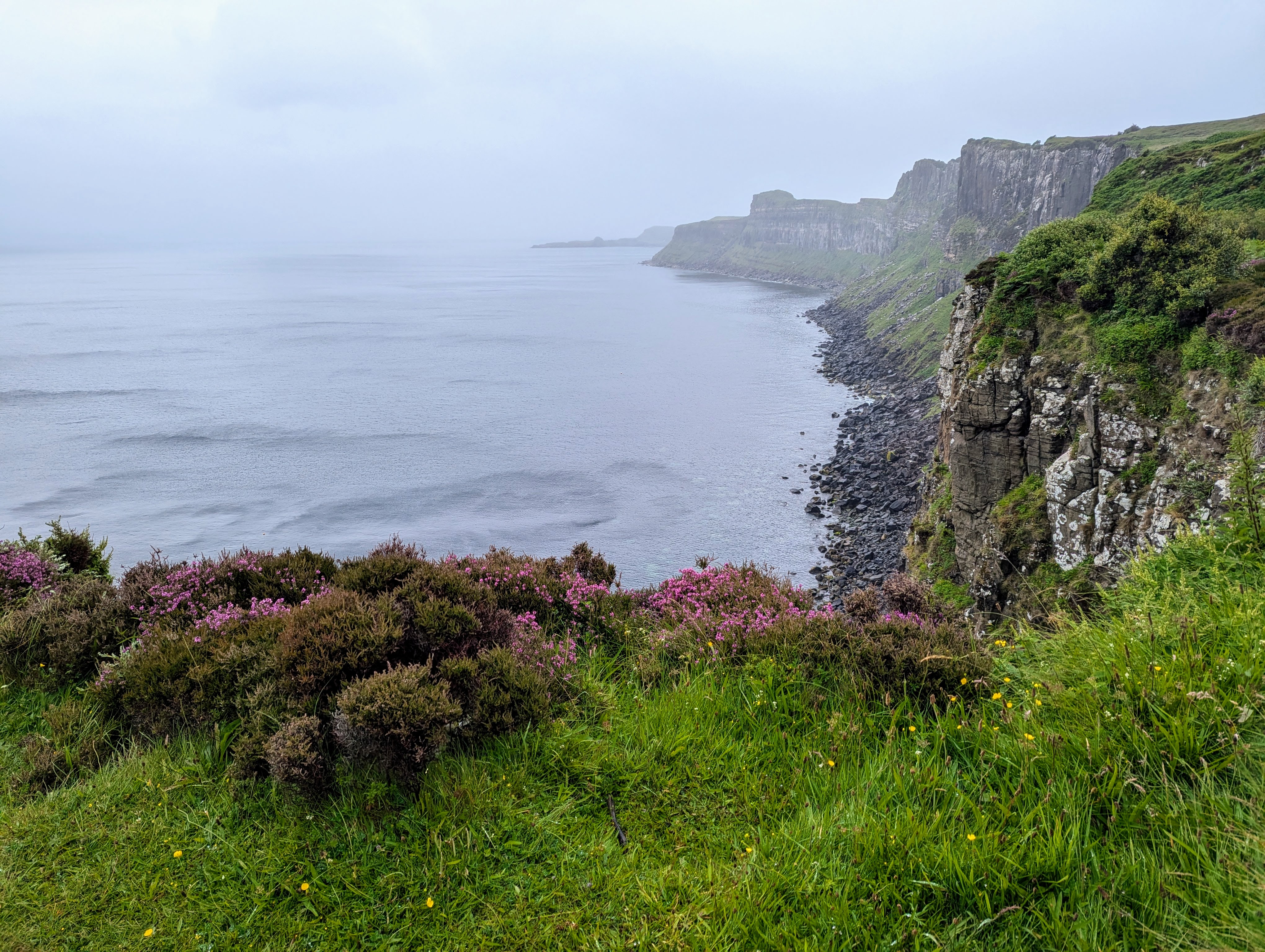
Unfortunately, the weather was not very cooperative, so we didn’t linger at many of the stops. We didn’t get out at the trailhead for the Old Man of Storr (rock formation) because we couldn’t even see it. We made brief stops at the overlooks for Lealt Falls and Kilt Rock.

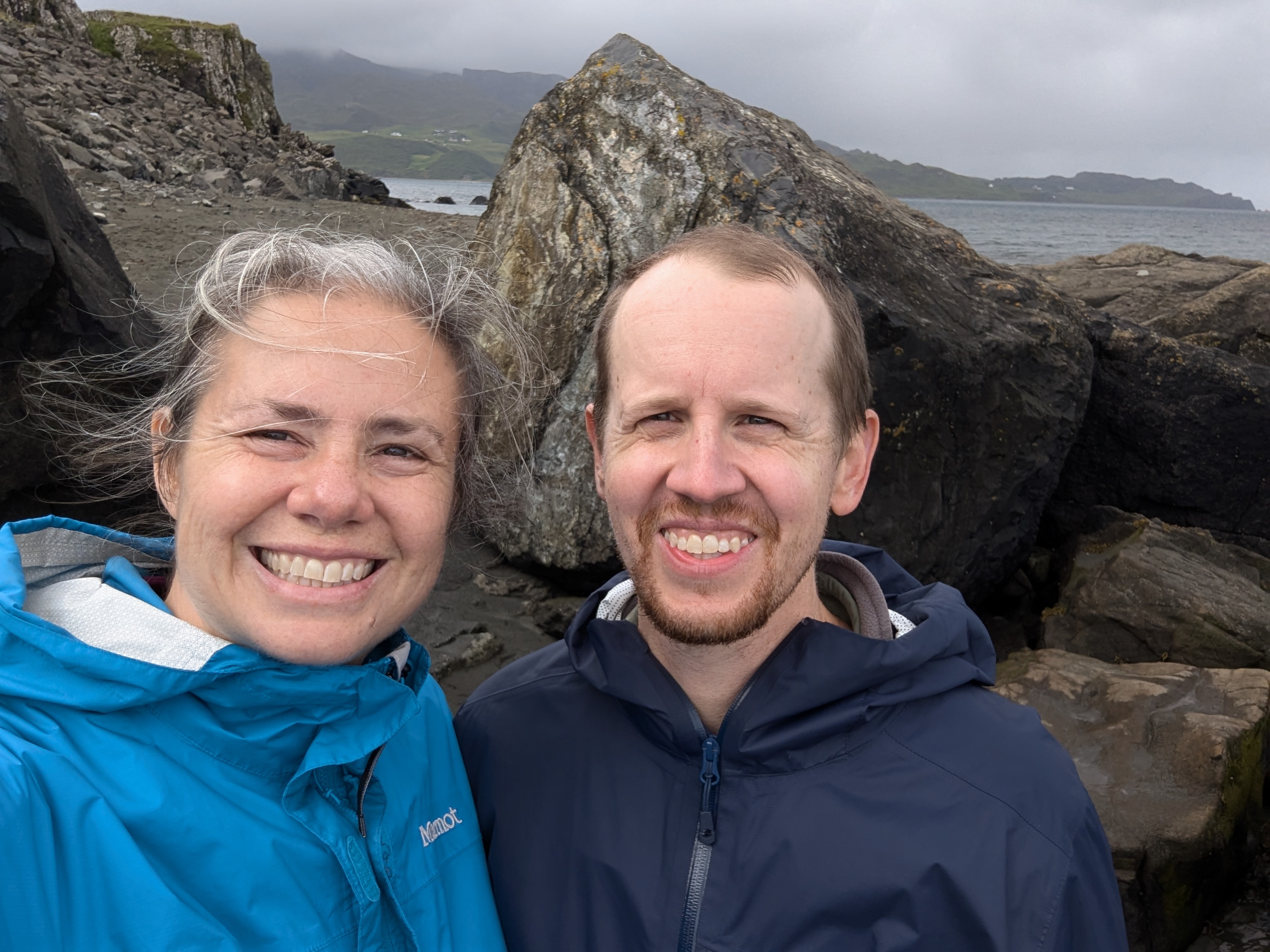
We drove on a smaller road off of the main path to get to An Corran beach. We had been interested to come here because there are dinosaur footprints you can supposedly see when the tide is right. A sign on the beach confirmed that they were there, but did not give great directions as to how to find them. The adults scrambled over the slippery rocks to try their best to spot them, but the kids were more than happy to just play in the black sand. The rain let up a bit as well so we ended up spending a while here.

The rain returned as we got back to the car, so we decided to eat our lunch (of picnic supplies purchased in Portree) in the car.
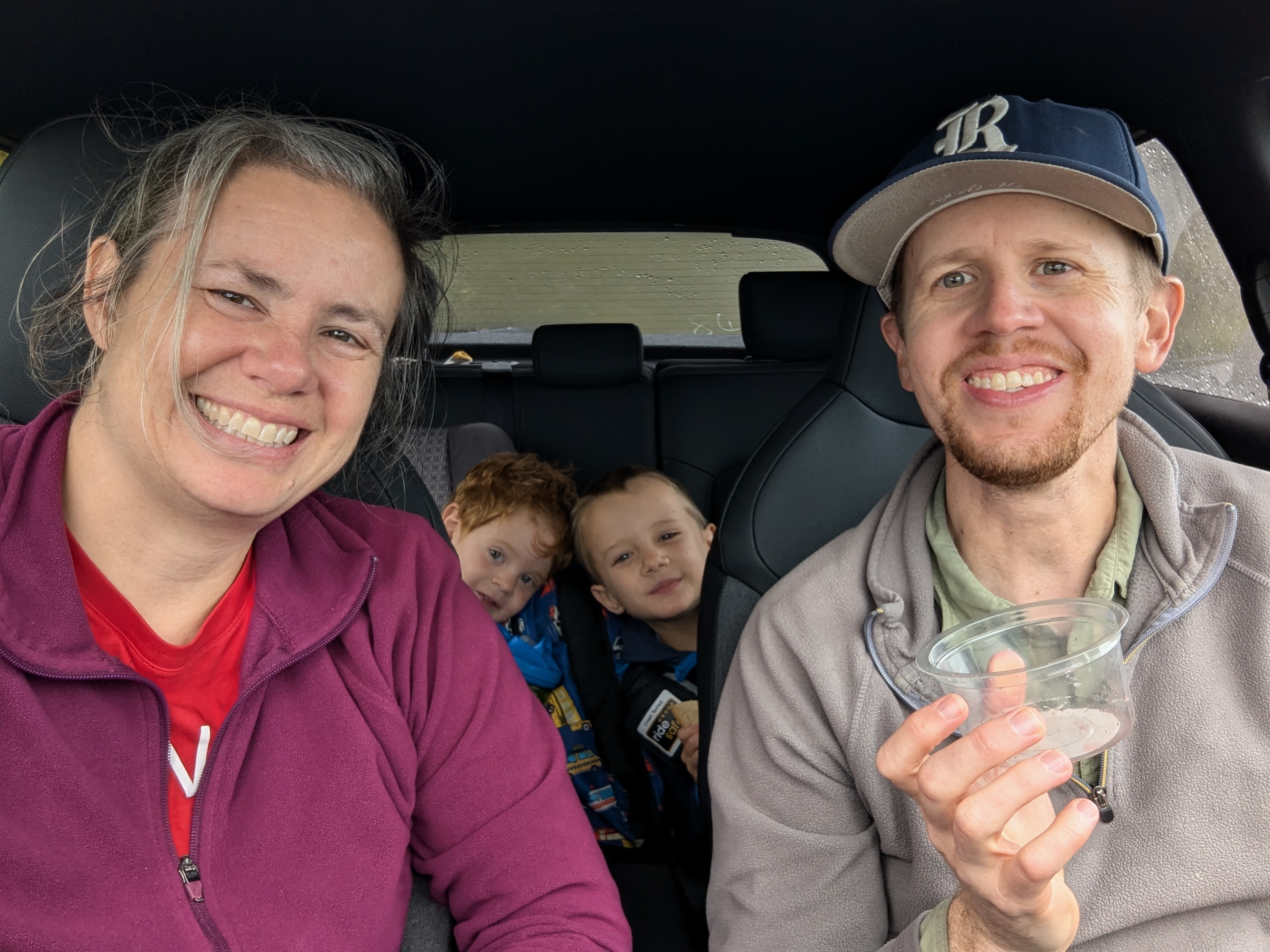
Picnic lunch in the car

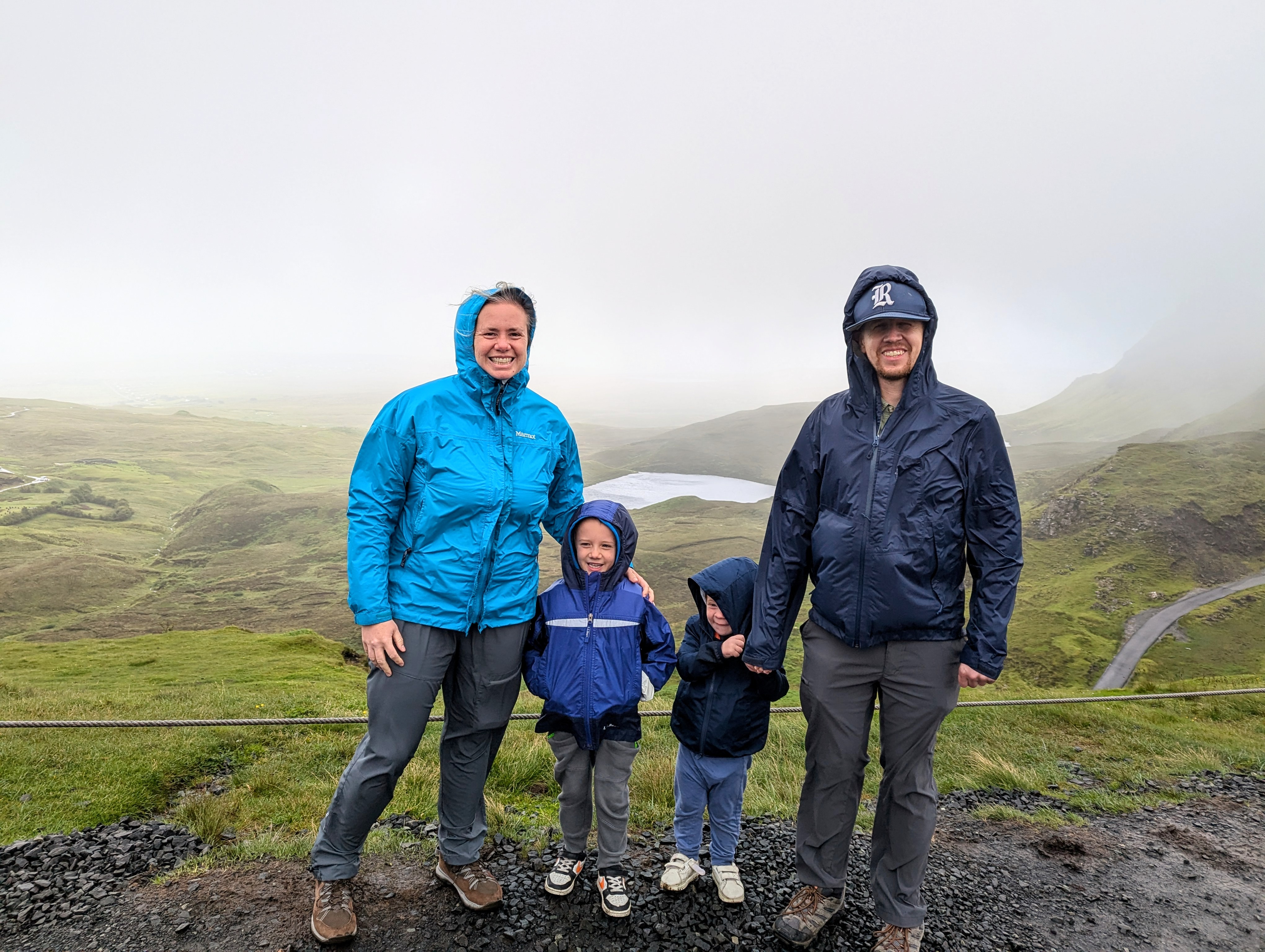
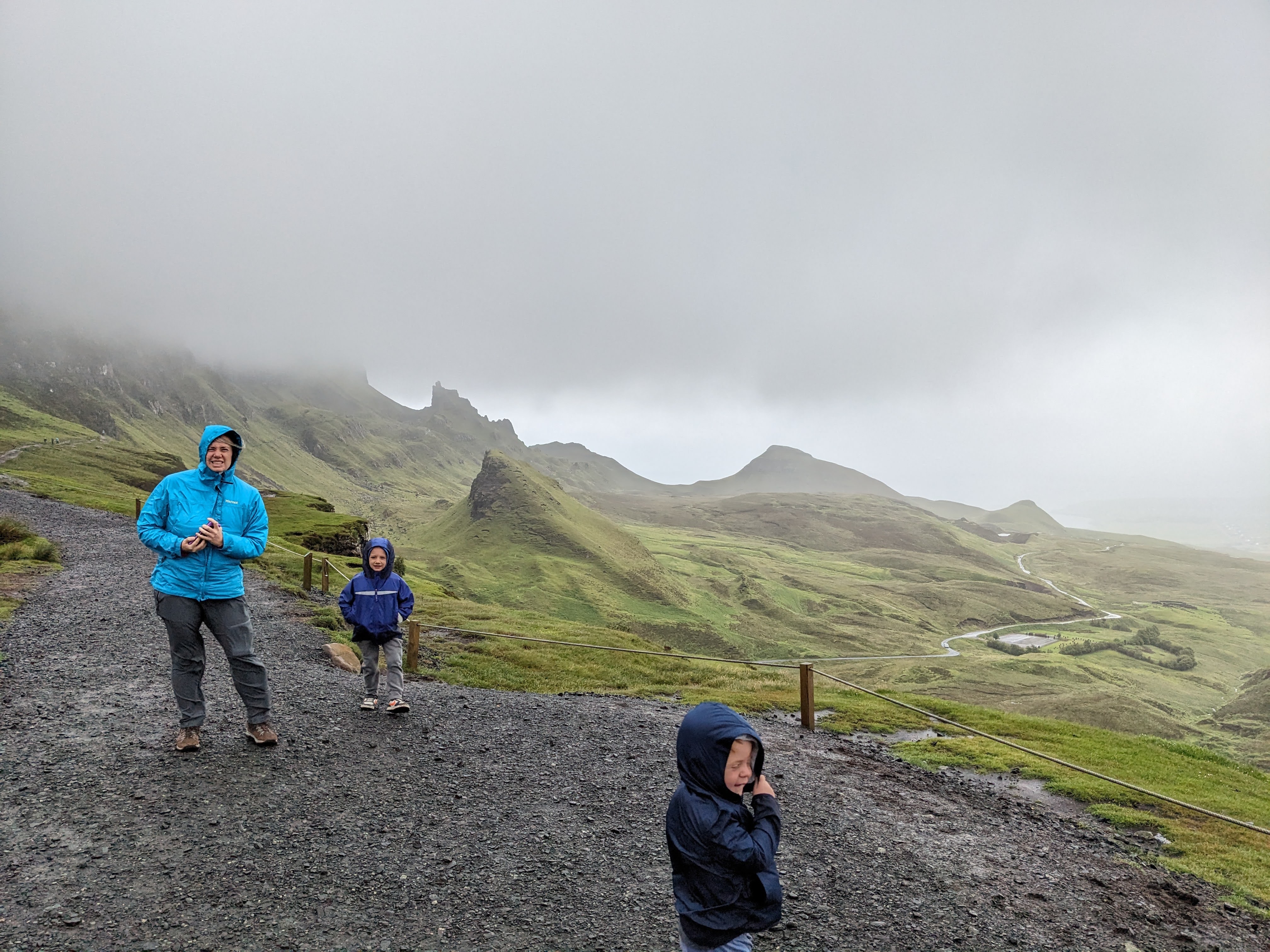
Our next stop was The Quirang, a series of rock formations in the center of the isle, accessible via a somewhat steep single-track road. We had been looking forward to viewing and maybe even hiking in this area that looks so scenic on the cover of the Rick Steves guide, but blowing clouds and rain in huge winds meant that we didn’t want to do much more than get out for a few pictures.
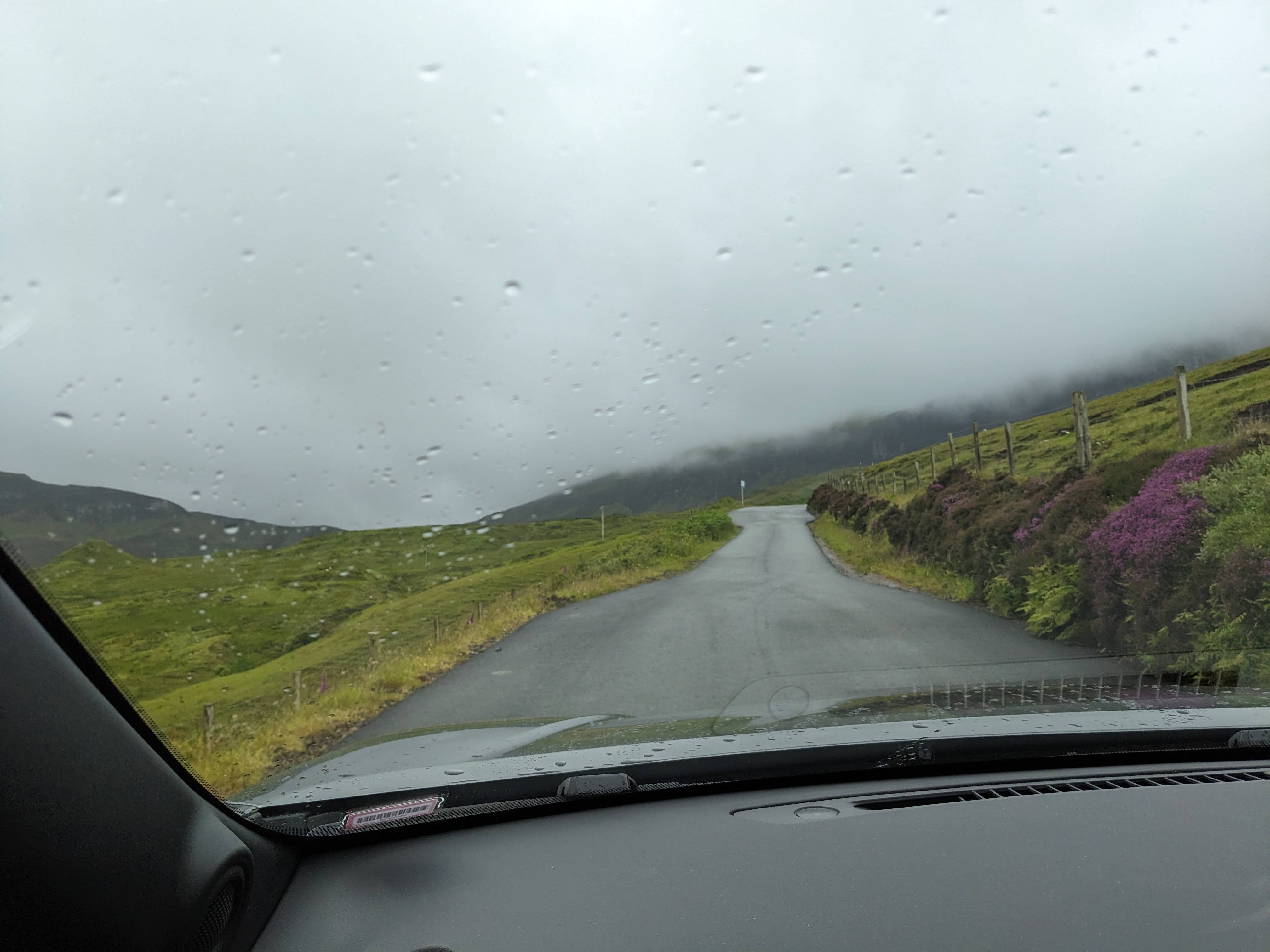
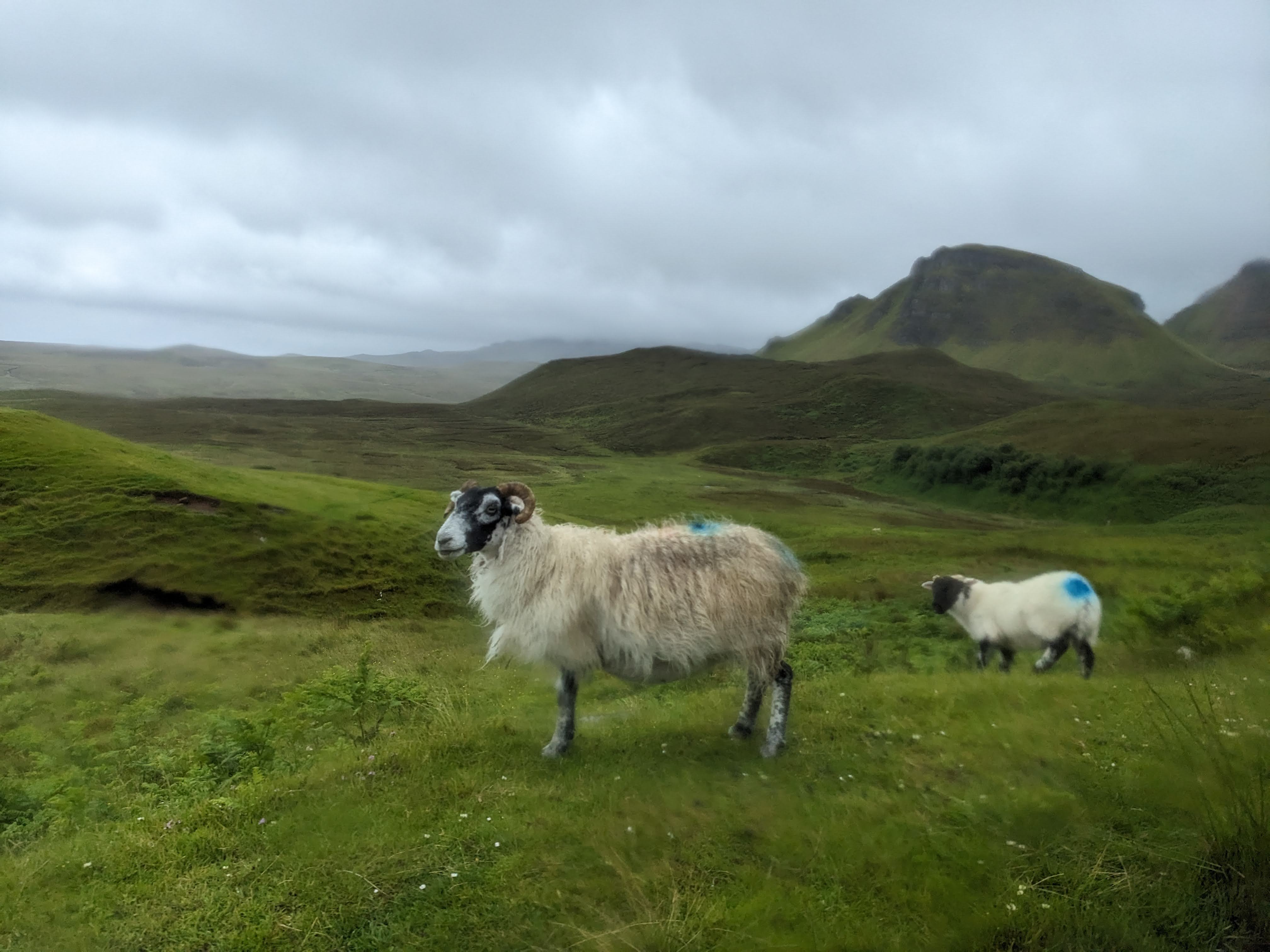
It took us a while to drive down from the area – this was the incident we mentioned in the Driving in Scotland discussion where someone coming up ignored the rules of the single-track road and never pulled over. A car coming down had to keep backing up in front of them something like half a mile until we and some others helped work the puzzle for how to squeeze them into a passing place.

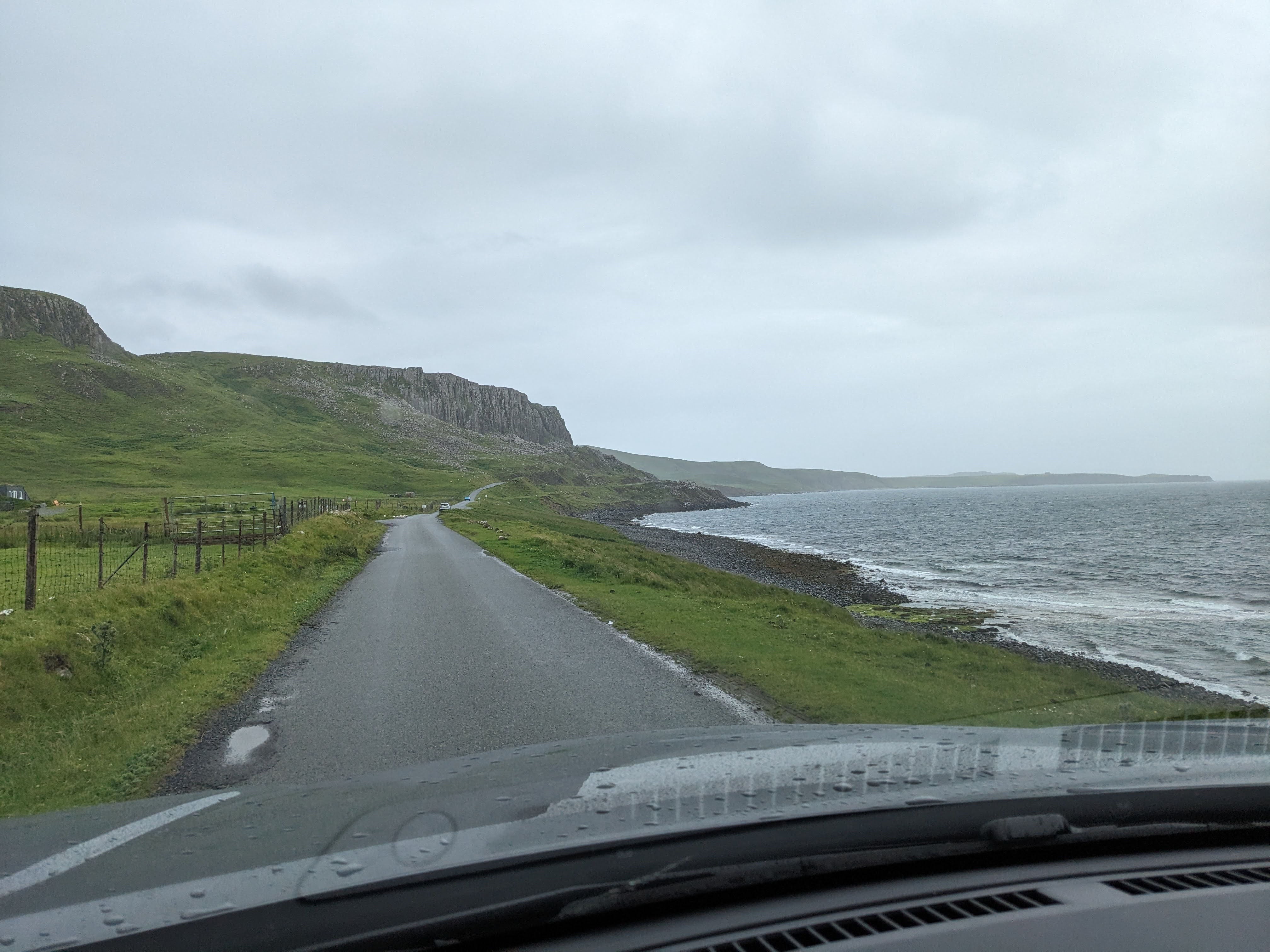
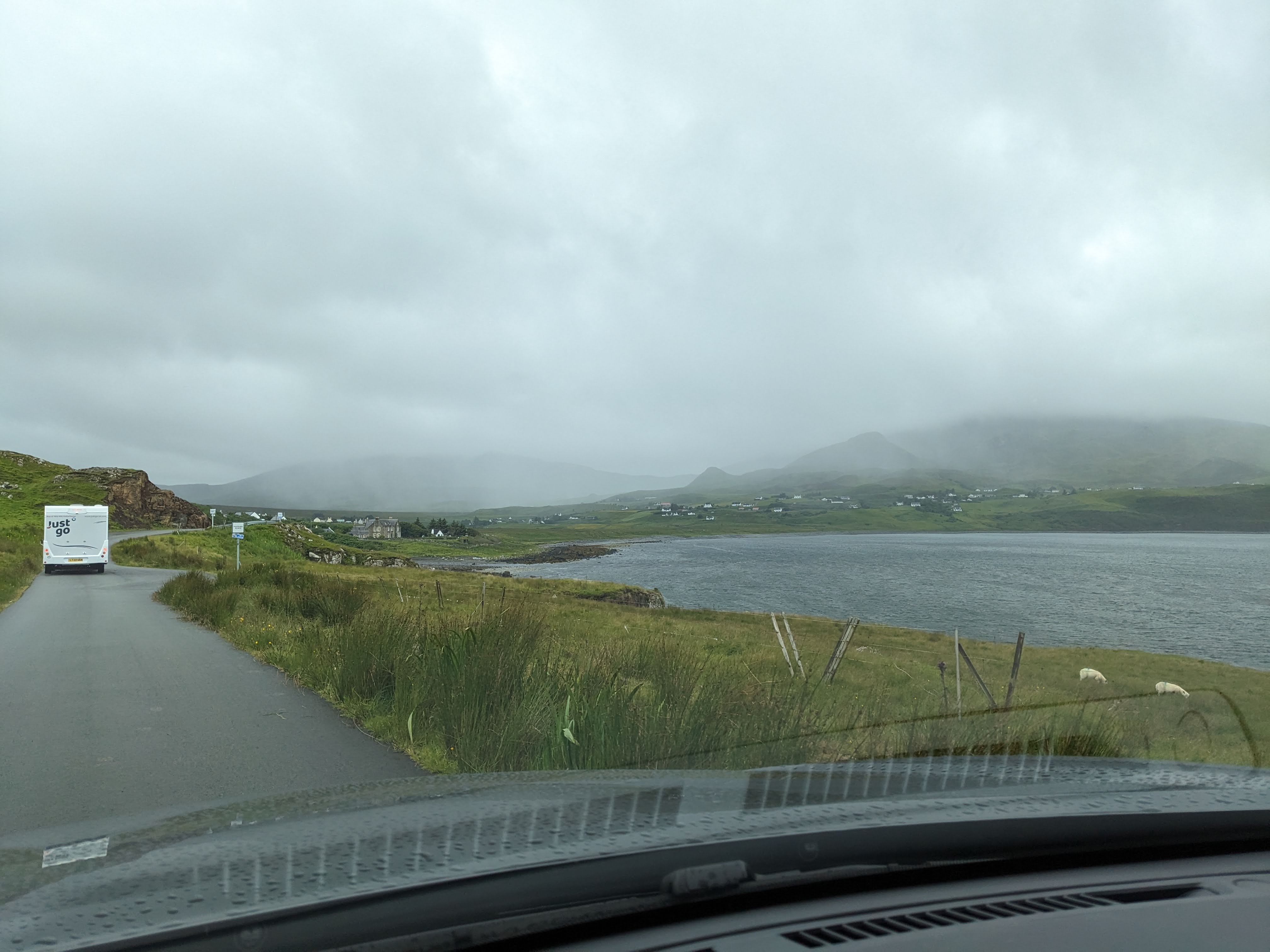
We continued on around the peninsula loop. Due to the weather we didn’t think it was worth it to get out, so we just enjoyed the views from the mostly single-track road.
Skye: Broadford

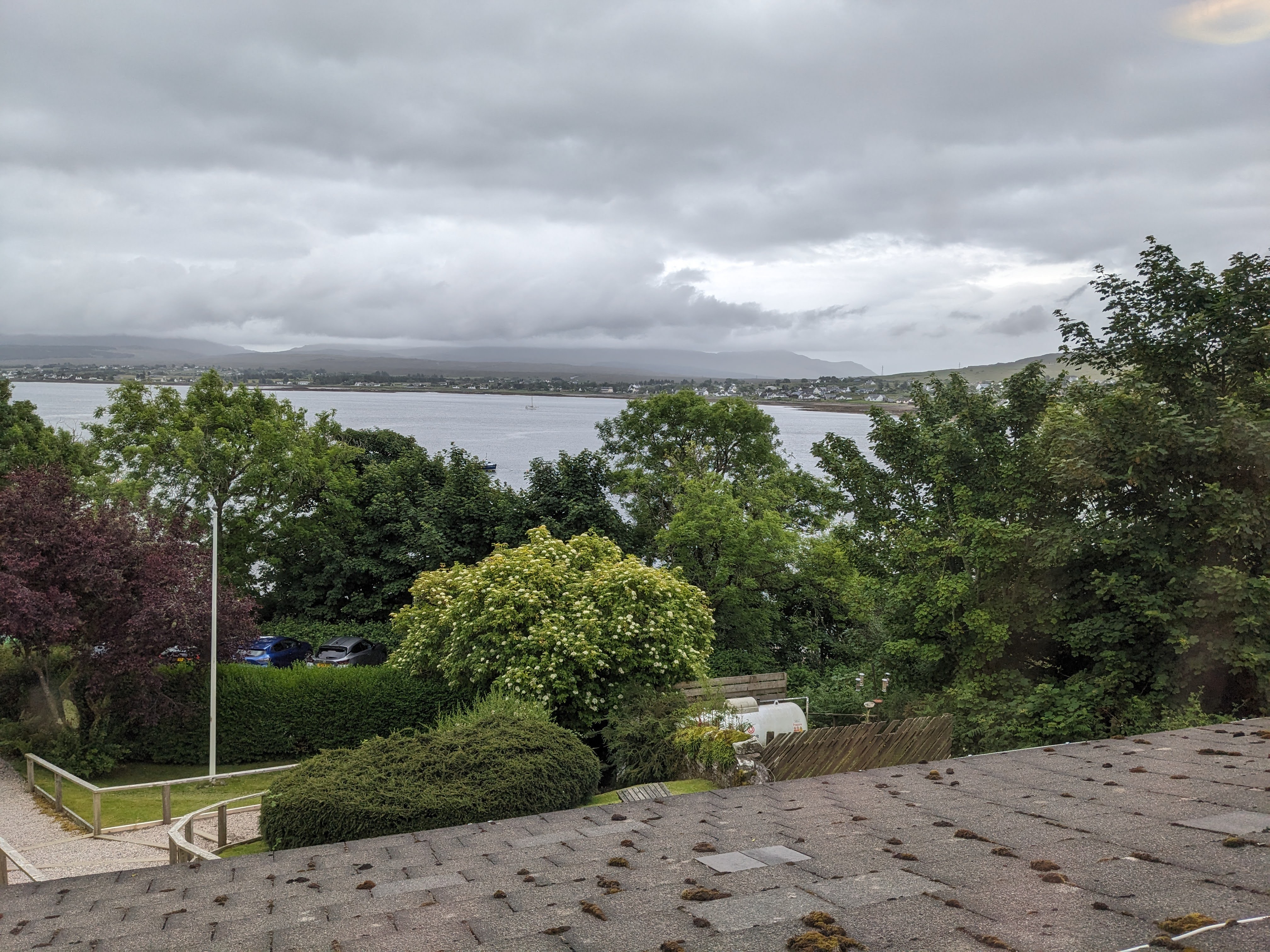
When searching on our own, we had a hard time finding any place reasonable to stay on Skye. Thankfully, the staff at Hostelling Scotland was able to book us a room at their hostel in Broadford on the island. We had a private room with two bunk beds. One downside was that we did not have an ensuite bathroom, so we had to walk down the hall for toilets or showers. However, the kids did fine with this and overall we enjoyed our short one night stay.

For dinner, we took a short walk into town to Cafe Sia. We all enjoyed the pizza, and the kids also appreciated that theirs came with ice cream.
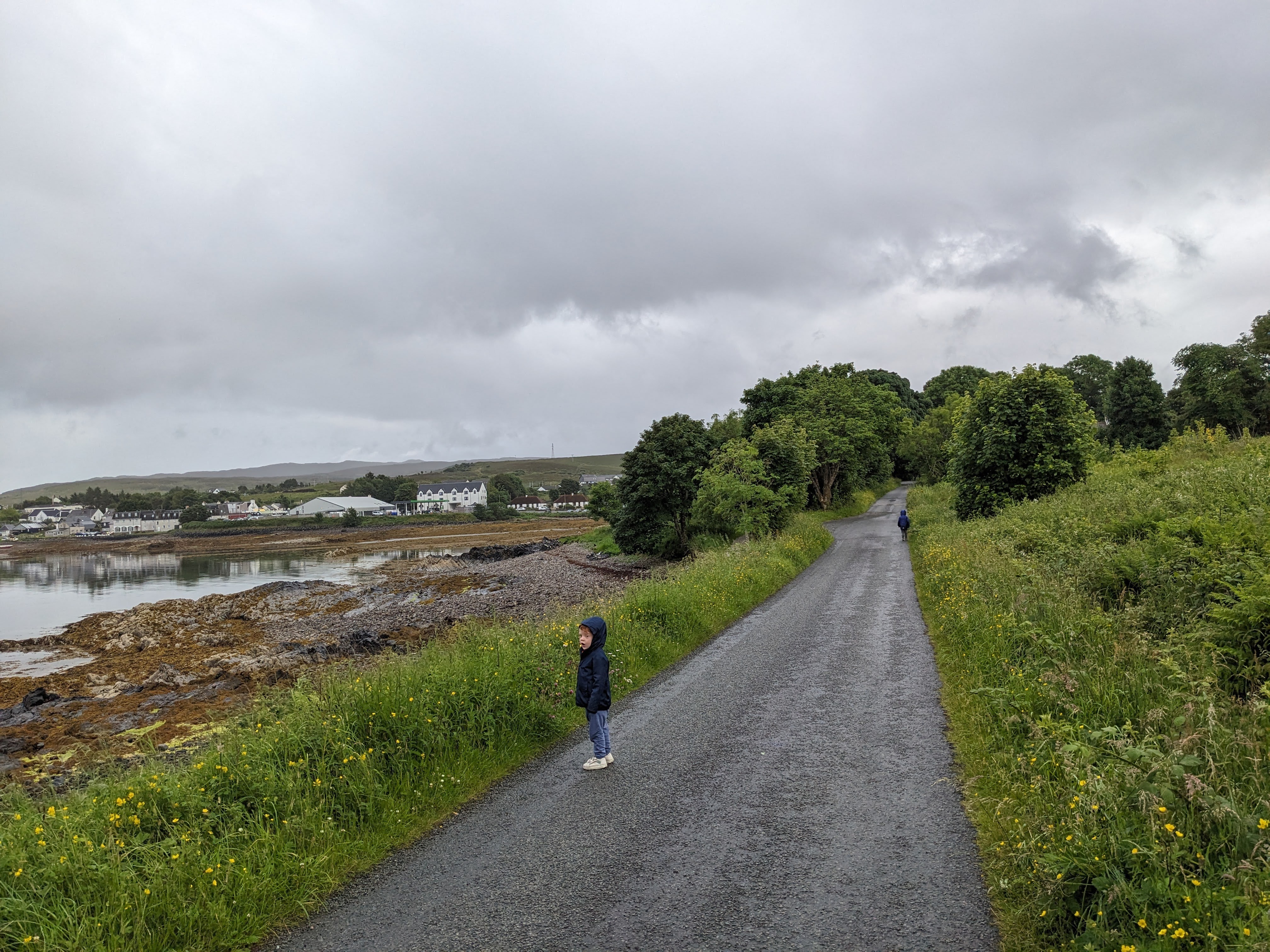
This was a nice way to wrap up our two days traveling along the coast, both on the mainland and the Isle of Skye. The next morning we would head back to the mainland to Loch Ness and Inverness!

Summer Trip to Scotland: Getting There

Before we had kids, when we were planning our summer trips, we would come up with a short list of candidate destinations, and often Scotland was very high on the list. It’s always been one of Della’s goals to travel through the Highlands that she read so much about in the Outlander series. Scotland never became our final choice, but it has always been on our mind.

When we had kids, we put big European vacations on hold for a bit, but in the summer of 2024, now that they were six and three, we decided that it was maybe the right time to go. We thought Scotland might be a great place to go with kids, especially since we were planning on renting a car and doing a roadtrip which would allow for a little flexibility.

Flying Four to Scotland for $22

As with past trips, one goal was to use miles to book our plane flights. Now that we have to pay for four tickets instead of just two, it requires a lot more miles. Eventually we decided that the best strategy would be to use United Airlines to fly one direction directly to or from Edinburgh, and American Airlines to fly the other direction via London (no direct flights to or from Scotland). Based on the available flights and our schedule, we chose to fly into Edinburgh on United, then out of London on American.

Since we have a United Airlines credit card, there was a little more availability of flights at the cheaper rate of 40,000 miles per person. In the end we chose the flight with a layover in Washington, D.C, and were able to get all four for 160,000 miles and $22.40 in fees.

Smoothly at the Start

The first part of our journey went exactly as planned. We rode the train to the Denver airport, and had enough time to eat lunch before flying to DC. In DC, we took advantage of the three hour layover and had dinner, then walked up and down the entire length of the terminal for exercise.

Here Come the Delays

As we were wrapping up our walk through the terminal at 8:30, we got a text from United that our flight had been delayed until 11:00 PM – our inbound airplane was arriving late due to lightning in Newark. We weren’t too worried yet…

But we watched through the United app as our inbound airplane still never left Newark. The delays kept trickling in.

  • At 9:30 PM, the flight was delayed until 11:27 PM
  • At 10:00 PM, the flight was delayed until 12:27 AM
  • At 10:45 PM (past our original departure time), the flight was delayed until 1:27 AM
  • At 11:OO PM, the flight was delayed until 2:15 AM

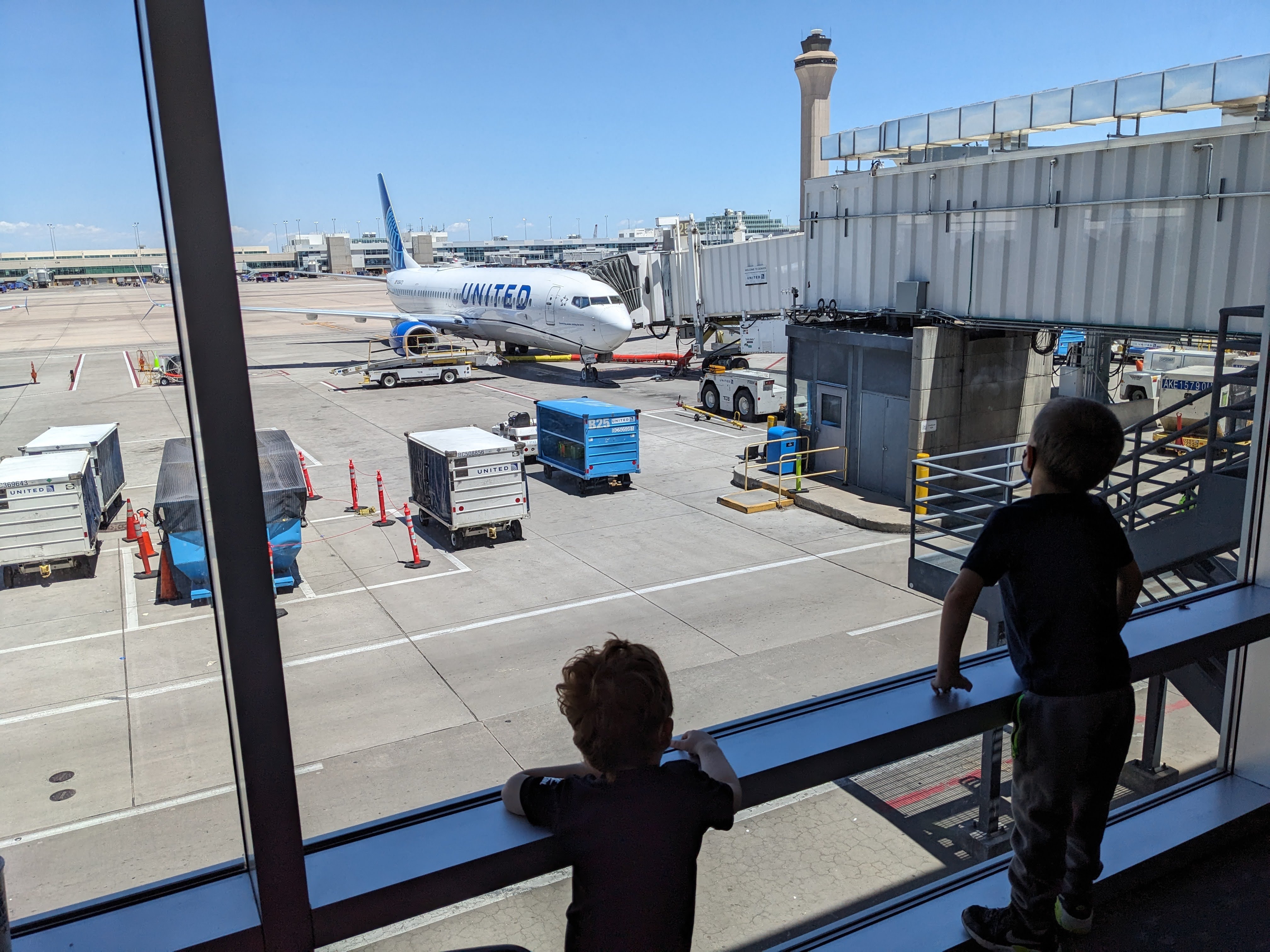
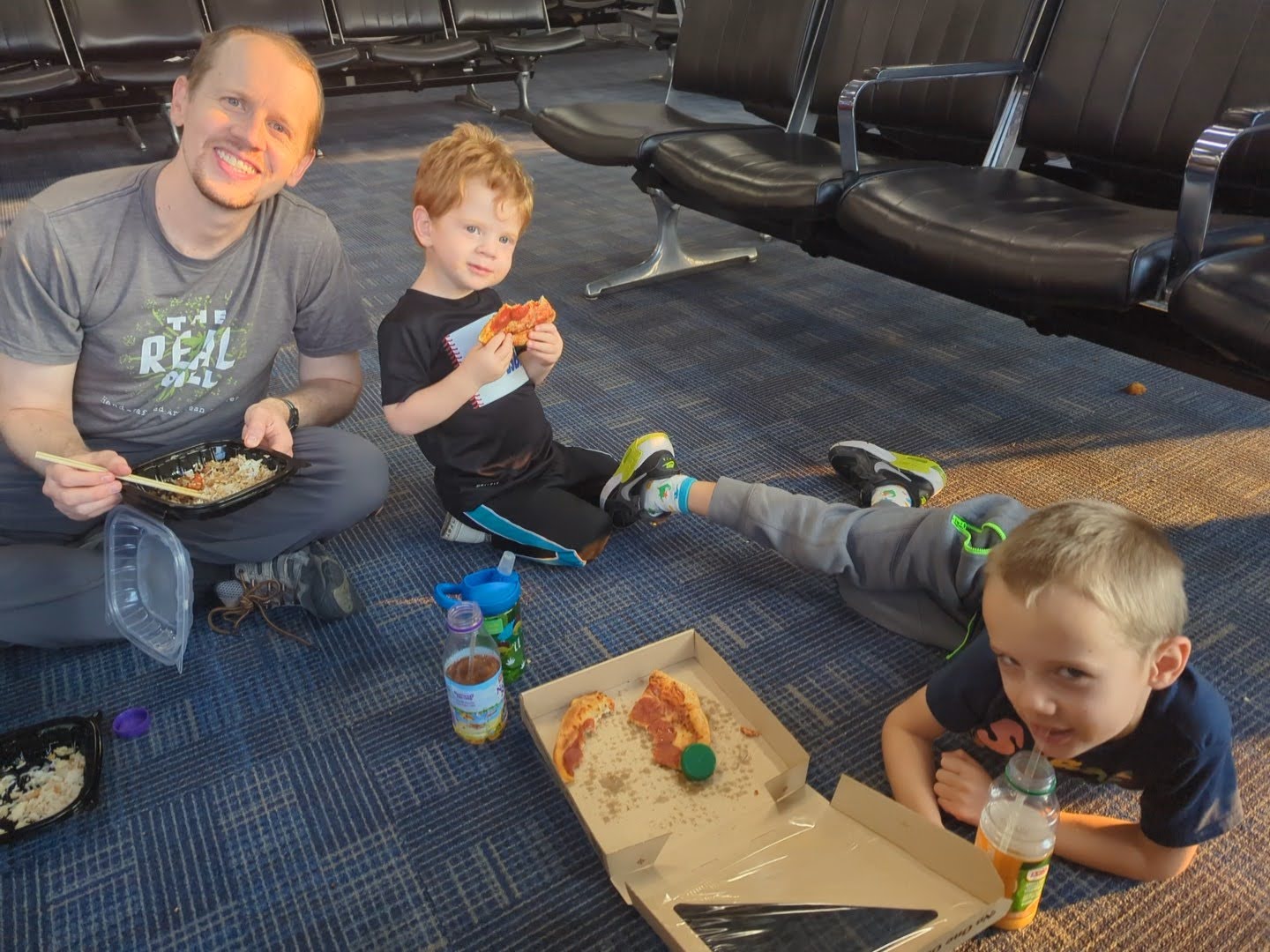
Through all this we had to try various things to keep the kids entertained. Even though it was late (even for our bodies on Denver time), they didn’t show much interest in sleeping.

At 11:55 PM, the flight was delayed until 3:00 AM.

At 12:05, there was a moment of optimism, as we could see that the Newark flight had left its gate. The delay was updated to be only 2:15 AM again.

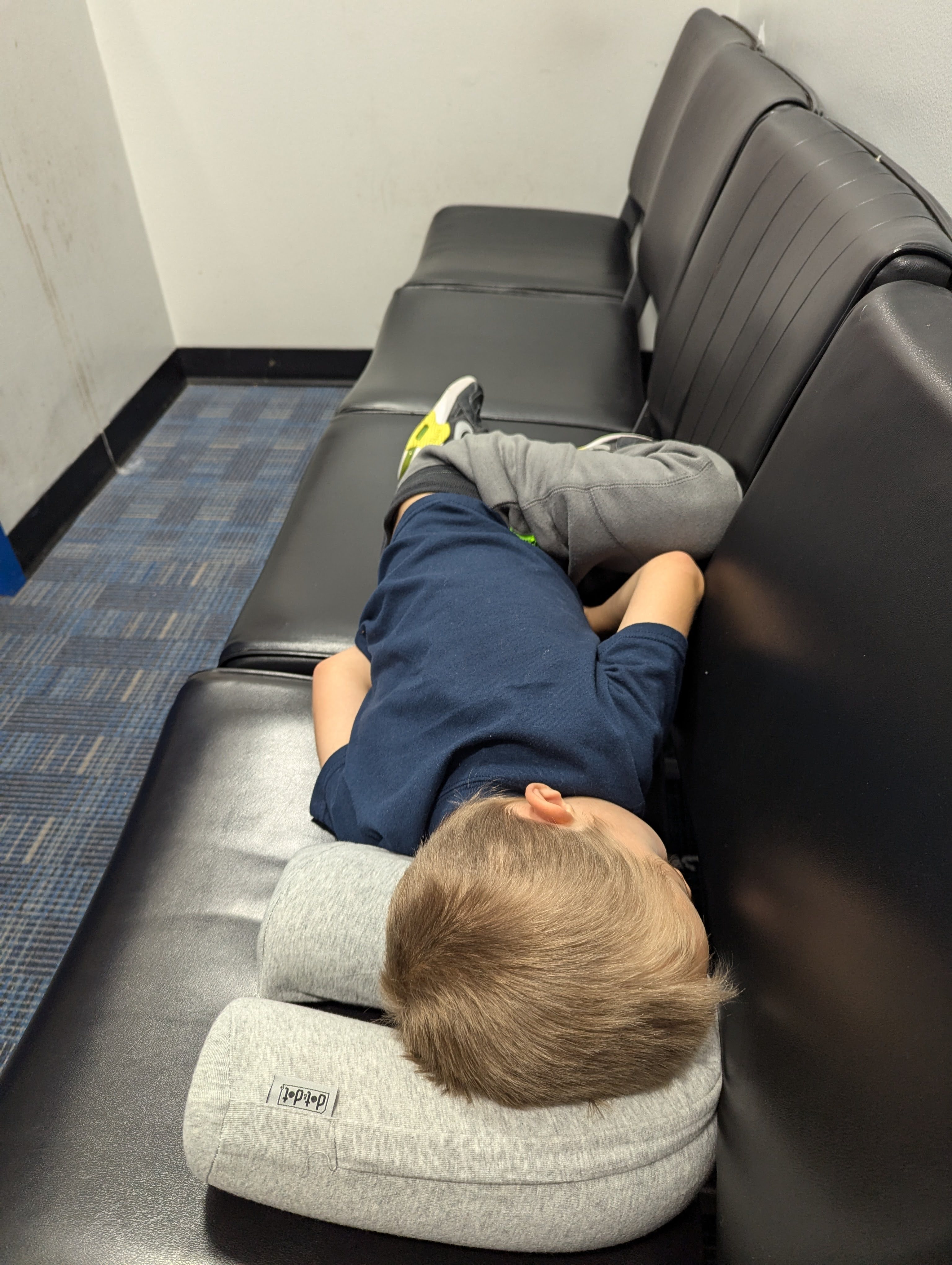
At this point, with it being after midnight, and not looking like we would leave for two more hours, we got one kid to sleep, but the other still refused.

The flight from Newark was in the air, and we were feeling tired but confident.

At 1:25 AM, the flight was cancelled.

There was then a big scramble to figure out what to do. Agents passed out cards with a QR code to connect with a virtual booking service, but we tried and nothing would connect. Our gate became chaos as United had reassigned it to a flight that was heading back to Newark. Eric eventually realized United agents were setting up at nearby empty gates and lingered enough to get in the front of one of those lines.

Talking with an agent, the best they could do for the four of us was to get us on the flight from DC to Edinburgh on Monday night – two days later than the original flight. This was not ideal, but it seemed like the only option.

We chose a voucher for a hotel through a link United sent us. Unfortunately, there was some sort of bug and the options seemed to be assuming we were at the other DC airport (Reagan National). There was no way to fix this, so we just chose the one that said it was closest but was actually more than 30 miles away in Alexandria.

We did have one car seat along, but the other travel harness was in our checked bag. Because it was so late, the United agents said there was no way we could get our checked luggage because there was no one to bring it out. We asked multiple times, but never got a better answer.

The best they could do was give us a voucher for the taxi service, which supposedly had car seats available. We lugged two very tired kids through the empty airport and out to the taxi, where we did find one with a seat. (Thank goodness for the stroller wagon we had purchased a few months before!) We took a very late taxi ride, got checked into our hotel, and crashed.

Unexpected Adventure in DC

We tried to sleep in the next morning, but it was hard to: we were still in our dirty clothes, and thinking about how much time we were losing in Scotland with the 2 day delay.

Eric had the idea to call the rebooking line again, hoping that it would work better during more normal hours. Thankfully it did, and that rebooking agent was able to find seats for us on the flight to Edinburgh from DC that night, so only a 1 day delay. We accepted that and then made a plan for the day.

We spent much of the morning lounging in the hotel room, which actually was pretty nice. We also used meal vouchers to eat lunch at the hotel restaurant.

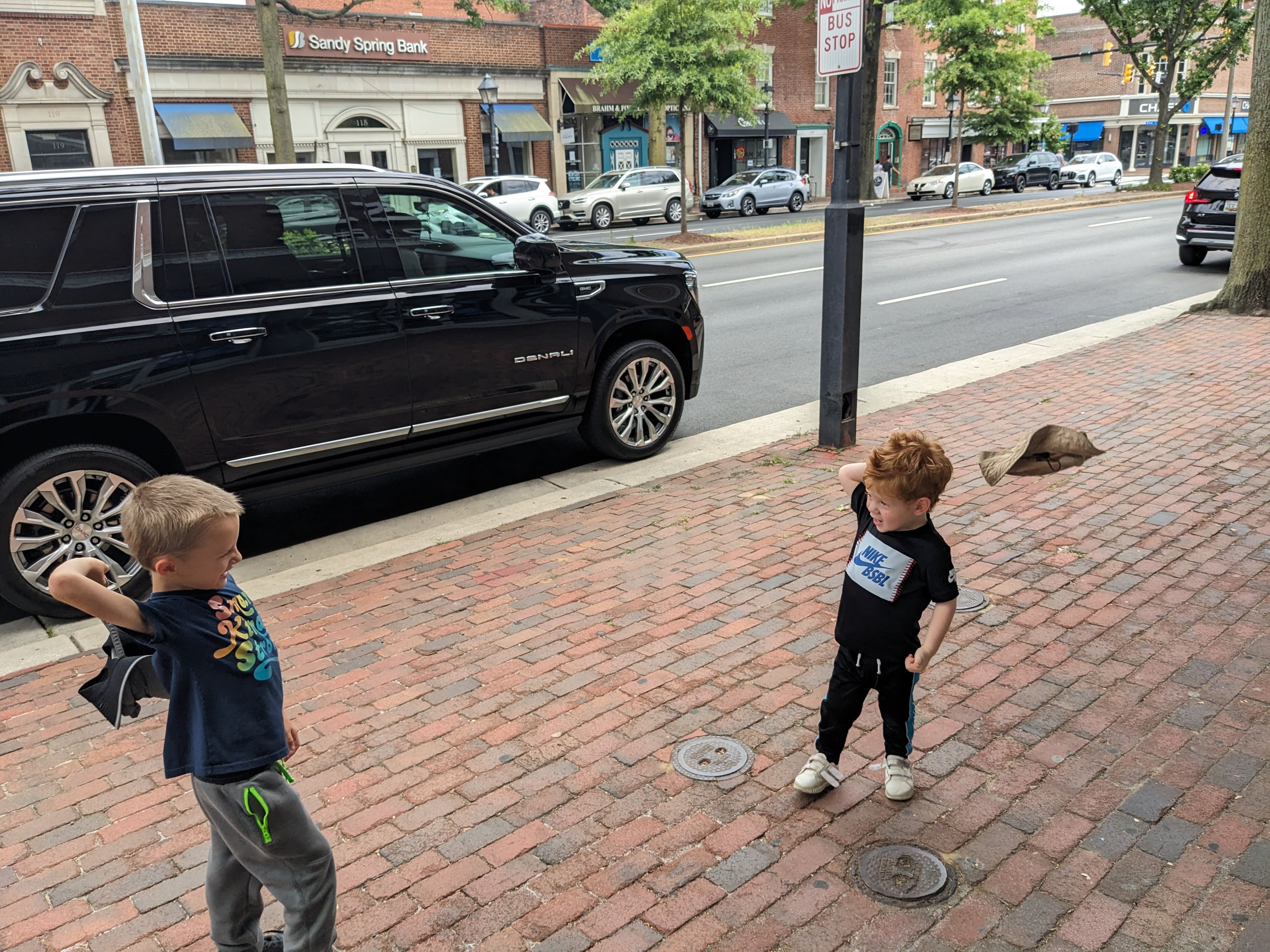
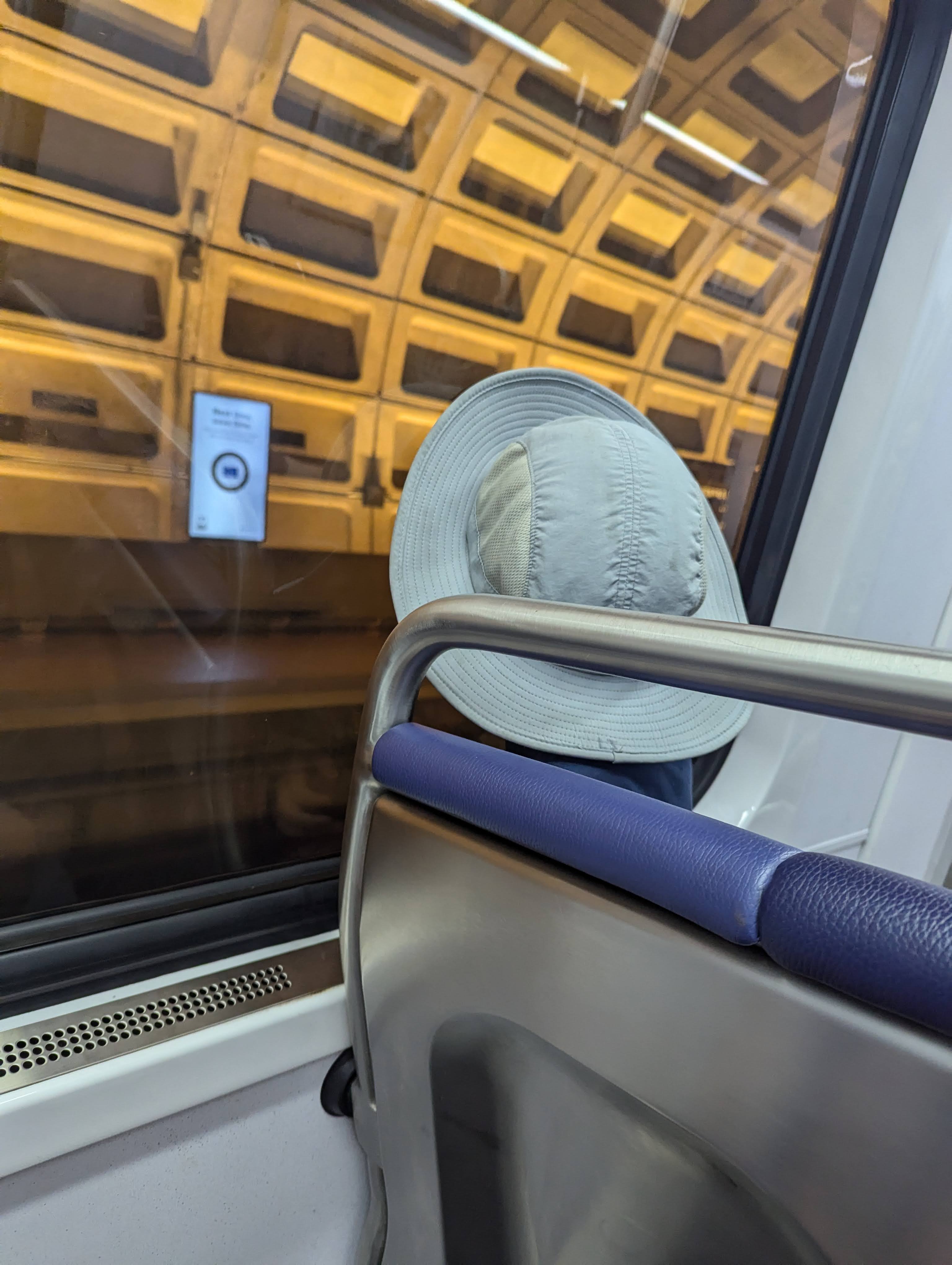
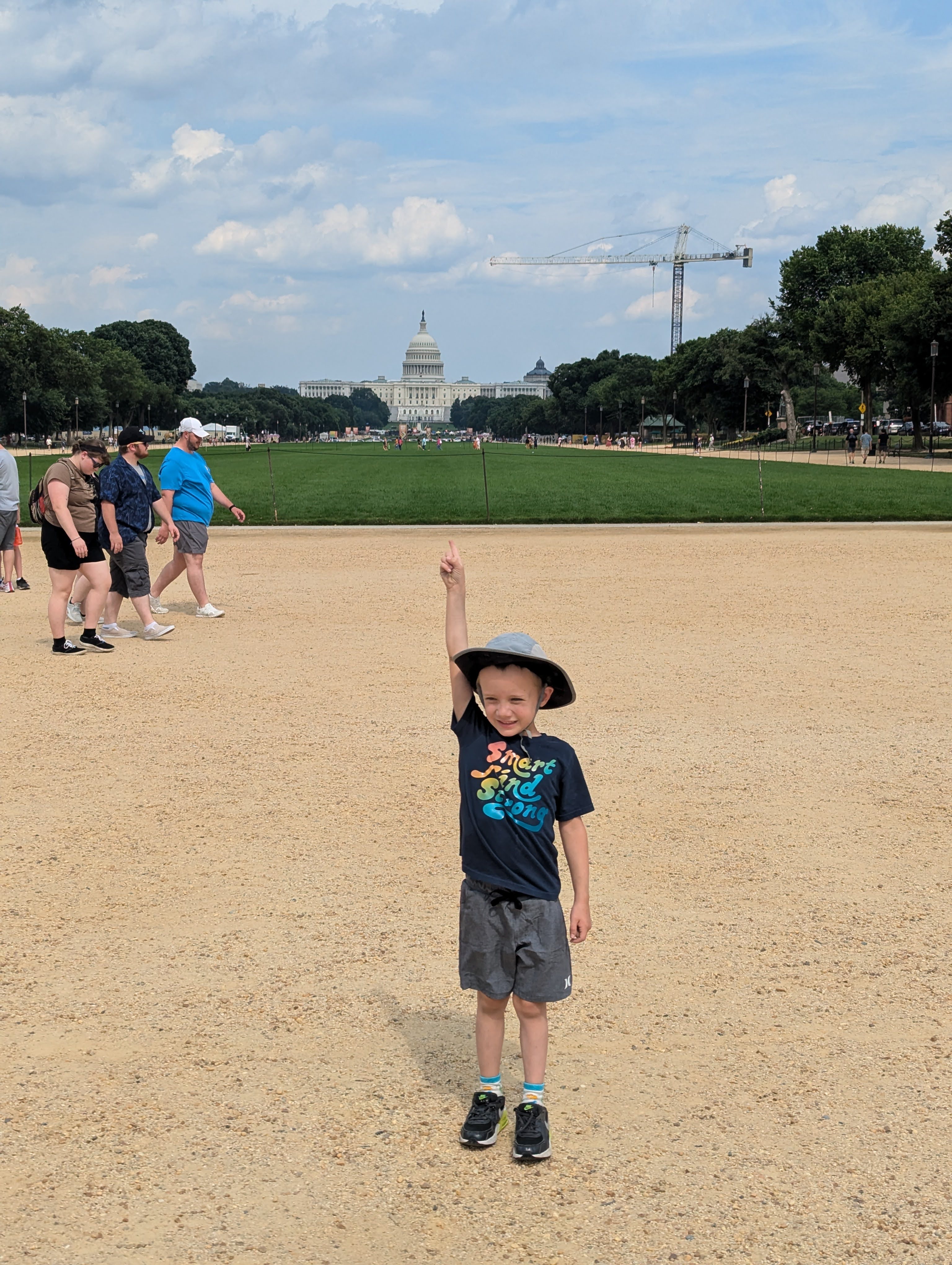
It was very hot in the DC area – they were under a heat advisory, and we didn’t want to spend another day and overnight flight in our same clothes. So, we had the idea to go buy some new outfits with shorts. We found a Ross nearby, and rode the free local bus there and bought a shirt and shorts each. (Side note: does this count as visiting the state of Virginia for the kids?) We changed into the shorts at the hotel (keeping the clean shirts in reserve for the flight), then rode the metro to the Mall for a little sightseeing.

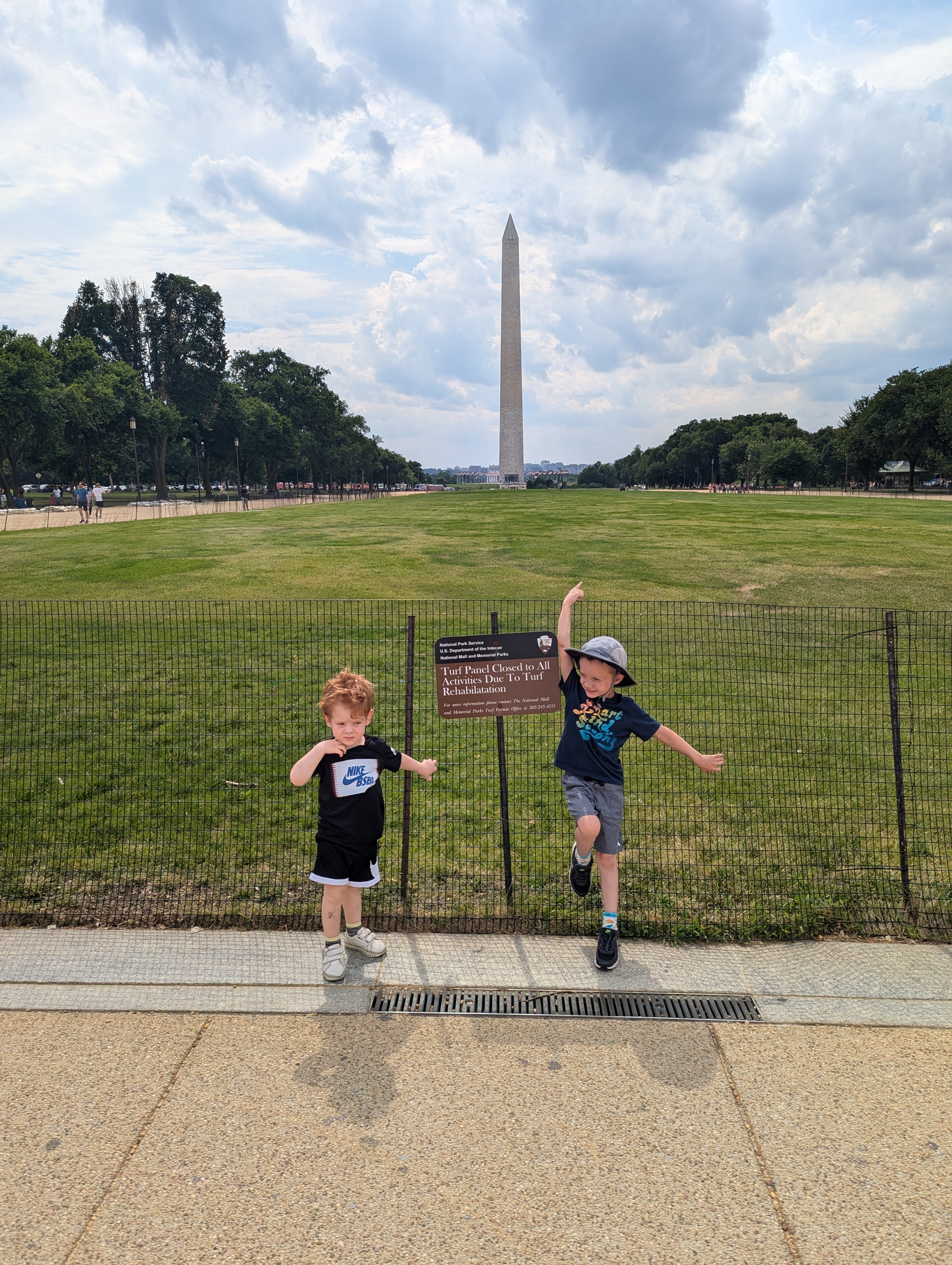
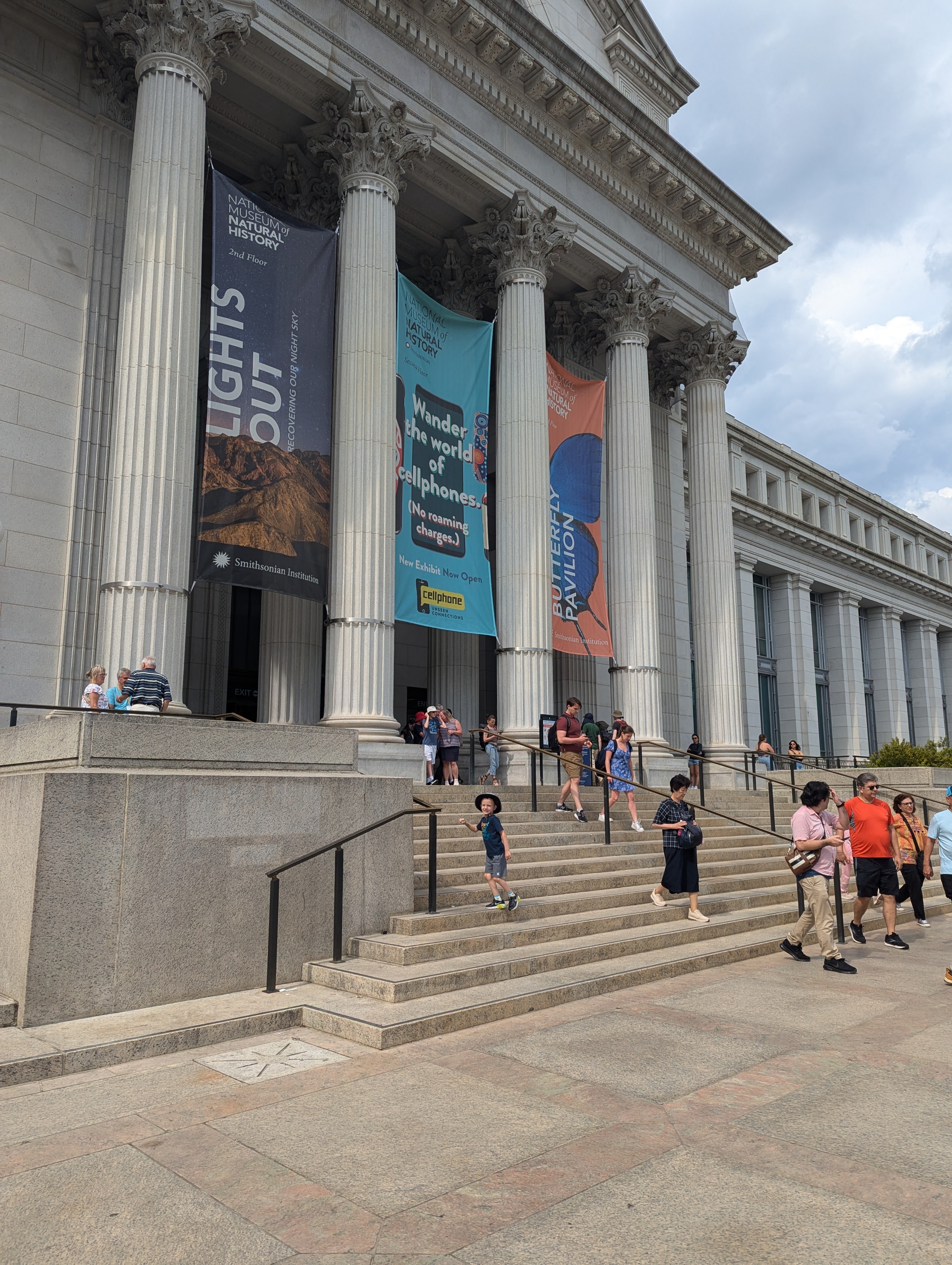
It was too hot to do much walking around the Mall, so we just walked through the middle and over to the Smithsonian Museum of Natural History, which we explored until closing time.

We had time for dinner at Hill Country Barbecue, then rode the (long) metro back out to Dulles airport.

Let’s Try This Again

Back at IAD, we got checked back in and to our gate in plenty of time. Thankfully, this time the inbound airplane had arrived earlier in the afternoon, and was already sitting at the gate. We got on board and breathed a sigh of relief as we headed to Edinburgh a day later than intended!

Our flight to Edinburgh went fairly smoothly. There was some weather in the area which meant that we spent some extra time on the tarmac before taking off, and in-flight service was delayed after takeoff. The kids fell asleep quickly, but the adults were unable to sleep well. It didn’t help that they still did a full meal service once the flight attendants were able to get up and move around.

Getting from the Edinburgh Airport into Town

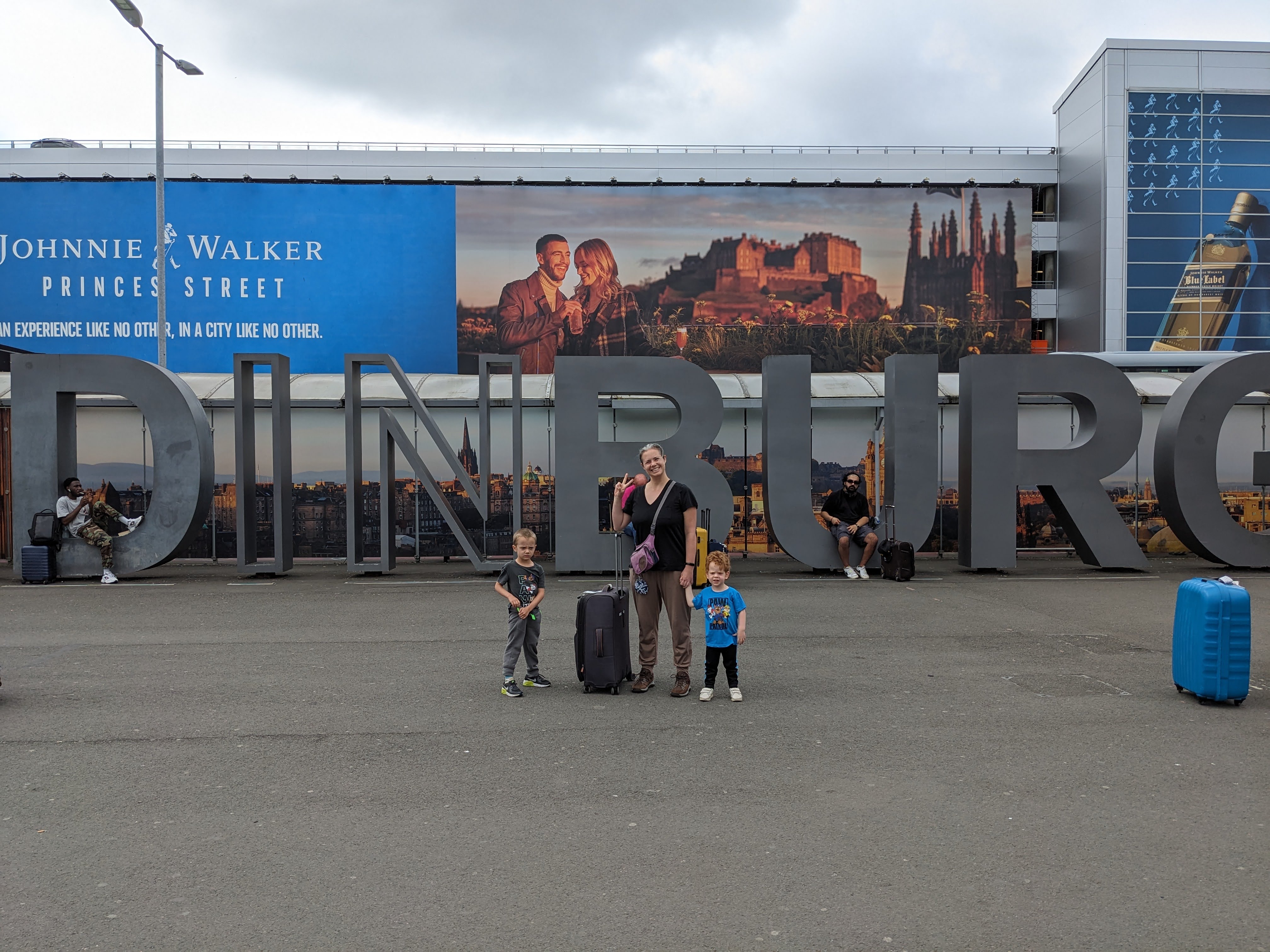
We made it to Edinburgh roughly on time. The adults were very tired, while the kids were mostly in good spirits. We were definitely glad to see that our checked bags had made it to Edinburgh as well!

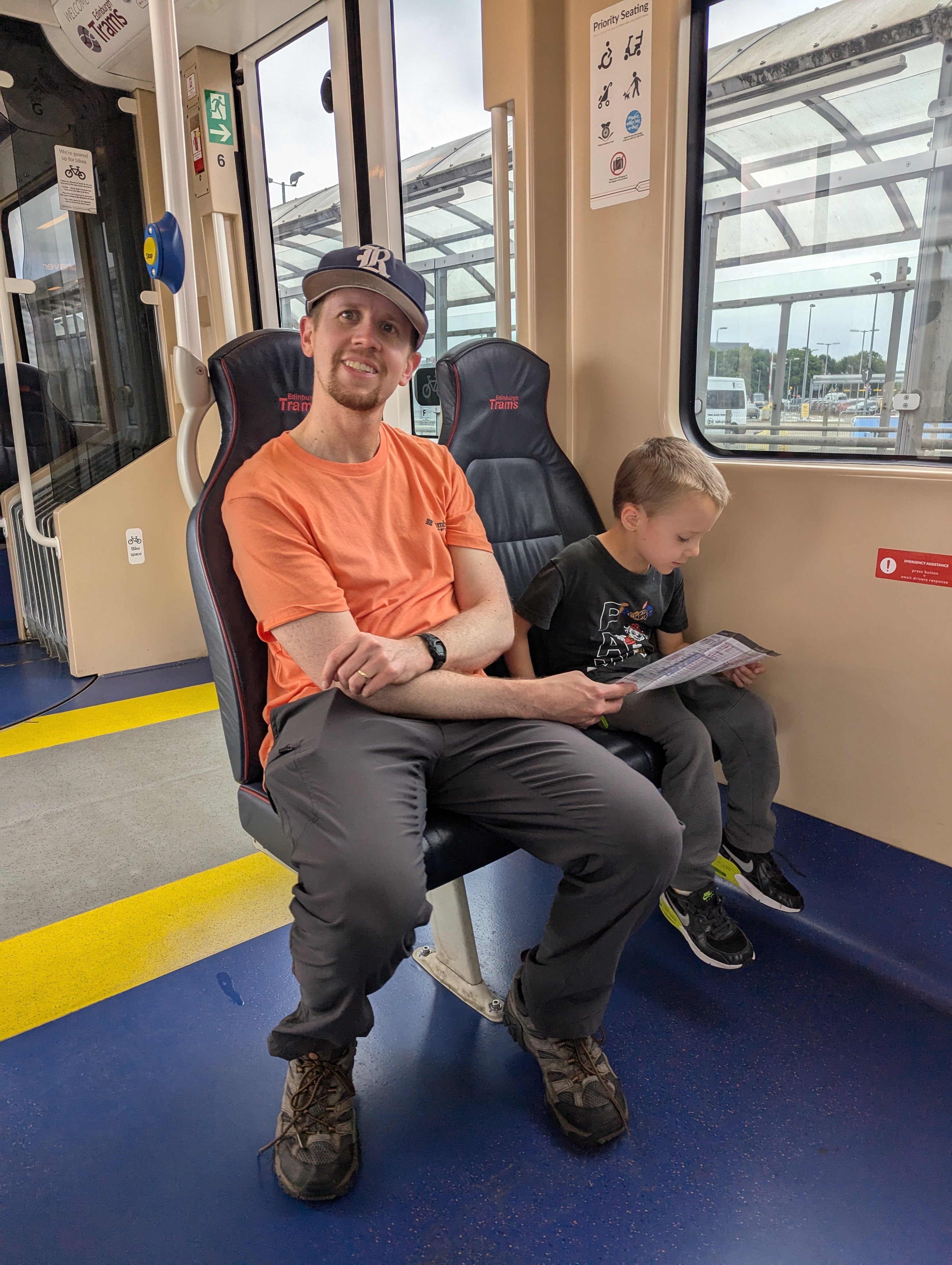
It’s actually very convenient to get from the Edinburgh airport to the city center. We were staying in an Airbnb just east of the main part of town, so we took the tram, which was well-labeled and easy to find.

Excited to look at the tram map!

After a 15 minute walk, we made it to our Airbnb flat. We were all tired, but still wanted to make the most of our (even more limited than expected) time in Edinburgh!

Mexico City: Getting from the airport to La Condesa by bus

In the summer of 2022, we decided we were feeling up to taking our first international trip with our family of four (and our first trip by plane since the beginning of the pandemic)! We chose to go to Mexico City, since it seemed like an easy international destination to get to from Denver with lots of interesting things to do. We’ll talk more about what we did there in later posts; the purpose of this post is to describe how we got from the Mexico City airport to our accommodations in the La Condesa neighborhood by bus, since it was not easy or well-documented.

The Different Transportation Options

If you read other resources about getting from the Mexico City airport to La Condesa, most will recommend taking a rideshare or taxi. However, we were traveling with a four year old and a one year old, and we didn’t want to bring car seats (since we planned to use Mexico City’s excellent public transportation system to get around for the rest of our trip) and didn’t want to try to ride without the car seats, so these weren’t an option for us.

The Mexico City Metro (train system) does run to the airport with a station outside of one of the terminals. However, this also wasn’t an option for us because the Metro regulations state that you are not allowed to carry large luggage onto the trains, and we were traveling with a big bag. We even saw large bollards preventing you from doing this at the airport station – although we also saw someone lift their luggage over this and do it anyway.

The option we chose was the Mexico City Metrobús, which also runs to the airport and does allow large luggage. This would require a number of different transfers to get all the way to La Condesa though.

Step Zero: Be Prepared

Make sure you are ready to look up information on your phone about transit. We sometimes used the standard Google Maps to get information. But, we got a tip to also try the Citymapper app, and found that it often had more up-to-date and helpful information about the different modes of mass transit in Mexico City.

Step One: Buy Your Ticket

Before you get on the Metrobús, you need to buy a ticket. The easiest way to do this is to buy one of the smartcards and load some value on it. The nice thing about these smartcards is that they can be used on the Metrobús, the Metro, the Trolleybus, and other systems around the city.

There is an easy to use machine where you can purchase the card in the airport terminal right by the door you will go out to catch the bus. We landed in Terminal 1, so for us this was Door (Puerta) 7. We had to break the larger bills we had gotten from the ATM in order to be able to use the machine (since you can’t load too much on the card). We just asked one of the money exchange booths nearby and they did this for us. The system is incredibly cheap so you don’t actually need to load too much onto the card (but do enough for multiple trips just to give yourself a cushion).

Step Two: Catch the Line 4 Bus

Just outside Door (Puerta) 7 was a sign indicating that this was a Metrobús stop.

The artistic MB in the red square is the Metrobús logo. The sign also indicates that we were at the right place for Line 4, which is color-coded with orange

The 4 Line bus supposedly came every five minutes, but it felt like we had to wait longer than that. You do need to be careful to catch the 4 Line Metrobús, as you will note that the inter-terminal bus also stops at this same stop (and is also a red bus).

Eventually, the Line 4 bus did come. It has a special area to put our luggage and was not too crowded. Unfortunately, after picking us up, it had to go to Terminal 2, where there was a lot of traffic, so this first part took a long time even though we didn’t get very far.

Step Three: Get Off at San Lázaro!

We weren’t very prepared for this step ourselves. Some of the documentation of Line 4 makes it seem like you can ride from the airport all the way to the end of Line 4. However, if you look at the route through a transit app, it does show that you have to transfer from one Line 4 bus to another at the San Lázaro station. We weren’t completely sure about this and were caught a bit unaware.

When the bus got to San Lázaro (the next stop after Terminal 2), it stopped briefly and everyone else got off. We didn’t move quickly enough and then panicked when the bus started turning back around! Luckily we were able to get them to stop and let us off (somewhat in the middle of the street). We scampered out with all of our items and scurried over to the bus stop. Definitely not the smoothest transition.

Step Four: Catch the Line 4 Metrobús (Again) Towards Buenavista

Since the airport version of Line 4 ended at San Lázaro, we had to catch the “regular” version of Line 4 to get where we were intending to head. We wanted to head in the direction of Buenavista. There are actually two versions of this Line 4 route: Norte (North) and Sur (South). We chose the Norte since it seemed to have less stops. The bus came within a matter of minutes.

This bus was a little bit more crowded, but one of the locals offered our four year old a seat.

Step Five: Get Off at México Tenochtitlan and Walk to Metrobus Line 1

Our next goal was to catch the Metrobús Line 1 headed south. Looking at the map, the best stop to get off on for this from Line 4 was at the México Tenochtitlan stop. Note that this stop used to be called “Puente de Alvorado” in case you are looking at old documentation.

From here, it was just a two block walk to Avenida Insurgentes, where the Revolución stop on Metrobús Line 1 is found. The stop is a large, well-signed shelter. You have to pay (using the same smartcard) to enter the stop.

Waiting at the Revolución stop. Feeling a little worn out already!

Step Six: Ride Metrobús Line 1 to Sonora

Even though the Metrobús Line 1 buses are large, articulated buses, this bus was very crowded. We ended up somewhat accidentally in the female-only section (but no one seemed mad at Eric – maybe the stroller helped), and even that was crammed standing-room only. Luckily we were all able to squeeze in with all our belongings.

We rode this bus (in its dedicated BRT lane) down to the Sonora stop, which is the closest to the Roma and La Condesa neighborhoods.

Step Seven: Walk to La Condesa

From here, we got to take a very pleasant walk to get to our accommodations in La Condesa. After all of the different transfers, stress of keeping up with our stuff, and the last crowded bus, it was very nice to get out and move again. This neighborhood is very picturesque, and our route took us through the lovely, tree-filled Parque México and the equally lovely, tree-filled Parque España (both of which we would later visit multiple times), so it was a refreshing end to our journey.

Conclusions

Taking the Metrobús from the Mexico City airport to La Condesa is possible, and not too hard. However, just make sure you allocate yourself plenty of time (and patience): overall, it took us about two hours! Eric’s mom did the same journey by Uber the next day and it took her less than 30 minutes, so if that works for you it is probably the better bet. But, if you are traveling with kids or big luggage, and you don’t mind a little extra time and work, consider the Metrobús!

A Night in New Hampshire

As we were wrapping up our 2 week road trip of New England and Canada, we decided to mark one more state off our list: New Hampshire. As a reminder, previously on the trip, we rented a car in Boston, explored Maine, then headed into Canada where we spent some fun days along the Bay of Fundy, relaxed in Prince Edward Island (PEI) and enjoyed a Hot Day in Halifax. We adjusted our route back to Boston to add in one night in New Hampshire.

With just one night to spend, we decided to base ourselves in the tourist-focused town of North Conway in the White Mountains. We dropped our stuff off at our hotel, the Schoolhouse Inn (where we were pleasantly surprised to be upgraded to a standalone cabin with its own screened-in porch), and then went out to do a little exploration of the area before it got dark.

We first drove up a very steep road to Cathedral Ledge, where we peered off the edge back into the valley below. The view was a little sullied by a large amount of haze. Kiddo seemed to enjoy climbing around even more than the view!

We then went to the nearby Diana’s Baths, where a short hike took us to the series of pools. We let Kiddo wade around a little bit, but the water was too cold to want to leave him in there for long.

We had dinner at a restaurant within walking distance of our hotel called Abenaki Trail. One feature that drew us to it was that they were clearly family friendly, advertising that they had toys and books for kids to play with while waiting for food to come. The food was pretty standard fare, but we did enjoy our massive poutine appetizer.

The next morning we headed towards Boston along the scenic Kancamagus Highway. Using some brochures we had picked up along the way, we chose a few different places along the road to stop and take in further.

Our first stop was at Rocky Gorge, where we did a one mile loop around a pond.

Kiddo fell asleep in the car, but we still decided to stop and take a short walk to see Sabbaday Falls. (Of course he woke up as soon as we put him in the carrier).

We drove through a number of scenic overlooks, stopping at one at the top of the pass to get some nice pictures (although still with some of the haze).

After stopping in the town of Lincoln at the other end of the highway for lunch at a Thai restaurant, we drove through steady rain back to Boston. We were sad to be wrapping up our two-week roadtrip, but happy that it had gone pretty successfully! 

Traveling with Kiddo (Lessons Learned)

Our upgrade to the standalone cabin with porch worked out well, especially because it gave us a space to hang out and read after putting him to bed. Our room came with two beds, so we put his kilofly on top of the bed (with some borders around if we snuck out). He seemed to sleep quite well in this arrangement.

Good morning!

As mentioned above, the restaurant for dinner maybe wasn’t our first choice for food, but it worked out well to choose a place that had some extra kid-specific distractions to help the meal experience go more smoothly.

At this point of the trip, we were starting to feel pretty frazzled trying to keep up with all of Kiddo’s accessories. When we woke up in the morning, we realized we couldn’t find one of the lids to his bottles, which was kind of important since we hadn’t packed very many. We called the restaurant from the night before but they didn’t have it. When Eric went out for breakfast supplies, he tried to find an easy replacement in multiple stores, but was unable to do so. We were able to make do, but it still left a bit of a bitter taste in our mouth, feeling like we weren’t on top of things. We’d like to say we learned a system to never lose items again, but as I bet you can guess, we still have misplaced items since then – especially those pesky small kid things!

Overall, looking back at our roadtrip with Kiddo, we have fond memories of this first big trip as a nuclear family. We think we were able to navigate parenting while traveling fairly well. He won’t remember any of it, but the two of us definitely will.

As we write this post at the beginning of the summer of 2020, it makes us nostalgic and also a little sad that it seems like we probably won’t be able to do a big trip this summer. Hopefully we will feel comfortable taking another trip like this soon!

Summer Trip to Iceland: Not Just Nature in the North

Due to Reykjavík’s location in the southern part of Iceland, most of the popular tourist destinations in the country are the waterfalls, glaciers, and volcanic features in that part of the country. So, as we continued our counter-clockwise loop around Iceland into the north, the crowds of tourists were smaller, and we were still able to find more stunning scenery while finding out a little more about the culture of Iceland itself.

Goðafoss

Our first stop after leaving Mývatn was another beautiful, glacier-fed waterfall. Goðafoss, meaning “waterfall of the gods,” is named so because after Iceland’s official religion was changed to Christianity at the Alþingi in the year 1000, the lawspeaker threw his statues of the Norse gods into the waterfall.

You can park on either side of the waterfall; we chose the east side. Goðafoss is very pretty, with crystal blue water, but the gnats here were very persistent so we didn’t linger very long. There is a smaller series of waterfalls just downstream that are also worth taking a look at.


Akureyri

The Ring Road then passes through the city of Akureyri, Iceland’s second largest urban area. We parked our campervan for free near the fancy Hof Cultural and Conference Center. We wandered through the small and cute main part of the central business district, and climbed the stairs to Akureyrarkirkja, the main Lutheran church in town. We found a relatively cheap burger place called DJ Grill and got some tasty burgers for lunch before hitting the road again.


Tröllaskagi Peninsula / Herring Era Museum

We next took a detour off of the Ring Road to drive the edge of the Tröllaskagi (“Troll”) Peninsula, a mountainous finger of land jutting out into the ocean with fjords on either side. Unfortunately, the gloomy weather didn’t let the area show off its best side, but we did enjoy the views we could see. We also experienced a few one-lane tunnels, which were pretty nerve-wracking to go through! They weren’t controlled by lights at all; instead, traffic both ways used the same lane with pullouts every few hundred meters to help solve the issue of two cars meeting head on. Nerve-wracking to say the least!


We stopped along the way in the town of Siglufjörður to visit the Herring Era Museum. In the first half of the 20th century, herring was a huge part of Iceland’s economy. Siglufjörður itself, located on a fjord near some of the best catching grounds, became a boomtown, with thousands of laborers flocking to the town and working in the catching or processing of herring. However, in the 1950s, the herring numbers precipitously declined, and by 1969 they were gone, and Siglufjörður’s golden period ended. Three of the old buildings from the herring era have now been converted into an immersive museum allowing you to get a feel for what that time in Iceland and Siglufjörður was like.

The first building, an old salting station, has exhibits on the history of the herring trade, and then on the upper levels has recreated the dormitories where the “herring girls,” the seasonal workers who came to the town to work in the summer, and the herring fishermen were housed. The second building, an old herring factory, has exhibits and old machinery demonstrating how herring was converted into both meal and oil. The third building contains old boats used for herring fishing set up on recreated piers.

Our visit happened to coincide with a local arts festival, with different members of the community showing off their talents. The boat building had musical acts, including a man playing an accordion, which definitely helped transport us back to the heyday of Siglufjörður and the herring industry.


Camping in Varmahlíð

After finishing our scenic detour along the Tröllaskagi peninsula, we rejoined the Ring Road and then stopped for the night in the town of Varmahlíð. Our original plan was to camp in the town’s main campground, but it was packed with Icelandic families and we wouldn’t have been able to get a spot close to the WC. Instead, we headed back to a place we had seen on our way into town that looked more like a private residence but did have a camping sign.

The sign gave its name as Lauftún. There was a large grass field that we just pulled into and picked a spot, then went up and rang the doorbell at the house. An older woman took our camping fee, which was by far the cheapest we paid all trip. It appeared to be a working farm, and Della had fun playing with the horses in the pen nearby. We later discovered a large room with seating and cooking areas that was being used by a local hiking club for their annual party. There was a small bathroom and a hot shower.


Glaumbær Turf Farmhouse

We had both been reading the book “Burial Rites” which is set on an Icelandic farm in the 1830s and describes the traditional Icelandic farmhouse made out of turf, so we were excited to get the opportunity to see an example of one in person. Glaumbær is just up the road from Varmahlíð so we made it our first stop the next day.

A farm has stood on the spot since Iceland’s “Age of Settlements” around 900 AD, and the turf farmhouse that you can tour was built in 1876. We used the self-guided tour brochure to explore the different rooms of the house. The walls are indeed made of thick pieces of turf, and the house has very few windows. The rooms are independent units accessible off of a single hallway, so they do not feel very well connected. One of the rooms we were most interested to see was the baðstofa, which served as the main sleeping and living quarters for all of the residents. It would have been very cozy confines during those long winters!


Kolugljúfur Gorge / Kolufossar Waterfall

We took a short detour off of the Ring Road to visit a small gorge with a pretty series of waterfalls. We took a short series of trails in either direction from the small parking area to get good views of the series of cascades. Note that there are no services here.


We enjoyed our brief time in northern Iceland, seeing more beautiful sights and getting to learn a little more about Iceland’s history and culture. Next, we would again detour from the Ring Road and drive the circuit of the Snæfellsnes peninsula.


Summer Trip to Iceland: Magnificent Mývatn

The Mývatn region in the northern part of Iceland surrounding a lake (the eponymous Lake Mývatn) contains a large number of interesting geologic features related to the still-active volcanoes in the region. Since there were so many things to do there, we decided to spend a whole day exploring the region.

Dettifoss

Our first activity in the general area is not technically part of the Mývatn region. We approached the Mývatn region at the end of a long travel day that started in the southeastern part of Iceland, taking a slight detour towards the end of our long driving day to visit Dettifoss, the most powerful waterfall in Europe.

We took the fairly new well-paved road to a parking lot on the west side of the falls. From there it was about a kilometer down a surprisingly barren path to see the Dettifoss. The water for the falls comes from the Vatnajökull glacier, the same one we had been exploring the day before. At the falls, there is both an overlook and a closer viewpoint.


There was an optional trail to Selfoss, another waterfall, but we were feeling tired so only walked far enough to see it from a distance.


Dimmuborgir

After getting a good night’s sleep (see below), we were ready to see the sights around Lake Mývatn. We didn’t end up taking the most optimal path between sights, but with our campervan it meant that we didn’t end up wasting too much time.

Our first stop for the morning was the eerie lava fields of Dimmuborgir. We got there at 10 for a guided hike led by a park ranger. With her, we walked through the shorter loop, learning about the geology and flora of the area. We also saw the cave of the “Yule Lads”, 13 elf-like creatures (each with a different personality) that function like Santa Claus, bringing different gifts in the 13 days before Christmas.


After the guided walk, we did the larger loop on our own to see the Kirkjan (Church) lava tube formation. All in all, we spent about two hours in the park, but would have spent less if just on our own.


Note to future visitors: the bathrooms here require a fee. Also, the small gnats are quite annoying, and do not seem deterred by bug spray. Luckily, they do not bite.

Lunch Break at Vogafjós

While self-catering our meals helped us save money, it did tend to get a bit repetitive. And, we had a hard time feeling like we were getting enough good vegetables. So, we decided to splurge and eat out for lunch at Vogafjós restaurant. It is attached to the cowshed of a local farm! Eric got a lamb sandwich, and Della got a crepe with rice and mushrooms. Both came with a salad with house-made cheese. And of course we had to get the ice cream made from the cows on the other side of the walls; it came with two flavors: geysir bread and schnapps.


Grjótagjá Cave

Being fans of Game of Thrones, we had to check out Grjótagjá, the small cave in the area with a thermal spring inside, made famous as the location of an intimate moment between Jon Snow and Ygritte. The cave was smaller than we expected, but the water was very pretty, and we could feel the heat rising off of it. Unlike the characters on the show, regular visitors are asked not to get in the water. We also enjoyed exploring the rift that the cave is formed from, and tracing its path all the way down to the rift we saw in Dimmuborgir.


Námafjall Hverir geothermal area

Walking through this area of orange soil, screaming steam vents, and bubbling mud pots made us feel like we were walking around the surface of Mars! What doesn’t come across in the pictures is the strong smell of sulfur that permeates the area. We found the whole area very fascinating and enjoyed taking it all in.


Hverfjall Crater Hike

After initially thinking it might be too tough, we changed our minds and decided to hike up the Hverfjall Crater which dominates the views around Mývatn. It only took us about ten minutes to hike up to the rim. The skies cleared into a sunny day, so we took about an hour to walk the circumference of the rim and take in the views of the surrounding area.


Mývatn Nature Baths

As a literal hotbed of geothermal activity, Iceland is known among other things for a plethora of geothermal pools to bathe in. Some of the geothermal waters have been converted into full-scale facilities that are popular tourist attractions. The most famous is the Blue Lagoon near Reykjavík. The second most popular is probably the Mývatn Nature Baths. We visited these baths at the end of our long day exploring the Mývatn region.

Before entering the pool, we followed the local custom of taking a full shower first (in gender-specific bathrooms). We were a little concerned about whether Della could swim in the pool, since she was six weeks pregnant at the time. But, we had read that it was ok as long as the water temperature was at or below body temperature. A constantly updating chart in the visitor center showed that one end of the pool met this criteria, so we spent almost all of our time lounging in the water there. Eric did explore a little bit of the warmer parts as well. The mineral-rich water has a cloudy consistency and left a smooth sheen on our skin. It was a very relaxing way to end out day exploring Mývatn!


Camping

The main hub for the Mývatn region is the town of Reykjahlíð, which has a few camping options. We chose the Hlíð campground just outside of town because it was slightly less expensive and less crowded than the Bjarg campsite closer to town. We actually didn’t even take a spot, but instead just “camped” in the parking lot because that kept us close to the bathrooms for nighttime visits. The shared kitchen and dining facility is outdoors, but enclosed in plastic so it was pretty warm.


We definitely enjoyed the wide variety of activities in Mývatn, and are glad we dedicated a complete day just to the one region! But, after the unique experience of camping in the same place for two nights, the next day we would hit the Ring Road again and continue on to more natural wonders of Northern Iceland.

Summer Trip to Iceland: Grand Glaciers and Incredible Icebergs

After exploring the waterfalls and other scenic sights of southern Iceland, we continued east on the Ring Road. Over the next day, we would have multiple chances to see different pieces of the massive Vatnajökull, the largest glacier in Iceland.

As we drove along the Ring Road, we were able to get glimpses of the different “tongues” of the glacier spilling down over the mountains. As we neared one section of the glacier, the surrounding scenery was replaced by a flat plain with very little vegetation. This was the result of a jökulhlaup: a massive flood (filled with icebergs) caused by geothermal events rapidly melting a part of a glacier. The highway was broken up by many metal one-lane bridges that were quite scary to navigate (there are sections in the middle that are two vehicles wide to allow for waiting). This is because parts of the Ring Road had been washed away in a jökulhlaup in 1996. Compounding the stress of driving through this section was the fact that it started raining very hard!


Skaftafell National Park – Svartifoss Waterfall

We were able to make it through the pouring rain to main entrance of this national park situated at the foot of a tongue of Vatnajökull. We were trying to find the trailhead for one particular trail based on a point on our maps app, but could not actually get there so just went to the crowded visitor center instead. It’s a good thing we did, because that’s where the trail started anyway. It was still raining, so we took some time exploring the visitor center and watching a film about the area, and eating a quick lunch in the car. We then put on a bunch of layers and headed out on the hike to Svartifoss.

The hike was labeled as “easy” at the visitor center, and while it wasn’t rocky, it definitely included a steady and significant elevation gain. We got very sweaty under all of our layers, and it wasn’t even raining much anymore. The waterfall was not as big as the ones we had seen in the previous days, but its background of black basalt columns made for an unique setting.


Svínafellsjökull

Just past Skaftafell was a dirt road turnoff for a viewing area of Svínafellsjökull, another tongue of Vatnajökull. This was our first chance to get a close view at a glacier. Just past the parking area is a small trail along the wall of a canyon that contains the massive amount of ice. We sat for a while and tried to take in the sheer amount of ice spilling down from the peaks above into the bay below.


Fjallsárlón Glacial Lake

We continued on the Ring Road around the southeast corner of the island and starting heading north along the eastern coast. Our next stop was at Fjallsárlón, a glacial lake made where another tongue of Vatnajökull has formed a body of water and deposits icebergs. It is less well known and visited than the neighboring Jökulsárlón glacial lagoon (although still relatively crowded). We walked down to the shore of the lake and enjoyed the views of the icebergs on the water and Vatnajökull in the distance.


We stayed here for about 40 minutes. A note to interested visitors: there is no public toilet here.

Jökulsárlón

Just up the road was Jökulsárlón, the more famous (and crowded) glacial lake filled with icebergs with a small channel connecting out to the ocean. We enjoyed watching as a few big icebergs started slipping down the channel, only to be caught on a shallow part.


We followed the channel out the ocean and the black sand beach, where there were small remnants of icebergs that the ocean had pushed back onto shore.


To cap off our visit, we walked back out to the main lagoon and watched the big icebergs in the middle, observing their different subtle behaviors. As we were leaving, we noticed a cool effect: the tide had started to come in, so the flow of the channel was reversed, pushing icebergs back into the lagoon.


All told we spent over an hour here, and there were public toilets.

Camping in Höfn

We spent the night at the main campground in the coastal town of Höfn. Lonely Planet says the town’s name “is pronounced like an unexpected hiccup (just say ‘hup’ while inhaling)” – gee thanks, that really clears it up! The campground was fairly crowded but we were able to get a spot in one of the areas off to the side close to an ablutions. The main ablutions block with a kitchen area was a little far away, so we didn’t cook there, but we did wash dishes there, take hot showers (fee required), and spend time in the indoor heated area.


Driving along the Eastern Fjords

The next day was a long travel day, as there were not any sights that we were particularly interested in seeing along the eastern part of the country. However, the drive was scenic, weaving along the coastline and then in and out of the eastern fjords (with Eric taking his first turn driving the manual transmission campervan).


One unexpected highlight was a black pebble beach just off the road, part of Hvalnes Nature Reserve. It was nice and sunny out, which had warmed the smooth black pebbles to a toasty temperature. Della really enjoyed laying on these warm stones and soaking in the heat.


By the end of our long driving day, we had bid goodbye to the wonders of Vatnajökull and its associated tongues and lakes, and were back along the continental divide in the magical area of Mývatn, which will be the subject of our next post!

Memories of My Dad

My dad passed away on October 15 after a long battle with Alzheimer’s disease. At his memorial service, I shared these memories of him. I put them here on this blog so that those who couldn’t be there could also learn about what a great dad he was. – Eric

In some ways it’s hard to know what to say about my dad. I’m supposed to be sharing my memories, but given his disease, the word “memory” takes on a different connotation. How can we talk about memories when his own memories were lost? And when his memories were lost, his family’s memories of him changed, as he himself did.

So today I don’t want to remember the way he was after the disease ravaged his mind, because that wasn’t him. I want to remember the dad that did a great job raising his two children and had a lot of fun along the way.

While I was reflecting on my memories, I came to the realization that my dad was a “cool dad.” On sitcoms, the standard trope is that kids are always embarrassed to be around their father, and cringe when he tries to hang out with them and their friends. But in my dad’s case, I don’t think that was true at all.

When I was in elementary school, he came in to give a career day presentation, talking about his profession as a commercial artist. I remember feeling very proud, because the other kids loved his presentation. He wasn’t talking about boring adult jobs – he was able to draw things for a living! And all of his pictures that he brought in to show were quite impressive both to the class and to me, with their precise lines and accurate renderings of real objects. It was also pretty cool to see his work out in the real world, whether it be in the newspaper or on the album cover of this little local bluegrass band named the Dixie Chicks.

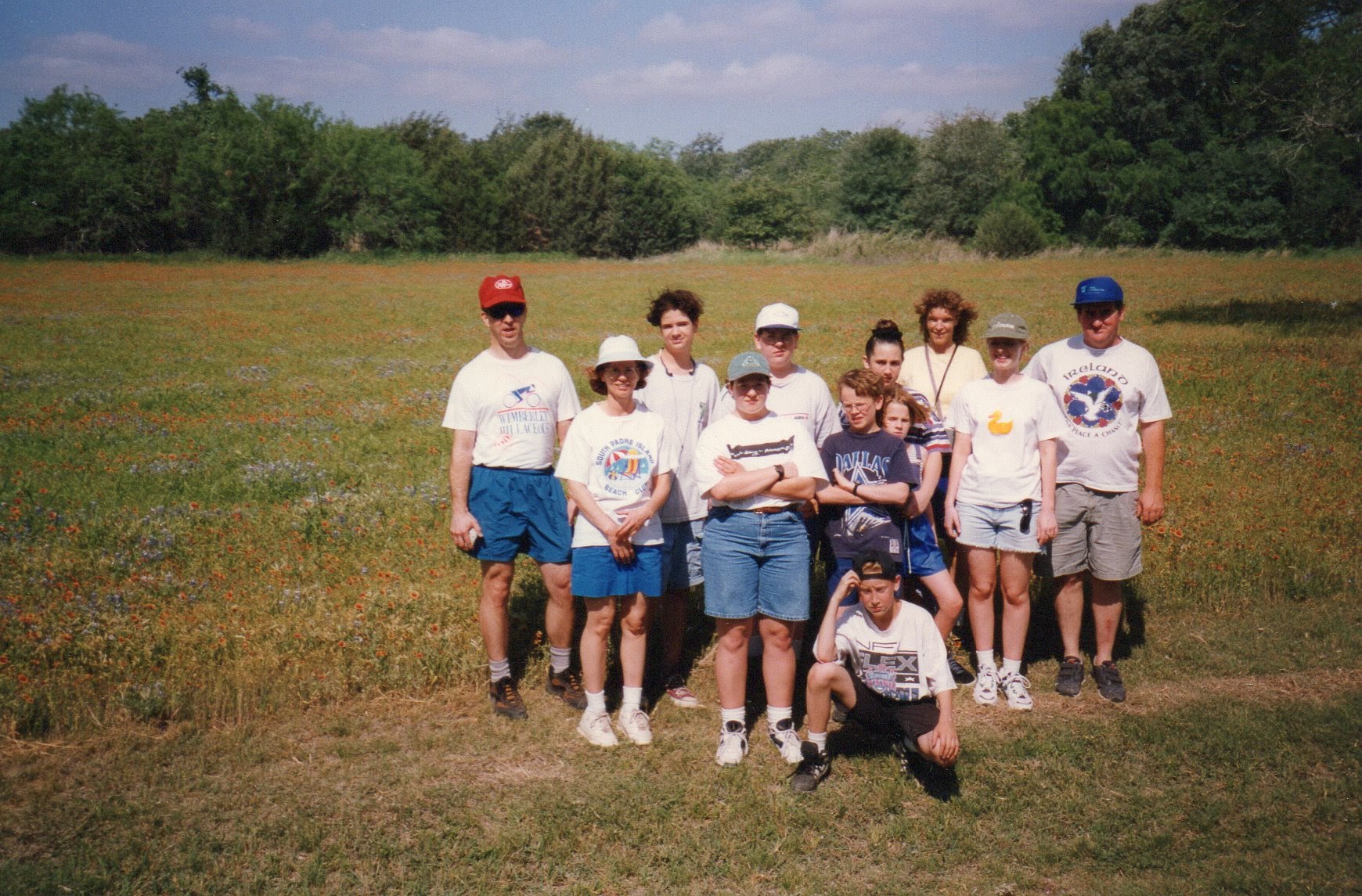
Since he was self-employed, he was able to serve as a chaperone on many of my field trips. Rather than be annoyed that he was around, I was happy, because I thought it was fun to spend time with him, and I thought my classmates did too. His goofy sense of humor helped him fit right in. The most impressive example of this was when he came on a multi-day trip to Big Bend, driving a van full of rowdy teenage boys all the way out to West Texas. Those of you who have been to Big Bend know how far that is from here, so that was quite a feat!

My dad also helped lead the youth group at our church for many years, and here also his affable style was a great fit for the group. In our many Sunday night sessions, we became quite a bonded group, led by his caring and friendly style, with a lot of laughs mixed in. I also have very fond memories of the two of us driving back from those youth group meetings, listening to the “Beyond Bows and Arrows” radio show of Native American music which we both found fascinating.

On a hike with the youth group

We shared a lot of inside jokes as well. Every morning, we would both read the Mark Trail comic strip and then laugh at the unintentional irony of the adventures those characters got into. Also every morning, my dad would drive me to the bus stop for my bus into school. We would always listen to the Musers on the Ticket, and their fake characters and other hijinks would be a constant source of jokes between the two of us. My dad and I listened to the Ticket from basically its beginning as a station, and would go every year to the first night of Ticketstock to get the free t-shirt and see the hosts. I still listen to the Ticket today even in Denver, and get a smile on my face when I hear something that I know would have made my dad laugh.

Matching Ticketstock t-shirts

My dad wasn’t the cool dad just because he was funny – I was also in awe of his bike riding habit. As often as he could, he would go out riding with his friends, and pretty serious distances too. I was impressed if I could just make it around White Rock Lake, and he was able to do rides like a 100 mile ride in the summer heat of Wichita Falls, all without complaining about the difficulty!

He was also a brave dad – he beat prostate cancer when I was in college. I remember visiting him in the hospital, where he didn’t ever want to make a big deal out of it. And then, as he recovered, we spent the summer catching up on old seasons of The Sopranos together, back before binge-watching was a thing.

He was a natural at getting to know people around him. When he was self-employed, I would visit him at his office occasionally, and often on Fridays he and his officemate would go out to the hamburger restaurant Chips for lunch. Going to Chips with him felt like we were going to visit with his group of friends – he and the cashier called each other “Cookie” and would exchange the same coupon back and forth each visit. He got to know one of the cooks well enough to learn about his family back home – which had a nice benefit for me, because whenever I ordered a grilled cheese, it would come to me as a double decker because they knew I was Steve’s son.

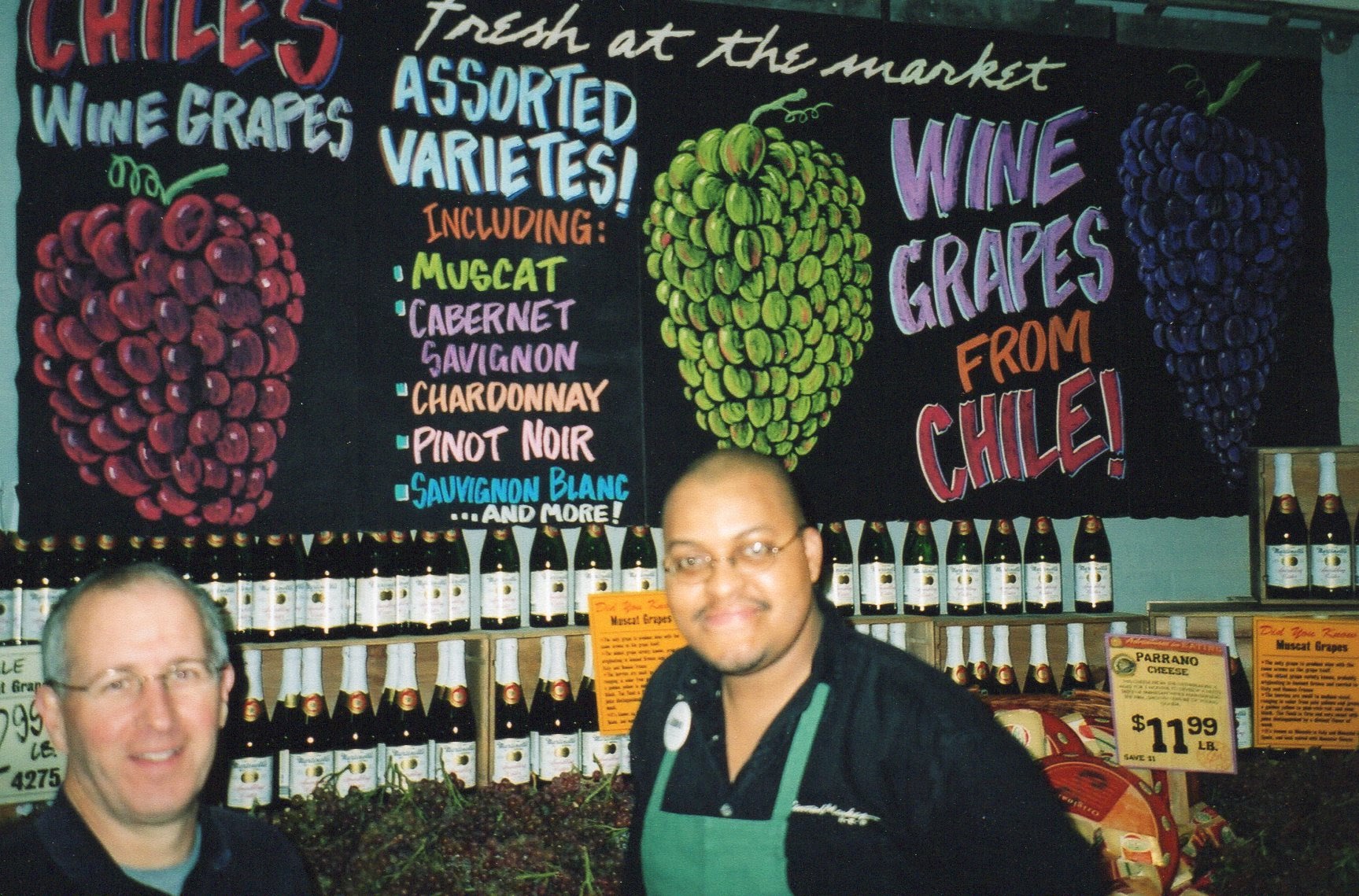
When I would visit him at his last job at Central Market, again it was like he was friends with everyone in the store. When we walked with him through the store, he would be greeted warmly by people from every department. He even became friends with the Sudanese refugees who helped bring the carts in.

Dad made the chalkboard lettering and art

After he retired from Central Market in 2009, he came out to Colorado to join me and Della on a raft trip with her family. On this trip, the two of us shared a tent, and one night, after a few beers, he confided in me the fears about what was happening to him – “my brain is turning to mush” was how he put it. So when I think about his passing, I am not sad for him, because I know the fear and confusion I heard in his words that night has now gone for him. What I mourn for is that so many people will not have a chance to get to know the Steve that I knew growing up, including his grandchildren. So I hope all of those here who have those memories will help keep them alive.

My dad’s favorite movie was undoubtedly “Dances with Wolves.” When I was young, we would watch it together at least once a year. Even as his disease progressed, one of the best ways that caregivers could calm him down was to pop in the dvd of “Dances with Wolves” and play it on repeat. In the final scenes of the movie, the main character has to leave the tribe that he has come to know as his family due to circumstances outside of his control. As he leaves, a member of the tribe shouts from a hilltop at him “Do you see that I am your friend? Can you see that you will always be my friend?” I think that my dad’s passing is kind of like this. Circumstances out of his control caused him to have to ride away from us sooner than he would have liked, and with a sense of sadness. As he rides away into the next life, I am shouting after him “Do you see that I am your friend? Can you see that you will always be my friend?” And I think, now that his mind is once again clear, he knows and remembers that all of us were, and will always be, his friend.

Slowing Down in Kotor, Montenegro

Our next stop after Dubrovnik was the town of Kotor in the relatively new nation of Montenegro. Kotor is the main town on the Bay of Kotor, a giant inlet on the Adriatic Sea. After moving so quickly through Croatia with Della’s family, we decided to slow down in Kotor and ended up staying six nights!

Where We Stayed

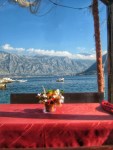
Apartments Samardzic – Part of the reason why we decided to stay in Kotor for so long was because we really enjoyed our space in this apartment. We had a nice queen-sized bed, a good bathroom, a kitchenette, a big living room, and our favorite feature: a view over the bay. We spent most of our afternoons just relaxing the in the living room, looking out over the bay and catching up on things. The hosts live right next door, and were always very kind whenever we had a question.

What We Did

Honestly, not too much. Even though we stayed in Kotor for many days, a lot of our time was spent catching up on the blog and reading books. We did try to do a little sightseeing most of the days. So, we did do these activities:

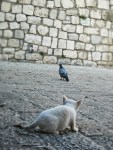
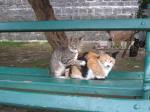
Explore Old Town – The Old Town of Kotor is known for being small but also like a maze. We spent a few different days trying to get lost in its different alleyways. We never got completely lost, but we did find a lot of picturesque little corners. We also found a lot of cute cats!

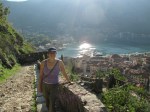
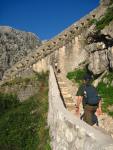
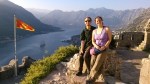
Climb the City Walls – Kotor has a very impressive defense system. Not only does it have thick walls to protect from attacks from the sea, it also has a series of walls running up the hill behind the Old Town that protect from attacks by land. Today, you can pay a small fee to hike up the old walls all the way to a fort at the very top. We took advantage of this one evening, and had great views over the bay as the sun set.

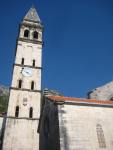
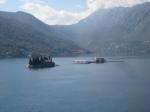
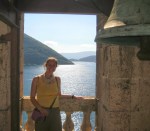
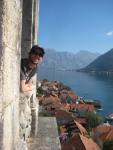
Day Trip to Perast – On one of the days in town, we also decided to take a day trip to the another interesting town near the mouth of the bay called Perast. There wasn’t too much going on there, but we enjoyed a lazy afternoon admiring its Venetian architecture and exploring its sights.

Zumba Classes – See our separate post.

Got Eric’s Hair Cut – It hadn’t been cut since before we left on our trip. As fun as it would have been to see him in a ponytail, he felt it was time. We asked around and heard that a place in Old Town would do it for a reasonable price. One evening we headed over there, and he got the exact cut he wanted in less than ten minutes!

CAM00394

Where We Ate

Our Apartment  – For as much as we enjoyed Kotor, its one downside was a lack of cheap, non-touristy restaurants. So, for every night except one, we cooked dinner in our apartment! We found a nice grocery store (in the same fancy shopping mall as the Zumba classes), so we were able to vary the menu each night. We were also able to get a local beer or wine each night for pretty cheap.

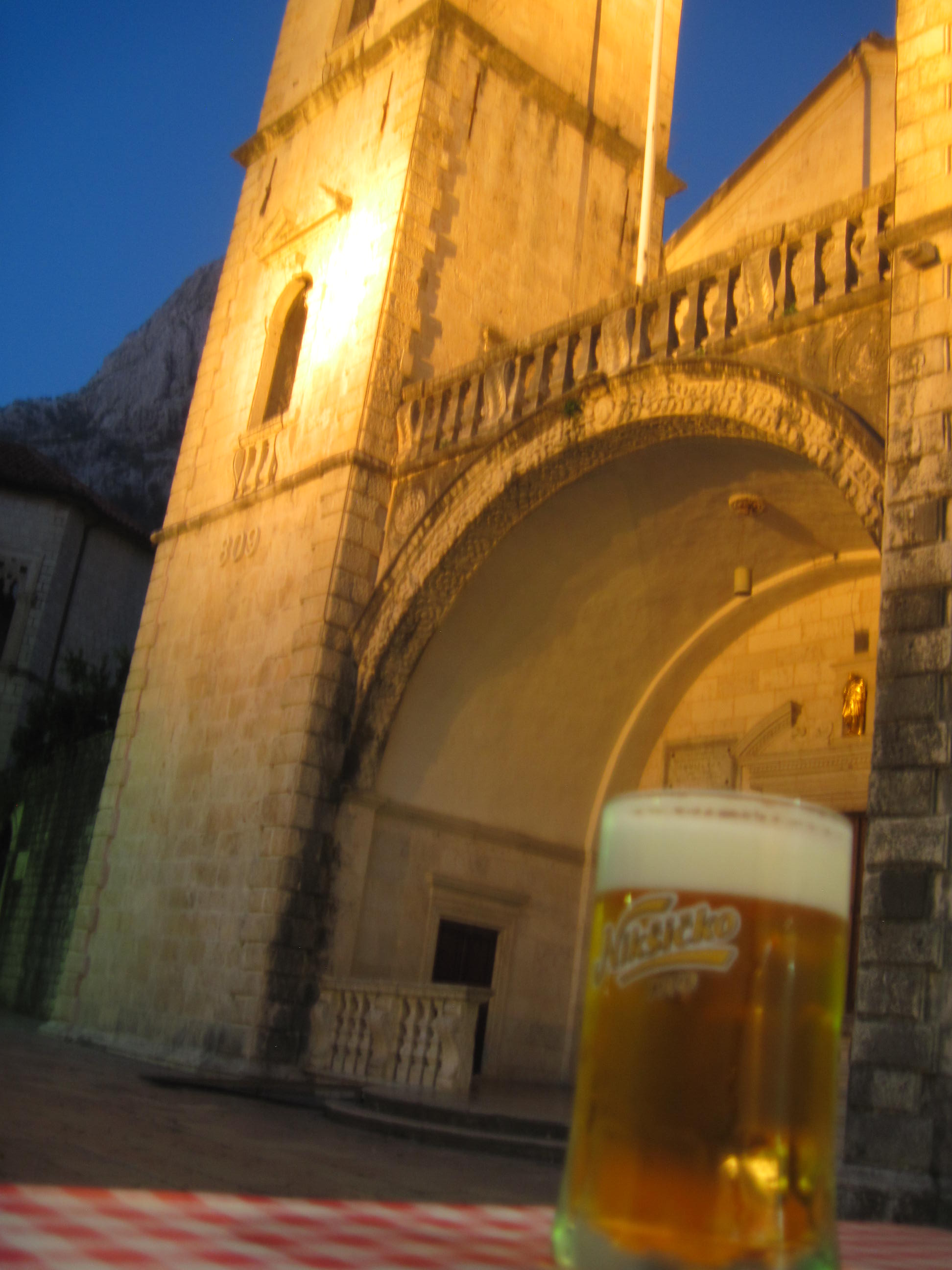
Pizzeria Sara – The one exception to our cooking at home was the night we climbed the City Walls – all of those stairs made us pretty hungry! So instead of figuring out what to cook, we decided to eat some pizza. We both tried to get pizzas with a little bit of local flair – Della had a topping of local ham, and Eric had some prosciutto.

IMG_2360

Our table had a nice view on the square in front of the cathedral

Final Thoughts

We may not have done as much sightseeing during our week in Kotor as we had done other weeks, but we really enjoyed the chance to relax and recuperate. The few activities we did do were fun, and Kotor is definitely high on our list of places we have enjoyed visiting!