Bali Essentials: A Pool

We really enjoyed our holiday in Bali where our friend Phill (and his friend Izaak) had planned our time.

While Bali is a truly lovely place with kind, content people, and a peaceful, spiritual culture, we decided we could never move there… We’re just not made for the weather.

Della spent almost every day sweating buckets, and we both felt like we needed to wash our clothing after every wear! (That doesn’t work so well when you only have a few outfits…)

Luckily, Phill got us set up with a very pleasant Airbnb in Seminyak. It was very comfortable and quite beautiful, but the really amazing thing was the pool!

We have not spent nearly enough time in our swimming suits throughout the last 7 months of our RTW trip, but we think we considerably made up the deficit in this one swimming pool.

We swam morning, noon, and night! We swam before breakfast, after long days in the sun, and even after dinner in the dark. We relaxed in the steamy afternoons with beers and Coke Zero, and enjoyed water from all directions swimming during the pouring rain.

We were so busy swimming that we didn’t even have time to take many pictures!

One thing we decided on our trip to Bali: the most important item you need is a pool!


A Holiday in Bali

We were quite excited to have the opportunity to meet up with one of our old college friends, Phill, in Bali for his birthday. He currently lives in Australia, so we don’t get too see him too often. Therefore, when we heard he was planning a weeklong birthday trip to Bali along with another friend from Sydney at the same time we would be just a few hours by plane away, we shifted our itinerary so we could meet up with them.

DSC08238_edt

What a wonderful holiday it was! Holiday because we had to do neither the planning nor the organizing – Phill took care of it all!

We spent 3 days in Seminyak and the remaining 4 in the lovely town of Ubud. Phill planned Airbnb lodging for us the whole week. All that was left was seven days of fun!

While in Seminyak, Phill had his birthday dinner at a Mexican restaurant (of course!) and it was actually quite good. We enjoyed lots of good food and several good drinks… and then a slightly silly walk back to our apartment.

We also did a scenic walk along the beach in Seminyak, did a day trip to the Bukit Peninsula where we enjoyed the Bali version of Mt. Rushmore, several lovely beaches, and an exciting adventure at the Monkey Temple, Ulu Watu. We also experienced a gorgeous Bali sunset.

In Ubud, we saw a traditional dance performance, did an amazing (if super hot) hike above a river valley, and played in a Monkey Forest. We drove through scenic rice terraces, tried Luwak coffee (made from coffee beans eaten and then expelled by civets), and cleansed ourselves in the lovely “spring temple” where cool spring water bubbles up from the earth and then is piped into different pools where you can purify yourself in the water. We visited Big Tree Farm where we learned about how chocolate is made and got to taste almost every step of the process. We went on a day-long search for lingas and found a nice waterfall. And finally, we accidentally participated in a local village temple’s birthday party and Eric got his very first massage!

Stay tuned for some more stories from our holiday in Bali!

Budget: Singapore

This is one of our Budget series of posts to give you an idea of how much we spent traveling around the world. Here we will look at Singapore. Check our posts to see what kind of activities we did and where we stayed!

In Singapore we used the Singaporean Dollar. We converted to US dollars using the current conversion rates at the time of our visit. It was approximately 1 Singaporean dollar to 0.8 dollars.

IMG_7030

Total Spent (3 days): $317.06

Accommodation: $140.51

We stayed in a small hotel room.

Activities: $75.47

This included a free walking tour, a museum, and the night safari (which was quite expensive).

Alcohol: $0

Alcohol was super expensive in Singapore. We abstained.

Food: $67.52

We ate out about one time a day, but we had to purchase our own breakfasts.

Miscellaneous: $0.37

We purchased a postcard.

Transportation: $28.13

We purchased a tourist 3 day transit card which covered both the MRT and the buses.

This divides out to $105.68/day which is over our $100/day budget. This is a little disappointing, but Singapore was quite expensive. Especially for lodging!

A Swing Through Singapore

After Myanmar, our next major stop was going to be Bali. But, when looking into flights from Yangon to Bali, we noticed that the cheapest options went through Singapore. We had heard that this was an interesting place to visit, so we broke up our flights from Yangon to Bali in Singapore and gave ourselves three days to explore this modern city-state.

Where We Stayed

Singapore in general is quite a bit more expensive than Myanmar, so finding a place that seemed to have a reasonable price was a bit of a challenge. There were some dorms available, but they weren’t cheap and we decided we wanted our own room. We ended up finding the Chang Ziang Hotel on booking.com and getting their cheapest room. We certainly got what we paid for – the room was tiny, but it was conveniently located near an MRT (Singapore’s public transit train) stop and plenty of cheap restaurants. The neighborhood was a bit grittier than one thinks of when picturing Singapore, but we never had any issues with safety.

What We Did

Singapore posed a planning challenge similar to that of our visit to Dublin: it offers many interesting things to do, but many of them are expensive, and we only had a few days. So we ended up picking a few big ticket items and then finding cheap or free activities to fill the rest of the days. We actually intended on doing more than we ended up doing, but the heat and humidity made us a bit lazy and we stretched out some activities longer than planned.

Indie Singapore’s Riverfront Free Walking Tour – We were excited to see that there was a free walking tour in Singapore so this was one of our top priorities. Wei, the local tour guide, leads a different tour on different days of the week, so since we were in town on a Thursday we ended up on the downtown tour. This actually worked really well for us since it gave a good overview of both colonial and modern Singapore.

Wei walked us through the history of Singapore, which was all new to us. In 1819, Sir Thomas Raffles of Britain convinced his superiors that a small settlement at the end of the Malaysian Peninsula would be a good place for a new British colony. The new colony of Singapore turned out to be wildly successful, and attracted quite the mix of immigrants: Europeans, Chinese, Indian and Malaysian were the main groups. During World War II, the Japanese occupied Singapore, which was a dark time in the history of the area. After the war, the British took back over, but 10 years later Singapore decided to break free, first as a part of Malaysia and then as its own country. Today the nation is thriving, doing big business as a commercial hub in the region. The culture is an interesting mix: the four official languages are English, Malay, Mandarin (Chinese) and Tamil (an Indian dialect), and the food is also a nice mixture of the different regional influences.

On the tour, Wei led us past many of the sites that played a role in the colonial era, from the riverfront that was a hotbed of activity to the old Parliament, a still functioning Anglican church, and the field where the Japanese rounded up the Europeans before marching them off to a prison camp during the occupation. We also got to see the sights of modern downtown Singapore, including the large bank skyscrapers, the Esplanade Theaters and the iconic Marina Bay Sands luxury hotel. We also took a nice food break in the middle where he led us to try some of the local specialties (more on that later). We really enjoyed the tour and would highly recommend it.

The National Museum – After our walking tour, we wanted to learn even more about the history of Singapore. We were disappointed to discover that the main exhibits at this museum were under renovation, but ultimately it turned out that the temporary exhibit on the history of Singapore was actually very good. It walked us through the history as described above in a nice chronological fashion, with good displays. We also though that it did the best job of setting the mood of the different periods that we had seen since our visit to the Schindler Factory Museum in Krakow.

Walk Through Little India – When the British planned the city, they designated different neighborhoods for the different ethnic groups. These neighborhoods had survived into modern times and are a fascinating way to get a feel for the cultures of the different groups. Walking through Little India, we saw numerous shops selling traditional Indian items like bangles and saris while blaring out Bollywood music onto the sidewalks. We stopped in a Hindu temple and were fascinated to observe some sort of ritual going on that involved offerings to one of the shrines and a two-piece instrumental accompaniment. We finished off our tour through the neighborhood by getting some delicacies at a small sweet shop.

The Sights Around the Marina Bay – We had heard that everyone who comes to Singapore has to take their picture with the famous “merlion” statue – an invented creation that is half fish and half lion. We then walked around the bay as the sun set, passing many people working out and many others filling the trendy bars that line the waterfront. Our destination was the front of the Marina Bay complex, where there is a nightly light show. We were wondering how it would work, since the seating faced the water, and there was no screen… where would the lights be displayed? As it turns out, the lights are displayed on a “screen” made of a thin spray of water shot up vertically from the bay. The show included moving pictures displayed on this screen as well as lasers, mist and fire cannons. A nice free way to end an evening!

Singapore Botanic Gardens – These large gardens are considered one of the highlights of Singapore, and even more impressive, are free! Therefore, we ended up spending almost a whole afternoon exploring the different sections of the garden, including a foliage walk, an evolution of plant life section (which we somehow ended up doing backwards… depressing how flowering plants turned into ferns), a “Healing Garden” highlighting the medicinal uses of many different plants, a rainforest, a ginger garden and finally the iconic swan lake. We were a little disappointed that many of the plants were not in bloom, but it still made for a pleasant respite from the hustle and bustle of the city.

Walk Through Chinatown – This is another one of Singapore’s enclaves set up for members of one of the primary ethnic groups. Given its close location to downtown, it has also become a pretty popular neighhborhood these days. When we visited, there were red decorations all over the place in preparation for the upcoming Chinese New Year celebrations. There were also a ton of stalls in the pedestrian-only alleyways selling all sorts of trinkets.

Night Safari – This was our most expensive activity in Singapore but also our favorite! They have set up a special zoo that you only visit after the sun sets. All of the exhibits are designed with the nighttime visitor in mind, with soft floodlights and illuminated signs. We walked the different paths and got great glimpses of different animals. Some of the highlights were fishing cats, hyenas (flashback time), leopards (meaning that we finally can say we have seen the “Big Five”), Asian lions, tigers, and an enclosure where we could get quite close to wallabies. Also included in our admission ticket was a tram ride that first went past some of the same exhibits we saw on foot, but then went into a tram-only section meant to represent the Asian rainforest, so we got to see animals like tapirs, wild cattle and different types of deer. In some parts of this section the animals could roam free and got very close to the tram! The only downside of the visit was that we felt rushed in the end because we wanted to make sure we didn’t miss the last train back into town (the Night Safari is far on the outskirts). So if you plan on going, we’d recommend getting there as soon as it opens for the evening!

Where We Ate

Since Singapore is such a mix of different cultures, the food is also quite a mixture of the foods from those same cultures. We found a few lists of iconic dishes and made sure to try as many as we could!

The food in Singapore was surprisingly affordable, especially if you went to one of the “hawker stalls.” These are kind of a cross between a food court and street food – they would be in a building like a restaurant, but there would be many different counters offering different types of food. We ate at these as often as we could.

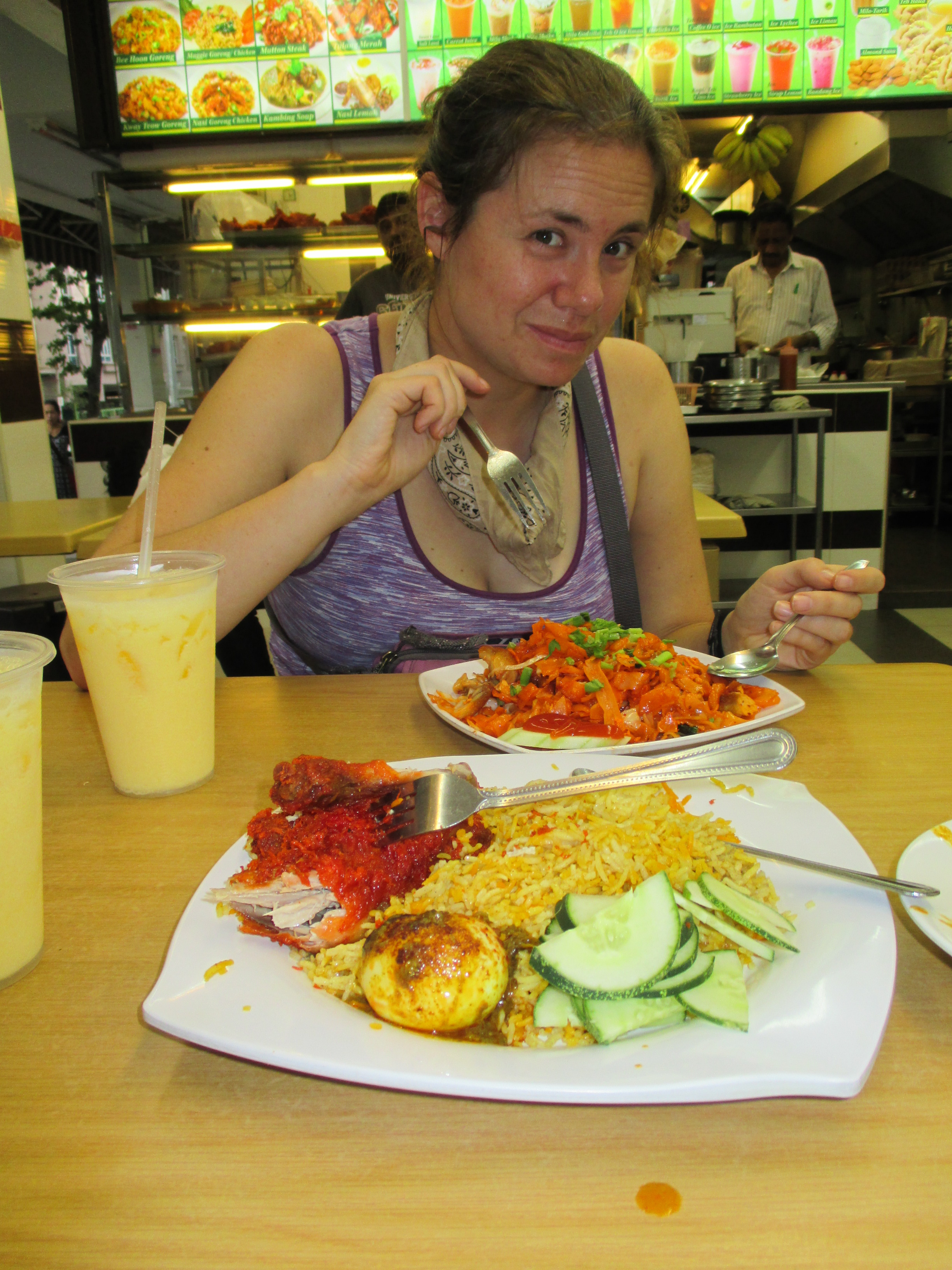
Our first meal was at an Indian Muslim stall near the Chang Ziang. Eric got a biriyani (Indian rice) with a piece of fried chicken on top, and Della got char kway teow, a dish with fried flat noodles that she likes because it reminds her of her favorite Thai dish, pad see eew (we had this dish at one of our favorite Asian places back in Denver, Jaya).

IMG_4857

While on our free walking tour, during the break we went to a local coffeestand and tried the special Singapore dish called kaya toast, which was pieces of toast served with a coconut jam called kaya, some sugar and large pats of butter. We took our guide’s suggestion and ate it dipped in sauce which we made from swirling soft-boiled eggs with soy sauce. It was interesting, but a little too sweet and buttery for our tastes.

We also at a a branch of Kopitiam, a food court chain in Singapore. Here Della visited one stall and got a Chinese-esque nodle soup with dumplings.Eric got a laksa, which is a coconut-base curry soup with noodles and some things that looked like stale bread but may have been bean curd puffs. It was spicy but good.

The day that we explored Chinatown, we found one street that had many hawker stalls set up in an open-air courtyard. Here Della decided to get the laksa soup, while Eric tried another local favorite: Hainanese chicken rice, which is a simple dish with tender steamed chicken served over rice with chicken broth on the side. For dessert, we decided to get  large concoction we had seen other people get: a large chunk of shaved ice topped with durian (a controversial fruit due to its somewhat pungent odor) ice cream. There were also pieces of jelly and red beans at the bottom. Definitely an interesting flavor combination!

We did have one meal where we didn’t really explore unique local food. While walking though a mall near the Esplanade, we spotted a salad place and decided that after so many fried noodle and rice dishes that something simple might be good! Eric did make a slight concession to local food by getting the salad that had fake crab and a chili-based dressing (chili crab is a local specialty). The fresh greens were good, but it turned out to be our most expensive meal in Singapore!

IMG_6589

Final Thoughts

Visiting Singapore was a little bit like a visit to a location in the US: everything was clean and orderly, and it was easy to get around and figure out things to do. We were a little nervous about the high costs of visiting, but we were actually able to find a good number of affordable things to do. We were also fascinated to learn more about the small island nation’s history and its mix of cultures – and sample the resulting mix of cuisines! We feel like we only scratched the surface, so we’d definitely like to visit again if given the chance!

Myanmar FAQs

When we were researching for our visit to Myanmar, we had a few questions that we wanted the latest answers to. So, in case anyone researching for their own trip has these same questions, we thought we’d make sure our answers were available!

How Did You Get Your Visas?

We had originally planned to get them at the Myanmar Embassy in Bangkok during the few days we spent there before flying to Myanmar. However, we then heard about the new e-visa service being offered and decided that it might be simpler. We applied online while still in Denver, got a confirmation of payment within an hour, and then got our visas within three days, so it worked quite smoothly. The printed copy of the visa was accepted at the Mandalay airport without issues. From what we heard from other travelers, it would have been cheaper to get the visa in person in Bangkok ($20 vs $50 online), but it would also have taken up to 7 hours, so we think that was a good tradeoff.

Were You Able to Use the ATMs in Myanmar?

Yes! Although, we only ended up using them twice: once at the Mandalay Airport and once in downtown Mandalay at a bank. In both cases we used the ATMs from CB Bank. Both our Charles Schwab and Fidelity debit cards worked without issue. The ATM at the airport was a little scary though – it would randomly fail when giving the money. But we just tried again, and then it worked.

IMG_4228_edt

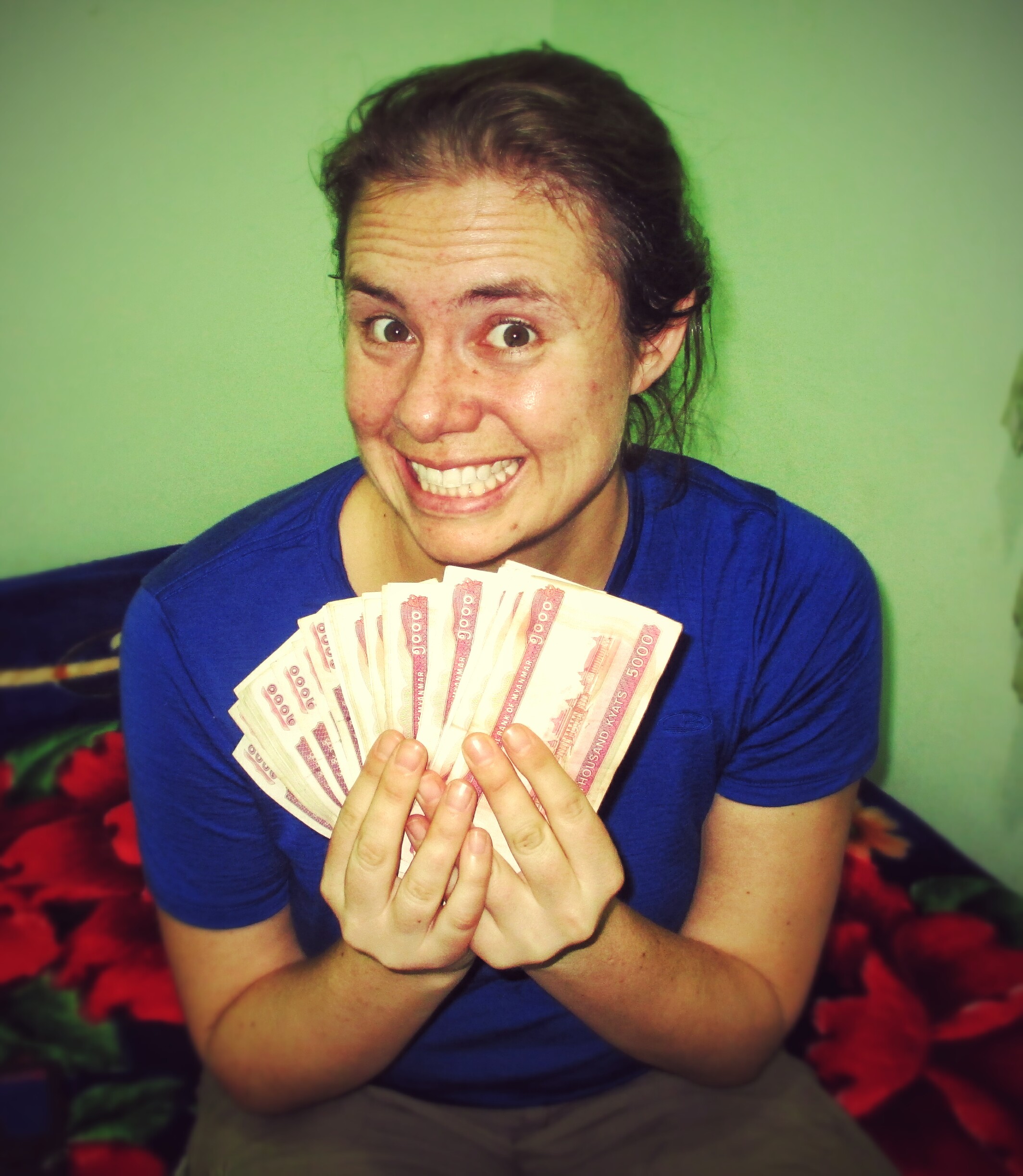
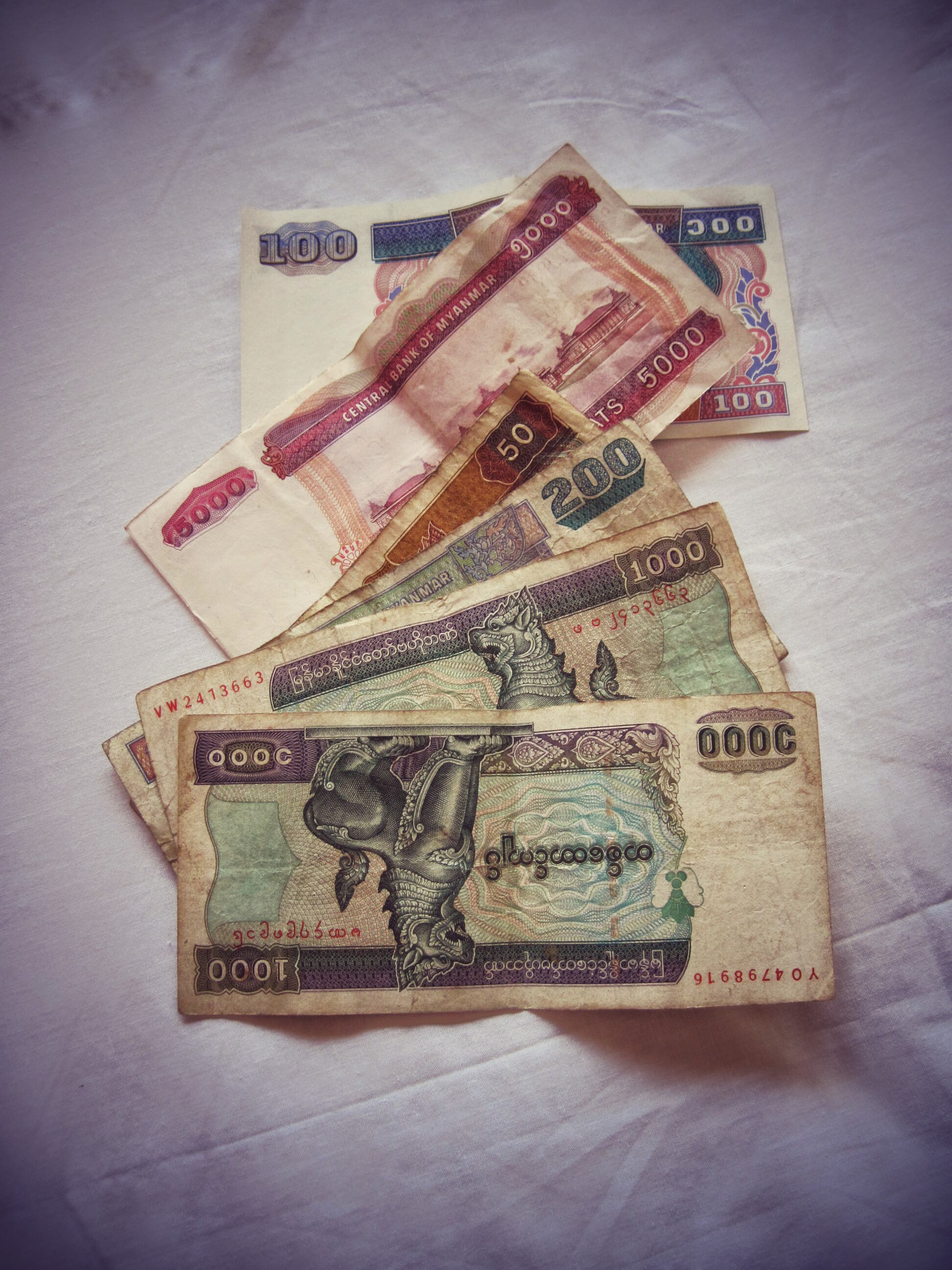
The ATMs dispense only 5000s which is the equivalent of a $5 bill. You end up with a LARGE stack of cash!


Do You Call The Country Myanmar or Burma?

Back home in the US, we knew the country as Burma. But once we arrived in the country, it was clear that all of the locals we met referred to the country as Myanmar, so that is what we stuck with. We’re aware that there is a political angle to which name you choose to use, but we didn’t ever hear enough of a debate on that to take sides.

Can You Drink the Water?

No, not even the locals drink it. But every one of our accommodations actually had a freely available jug or bottles of spring water for their guests.

How Is the Internet Connection?

Everywhere we stayed had at least some Internet connection. Some places it was surprisingly fast (Bagan) while others it was frustratingly slow (Inle Lake). But we were almost always able to get a small connection.

Budget: Myanmar (Burma)

This is one of our Budget series of posts to give you an idea of how much we spent traveling around the world. Here we will look at Myanmar. Check our posts to see what kind of activities we did and where we stayed!

In Myanmar we used the kyat. We converted to US dollars using the current conversion rates at the time of our visit. It was approximately 1000 kyat to 1 dollars. Businesses used this as a flat rate, though the real rate at the time was more like 1,300 kyat to $1.

IMG_6259_edt

Total Spent (18 days): $1304.72

Accommodation: $495.32

We stayed in a variety of accommodations: some hotels, some hostels, one dorm room. Everywhere we stayed included breakfast and drinkable water.

Activities: $202.59

Activities are quite affordable in Myanmar. We did several day tours, both in boats and cars. This included entrance and camera fees to all pagodas as well as a few museums. We also did a puppet show!

Alcohol: $28.65

Overall, beer is quite reasonably priced in Myanmar. You can normally get a large bottle of beer for under $2. We also visited a winery and had a couple of glasses of wine!

Food: $170.95

Food was wonderfully inexpensive in Myanmar. You could get a good meal with drink for under $10. You can also do it even cheaper if you are a little braver than we are: if you ate street food from stalls then it would be even more affordable. We didn’t as almost every person we met who had was sick. Though, we did hear of one friend recently who had no problems!

Miscellaneous: $40.02

This included a several souvenirs, several bathroom fees, a laundry, and a few exchange transactions.

Transportation: $267.19

This included a variety of taxis and buses. The biggest cost was a boat ride from Mandalay to Bagan which was $80!

Visas: $100

We purchased visas online prior to arriving using the new online purchase tool for tourist visas. It was more expensive than it would have been in person in Bangkok, but a fraction of the time.

This divides out to $72.48/day which is under our $100/day budget. It is not as low as we were hoping for time in Asia, though we knew Myanmar would not be the cheapest country in Asia due to the visa fees and the relatively high cost of accommodation. 

Saying So Long to Myanmar in Yangon

Our final stop on our trip through Myanmar was its largest city (and former capital), Yangon. We had initially only planned to spend a couple of our last days in the country in this city, using it as a base for a trip to the “Golden Rock,” but in the end we decided to just spend all of the time exploring the different things the city had to offer.

Getting There

The main option to get to Yangon from Inle Lake was an overnight bus. We had to choose between the “normal” and “VIP” class buses, and we went with the VIP option with the hope that it would make sleeping easier. The seats were quite large, and had a good recline feature and a footrest. We also got a snack box and a toothbrush to use at one of the rest breaks. During the first part of the trip, they played music videos and one movie on the overhead tv, but for most of the journey the cabin was pretty dark and quiet. It really was quite comfortable,  but even so, we didn’t actually end up getting too much sleep, so after checking into our accommodations in Yangon at 7 AM, we took a nice long nap.

Where We Stayed

Finding a cheap but well-reviewed place in Yangon turned out to be quite a challenge, as there were many cheap places but almost all with average ratings. In the end we found the Hninn Si Budget Inn and ended up generally enjoying our stay. We had a small double room with a shared bathroom down the hall. The rate included breakfast, although it was the least interesting of any breakfast we had in Myanmar. The staff was very kind and helped us with transportation a few times.

Our room at Hninn Si

Our room at Hninn Si

What We Did

Explore Downtown Yangon – The city has a lot of interesting sights to see in its downtown core, a lot of it left over from when the city was called Rangoon and functioned as the capital of the country during the colonial occupation by Britain. We ended up exploring this area twice: the first on our own using a self-guided walking tour in Lonely Planet, and the second time on a free walking tour led by Free Yangon Walks. The highlights included the Sule Paya – a large pagoda which now sits in the middle of a traffic circle, Mahabandoola Garden – a very pleasant park where we relaxed in the shade and made conversation with locals wanting to practice their English, and many examples of colonial-era buildings, from the City Hall to old banks to the fancy Strand Hotel.

Even more interesting that the architecture was just observing life on the streets of this bustling city. There were food vendors of all sorts, and many people making new packs of the betel nut concotion that a good chunk of the population chews (the effect is supposedly similar to chewing tobacco). There were also vendors selling everything from SIM cards to clothes to even a large selection of used books, including many random English-language textbooks. We were also fascinated to observe the bus system: buses of all ages and conditions would go up and down the street, pausing briefly where a worker (usually a young male) would holler out the back (presumably announcing the destination) while pushing people off and pulling them on. We never worked up the nerve to get on one of these!

Ride the Yangon Circle Line – Yangon only has one commuter rail line: the Yangon Circle Line, which makes a slow loop around the city and its surrounding residential areas. Since it is a loop and costs so little ($0.50 per person), it has become a popular tourist activity. Some reviews made it sound pretty hectic, but we actually found the three-hour ride to be quite relaxing. Maybe it’s because we went on a weekend during the middle of the day; there was never too much of a crowd. We were quite interested to see life outside the train, including lively markets at some of the larger stops. Also, we enjoyed watching some of the people who hopped on the train midway through use the rest of the train ride to change their large collection of produce into sellable bundles.

Shwedagon Paya – Many people consider this to be the most important Buddhist site in all of Myanmar. We planned our visit to have us arrive by sunset since the color was supposed to be the best then. The temple complex includes many smaller shrines, but the highlight is the massive central stupa. Unfortunately, a lot of it was covered in bamboo scaffolding during our visit (although you could argue that the scaffolding itself is interesting to look at). The entrance fee was the most expensive of any payas we visited in Myanmar, although we were happy that we got a detailed map with labeled narration for many of the smaller shrines.

Botataung Paya – Much smaller than Shwedagon, but Lonely Planet recommended it, and it was just a few minutes’ walk from our guesthouse, so we checked it out. We went on a Sunday, so it was busy with worshipers coming and going. The most unique feature was that we could actually walk inside the large stupa – in all other cases this was closed to the public. This one had a maze-like interior with walls gilded with gold and a few different relics, including a few hairs of Buddha that we had to get in a line to see.

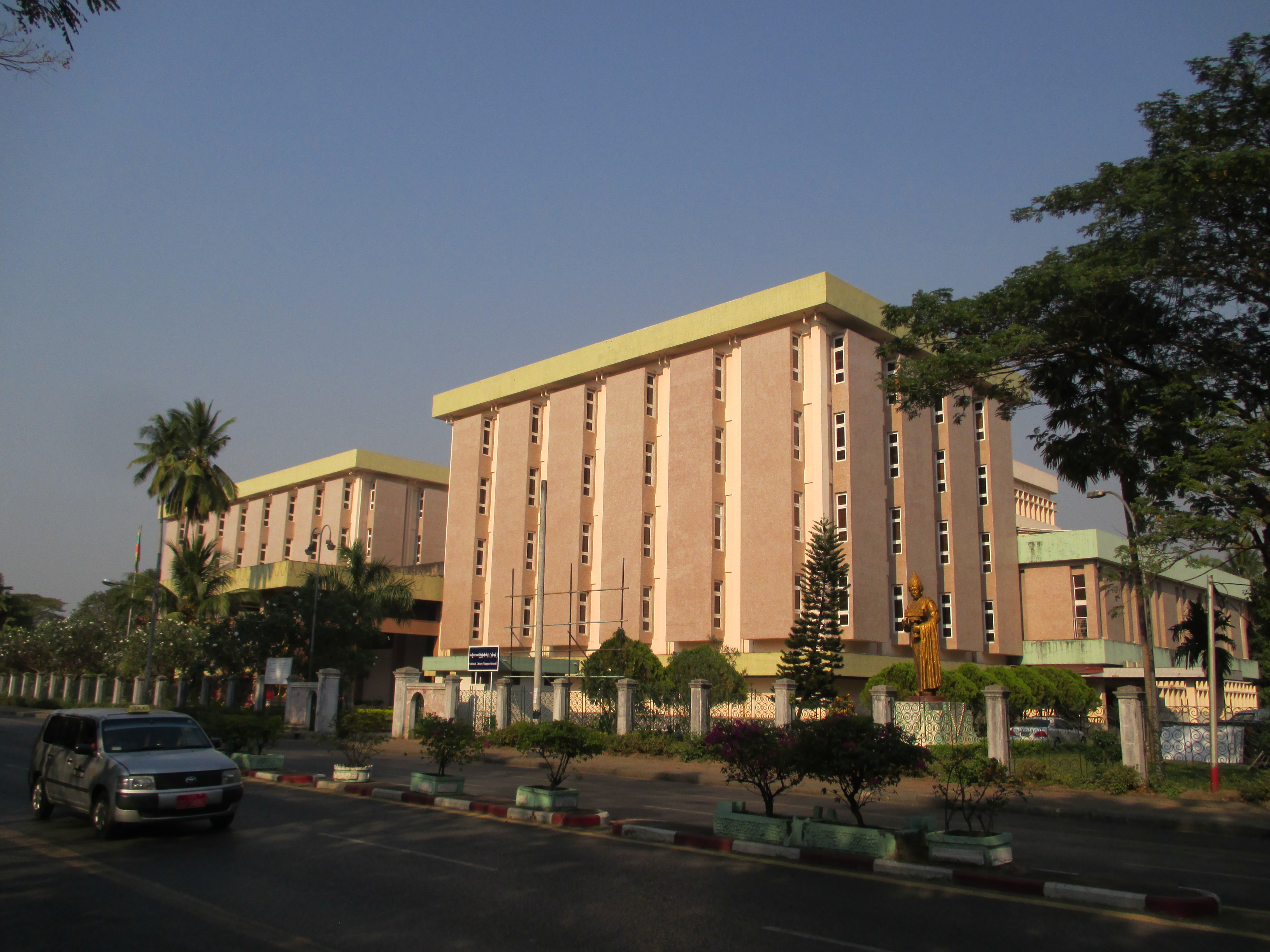
National Museum – We spent an afternoon exploring this large museum dedicated to Myanmar’s history and culture. There were many different exhibits scattered over the five floors, including displays on royal artifacts, fossils, traditional arts and crafts and the different cultures within the Myanmar. We felt the most interesting exhibit was the Lion Throne, one of the eight such thrones used by the king for ceremonial purposes (which looks more like a door). We weren’t even allowed to take cameras into the museum, so we don’t have any pictures of the interior.

The National Museum

The National Museum

Kandawgyi Lake – We spent an afternoon in this park just to the east of Shwedagon Paya. The boardwalk on the southern edge provided scenic views, but some of the boards could have used some serious repair! It was pretty hot and sunny, so we followed the lead of the young local couples we saw and found a spot in the shade to relax and enjoy the view.

People’s Park – This was one of our highlights in the latest monthly update!

Where We Ate

The most interesting places to eat would have been the different street food stalls all over the place, but we had met enough fellow travelers who reported getting food poisoning that we decided to stick to restaurants. In doing this, we discovered that in most cases, especially near our guesthouse, the restaurants were more expensive in Yangon than they were in other parts of the country. At the Malaysian place across the street we both just got fried rice since everything else was twice what we had been paying for entrees elsewhere, and then at a Chinese/Shan place down the street Eric was downright shocked when the bill came and his dish was $7 (we had been paying in the neighborhood of $2-$3 in other places).

We did find some nice cheap restaurants elsewhere in the city with the help of Lonely Planet. The first was Aung Thukha near the Shwedagon Paya. This was one of the standard curry places where you chose a main meat and got to enjoy it with a soup, rice, and vegetable side dishes. Della got a pork curry and Eric went with catfish.

Catfish curry plus all of the sides

Catfish curry plus all of the sides

Near the National Museum we ate at Feel Restaurant. The menu was quite overwhelming, with 20 pages of choices, and none of the descriptions in English. We both pointed at pictures that looked good and hoped for the best. Della ended up with a noodle dish and Eric ended up with a soup with the consistency of egg drop soup with a meat that tasted like chicken. We crossed our fingers as the bill came, and were very pleasantly surprised that each dish was only $2!

Final Thoughts

We think it was the right decision to spend our last five days all in Yangon. There were plenty of things to do, and we enjoyed getting to explore the city at a leisurely pace instead of rushing between sights. The city was also a great way to get a good last glimpse of the people and culture of Myanmar. As we flew out of Yangon, we were a little sad to say goodbye!

Monthly Recap: Month 7

It is a little surreal to be writing a monthly update for month 7! That means we are more than halfway through our trip… Feels very strange. In some ways it feels like we’ve been going forever! In others it feels like we’ve barely started… And when we think about our long break at home and then heading off to a brand new continent, it almost is like we really just started!

Here are our stats for this month.

Countries visited: 5 (USA, Thailand, Burma/Myanmar, Singapore, Indonesia) Though, Indonesia hardly counts because we just arrived on Jan 31.

Beds Slept In: 11 (This is a particularly high number in part because we had 3 different beds in Mandalay… all in the same hotel, but three beds all the same!)

UNESCO Heritage Sights Visited: 0  Total on RTW: 34

We traveled by 6 planes this month!

We traveled by 0 trains this month.

We traveled by 2 long distance buses.

We traveled by 1 long distance boat.

We traveled by 2 shared taxis.

Top Moments:

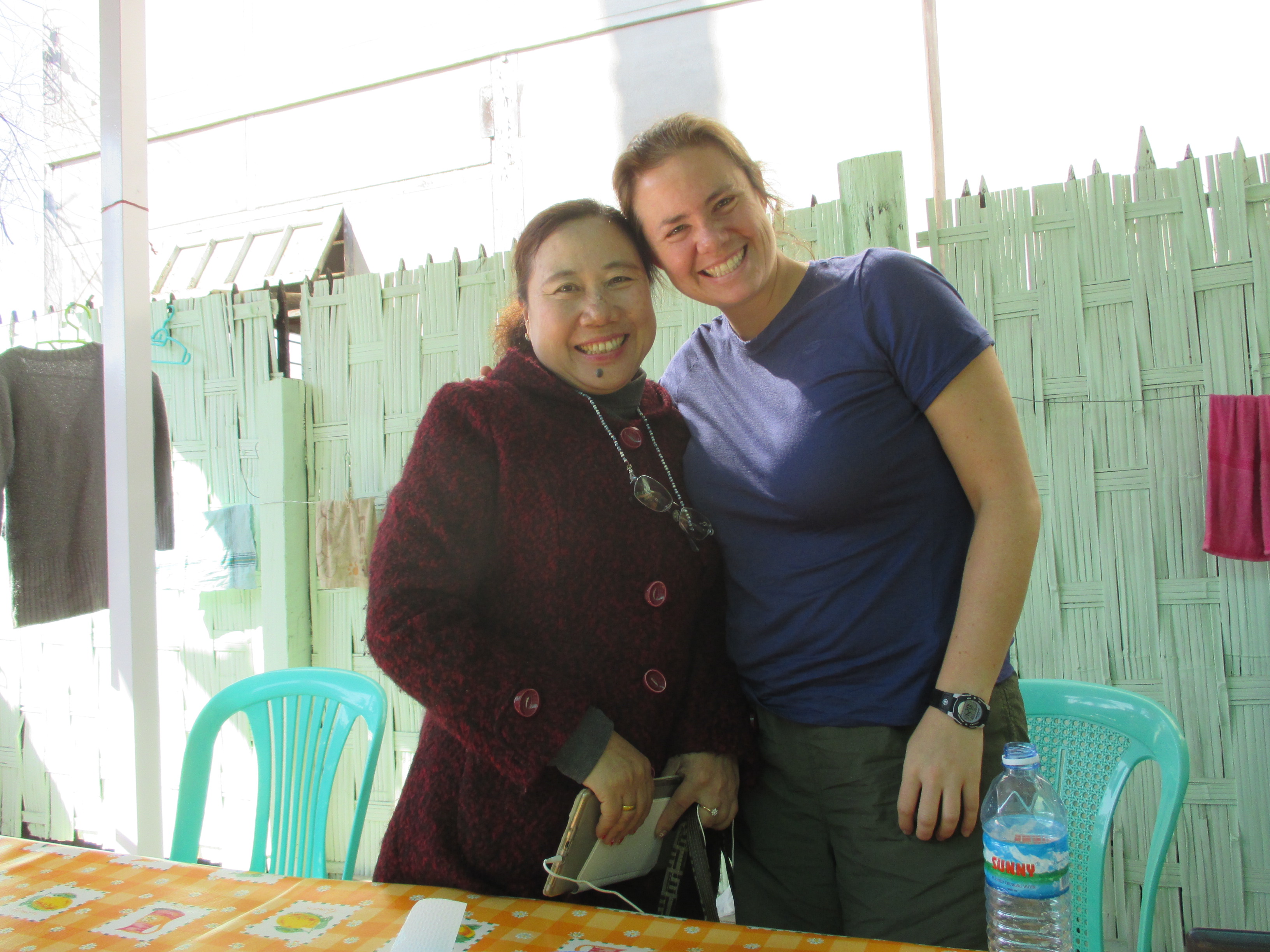
~ We arrived in Mandalay not entirely sure what to expect. We had heard that it might be difficult to travel in Myanmar… However, the minute we arrived at our very first guesthouse we were overwhelmed with the kindness of the people. “Mama” at Yoe Yoe Lay guesthouse treated us as if we were family and was kind, generous, and fun to be around. Every other staff person there seemed unbelievably kind. The accommodations were also quite lovely and at a good price. It also didn’t hurt that the moment we walked in, we started talking to another couple who we really enjoyed and hungout with multiple times thereafter. The guests at the guesthouse were great and the staff was even better. It made Mandalay particularly enjoyable for us!

Della with "Mama" - the head of our amazing guesthouse - Yoe Yoe Lay

Della with “Mama” – the head of our amazing guesthouse – Yoe Yoe Lay

Eric enjoying breakfast at Yoe Yoe Lay

Eric enjoying breakfast at Yoe Yoe Lay

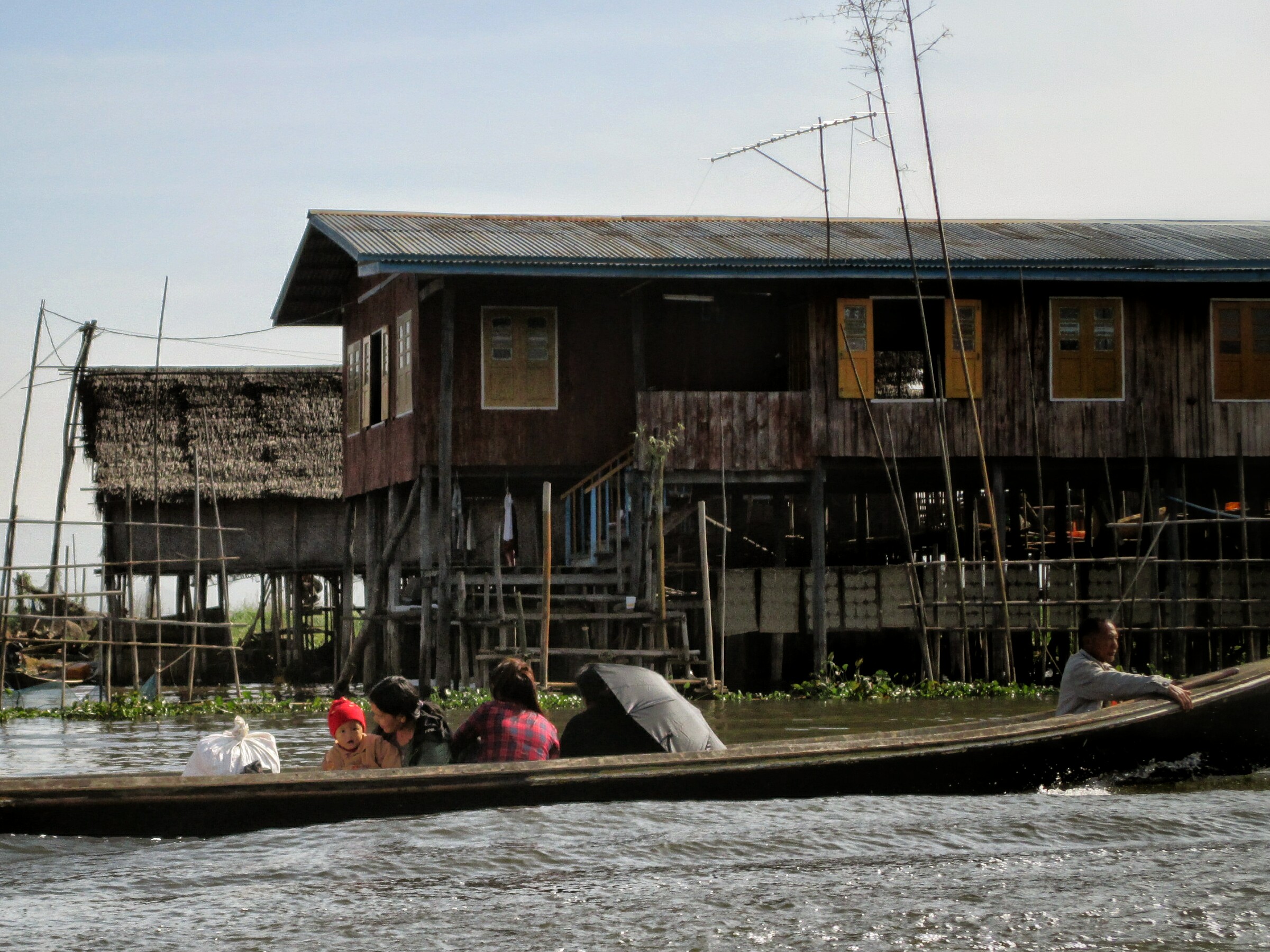
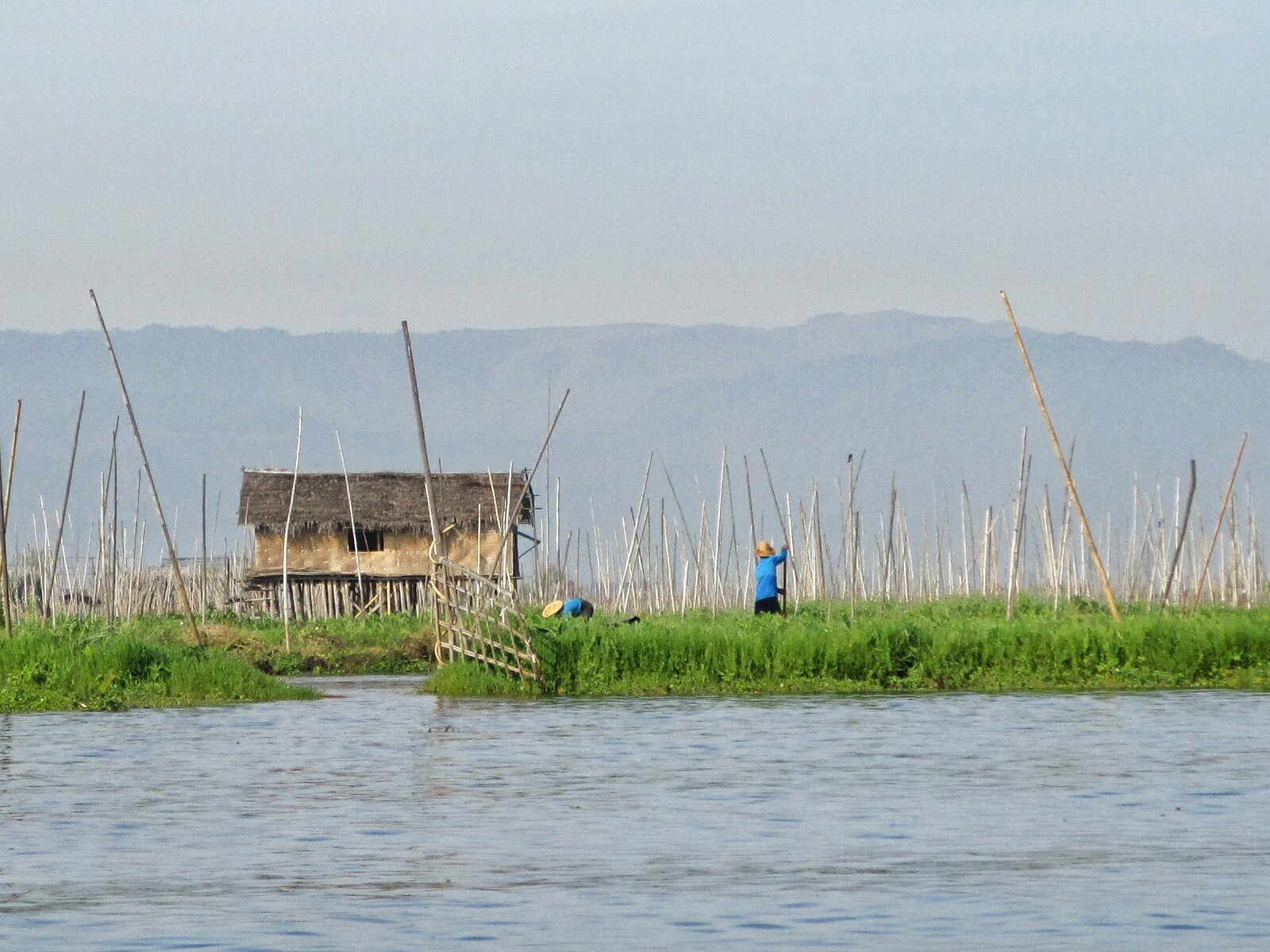
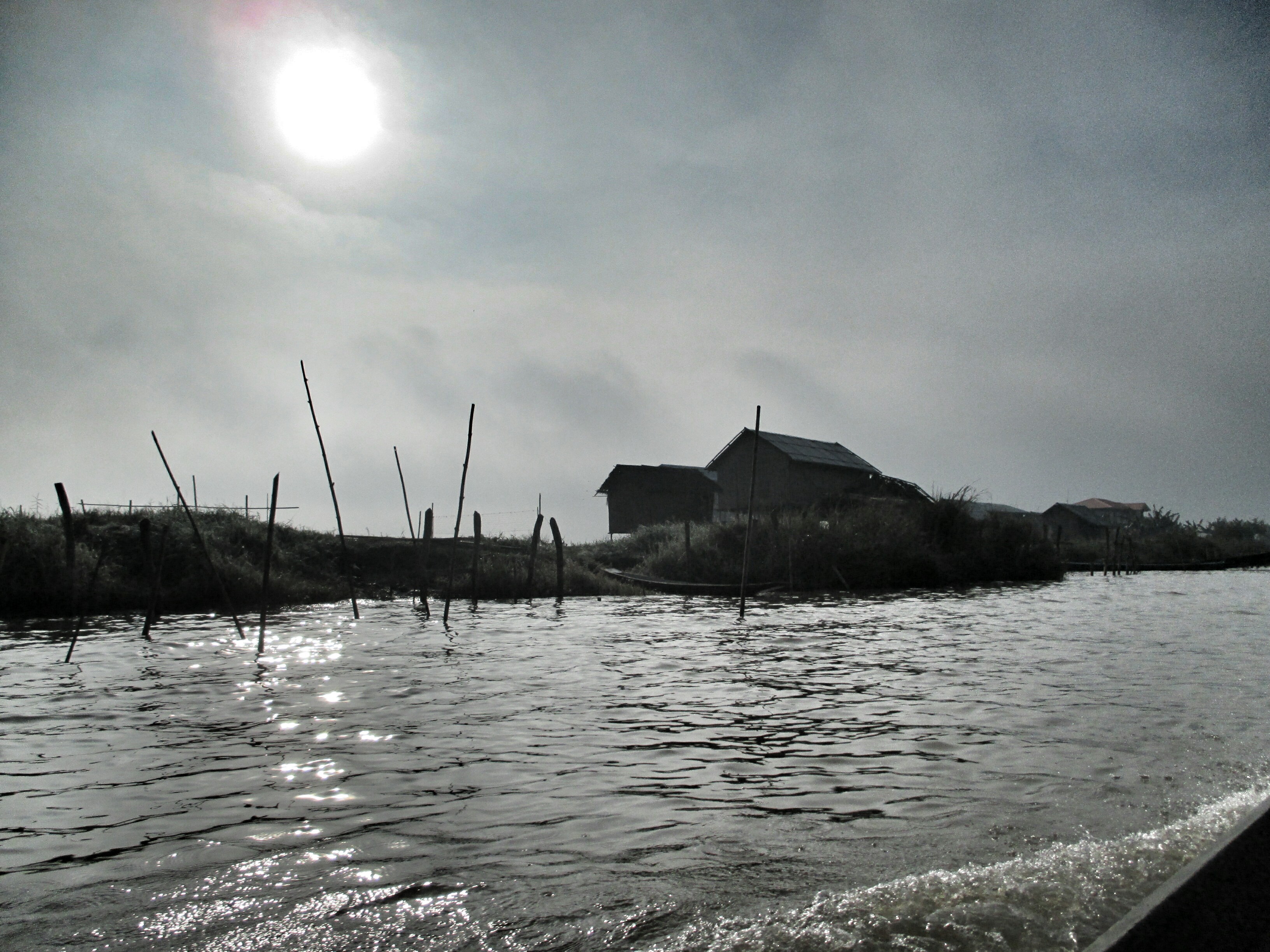
~ We knew we were going to take a boat tour on Inle Lake. It was a “must do.” However, we had read some conflicting accounts about the tours. Some people said they were canned and that the guides kept taking you to shops and trying to get you to buy things. Others complained about the limitations of being on a tour, feeling constricted in their freedom of where and when to spend their time. Some of those things were true on our boat trip, but somehow it didn’t matter. We spent hours floating through the lake. The destinations on the lake actually hardly mattered – we thought just being on the lake and observing the beauty and the way of life was wonderful. The day was gorgeous and we spent the time on the lake in quiet contemplation, enjoying our ability to do this trip and explore new places.

Families zipping through the waterways

Families zipping through the waterways

People working their fields

People working their fields

Beautiful Inle Lake

Beautiful Inle Lake

Runners up for Top Moments:

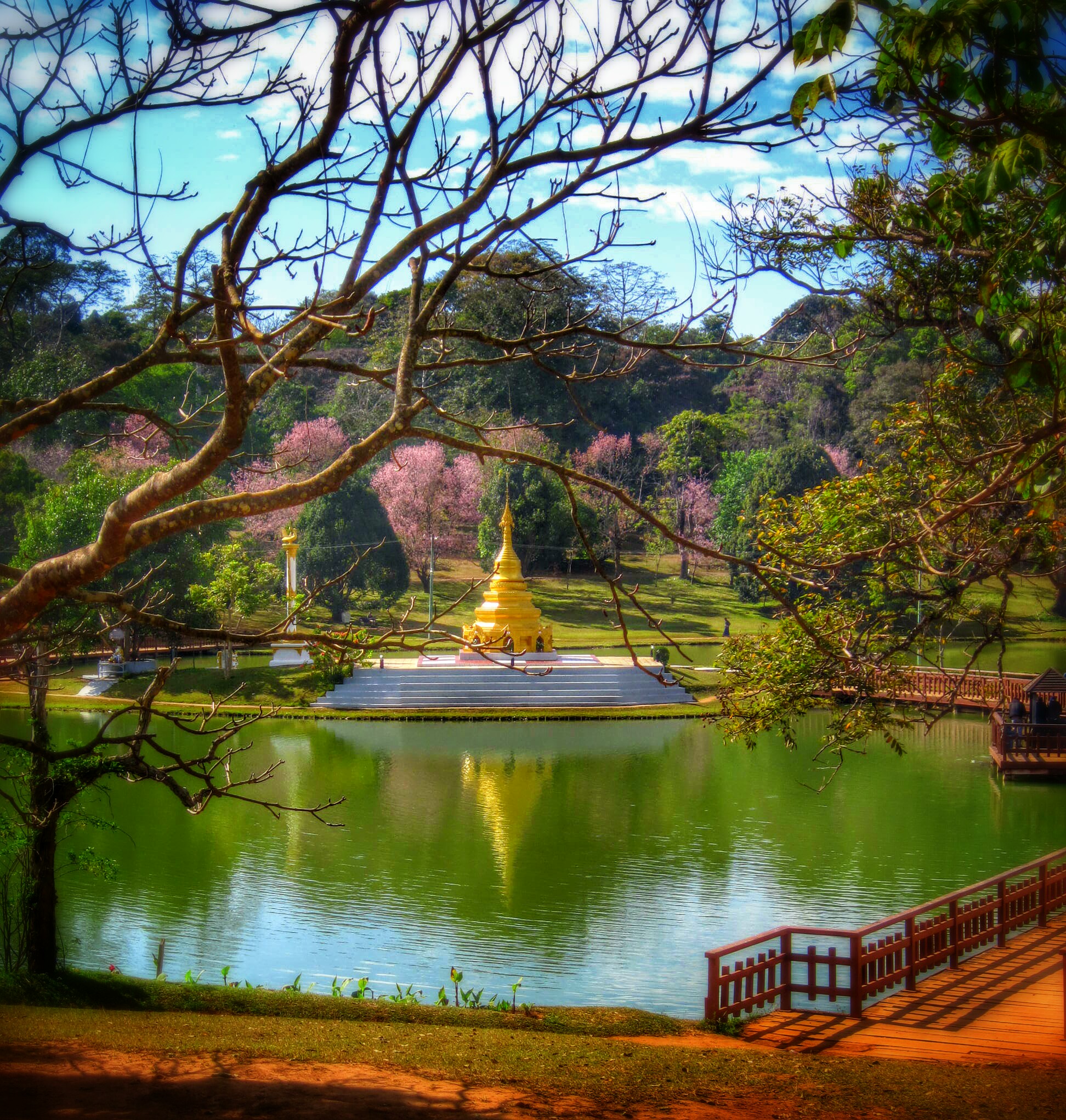
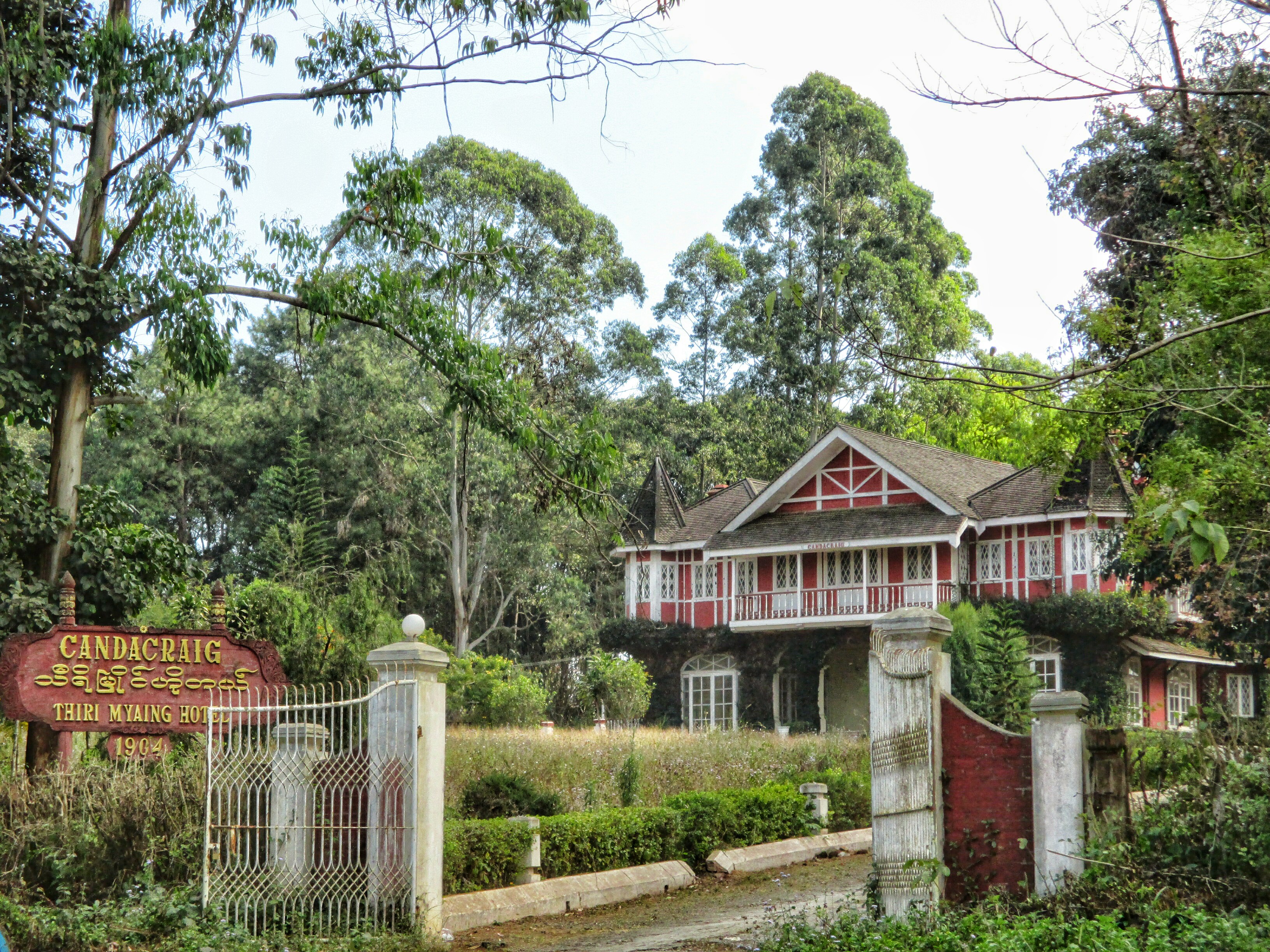
~ Our second town in Myanmar was called Pyin Oo Lwin. We had heard that the town wasn’t really worth the trip, that it was only blah. However, we were interested in visiting because Della’s parents had visited on their rtw trip 35 years ago. They had many great memories of the beauty of the town, the old colonial buildings, and of the people out strolling the gardens under their parasols. We wanted to see what they remembered. We spent a whole day chasing the past in Pyin Oo Lwin! We ran into some troubles finding some of the places, but ultimately succeeded and really enjoyed the time biking through town. In additions, the gardens were absolutely gorgeous. We again had a lovely day!  Unfortunately, we didn’t see any parasols.

The pagoda in the beautiful gardens of Pyin Oo Lwin

The pagoda in the beautiful gardens of Pyin Oo Lwin

The beautiful colonial house Candicraig - where Della's parents stayed when they visited 35 years ago

The beautiful colonial house Candicraig – where Della’s parents stayed when they visited 35 years ago

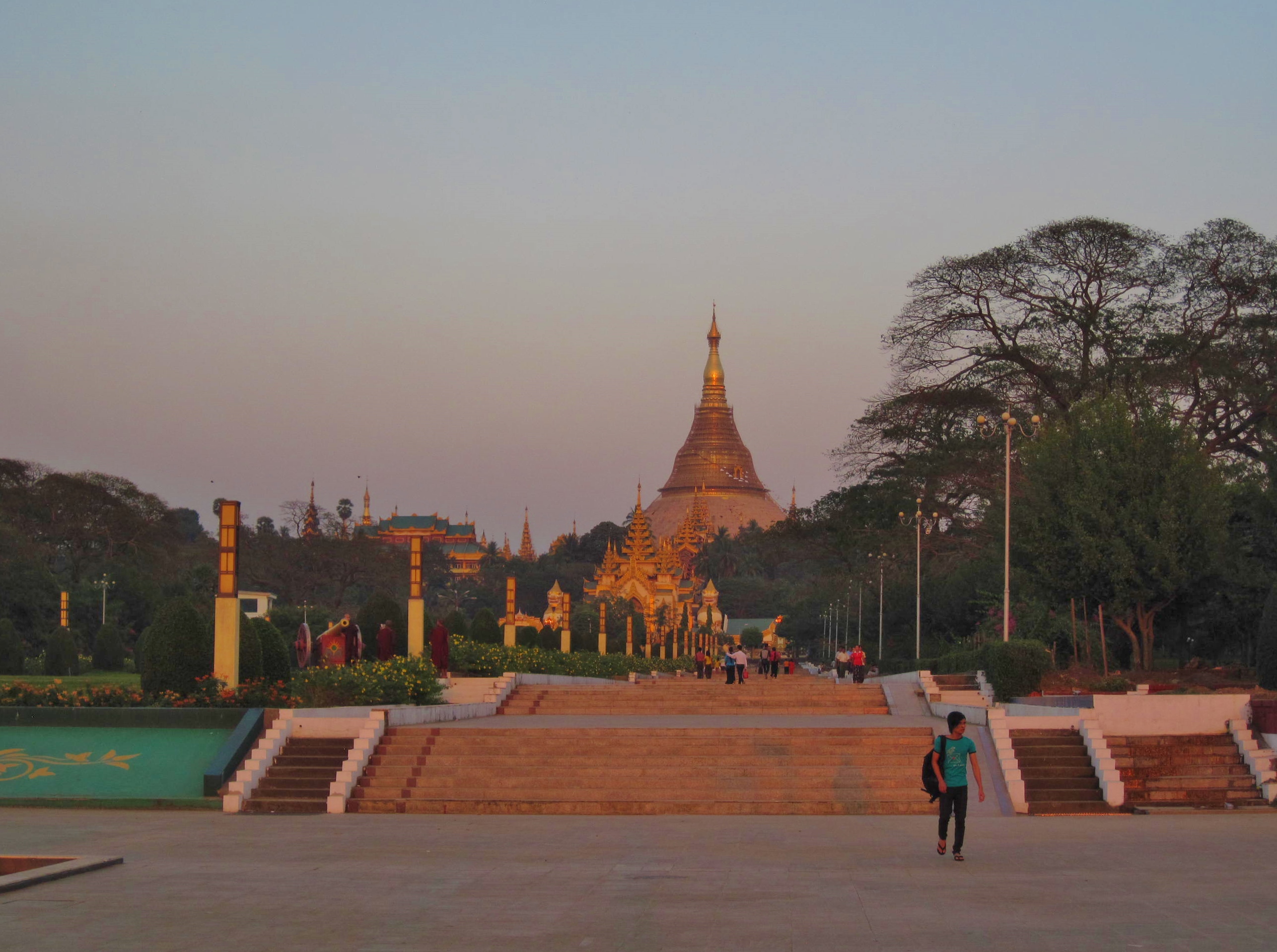
~ Our final day in Myanmar was in Yangon. We spent several days in Yangon, probably more than we really needed to, but it allowed for some relaxing days. Our last day, we headed to the National Museum and then to the nearby People’s Park. It is a lovely park with some strange attractions, like an old plane, trees with hanging bridges between them, and giant banana statues. It also has great view of the Shwedagon Pagoda. But the most fun part was that they decided to blast music throughout the park. When we first heard it, we thought it must be some sort of performance or event, but it turned out it wasn’t. Della was, of course, tempted to dance, though she didn’t because no one else was even moving to the beat. We enjoyed the music, the views, people watching, and the sunset as our time in Myanmar wound to a close.

Shwedagon Pagoda at sunset as seen from People's Park

Shwedagon Pagoda at sunset as seen from People’s Park

The sun sets on our time in Myanmar

The sun sets on our time in Myanmar

Items Missing, Broken, Discarded, or Added:

Nothing!

Packing Update:

See our posts on both Della’s and Eric’s packing update!

Books Read: (Have you read any of these??)

Della has read Snuff by Terry Pratchett (3), Animal Farm by George Orwell (4), The Fault in Our Stars by John Green (3), I Am Pilgrim by Terry Hayes (4), Unbroken by Laura Hillenbrand (4)

Eric has read Wild by Cheryl Strayed (4), Wizard’s First Rule by Terry Goodkind (3), Is Everyone Hanging Out Without Me? by Mindy Kaling (3), No Birds Sing by Jo Bannister (3.5)

Eric and Della have BOTH read Burmese Days by George Orwell (4), Neverwhere by Neil Gaiman (4), My Sister’s Bones by Cathi Hanauer (3.75), Hearts in Atlantis by Stephan King (4)

The rating system is for Della’s mom who is refusing to just go look on Goodreads. It is 1 to 5, 5 being the highest.

Make sure to catch up on all our monthly recaps: Monthly Recap 1, Monthly Recap 2, Monthly Recap 3,Monthly Recap 4, Monthly Recap 5, Monthly Recap 6