Budget: Hong Kong

This is one of our Budget series of posts to give you an idea of how much we spent traveling around the world. Here we will look at Hong Kong and Macau. Check our posts to see what kind of activities we did and where we stayed!

In Hong Kong we used the Hong Kong Dollars. We converted to US dollars using the current conversion rates at the time of our visit. It was approximately 8 Hong Kong Dollars to $1.00.

Total Spent (6 days): $649.26

Accommodation: $258.43

This felt very expensive compared to the prior countries we had been visiting in southeast Asia. It was a tiny room for a lot of money!

Activities: $59.41

This included taking the peak tram, cable car to the Big Buddha, and a few museums.

Alcohol: $5.16

We only count alcohol costs when it is not purchased with other food. This was only 1 beer! Very different from Vietnam!

Food: $151.24

Again, we had a big of sticker shock comparing the food prices to those of our prior countries of Thailand and Vietnam. We ate out only once a day at the most. We bought snacks from the grocery store for breakfast and dinner. Dinner was a bit hard as we didn’t have a kitchen in our small hotel room. We only bought things we could heat in a microwave!

Miscellaneous: $21.89

This included some postcards, a few souvenirs and a load of laundry. We also had a little cost of currency exchange.

Transportation: $153.12

It was quite convenient to use the public transportation system in Hong Kong. We purchased an Octopus Card at the airport which covered all forms of transit! The only extra we paid was for our boat to and from Macau and the buses there.

This divides out to $108.21/day which is over our $100/day budget. Hong Kong was much  more expensive than the countries we had visited previously in SE Asia. We had a short time in Hong Kong so we tried to do a lot quickly. We also spent quite a bit so that we could do a day trip to Macau. We tried to keep our costs down by eating out rarely and doing a lot of self-guided walking tours. But, we did choose to pay a bit more to stay in a nicer place. We had heard reports of cheaper places but those all seemed quite sketchy. Overall, it was a bit challenging to stay to our budget, but we are still happy with our time in Hong Kong.

Meandering through Macau

We were really enjoying Hong Kong, but we also wanted a chance to visit another Special Administrative Region (SAR) of China: Macau. We really knew very little about this tiny place. Much like Hong Kong, Macau is a city that was once administered by a colonizing country, despite being attached to the China. Hong Kong belonged to Great Britain, but Macau belonged to Portugal until 1999.

Despite now being officially part of China, it still has two languages: Chinese and Portuguese. Also, similarly to Hong Kong, Macau falls under a policy of “one country, two systems.” This means that while it is a part of China, Macau maintains its own legal system, the public security force, monetary system, customs policy, and immigration policy. It also has established itself as something of a “Vegas in the East.” A lot of its economy focuses on gambling, and huge casinos dominate the city. We also had heard that it had a lovely, Portuguese-influenced, old town. We were quite excited to visit Macau and experience the diversity the city had to offer.

Getting There

Getting there proved to be a bit more difficult than we had hoped. We had read that it was an easy process: take a ferry. The ferries supposedly left from Hong Kong every 30 min. That sounded pretty simple, so we didn’t really rush in the morning and left our hotel around 10.

We rode the metro to the Sheung Wan station, then worked our way through a mall to the TurboJet offices. We arrived at the ferry terminal only to find that, while it was true that the ferries left every 30 min, you couldn’t necessarily buy a ticket for the next upcoming ferry! They were full! The next available ticket wasn’t until 11:45.

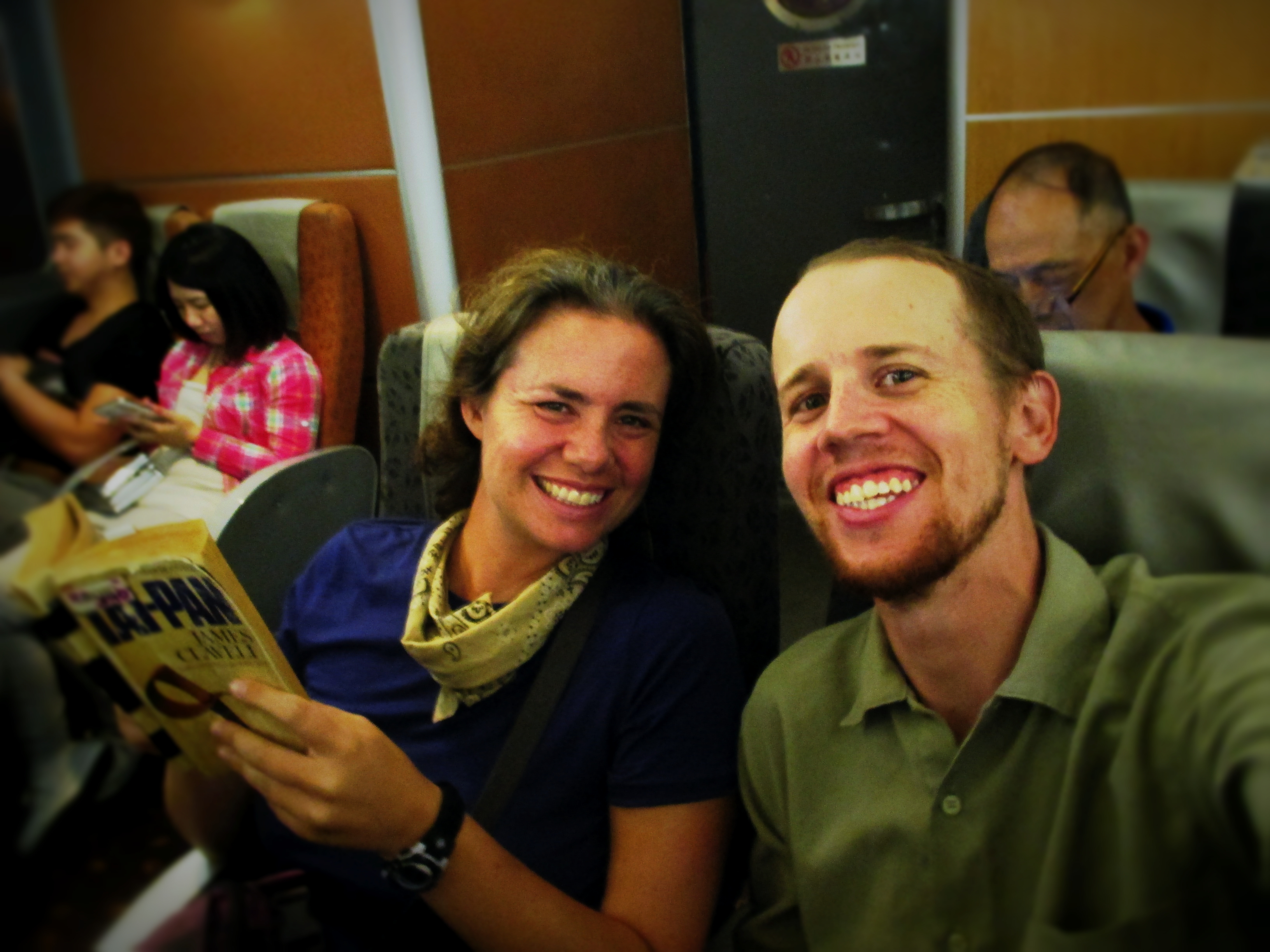
We went ahead and went through Hong Kong exit immigration and went downstairs to the waiting area. At this point, it really felt like we were in an airport, waiting in the lobby and boarding at certain times. We boarded on time and found our assigned seats in the lower part. The ferry was quite fancy – felt like an airline interior. The ride over took about an hour. A little choppy but not so bad that we couldn’t read.

Once in Macau, we had to go through immigration to get in, pretty much like we were arriving in another new country! They didn’t actually stamp our passport though. We couldn’t decide if we were happy or sad about this. We did want the stamps, because its definitely fun to look back at the stamps in the passport, but we were a little worried because we were both running out of pages in our passports!

Outside we found the tourist information desk. They weren’t super helpful but we did pick up some maps (and even a walking tour brochure made by UNESCO) and get the bus number that we needed to take. Luckily Hong Kong dollars are 1-to-1 with the Macau patacas and are accepted there so we didn’t need to get money.

We rode the #3 bus which took us into the historic part of town.

What We Did

We focused our efforts mostly on completing the UNESCO walking tour. We ended up starting in the middle though, so we had to do it out of order.

We had taken the bus to Senado Square. It was quite pretty, with wavy white and black cobblestones and colonial buildings. But it was also full of tourists, which detracted from the effect.

IMG_0864_Fotor

We headed north, finding more of the sights marked on a UNESCO walking tour book. This took us by a the small Sam Kai Vui Kun Temple, the Lou Kau Mansion – a traditional Chinese merchant’s house that we could go into for free, St. Dominic’s Church, and “The Cathedral,” set in a calmer square. It felt in a way like we were back in one of the Croatian coastal towns, with the shiny cobblestones and pretty architecture, but also with the crowds squeezing you at every turn.

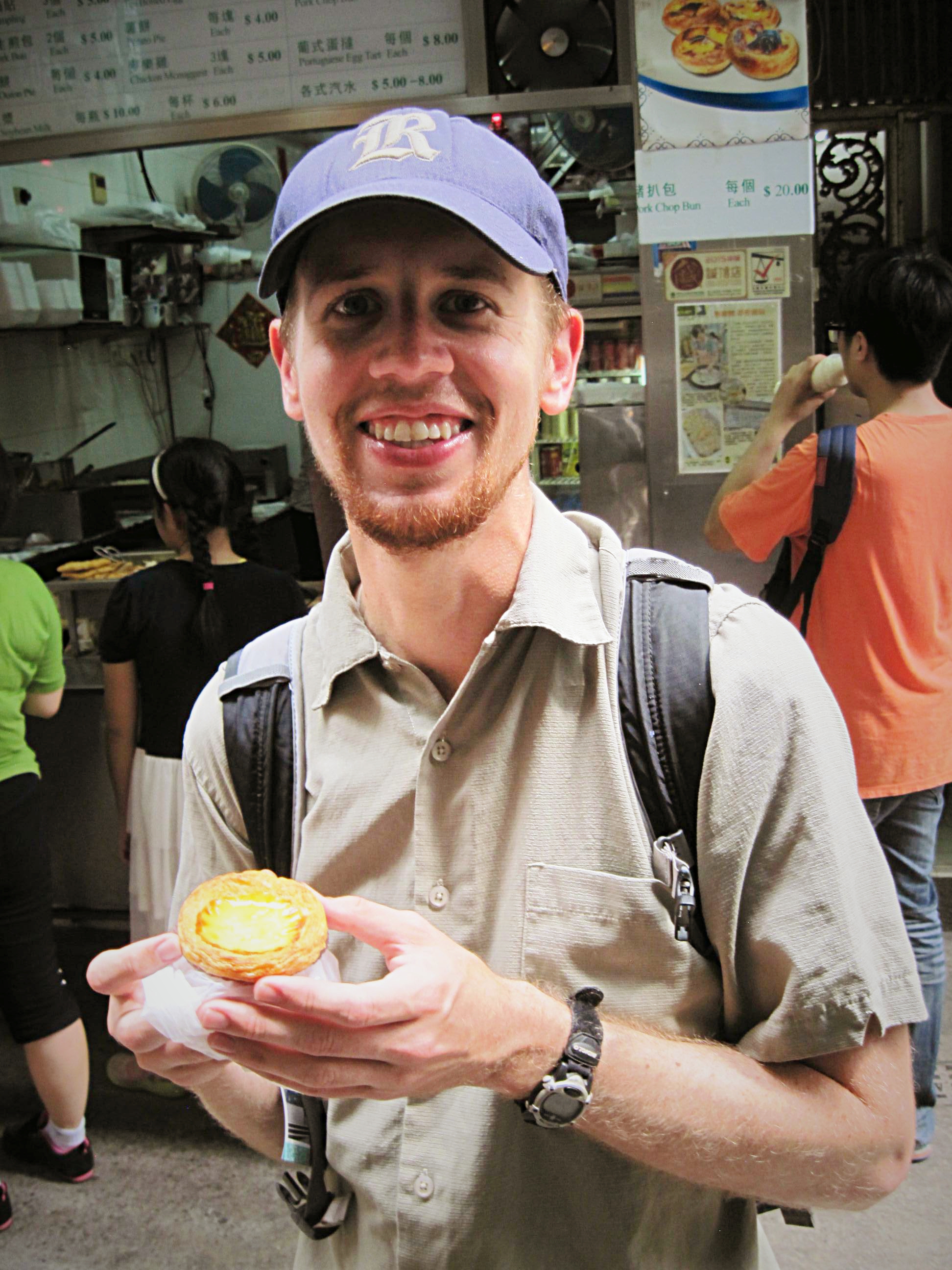
After this we were getting a little hungry so we saw a bakery on a side street. We shared a snack of fried wontons, a fried dumpling, and the Macau classic egg tart.

Eric with an egg tart

Eric with an egg tart

To get to the next stop required us to go up a narrow lane past places selling beef jerky and cookies. These were quite popular with the Asian tourists, so we had to squeeze through very crowded spaces around those who had stopped to get free samples. Brought back some memories of the Spice Market in Istanbul!

IMG_7522_Fotor

We finally made it to the iconic image of Macau, the façade of St Paul’s church. The rest of the church burned down in a fire, but the intricately-carved façade remains. We maneuvered around crowds to take pictures on the stairs and the platform below. We had an interesting time trying to find the Asian and Western influences in the artwork.

We then went up onto Mount Fortress, one of the many fortresses built by the Portuguese in defense of the city from the sea. We got great view over the city from the top. It was interesting to note that many of the residential buildings looked run down, but the fancy casinos gleamed in the distance.

From here we could enter the Macau Museum. It started out promising with an interesting comparison between the history and culture of the West and East before they met up in Macau. They then sped through the history of how Macau was actually founded, but had large displays on life, trade and religion during the early days of the colony.

IMG_0903_Fotor

On the second floor they had set up facades of different types of houses in Macau. It was pretty fancy like in the Hong Kong Museum – guess they like their faux-towns here! We waited a bit for a show about the fisherman in the inner harbor but left before it was over since it was slow. We then went through exhibits on life and traditions in the later part of the colony, with displays about the different types of shops, mannequins representing the street hawkers, setups showing typical dining and living areas, and wedding traditions. The final floor was a bit random, with sketches of life in early colonial times, a movie about modern Macau, a few displays on Macau clubs abroad, and then very brief information about it rejoining China in 1999. Overall, we quite enjoyed the museum. It was just about the right size; you felt like you could read everything without spending days. However, the lower floors were the best.

We headed back out and continued the walking tour. Back near St Paul’s we saw a section of the old city walls and a tiny Chinese temple. We walked down to a much quieter street and walked further north to the Camoes Square, which was filled with people playing and relaxing. We peeked in the nearby Protestant Cemetery where there were a good number of Americans buried.

We were getting hungry, so we went a little further. We didn’t see any restaurants that looked like a good fit for us, although we did see an ice rink! We backtracked through the crowds to near St Dominics. We then went down a random side street and saw a place advertising Macanese food, and decided to go for it. We each got a Macau beer, which wasn’t too bad. For meal, Eric got chicken in Portuguese sauce with rice, and Della got broad noodles.

IMG_0930_Fotor

We walked past Senado Square to see a few more of the sights on the tour. The bulk of them were found on St Augustine’s Square, including St Augustine’s Church, and the very green Dom Pedro V Theatre. We were getting tired, so we decided to find one more sight: St. Lawrence’s Church.

From here we cut down to the water and walked to the casino area. Eric wanted to make sure to experience to glitzier, modern side of Macau in addition to the old town. So, even though we were pretty tired, we went into the fancy Grand Lisboa. We walked around the interior and gawked at their gaudy pieces of art on display. We also went into the casino floor, where we just strolled through. The minimums were very high so we didn’t play anything. We did pause to watch a burlesque show that randomly happened on the main floor.

Outside the casino, we had hoped to take a free shuttle back to the ferry pier, but the line was incredibly long. Instead, we saw a bus station across the street. It was a little confusing but we eventually found a bus that took us back to the ferry pier.

Getting Away

It was about 7:30. We hoped to not to have to wait too long for a ferry, but the only ticket they were selling was not until 9:45! We bought it before completely thinking it through and were pretty bummed. The scalpers near the window had earlier tickets but wouldn’t trade. Della was furious, knowing that the scalpers had purposely bought up all the upcoming tickets. Feeling disappointed, we found a quiet place to sit and read books for a while.

Then we decided we might as well go into the departures area and see if we could get on an earlier boat. We went through Macau exit immigration and made our way inside. As it turns out, getting on an earlier boat is a standard thing. Each gate has a separate line for standby passengers. You have to gamble a bit as to which line you choose, since the lines don’t roll over to the next ship. At first we thought about getting on the 8:45 line, but we would have been a little further back. Instead we just went to the 9:00 line since we would be some of the first in line. We were pretty nervous when 9:00 rolled around, but we made it on just fine.

We were assigned seats up top. The ride back was smoother than the ride there and also took about an hour. We had to go back through immigration to get into Hong Kong.

IMG_7548_Fotor

Final Thoughts

In the end it seemed like quite an ordeal to get there and back in one day! We should have maybe spent the night there, or left earlier, or gone on a day when it would have been less crowded. The old town was simply lovely, and we really enjoyed feeling like we were in Europe again for a time. However, the crowds did ruin it for us a bit. We suspect it might be really lovely in the evening, when some of the day trippers have left!

Hanging Out in Hong Kong

We’ve switched the blog back to talking about some of our other travels on our round-the-world trip, but are hearts are still with Nepal. If you’d like to contribute to help the people of Nepal recover from the devastating earthquake, please visit our page collecting some worthy causes.

After our enjoyable time in Vietnam, we said goodbye to Della’s parents and to Southeast Asia, where we had been since January. We had originally intended for our next stop to be in Nepal, but it was easier to fly to Hong Kong next instead. Also for airfare reasons, we ended up staying in Hong Kong for six nights, which was one more than we had planned for. We hoped that we would find ways to occupy our time… and we certainly did!

Getting There

We were able to use credit card rewards to get a cheap flight on Vietnam Airlines from Hanoi direct to Hong Kong. We were surprised when we discovered that our seats were on the exit row! We hadn’t put in a special request or anything. The flight went fairly quickly, and we enjoyed the free wine that came with the lunch that was served.

Upon arrival in Hong Kong, we bought our Octopus cards, which can be loaded with cash and used for all sorts of public transportation in the city. The helpful staff at the tourist information center told us how to use public transportation to get to our accommodations. The airport is quite far from the city center, so we knew it would be a long journey.

As it turned out though, it was quite pleasant. The bus was a fancy, new-feeling double decker bus. There was even a closed-circuit tv system so we could monitor our bags stored on the lower level as we took in our first views of Hong Kong from the upper level.

Where We Stayed

We had a pretty hard time finding a place that was both affordable and looked comfortable. We had been spoiled in Southeast Asia with big rooms for cheap prices, but Hong Kong felt like Singapore, with even tiny rooms being very highly priced. The cheapest rooms were in the Chungking Mansion (big apartment blocks are called mansions in Hong Kong) in the Kowloon area, but those were tiny, with most being around 5 square meters (about 54 square feet). We expanded our search area and found a place advertising 10 square meter rooms (about 108 square feet). The reviews were OK, so we went ahead and booked at the Yesinn Fortress Hill.

It was located in the North Point area on the main Hong Kong island. None of the major tourist attractions are within walking distance, but there is a subway station very close, and the trains run so frequently that we didn’t feel like it was that hard to see the sights.

The check-in process was a little convoluted. We found the Continental Mansions and rode the elevator up to the 15th floor where we located the reception. Here we were told that our room was actually in a different part of the building, so we had to ride the elevator back down to the ground floor, walk to a different elevator bank, and ride up to the 3rd floor. Luckily when coming or going we didn’t have to go back through reception, but the downside of this was that we couldn’t take advantage of some of the shared facilities that we near the reception.

The room was as cozy as advertised, but we actually found it a manageable size. The bed was a little smaller than normal but still big enough for two. They managed to squeeze a desk, dresser, and mini-fridge in, which were all helpful. The bathroom was very small, with the shower above the sink, but you could actually angle it in such a way that it felt like a normal shower.

What We Did

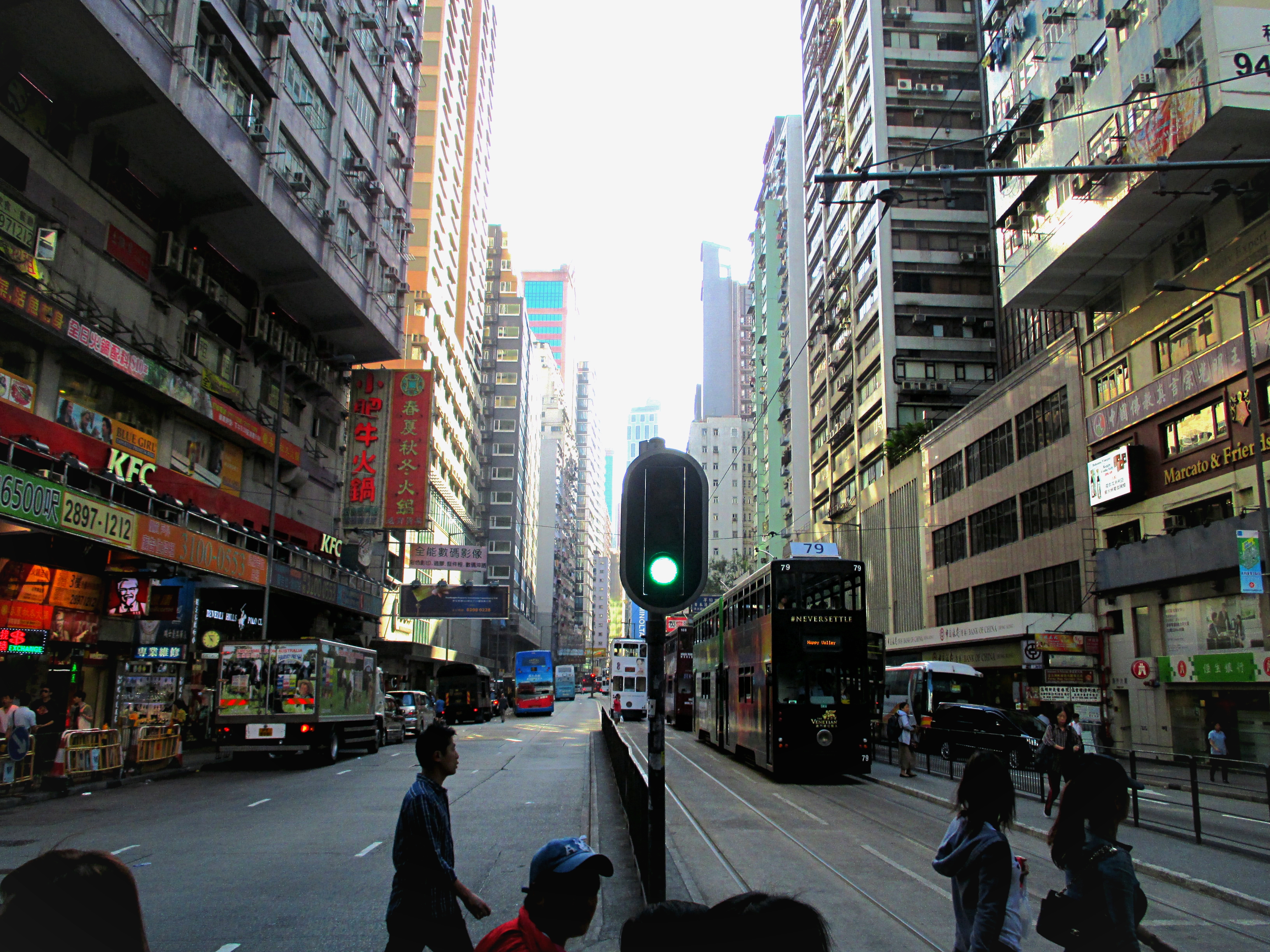
Hong Kong is a huge city, and we found plenty of ways to spend our time. It was very easy to get around between sites using the fast Hong Kong public transportation system.

Avenue of Stars and “A Symphony of Lights” – Our first night in town, we headed over to the southern tip of the Kowloon neighborhood to watch the free nightly multimedia performance called “A Symphony of Lights,” during which the buildings across the bay on Hong Kong island light up in time to music. We arrived a bit early so we spent some time exploring the Avenue of Stars, the Hong Kong film industry’s version of the Hollywood Walk of Fame. Bruce Lee and Jet Li were the main names we recognized. As for the light show, it was interesting, but we think we actually preferred the show in Singapore’s harbor for pure spectacle.

Hong Kong Museum of History – We didn’t know much about Hong Kong going in, so we made sure to stop at this museum to hopefully get more background. They were running a special that day, so admission was free, but we splurged on an audio guide to help guide us through. We diligently went through the natural history and prehistoric sections, stopping to listen to every entry, but then we realized that the museum was way bigger than we had anticipated and decided we had to move faster, so we basically stopped using it. The museum had very nicely put together displays, especially in the section describing life as a British colony, where they had recreated entire storefronts. We did feel the information was a little lacking, especially at the end where they only briefly described how control was returned to China (and what it meant that it was a special administrative region that retains some autonomy).

A Night at the Happy Valley Horse Racessee separate post

Victoria Peak – The weather was bright and sunny the next day, so we decided to head to the vantage point at the top of the peak that overlooks the harbor. We rode the historic funicular up the steep ride to the top. We didn’t pay to go to the fancy observation deck, but instead walked along a nice path to either side of platform and were able to get great views.

Walk Through Hong Kong Park and Wan Chai – After coming down from Victoria Peak via the funicular, we walked through the large Hong Kong park found in the middle of downtown. We were impressed with the large amount of green space and the variety of activities within the park. Our favorite was the aviary where we spotted a number of interesting birds. After the park, we followed the Lonely Planet walking tour of the Wan Chai neighborhood, where we saw a mix of historic and modern structures.

The Tian Tan Buddha and Po Lin Monastery on Lantau Island – We enjoyed a day trip out to one of the more far-flung islands of Hong Kong, Lantau. The big attraction here is a big Buddha statue and monastery in the village of Ngong Ping on top of the mountains on the island. The cheap way to get to Ngong Ping is to take a bus, but we splurged and took the cable car – and were definitely glad we did so. The views were amazing, if not a little scary! The village at the top is very touristy and felt fake, but the Buddha statue was impressive, and the monastery buildings were pretty as well. We also spent an hour or so hiking into the mountains beyond the tourist facilities, where we found a path decorated with a poem written on wooden poles.

Walk Through Sheung Wan – We also followed a Lonely Planet walking tour through this neighborhood, which was originally the hub of the Chinese community and still shows many of those influences. We walked past interesting dried seafood weird herb shops – not sure even what we were seeing half of the time!

We stopped for a snack break in a small park where we found a path made of upraised stones that you were meant to walk on barefoot, like the one we saw in Battambang. This time, we took off our shoes and tried it ourselves. It hurt! We still aren’t sure what the exact purpose is.

The final stop on the tour was the most impressive: the Man Mo Temple, one of the oldest Taoist temples in Hong Kong. The air inside was thick with the smoke of dozens of mazzive incense coils burning at the same time. Outside there was a furnace for burning (fake) money offerings, just as we had seen in Vietnam.

After the walk, we continued into another neighborhood and took a ride on a non-traditional tourist attraction: the longest outdoor covered escalator system in the world, the Central-Mid-Levels escalator. This series of escalators goes straight up a hill from the Hong Kong harbor to a road on the top of the hill, with many restaurants and shops along the way. The elevation gain is 443 feet, and it took us about 20 minutes to get up. Unfortunately, the easiest was down is to walk, but it made for good exercise.

Star Ferry – The classic way to get across the Victoria Harbour from Hong Kong island to Kowloon is to take this old double decker ferry. It opened in 1888, and is still popular and cheap today. The ride was brief but gave us great views.

Temple Street Night Market – We didn’t do very much shopping in Hong Kong, but decided to check out the most famous night market in town. We abstained from getting a selfie stick, but Eric did decide to purchase one of the “beckoning cat” figurines, thinking it was a nice traditional Chinese item. He was later disappointed to learn that it is actually Japanese in origin!

Where We Ate

We had a bit of a mixed experience with food in Hong Kong. After Vietnam, the food seemed very expensive, and much harder to find. There were hardly any street food options, and many places that looked cheap only had Chinese menus. Over the course of our time in the city, we gradually began to find some places that interested us though.

Our favorite place was the renowned Tim Ho Wan, the dim sum eatery known for being the cheapest restaurant in the world to have received a Michelin Star. We had read about the lines being out the door, but the location located conveniently close to our hostel had available tables. The surly waitress just dropped a paper checklist down on our table and didn’t provide any further guidance, but we were able to discern that we needed to check off the items we wanted to try on the paper. Dim sum is characterized by small servings of Chinese food items, usually dumplings or other steamed delicacies. We tried to get a mixture of dumpling, steamed buns, and steamed cakes. It was all quite good, and we were stuffed! We enjoyed it so much that we went back on our last morning in town to get another round of our favorites and try a few items that we had missed the first time. It definitely merited the hype.

Another meal that stood out to us was lunch at the restaurant in the Hong Kong History Museum. Our expectations were low for a cafe in a museum, but it turned out to be a cheap and friendly place. It was decorated to resemble a diner in Hong Kong in the 50s and 60s. Another nice feature was that it employed some people with developmental disabilities. We both got a set lunch which included a soup and a large entree.

Nice meal after a long time on our feet in the museum

Nice meal after a long time on our feet in the museum

The other meals we had while eating out were good, just maybe not as affordable or tasty as we had hoped.

Because everything was pretty expensive in Hong Kong, there were a few nights that we decided to just “cook” our own dinner. You may be wondering how we could possibly cook in our tiny room, but luckily there was a shared microwave in the hallway. We went to a supermarket by the subway station and bought different frozen dumplings to heat up. Not as good as Tim Ho Wan, but cheaper and pretty convenient!

Enjoying dumplings and carrots in our room. Another benefit of eating in is cheaper beer!

Enjoying dumplings and carrots in our room. Another benefit of eating in is cheaper beer!

Final Thoughts

Our initial worry that we would be spending too much time in Hong Kong turned out to be wrong – if anything, we wish we could have had more time! There were a lot of interesting sights to see in the big city. We regret that we didn’t connect more with the food scene and find cheap local options, but think with more time we would have been able to figure it out. Hong Kong was a good way to get a quick dip into Chinese culture and the unique culture of Hong Kong on our world trip.

Flashback Friday: Leaving the Country/Layover in Egypt

Flashback Friday is a picture series where we “flashback” to some of our memories – from either from our prior travel or from home. We hope you’ll enjoy some of our remembrances!

One year ago today we left the country. We left our home in CO on June 29th, but had the opportunity to spend a few days with Della’s uncle in New York state.  Then we headed abroad! We were pretty excited to have found a plane ticket with a long layover in Cairo – long enough for us to leave the airport and explore the pyramids! Talk about an exciting first day on the road!

IMG_9961

Sports Fan Abroad: Horse Races at Happy Valley Racecourse in Hong Kong

We’re going to switch the blog back to talking about some of our other travels on our round-the-world trip, but are hearts are still with Nepal. If you’d like to contribute to help the people of Nepal recover from the devastating earthquake, please visit our page collecting some worthy causes.

Eric had thought that he might have the chance to sample sporting events all around the world on our trip, but as it turned out the only one we ended up going to was a soccer game in Olomouc, Czech Republic. However, when doing research on Hong Kong, he saw that probably the biggest sporting event there was the weekly races at historic Happy Valley Racecourse (established in 1846), and our time in the city would overlap with one of the race nights. Our hostel in Hong Kong had a sign up for a group outing, so that sealed the deal: we were headed to the races.

We met at the front desk of our hostel at 4:30 as we had seen on the sign, but were a little perturbed when we noticed we were the only ones there. No one else showed up, so the two of us headed out with out one of the workers. As it turned out, we were going to another branch of the same hostel closer to the track where we would meet up with a group from there. We were relieved to hear that, because it seemed like it would have been awkward with just us and the not-too-talkative hostel worker.

We rode the above-ground trolley over to Causeway Bay and then walked to the other hostel. Then we found out that the group from that hostel wasn’t leaving for another hour! So we just sat in the common area and used their WiFi while we waited.

The above-ground trolley drives away after dropping us off

The above-ground trolley drives away after dropping us off

Finally, a different guy who worked at that hostel gathered the small group (about 10 people) that had been waiting there, and we all walked over to the Racecourse together. We entered into the grandstand area, which was at track level. The entrance fee was a very reasonable 10 Hong Kong dollars (HKD), which is about $1.30.

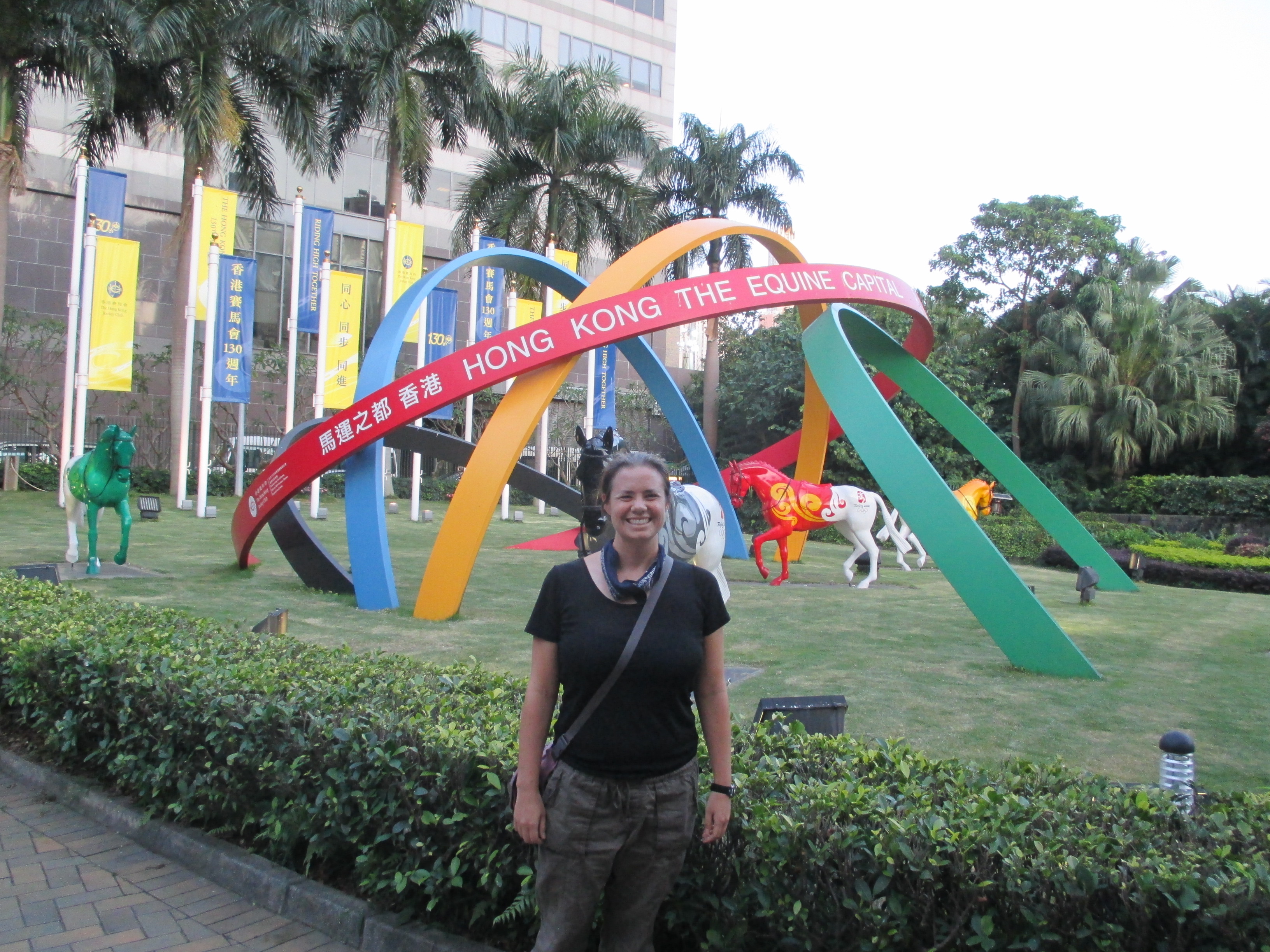
A display outside the racecourse touts Hong Kong as the equine capital. It served as the site for equestrian events during the 2008 Beijing Olympics

A display outside the racecourse touts Hong Kong as the equine capital. It served as the site for equestrian events during the 2008 Beijing Olympics

We had arrived about an hour before the races started, so we had time to explore the area. The weather was great, so it was fun to just stroll around. There was a buzz in the air, with a lot of people already starting to fill the stands. We got a beer from one of the many vendors and then tried to figure out how the races would work.

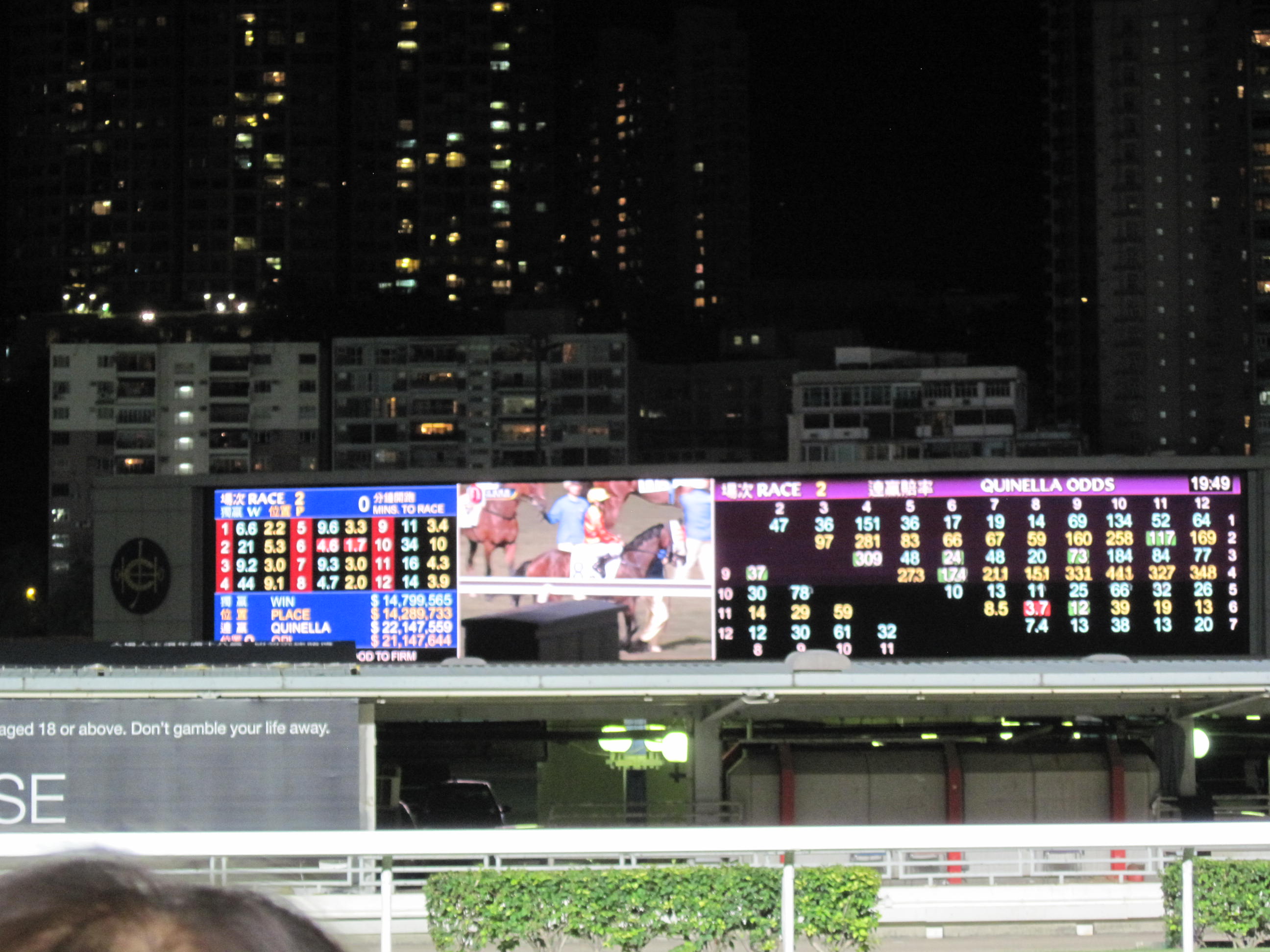
The guy from the hostel who had walked us over didn’t actually know much about how the betting worked, so we all worked together to figure out how to do it. We found a paper guide that listed the different horses running in the different races, and then figured out how to read the odds board. Della didn’t want to pick a horse until we had seen them, so we waited by the area where they were paraded around before making our selection. One horse made good eye contact with her, so we chose him.

We went up to one of the places where we could place a bet, and were able to find an employee who graciously walked us through the process. We picked our selected horse to “place,” meaning it just had to finish in the top 3. We placed the minimum bet of HKD 10, so we weren’t risking much.

The confusing odds board

The confusing odds board

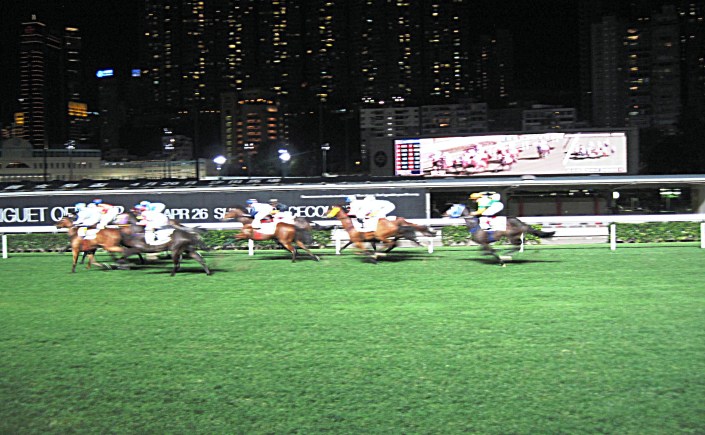
We made our way down to the track and got a good spot right by the rail and near the finish line. The race was starting on the other side of the track so we had to watch the first part on the monitors. It was over very quickly, but after watching the video replay we discovered that we won! We made a HKD 9.50 profit.

Emboldened by our success, we again bet on the second race for a horse to place (after seeing them parade by). This race was longer so the horses passed by twice. We won again! This horse was a bit more of a favorite so we only made HKD 6.

The group debated and decided to stay for the third race. We had a hard time choosing a horse to bet on, so we ended up betting on both a good horse and one with long odds. The good horse did place, but the long shot didn’t, so we didn’t get all our money back. In the end though, we made just about enough to cover the cost of our admission.

We then decided to head out, so we missed out on the many other races that went on into the night. Still, it was quite a fun experience, both learning how horse races work and being around the large crowds of tourists and locals alike. With how cheap it is too, we would definitely recommend it as an activity when visiting Hong Kong!

We took the trolley back home

We took the trolley back home

Flashback Friday: Leaving on our World Trip

Flashback Friday is a picture series where we “flashback” to some of our memories – from either from our prior travel or from home. We hope you’ll enjoy some of our remembrances!

Well – So, it’s not Friday… But, still, we thought this was a flashback worth having. One year ago today, we left Denver on one of the biggest adventures of our lives. We packed up super early and headed to the airport both excited about and terrified of what awaited us. Looking back, we feel so much pride in what we managed to do in this last year. For the most part, it was a collection of fantastic memories: one amazing experience after another. We’re already hoping and planning we can another trip like this again someday!

Look at our fresh (also tired because it was way too early in the morning) faces: ready for adventure! Here we come, World!

10420788_966585597581_7913711058980940808_n

Goodbye at the airport

Goodbye at the airport

Ready for some Globe Gazing... also ready to adjust our packs

Ready for some Globe Gazing… also ready to adjust our packs


Budget: Vietnam

This is one of our Budget series of posts to give you an idea of how much we spent traveling around the world. Here we will look at Vietnam. Check our posts to see what kind of activities we did and where we stayed!

In Vietnam we used the Vietnamese Dong. We converted to US dollars using the current conversion rates at the time of our visit. It was approximately 20,000 Dong to $1.00.

IMG_9513_edt

Total Spent (20 days): $1324.30

Accommodation: $327.40

We stayed in mostly small hotels and guesthouses. We stayed in one dorm room in Phong Nha.

Activities: $306.80

This included all museum entrance fees. Amazingly, it also included four day tours: Cu Chi Tunnels, My Son, kayaking in Cat Ba, and the most expensive: a cave tour in Phong Nha.

Alcohol: $6.80

We only count alcohol costs when it is not purchased with other food. However, beer is amazingly cheap in Vietnam. This price includes 6 separate instances of buying alcohol (for two).

Food: $259.61

Food is delicious and affordable in Vietnam! Many of our accommodations also included free breakfast!

Miscellaneous: $47.98

This was mostly laundry and sending postcards. We also purchased new sunscreen which was a little expensive. We bought a few souvenirs which we were able to send home with Della’s parents.

Transportation: $257.72

We did quite a bit of moving around in Vietnam. This included buses, an overnight train, air flights, cabs, airport pick ups, and some bike rentals!

Visas: $118

Visas are a bit complicated for Vietnam. First you have to gain an approval letter which you must do before you arrive in the country. There are a couple of options for how to get the approval. We used a website called Hotels in Vietnam. It was a pretty, easy but somewhat expensive and time consuming process. We applied for the letter on the 14th of the month and didn’t get it electronically  until the 17th. Once you have the letter, you print it out and take it with you. When you arrive in Vietnam, you must have the letter and passport photos and you must pay another fee. Even though we did everything right, it still took close to half an hour to get the visas processed in the Saigon airport.

This divides out to $66.22/day which is under $100/day budget! Now that’s what we were hoping for in Asia! We even felt like we splurged on activities and accommodations, and we were able to remain this low, so it just goes to show that Vietnam can be an inexpensive place to travel.


Cruising the Karsts Around Cat Ba, Vietnam

We’re going to switch the blog back to talking about some of our other travels on our round-the-world trip, but are hearts are still with Nepal. If you’d like to contribute to help the people of Nepal recover from the devastating earthquake, please visit our page collecting some worthy causes.

One of the biggest tourist draws in all of Vietnam is the scenic UNESCO World Heritage-listed Halong Bay on the coast east of Hanoi. We considered a visit there, but when researching came across many stories of how scam-prone it was to take a trip on the bay. We then found out about the neighboring Lan Ha Bay, which also has the characteristic karsts but is further away, so less infiltrated by large tour groups. Another benefit of Lan Ha Bay is that it easily visited as a day trip from the sizable town of Cat Ba, on large Cat Ba Island. This sounded like a better fit for us, so after our time in Hanoi we took a two day trip out there.

Getting There

Based on the advice from Lonely Planet and our Hanoi hotel, we booked a multi-step trip from Hanoi to Cat Ba town using the one company that offers this service – Hoang Long transport. It was a long and somewhat grueling process, but we did make it to Cat Ba as promised with no last minute fees, so we felt it was worth it. The steps were:

  • Taxi from our hotel in Hanoi to the bus station
  • Bus from Hanoi to the Hoang Long office in Haiphong. This bus left earlier than the ticket stated, but went somewhat slow as it would pick up and drop off people anywhere along the road. It was a bit of a strange ride too, because for the first half of the journey they looped a show of old-time Vietnamese music performances about four times over, then for the second half they switched to videos that showed scantily-clad women dancing to pop music.
  • After a wait at the Hoang Long office, a different bus from the office to a ferry terminal on the coast
  • A 30 minute or so ferry ride across a channel to another ferry terminal on Cat Ba Island
  • A bus ride from the ferry terminal to the Hoang Long office in Cat Ba town
  • Walk from the office to our hotel

Where We Stayed

Cat Ba is a big tourist draw, especially in the summer, so there are plenty of big hotels right on the water. We chose the Gieng Ngoc, which was on the somewhat quieter end of the main road. Both the two of us and Wayne and Peggy (Della’s parents) went for a small upgrade to get a room with a balcony overlooking the water. Our room itself felt a little dated, but the view was quite nice, so we were glad we made that decision.

What We Did

As you might expect, one of the big draws of visiting Cat Ba is taking a tour out into Lan Ha Bay, so our first order of business after getting checked in and grabbing some lunch was to go around town and find a tour for the next day. A few different offices on the main drag offered some decent-sounding tours with both snorkeling and kayaking, but we kept looking because we were hoping to find something that was more oriented to just kayaking. We found just such a tour at Asia Outdoors. Their main focus is rock climbing, but they also offer full-day kayaking tours. We booked one of these for the next day, then asked them for guidance on what to do with the rest of our afternoon.

They recommended that we walk out to the beaches just outside of town. The first beach was just an easy 20-minute walk away.


Wayne is never one to turn down a swim, so he got into his suit and dove right in. The rest of us decided it was a little too chilly, so we just relaxed and watched the groups of Vietnamese teenagers frolic in the surf (maybe they had just graduated like the groups we saw in Hanoi?). Some of them were even playing in organized team activities that we had fun trying to figure out (future Rendezvous games ideas?).

To get to the second beach we took the nice pedestrian path along a cliff face. This gave us an excellent view of the karsts of the bay that we would be kayaking through the next day.

At the second beach Wayne hopped right back in the water.

From the second beach there was a road that led back into town, making for a nice loop. We walked back in and then headed out for dinner (more on that later). After dinner, we enjoyed just walking down the main drag. The teenagers were out in groups and seemingly having a lot of fun. One of the most popular activities was to rent a tandem bicycle and ride up and down the street.

The next day, we woke up bright and early and headed over to the Asia Outdoors office. They rounded up the group of kayakers and rock climbers, then shuffled us into vans for a short trip over to a small harbor. Here we got on the traditional junk boat that was our transportation for the day.

It was a nice large boat with tables and benches downstairs and a platform upstairs. For the first part of the ride, we stayed downstairs and enjoyed the view as we cruised out into Lan Ha Bay. The boat dropped off the people that were going rock climbing, and then we moved up to the top. The boat had to stop at a depot to pick up our kayaks, and then drove us to our first spot.

We got into our kayaks, which were two-person set-ups made up heavy fiberglass. You sat down inside, but no net or anything like that. Della took the back seat. After the group was all in their boats, our guide led us on a tour of the different spots. We kayaked through a hole in a karst, then around some others.

We headed to a place where at high tide you can go in to an isolated lagoon. This is very low tide though, so we had to park a ways a way and walk in over the muddy ground and sharp rocks. It was pretty inside but not too much to see.

Our next stop was a beach, where there was a small cave with a shrine inside. We also tried to help a giant jellyfish that was near the shore get back out in the open water.

We rode into one cave, where we were able to get pretty deep since the tide was so low. We went around another karst, through another opening, and then headed back to the boat. In the distance we could see a karst with a hole underneath that the guide said was on one of the Vietnamese dong notes, but we later couldn’t find it.

Back on the boat, we rode back to pick up the climbers. On the ride over we got to talking with some of the people on the tour, and they were very easy to talk to. During this ride our lunch was ready, so we headed down to the cabin area. It was a variety of Vietnamese dishes served family-style, and all very good. We were stuffed! There was also a pause when we let some overnight guests off, and Wayne and Della took the opportunity to jump in for a quick swim.

The boat drove us back to the kayak depot, where we got out for our second round of kayaking. This was with a larger group since some of the climbers came. This time Eric got in the back.

This trip wasn’t quite as scenic but was still nice. We were led past floating villages, where fisherman live on the water and have large setups to grow fish and to catch squid. We went into a large interior cove of one karst. Della got out and swam here, but didn’t linger long because we had seen a few of the large jellyfish. We road back around through some more karsts and past a sunken concrete boat. Wayne wanted to go out to the open ocean, but no one else did so he didn’t.

We kayaked back to the depot and returned our kayaks. Once everyone was onboard, the boat headed back to harbor. We enjoyed the views of the bay in dwindling sunlight. Peggy stuck up a conversation with a group of New Yorkers who had gotten on at the depot – as it turned out, one of them was the founder of Asia Outdoors, so it was interesting to hear his stories.

The minivans took us back to Cat Ba town, and we rushed to make sure and get good shots of the sunset from the boardwalk and then the rooftop terrace of our hotel. A long day, but a fun one. We couldn’t have asked for better weather, and the amount of kayaking seemed to be just right!

The next morning, the two of us just hung out in the room and caught up on the blog, but Wayne and Peggy still had a bit of a sightseeing itch. They hopped on the back of motorbike taxis and took a ride up the hill behind town to the Cannon Fort situated on top. From here they had great panoramic views of the island and the bay beyond. There were also a few exhibits from the fort’s use during the French and American wars.

Where We Ate

As we said, Cat Ba is definitely a tourist town, so there are plenty of places to eat along the main drag, all with about the same menu. It was still early April when we visited though, so some had not yet opened for the season. We tried three different places that were open, and none particularly stood out. They all had seafood dishes which Wayne was interested to sample. Della isn’t as much of a fan of seafood, but was able to find dishes like curries to satisfy her.

On the first night, it was Eric’s birthday, so we also went out in search of “fresh beer,” the very cheap local beer that has been recently brewed (that we first tried in Hoi An). It was a bit of a scavenger hunt, but we finally found one place and enjoyed a couple of glasses.

Getting Away

From Cat Ba, we wanted to get back to Hanoi, and again the recommended way was to book a combination ticket through Hoang Long. We took the 1:30 bus back to the ferry port on Cat Ba island, then the ferry back across to the mainland.

From here our journey changed from what we were expecting. While we were on the ferry, a guy who we didn’t recognize said that the four of us should follow him once we got off. We were a little skeptical, but a big group followed him so we went to investigate. As it turned out, they were a tour group coming back from a multi-day trip and headed back to Hanoi, and the guy we were following was their guide. There were a few empty spots on their minibus transport back, so some arrangement had been made for us to get on that. This saved us from having to transfer to a different bus in Haiphong.

While on this bus, we did witness some of the rudeness that we had been warned to expect in northern Vietnam. Another couple had also gotten on the minibus, seemingly with the same permission from the guide. After a break at a rest stop though, the guide came to the back where they were sitting and stared at them hard for a minute, then asked to see their ticket. They showed it to him, and he accused them of getting on the wrong bus at the rest stop! They protested, and the rest of us backed up their claim that they had been on since the ferry. The guide wasn’t satisfied, and flagged down a passing Hoang Long bus on the highway. Both our bus and that bus pulled over, and the guide tried to get the Hoang Long bus to take this couple. But that bus didn’t like their ticket either, so they had to get back on the minibus. The guide threw his hat down in disgust and sulked the rest of the journey home.

Final Thoughts

We really enjoyed our time on Cat Ba. It helped that we found a tour that met our desire to kayak so well, and that there was such great weather to allow us to really appreciate the scenery of the karsts. At least for us, choosing to stay on Cat Ba and do a day trip to Lan Ha Bay over cruising into Halong Bay turned out to be the right decision.

Hanoi, Vietnam

We’re going to switch the blog back to talking about some of our other travels on our round-the-world trip, but are hearts are still with Nepal. If you’d like to contribute to help the people of Nepal recover from the devastating earthquake, please visit our page collecting some worthy causes.

After our trip to the caves of Phong Nha in Vietnam, we headed to the capital and center of the northern part of the country, Hanoi. Here we met up with Wayne and Peggy (Della’s parents) once again, and spent three days exploring the sights. Hanoi has an extensive history: founded in 1010, served as the imperial capital until it shifted to Hue in 1802, the capital of North Vietnam, and now the capital of the unified Vietnam.

We had heard mixed reports about the city, with many people saying that the people were unfriendlier than those in Saigon, and that the narrow streets were unsafe to navigate with crazy motorbikes flying around. Also, we wondered how Americans would be received in northern Vietnam, where for so long we had been the enemy. So, we were a little anxious to visit and see how the city would strike us.

Getting There

We ended up using airline points to book a cheap flight from the Phong Nha area directly to Hanoi. The flight was a first for us in that it was on a propeller plane. This made us a little nervous, but it all went smoothly. The flight was so quick that we only got served water!

IMG_0185

The Hanoi airport is pretty far out of town, so once we landed we still had a bit of a journey to get into town. There isn’t an easy way to do this, so we booked a private transfer through our hotel.

After we left the baggage claim area, we were a little perturbed that no one was waiting for us with our name on a sign as we had been promised. We stood around for a minute and finally a guy showed up fumbling the sign. He was also messing with his phone and eventually motioned to us to sit while he made some calls. We were pretty confused. Our inquiries were not really answered as he didn’t speak English very well.

Eventually he led us outside and out to the parking area… where we got on a medium-sized bus! We were now very confused since we thought we would be riding in a car. Our “handler” left and went back towards the terminal, leaving us with the bus driver who also didn’t speak much English. The bus then exited the parking area… and went to the international terminal. More confusion. We waited in the pickup area for 10 minutes or so, but no one ever got on. Security eventually motioned to him to leave. He made some phone calls, then exited and drove out to the city.

Confused on our private bus from the Hanoi airport

Confused on our private bus from the Hanoi airport

The drive in took almost an hour. We were nervous, but the bus did indeed drop us off right in front of our hotel.

Where We Stayed

We stayed in the Golden Time Hostel 2 (there are three locations in Hanoi), which was more like a hotel despite its name. Probably the best part about the Golden Time was the friendly staff that work at the front desk. Tony and Ahn, a married couple, always greeted us by name and with a smile. There was always coffee, tea and bananas set out all the time as well, which was refreshing after a long day of sightseeing. The included breakfast had a good selection as well. The rooms were nice and spacious, so we slept well. The location was close to the main tourist attractions but not right in the center of the hubbub.The only downside in our opinion was that the bathroom was a bit strange, because the shower drain was in a tub, and the shower curtain didn’t really surround the tub, so it was easy to get water all over the floor where it wouldn’t drain.
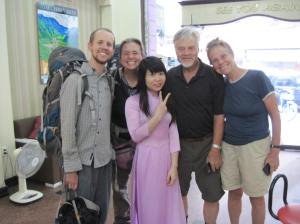
Posing with Ahn, the friendly proprietor at Golden Time Hostel 2

Posing with Ahn, the friendly proprietor at Golden Time Hostel 2

What We Did

Sightseeing in Hanoi was refreshing just because we finally had relief from the heat! It was a little overcast with occasional light rain, but after weeks of sweltering temperatures we didn’t mind too much.

Hoan Kiem Lake and Ngoc Son Temple – This lake in the center of town is pleasant to walk around and a hub of many of the city’s activities. Our hotel was just a block away so we walked by almost every day. There is a legend associated with the lake which states that the Emperor Le Thai To returned a magical sword to a giant turtle that lives in the lake, giving it its name (the English translation is “Lake of the Returned Sword”). A red bridge goes out to the temple on an island in the lake, which contains a stuffed carcass of one of the turtles that still live in the lake. In the mornings you can find local residents doing all sorts of aerobic activities.

Old Quarter – We spent a day just wandering through the maze of narrow streets in the Old Quarter. This is the historic commercial area of the city, and is still buzzing with all sorts of commerce. Interestingly, many of the streets are named after the type of item that was traditionally sold on the street, and in many cases is still sold there today. We especially enjoyed Bamboo Ladder Street and Votive Paper Street. There was also a historic merchant’s home that we visited to get a sense of how the buildings used to look.

Ho Chi Minh Mausoleum and Museum – We had read in advance that the mausoleum housing the preserved body of the national hero Ho Chi Minh (the leader of Vietnamese Communist revolution and first President after independence – their version of George Washington) had limited visiting hours, so we made sure to head over on a morning that it was open. It was more than a quick walk away, and we thought we would save money and hassle by just taking a local bus that Google Maps said would drop us off right in front. But, as we followed the progress of the bus, it took one turn that took it away from the mausoleum, then kept going in that direction. After we passed a giant intersection, we figured we had to get off before we got even further away. We then walked a little bit to get back through the giant intersection and back towards the complex. We hailed a cab, nervous that we would get scammed, but it turned out to be a quick and cheap ride. We never quite figured out why we were on the wrong bus.  We saw the same bus (with the same bus number) later that day near the mausoleum…

There were something like eight roads converging at this circle

There were something like eight roads converging at this circle

The guidebook had warned that the mausoleum was popular, so we weren’t surprised to see a large line going into it. We headed around the side of the complex to find the entry point to the amusement park-style line corrals, and kept going… and going… The line had spilled out of a security checkpoint and across the street. We figured that it would take hours to get through the line, and the mausoleum closed in two hours anyway, so we decided that we would not be able to visit after all.

Instead, we went to the Ho Chi Minh Museum which is in the same complex. It told the story of Ho Chi Minh from childhood through the revolution, but also had some random modern art interpretations of the ideas underlying the Communist revolution, so the overall experience was a little confusing, but quite interesting.

Also in the same complex is the One Pillar Pagoda, which as its name implies, is a temple on top of one pillar, built in 1049 by Emperor Ly Thai Tong. After a brief visit there, we walked to the mausoleum, which was closed for the day. We did get to see a changing of the guards, which was interesting to contrast with the one in Athens. We walked past the current Presidential Palace and tried to make our way to Ho Chi Minh’s Stilt House, but ended up lost in a neighborhood and had to give up.

Imperial Citadel – The complex served as the center of the Vietnamese Empire’s military when the capital was in Hue. Much of it has been lost to the ages (and destroyed by the French), and there are still many archaeological excavations uncovering the site. Some bunkers were also built here during the modern war as command centers for the Northern Vietnam army, and were preserved as they were then. We weren’t expecting to spend much time here, but there turned out to be quite a few things to see so we spent almost a whole afternoon. We also enjoyed the extensive bonsai collection as well as high school graduates posing for pictures in traditional outfits.

Temple of Literature – There were also plenty of graduates posing for pictures in the scenic pavilions and courtyards that make up this temple. Fitting, because it was established in 1070 to honor scholars, and dedicated to Confucius, the famous Chinese philosopher. It also served as a university, and you can still see stelae that list those who received doctoral degrees.

Hoa Lo Prison Museum – The small sliver that remains of an old prison built by the French has now been turned into a museum describing its former use. The majority of the exhibits were dedicated to its use by the French to hold and execute Vietnamese political prisoners. There were two small rooms describing its role as a jail for American prisoners of war during the Vietnam war (when they gave it the nickname the “Hanoi Hilton”). The most famous resident was probably John McCain.

Vietnamese Women’s Museum – This modern museum describes the role of women in the culture and history of Vietnam. Special attention was paid to women during the Vietnam War, where they were involved both on the home front as well as on the front lines. The cultural aspects felt a lot like many of the other ethnographic museums we had visited, in that it described the various traditions and clothing (involving women) of the many ethnic groups that make up Vietnam.

Water Puppet Show – We took in one of the performances of this unique art form that started in the rice paddies of North Vietnam. This puppet show uses water as the stage for many small vignettes using different puppets, accompanied by a small traditional orchestra. We were fascinated the whole time by the spectacle.

54 Traditions Gallery – Wayne and Peggy know one of the founders of this neat collection of artifacts from the different cultures found in Vietnam (the name comes from the fact that there are 54 different cultures!). Their friend Mark gave us a nice tour of their collection, where we feel like we barely scratched the surface of all of the interesting stories associated with the items. Wayne and Peggy purchased a nice artifact that was once part of an altar in a temple.

Street Hair Cut – Wayne needed a trim, so he went just down the street from the hotel to a barber set up on the street. He got a nice cut for a very good price, and a good story to tell!

Zumba Class – See the separate post.

Where We Ate

Hanoi is known as one of the best places to get some Vietnamese street food, and we didn’t delay testing this out. We had our first lunch at a little place right outside the hotel. Most places just set up little plastic tables and chairs – think what you would use at a kid’s tea party. We crouched down into these chairs and ordered their main dish, bun cha, which is sweetly-marinated grilled pork served with a broth over vermicelli noodles. We also had Hanoi-style spring rolls, meaning they are fried (we decided we preferred the fresh ones to fried).

IMG_7067

Hanoi also has plenty of small sit-down restaurants in the area of the Old Quarter, and we visited a few. The first night we went to Minh Thuy’s in the main backpacker area. Eric and Peggy got the specialty called xoi xeo, which was a yellow sticky rice.

IMG_7090

On the night of the water puppet show, we needed a place to eat quickly, so Tony at the hotel recommended New Day, which turned out to be a great call. We were worried that there was no seating, but they found a place to squeeze us in. For food, we were able to select a bunch of premade dishes from cafeteria-style trays and get them brought to our table promptly. It was all very tasty, so much so that we went back on our last night in town (but that time ordered from a menu).
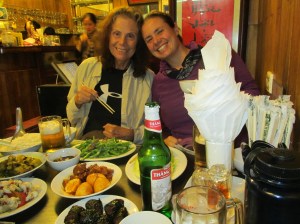
IMG_7158

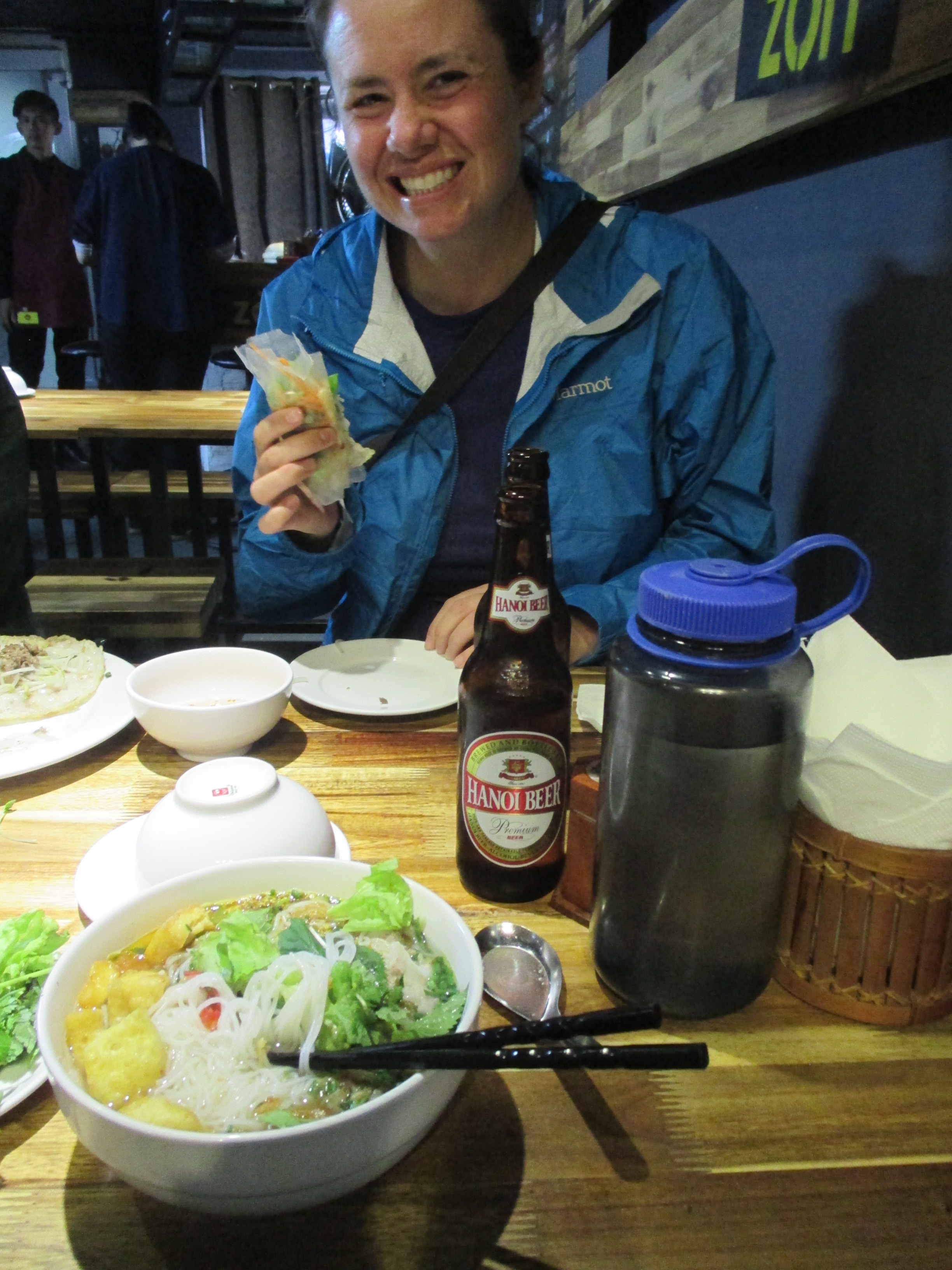
The night after the Zumba class, we wanted something simple and close, so we headed to a small place just around the corner from the hotel called Bahn Xeo Zon. As the name suggests, their specialty is bahn xeo, the Vietnamese savory pancake. Their version was probably the best one we had in Vietnam. Eric got a crab-flavored noodle soup called bun rieu cua.

Bun rieu cua in the foreground, Della enjoying a banh xeo in the background

Bun rieu cua in the foreground, Della enjoying a banh xeo in the background

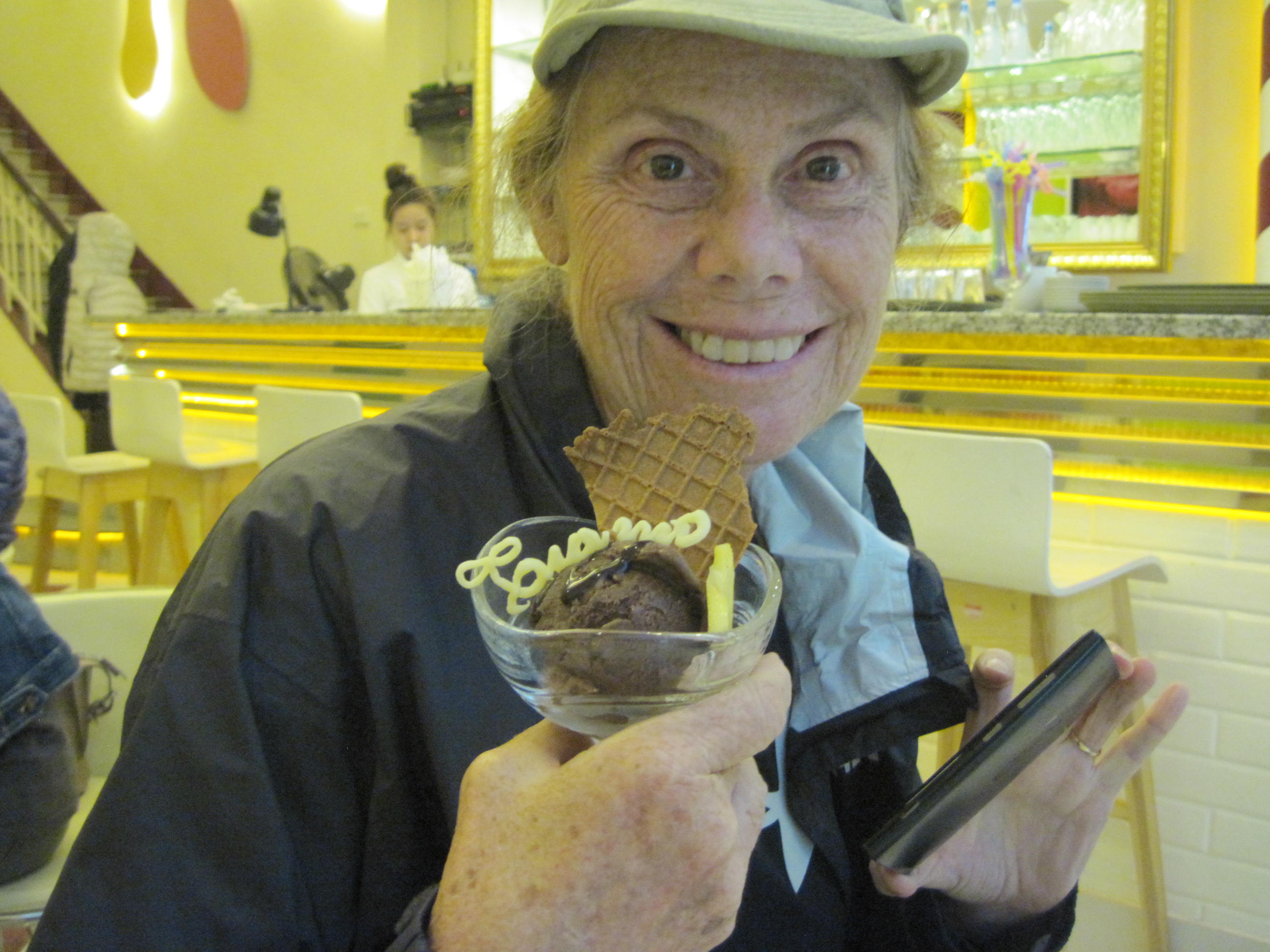
We also splurged one evening and got some gelato from a fancy place on the same block as the hotel. It was a little overpriced but the service and presentation were excellent.

IMG_0374

Final Thoughts

Hanoi greatly exceeded our expectations! We found the city’s ancient and recent history enlightening to explore, and the food was all very good and cheap. We didn’t find that people treated us poorly; the service was at the same high level that received throughout Vietnam. The weather was a little gloomy, but never kept us from doing what we wanted. Even with our jam-packed three days, there are plenty of things we feel like we missed out on. Hopefully we can figure out how to fit Hanoi back into future travels.