Scotland Road Trip: Glencoe, Glenfinnan, and the Isle of Skye

In the summer of 2024, we took a trip to Scotland with our two children, ages six and three. After a longer than expected journey getting there, and two nights in Edinburgh, we rented a car and took a road trip through the Highlands.

Glencoe

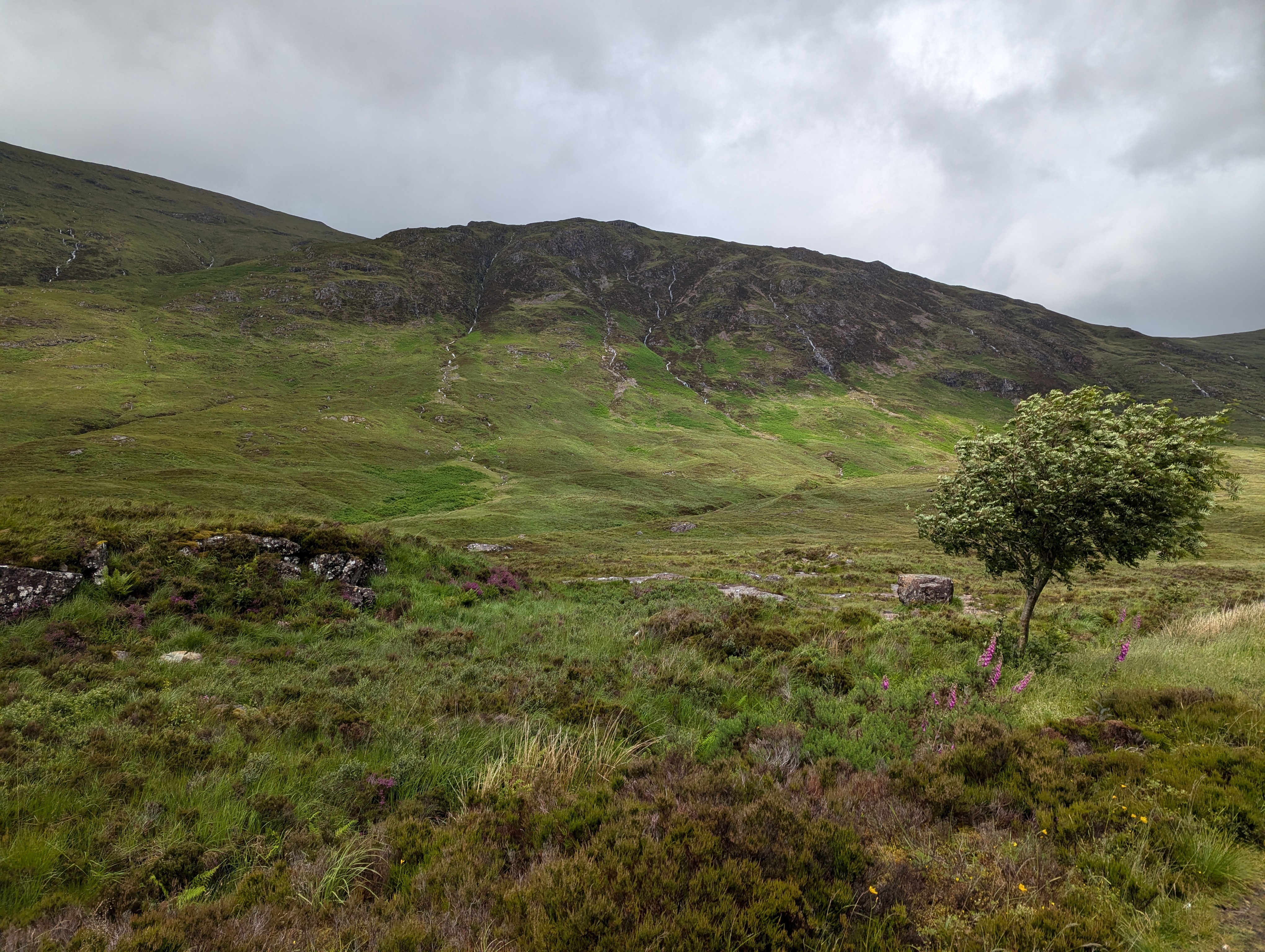
After checking out of the hostel in Oban, we drove north along the coast. Our next stop was Glencoe (also written as Glen Coe), a beautiful valley in the Scottish Highlands. If you have watched Outlander, you have seen this beautiful area in the opening credits. There is a highway that provides for a scenic drive through the valley and a number of hiking opportunities along the way.

We stopped at the Visitor Centre to get more information about the area and what hikes would be best to do with kids. They also had a reconstruction of a 17th-century turf house showing what life was like in that era.
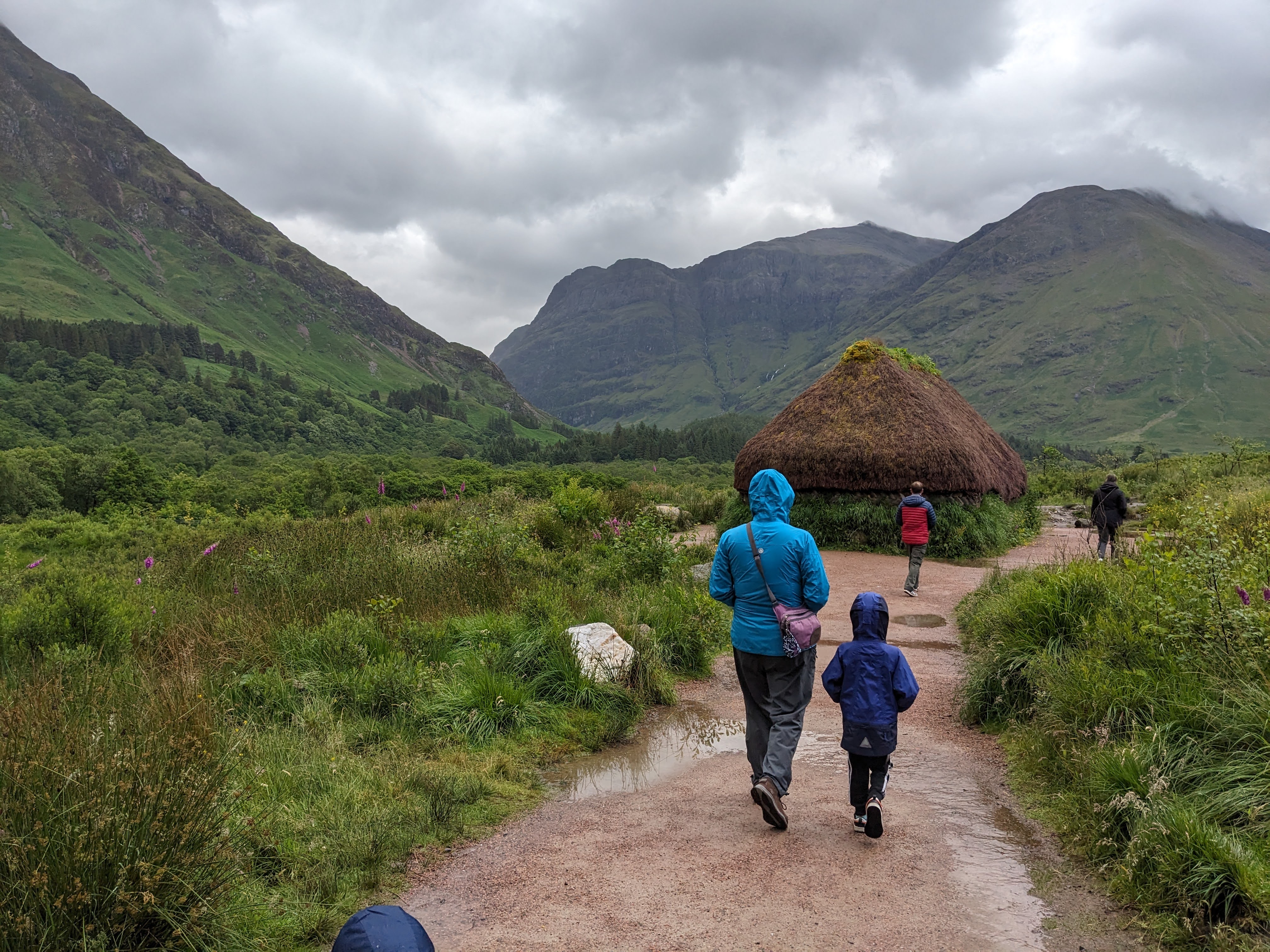
Nice views of Glencoe from the turf house

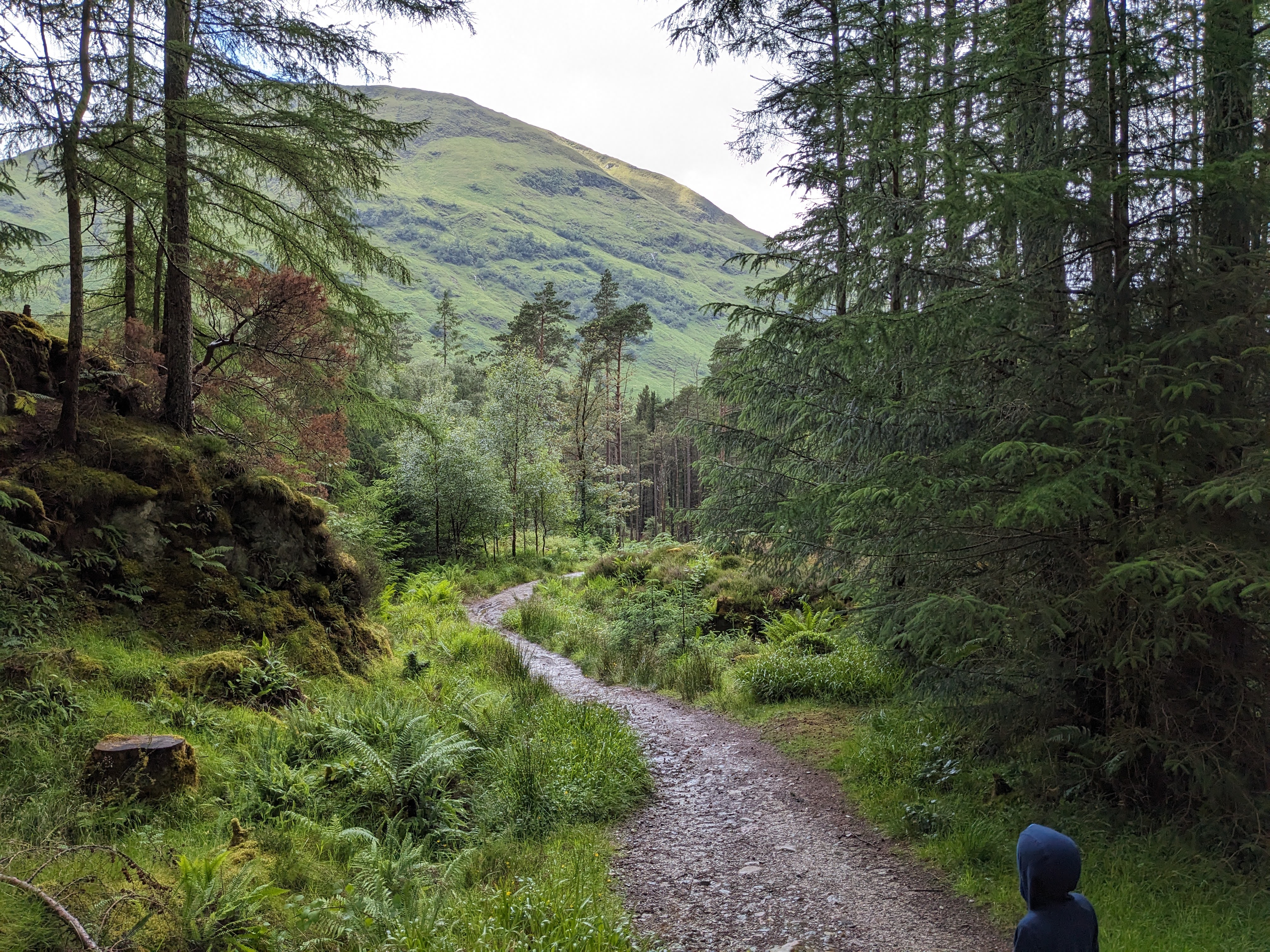
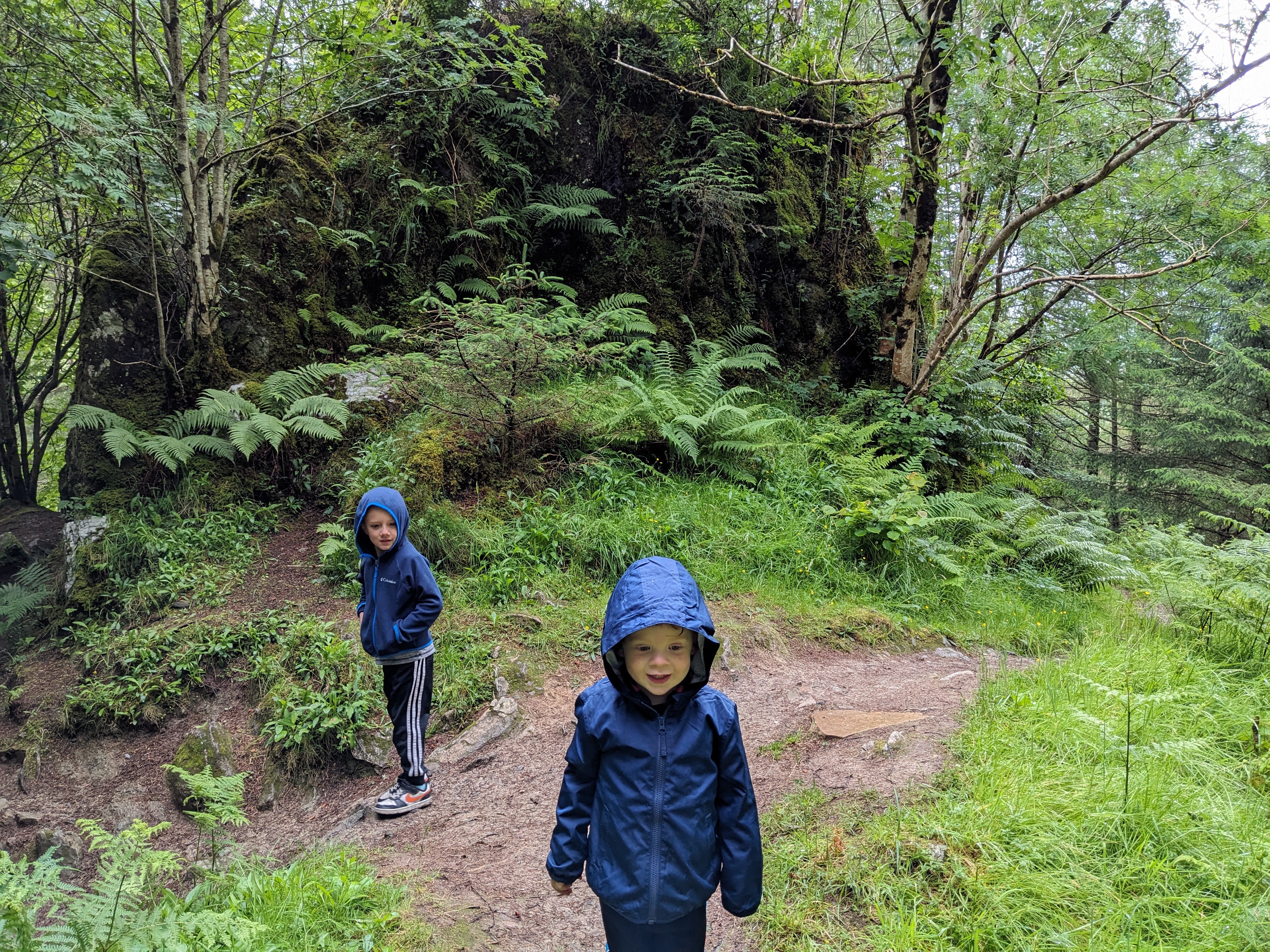
The rain seemed to have cleared slightly, so we next did the nearby Signal Rock hike. It involved some mild up and down through a (planted) conifer forest. There was lots of mud and some puddles we had to help the kids get around. The rock itself is now surrounded by trees, so you don’t get the visibility you would have had when it was supposedly used to signal the start of the Glencoe Massacre. It did start raining again on our walk back so we tried to move quickly.

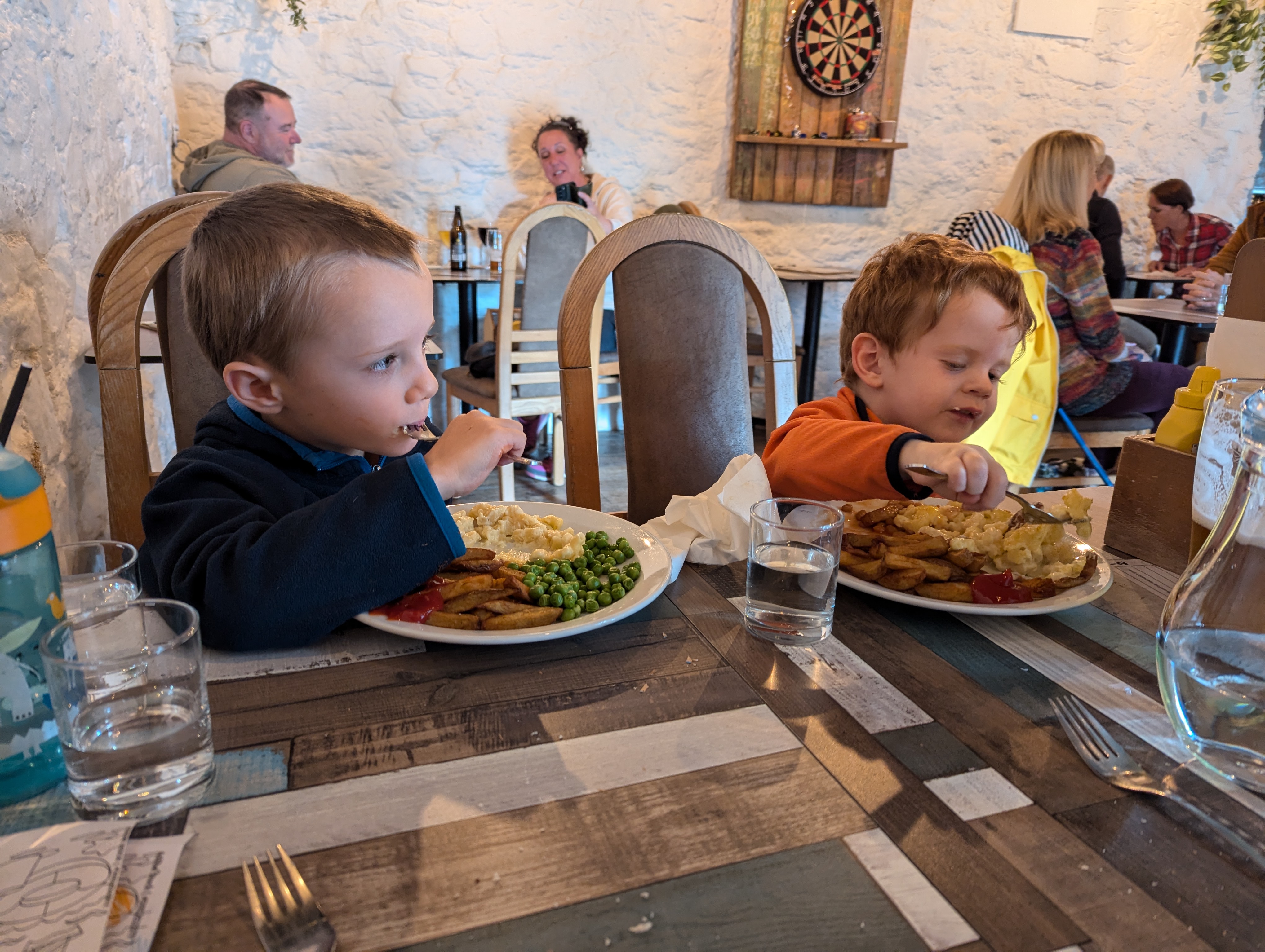
For lunch, we stopped at the recommended restaurant of the nearby Clachaig Inn. We were impressed that even with a number of other visitors our food came quickly. We were also excited to hear that the music that they were playing matched many of the songs on our road trip soundtrack.
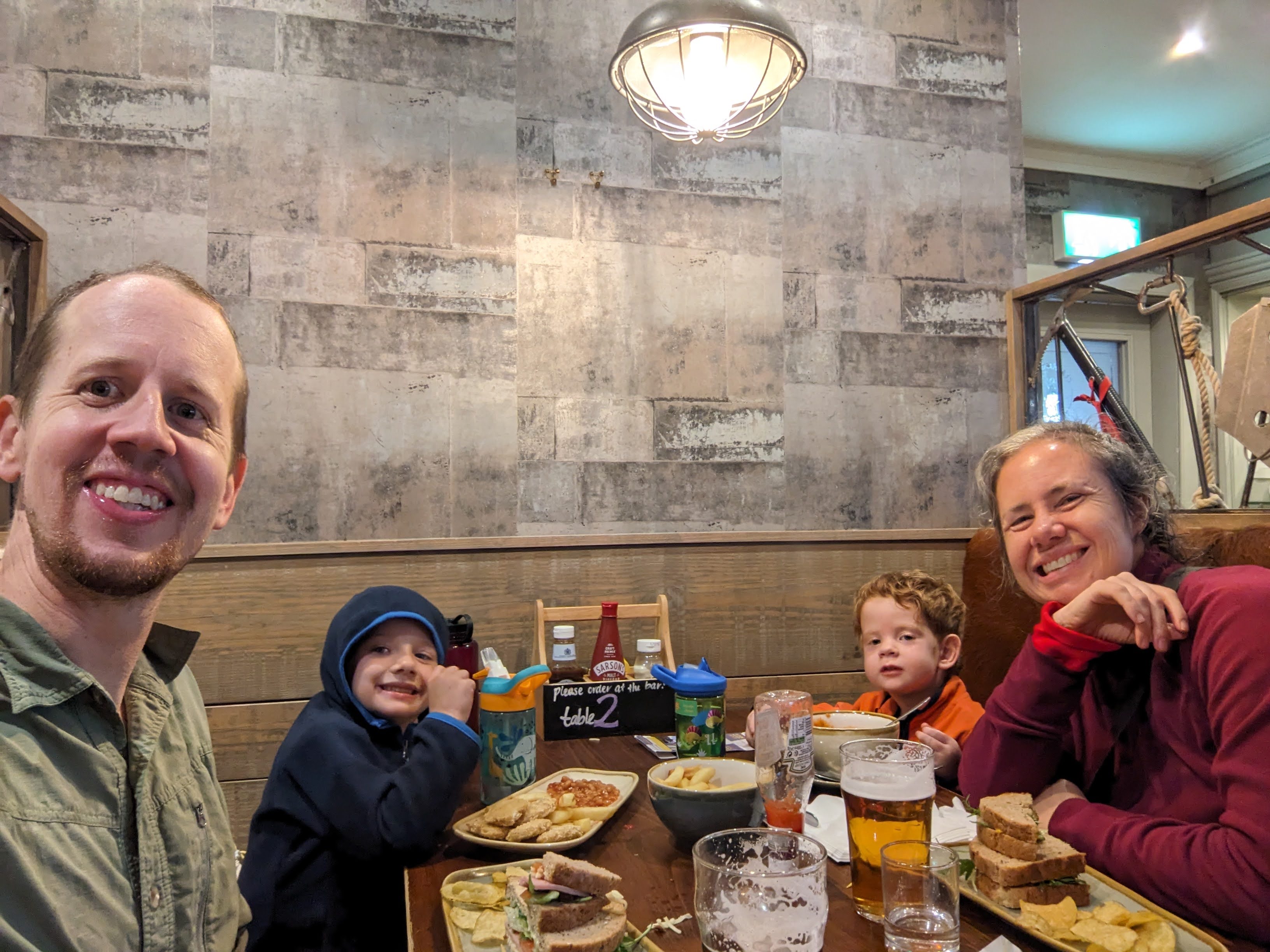
After the welcome chance to dry off and warm up, we got back in the car, cranked up the Outlander theme song, and drove the scenic road through Glencoe. The views did not disappoint!

Glencoe

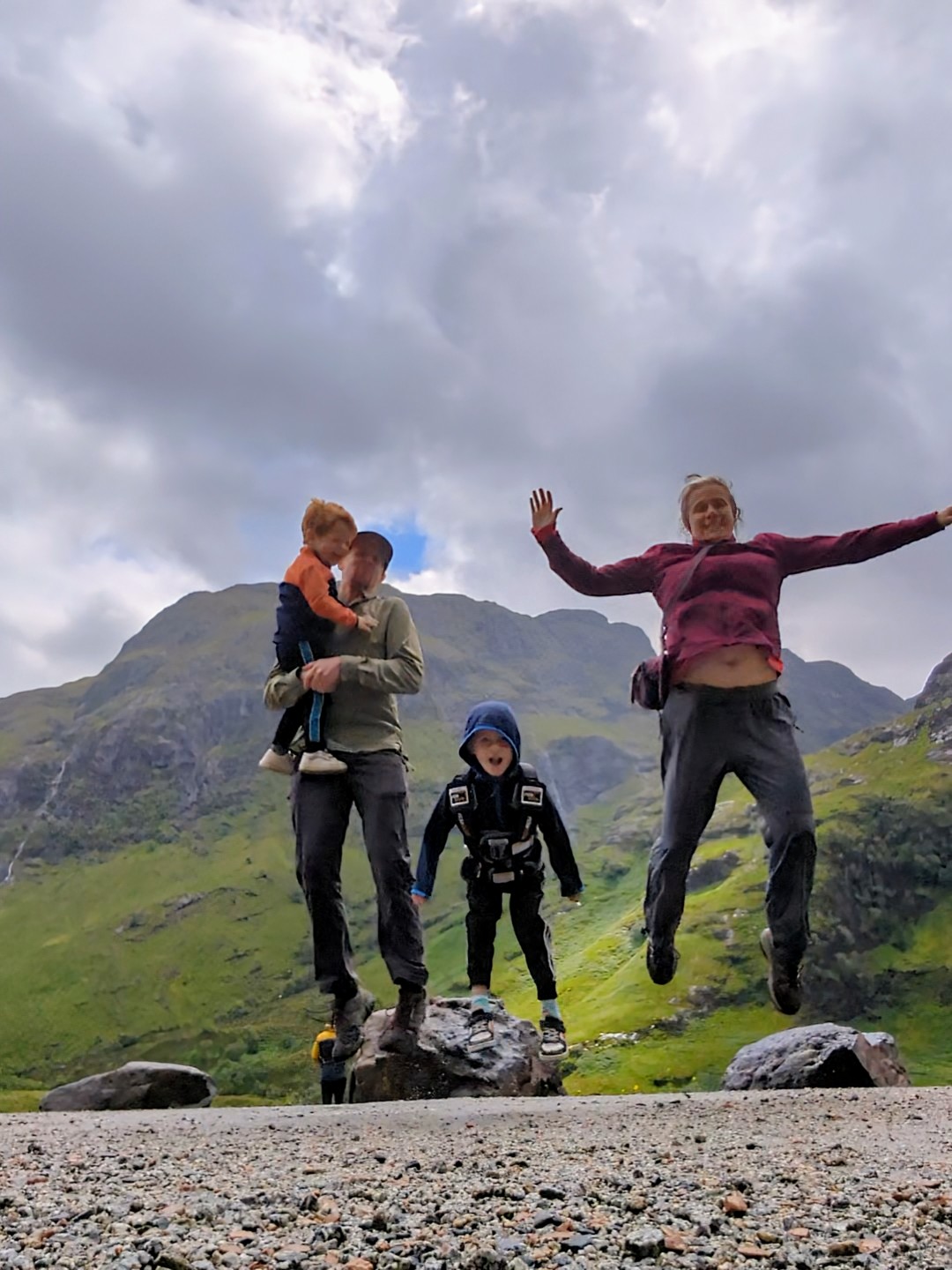
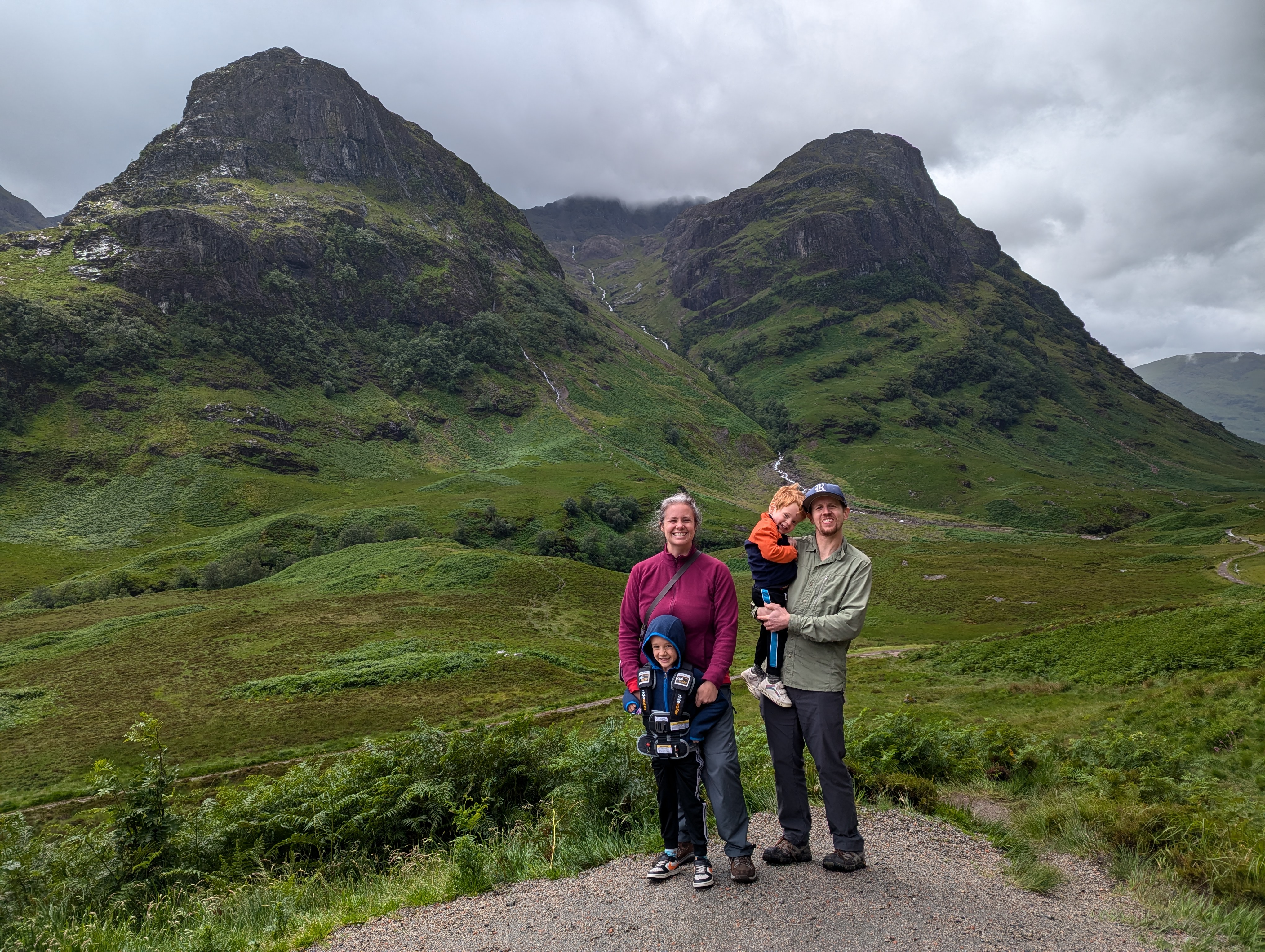
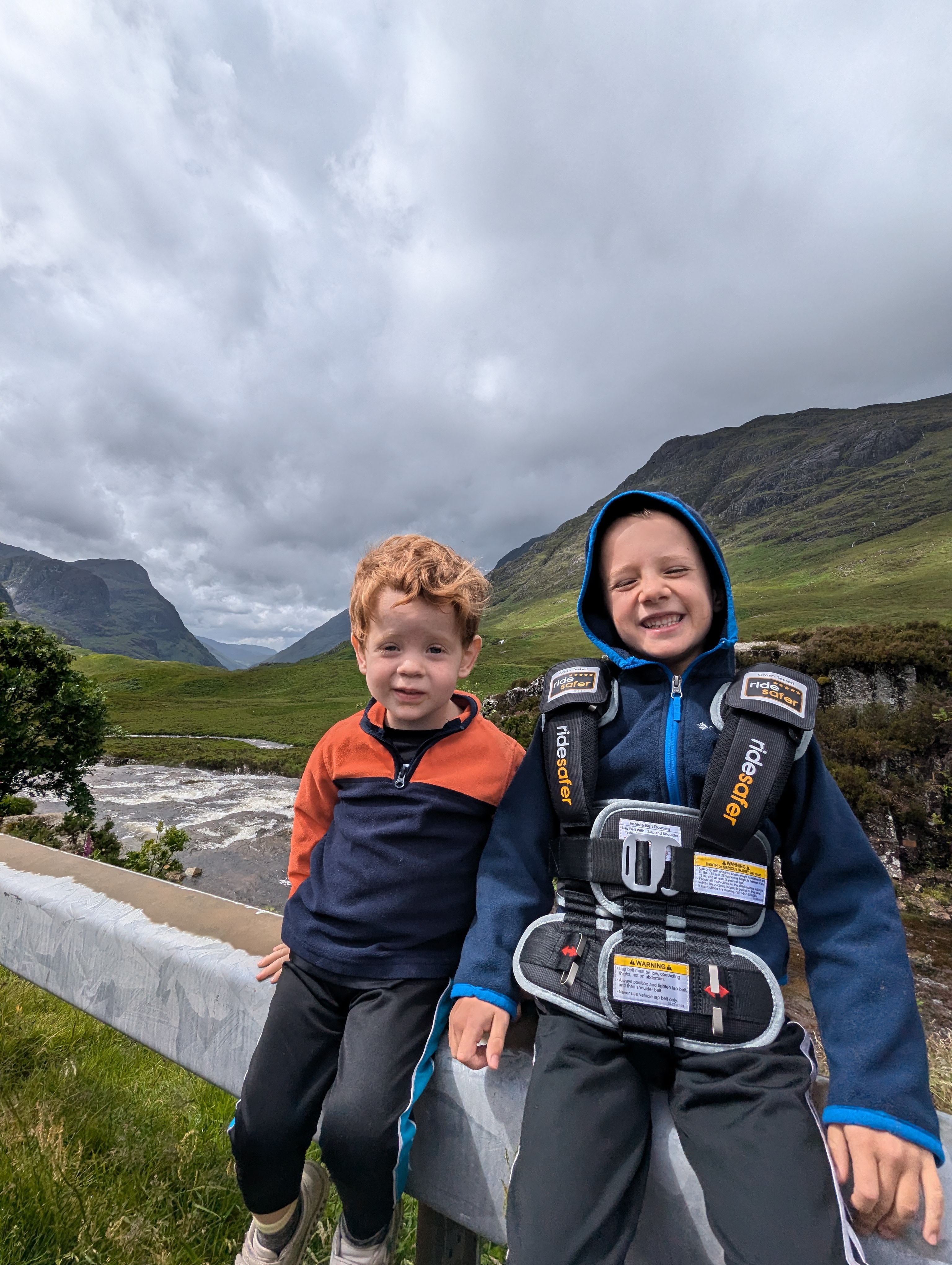
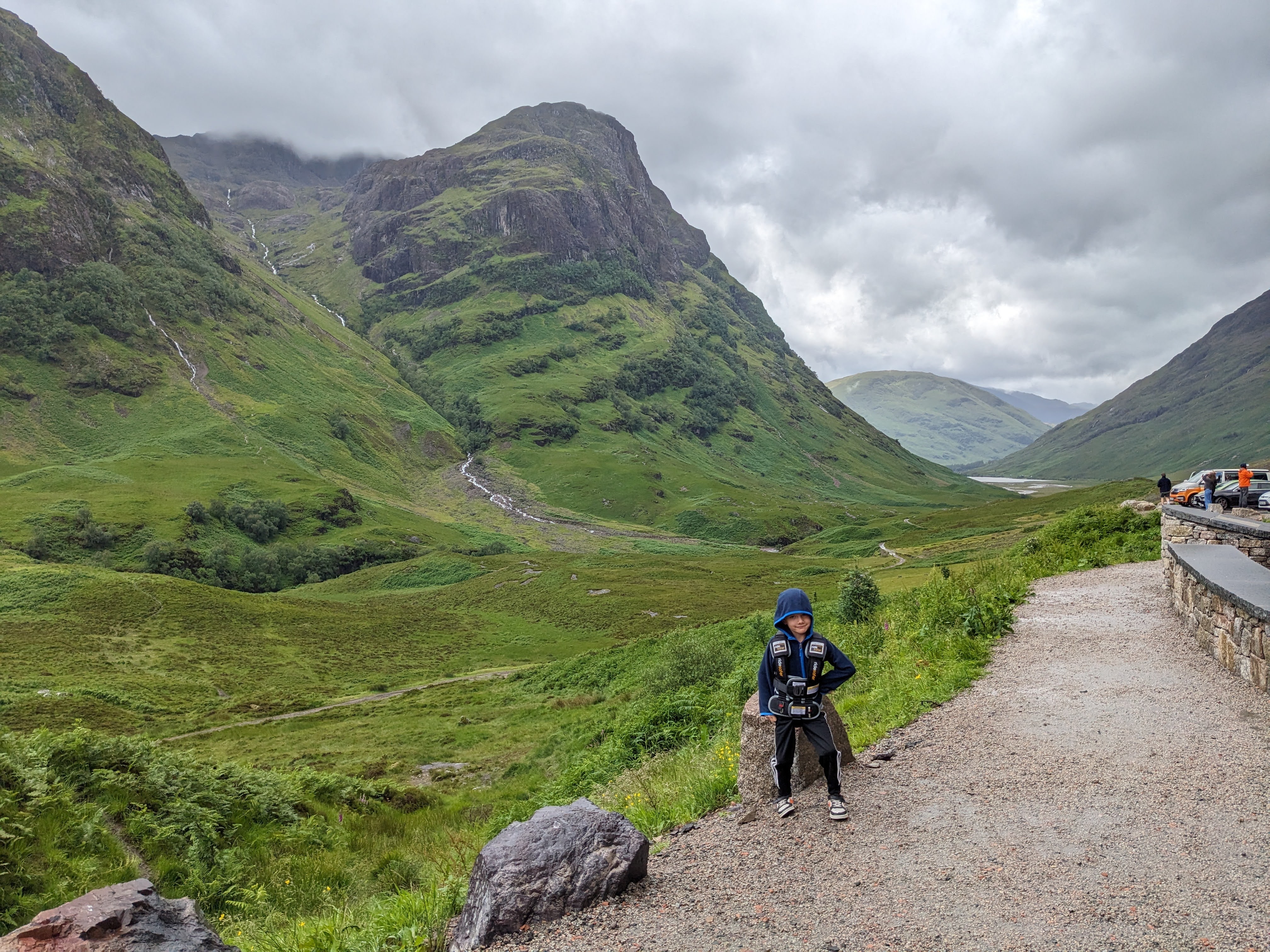
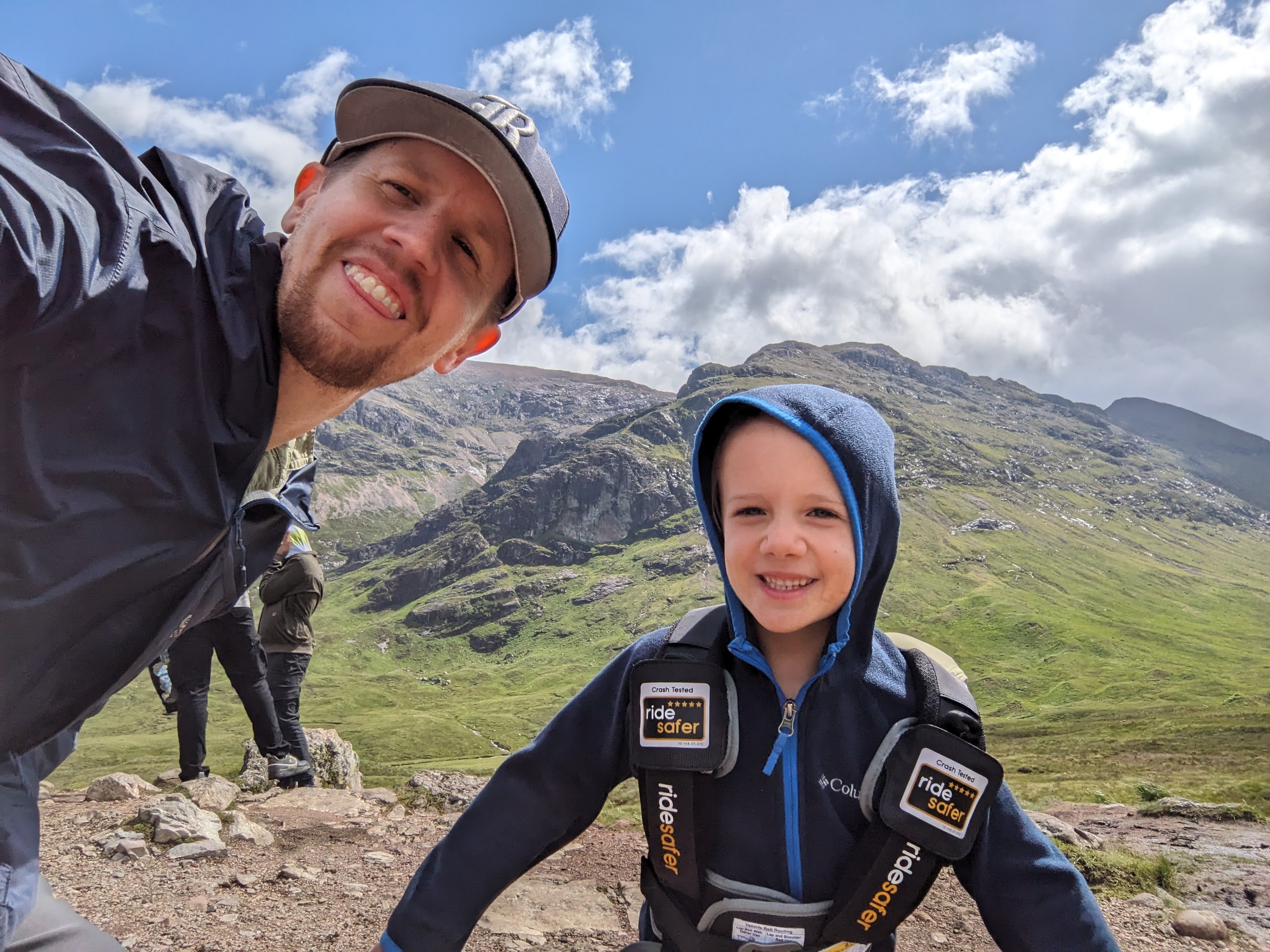
We stopped at the Three Sisters Viewpoint where there are great views across at the Three Sisters mountains, plus up and down the valley.

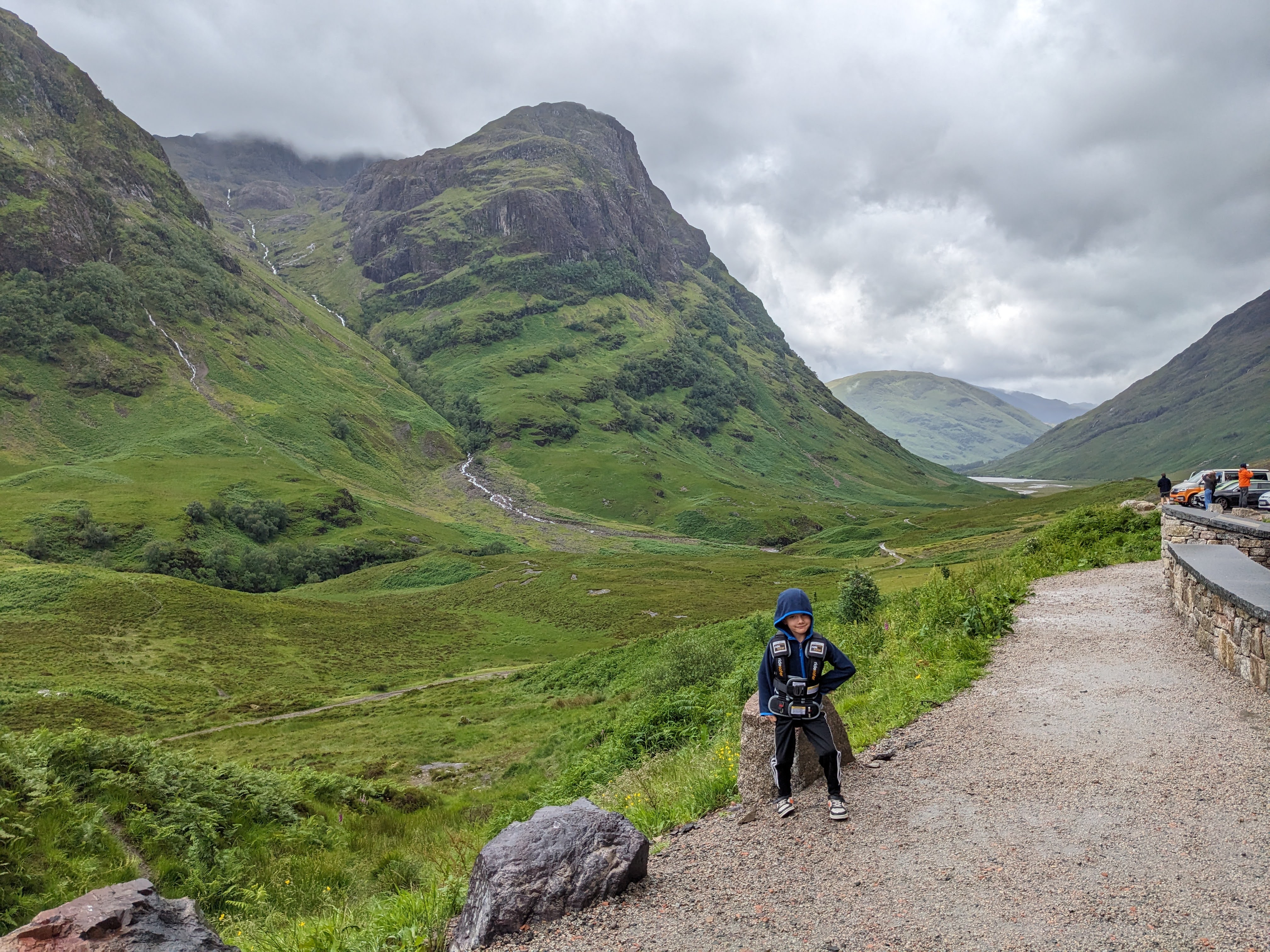
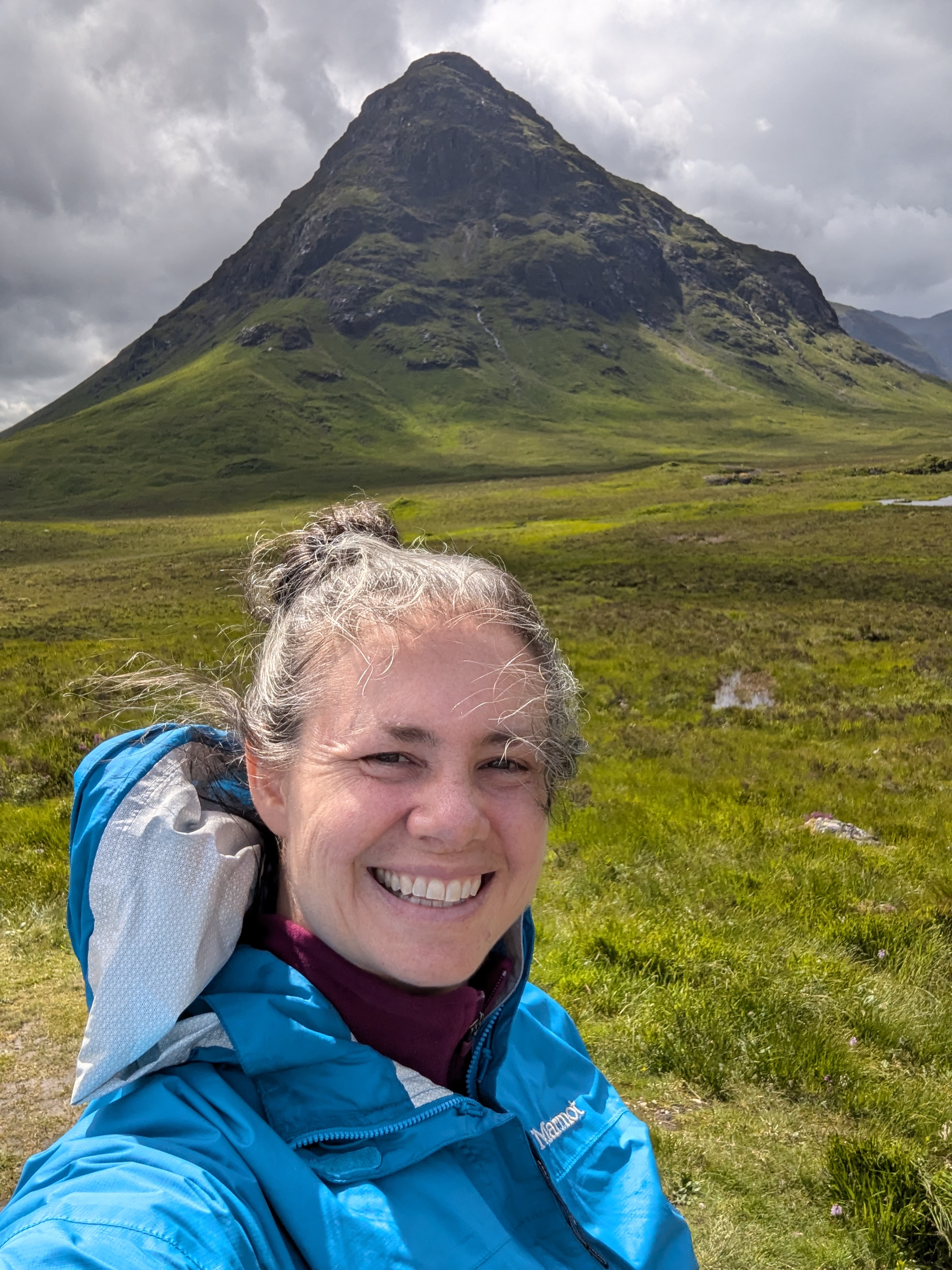
We stopped one other place where Rick Steves had recommended a hike, but it seemed too windy to be enjoyable. We did get some great views from the parking area though.
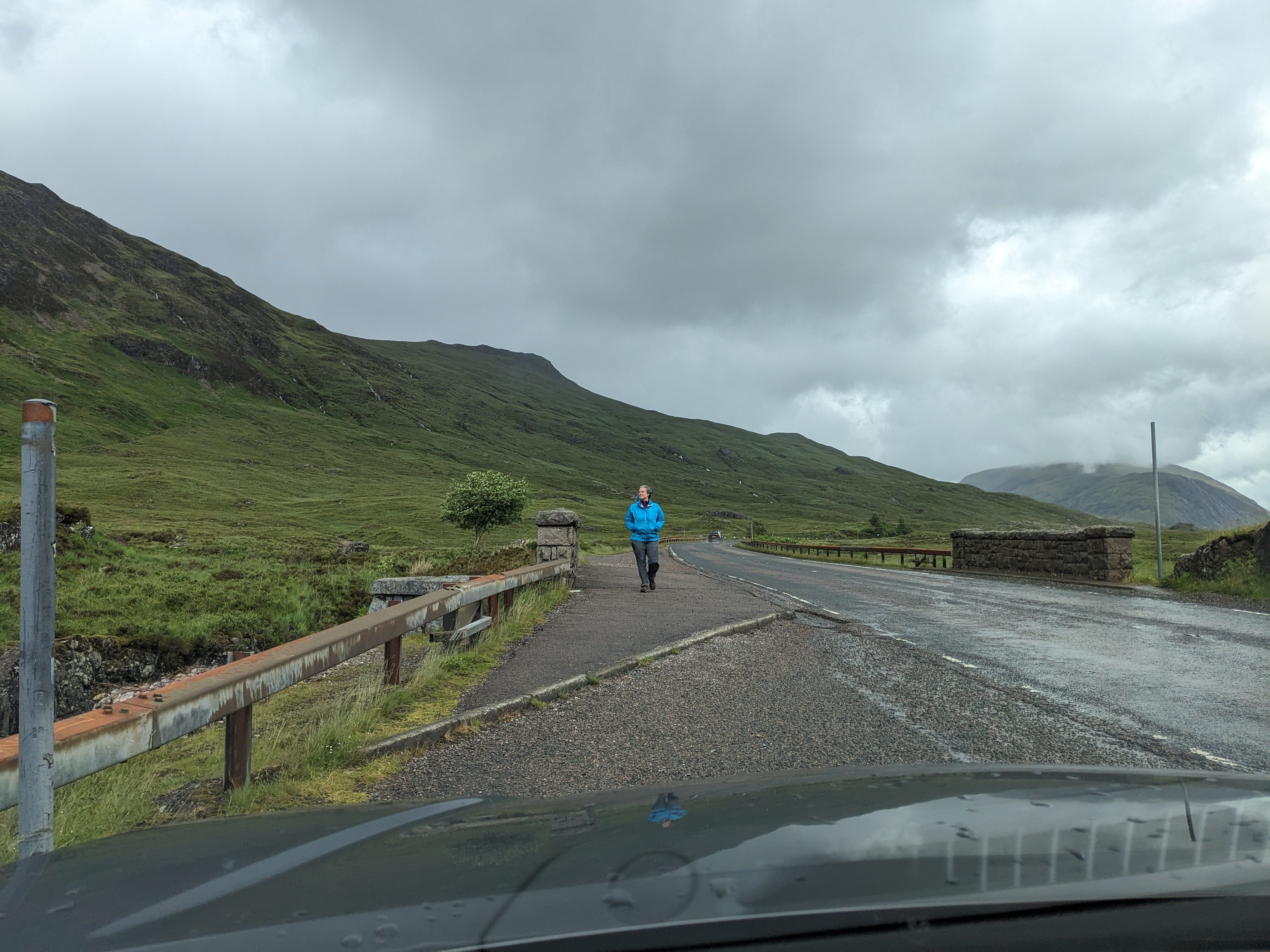
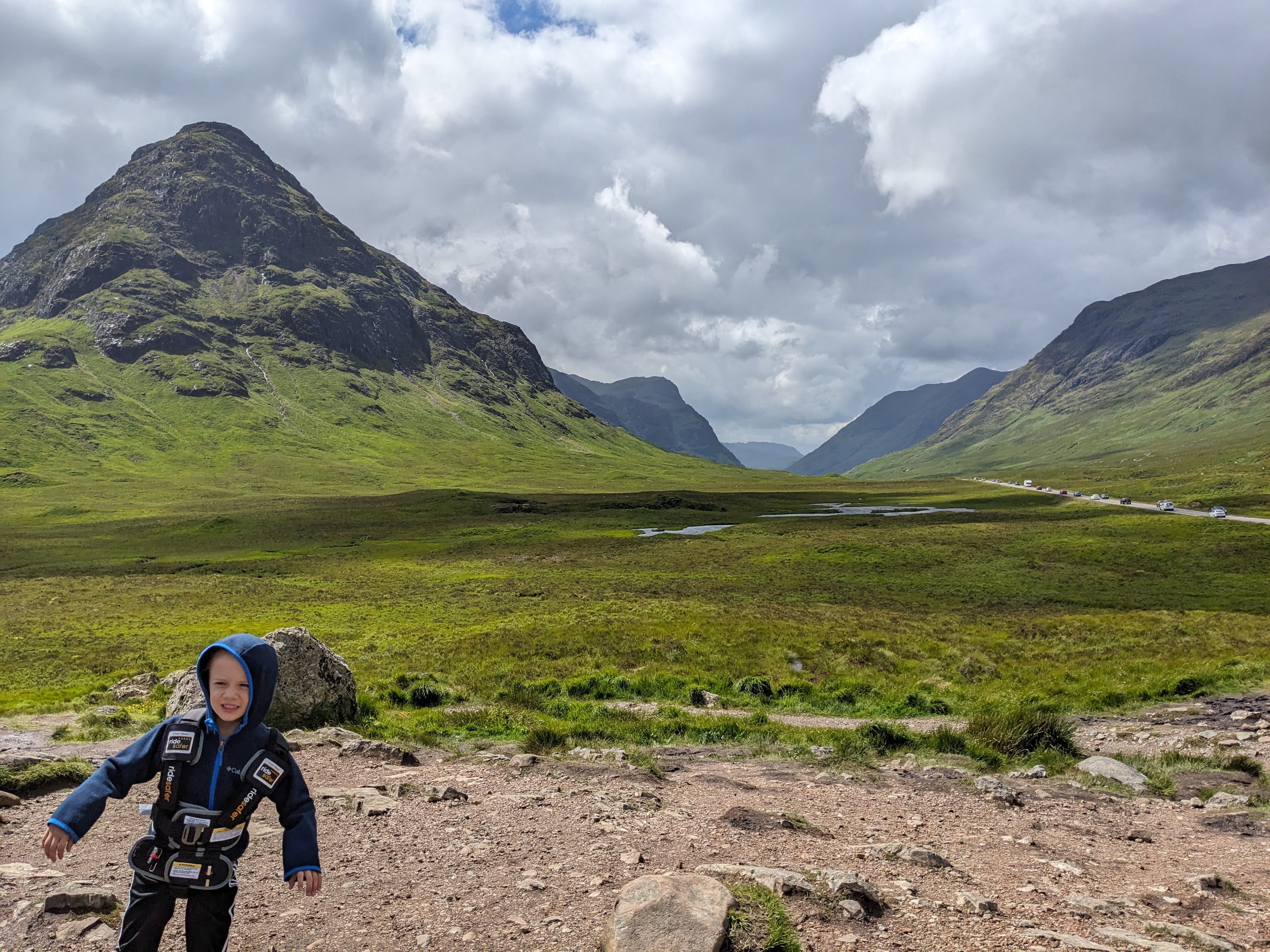
Once we got to an area called Rannoch Moor, the hills flattened out. We turned around and drove back through Glencoe, getting to see the beautiful valley coming from the opposite direction.
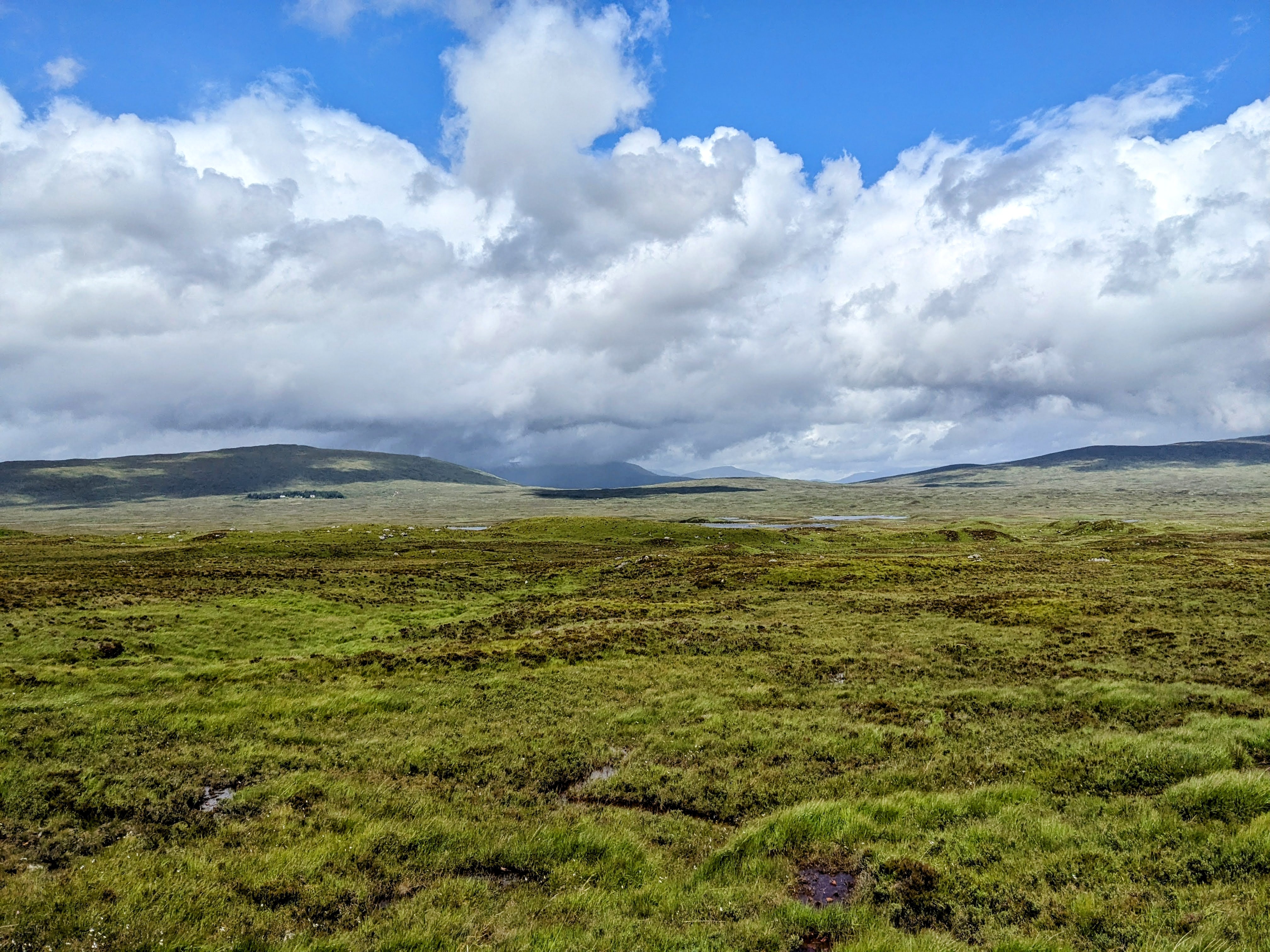
We stopped at one more overlook, but had to take turns getting out because our younger kid had fallen asleep.
Glenfinnan

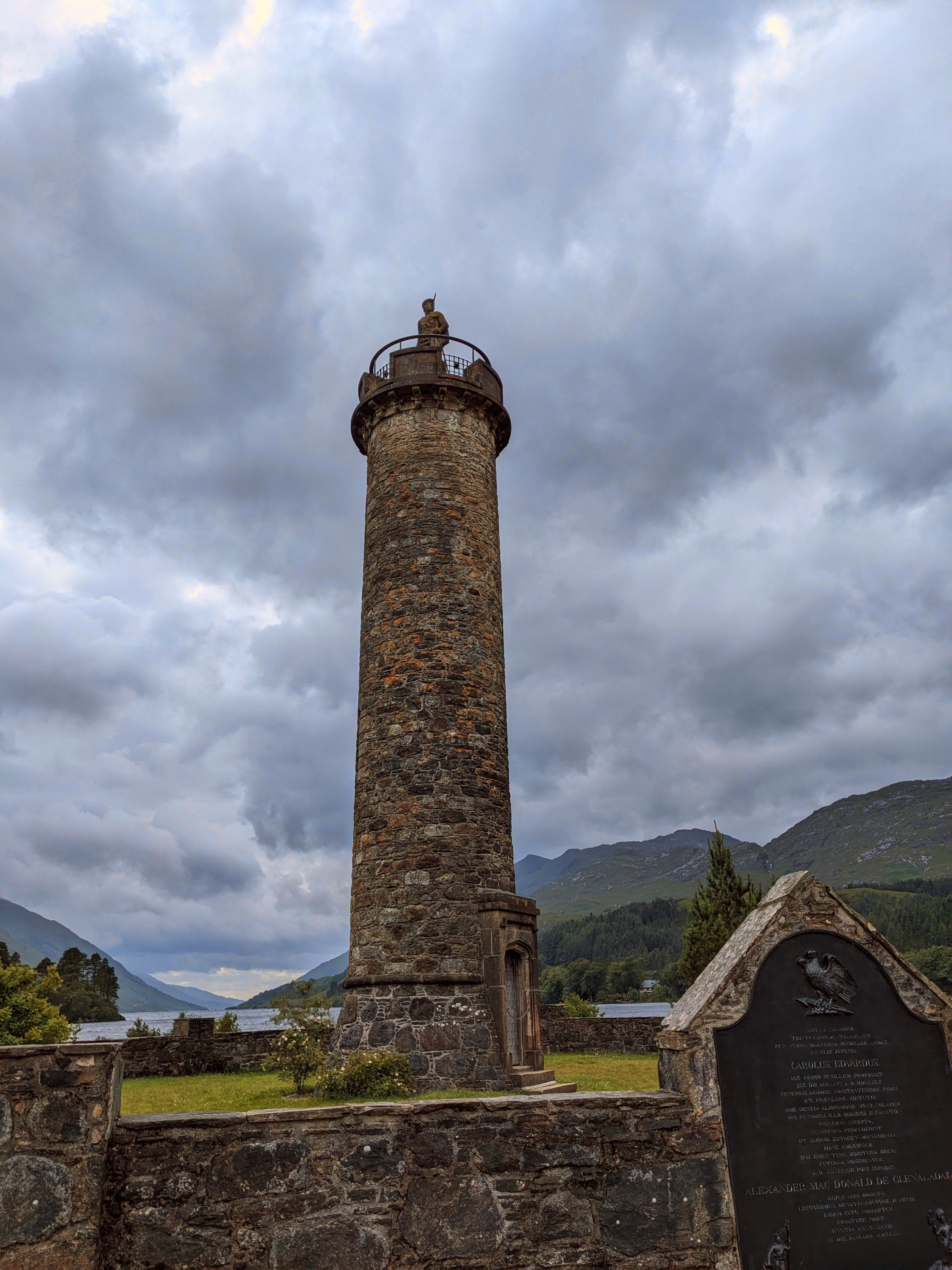
After driving back through Glencoe, we got back on the bigger coastal highway and continued north through the town of Fort William (and its many roundabouts). Our next destination was the Glenfinnan Monument. This is again another location of particular significance to fans of Outlander. The monument marks the spot where Charles Edward Stuart (“Bonnie Prince Charlie”) landed in Scotland in 1745 to start the 1745 Jacobite Rising – the conflict featured in the novel and show.

Before checking out the monument, we walked over to see the attraction that perhaps draws even more visitors to the area: the Glenfinnan Viaduct. This expansive railway viaduct was popularized when it was used as a filming location in the Harry Potter films as part of the tracks that the train to Hogwarts takes. There is a steam train for tourists that makes a few trips daily over the viaduct, and it has become a very popular destination for fans looking to get a picture. We debated trying to see it, but we would have either had to cut our time in Glencoe short or arrive late to our hotel in the evening, and we ultimately decided it wasn’t worth fighting the crowds anyway.
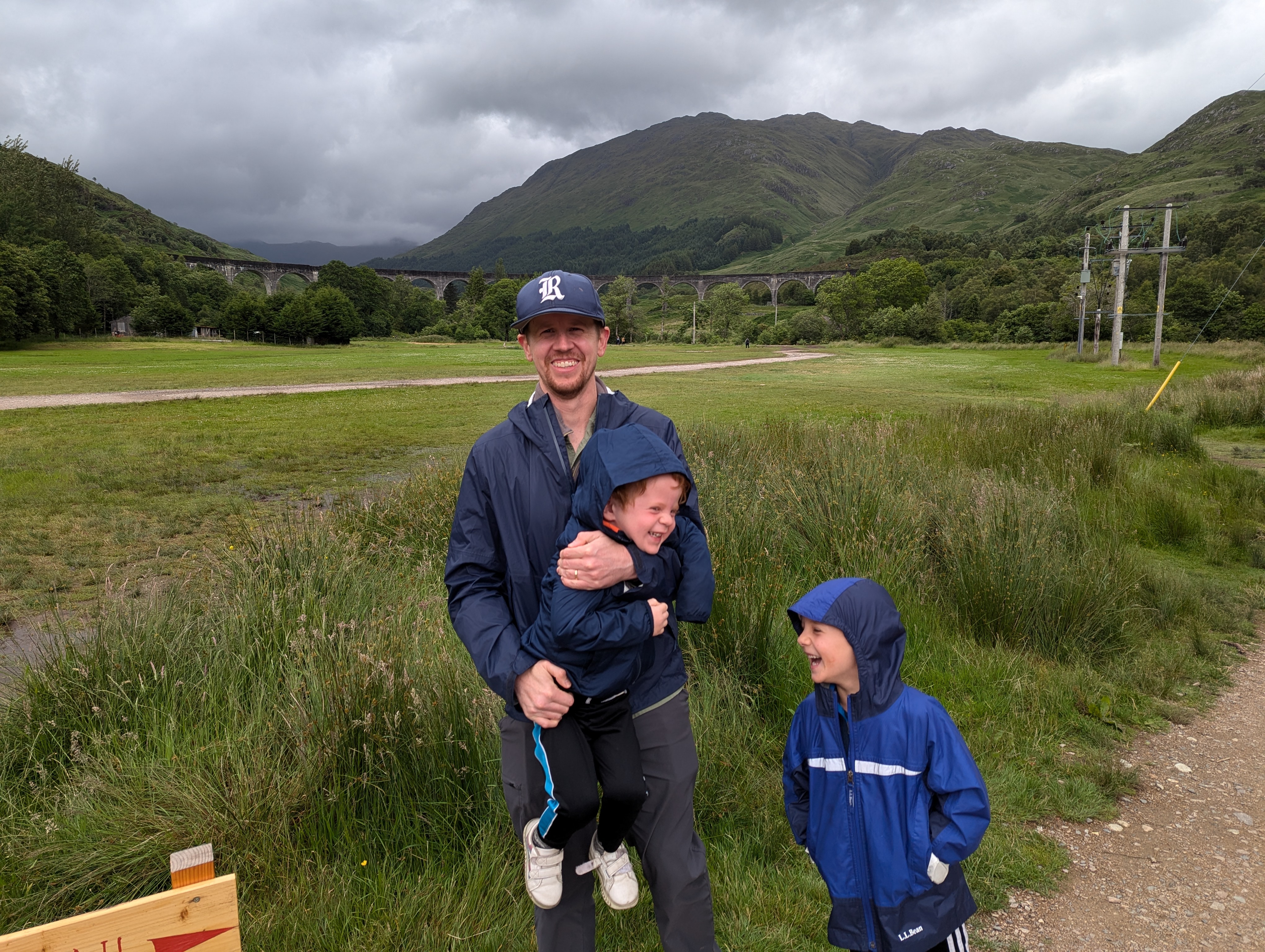
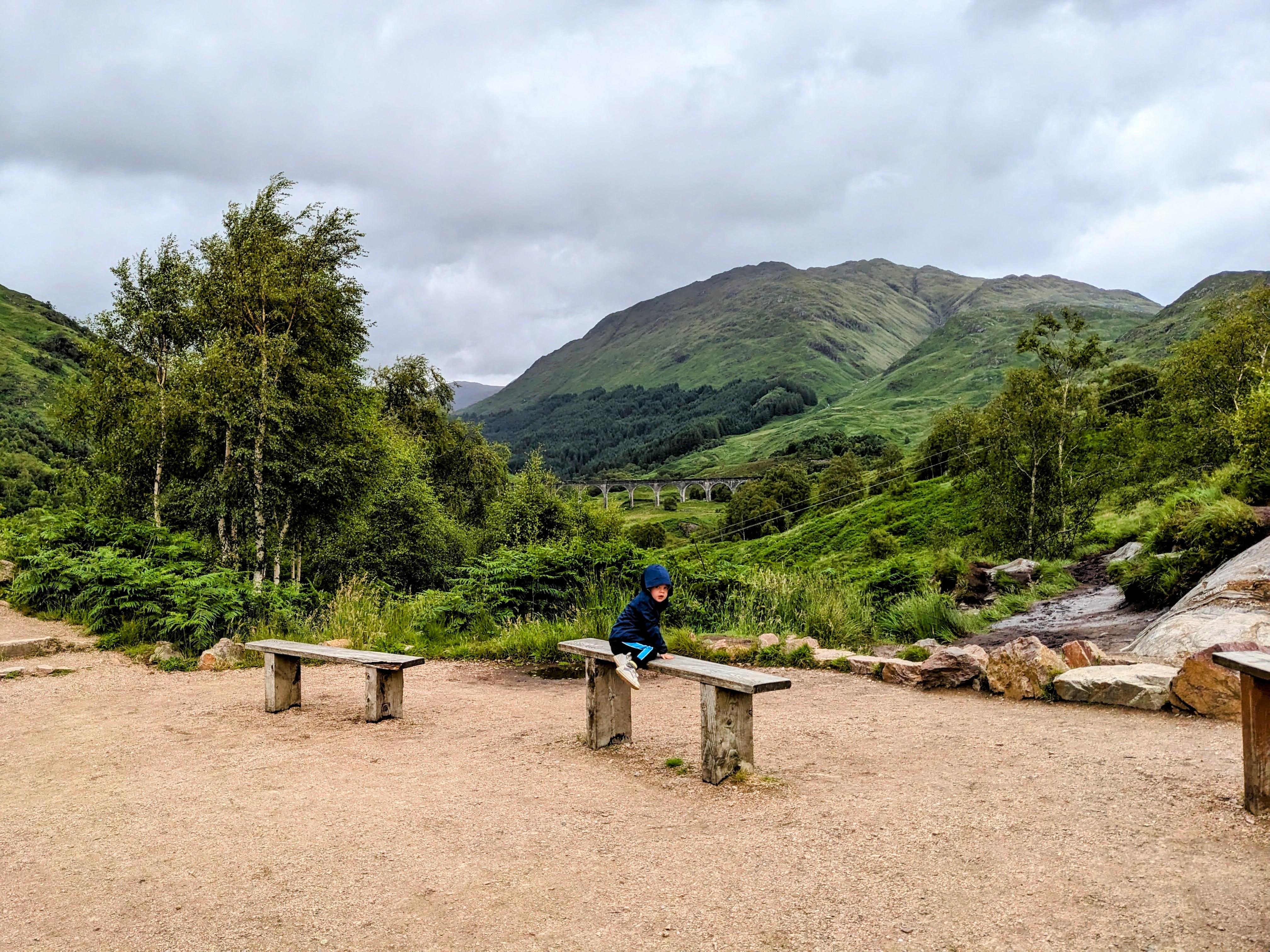
Glenfinnan Viaduct in the distance

Next, we learned more about the monument in the small visitor centre, and then walked across the road to walk around the monument. The Highlander soldier at the top seems especially evocative.

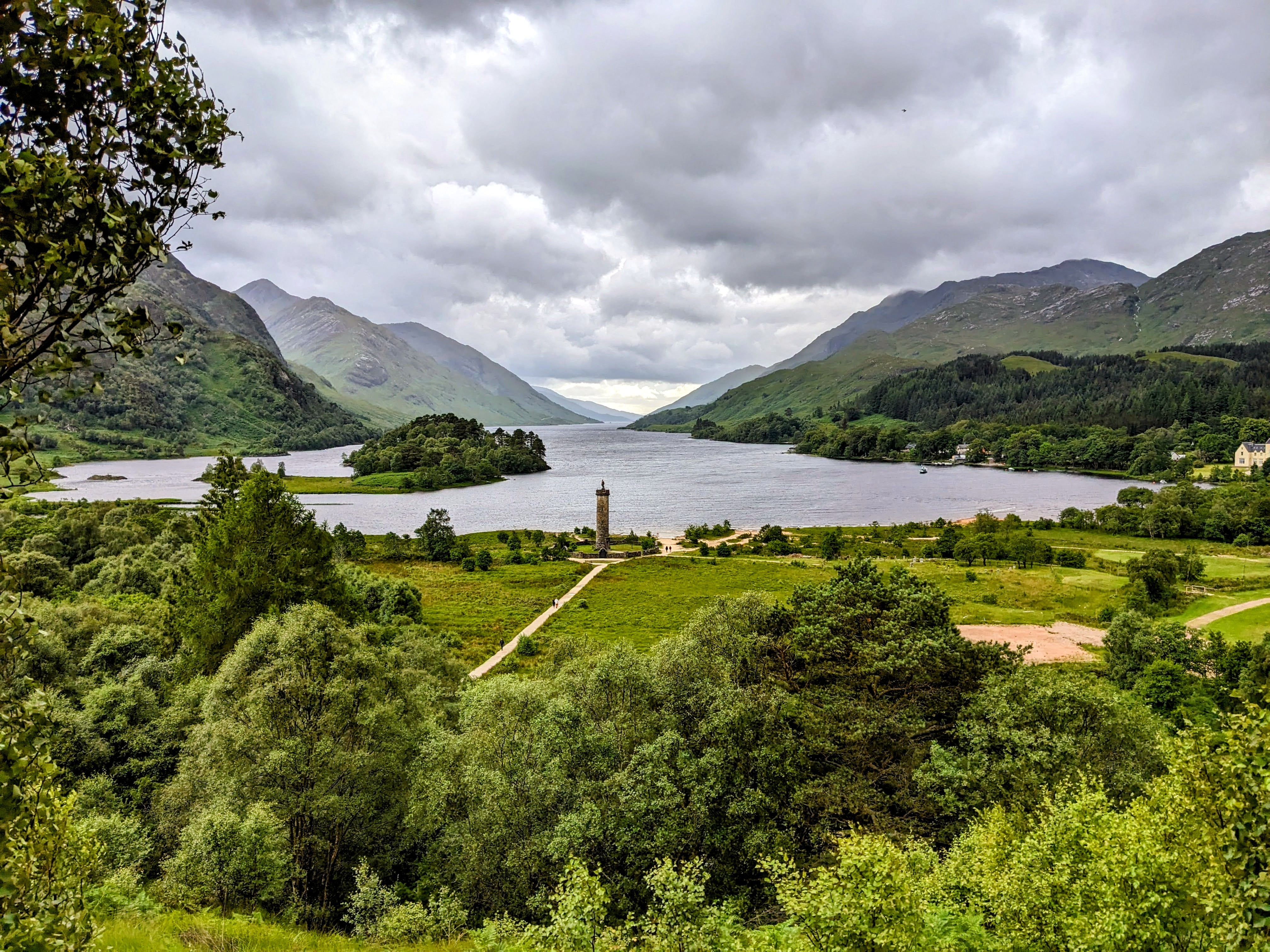
To wrap up our time, we took a short trail up to a viewpoint with good views of both of these attractions.
Arisaig

When we were putting together our road trip itinerary, the toughest puzzle was figuring out where to stay between Oban and Skye. We thought about staying near Glenfinnan itself, but there aren’t any budget options near there. Ultimately we had the revelation that it might be good to stay as close to Skye as possible so that we could spend as much time as possible there the next day. With that goal in mind, we looked near the port of Mallaig where we could catch the ferry the next morning. We found a reasonably priced hotel in the town of Arisaig.

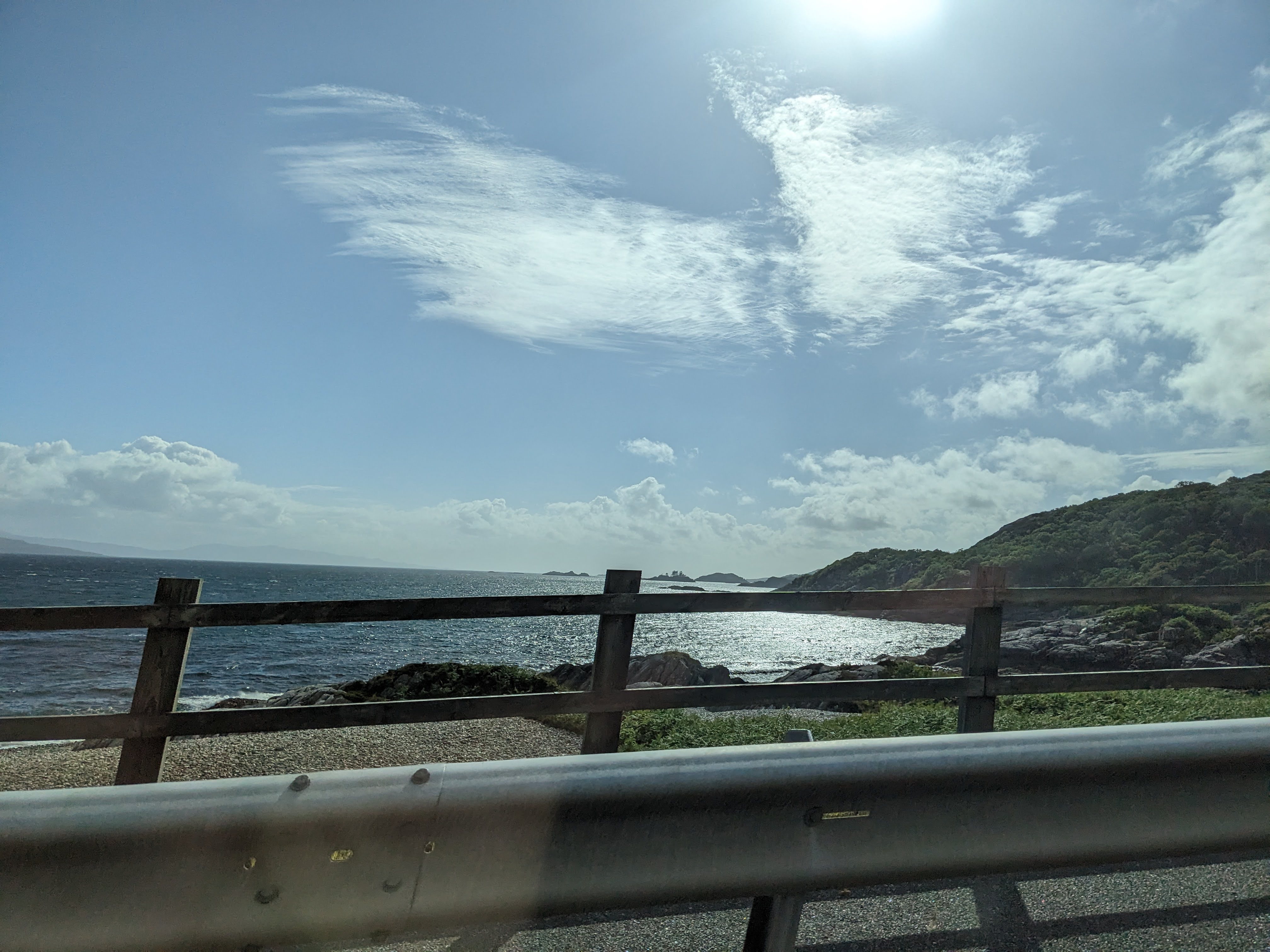
The drive from Glenfinnan to Arisaig along the “Road to the Isles” was quite scenic. The sun came out and made for nice views over the water. We could see the train tracks for most of the way too, and we even briefly saw the steam “Harry Potter” train when we went under it on a bridge – too quickly for pictures unfortunately.

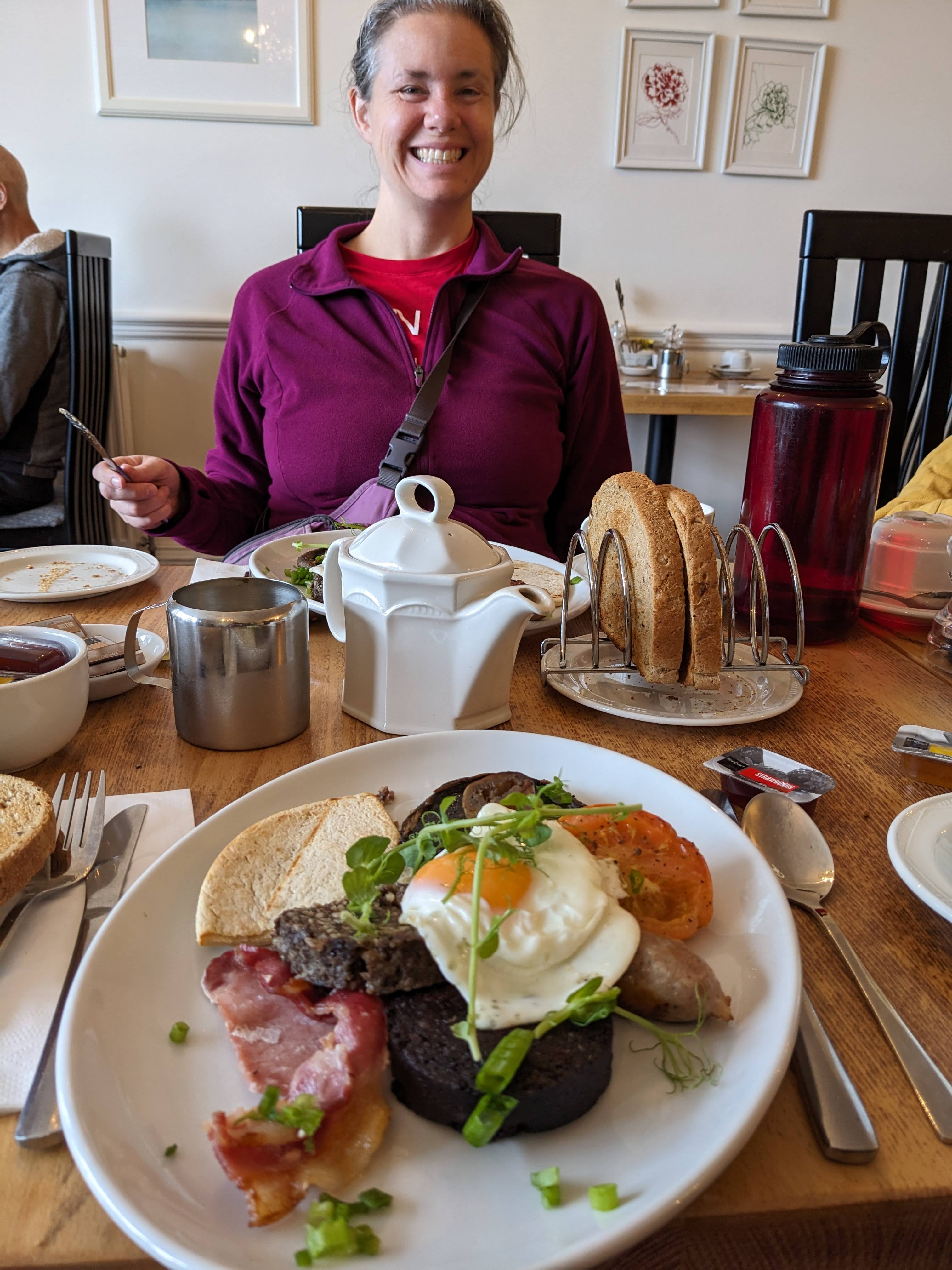
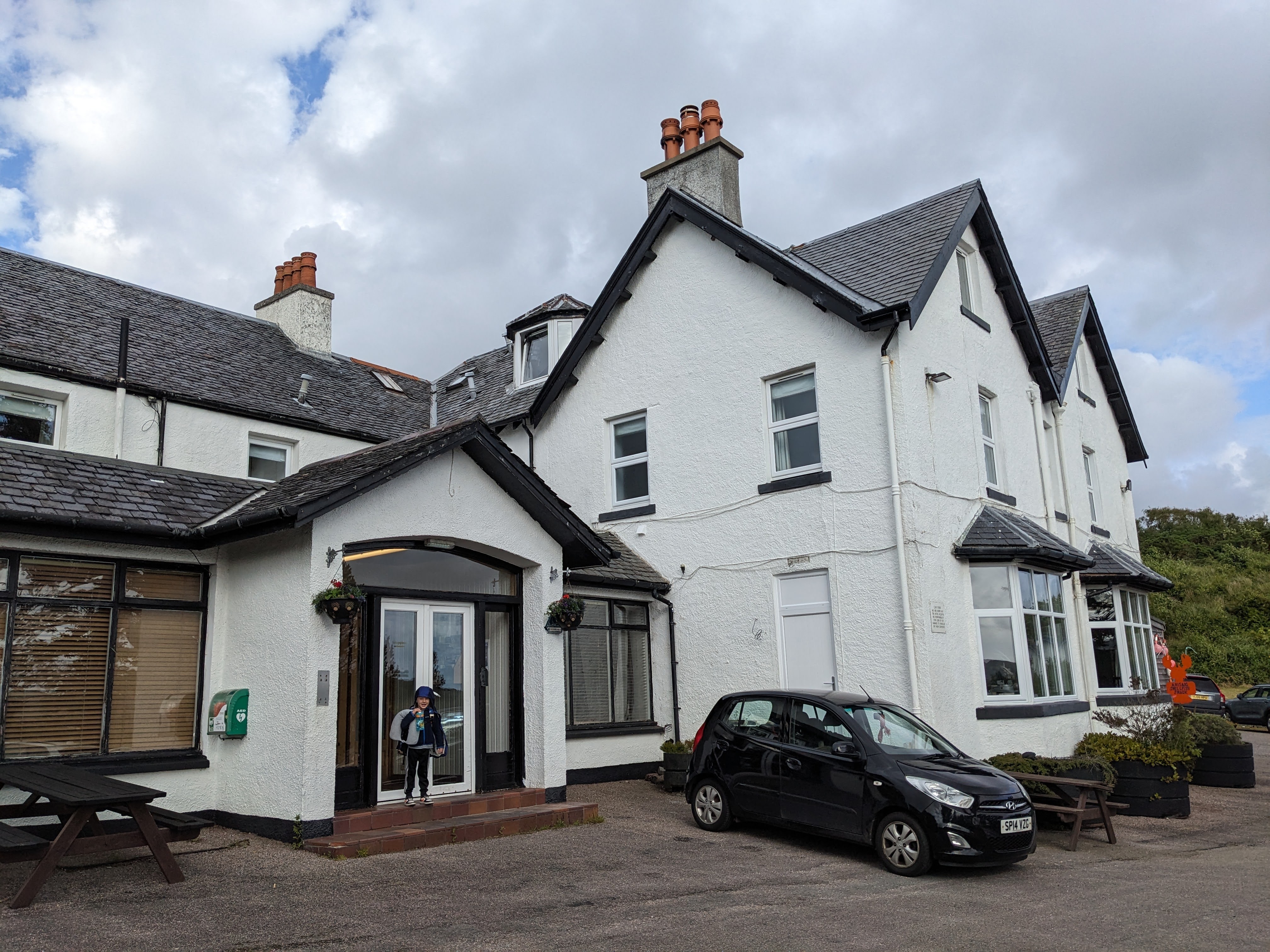
We stayed in the Arisaig Hotel in one of the family rooms with bunk beds for the kids (booked directly with them). We had a nice dinner at the attached restaurant (making sure to make reservations ahead of time because it was quite popular). Probably our favorite feature came the next morning: our room rate included a full Scottish breakfast! The adults really enjoyed getting to try some of the specialties including blood sausage.
Over the Sea to Skye

Merry of soul s/he sailed on a day
Over the sea to Skye.

The line above is from both the Outlander theme song and the poem/song it is based on, the Skye Boat Song. It is describing Bonnie Prince Charlie escaping on a boat over to the Isle of Skye after the defeat of the Jacobite Rising. It was interesting for us to make the same journey just a day after seeing the monument to the beginning of the Rising.

We had pre-booked the ferry to Skye out of Mallaig for the 9:00 sailing. The breakfast at the Arisaig Hotel would only be served starting at 7:45, so we made sure to be all packed up and at the breakfast area right at the beginning. From there it was only a ten minute drive to the ferry terminal, and we ended up making it on time.

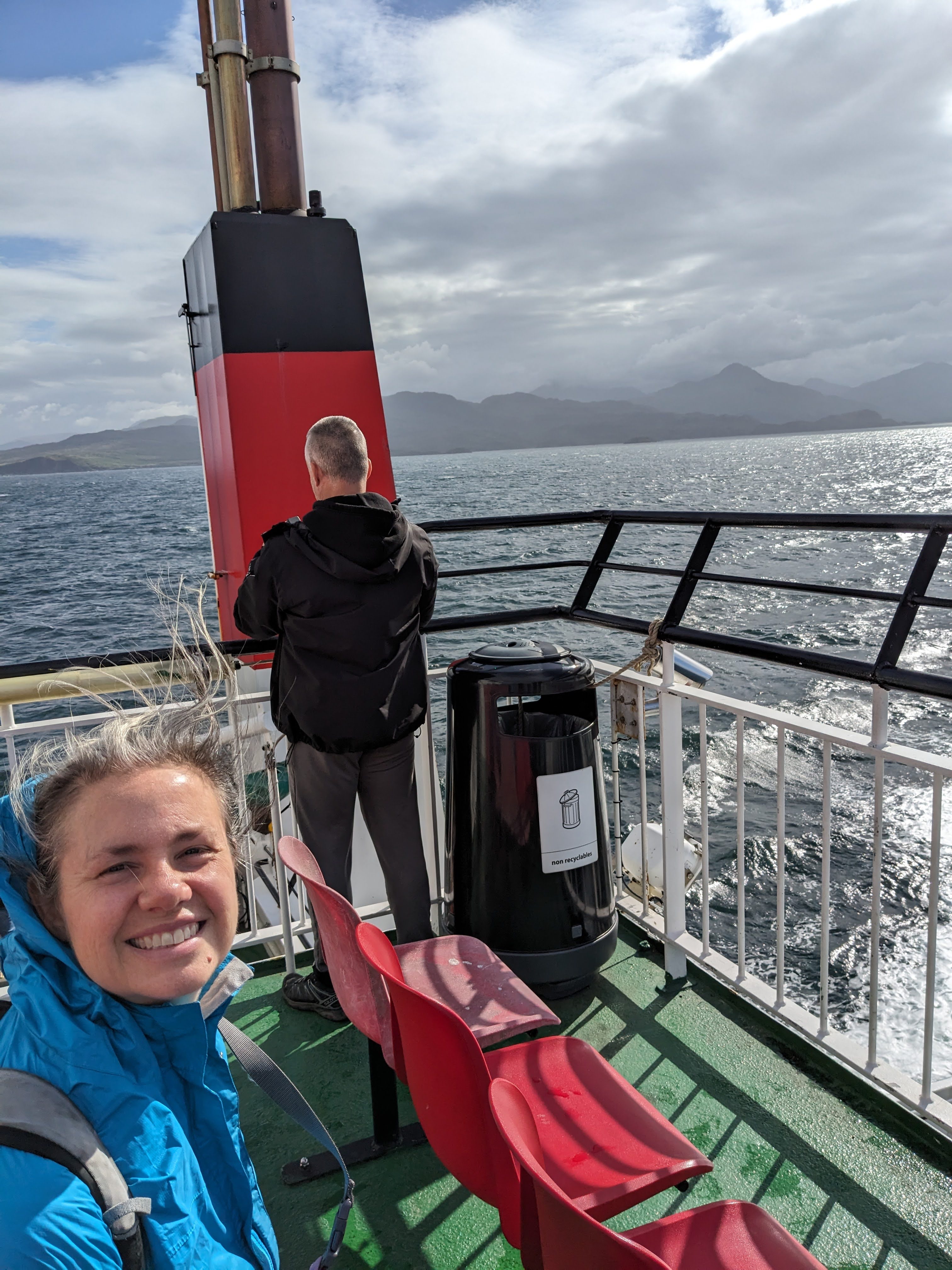
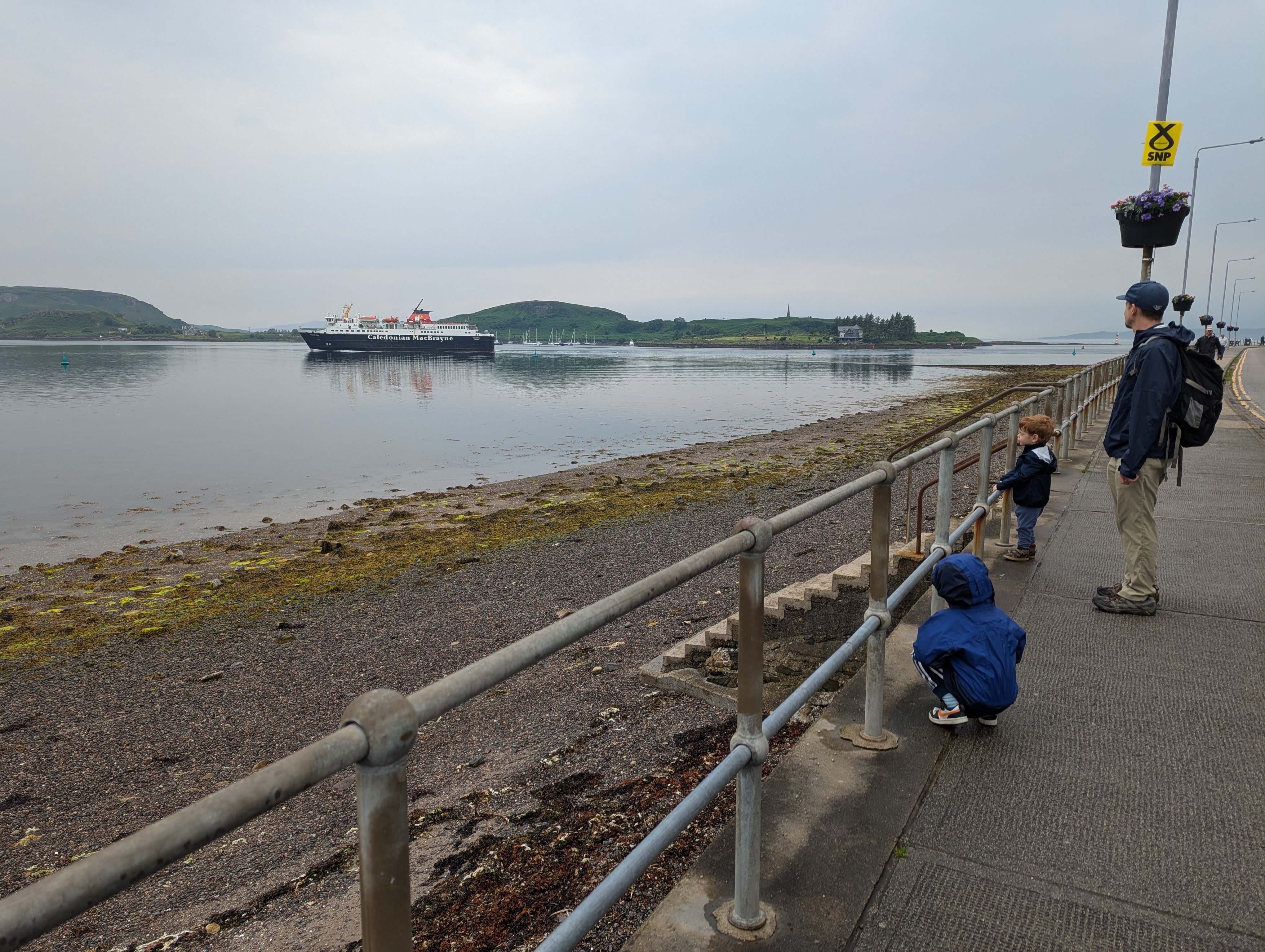
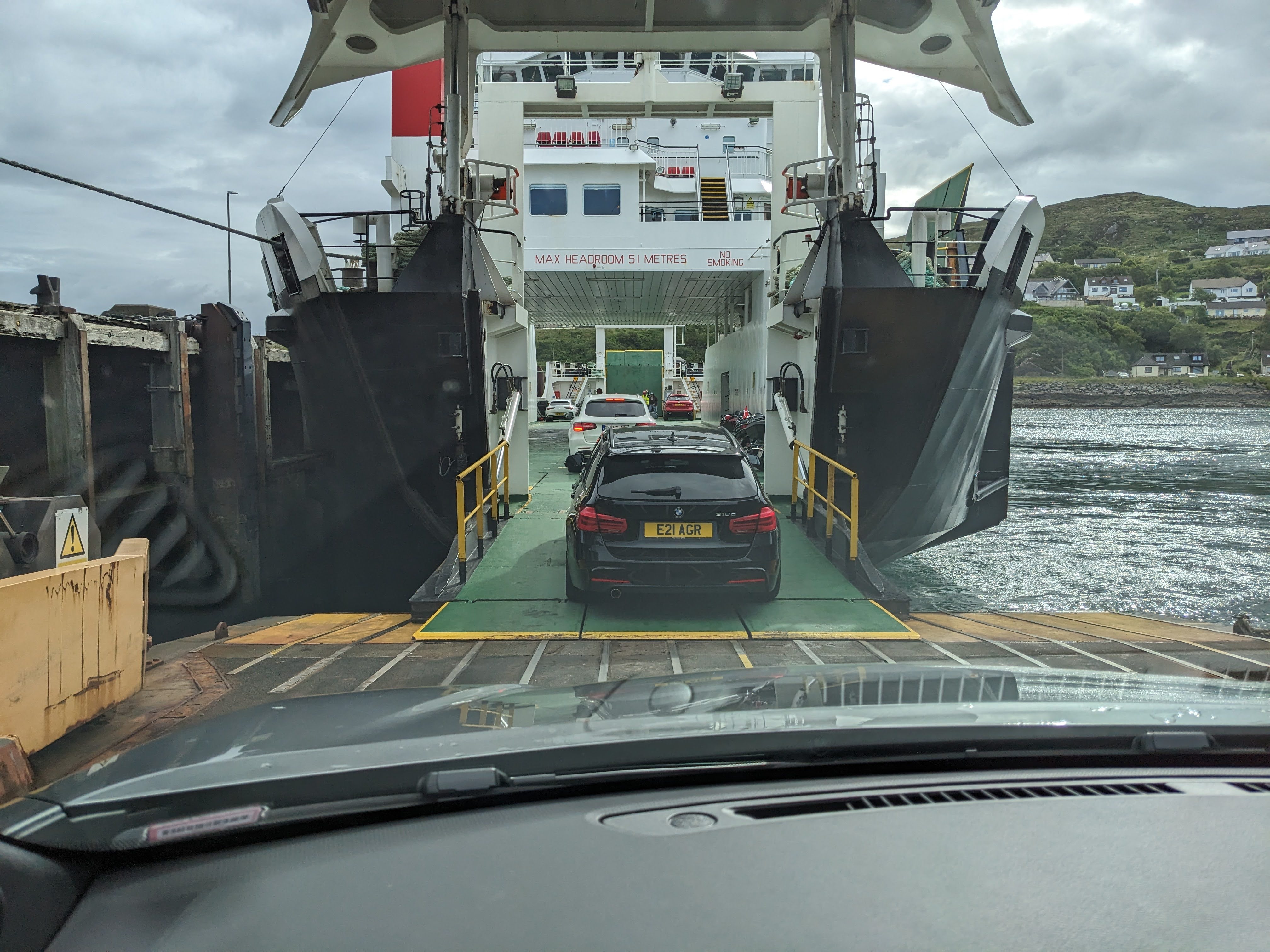
The ferry was run by the same company we had seen in Oban, Caledonian MacBrayne. We drove our car onto the ferry, then got out and headed up to the observation area. The sun came out so we spent most of the ride out on the deck, watching mainland Scotland recede just as Bonnie Prince Charlie had.
Skye: Portree

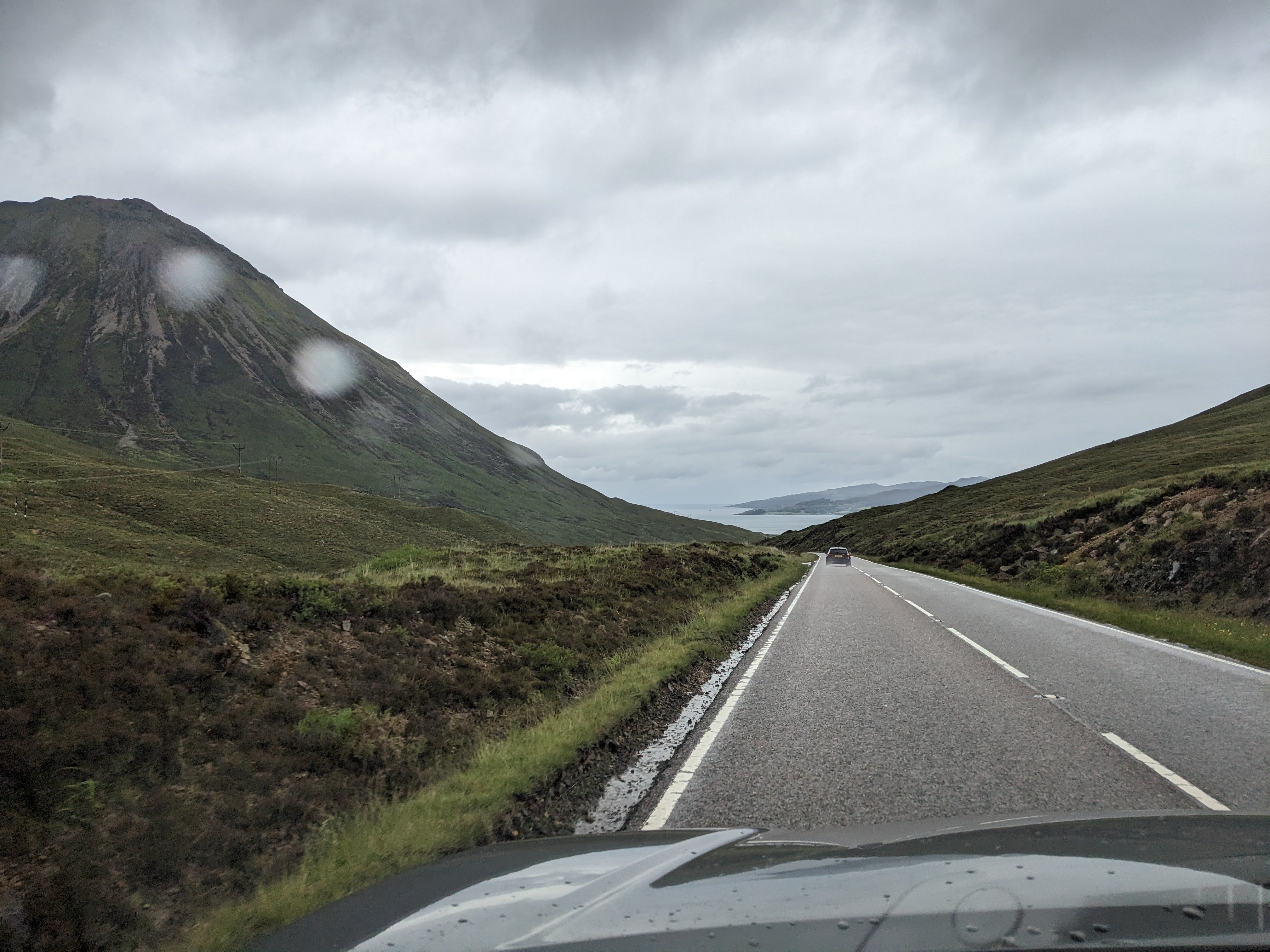
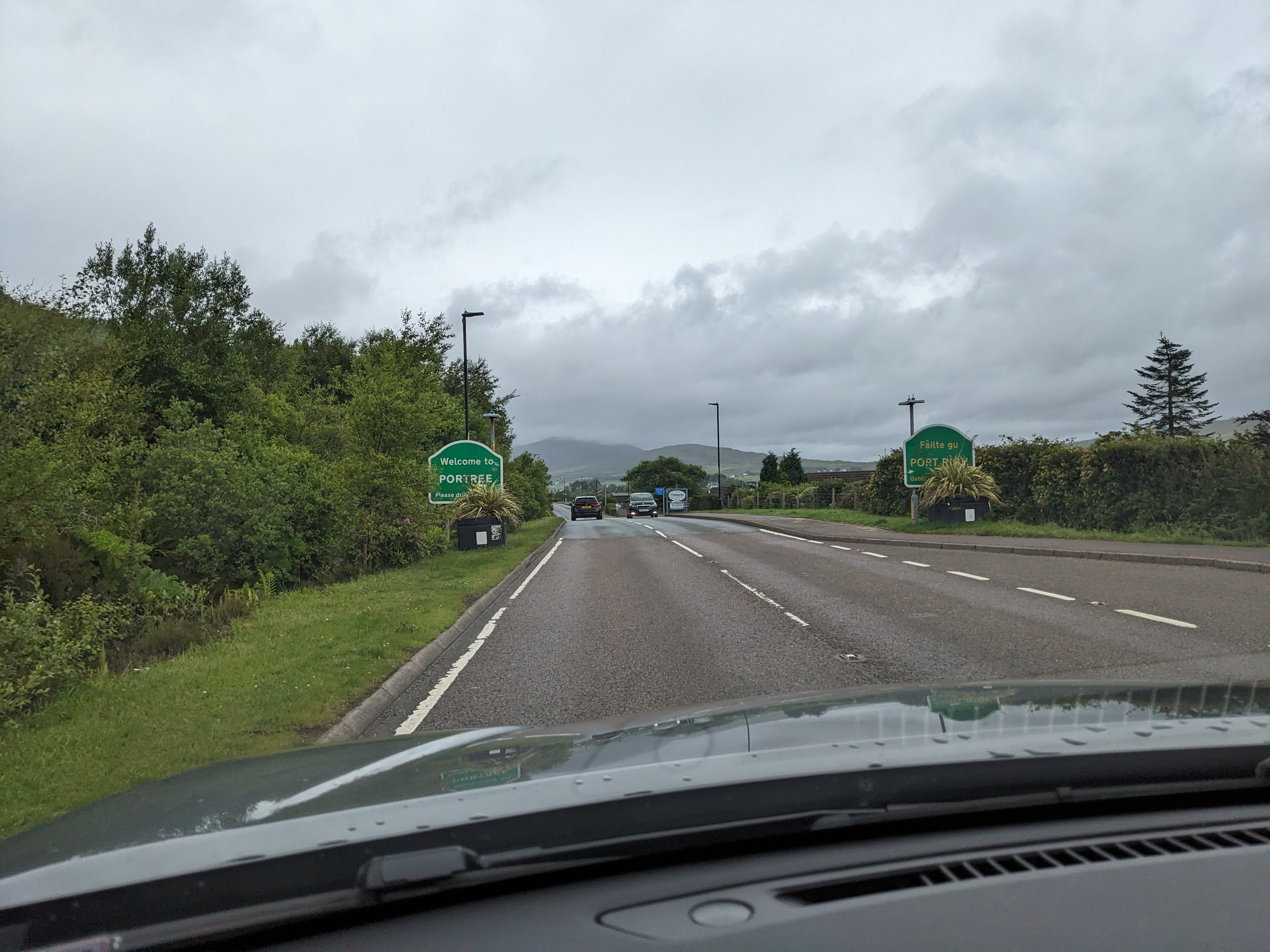
The ferry from Mallaig goes to the town of Armadale on the Isle of Skye. Here we drove off of the ferry and then drove up the large island to its largest town, Portree. This scenic drive took about an hour and a half.

In Portree we parked in a public lot in the main square and then got out and explored the town. We explored some souvenir shops and walked up to a viewpoint to get a nice view of the harbor and the colorful houses lining it. On the way back we stopped at a cafe for a hot drink and some snacks. The kids also had fun chatting with a talkative local.

Skye: Trotternish Peninsula

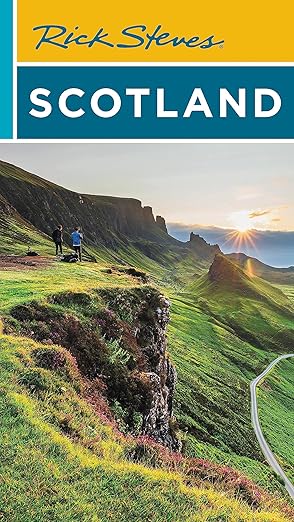
We got back in the car and started our trip around the scenic Trotternish peninsula north of Portree. We used the Rick Steves guide to help us figure out which of the places along the loop to get out of the car and see.

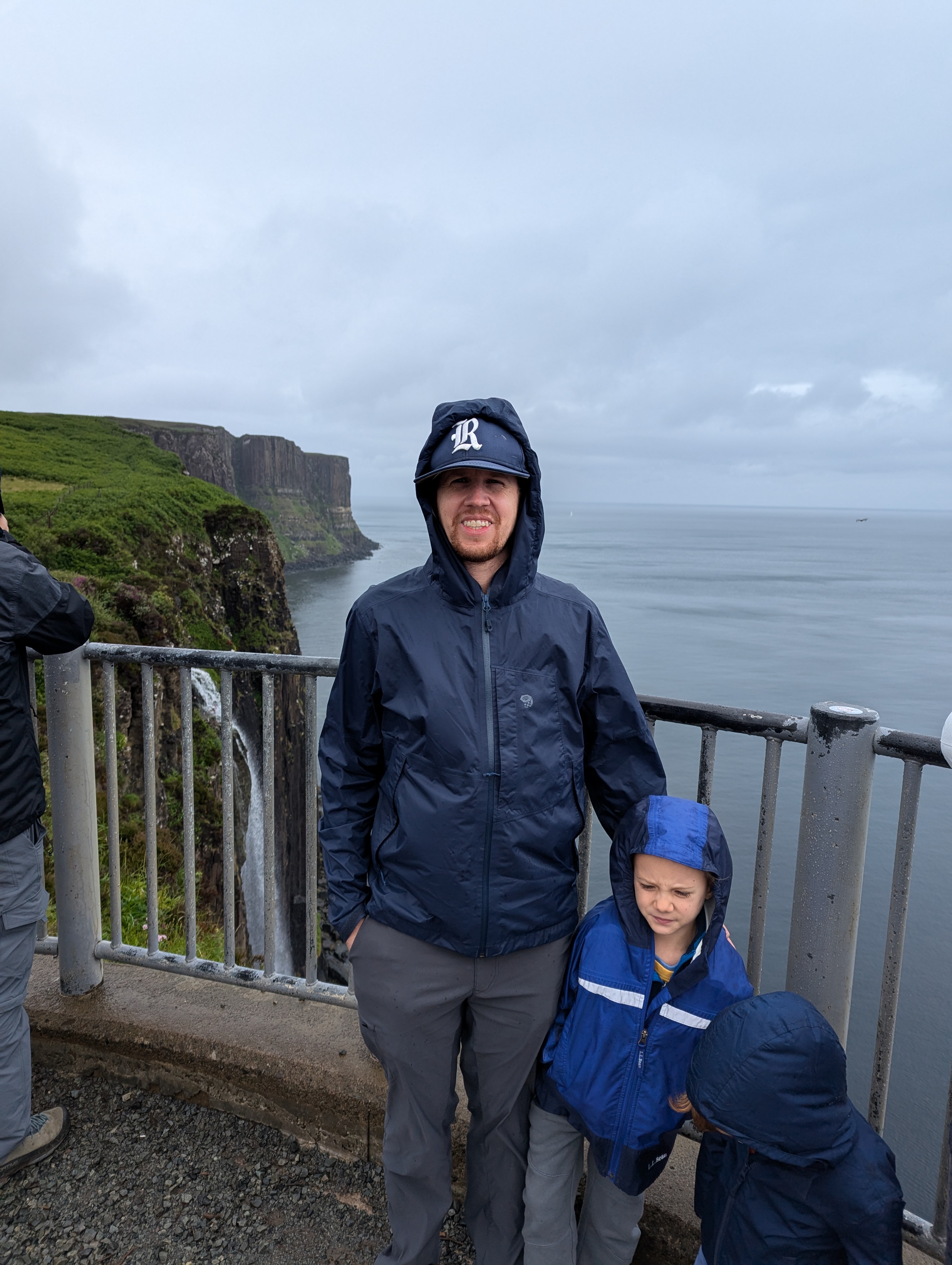
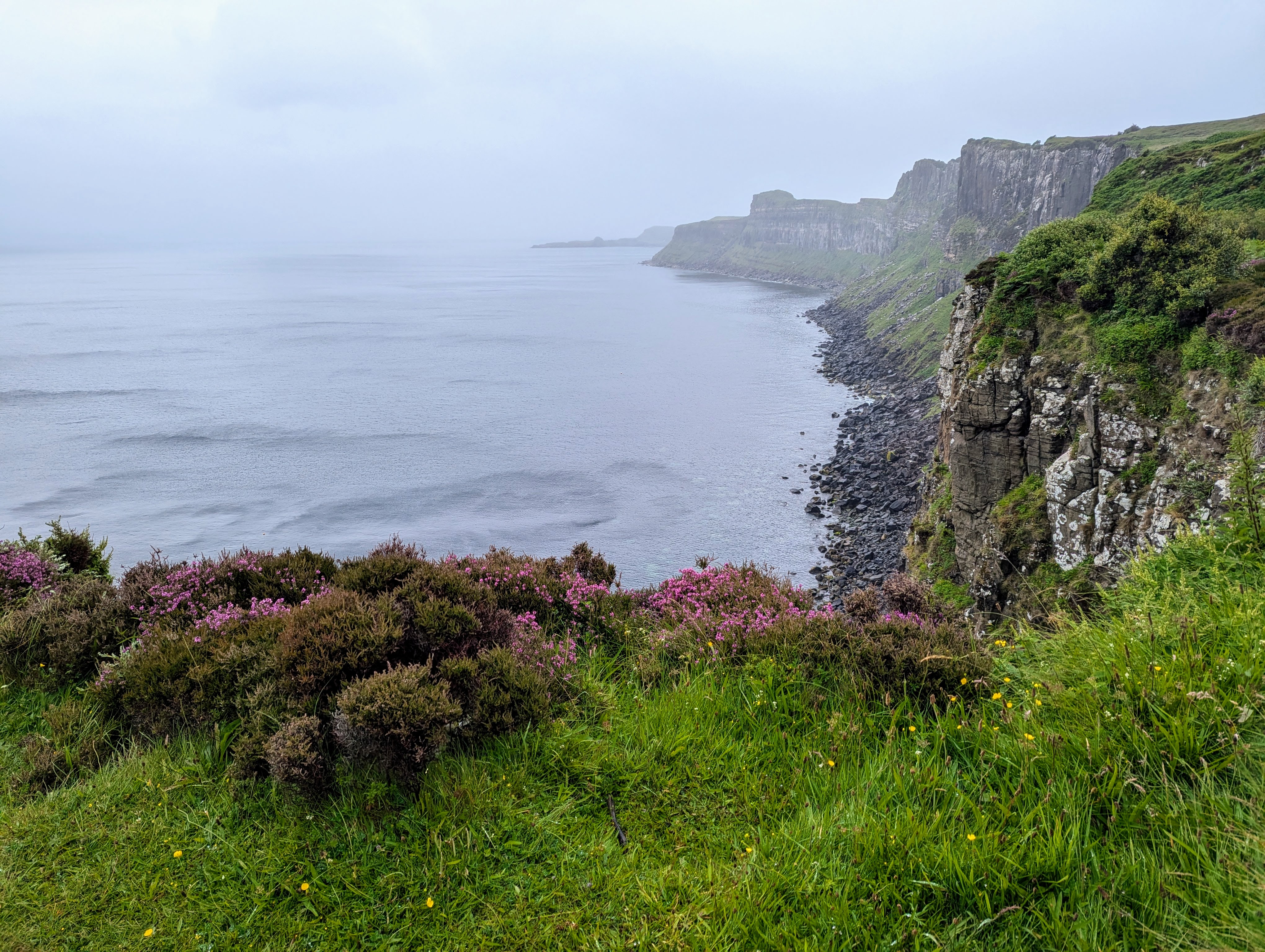
Unfortunately, the weather was not very cooperative, so we didn’t linger at many of the stops. We didn’t get out at the trailhead for the Old Man of Storr (rock formation) because we couldn’t even see it. We made brief stops at the overlooks for Lealt Falls and Kilt Rock.

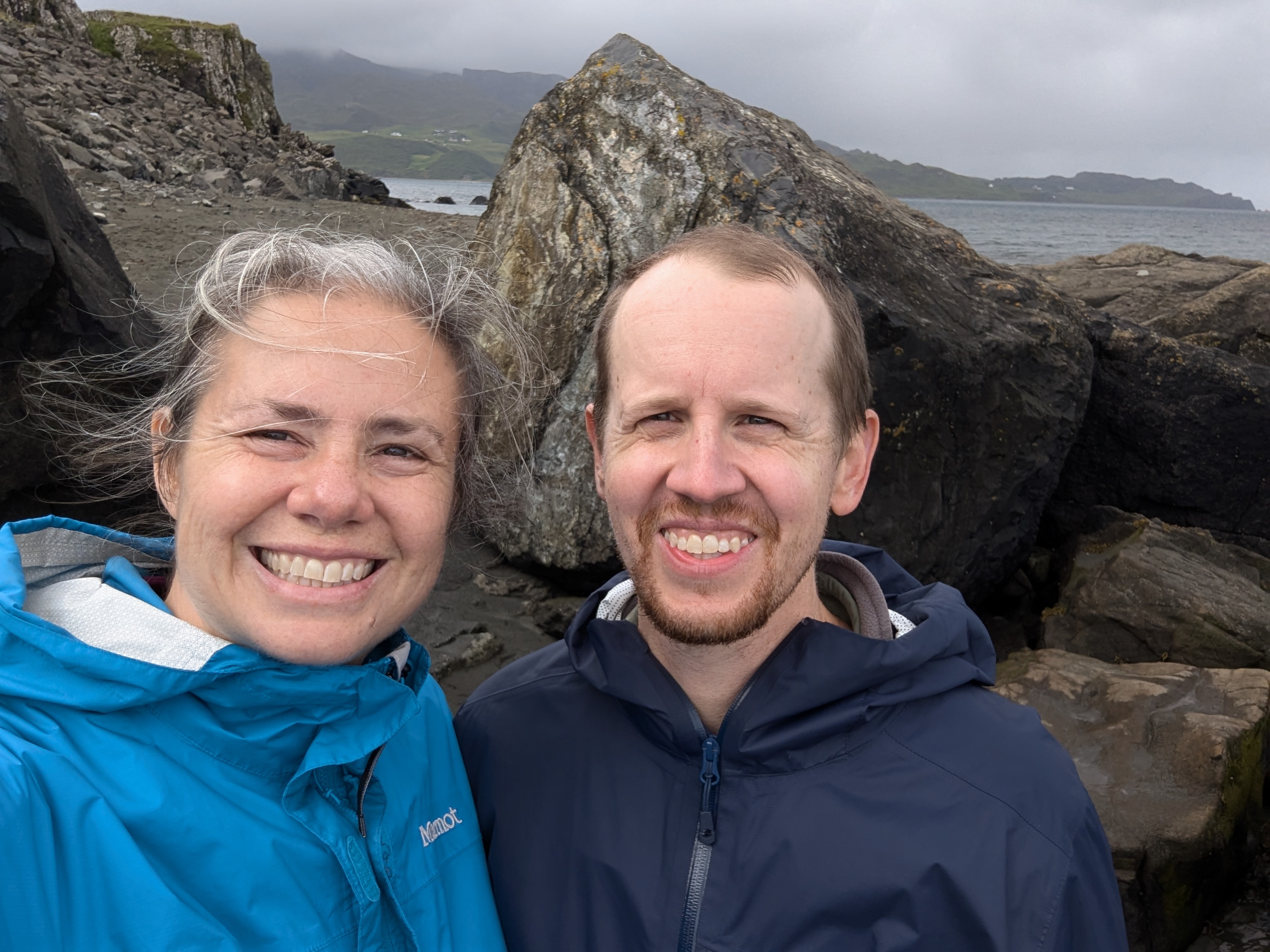
We drove on a smaller road off of the main path to get to An Corran beach. We had been interested to come here because there are dinosaur footprints you can supposedly see when the tide is right. A sign on the beach confirmed that they were there, but did not give great directions as to how to find them. The adults scrambled over the slippery rocks to try their best to spot them, but the kids were more than happy to just play in the black sand. The rain let up a bit as well so we ended up spending a while here.

The rain returned as we got back to the car, so we decided to eat our lunch (of picnic supplies purchased in Portree) in the car.
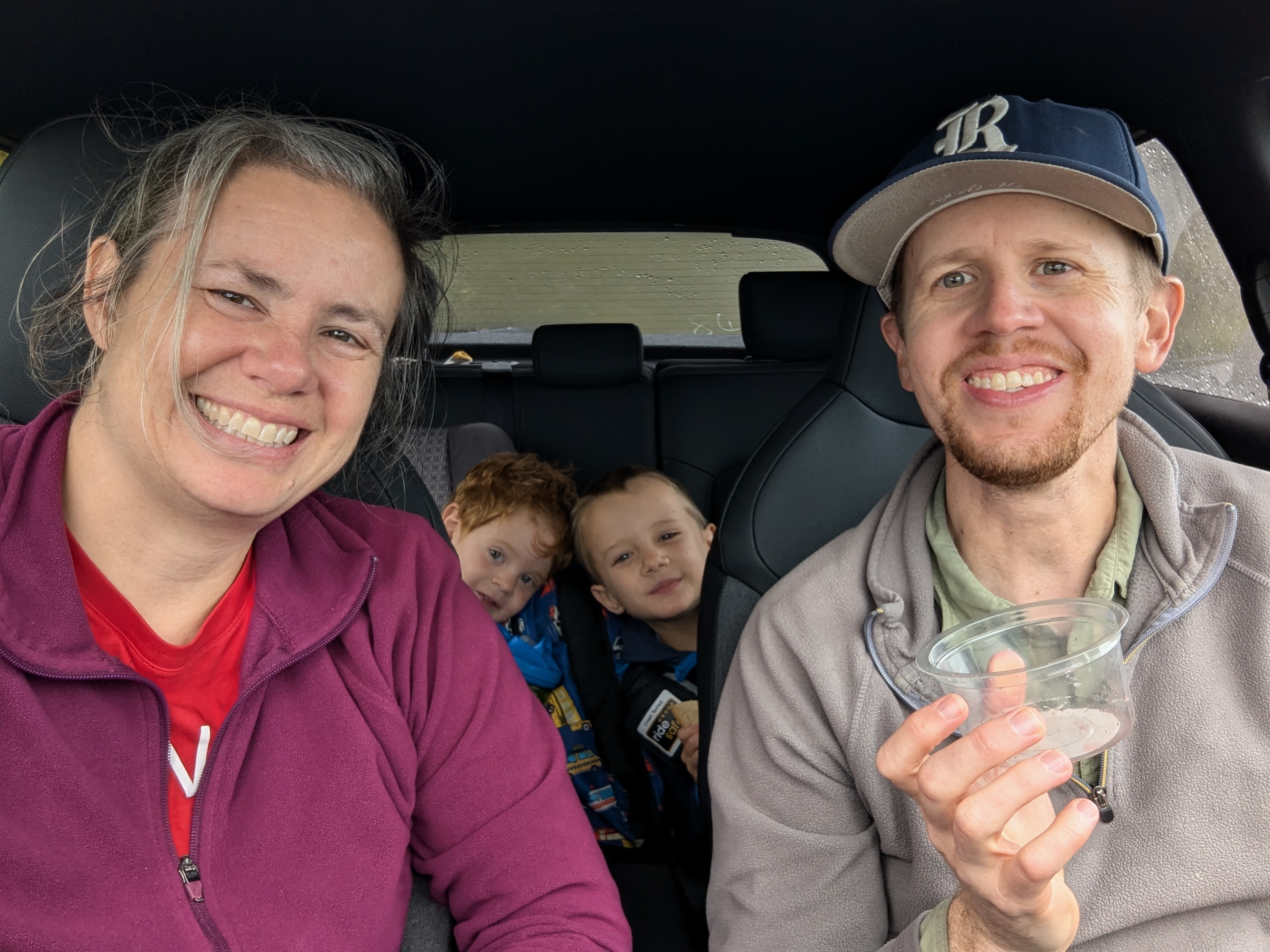
Picnic lunch in the car

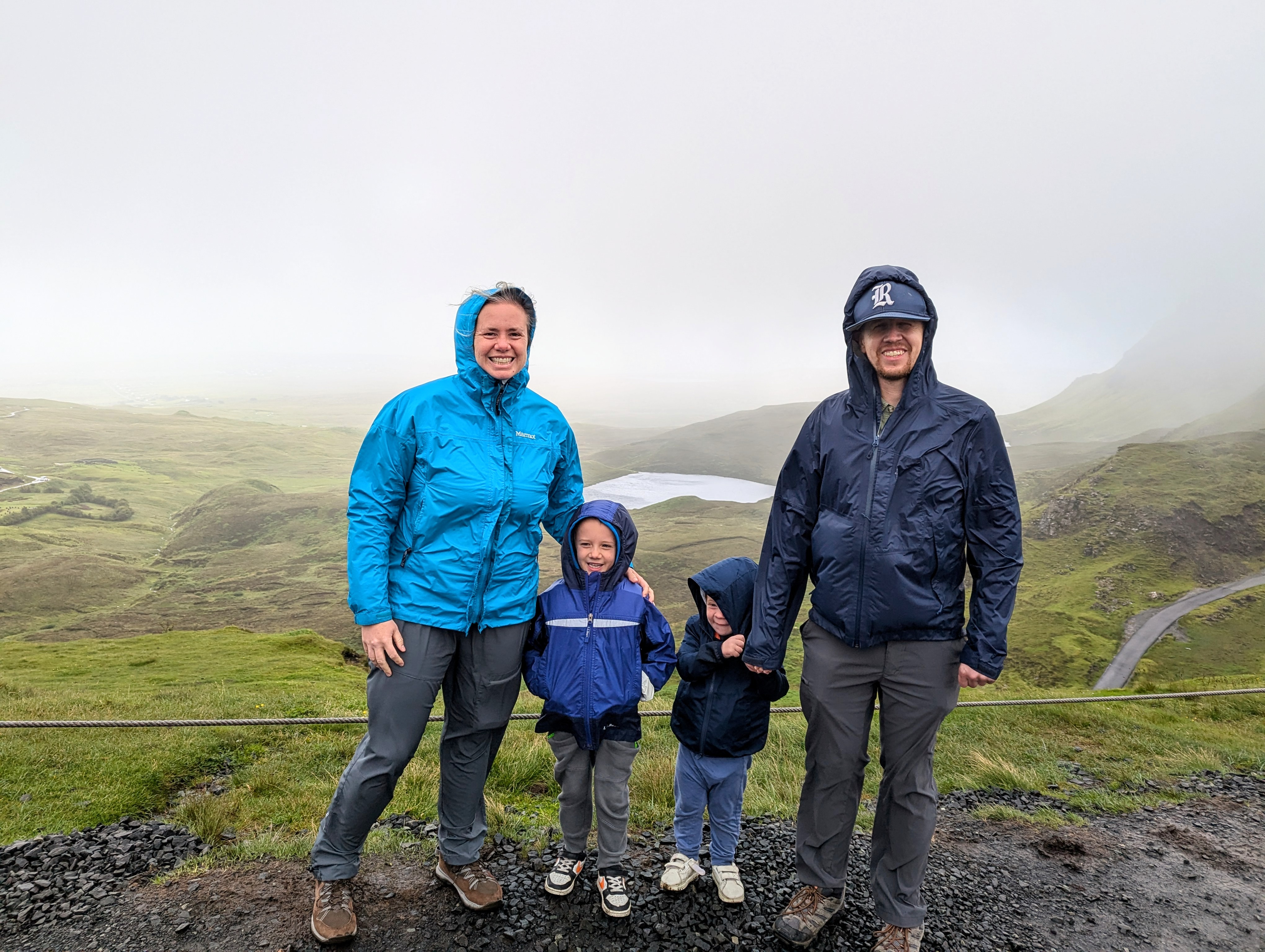
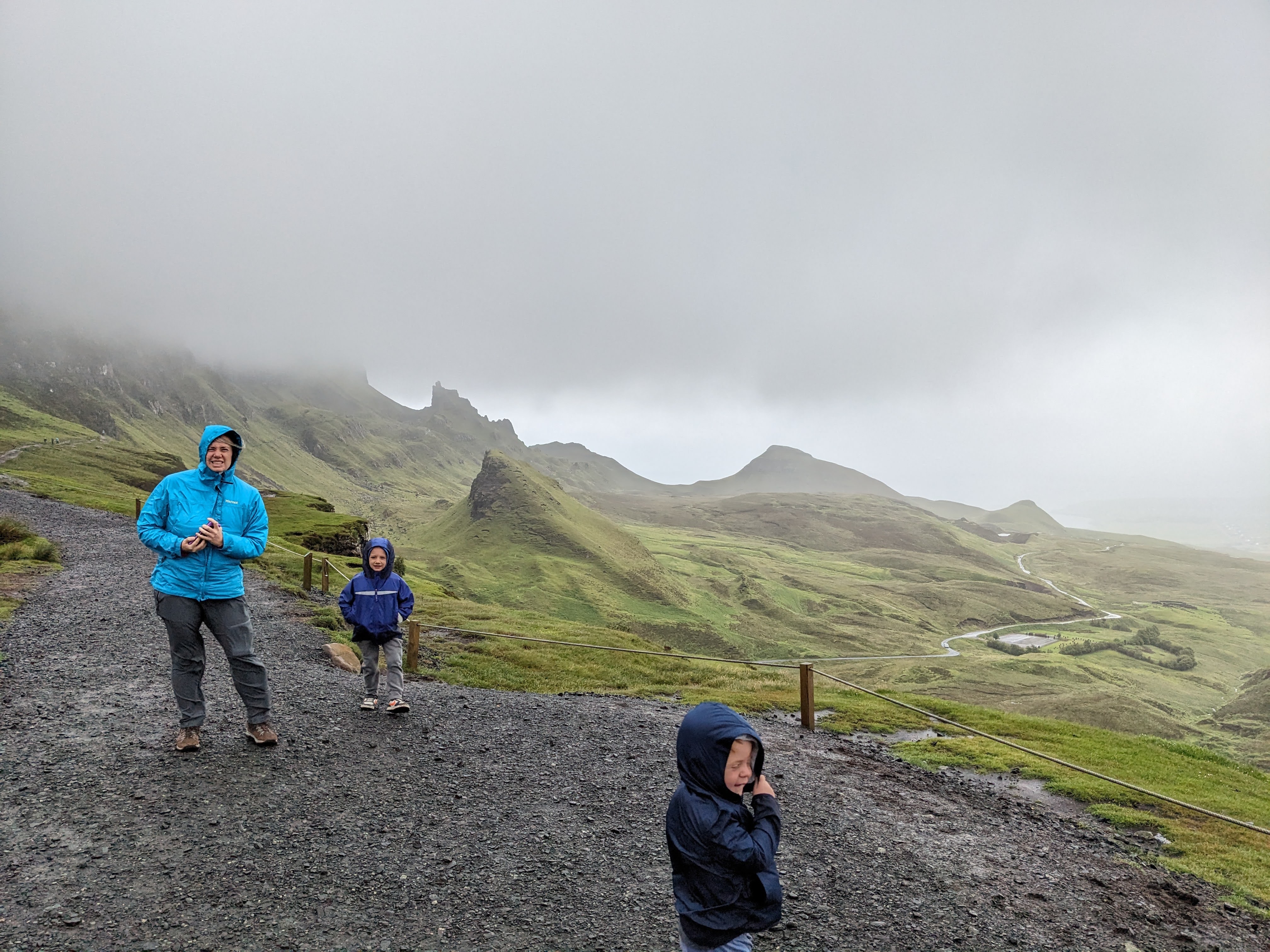
Our next stop was The Quirang, a series of rock formations in the center of the isle, accessible via a somewhat steep single-track road. We had been looking forward to viewing and maybe even hiking in this area that looks so scenic on the cover of the Rick Steves guide, but blowing clouds and rain in huge winds meant that we didn’t want to do much more than get out for a few pictures.
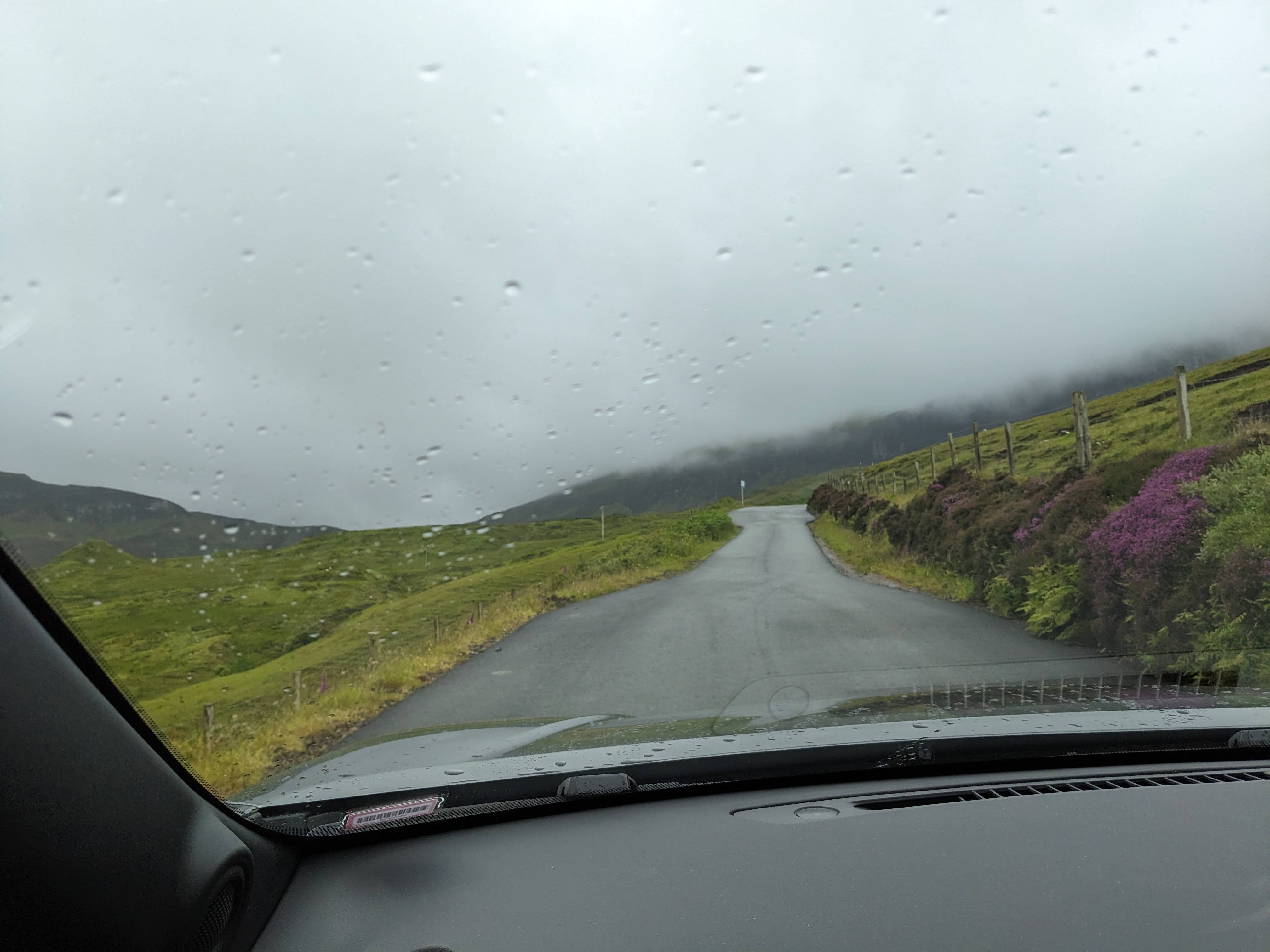
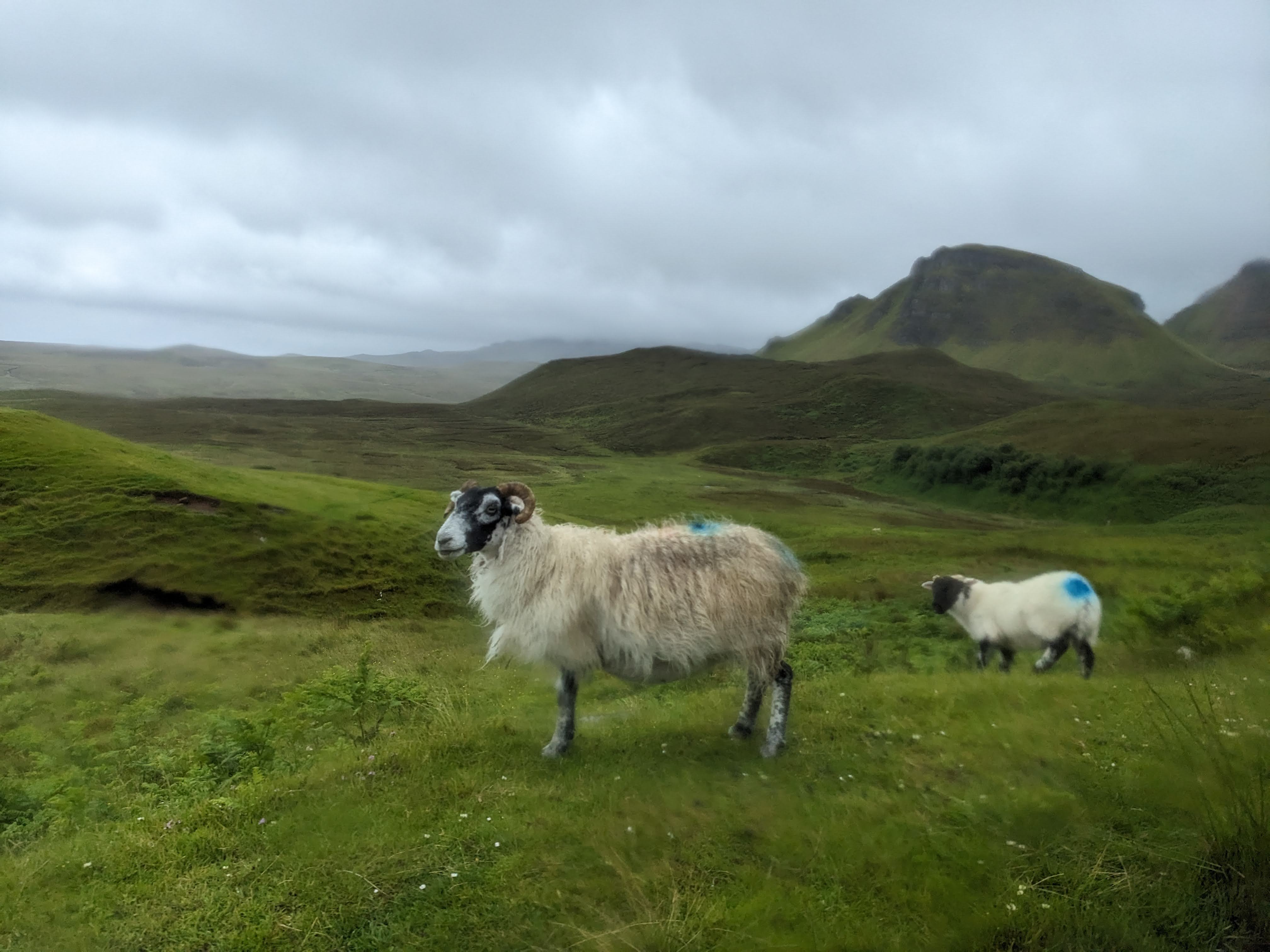
It took us a while to drive down from the area – this was the incident we mentioned in the Driving in Scotland discussion where someone coming up ignored the rules of the single-track road and never pulled over. A car coming down had to keep backing up in front of them something like half a mile until we and some others helped work the puzzle for how to squeeze them into a passing place.

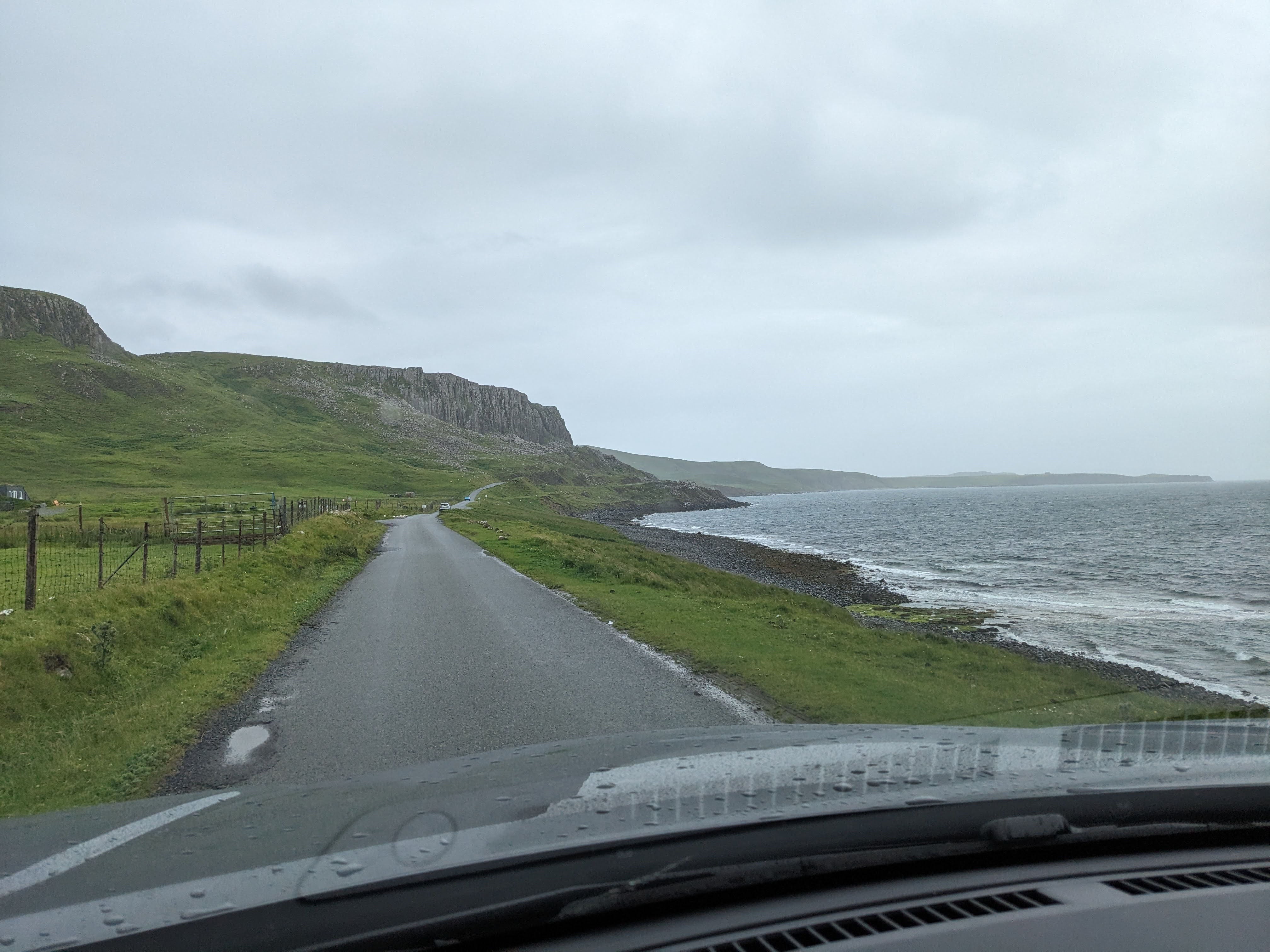
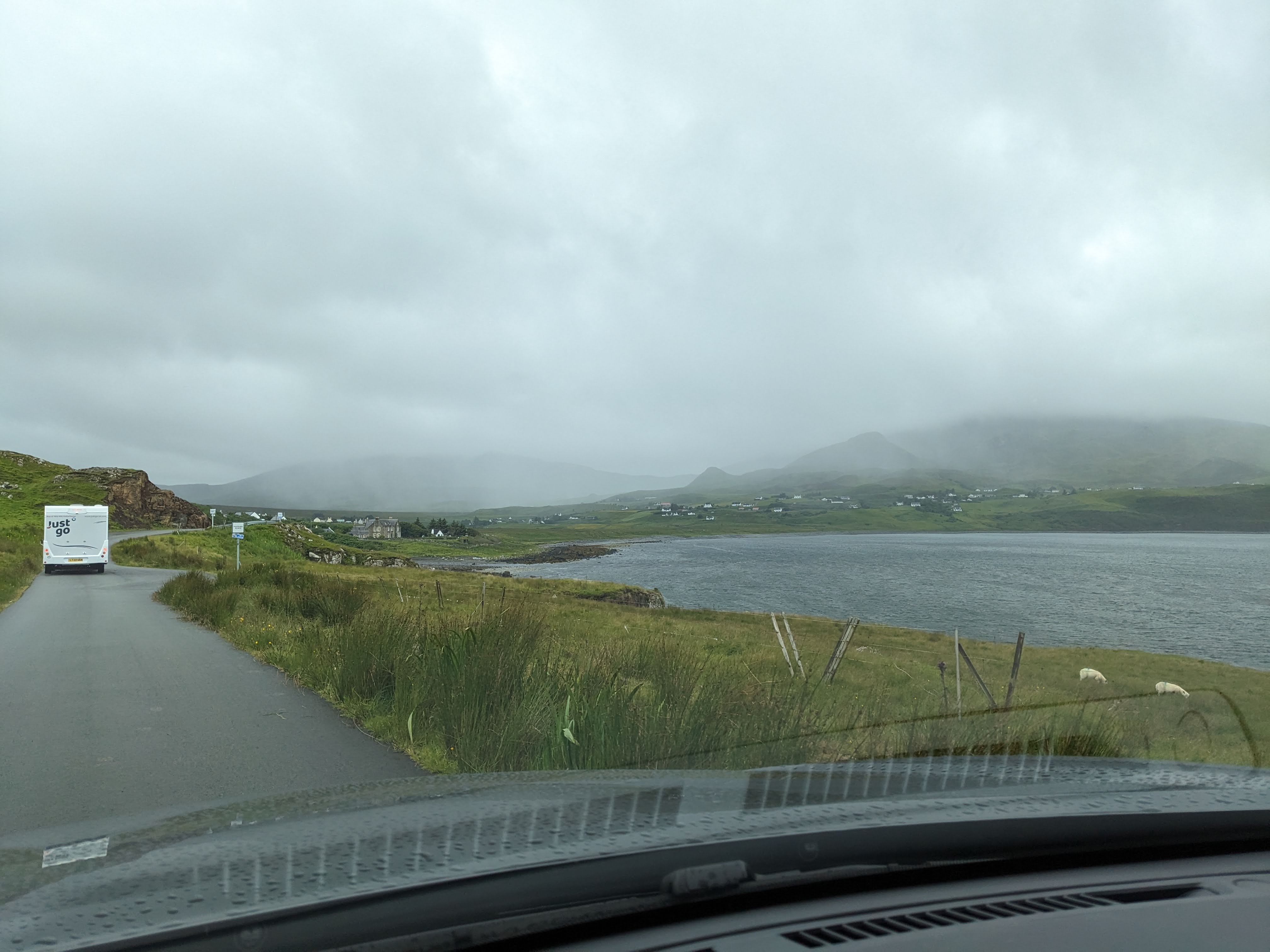
We continued on around the peninsula loop. Due to the weather we didn’t think it was worth it to get out, so we just enjoyed the views from the mostly single-track road.
Skye: Broadford

When searching on our own, we had a hard time finding any place reasonable to stay on Skye. Thankfully, the staff at Hostelling Scotland was able to book us a room at their hostel in Broadford on the island. We had a private room with two bunk beds. One downside was that we did not have an ensuite bathroom, so we had to walk down the hall for toilets or showers. However, the kids did fine with this and overall we enjoyed our short one night stay.

For dinner, we took a short walk into town to Cafe Sia. We all enjoyed the pizza, and the kids also appreciated that theirs came with ice cream.
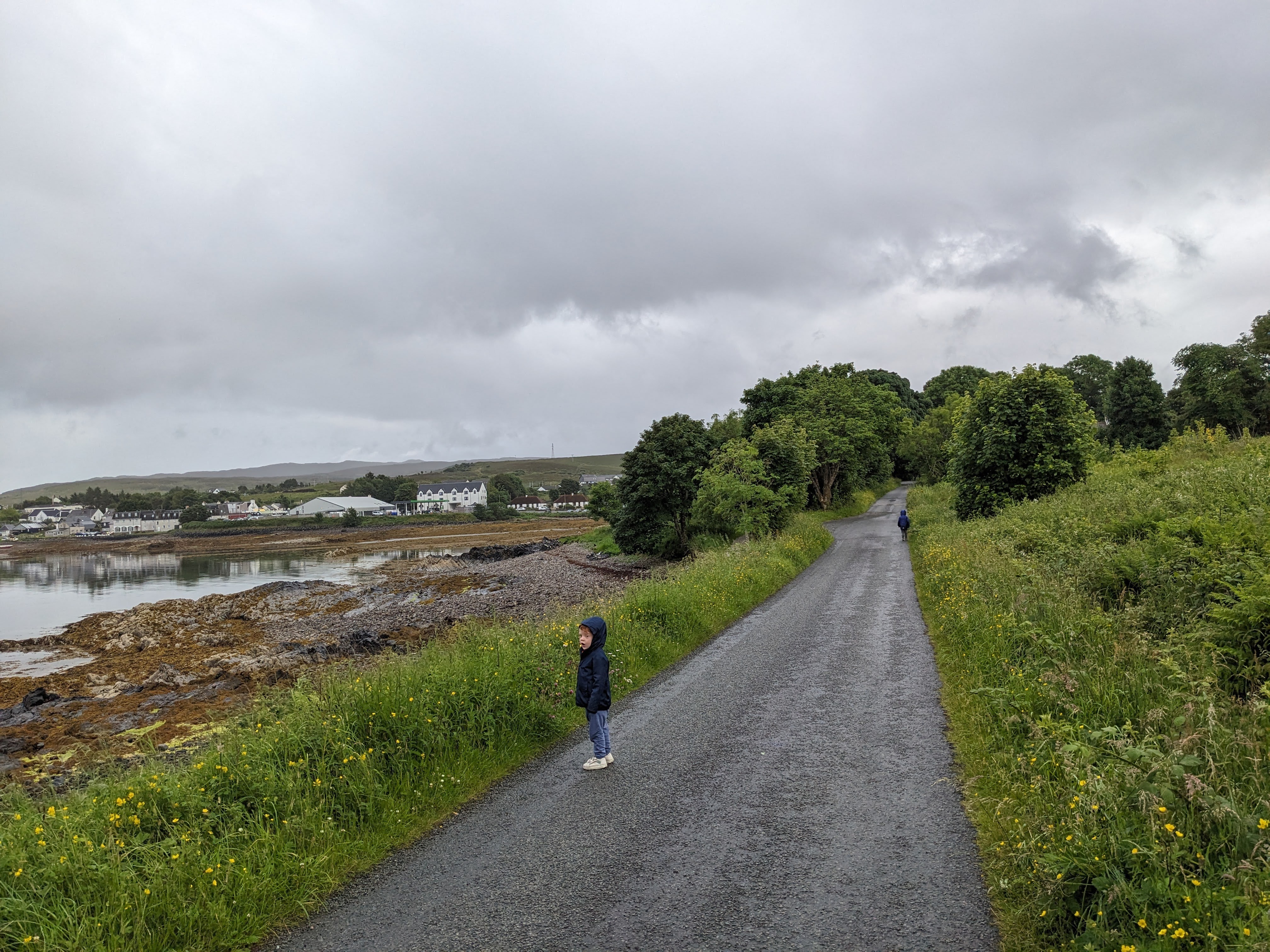
This was a nice way to wrap up our two days traveling along the coast, both on the mainland and the Isle of Skye. The next morning we would head back to the mainland to Loch Ness and Inverness!

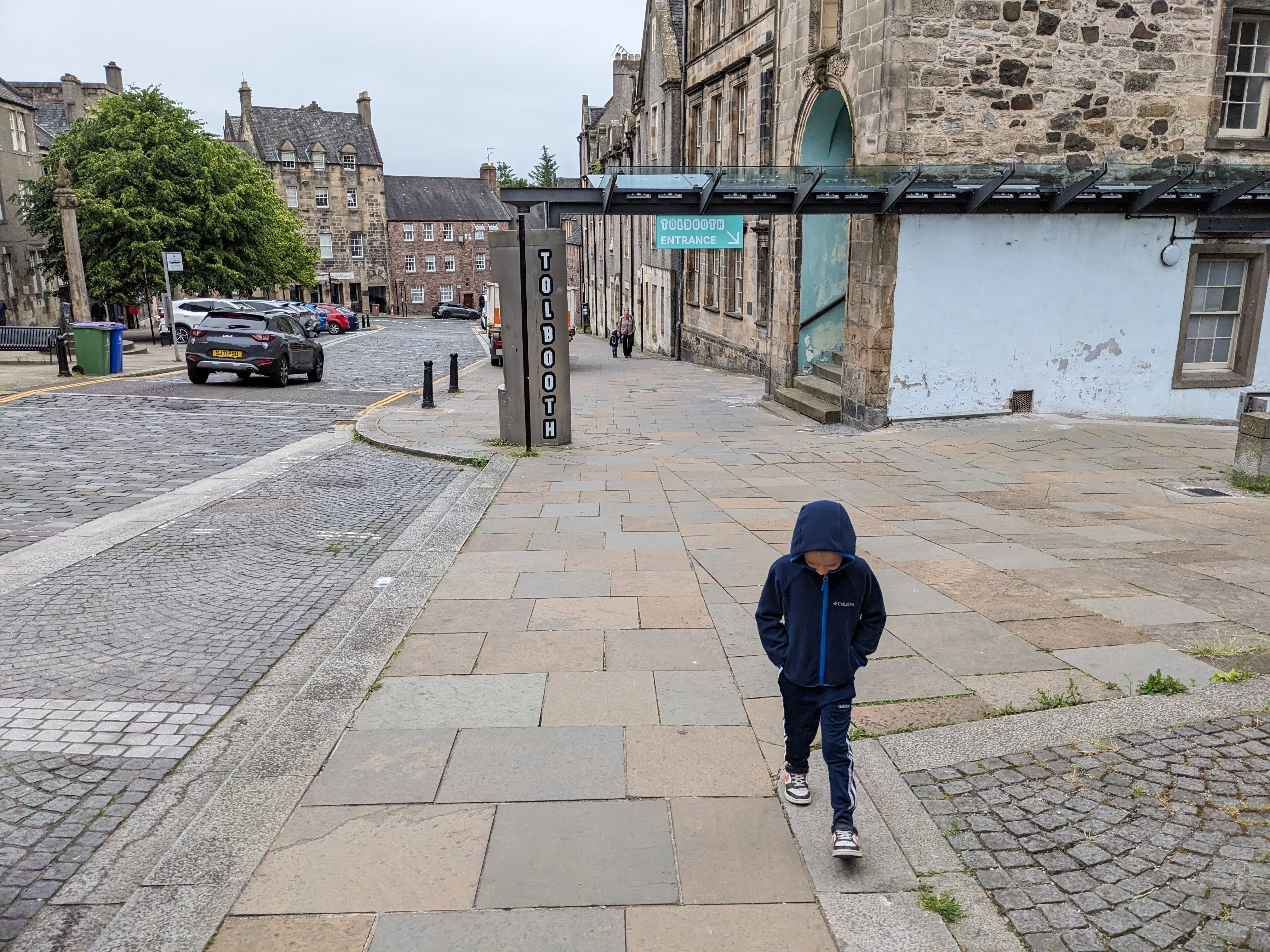
Scotland Road Trip: Stirling and Oban

In the summer of 2024, we took a trip to Scotland with our two children, ages six and three. After a longer than expected journey getting there, and two nights in Edinburgh, we rented a car and took a road trip through the Highlands.

After picking up our car in Edinburgh as described in our previous post, our next destination was Stirling Castle. It was a little intimidating for Della to have get familiar with driving a new car on a different side of the road while in the city, but she was able to figure it out as Eric navigated. There were also a lot of roundabouts which we also don’t see a lot of in the US. Eventually we got on a larger highway which was refreshingly straightforward.

We got to drive by “The Kelpies”: large steel horse-head sculptures

Stirling Castle

Our destination was Stirling Castle, located on a big hill in the city of Stirling. It took us about an hour to get there from Edinburgh. One feature of our car we didn’t talk about in the previous post was a fancy navigation system where you could plug in an address and get turn-by-turn directions. (Yes, we know that this is probably a standard these days, but our car at home is from 2013). That helped us navigate there… although it took us on a back way up the back of the hill that the castle is on using some pretty narrow roads.

We were planning to park in the main parking lot for the castle, but when we got there it was blocked off because it was full! That meant we had to keep driving back down the hill into the main part of Stirling. We eventually found a city parking lot to park in (but only valid for two hours). We had reserved a timed entry into the castle, so we then had to race-walk back up the hill to make it in time for our reservation.

Rushing up the hill to the castle

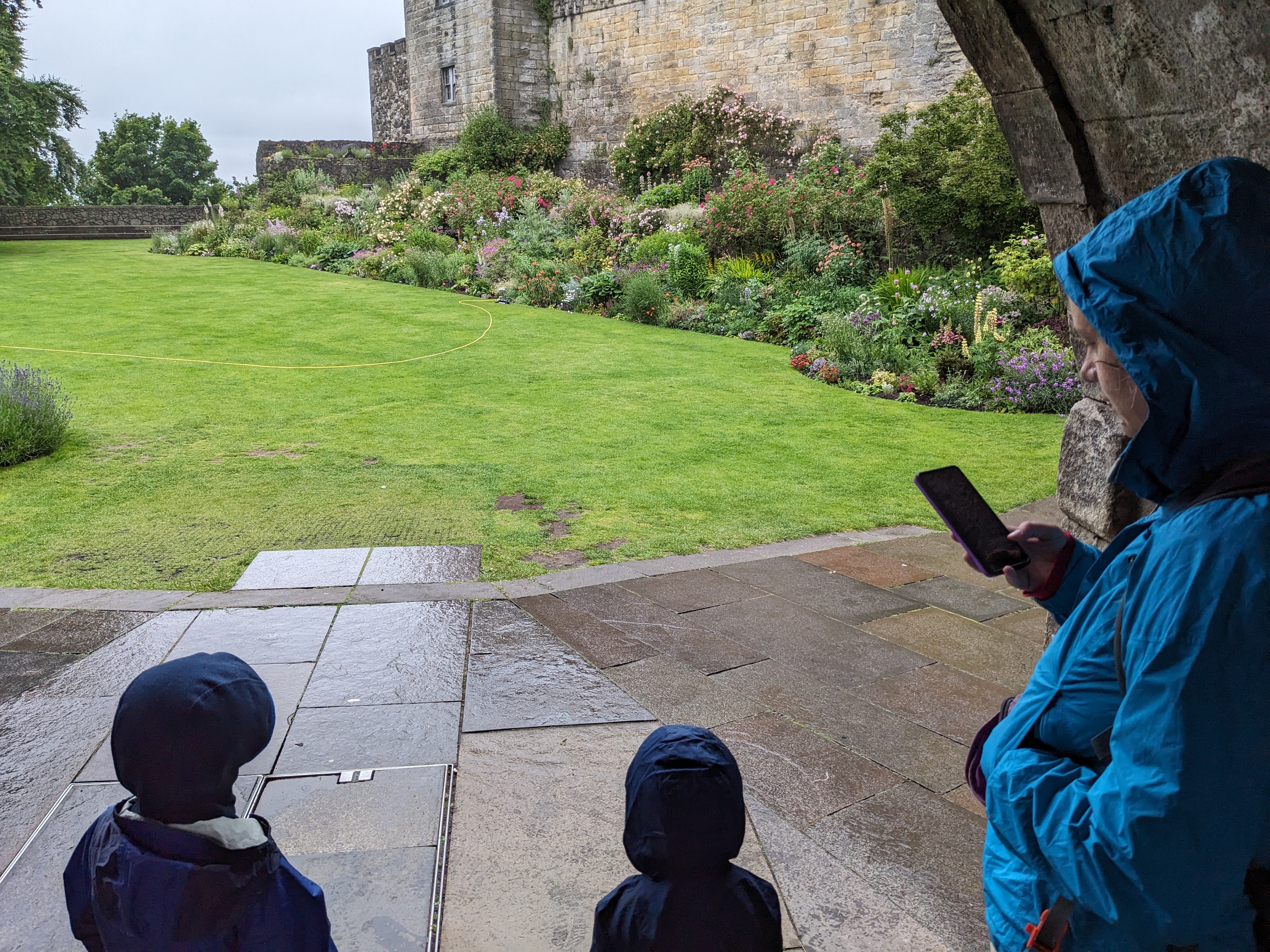
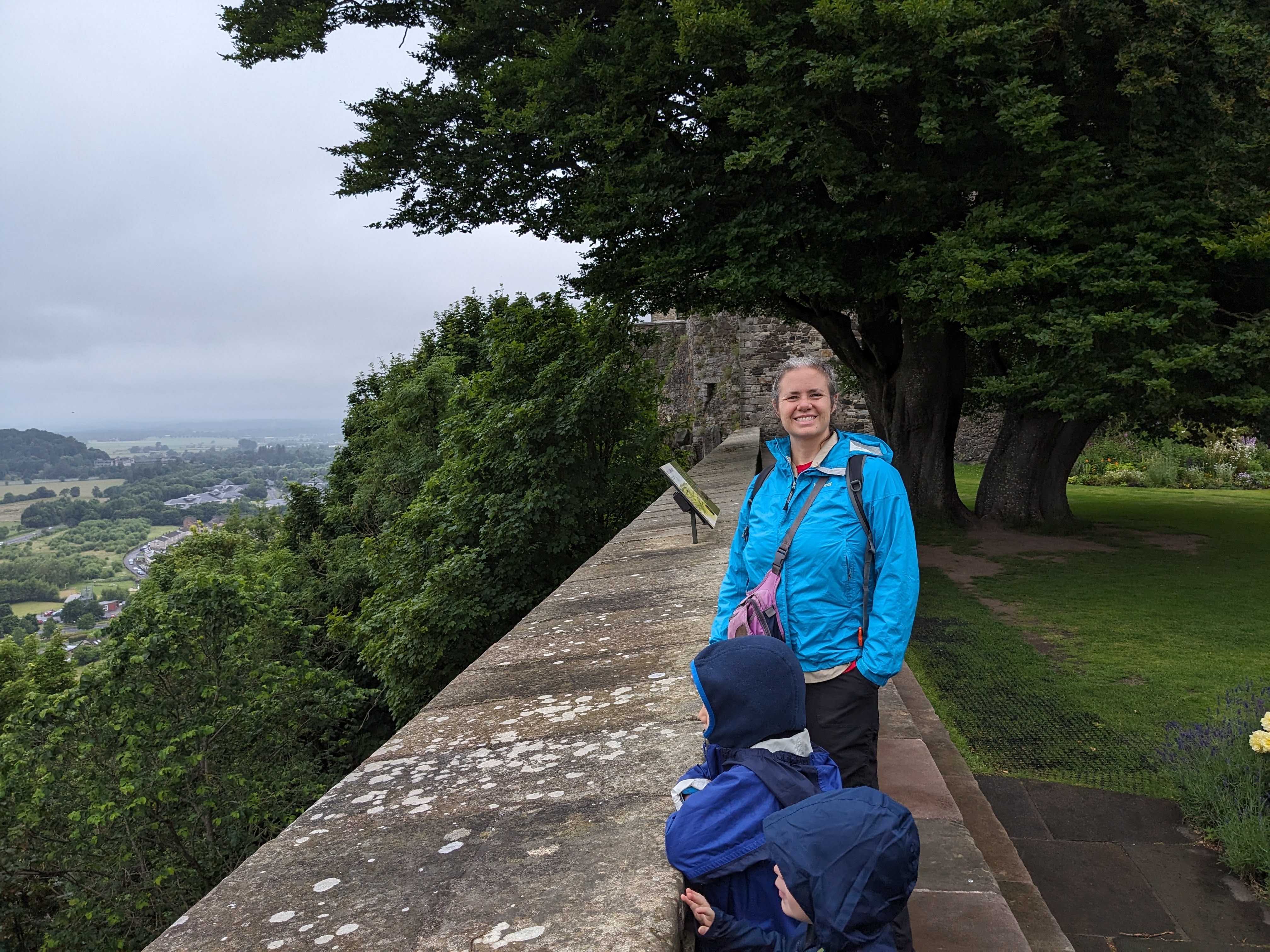
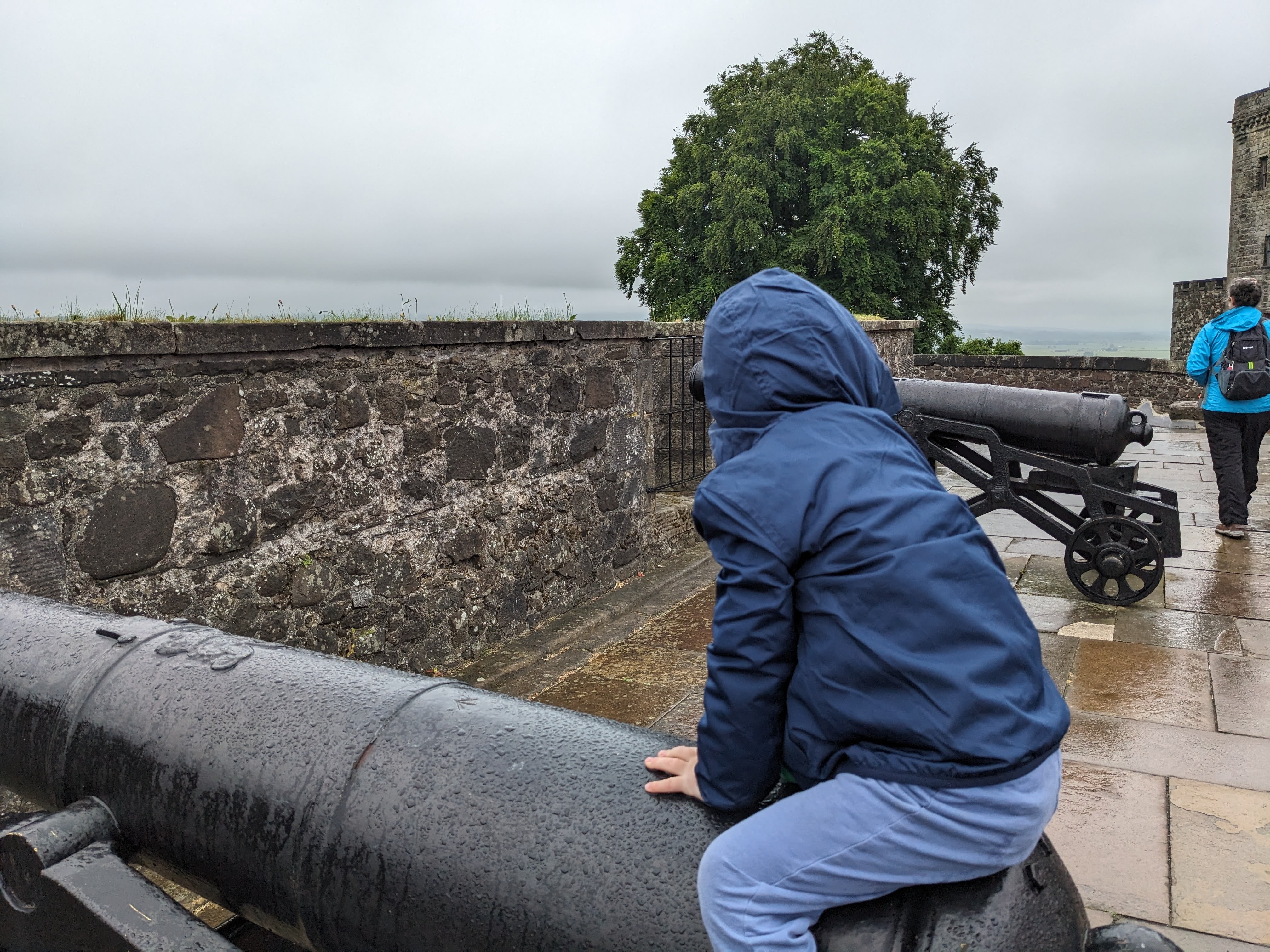
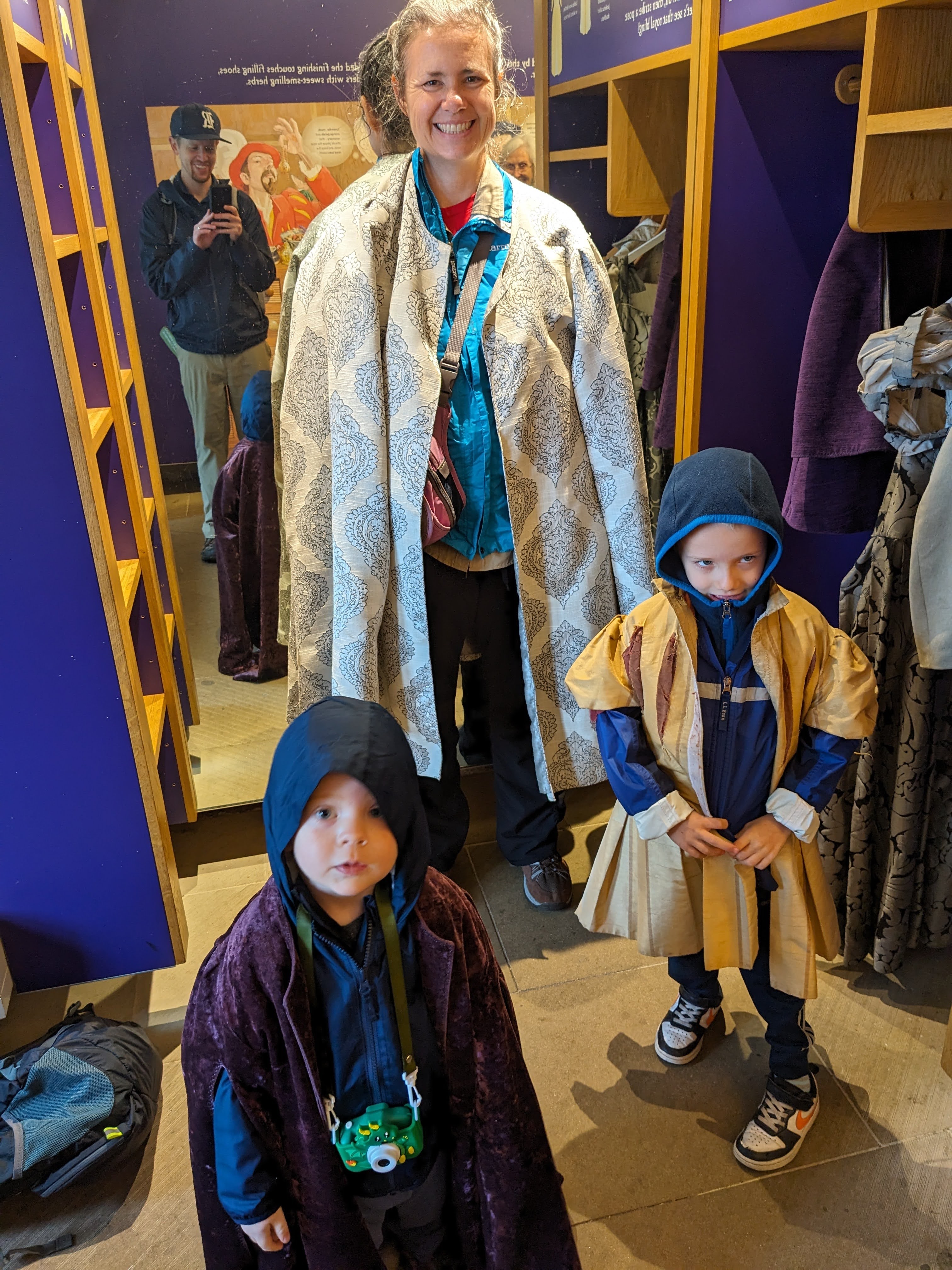
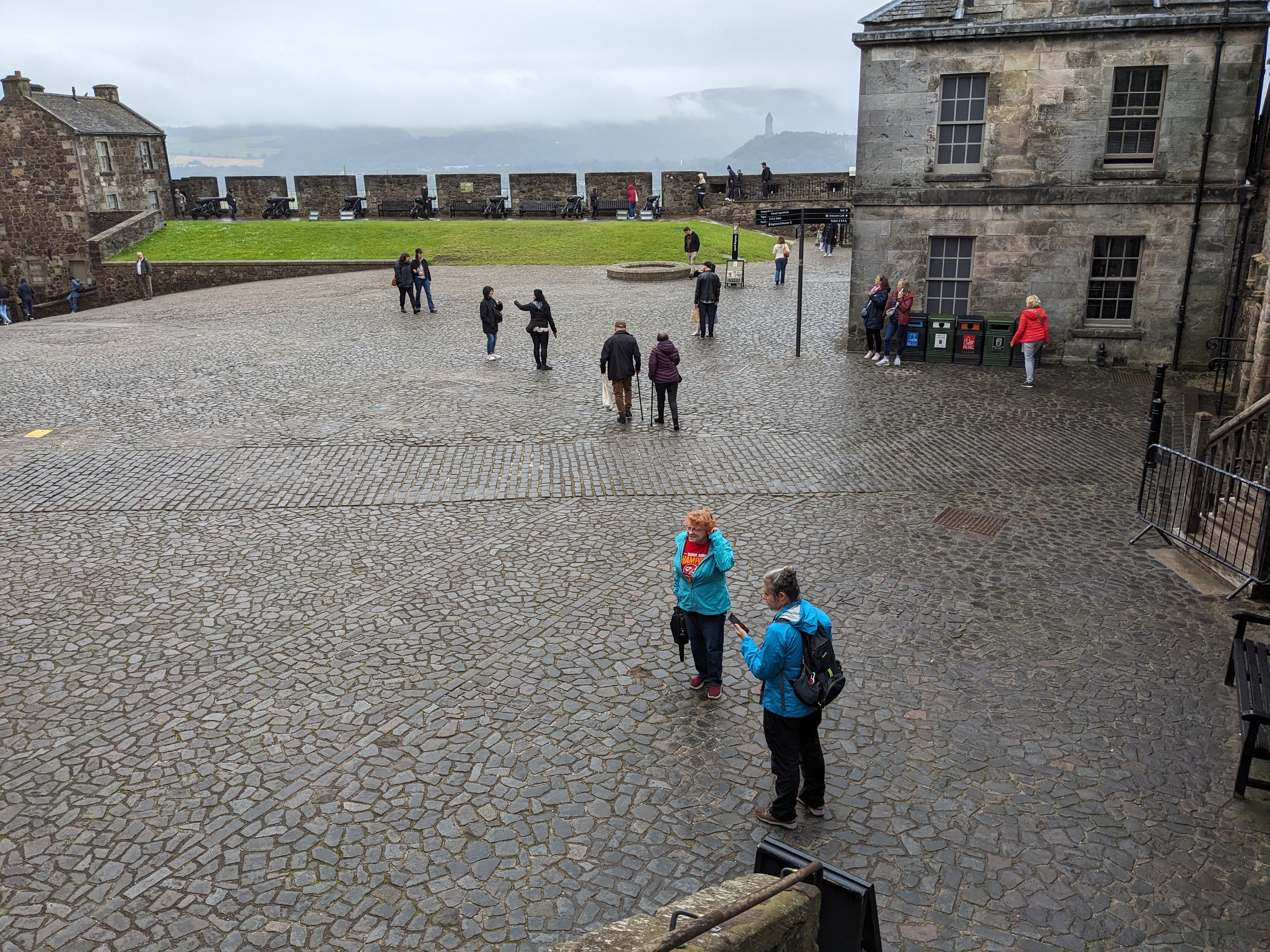
Stirling Castle is included in the Explorer Pass, so we were able to book our visit through that. We had pre-booked a time just to make sure we could get in. To tour the castle, we used, you guessed it, a self-guided tour from the Rick Steves guidebook. Stirling Castle actually felt bigger than Edinburgh Castle, so there was plenty to see. We enjoyed the gardens and 360-degree views from the battlements, plus some nice areas about life in the castle that were aimed towards kids. Also in the royal apartments there were some actors who were able to provide some historical context to what we were seeing.

We rushed through the end of the castle tour to make sure to get back to our car before our two hour parking was over. It was easier heading back down the hill than it had been coming up! After adding time to our parking, we went to eat lunch in town. We found a Thai restaurant called Sida Thai which had some good lunch specials.

Oban

We then hit the road west to the town of Oban, our destination for the night. This route was one that really introduced us to what we talked about in “Driving in Scotland,” with many roads that were “highways” with 60 MPH speed limits, but with blind curves and narrow lanes. After 2.5 hours, we were definitely happy to get to Oban!

There were some nice views along the way

In Oban, we were staying in the first of the Hosteling Scotland hostels we had previously discussed. Here we were able to get a private room with its own ensuite bathroom, which was a nice way to ease in to hostel life. The hostel itself is located in a nice older building right by the bay.

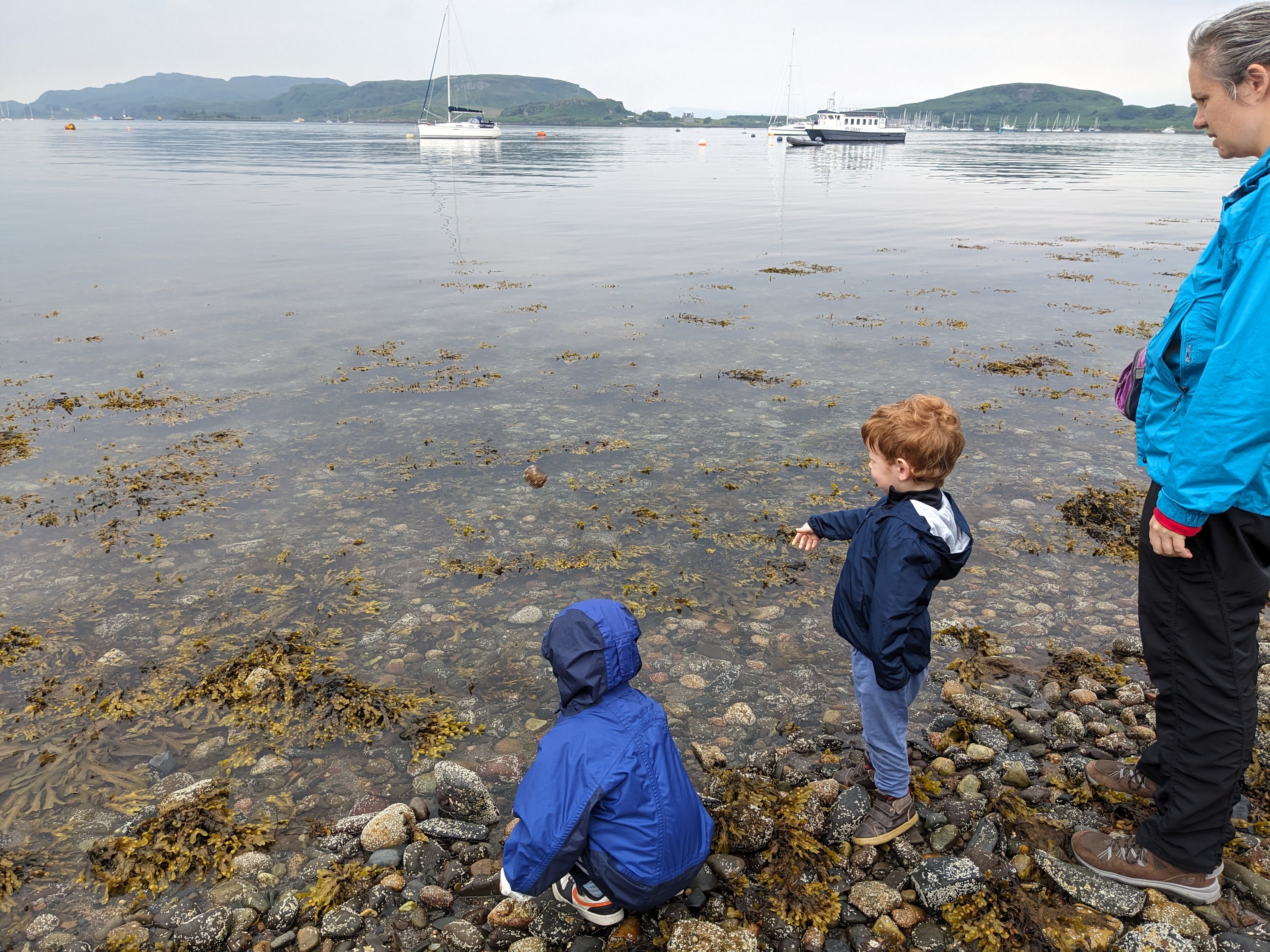
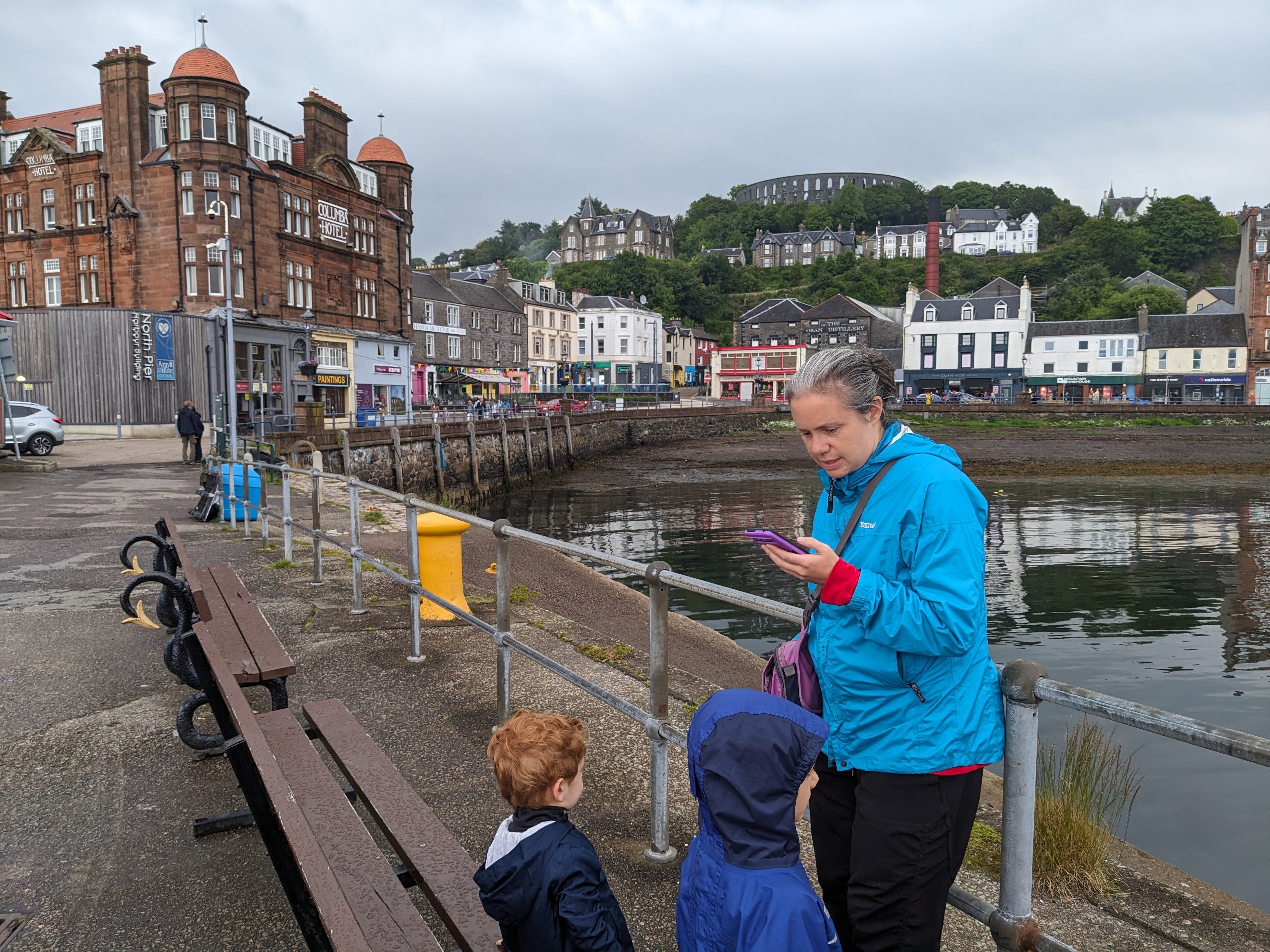
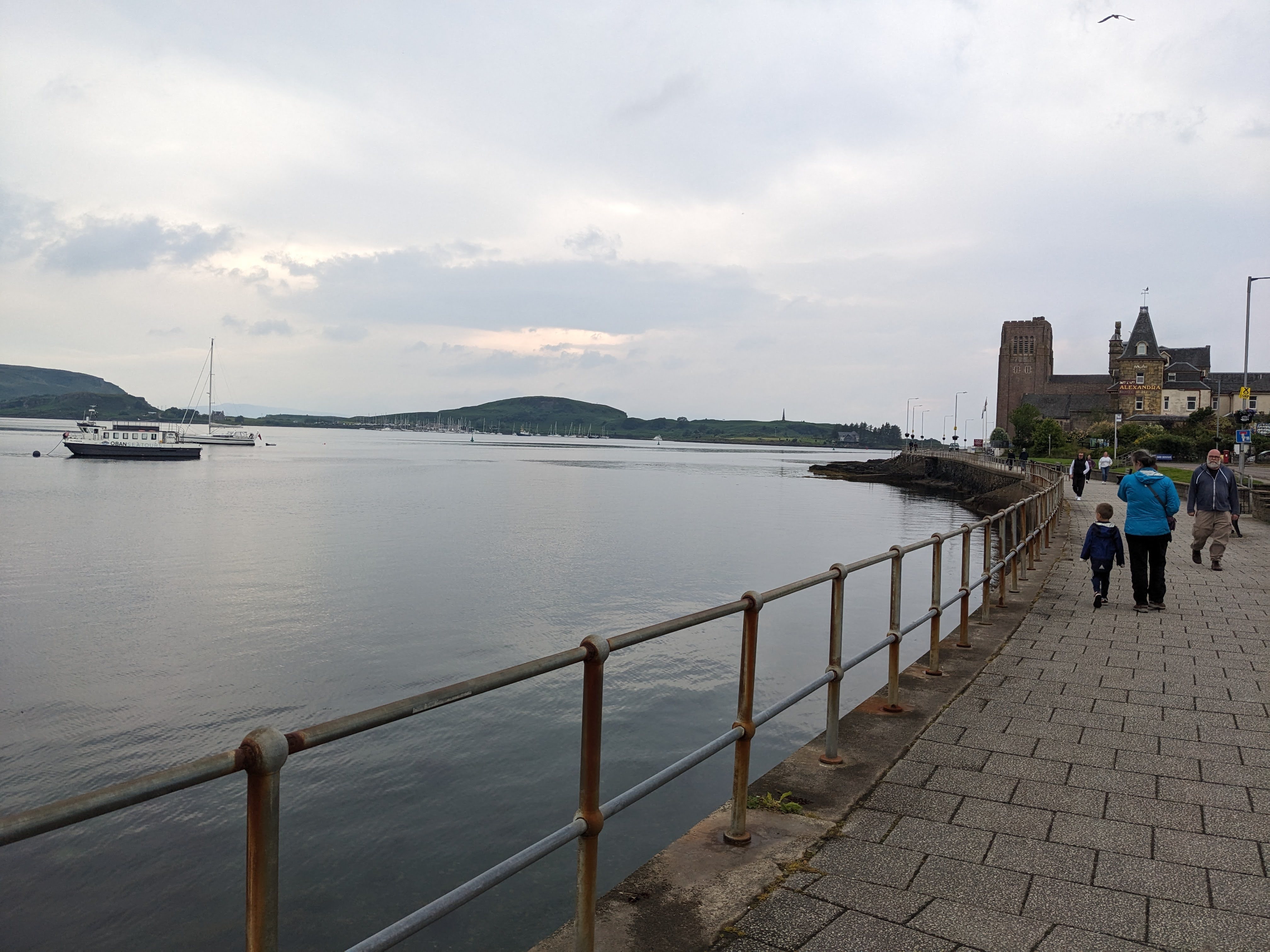
After settling in, we walked along the shore into the main part of town. The kids were interested in touching the water, so we found a staircase and walked down. The tide was low so we ended up walking on slippery ocean rocks. We continued on to the North Pier where we took in the sights of the city and the bay. We had dinner at the Piazza Italian restaurant there – good but smaller portions. We headed back to the hostel and relaxed for the rest of the evening.

Trip to the Isle of Mull

Our itinerary had us spend two nights in Oban, so we had another full day to use. We had originally hoped to take a tour to the Isles of Mull and Iona. However, the weather forecast was showing constant rain, so we didn’t think it would be particularly enjoyable to be out all day in inclement weather. Instead, we decided just to ride the ferry to Mull and back on our own for something to do.

Before catching the ferry, we had time to get the “Wee Breakfast” at the hostel, the continental breakfast that was included in our booking. It had a nice assortment of cereals and toast.

We then walked back into town and caught the 9:55 ferry. The car reservations had filled up far in advance, but there were plenty of spots available for passengers on foot. The kids enjoyed saying the name of the ferry company: “Caledonian MacBrayne.”

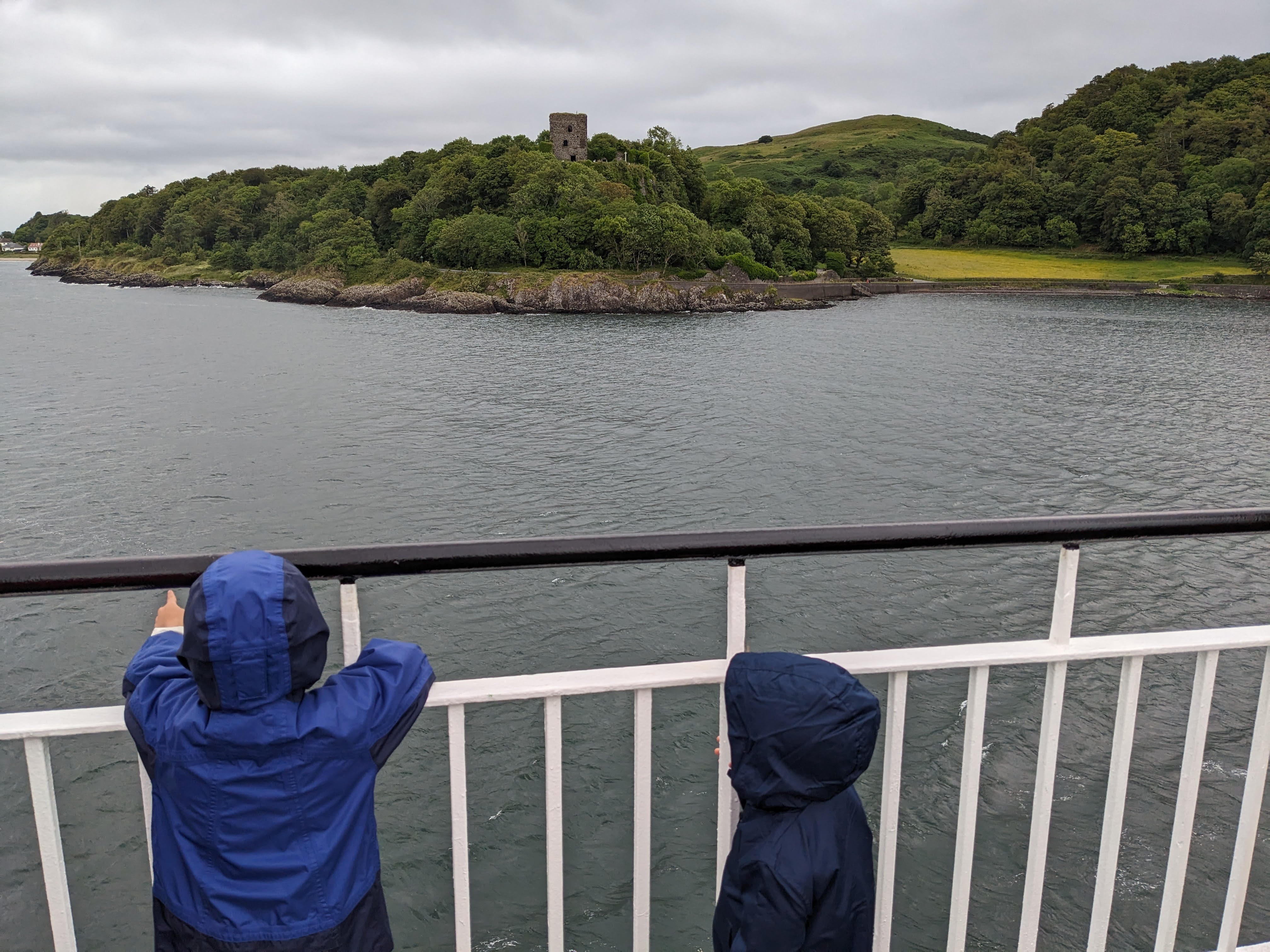
The weather was cloudy but not raining, so we started out on the outside observation deck. We had nice views of Oban as we exited the bay. Once we were out in open water we started to feel cold and wet, so we headed into the inside observation area for the rest of the 45 minute journey to Craignure on Mull.

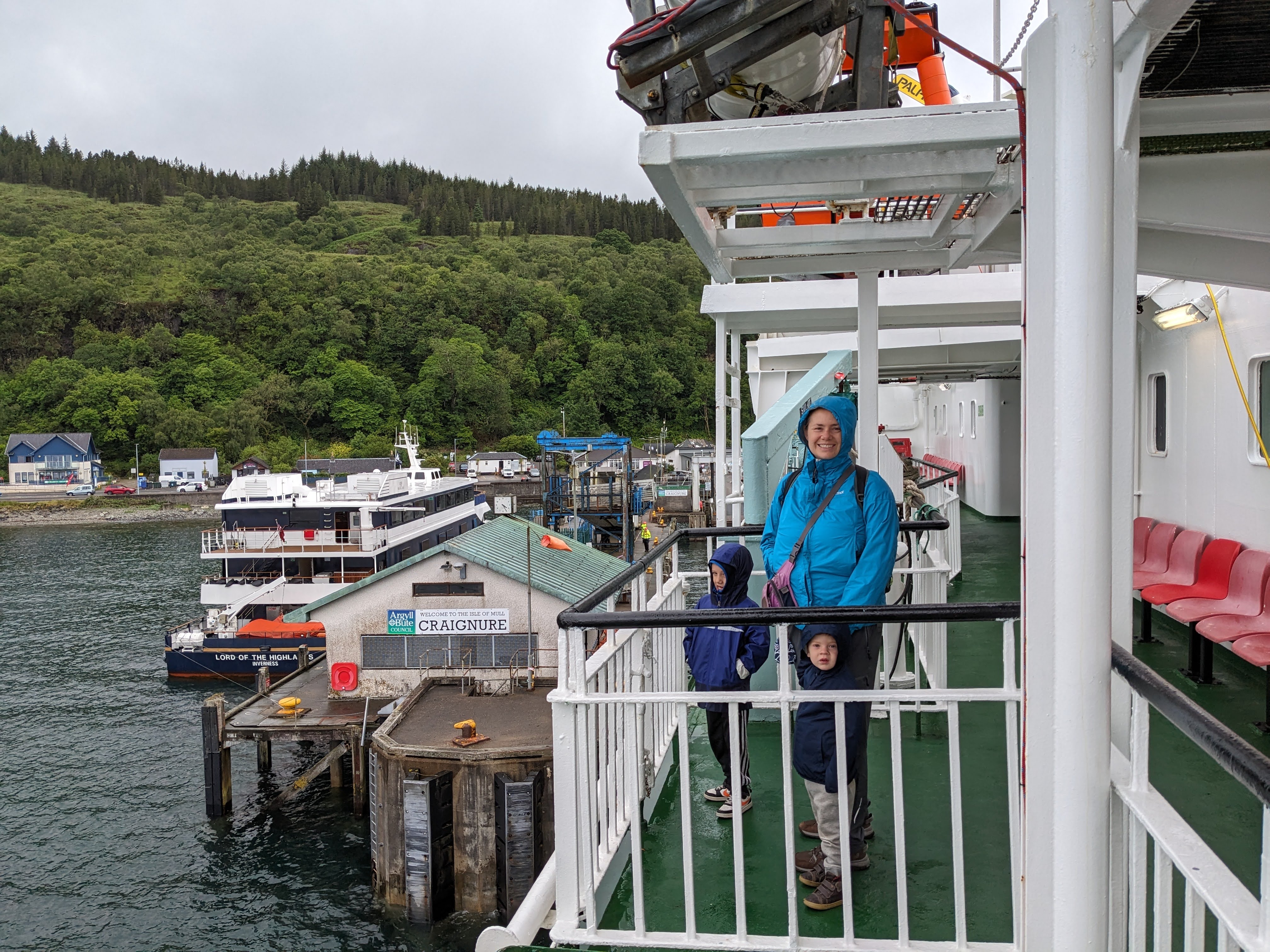
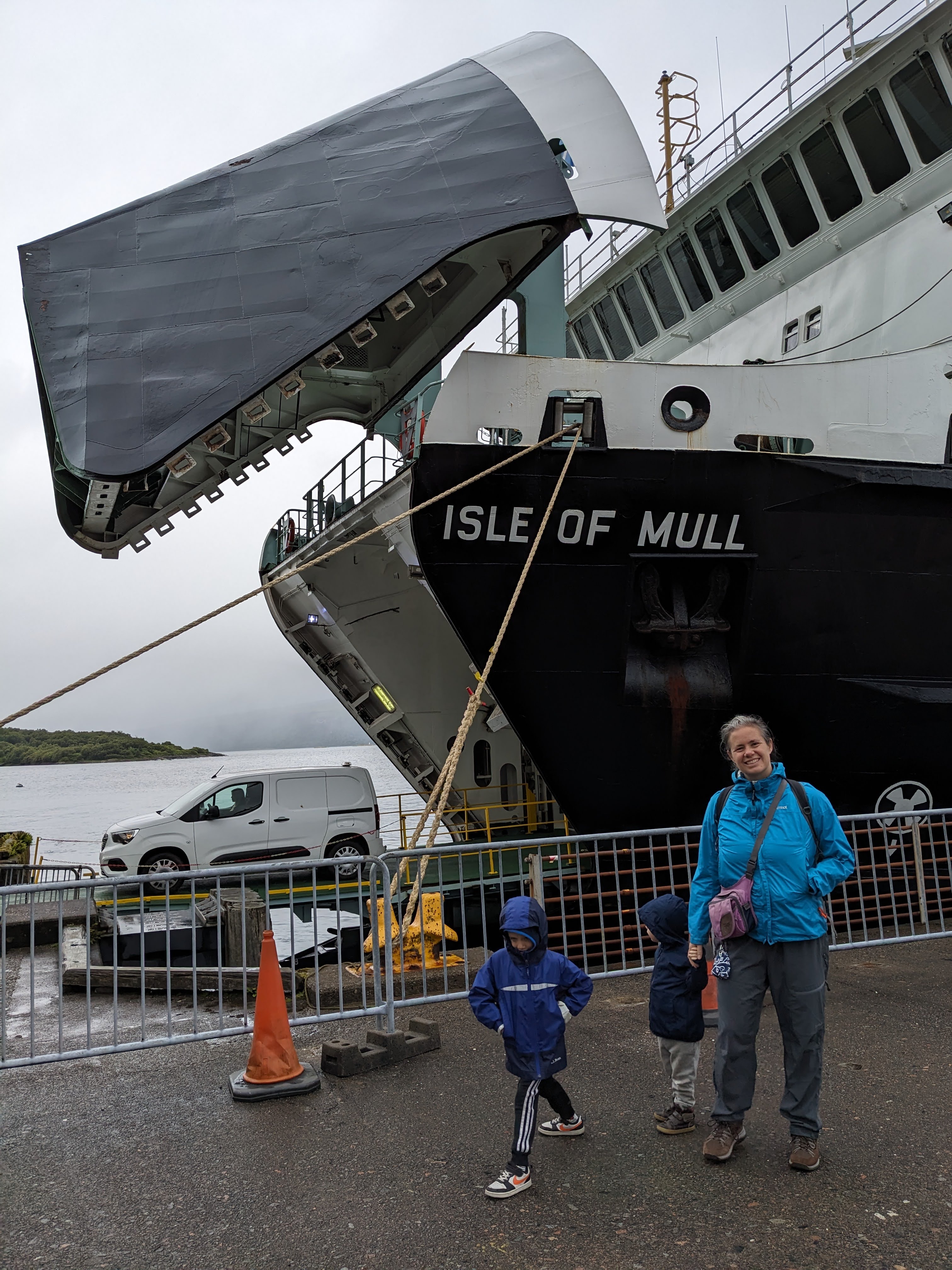
Once we arrived at Craignure, we didn’t have a lot of time because we wanted to ride the same ferry back to Oban. We had just enough time to get off, check out a gift shop by the tiny ferry terminal, and then get back on. We did find it fascinating to watch the cars load off and then on to the ferry. They actually raise up the nose of the ship to allow for access.

Watching the cars come off the ferry with its nose lifted. Note that the ferry is also named Isle of Mull because this is its main service

The ride back was pretty straightforward since we followed the same path, so we mostly stayed inside. We did go back outside for the final stretch into Oban.

Rainy Afternoon in Oban

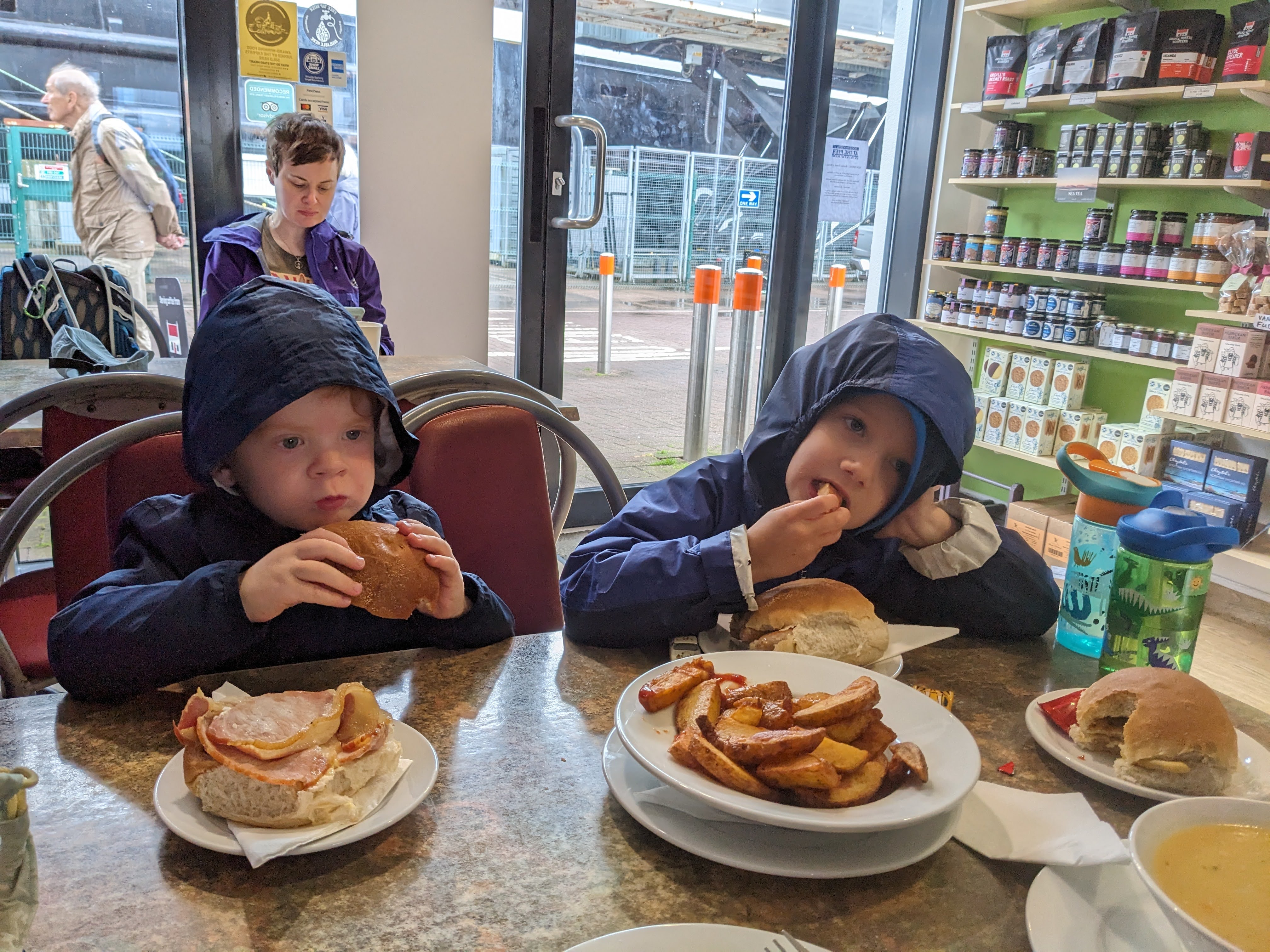
After disembarking, we grabbed lunch at a little cafe in the ferry terminal called Argyll at the Pier. The warm soup was nice on the damp day! As we left the terminal, we did get a little bit of sun. We grabbed some groceries at a Tesco supermarket and walked back (in the rain) to the hostel.

We spent some time in our room relaxing and drying off. We then tried to decide what to do with our afternoon that the kids would enjoy (not the Oban Distillery unfortunately). We ended up heading to Atlantis Leisure, Oban’s version of what we would call in the US a recreation center. They had a big soft play area for the kids that they enjoyed playing around in for quite some time.

Soft play area at Atlantis Leisure

For our dinner, we kept it easy and used the hostel kitchen to heat up a few different items we had gotten at the supermarket.

Self-catered dinner at the hostel

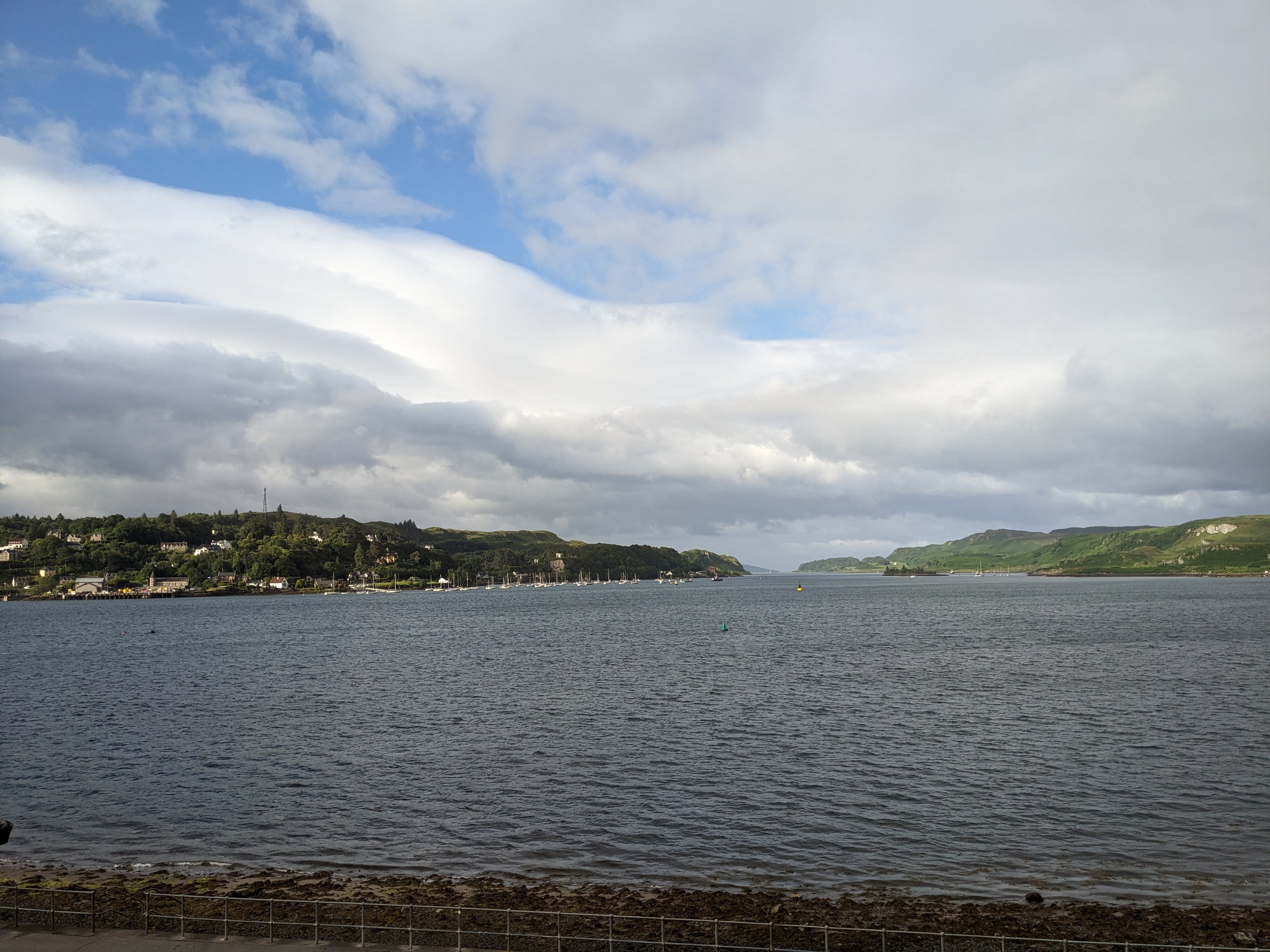
The next morning, we had the Wee Breakfast again and hit the road for our next destination, Glencoe. Of course, this morning there was a little bit of a blue sky! It was a little bit of a frustrating reminder that we hadn’t gotten to experience everything we wanted to in Oban due to the weather, but still provided a nice vista as we said goodbye to the pleasant town.

Sun over Oban Bay on the day of departure

Summer Trip to Scotland: Road Trip through the Highlands Overview

In the summer of 2024, we took a trip to Scotland with our two children, ages six and three. After a longer than expected journey getting there, and two nights in Edinburgh, we rented a car and took a road trip through the Highlands.

Itinerary

We mostly based our itinerary on what Rick Steves recommends here, with some modifications for what we thought would be most interesting for our family. Along the way, we almost exclusively stayed in hostels run by Hostelling Scotland, which were nice, affordable options for our family of four. We also found it easy to work with them to book all of our stops ahead of time.

  • Day 1: Pick up car and drive to Stirling. Visit Stirling Castle. Drive to Oban and spend two nights there.
  • Day 2: Sightseeing in Oban. If the weather cooperates, consider a trip to the islands of Mull and Iona.
  • Day 3: Drive from Oban to Glencoe. Explore the scenic valley and do some hiking. Drive on to Glenfinnan and visit the monument (and maybe see the steam train on the viaduct). Spend the night in Arisaig (to be near the ferry port of Mallaig).
  • Day 4: Catch a ferry from Mallaig to the Isle of Skye. Drive to Portree, then around the Trotternish peninsula, stopping at scenic spots along the way. Spend the night on the island in Broadford.
  • Day 5: Drive off the Isle of Skye on the Skye Bridge, headed towards Inverness. Stop at Loch Ness attractions including Urquhart Castle. Arrive in Inverness. Spend two nights there.
  • Day 6: Explore Inverness and the surrounding area, including Culloden Battlefield.
  • Day 7: Leave Inverness. Head first to Nairn and play on the beach. Drive south to Newtonmore and visit the Highland Folk Museum. Spend the night in Perth.
  • Day 8: Drive from Perth to Edinburgh in the morning, leaving enough time to explore the city in the afternoon.

As we mentioned in previous posts, this was not exactly the original plan. We had originally planned on spending three nights in Inverness, and then on Day 8 we would have driven from Inverness all the way to Edinburgh (stopping in Newtonmore), only arriving in the afternoon/evening. Since we wanted to have more time in Edinburgh, we asked Hostelling Scotland if we could shift that last night. They didn’t have space in Edinburgh for an extra night there, but they did have a room at the hostel in Perth. Perth is only an hour away from Edinburgh, so that was our best option for spending most of the day in Edinburgh.

Driving in Scotland

We rented our car from Budget, using the location that ended up being walking distance from our Edinburgh Airbnb. We were happy to see that it was the same price (and maybe a little bit cheaper) to rent in town versus having to return to the airport.

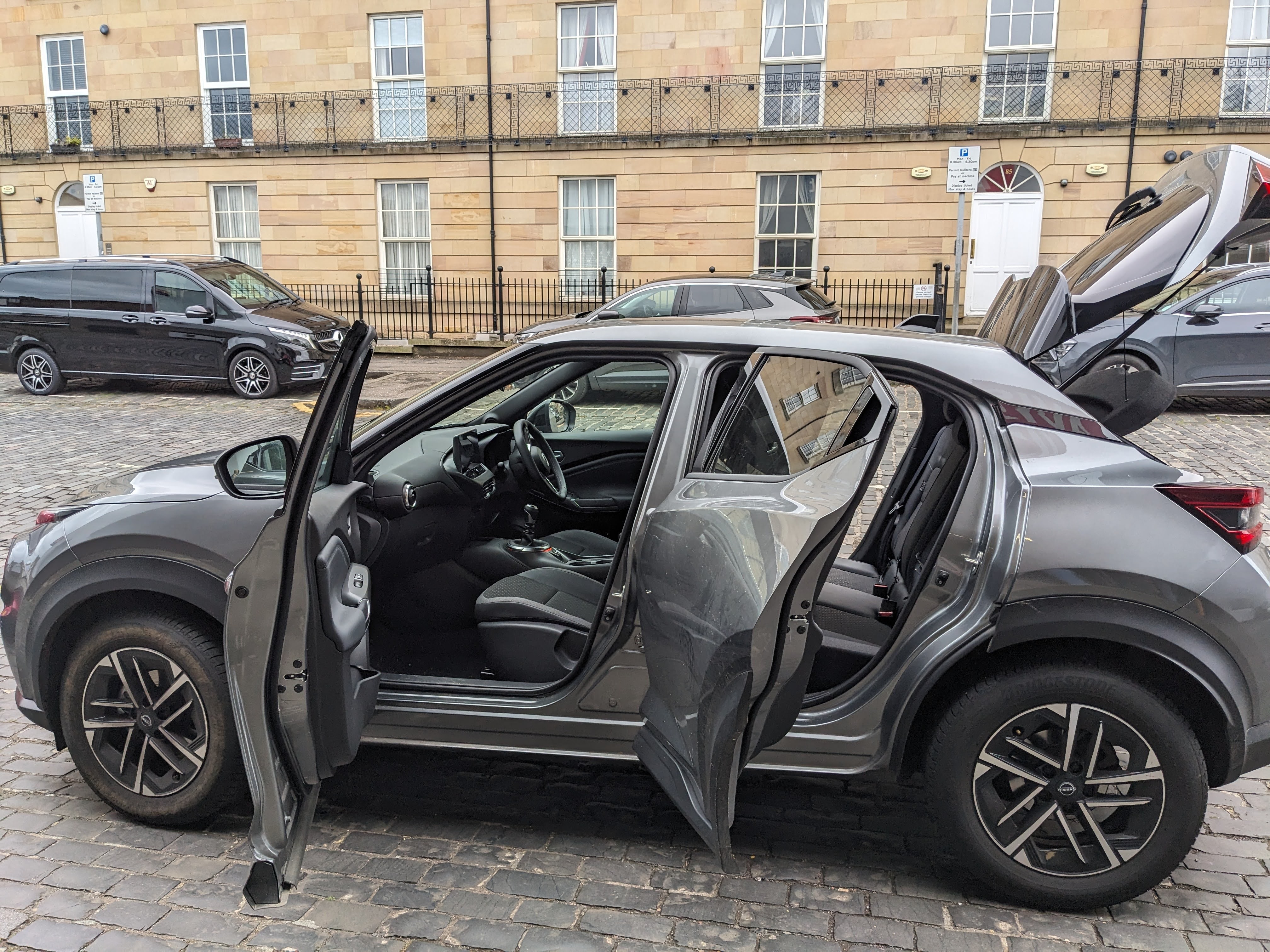
One thing to note for travelers from the US like us is that the car selections are generally smaller than in the US. You don’t find many options for large SUVs like you might be used to! We chose a Compact SUV which we thought would be fine for our family of four (and hopefully big enough in the back for the younger kid’s car seat), plus maybe a little more able to handle any rugged roads we went on. We ended up being assigned a Nissan Juke. It felt a bit more “compact” than “SUV,” but it worked fine for what we needed.

Eagle-eyed readers may have noticed in one of the pictures above that the car had a manual transmission. That is another thing that travelers from the US may need to be aware of: in many cases it is easier and cheaper to get manual transmission instead of automatic. Fortunately for us, Della learned to drive a manual transmission growing up and still remembers well enough to feel confident enough to do it on this trip. Another thing to consider is that in Scotland the driver sits on the right side of the car, so they have to shift with their left hand. We did have some experience driving this way on our self-drive safari so we were pretty confident we could figure it out. Unfortunately, the UK is a little more restrictive than the US in terms of allowing multiple drivers of the car. We could have added Eric as a secondary driver, but it would have added a lot to the cost, so Della said she would do all the driving.

One big decision we had to make as traveling parents was what to do about seating for the kids. Back in the US, we hadn’t felt like our six-year old was big enough to ride in a booster, so he was still in a big car seat (and obviously the three-year old was as well). You can rent car seats from the car rental company or from local services, but the cost for eight days felt like enough to buy a brand-new nice seat! We didn’t want to bring our big seats from home, so we thought about bringing along some lightweight seats we have. Still, that wasn’t a great fit because we knew at the end of the trip we would be using the London Underground and we didn’t want to lug two seats around on that no matter how lightweight they were. Finally, we came up with a hybrid plan:

  • For the three-year old, we would bring a lightweight car seat that was very close to reaching its expiration date, so at the end of the road trip we could just dispose of it in Edinburgh and not have to have it in London
  • For the six-year old, we decided to purchase the RideSafer Travel Vest, a small harness that allows the child to be securely strapped into a regular seat. This packs down very compactly, so we thought it would be great for this trip and future ones as well

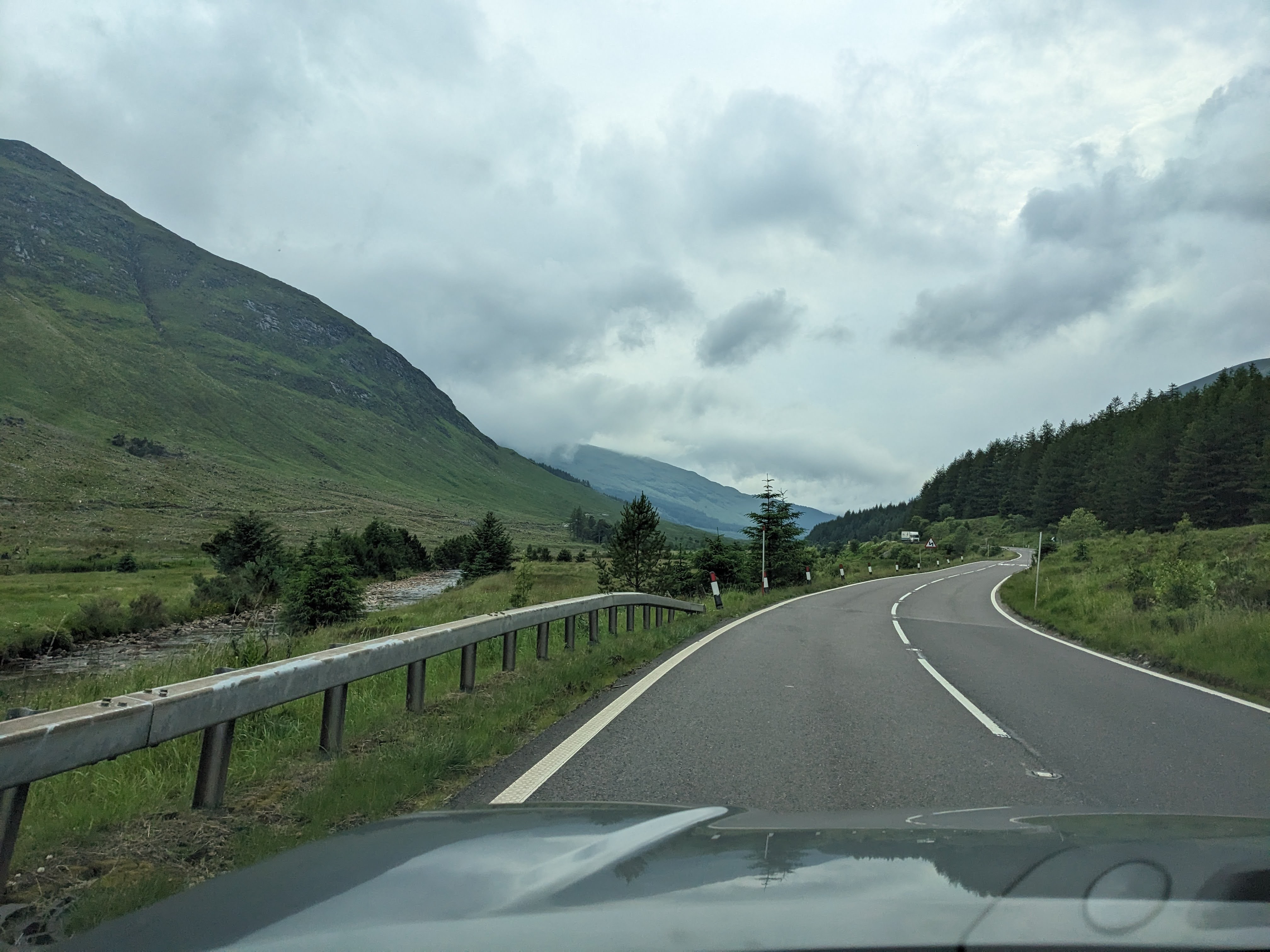
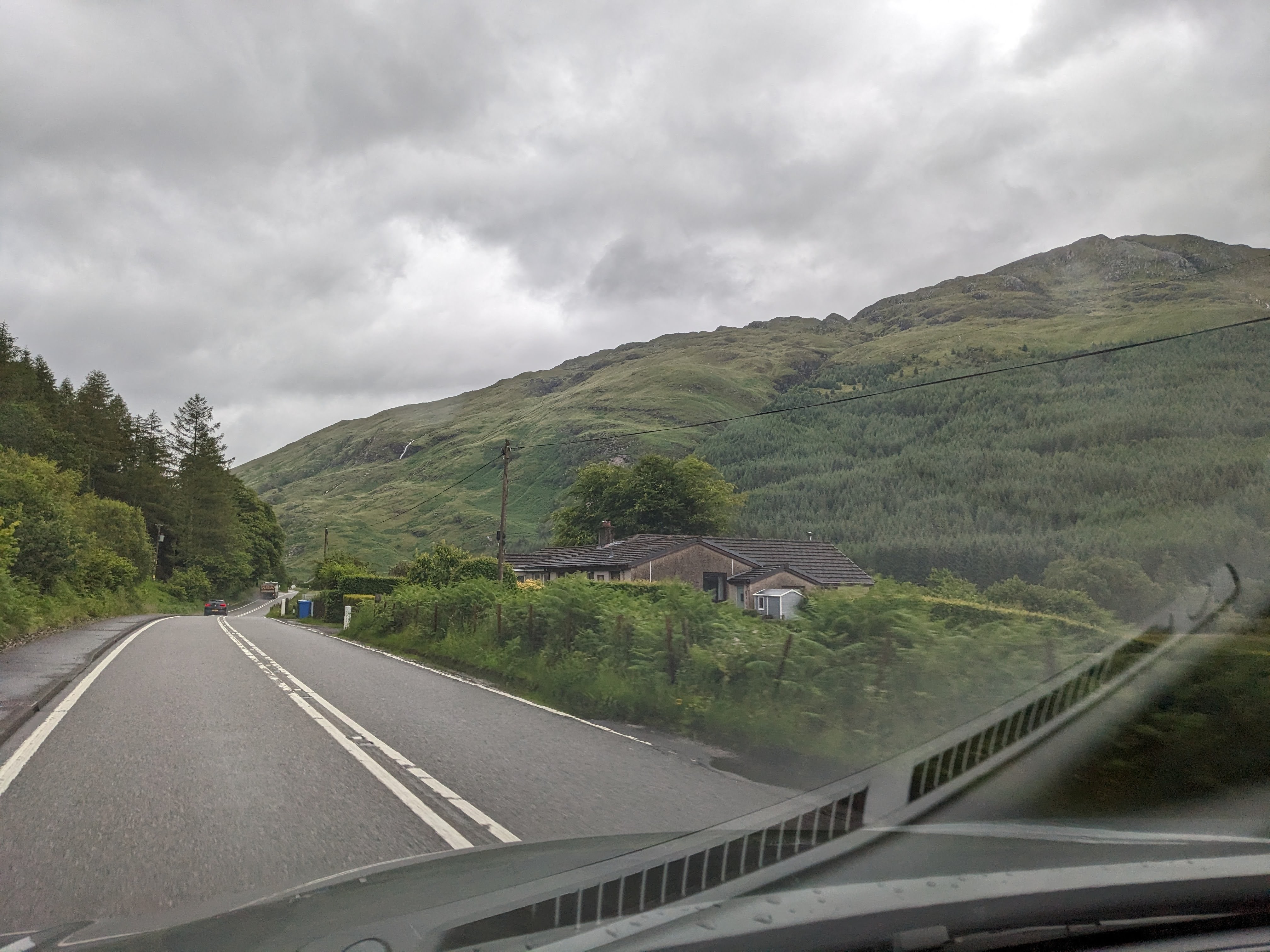
Yet another thing for drivers from the US to consider about driving in Scotland is that the highways may be much more narrow than you are used to, especially if you live in the western US like us and are used to wide-open spaces. Scotland does have some roads that are as big as interstates, but many of what were listed as highways were much smaller two-lane roads that we were used to. They also had in many places narrow shoulders with not much room for error, tight and blind curves, and large trucks coming from the opposite direction. Yet they still had a speed limit of 60 MPH! Not to mention the fact that we were driving on the opposite side of the road that we were used to, so we missed the intrinsic feel of where to put ourselves in our lane. All that probably combined to make the locals frustrated at us not feeling comfortable driving as fast as we could be.

Tried to capture a feel for what the highways were like

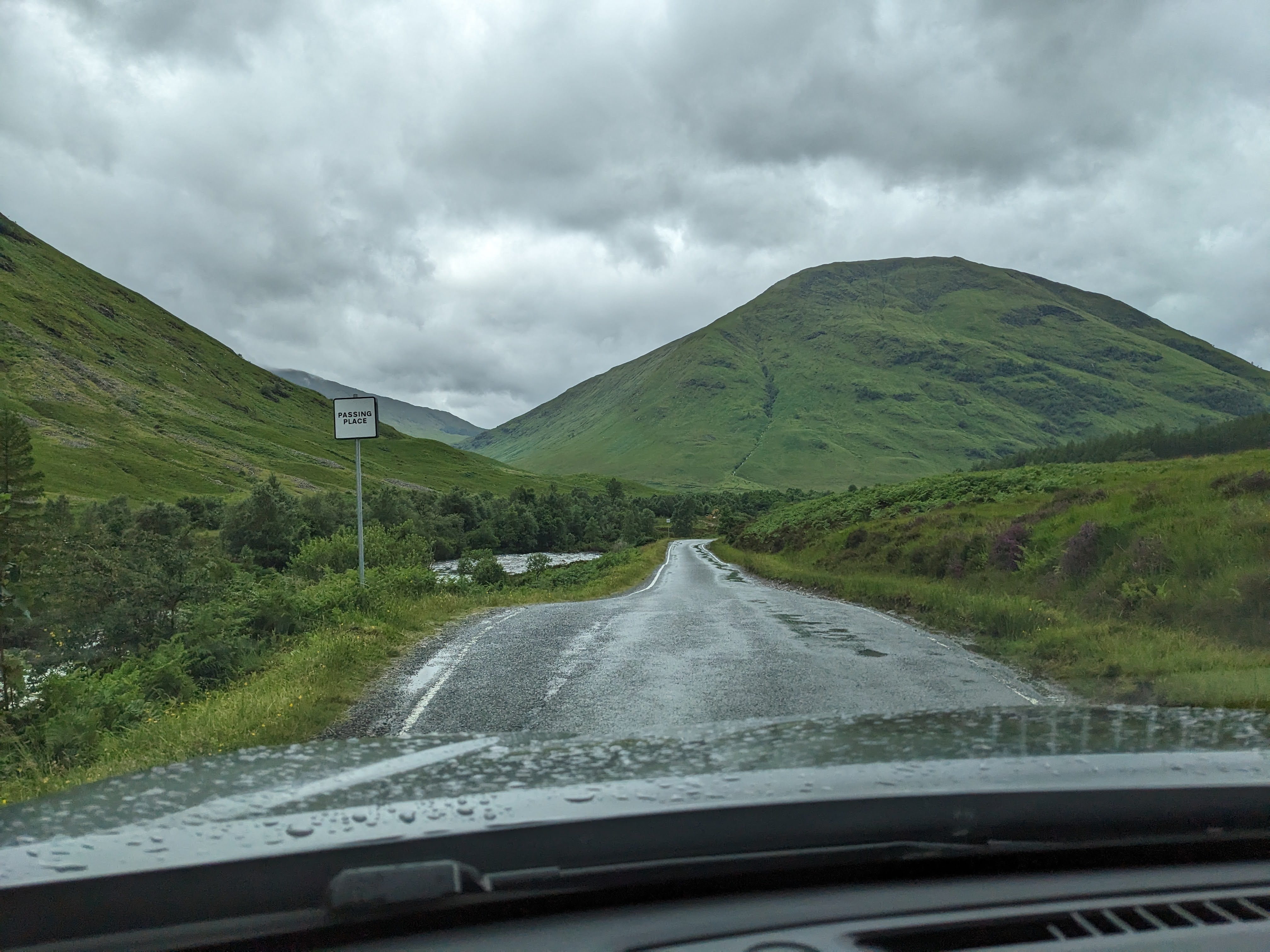
If you are planning to go to the Isle of Skye or another smaller location, you need to familiarize yourself with the rules for single-track roads. These are roads where there is only one paved line which is expected to be used by drivers going both directions! You should study how to use the marked “passing places” to yield to drivers coming from the other direction, and what the rules are for which driver yields. We saw someone (almost certainly a tourist) ignore these rules on Skye and cause a huge mess for everyone else, so they are definitely important to understand.

One final thing to think about is what you want to listen to! We thought it would be fun to put together a playlist of songs from Scotland to match the beautiful scenery we were seeing – including plenty of songs from the Outlander tv show!

We hope this overview post helped to set the scene for our Scottish Highlands road trip! Next up, we will describe the different stops along the way in more detail.

Summer Trip to Scotland: Getting There

Before we had kids, when we were planning our summer trips, we would come up with a short list of candidate destinations, and often Scotland was very high on the list. It’s always been one of Della’s goals to travel through the Highlands that she read so much about in the Outlander series. Scotland never became our final choice, but it has always been on our mind.

When we had kids, we put big European vacations on hold for a bit, but in the summer of 2024, now that they were six and three, we decided that it was maybe the right time to go. We thought Scotland might be a great place to go with kids, especially since we were planning on renting a car and doing a roadtrip which would allow for a little flexibility.

Flying Four to Scotland for $22

As with past trips, one goal was to use miles to book our plane flights. Now that we have to pay for four tickets instead of just two, it requires a lot more miles. Eventually we decided that the best strategy would be to use United Airlines to fly one direction directly to or from Edinburgh, and American Airlines to fly the other direction via London (no direct flights to or from Scotland). Based on the available flights and our schedule, we chose to fly into Edinburgh on United, then out of London on American.

Since we have a United Airlines credit card, there was a little more availability of flights at the cheaper rate of 40,000 miles per person. In the end we chose the flight with a layover in Washington, D.C, and were able to get all four for 160,000 miles and $22.40 in fees.

Smoothly at the Start

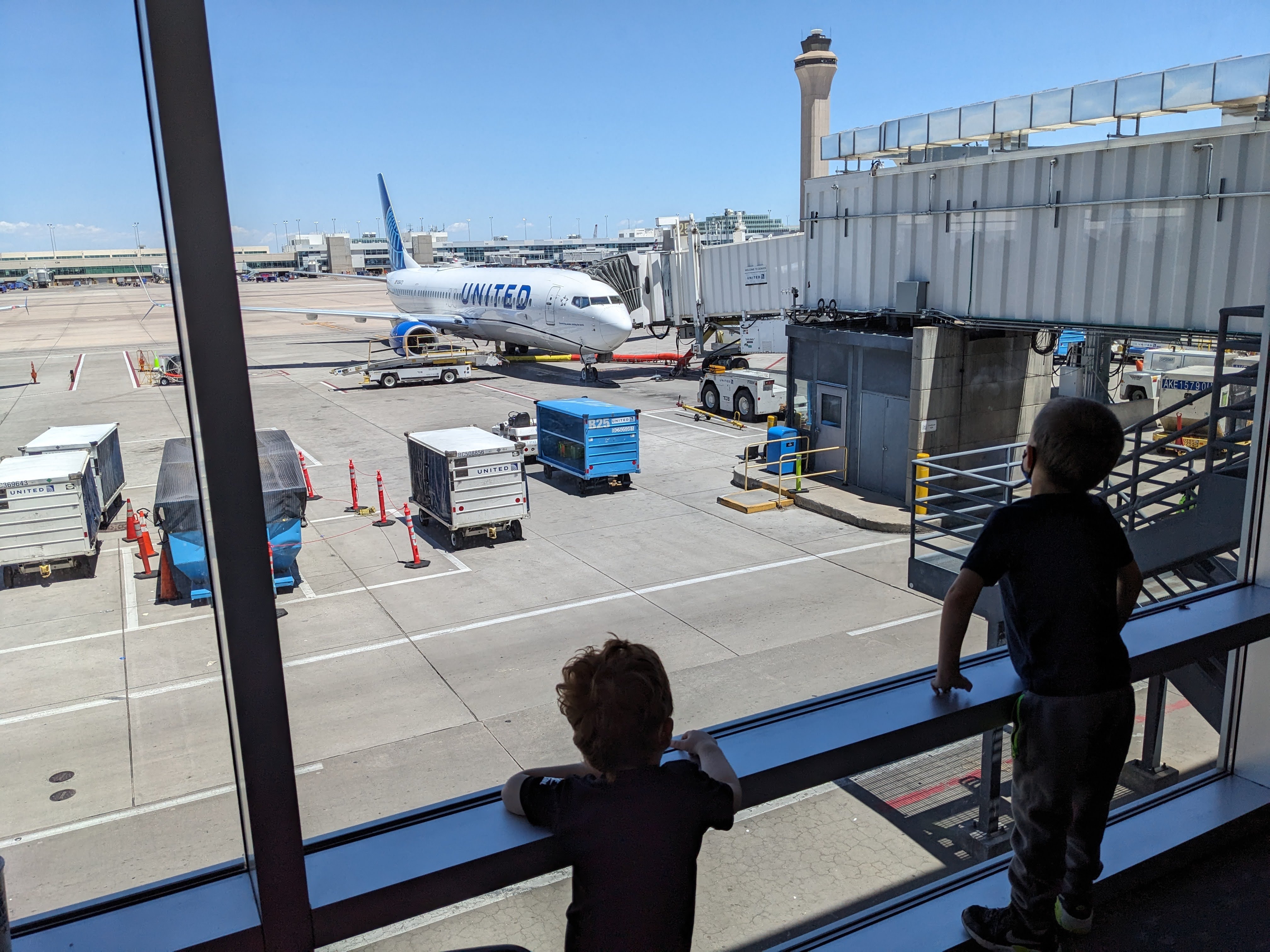
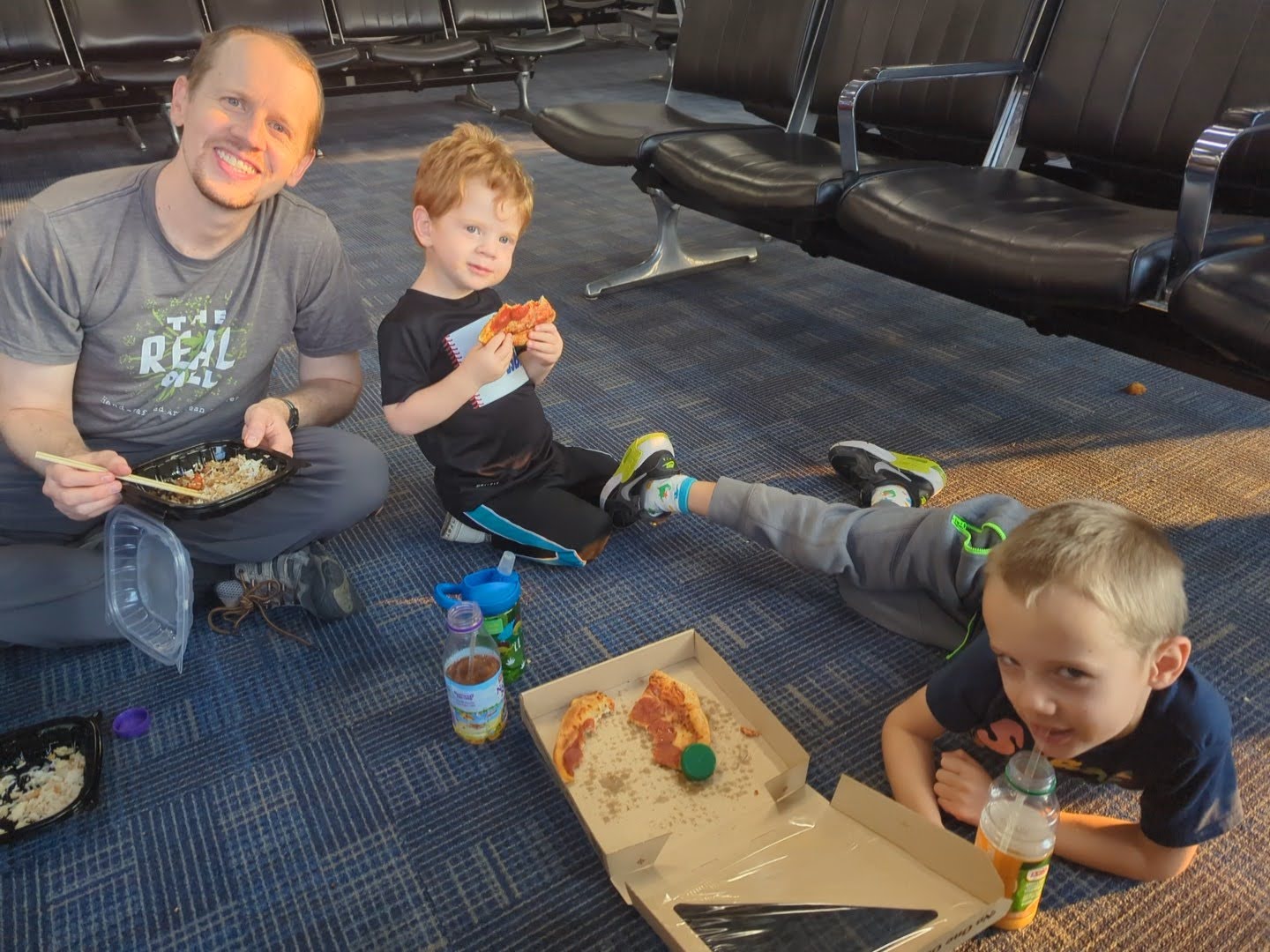
The first part of our journey went exactly as planned. We rode the train to the Denver airport, and had enough time to eat lunch before flying to DC. In DC, we took advantage of the three hour layover and had dinner, then walked up and down the entire length of the terminal for exercise.

Here Come the Delays

As we were wrapping up our walk through the terminal at 8:30, we got a text from United that our flight had been delayed until 11:00 PM – our inbound airplane was arriving late due to lightning in Newark. We weren’t too worried yet…

But we watched through the United app as our inbound airplane still never left Newark. The delays kept trickling in.

  • At 9:30 PM, the flight was delayed until 11:27 PM
  • At 10:00 PM, the flight was delayed until 12:27 AM
  • At 10:45 PM (past our original departure time), the flight was delayed until 1:27 AM
  • At 11:OO PM, the flight was delayed until 2:15 AM

Through all this we had to try various things to keep the kids entertained. Even though it was late (even for our bodies on Denver time), they didn’t show much interest in sleeping.

At 11:55 PM, the flight was delayed until 3:00 AM.

At 12:05, there was a moment of optimism, as we could see that the Newark flight had left its gate. The delay was updated to be only 2:15 AM again.

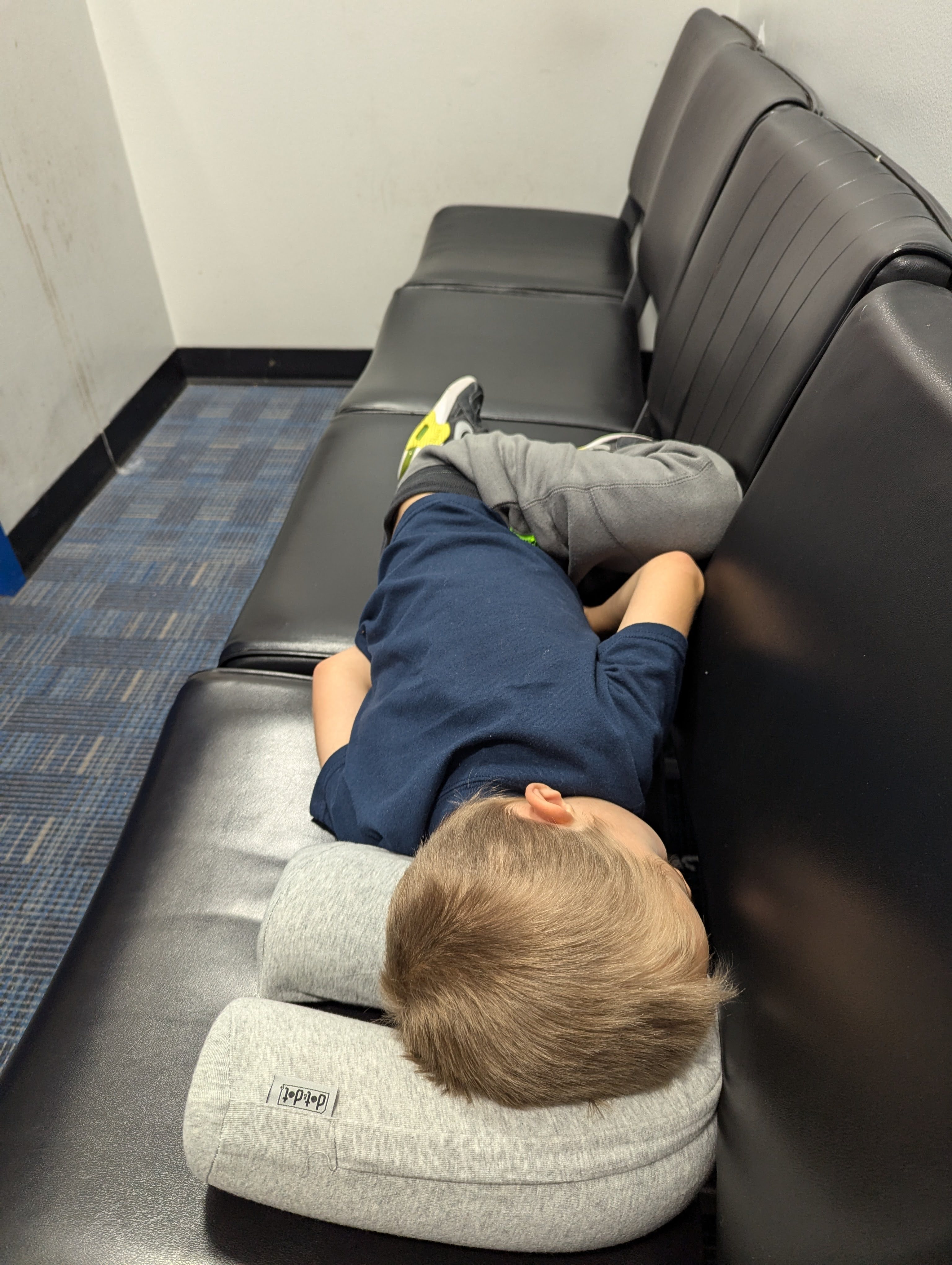
At this point, with it being after midnight, and not looking like we would leave for two more hours, we got one kid to sleep, but the other still refused.

The flight from Newark was in the air, and we were feeling tired but confident.

At 1:25 AM, the flight was cancelled.

There was then a big scramble to figure out what to do. Agents passed out cards with a QR code to connect with a virtual booking service, but we tried and nothing would connect. Our gate became chaos as United had reassigned it to a flight that was heading back to Newark. Eric eventually realized United agents were setting up at nearby empty gates and lingered enough to get in the front of one of those lines.

Talking with an agent, the best they could do for the four of us was to get us on the flight from DC to Edinburgh on Monday night – two days later than the original flight. This was not ideal, but it seemed like the only option.

We chose a voucher for a hotel through a link United sent us. Unfortunately, there was some sort of bug and the options seemed to be assuming we were at the other DC airport (Reagan National). There was no way to fix this, so we just chose the one that said it was closest but was actually more than 30 miles away in Alexandria.

We did have one car seat along, but the other travel harness was in our checked bag. Because it was so late, the United agents said there was no way we could get our checked luggage because there was no one to bring it out. We asked multiple times, but never got a better answer.

The best they could do was give us a voucher for the taxi service, which supposedly had car seats available. We lugged two very tired kids through the empty airport and out to the taxi, where we did find one with a seat. (Thank goodness for the stroller wagon we had purchased a few months before!) We took a very late taxi ride, got checked into our hotel, and crashed.

Unexpected Adventure in DC

We tried to sleep in the next morning, but it was hard to: we were still in our dirty clothes, and thinking about how much time we were losing in Scotland with the 2 day delay.

Eric had the idea to call the rebooking line again, hoping that it would work better during more normal hours. Thankfully it did, and that rebooking agent was able to find seats for us on the flight to Edinburgh from DC that night, so only a 1 day delay. We accepted that and then made a plan for the day.

We spent much of the morning lounging in the hotel room, which actually was pretty nice. We also used meal vouchers to eat lunch at the hotel restaurant.

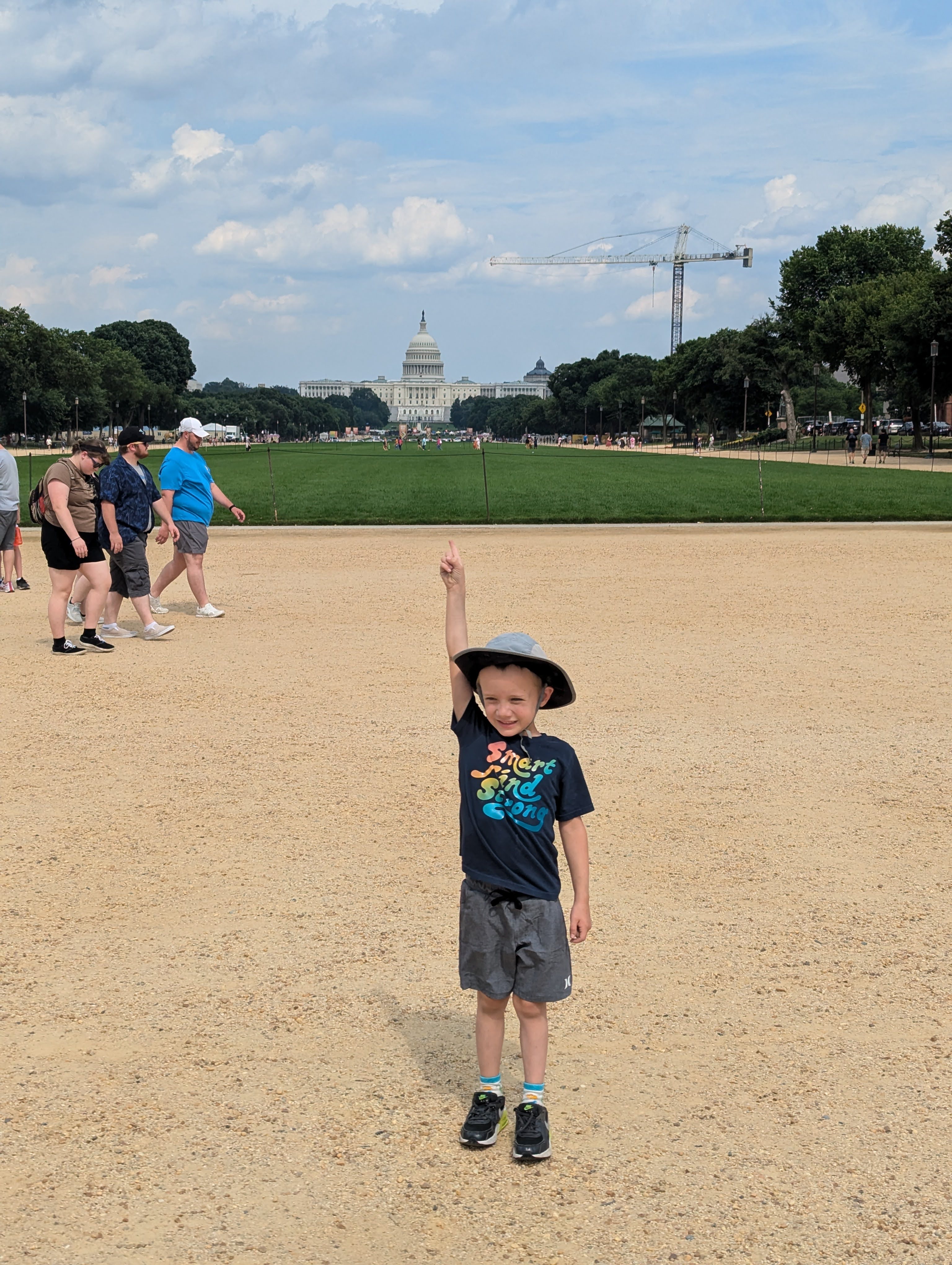
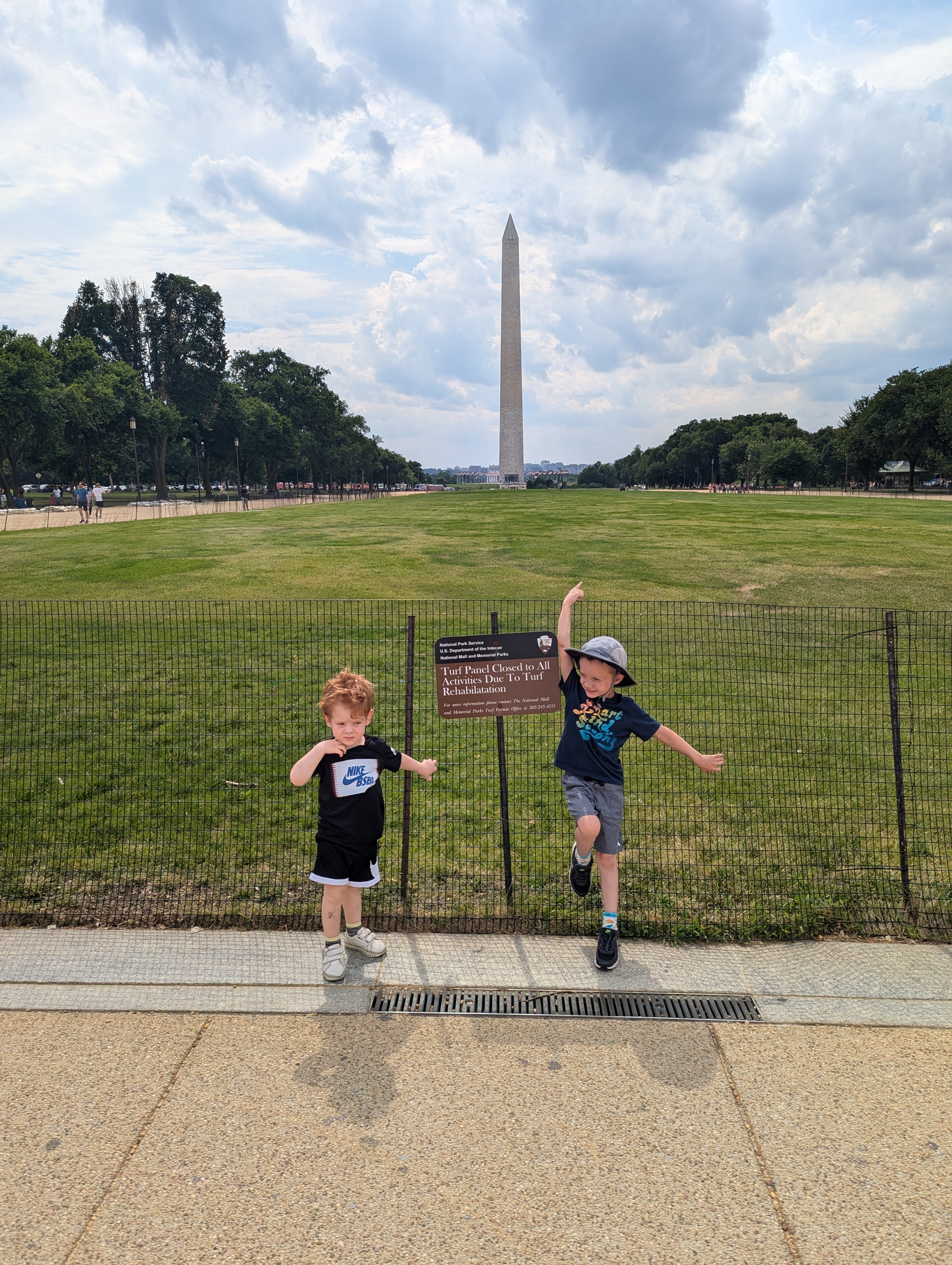
It was very hot in the DC area – they were under a heat advisory, and we didn’t want to spend another day and overnight flight in our same clothes. So, we had the idea to go buy some new outfits with shorts. We found a Ross nearby, and rode the free local bus there and bought a shirt and shorts each. (Side note: does this count as visiting the state of Virginia for the kids?) We changed into the shorts at the hotel (keeping the clean shirts in reserve for the flight), then rode the metro to the Mall for a little sightseeing.

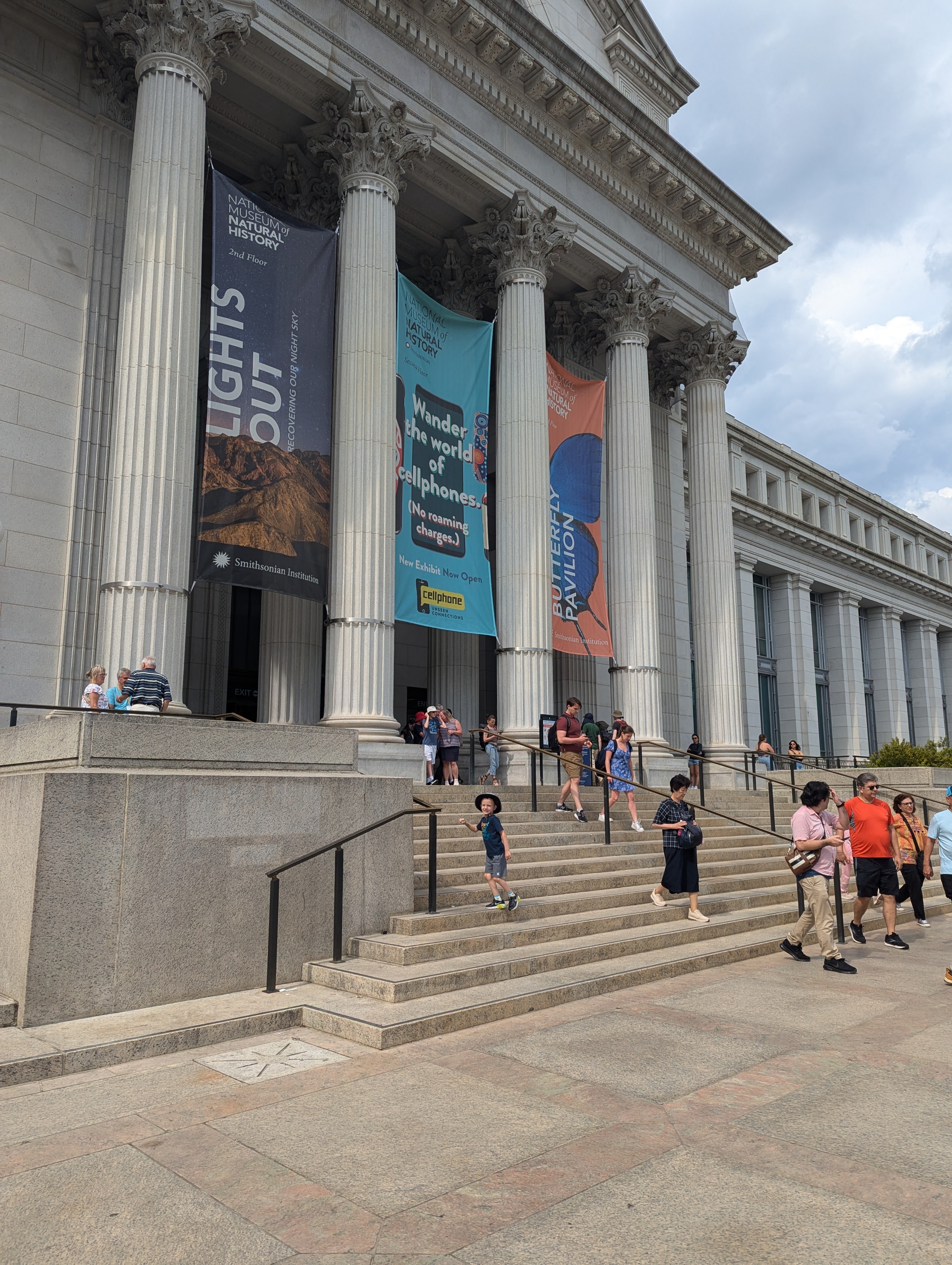
It was too hot to do much walking around the Mall, so we just walked through the middle and over to the Smithsonian Museum of Natural History, which we explored until closing time.

We had time for dinner at Hill Country Barbecue, then rode the (long) metro back out to Dulles airport.

Let’s Try This Again

Back at IAD, we got checked back in and to our gate in plenty of time. Thankfully, this time the inbound airplane had arrived earlier in the afternoon, and was already sitting at the gate. We got on board and breathed a sigh of relief as we headed to Edinburgh a day later than intended!

Our flight to Edinburgh went fairly smoothly. There was some weather in the area which meant that we spent some extra time on the tarmac before taking off, and in-flight service was delayed after takeoff. The kids fell asleep quickly, but the adults were unable to sleep well. It didn’t help that they still did a full meal service once the flight attendants were able to get up and move around.

Getting from the Edinburgh Airport into Town

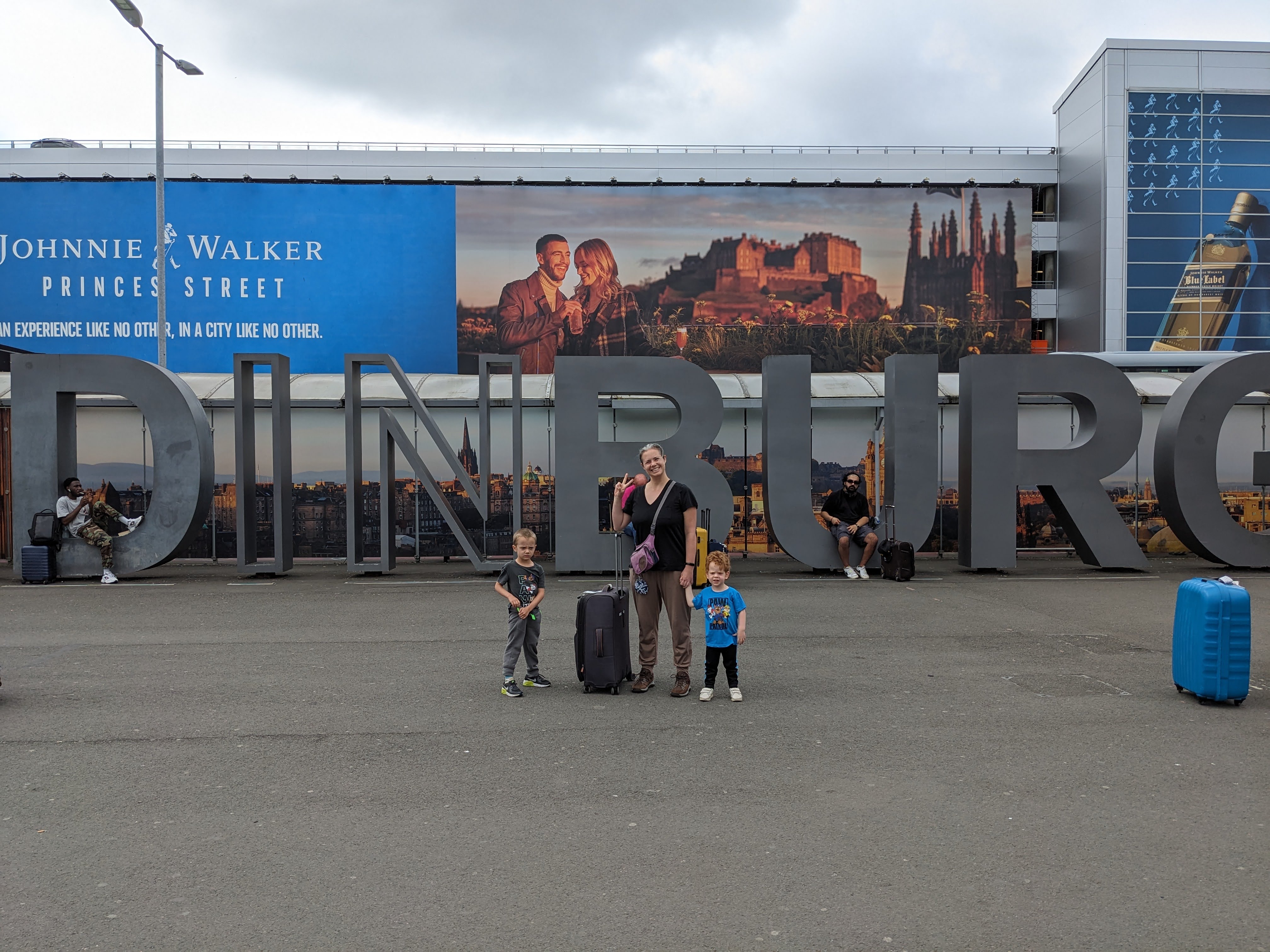
We made it to Edinburgh roughly on time. The adults were very tired, while the kids were mostly in good spirits. We were definitely glad to see that our checked bags had made it to Edinburgh as well!

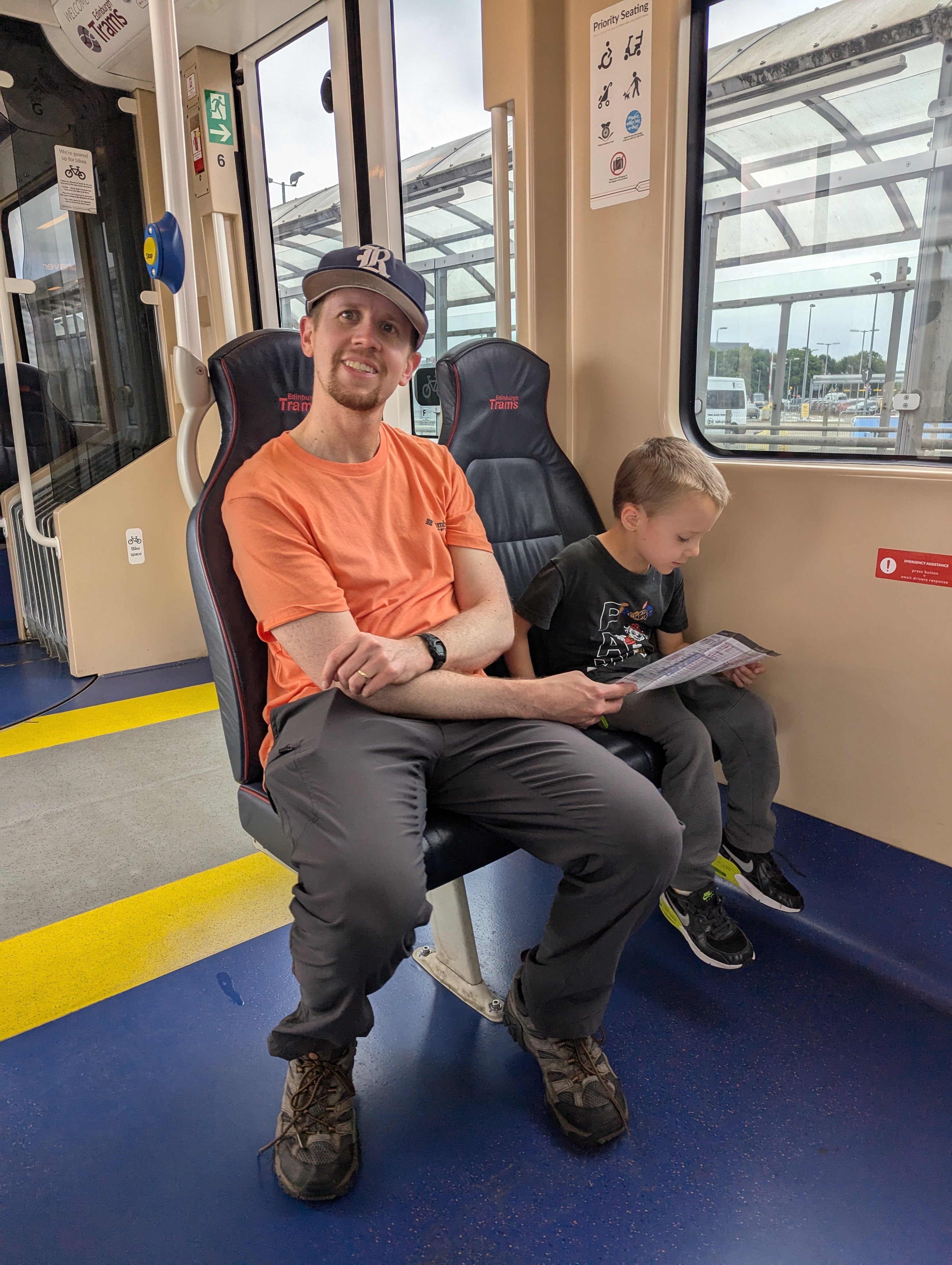
It’s actually very convenient to get from the Edinburgh airport to the city center. We were staying in an Airbnb just east of the main part of town, so we took the tram, which was well-labeled and easy to find.

Excited to look at the tram map!

After a 15 minute walk, we made it to our Airbnb flat. We were all tired, but still wanted to make the most of our (even more limited than expected) time in Edinburgh!

What Were the Most/Least Expensive Places to Travel Per Day?

As you might have gathered from reading some of our recent posts, we enjoy gathering and analyzing data- especially when this data regards the costs of our recent RTW adventure.

We kept detailed budget information on all of the places that we visited, in part to see how much we actually spent in total for our 10 months of travel, but also to look at the information broken down by country. We recently wrote about how much we spent in total and were excited that we had managed to keep under our goal of spending less than $100/day on the trip.

But for those of us who are really curious about data, or those who might be considering trips to some of the countries we visited, we have a bit more information!

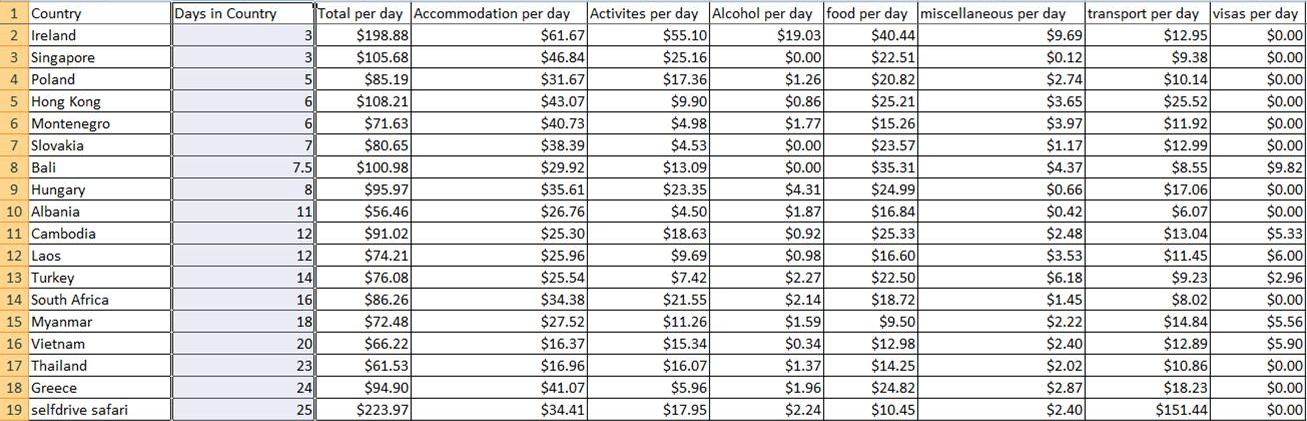
We visited a total of 29 countries on our RTW trip, but for various reasons, we kept a budget breakdown by country of only 17 of them (as well as a budget for our whole self-drive safari in southern Africa). Some of the reasons we didn’t include a country might be: we visited for only a day so the data isn’t that valid or interesting (Egypt, Zimbabwe, Germany, Macau), we visited with our parents and they either changed our mode of travel significantly or paid for a significant portion of the trip so we felt like the data would not accurately represent what we did there (Czech Republic, Slovenia, Croatia, Bosnia Herzegovina), we visited friends/family/relatives at home (USA), or our activities ended up being so strange and out of the ordinary that they don’t represent a normal trip to the country (Nepal). We also kept our budget for our self-drive safari as a whole rather than separate the countries we visited (Botswana, Namibia).

We took the data that we were keeping which was in categories for spending (Accommodation, Activities, Alcohol, Food, Miscellaneous, Transport, and Visas) and divided each of those out by day to get some idea of which countries were expensive in which categories.

Here are the countries we have full data on in alphabetical order.

expenses per day

As you can see: 17 countries plus our self-drive safari were looked at. They cover three continents: Africa, Europe, and Asia.

We kept a record of how many days we were in each country.

expenses per day days

The shortest amounts of time were in countries that we managed to plan last minute layovers in on our way somewhere else (Ireland and Singapore). We actually are a little regretful that we didn’t spent more time in Poland. As it was, we only crossed the southwestern corner and visited only one city there. Krakow was great and it whet our appetite to see much more of Poland. Hong Kong is small so we spent a short time there, but we ended up wishing we had more! The longest visits were in the places that were farthest away, places where we felt a return trip was slightly less likely. Our self-drive safari took us to 4 countries and was the longest period of time where we did one activity on the entire trip.

Average Accommodation Costs Per Day

expenses per day accommodation

Our cheapest accommodations were, unsurprisingly, in southeast Asia. The surprise there is that Turkey was so affordable. The great thing about all of those is that we also got nicer accommodation in all those places than in some of the others. We almost never stayed in a dorm in SE Asia for example, whereas, our most expensive nights were in Ireland where we rented just one room in someone’s home. Singapore and Hong Kong both were high and both of those rooms were small and relatively uncomfortable. The self-drive safari were all campsites (!) yet this ranks on the more expensive half of our accommodations. Strange.

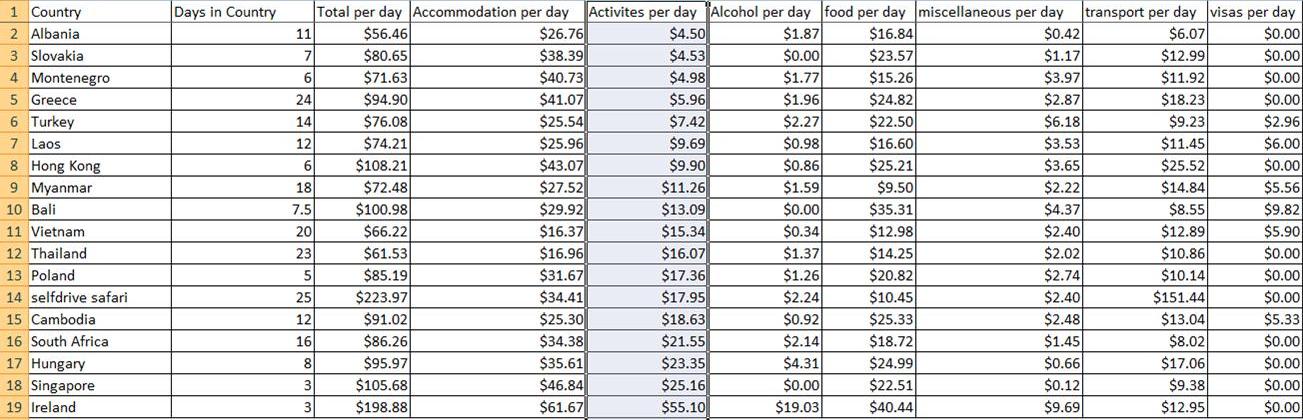
Average Activities Costs Per Day

expenses per day activities

This is, no doubt, a difficult one to compare. Activities costs depend largely on time of year, length of stay, and interests. Montenegro was low, for example, because we didn’t do a lot while we were there. We took a week to calm down and relax, mostly walking and people watching. Vietnam and Thailand rank more expensive on this list, but that is in part because the cost of activities were so low there, that we chose to do more! For example, we took many day tours in both those places: days with elephants, cooking classes, cave tours, guided excursions, etc. We did none of those things in Albania, choosing more “do it ourselves” activities. However, this does give you a decent representation of activity costs. Ireland and Singapore were very high and that shows!
Average Food Costs Per Day

expenses per day food

Our lowest costs here were in SE Asia again – with the weird standout being Cambodia. We’re not sure what to say about that except that it was the beginning of our experience with hot, humid SE Asia. We weren’t tough yet and looked for places with indoor seating and AC which undoubtedly increased our costs. Bali ranks high because we traveled with some friends who really enjoy food! Our self-drive safari comes in low (for the first time) because we did all of our cooking for ourselves. The same can be said of Montenegro, which also comes in pretty cheap. For our entire week there, we only ate out once. Interestingly though, Vietnam and Thailand come in very cheap and we ate out for almost every meal there! They both are excellent places to be if you enjoy eating! Ireland was just plain pricey!

Average Transportation Costs Per Day

expenses per day transportation

Not surprisingly, our self-drive safari comes in the most expensive here with the cost of renting our safari truck and paying for gas. It is frustrating to see Greece come in so high, especially because the transportation there ended up being so unreliable. Albania was a true winner in this area – easy transport (though not super comfortable) and very cheap prices.

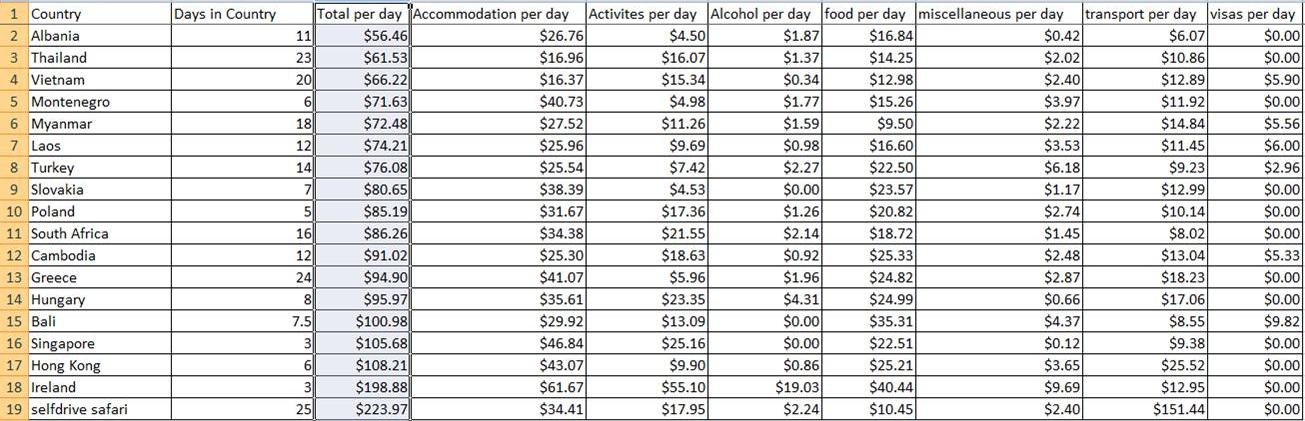
So… What were the most and least expensive places?! Let’s find out!

Average Total Cost Per Day

expenses per day total

Our cheapest country was Albania! Who would have thought that the least expensive place to travel would have been somewhere in Europe? The most expensive by far was our self-drive safari. This also seems a bit of a surprise because we were driving ourselves and staying in campsites along the way. Other things we noticed which muddle the data: We tended to spend more in places were we spent the least amount of time (see Ireland, Hong Kong, and Singapore). We think we felt the pressure to cram the same amount of things in but had to do it in a hurry. This definitely caused higher average per day costs.

There you have it! Check out our activities in each country to get a better idea of how this data might relate to you and your travel style.

Traveling Then and Now Part 2

Hope you enjoyed the first part of our interview with Della’s parents about what it was like when they traveled around the world back in 1979-80. Here we will continue to hear more about their life on the road then and compare it with ours on the road now!

How hard was it to communicate with the local population at every stop?

Peggy and Wayne (P&W): In some countries like Egypt, Turkey, Taiwan, Greece and even, Germany, there was not much English spoken or understood (and needless to say, we didn’t speak their language). Taiwan was especially rough because we didn’t understand the weights, measures, or street signs because they were in a different script. Even if someone wrote the street name on a paper, we found it impossible to compare the two different renderings of the same name. A lot of countries were easier because they were former British colonies. That meant there were English speakers and even English language newspapers. We found more English spoken in India 35 years ago than during our 2008 visit.

Chatting with a local in Burma

Chatting with a local in Burma

Della and Eric (D&E): For the most part, it has been incredibly easy. English is the universal language and there have only been a very few times where others didn’t speak it. We feel quite lucky (and lazy) that we never have to work very hard to communicate.

How did you get money?

P&W: Except in Europe, almost no place we stayed, ate, or shopped accepted credit cards and the only card of any value at all abroad, was American Express. Each of us had an American Express card and it was important to be one of their customers. Once every 30 days you could use the card to cash a check by going in person to the American Express office. Not many places had such offices however. We carried some US cash and $4800 in American Express travelers checks in relatively small denominations. We would carry these in our money belt or in pockets we had sewn inside our pants both at our waist and near the cuffs. Halfway through the trip, we had American Express re-issue some travelers checks, since they were so sweaty and worn out. At airports and near border crossings there were always currency exchanges They usually took large commissions so we would only use these to get a minimal amount of local currency, sufficient to tide us over until we could get to a bank. Exchange rates were better there, but foreign banks often kept short and sometimes erratic hours and the money exchange process was tedious and time consuming. Most countries had established exchange rates (rather than market driven ones). You could almost always get a much better rate on  the “black” market, on the street. Doing so, however, was illegal. As part of your entry and exit, you were supposed to declare all your cash and then show official receipts demonstrating official exchange for the difference in dollars between the amount you came in with and the amount you left with. Some countries required that you exchanged at least a minimum amount. We never ran out of money, but other travelers did. And that was a big deal. They had to send home for money to be wire transferred to a bank. It cost a lot to do and could take a long time.

At the beach in India

At the beach in India

D&E: We almost exclusively get money from ATMs along the way. It has been easy to find them at almost every stop. We make sure to use debit cards from accounts that charge no foreign transaction fees. Eric uses Charles Schwab and Della uses Fidelity. Many places also accept credit cards and we use those as often as we can. Again, we have ones that have no extra foreign transaction fees.

How did you budget / find inexpensive options?

P&W: We didn’t have a budget, we just tried to be as cheap as we could be. We had enough in savings that we knew we wouldn’t run out before the end of the trip. The bigger worry was always having access to cash if we should need it and not having our cash and/or airline tickets stolen.

We wrote down all of our expenses in the back of our journal. We would keep tabs by category of spending for each country and divide by the number of days. Our records show that  it cost $12 a day for two people in Nepal (and about half that while trekking).

We spent almost $13,000 overall during the nine months we traveled. Airfare figured prominently in our budget – costing almost $3500. We spent about $1600 on things – souvenirs and gifts. Excluding airfare and these purchases, we spent about $30 per night. That includes $1700 spent on internal transport. We had relatively high costs in Europe and in Hong Kong. We also had high daily costs in Burma because the visa there was very restrictive and required that internal transportation be done by air, rather than by boat, train or bus. When looking for lodging, we usually started by looking at recommendations from Lonely Planet or other travelers. We would go to the area where the recommended guest house was located. If the recommended place was full or was no longer cheap, we could usually find other cheap places nearby. Booking ahead really wasn’t an option since there weren’t many phones. Sometimes we would follow touts. Perhaps most important to keeping costs down was that Wayne loved bargaining with everyone and about everything. Even when he didn’t want to buy, Wayne would bargain just to get a sense of what things really cost.

Negotiating over something in Greece

Negotiating over something in Greece

D&E: We try to say we have a general budget on average of about $100/day. However, that is a pretty arbitrary number that we have chosen for ourselves. Our general rule is to be as cheap as possible. It is often easy to pick affordable accommodation because you can compare all prices in one sitting on the computer before you book. Sometimes it is even the same with restaurants, though we count more on fellow travelers and outside menus generally. We try to eat out only as much as is necessary, cook for ourselves occasionally, take public transit as much as possible, and stay in dorm rooms when we feel like we’re spending too much! Check out our budget posts to see how much we’ve been spending in each location.

Were there opportunities to work or volunteer abroad?

P&W: In Greece, we think we picked oranges for one day for $5.

We worked as volunteers for about two weeks in South India and it was an incredible experience. A graduate school friend had prior experience working with NGOs in India and he arranged the experience for us. It was at a clinic/farm, run by an elderly British lady and a Hindu couple.  They provided health care services in a rural area. Often patients had to travel hours to get to the clinic, so if they had an injury that needed ongoing care, they would stay and if able, work on the farm in exchange for their room and board. We did a building project for them and it was quite an experience to take the oxen cart to get our supplies. This place was so off-the-tourist track that locals would surround us and just stare.

D&E: We haven’t volunteered or worked yet, but we see a lot of other travelers who do. Many travelers use a site called workaway.com where you can find opportunities abroad. There are also a ton of volunteer opportunities through different non-profit organizations. We hope to do some volunteering with elephants in Thailand!

How did you record the memories from your trip? Pictures? Text?

P&W: We took about 2000 pictures during our trip. Wayne’s walk-around day bag was the camera case with a 35 mm SLR camera and two big lenses: a wide angle and telephoto lens. We bought an additional zoom lens in Hong Kong. Peggy had the original “spy camera,” a small 35 mm Minox. We had to ration our picture taking because we brought all of our film from home and because film and processing were relatively expensive. We shipped our film home whenever we sent a package and had it developed there. As a result, we didn’t know whether any of the pictures we took were any good. Going through airport security was tough because the old x-ray type machines used for security could ruin film, so we carried a  lead bag to protect it. We kept index cards for each roll of film to take notes on where pictures were taken.

We also kept a journal. We wrote our experiences down every couple of days. Peggy used carbon paper to make a copy as she wrote each page in the journal, and then send those pages in lieu of letters to our families. They were to keep the letters just in case our journals got lost. We remember having to be really careful using the carbon paper. Sometimes it would end up folded and you’d lose half a page, or worse yet if you put it in the wrong way, you ended up with backwards script on the back side of the journal page and nothing on the paper to be sent home! We also bought souvenirs, which contributed to our memories. We shipped items home from several of the countries we visited. Shipping was a little difficult. We varied who we sent packages to because you would have to pay tariffs if you sent too much to the same address . It sometimes took several days to put together a package. Finding boxes was quite hard, especially in Africa. Also every country had a different process. In India, you had to find a tailor to sew a cloth around the entire box and put wax seals on seams. We shipped 13 boxes in total, including a small marble table top from Agra and Tibetan rugs from Nepal. Despite dire warning that stuff would be stolen or lost in transit, every one of our  boxes made it home eventually! We waited over a year for the Agra marble. We had a friend going to Agra and we asked him to visit the  shop where we bought it. The guy told him he had only recently completed the inlay of the semi precious stones (it was a special order) and it was in the back room ready for shipping. To be on the safe side, our friend accompanied the craftsman to the post office just to make sure that it was sent!

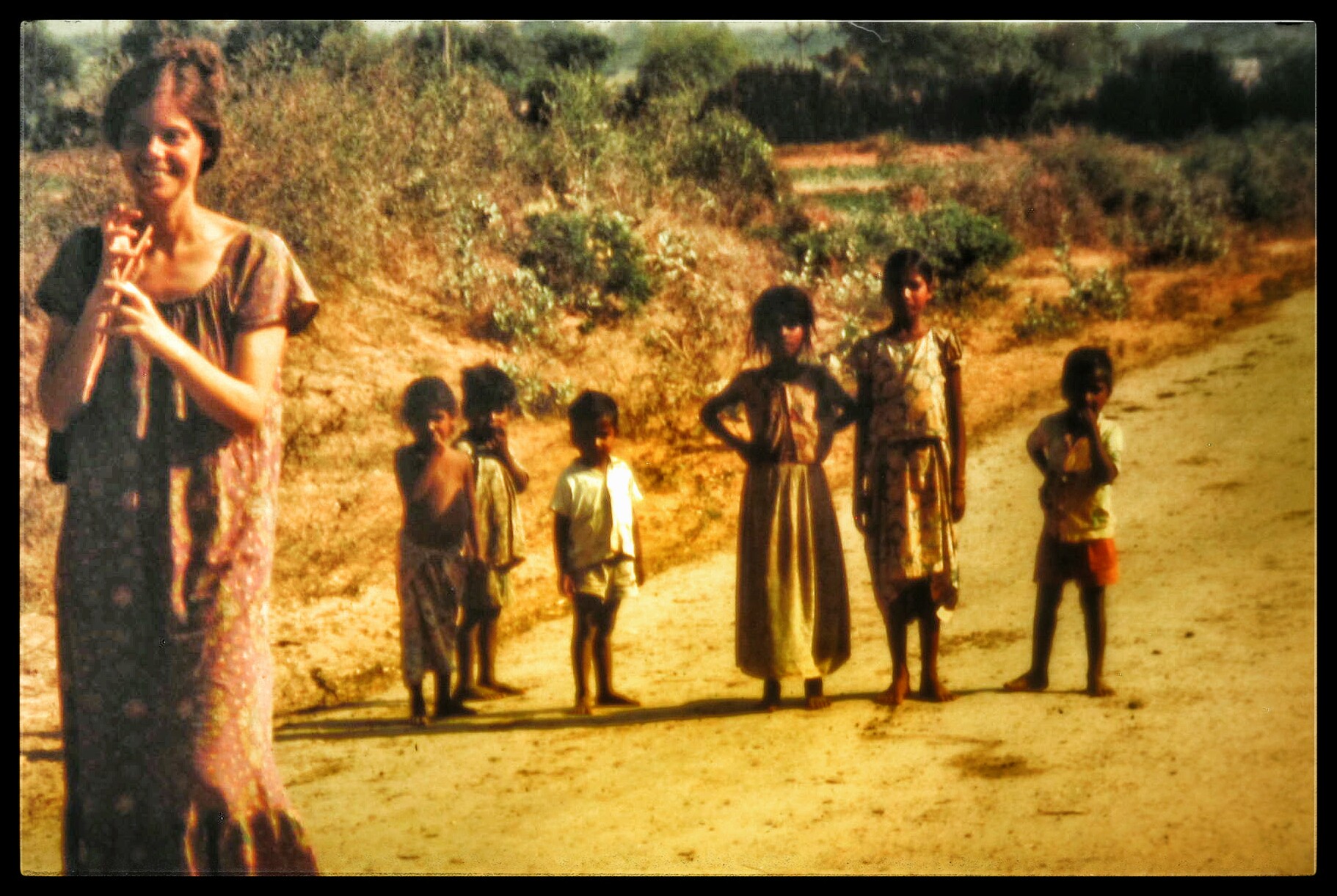
Peggy as the Pied Piper in rural India

Peggy as the Pied Piper in rural India

D&E: Obviously our biggest tool is this blog! However, we also keep a more personal more detailed log of every day travel. We have taken thousands and thousands of pictures – sometimes more than we know what to do with! Keeping everything digitally makes it easy to have way more than you really need. We have also sent quite a few postcards home. We have purchased a few souvenirs which we have sent home with family members when they have visited and we took some home ourselves on our break over the holidays.

How did you keep in contact with home?

P&W: We sent letters and postcards to family and friends fairly often. We would send things called airgrams. They were pretty affordable. The paper was really lightweight, almost like tissues. We had to be careful, as they could get ruined easily!

We made one or two phone calls. You would go to the center of town where there was a bank of phones for international calls. You would wait for them to get set up and then they would assign you a booth. We called our families around Christmas. We would generally call collect. It was difficult though, because there was no way to prearrange the call, so we just hoped people would be around.

We had given people a general itinerary of where we expected to be, each time we bought a batch of air tickets. We asked them to send us letters “post restante” or general delivery to the larger cities. They could also send things to the American Express offices or the American embassies. People would send us letters fairly often. When we arrived in major cities, we would check in all three of those places to make sure we didn’t miss a letter.

We traveled with Peggy’s parents in Italy at the start of our trip. Other travelers in Europe seemed quite a bit younger than we were. Later on, in Africa and Asia, we connected with quite a few other travelers and most were our age. We also managed to see some friends from home along the route. In Kenya we celebrated Christmas with a friend from the US who was working as a teacher in a small village near the Uganda border. In Delhi we stayed twice, for a week each time, with graduate school friends who had a real house, with a guest bedroom and servants who offered us “bed tea” each morning.

We  would try to stay abreast of what was happening at home through newspapers or radio. In larger cities, we we could find the International edition of the Herald Tribune and sometimes Time or Newsweek Magazine. Back then, US embassies weren’t quite so barricaded and some had reading rooms you could visit. Occasionally we would hear English speaking radio stations. We remember staying in an old hotel in Rangoon and hearing a radio playing The Voice of America in the room next door. We heard about the failed attempt to rescue the hostages held in Iran.

Peg holding up the wall in Mycenae

Peg holding up the wall in Mycenae

D&E: It has been quite easy to keep in contact with home. We have email of course. We also use some other internet sites like facebook, Instagram, and this blog to stay in touch. In addition, our cell phone plan allows us free texting and data in many countries so we have been able to text home often. We have also called using online tools like Skype and Viber. We are in touch so much it is like we have hardly left! =p

What kind of contingency plans did you have for when/if you got separated?

P&W: Our contingency plan was to go back to the place we had last seen each other, or if that failed, to go to the place where we were staying. Our big fear was getting separated when we were in transit or first arriving in a new place. Our fall back plan was to go to the main post office in our destination city at noon and to do so for repetitive days. Fortunately we never lost each other for long, but we each had some nightmares in which even our fallback plan didn’t work.

Our friends almost got separated on a flight. There was room for 3 of us but not all 4 to fly from Kenya to Bombay. The ticket agent saw no issue with a couple being separated. All 4 of us stood at the counter refusing to move until the manager figured out a solution that would allow a couple to either stay together or leave together.

Didn't want to get too separated!

Didn’t want to get too separated!

D&E: When we head into a very crowded place, we typically set a point like the entrance or exit. The general rule is to go back to where you last found a person. However, we don’t really worry too much given that we both carry cellphones and have the option to call or text if need be.

Who else did you meet while traveling?

P&W: We met a lot of Germans traveling, usually in a slightly fancier style and heading to beach destinations. There were also a lot of Aussies, spending a year getting to England, then working, then travelling for another year returning home. There were fewer Americans overall but it was usually Americans that we hooked up, sometimes travelling for several days together. There were no large Asian tour groups except in Japan.

While we enjoyed the time spent with the people we met while on the road, we didn’t really maintain contact with anyone. On a visit to Alaska, Wayne did see some folks we had spent time with in Nepal.

Peggy hanging out with a travel friend... and a car that crashed into their bus!

Peggy hanging out with a travel friend… and a car that crashed into their bus!

D&E: We meet a lot of travelers from Europe – specifically Germany, the UK, and Belgium. There are also a lot of Australians on the road! We meet people from the US fairly regularly, though it depends a bit on the place. We also meet lots of Canadians. Facebook has made it quite easy to stay in touch with our new friends from the road!

What (besides friends and family) did you miss from home?

P&W: We really missed our morning coffee. Even places that said they had coffee were actually serving instant Nescafe . . .Yuck. We also missed beer and wine. Adding a drink (if available) doubled the cost of any meal, so we usually refrained.

Peggy and a monkey

Peggy and a monkey

D&E: Good Tex-Mex/New Mex-Mex food and craft beer!

What advice do you have for the travelers of today?

P&W: Go and travel the world! Appreciate how easy it is to do in an age where there is modern communications, an international monetary system and ways to get points for cheap airfare. Despite it being logistically easier, there will still be challenges and in overcoming them, you will increase your self confidence. You need to prepare and to plan, but you also need to be flexible and to change your course as you go. You’ll develop and enhance your appreciation of different cultures and of diverse people. You’ll take home images and impressions that will make world events that occur later more meaningful, though not always more understandable. And you will have memories that will last a life time! (And may even inspire the future generations to travel as much as you did through your awesome stories! – Added by Della)

Family jelfie in Greece - seeing a place for the first time (Della, Eric, and Dana) and for the 2nd 35 years after the first (Peg and Wayne)

Family jelfie in Greece – seeing a place for the first time (Della, Eric, and Dana) and for the 2nd 35 years after the first (Peg and Wayne)

Traveling RTW – Then and Now

One of the many things that inspired us to go on our RTW trip was that Della’s parents, Peggy and Wayne, did a RTW trip of their own. They traveled for about 9 months in the years 1979-80. The trip was in many ways similar to ours; they visited Europe, Africa, and Asia. One of the things that has been really fun as they have met up with us a few times on our trip is discussing what is the same and what is different from when they traveled 35 years ago!

Their trip took them from Italy (where they visited Peggy’s father’s old home), to Eastern Africa, and finally to Southeast Asia. We decided to ask them some questions about their trip to see how it compares with traveling RTW now! Read their answers and our own and draw your own conclusions!

This is part 1 of this interview series. Stay tuned for part 2!

Before you left the US, how did you plan where you were going to go?

Peggy and Wayne (P&W): We planned to follow in the footsteps of a friend of Wayne’s who had done world travel. He wrote to Wayne with the details of what he was doing. What stuck in Wayne’s mind was that he said he had been gone for 11 months, had traveled overland by bus from London to India, had kept detailed records of his budget and had spent only $530. This overland route had become a somewhat standard backpacker’s route. We hoped to do that. We did a little planning using a single Lonely Planet guidebook for Asia Overland travel. Part of our planning was to attend a series of travel lectures sponsored by National Geographic. We also talked to people we knew in DC who had taken world trips. Both before and during the trip, much of our planning was based on word of mouth information from other travelers.

We also had been invited by our friend who was an Assistant to the  ambassador in India to visit with for a while. We hoped to arrive there by Republic Day in January.

Wayne in Greece

Wayne in Italy

Della and Eric (D&E): We wrote a more expansive blog post about this awhile back, but in short: We talked to Wayne and Peggy about where they went, we read a lot of travel blogs to get inspiration, we checked out a lot of Lonely Planet (and other) guide books from our local library, and we did research on climates in each locale to figure out the best times to visit.

How did people react to your plans to travel?

P&W: People thought we were a little weird. Most of the people we knew in DC were on a professional path and they thought it was strange  that anyone would risk the consequences of getting off that path. They thought the trip was less crazy in terms of a money perspective, but we would miss out on professional advancement.

Wayne had traveled a lot prior and had even gone to Israel for 7 months while in college. His parents, therefore, were accustomed to his wanderlust, but they always worried, especially his mother. His dad was confident he knew what to do. The typical advice his parents gave was “I know you know that you’re doing, but be careful!” Peggy’s parents, who rarely left New York, thought we were crazy, period. They had given up  on understanding our choices, but never sought to influence to change our plans. In both cases, since we were already living far away from home, it wasn’t a huge change for them having us gone. Our parents ultimately were both supportive and helpful, especially because they both took on responsibility for managing affairs back in the US. Peggy’s parents even joined us for the beginning part of our trip in Italy!

Peggy's parents during the trip in Italy

Peggy’s parents during the trip in Italy

D&E: We got a variety of reactions –some jealousy, some wondering how we could possibly afford it, and some just blown away at the thought of leaving home for so long. For the most part, people have seemed quite excited for us. We did write a blog post about why we chose to do this trip which addressed many of the questions and reactions we had received from people.

Not surprisingly, Peggy and Wayne were super supportive and excited for us. They were pleased that we were going to set out on such an adventure, but also started to understand some of the worry that their parents felt when they left. Eric’s parents were also supportive and made plans to meet us along the way. Peggy and Wayne have been very helpful from a logistics perspective in managing our affairs back home and they, as well as Della’s sister, have made it a priority to join us for parts of the trip as well.

What did you do with your possessions from home while abroad?

P&W: We owned a house in DC which we rented out to an existing roommate. We didn’t get rid of anything. We left the house furnished so most of our stuff stayed in place in the house. We did worry a lot about who would handle repairs on our very old house. Just before we left, it rained heavily and a skylight started leaking. We knew we couldn’t leave until we had it repaired. We were trying to clean the roof tar off some clothing using gasoline. Then in a rush we put the clothing in the washer and proceeded to cause a small explosion. Dealing with the consequences of that delayed our departure a couple of days (to New York which was an interim step prior to our international departure). A friend agreed to keep our cat, but only after he had been declawed. Gus didn’t talk to us for days after the operation. We owned two cars. We left one in New York and one in Colorado in the garage of the cabin.

At a market in Thailand

At a market in Thailand

D&E: We also rented out our house, but to a friend who wasn’t already living there. We were able to keep it partially furnished and leave the rest of our possessions in the house in the attic and basement. We asked Eric’s parents to take care of our cat while we were gone. Our two cars currently reside and Peggy and Wayne’s house.

How did you get your appropriate Visas?

P&W: We had to get all of our visas and information from consulates or embassies. We did that while we were in New York and it took almost a week of walking around the city to get it all done.

IMG_5103_edt

D&E: Most of the time, we are able to get our Visas on arrival. There have been a few that we had to apply for in advance. However, luckily, so far we have been able to get this quickly and easily online! We do think we will have to get our Vietnam visa in person before we go there.

What was in your pack? What kind of clothes did you pack?

P&W: We each had a large internal frame backpack. We had one big camera bag, and Peg’s pack had detachable zip pockets that we carried as day bags. We don’t remember exactly what we had in our packs. We know we took one down sleeping bag and made a light weight, quasi sleeping sheet that zipped on. If it was hot we put the sheet side up and if it was cold, we put the sheet down. Peggy had sandals and hiking boots, 2 pairs of pants, and a dress. She bought a great wraparound ankle length skirt in India. She loved skirts because they were cooler in the heat and also facilitated peeing somewhat more discretely out of doors in places where there were no facilities. Wayne brought jeans. He remembers that he bought his first GoreTex coat for the trip. It actually leaked like crazy. He went back to the store in DC a year later and returned it for a replacement! We remember buying replacement black cloth Chinese slippers in Hong Kong and some clothes in Sri Lanka (but those didn’t last).

We had repairs and medicine kits. We also made big zippered nylon bags to wrap around our big packs when we flew, in order to protect the straps. These turned out to be really useful because we were often able to establish a home base in some guest house in a country and then leave extra gear in those bags while we traveled to other places. We did this when we trekked in Nepal.

We had a coil to heat water in a cup. We also used Iodine to purify water. We started with pills but then used a dropper.  We had a hell of a time communicating with pharmacists when we needed to replace the iodine. We had to treat the water pretty much everywhere we traveled, even for brushing our teeth.

We always remember spending days in New York packing and repacking our bags. We weighed everything! The problem was that no one item weighed very much, but put together they weighed an awful lot. We finally made our decisions, went to the airport, decided we were too heavy, shed stuff at the gate sending it back home with Peg’s parents. Then after travelling in Italy with Peg’s parents, we sent even more stuff home! Mostly we parted with some sweaters and fancier clothes that we figured we wouldn’t need after leaving Europe.

D&E: We focused on packing things that were lightweight, quick dry, and wouldn’t hold smell. We talk extensively about our packing lists here and here.

How did you buy plane tickets?

P&W: We considered buying an around the world plane ticket, but they were expensive and had confusing rules regarding stops and direction of travel. That posed a dilemma because back then one-way tickets generally sold at a large premium. We finally decided to buy our initial ticket from New York to Frankfurt from a travel consolidator for $175. You had to send him money via mail and then he met you at the airport with the actual ticket on the day of the flight.

Remember our original plan was to travel overland, mostly by bus, from Europe to India. Once we were in Italy we had to revise our entire travel plan. It was then that the Iranians took the American hostages. That foreclosed travel there and the Russians had recently invaded Afghanistan. So that wasn’t an option either. As a result, we ended up having to take many more flights than we originally anticipated. During our re-plan of the trip, the key was to find big cities with travel agents or flight consolidators who would bundle tickets at discounted prices. Athens and Bangkok were those cities. We spent a lot of time in Athens going between different agents trying to find routings that made sense. We decided at that point to buy blocks of tickets that took us to Egypt, Kenya, and then, India. We did the same thing in Bangkok, trying to figure out a route that would take us home. We had to choose between one that would take us through Malaysia, Indonesia and Australia or a route that would take us via Hong Kong, Japan, Taiwan, Honolulu, and then home. We chose the latter.

When we booked these big chunks of tickets, we would have to carry the paper tickets all with us! It was as important as your passport and money. Sometimes people would even steal tickets. You didn’t need a picture ID to fly on tickets then. We also learned the hard way, that having a ticket didn’t necessarily mean we had a confirmed seat on a flight. From that point on, we checked flight codes very, very carefully.

We figured out our travel as we went from arrival in Bombay through to Bangkok. Mostly we traveled by train, bus, or boat. But some stretches required air travel. In India, we learned that there was a narrow window in which you could buy tickets.  “Control” over ticketing would shift location depending on how much in advance you tried to get tickets. We tried to book a flight from Kathmandu to Calcutta a couple of months out. The ticket agent in Delhi, sent us to the main computer center on the other side of town for the airline. When we got to Kathmandu (still several weeks before the scheduled flight out) we stopped at the airline office to confirm the ticket. Not only did we not have a confirmed seat, it turned out there was no such flight. The man was actually mad at us for having a ticket! We had to explain that it was their system who had given it to us in the first place. He told us, “I didn’t do this! The computer people did this!” We were at an impasse until we were able to talk to the manager. He understood and told his underling to book us on a different flight. We waited a long time. It turned out that he was filling out a lot of paperwork to cancel the original flight. We always laugh when we remember the manager informing the underling “It is not necessary to cancel a ticket for a flight that does not exist!”

Spending time in Athens

Spending time in Athens

D&E: Buying plane tickets is easy! We buy them online of course. The only challenge is figuring out how to use miles to fly more cheaply. We worked hard to gain credit card “miles” so that we wouldn’t have to pay full price on any of our long plane rides. Thus far, we have succeeded! We flew from the US to Africa, South Africa to Europe, Turkey to home, and Denver to Bangkok all using miles. We search for the best deal using a lot of different airline search sites, but one of our favorites is Kayak.com.

While you were traveling, how did you figure out what to do within cities? How did you choose accommodations?

P&W: We carried the Asia Overland guidebook and that helped with some of the planning. We would visit the Tourist Information (TI) center and get a lot of information from them at the beginning. Peg read everything really carefully. Wayne relied more on talking to people, he asked everyone he met, whether it was the guy hawking his wares or other travelers, what to do and how to get there. We would also always try to find out what things should cost, so we knew how to approach bargaining. We also would stop by travel agents selling tours. That gave us an idea of what was worth seeing. If we could figure out how to do it on our own, we would. Other times, we might buy the mini-bus tour.

D&E: We access a lot of tools to figure out what to do in a city. We use our Lonely Planet guide books which we can carry a lot of thanks to Kindle Unlimited and our tablet. We use websites like tripadvisor to help us decide what to do. One of our biggest resources is other travelers- but instead of talking in person (we do sometimes of course!), we use travel blogs. There are so many travelers out there who share their experiences in blogs, and we use those a lot to figure out how to get places and decide what to do. For accommodation, we use Lonely Planet and travel blogs (and other travelers in person), but we also do extensive research online. We use sites like hostelworld, booking.com, and airbnb. In Asia, we have started to use agoda.com as well.

What kind of places did you stay?

P&W: Where we stayed varied by country. We didn’t stay in a lot of hostels and didn’t prefer them. Most hostels locked you out during the daytime hours. We usually stayed in guesthouses where we had our own room. We did stay in hostels in Japan and Bangkok. In India, we stayed in places where the Indian middle class might have stayed, or places that catered to the Peace Corps crowd. These guesthouses often had common area or associated restaurant.

In India and other places where we traveled by train, we would often book sleeper trains, thereby reducing our need to find lodging. We also enjoyed staying in government guest houses some of which were in the train stations themselves. These were holdovers from the days of the British Raj. In Japan, we also stayed with Servas hosts. This was an international peace through friendship organization. In general, Servas worked best for a trip highly planned and with long lead times. Staying with real people in real homes was a treat – really interesting and informative, but a bit exhausting.

Staying on a roof!

Staying on a roof!

D&E: For the most part we have stayed in hostels and guest houses. Every now and then we stay in a hotel. We have also stayed in several apartments using sites like Airbnb. Our favorite places have a communal vibe so we can meet other travelers to make connections and a kitchen so we can cook some of our own food.

How did you get around?

P&W: We took flights for large distances. In Egypt, India and Sri Lanka we took a lot of trains. They were great. We also took a lot of buses, although we liked them less well. Schedules and routes were much harder to figure out and they were always very crowded (with animals as well as people). Some of our best rides were on the roofs of the buses. Some transport was in the back of pickup trucks (that had wood seats along the edges) or in mini vans. The hard part about these was that even if they told you they were leaving at a given time, you usually had to wait for however long (sometimes hours) that it took for them to fill all their seats (and then some). Within cities, transport was often by bicycle rickshaw. There were still many rickshaws pulled by men, but we felt too big and heavy to want to ride these.

D&E: We’ve gotten around almost every way you can think of. Planes for big distances (and some small when we were in a rush). We’ve used a lot of buses and trains. Within cities, we are always happy if there is a subway or rail equivalent. We have even traveled by boat, horse cart, and electric bicycle! Occasionally we have used taxis as well.

Read Part 2 of our interview with Peg and Wayne here!